
Review · KYOTO HISTORY TOURS
Kyoto Early Bird English Tour: Fushimi-Inari and Arashiyama
Kyoto’s most famous sights are much easier to appreciate before the day heats up and the paths fill. This early-morning walking tour links Fushimi Inari, Arashiyama Bamboo Grove, and Tenryu-ji in one well-planned half-day.
I like the small group, capped at nine people, and the practical help from guides such as Vincent and Hiro. I also like that the tour adds cultural context, local food suggestions, and a short break instead of rushing from one landmark to the next.
The catch is the pace: you’ll walk about 9,000 steps and use trains between areas. Anyone with limited mobility, or anyone hoping for a slow temple morning, should choose a less active outing.
Key points to know before booking
- Early starts make a real difference: The first available time slots offer the best chance of quieter paths and cooler temperatures.
- Three major Kyoto sights fit into one morning: You visit Fushimi Inari, the Bamboo Grove, and Tenryu-ji, with stops at Togetsu-kyo Bridge and Kimono Forest.
- The group stays small: No more than nine participants means it is easier to hear the guide and ask questions.
- The tour covers about 9,000 steps: Comfortable shoes are essential, and this is not a suitable choice for wheelchair users or people with mobility impairments.
- Transportation costs extra: Expect about 630 yen for public transportation, paid separately from the $102 tour price.
- Local advice is part of the value: Guides Vincent and Hiro are praised for clear English, friendly help, answers about life in Japan, and restaurant suggestions.
Why the early start matters in Kyoto
The timing is the clever part of this tour. Fushimi Inari and Arashiyama are two of Kyoto’s most popular sights, and both can feel very different early in the morning than later in the day. The tour is designed to reach them before peak crowds and stronger heat.
I would choose the earliest available start if peaceful photos matter to you. You still may encounter other visitors, but an early arrival gives you a better chance to enjoy the torii gates and bamboo paths without stopping every few steps for a passing group.
There is also a practical benefit. This tour covers a lot of ground outdoors, so cooler morning air makes the walking easier. The tradeoff is obvious: you need to get up early, and you may not have time for a full breakfast before meeting at Kyoto Station.
One useful detail from the experience is the short pause in Arashiyama. It gives you a chance to have coffee or a snack after the first major sights. Still, you should bring cash and avoid assuming that breakfast will be available at the exact moment you want it.
More History Tours in Japan:
- Kyoto: Fushimi Inari, Kinkakuji, Bamboo Grove 1 Day Bus Tour
★ 4.8 · 4,316 reviews - World Heritage Shirakawa-go and Experience Tours from Kanazawa
★ 5.0 · 4,049 reviews - Tokyo: Imperial Palace and Shogun Historical Walking Tour
★ 5.0 · 2,251 reviews
Starting at Kyoto Station and heading to Fushimi Inari
The meeting point is Kyoto Station, one of the easiest places in the city to reach by train. From there, the group takes a train for about 15 minutes to Fushimi Inari Taisha. Transportation is part of the route, but it is not included in the tour price.
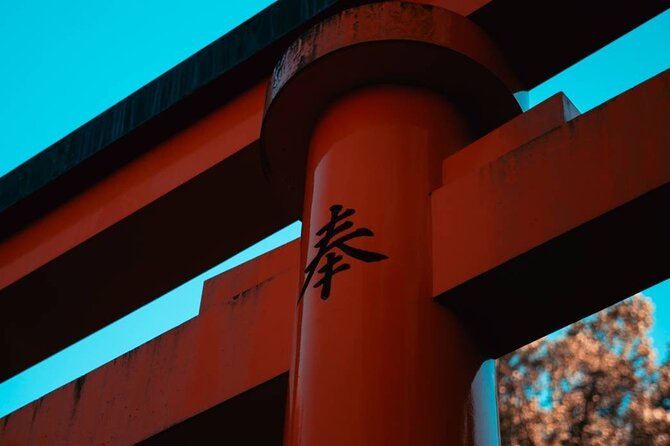
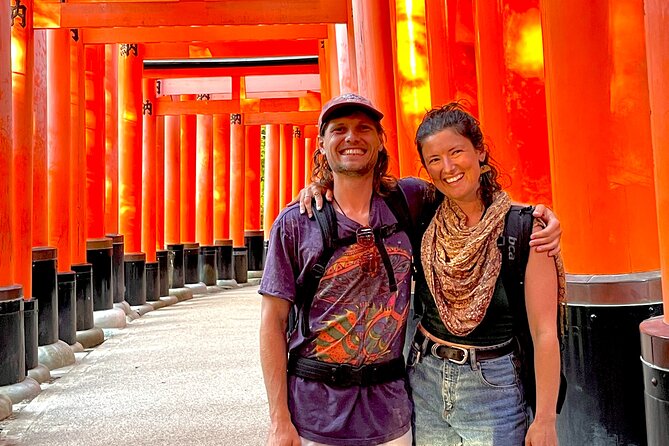
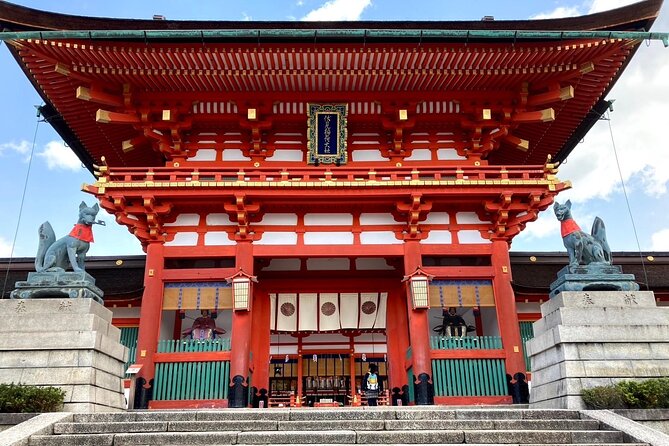
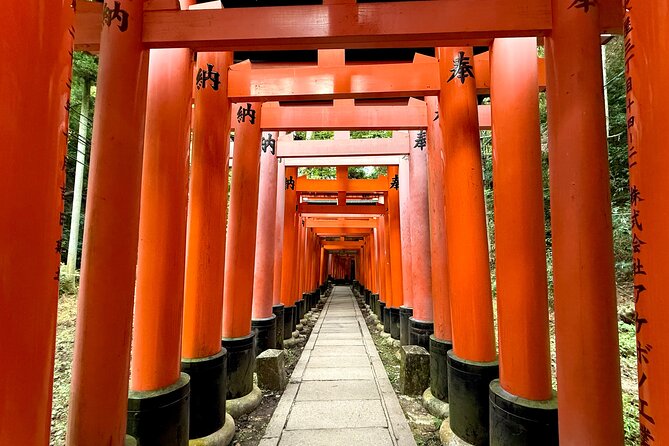
Starting here makes good sense. Fushimi Inari is one of Kyoto’s defining sights, known for its long rows of orange torii gates leading up the wooded slopes of Mount Inari. Your guide leads the visit and explains the shrine’s customs, background, and meaning rather than leaving you to work out the details alone.
You should expect walking, steps, and an uphill element at Fushimi Inari. The tour does not attempt to cover every path on the mountain. The scheduled visit lasts about an hour, which gives you time for photos and an introduction to the shrine without turning the morning into a long mountain hike.
This is one place where a guide adds real value. The torii gates are instantly recognizable, but the visual appeal is only part of the visit. With someone explaining what you are seeing, the shrine becomes more than a photo stop.
Bring comfortable shoes with a firm sole. Sandals or stiff new shoes will make the rest of the morning less pleasant, especially since the total route reaches roughly 9,000 steps.
The train ride to Arashiyama
After Fushimi Inari, you take another train, with about 30 minutes of travel time before reaching Arashiyama. This transfer means the tour is not a continuous walk through one neighborhood. You are crossing Kyoto by public transportation to connect two separate areas.
That makes the experience efficient, but it also means you need to stay with the group and pay attention to the meeting instructions. Your guide handles the route, which is helpful if you are unfamiliar with Kyoto’s train system or uneasy about changing locations early in the morning.
Public transportation is not included. The estimated total transportation cost is about 630 yen, so factor that into the listed $102 price. You may also want extra cash for a drink, snack, or small purchase during the Arashiyama break.
Walking through Arashiyama Bamboo Grove
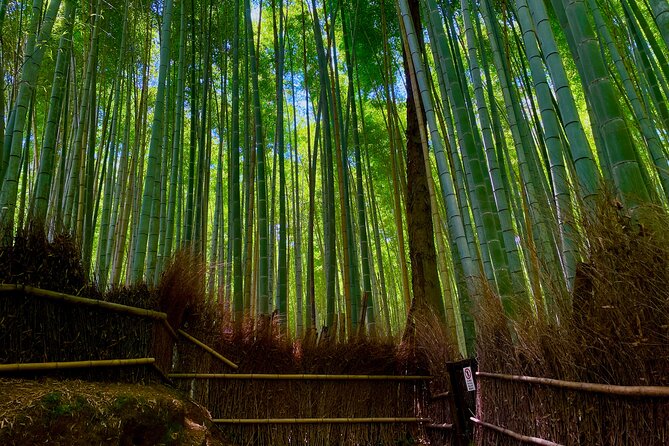
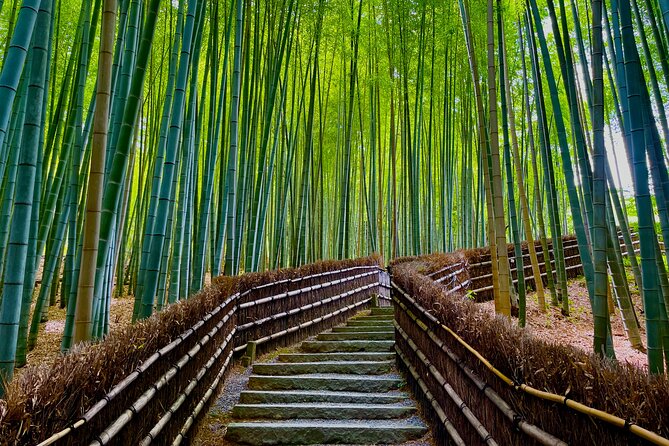
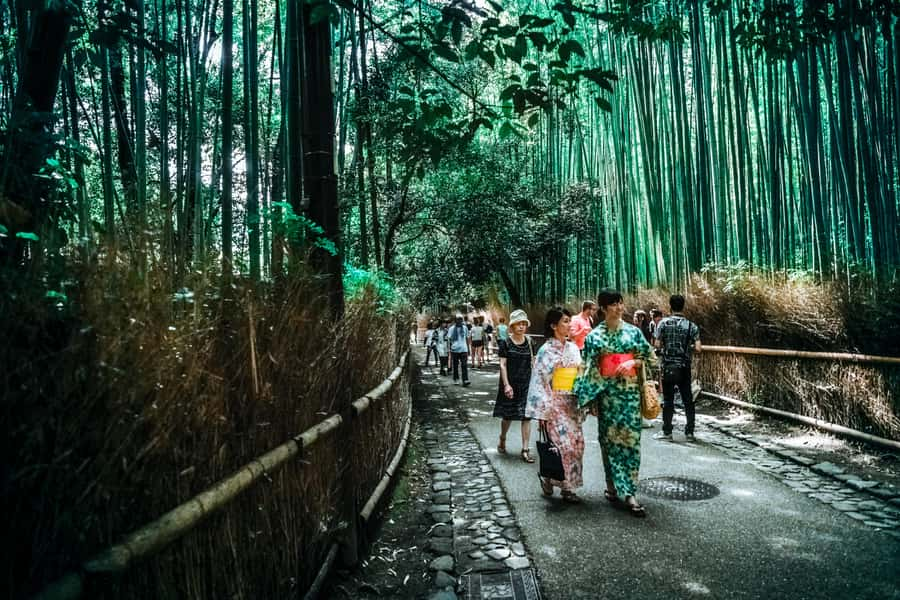
The Bamboo Grove is the second major stop, with about an hour for a guided visit and photos. The tall bamboo creates one of Kyoto’s most recognizable scenes, but the path itself is not a long wilderness walk. It is a popular public route, and the atmosphere depends heavily on the time of day.
That is why the early schedule matters again. The sooner you arrive, the better your odds of taking in the bamboo without a solid stream of people around you. The guide can also help you understand how this famous setting fits into Arashiyama rather than treating it as a quick photograph and nothing more.
I would keep expectations realistic. The grove is beautiful, but it is compact and popular. If you expect a remote forest trail, you may find the setting busier and more developed than imagined. The strength of this tour is that it pairs the grove with other Arashiyama sights, so the visit does not depend on one short path carrying the whole morning.
The walking surface and pace are manageable for many active visitors, but the total day remains demanding. After Fushimi Inari and the train ride, you still have more sightseeing ahead.
Same streets, a different century:
- World Heritage Kyoto & Nara Uji Authentic Matcha Experience
★ 5.0 · 1,573 reviews - Kyoto Gion: 2-Hour Geisha Culture & History Walking Tour
★ 5.0 · 1,186 reviews - Tokyo Castle & Imperial PalaceーShogun Walking Tour
★ 4.7 · 1,068 reviews - Kanazawa: World Heritage Shirakawa-go Morning Guided Tour
★ 4.9 · 988 reviews
A short Arashiyama break for coffee and browsing
The schedule allows about 20 minutes of free time in Arashiyama. This is a small but useful pause. You can take a breath, buy a drink, look at shops, or grab something to eat if you skipped breakfast.
One guide-led morning included a coffee pause that helped because the participants had not eaten before the early start. I see this as a thoughtful feature, though 20 minutes is not enough for a full restaurant meal or extended shopping.
Use the break according to your needs. If you are hungry, deal with food first. If you already ate, it is a chance to rest your legs before the next sights. Do not expect a long personal exploration of Arashiyama, since the group still has Kimono Forest, Togetsu-kyo Bridge, and Tenryu-ji ahead.
Kimono Forest and Togetsu-kyo Bridge
The tour passes through Kimono Forest, with about five minutes for a guided look. This colorful installation near Arashiyama Station adds a modern design element to a morning otherwise focused on shrines, temples, and natural scenery.
The stop is brief, so think of it as a quick introduction and photo opportunity rather than a major visit. Your guide can point out what makes it distinctive, but you will not have much free time there.
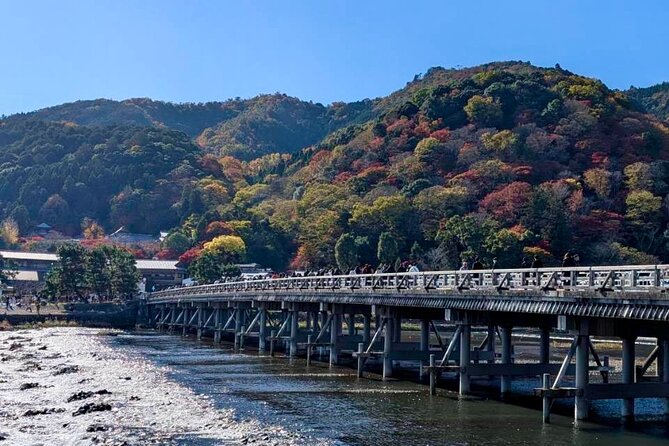
Next comes Togetsu-kyo Bridge, one of Arashiyama’s best-known landmarks. The schedule allows another short photo stop and guided pass-by. The bridge provides a change of view after the enclosed bamboo path and gives you a clear sense of Arashiyama as a wider district.
These short stops work well for people who want an overview of the area. They will feel too rushed if you want to linger at every location. The tour’s design favors seeing several important places with explanations, not spending an hour at each one.
Tenryu-ji and the meaning of Zen
The final major sight is Tenryu-ji Temple, where you spend about an hour. Admission is included, which is important because this is the only entrance fee specifically covered in the tour price.
Tenryu-ji is the place where the guide brings the morning’s themes together. You learn about Zen Buddhism and the temple’s place in Kyoto’s religious and cultural story. A guide can explain the purpose of the buildings, grounds, and traditions in a way that is difficult to pick up from signs alone.
This is also a welcome change of pace. Fushimi Inari is defined by its gates and hillside route, while Arashiyama offers bamboo, bridge views, and short urban stops. Tenryu-ji gives you time to focus on a temple setting before the tour ends.
You finish at Togetsu Bridge. Since the tour begins at Kyoto Station and ends in Arashiyama, you do not have to return with the group to the starting point. That is useful if you plan to continue exploring the district, have lunch nearby, or return to your hotel on your own.
What the guide adds to the morning
The strongest part of this experience is the human guidance. Vincent is praised for being friendly, helpful, and easy to understand in English. Hiro is also praised for giving clear explanations, answering questions about daily life in Japan, and suggesting places to eat.
That matters because the tour is not only about taking you to famous places. You can find Fushimi Inari, the Bamboo Grove, and Tenryu-ji on a map. The benefit is having someone explain what you are looking at, keep the route moving, and help with small practical questions along the way.
The guides also provide restaurant recommendations. That is especially handy at the end, when you are already in Arashiyama and may want to stay for lunch. Suggestions from a guide can save time, though the supplied details do not name particular restaurants.
You should make use of the small group. Ask questions about shrine customs, Zen, local life, or food. With a maximum of nine people, the setting is better suited to conversation than a large coach tour.
Is $102 a fair price?
At $102 per person, this is not the cheapest way to visit these sights. You can reach the major locations independently for less, especially if you are comfortable using Kyoto’s trains, reading signs, and researching the sites in advance.
The value comes from the structure. You get an English-speaking guide for 4.5 hours, a small group, transportation planning between distant areas, guided visits at three major sites, and admission to Tenryu-ji. You also get direct help with questions and food suggestions.
Transportation costs about 630 yen extra, and personal purchases are not covered. The price makes the most sense for a first visit to Kyoto, a short stay, or anyone who wants the morning organized without hiring a private guide.
It is less attractive for independent visitors who prefer to move slowly, take long photo breaks, or spend most of the day at one temple. You are paying for guidance and efficiency, not luxury transportation or a private itinerary.
Who should book this tour?
I would recommend it to active visitors who want to see several Kyoto highlights in one morning and prefer explanations in English. It also suits families who want help with directions and history, provided everyone can manage the walking and early start.
It is a good fit if you feel nervous about finding Fushimi Inari and Arashiyama on your own. The train transfers are handled as part of the group route, and the guide can answer questions along the way.
Couples and small groups may also like the format. The maximum of nine participants keeps it more personal than a large sightseeing bus, while still costing less than a private tour.
I would not choose it if you have mobility limitations, use a wheelchair, or want a relaxed morning with little walking. The route includes about 9,000 steps, public transportation, shrine paths, and several stops. You should also avoid booking the latest available start if crowds are a major concern.
Before booking, make sure WhatsApp or SMS works on your phone. The guide uses one of these services for easy communication, so access is required.
Should you book the Kyoto Early Bird tour?
Book it if you want an efficient introduction to Fushimi Inari, Arashiyama, and Tenryu-ji, and you are willing to trade a lie-in for quieter streets and cooler air. The strongest reasons are the small group, the early timing, and guides such as Vincent and Hiro, who add useful explanations and practical local advice.
Skip it if you want a slow, self-guided day or cannot comfortably walk 9,000 steps. For most active first-time visitors, though, the tour offers a sensible way to cover three major Kyoto sights before the city gets busy.
FAQ
How long does the tour last?
The tour lasts 4.5 hours. Starting times vary, so you need to check availability when booking.
Where does the tour begin?
The tour begins at Kyoto Station.
Where does the tour finish?
The tour finishes at Togetsu Bridge in Arashiyama.
Which attractions are included?
You visit Fushimi Inari Taisha, Arashiyama Bamboo Grove, Kimono Forest, Togetsu-kyo Bridge, and Tenryu-ji Temple.
Is transportation included?
No. The tour uses public transportation, and the transportation cost is approximately 630 yen.
Is admission to Tenryu-ji included?
Yes. Admission to Tenryu-ji Temple is included in the tour price.
How much walking is involved?
The tour requires approximately 9,000 steps. Comfortable shoes are recommended, and the activity is not suitable for wheelchair users or people with mobility impairments.
Newest history tours we have reviewed in Japan
- Tokyo: Asakusa & Sensoji ー Oldest Temple Walking Tour (2hrs)★ 5.0 · 213 reviews
- Private sake pairing@ancient underground★ 5.0 · 27 reviews
- [30 minutes] Rickshaw tour around Asakusa [History, sightseeing, Tokyo Skytree]★ 5.0 · 38 reviews
- Private Tour Through the Tokyo National Museum & Ukiyo-e★ 4.7 · 17 reviews
- Tokyo: Customized Private Historical Guided Photoshoot Tour★ 5.0 · 25 reviews
- Tokyo: Imperial Palace, the history of Japan (ENGLISH GUIDE)★ 5.0 · 77 reviews
- (Ticket Included) Explore Osaka Castle & Museum of History★ 4.8 · 21 reviews
- Tokyo: Edo Castle & East Garden of the Imperial Palace Tour★ 4.7 · 112 reviews
Kyoto History Tours, compared.
Fushimi Inari, Kinkakuji, Bamboo Grove 1 Day Bus Tour
Read our review →
Kyoto Gion: 2-Hour Geisha Culture & History Walking Tour
Read our review →
Browse the lists this tour appears in