
Review · SPAIN HISTORY TOURS
Caceres: Highlights, History and Jewish Quarter Walking Tour
Cáceres changes character as you walk from its grand medieval palaces into the Jewish Quarter. Wide stone spaces give way to narrow lanes, low houses, plastered walls, and a quieter feel that tells a different part of the city’s story. I like that this tour connects the famous monuments with the less polished, more intimate corner of the old town.
Two things work especially well here: the chance to enter Carvajal Palace and Becerra Palace when they are open, and the focus on Jewish customs rather than simply pointing out old buildings. The main concern is pace. Two hours is not long for so much history, and one guide may spend more time talking while another moves faster between stops.
Key points to know before booking
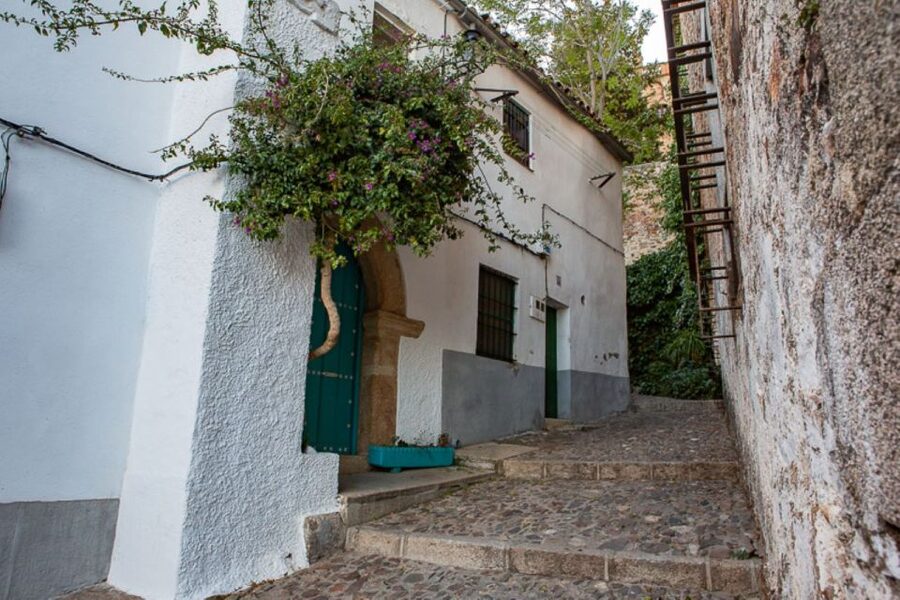
- The route crosses two very different parts of old Cáceres: grand palaces and towers first, then the close lanes of the Jewish Quarter.
- The former synagogue is now San Antonio Hermitage, giving you a clear example of how the neighborhood changed over time.
- Carvajal Palace and Becerra Palace are included when open, adding interior visits to the outdoor walk.
- The tour is led in Spanish by an officially authorized Extremadura tourism guide.
- Small groups can make the stops and explanations feel more personal, with guides such as Manuela and Javier praised for answering questions and keeping conversation easy.
- The €16 price is strong value if the included interiors are open and you want context rather than a simple orientation walk.
Start beside the tourist office in the walled city
You meet the Pasearte Cáceres guide next to the tourist information office. That is a sensible starting point because you are already at the edge of the monumental area, with no transfer or taxi needed once you arrive in the old town.
The two-hour walk is designed as an introduction to intramural Cáceres, meaning the historic city inside its walls. You are not setting off for a distant sight or a separate museum. The experience stays focused on the old center, where streets, houses, palaces, and religious buildings sit close together.
Your guide speaks Spanish, and the tour is conducted by an Official Tourism Guide of Extremadura. That matters because the guide is authorized by the regional administration and works within the tourism rules of Extremadura. If you do not understand Spanish, this is a serious point to consider before booking.
The route is wheelchair accessible, according to the activity details. Still, the Jewish Quarter is made up of narrow historic streets, so you may want to confirm the practical route with the provider if you use a wheelchair or have limited mobility. The tour description confirms accessibility, but it does not provide a detailed surface or slope breakdown.
More History Walking Tours in Spain
- Barcelona: Tapas Walking Tour with Food, Wine, and History
★ 4.8 · 4,261 reviews - Barcelona Tapas Walking Tour: Food, Wine & History
★ 4.5 · 1,928 reviews - Madrid Historical Walking Tour
★ 5.0 · 721 reviews
The monumental opening: palaces, towers, and medieval power
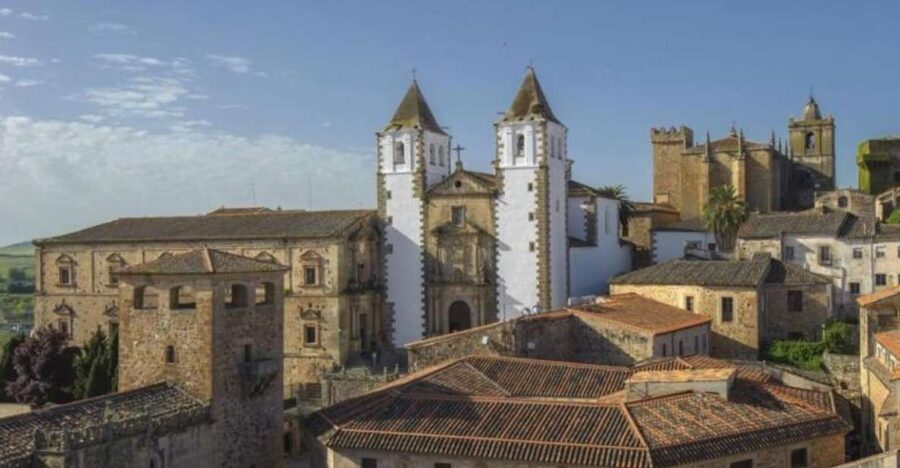
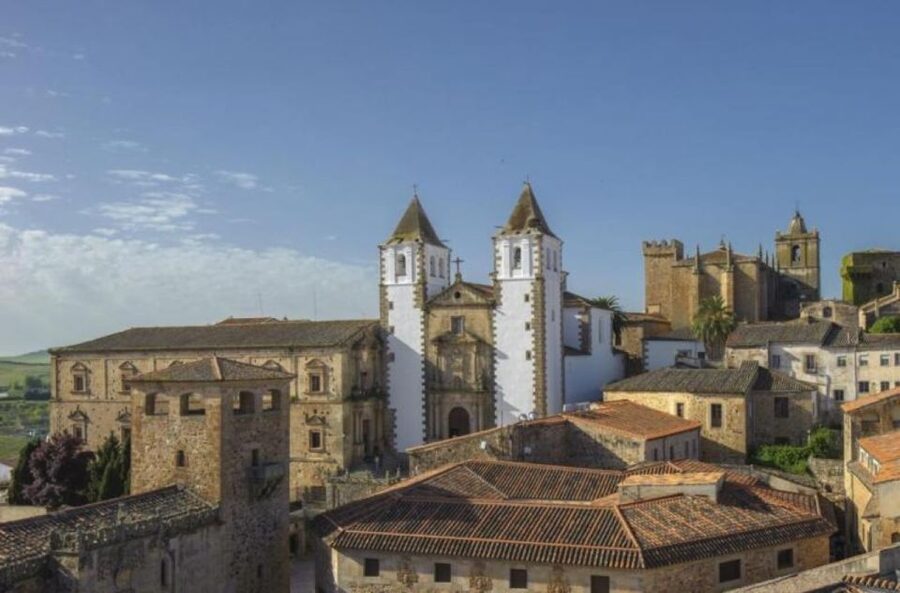
The first part presents the grander side of Cáceres. The old city became a medieval reference point through centuries of different cultures and political powers, and the stone buildings make that story visible before the guide even begins to explain it.
The city’s historic center has been on the UNESCO World Heritage list since 1986. That label is useful here, not because it replaces the guide, but because it explains why Cáceres feels like a preserved historical complex rather than a collection of unrelated sights. You are seeing a city where streets, walls, palaces, and religious buildings still work together as a whole.
The tour includes the Palace of Carvajal when it is open. Its presence gives the route a strong architectural anchor. Rather than hearing only about noble families from the street, you may be able to step inside and see how one of the city’s important residences is organized.
Becerra Palace, home to the Mercedes Calles-Carlos Ballestero Foundation, is also included when open. This is another useful contrast with the Jewish Quarter later in the walk. The palace represents the world of wealthy and powerful families, while the eastern quarter shows a more modest pattern of houses and lanes.
Keep in mind that interior access depends on opening conditions. The tour includes admission to these buildings when they are open, but you should not book expecting every interior to be guaranteed at every departure. Even without an interior visit, the guide still uses the buildings to explain how Cáceres developed.
A change of scale in the Jewish Quarter
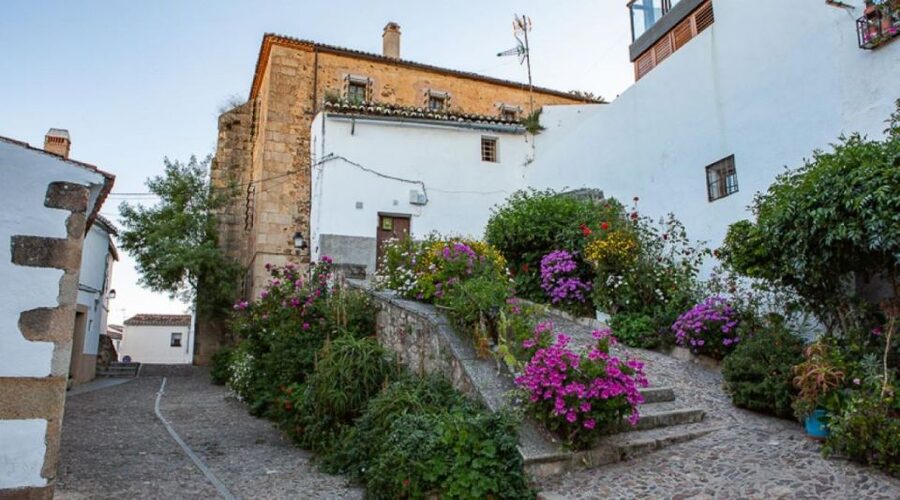
The route becomes more distinctive once you enter the Jewish Quarter in the eastern part of the walled enclosure. This is where the tour moves beyond a standard monument walk.
The change is easy to read in the street plan. Large squares and tall towers give way to narrow alleys and lower homes. Instead of the carefully cut stone associated with grand palaces, you see brick, plaster, and plastered stone, materials linked with traditional Extremaduran houses.
That contrast is one of the best reasons to choose this experience. A quick walk through Cáceres can leave you with the impression that the entire old town was built for nobles and military families. The Jewish Quarter complicates that picture. It shows how another community lived within the same walls, with its own traditions, religious practices, and way of understanding daily life.
The quarter was one of the larger Jewish communities, or aljamas, in the Kingdom of Castile during the 15th century. The guide uses the remaining buildings and street pattern to explain that past. You are not simply looking at a preserved set of lanes. You are being shown how urban form can retain traces of a community even after that community has been forced to leave or convert.
The Jewish Quarter belongs to the Caminos de Sefarad network, which links well-preserved Jewish quarters across the Iberian Peninsula. That connection gives the stop a wider Spanish context. Cáceres is part of a national story about Sephardic Jewish heritage, not an isolated local curiosity.
San Antonio Hermitage and the former synagogue
One of the most meaningful stops is the Hermitage of San Antonio de Padua. The building is associated with the former synagogue, which was later Christianized.
This change in use is important because it makes the history tangible. Religious buildings often survive while their original communities do not. Here, the building offers a way to discuss Jewish worship, Christian conversion, persecution, and the long afterlife of local customs.
When open, the hermitage is included in the tour. Its location also gives the neighborhood its popular name, San Antonio. Inside, your guide can connect the building to the wider story of the Jewish community rather than treating it as a separate church visit.
The historical subject requires some patience. One confirmed criticism of the experience is that too much history can be delivered in long stretches, with repeated stops that leave less time for seeing the surroundings. That is a fair concern, particularly if you prefer a brisk walk with short explanations.
I would approach this stop with a clear preference. If you enjoy social and religious history, give the guide room to explain the changes. If you mainly want photographs and a quick look at the streets, you may find the pace slow. The best guides on this route appear to respond well to questions, so it is worth asking for a shorter explanation if the details begin to pile up.
More Jewish Heritage Tours in Spain:
- Private Jewish Heritage Journey by Barcelona Dreaming
★ 4.8 · 383 reviews - Girona: Jewish Heritage Guided City Tour and Museum Visit
★ 4.8 · 124 reviews - Úbeda-Baeza historical tour with Water Synagogue
★ 4.5 · 57 reviews - Seville in 1 Day Tour: Historic Center, Monuments, and Jewish Quarter
★ 4.8 · 19 reviews
What the guides add to the walk
The guide can make or break a compact history tour. With only two hours, the person leading you must choose what to explain and what to leave for another visit.
Manuela has been praised for handling a lot of material in limited time, even though one visitor still felt the presentation moved quickly. Javier has also been singled out for taking time with questions and making the visit feel conversational. These names do not guarantee who will lead your departure, but they show the kind of guiding style you may encounter.
The strongest feature is the official local perspective. A guide trained to interpret the Jewish Quarter through the RASGO project has specific preparation for explaining this heritage site. That is more useful than a guide who simply lists construction dates and family names.
At the same time, the tour is conducted in Spanish only. You should be comfortable following spoken Spanish for two hours, including historical terms and explanations of Jewish traditions. The smaller group format helps because you can ask questions and stay close to the guide, but it does not change the language requirement.
A good tactic is to arrive ready to listen for the main thread: who lived in each part of the city, how the buildings were used, and what changed after the Jewish community was persecuted and Christianized. You do not need to retain every date to understand Cáceres.
Is $16 a fair price?
At $16 per person, this is a good-value introduction to Cáceres, especially if Carvajal Palace, Becerra Palace, and San Antonio Hermitage are open during your visit.
You are paying for a two-hour guided walk, authorized local guiding, and admission to the listed interiors when available. That compares favorably with a simple outdoor orientation walk because the route includes places you might otherwise pass without knowing their significance.
The value is strongest for a first visit. You gain a basic map of the monumental quarter, learn where the Jewish Quarter begins, and receive enough context to return later on your own. The included 20 percent discount card for the Co-Cathedral of Santa María adds another useful benefit if you plan to visit that major church.
The price is less compelling if you already know the old town well, speak little Spanish, or prefer to move quickly. The tour’s purpose is explanation, not just sightseeing. Several stops involve listening, and the amount of historical detail may feel heavy for people who want a short stroll.
There is also no food or drink included. That is not a serious drawback for a two-hour city walk, but plan a café stop before or after rather than expecting refreshments along the route.
How to handle the two-hour pace
Two hours is enough to cover the essential sequence, but it leaves little room for long photo stops or extended time inside each building. The guide has to move between the monumental quarter, the palaces, and the Jewish Quarter without turning the experience into a half-day visit.
The tour works best if you treat it as a foundation. Listen for the main ideas, note the buildings you want to revisit, and save detailed photography for afterward. The narrow lanes are easier to appreciate when you are not trying to stop at every corner.
You may also want to tell the guide what interests you most. If Jewish traditions are your priority, say so early. If architecture matters more, ask about the palaces and the differences between noble stonework and popular Extremaduran homes.
The reported range of guiding styles is worth keeping in mind. Some guides may give compact explanations and move along, while others may pause often and provide a fuller historical account. A small group makes it easier to ask for clarification, but the fixed duration means the guide cannot cover every subject in equal detail.
Who should book this Cáceres walk?
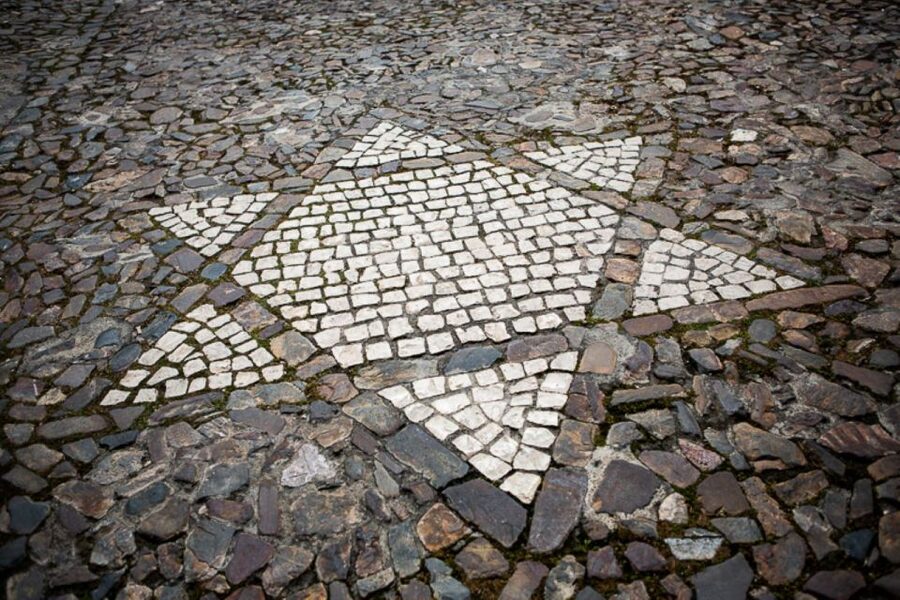
I would recommend it to a first-time visitor who wants a clear introduction to the walled city and who can follow Spanish comfortably. It suits anyone interested in how Jewish, Christian, and medieval urban traditions shaped the same small area.
It is also a good choice if you value access to interiors. Carvajal Palace, Becerra Palace, and San Antonio Hermitage give the route more substance than a walk that stays entirely outdoors.
History-focused visitors should enjoy the attention to Jewish customs and the survival of material traces from a persecuted culture. The tour also suits people who prefer small groups and direct conversation with a local guide.
I would hesitate if you want a fast-paced sightseeing circuit, minimal commentary, or an English-language tour. The possibility of frequent stops and long historical explanations is not a minor detail. It is central to the experience.
Practical details before you reserve
You can cancel up to 24 hours before the start for a full refund, and the reserve-now, pay-later option keeps your plans flexible. Starting times vary, so check availability for the date you want.
Meet beside the tourist information office with the Pasearte Cáceres guide. The activity lasts two hours, is offered in Spanish, and is described as wheelchair accessible.
The three interiors are included only when open. The Co-Cathedral of Santa María is not part of the tour admission, but the 20 percent discount card can reduce the cost of visiting it separately.
Should you book it?
Book this tour if you want Cáceres explained through both its grand palaces and its quieter Jewish Quarter. The strongest reasons are the official local guide, the included interiors when open, the focus on Jewish traditions, and the modest $16 price.
Skip it if you need English, dislike frequent historical pauses, or want to cover the old town at your own speed. For everyone else, this is a practical way to understand why Cáceres is more than a beautiful medieval backdrop. The shift from noble palace to low Jewish Quarter house is the central lesson, and it gives the two-hour walk a clear purpose.
FAQ
Where does the Cáceres walking tour meet?
Meet your Pasearte Cáceres guide next to the tourist information office.
How long does the tour last?
The walking tour lasts two hours.
What language is the tour offered in?
The live guided tour is conducted in Spanish.
Which interiors are included?
When they are open, the tour includes Carvajal Palace, Becerra Palace, and the Hermitage of San Antonio de Padua.
Is the Co-Cathedral of Santa María included?
The Co-Cathedral is not included as an interior visit, but you receive a card offering 20 percent off admission.
Is the tour wheelchair accessible?
The activity is listed as wheelchair accessible.
Can I cancel for a refund?
You can cancel up to 24 hours in advance for a full refund.
Newest history tours we have reviewed in Spain
- Visita Guiada Por El Casco Histórico De Cuenca Y Su Catedral★ 5.0 · 45 reviews
- Mosque of Cordoba History Tour in English Tickets included★ 5.0 · 257 reviews
- Jerez de la Frontera History and Art Walking Tour★ 4.5 · 49 reviews
- 2 Hours Tour around Cádiz: History, anecdotes and curiosities★ 5.0 · 89 reviews
- The Authentic Bilbao Pintxos, Food & Wine Tour with a Local★ 5.0 · 360 reviews
- Bilbao Historical Small Group Tour★ 4.5 · 159 reviews
- Andorra Original History and Sightseeing Tour (Private, Pickup)★ 5.0 · 350 reviews
- Barcelona Jewish & Gothic Tour★ 5.0 · 18 reviews
Jewish Heritage Tours, compared.
Budapest Jewish Heritage Memorial Walking Tour & Synagogue Entry
Read our review →
Jewish Heritage Guided Tour with Synagogue Ticket
Read our review →
3-Hour Porto Jewish Heritage Walking Tour with Local Guide
Read our review →
Private Jewish Heritage Journey by Barcelona Dreaming
Read our review →

Anne Frank and the Jewish History of Amsterdam Private Tour
Read our review →
Lisbon Jewish Heritage and History – Private Tour Van
Read our review →
Browse the lists this tour appears in