
Review · BERLIN HISTORY TOURS
Berlin: Urbex Abandoned Places & History Tour
Berlin’s old Stasi hospitals offer something far stranger than a standard city tour: empty medical buildings, underground passages, rooftop views, and traces of a secret state. With an experienced urbex guide such as Yoorii, you learn how to explore these places legally and safely rather than simply wander through broken rooms.
I like the small six-person group, which gives you time to ask questions and take photographs. I also like the mix of history and hands-on exploration, from original flooring and old papers to graffiti glowing in the tunnel darkness. The main caution is the site’s condition: broken glass, fire damage, demolition, and restricted areas can make the experience feel less complete than the price suggests.
Key points at a glance
- Former Stasi hospitals: Explore medical buildings once used mainly by East Germany’s secret police and senior officials.
- Tunnels and headlamps: Walk through dark underground spaces with a rented torch and look for graffiti in the shadows.
- Rooftop views: Reach higher parts of the site for unusual views across Berlin.
- Guide Yoorii: Expect history, practical safety advice, humor, and help finding the most worthwhile corners.
- Small group of six: The limited size suits photography and makes it easier to stay together in a complicated site.
- Three hours of active exploring: Wear clothes that can get dirty, leave the large backpack behind, and expect uneven ground.
Entering Berlin’s former Stasi medical world
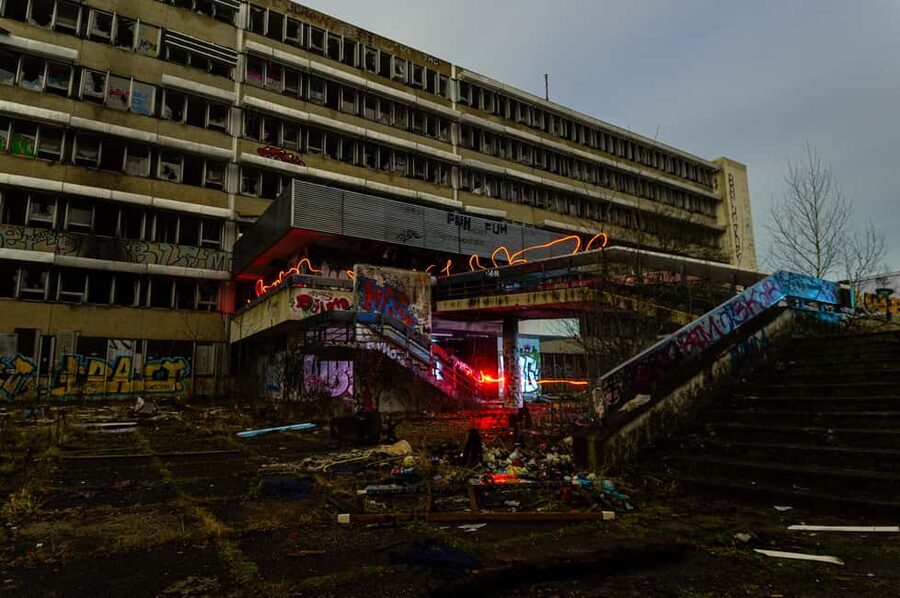
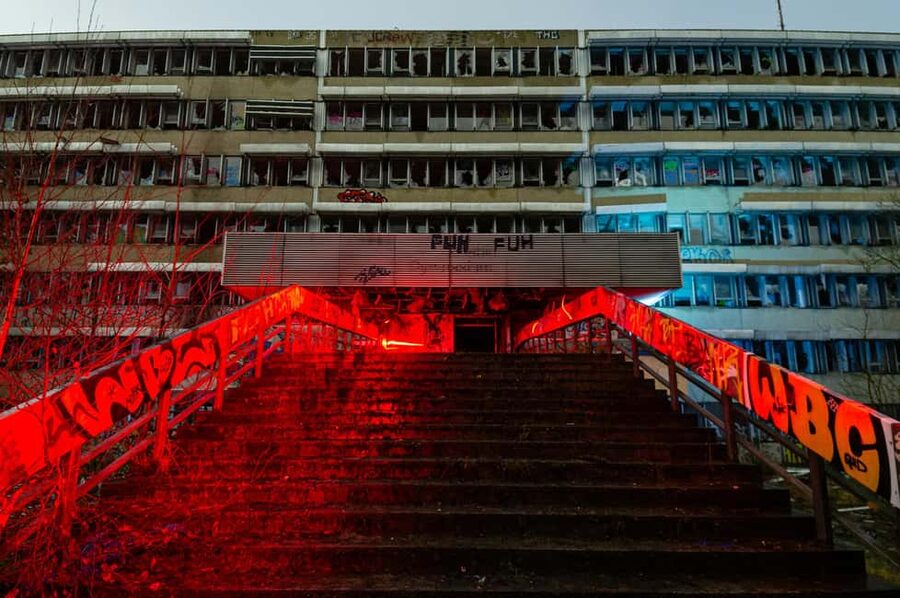
The main setting is a group of abandoned hospitals linked to the Ministry for State Security, better known as the Stasi. East Germany used these facilities as a private medical system for its own agents and senior officials. The hospitals had modern equipment for their time, skilled staff, and strict secrecy.
That background changes how you look at the empty rooms. A cracked corridor is not just an old corridor. It once belonged to a closed institution built around secrecy, control, and protection for the people running the regime.
After the Berlin Wall fell in 1989 and East Germany collapsed, the hospitals lost their purpose. The buildings were left behind, and nature, fire, graffiti, weather, and trespassing slowly reshaped them. The tour uses that decay as part of the experience, while the guide supplies the context that the buildings can no longer explain by themselves.
You should not expect a polished museum. There are no neat labels beside every room and no restored medical wards waiting for inspection. The value comes from standing inside a place that has been abandoned, hearing what it was used for, and noticing small surviving details.
More History Tours in Berlin:
- Berlin: 3-Hour World Heritage Cruise to Potsdam
★ 4.5 · 1,569 reviews - Berlin: History of the Third Reich Guided Walking Tour
★ 4.7 · 791 reviews - Berlin: Berlin Charité Guided History Tour
★ 4.4 · 660 reviews
What the three hours feel like
The tour begins at the exit from S-Bahn Buch, on the side facing the Netto supermarket. After coming downstairs, turn left. This meeting point matters because the site is outside Berlin’s central sightseeing zone, so allow enough time to reach Buch before the start.
From there, the experience moves into the abandoned hospital grounds and buildings. The exact order can vary with access and conditions, but you should expect a mixture of interior rooms, underground areas, and higher viewpoints.
The guide’s role is especially useful here. Large abandoned complexes can quickly become repetitive, with one empty room looking much like the next. Yoorii helps you avoid wasting your limited time and takes you toward places with stronger visual or historical interest.
You are not simply shown a building and sent on your way. The stated aim is to teach you how to explore in a safe and legal way. That includes moving carefully, keeping a torch ready, judging spaces before entering, and understanding the culture of urban exploration.
The tone is intended to be light and active. You may be asked to step outside your comfort zone, but this is not a stunt tour. You should still follow the guide’s directions and avoid treating the site like a playground.
Old documents, original floors, and damaged rooms
One of the more rewarding parts of the visit is finding what remains in place. The hospital complex has included old documents, original flooring, and other small traces of its former use. These details do more work than a large empty hall because they connect the decay to the building’s working life.
You might find yourself stopping over a scrap of paper or looking closely at a floor that has survived years of neglect. The tour gives you time to pause rather than rushing from one photo stop to another.
Still, keep your expectations realistic. The site has suffered damage, including fires and heavy destruction by young people who entered before or outside organized tours. Some areas have been demolished, and some rooms are now little more than empty shells.
That means the tour’s quality depends partly on your attitude. If you want intact hospital equipment and a carefully preserved secret-police facility, you may be disappointed. If you enjoy piecing together a place from fragments, stains, floors, papers, graffiti, and the guide’s explanation, the same damage becomes part of the story.
Into the tunnels with a torch
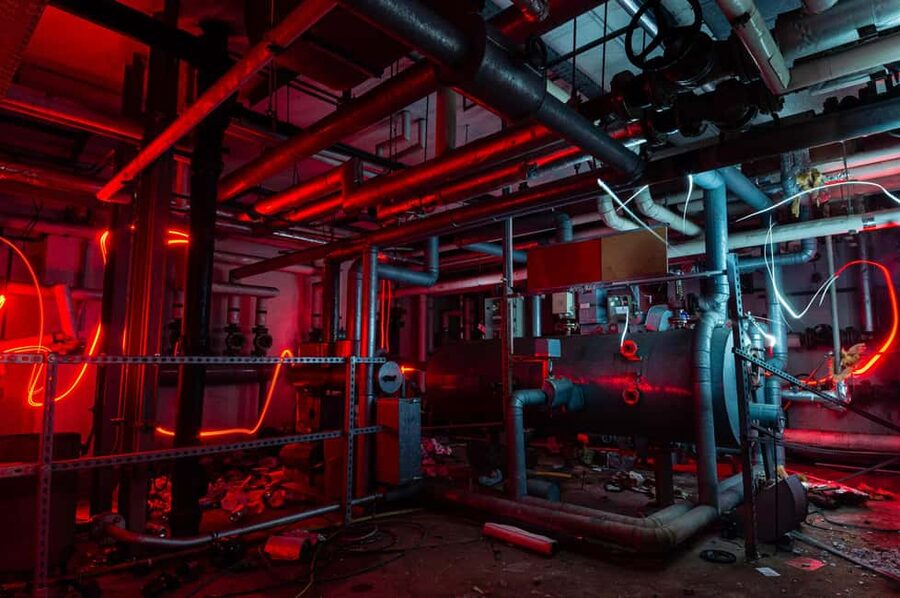
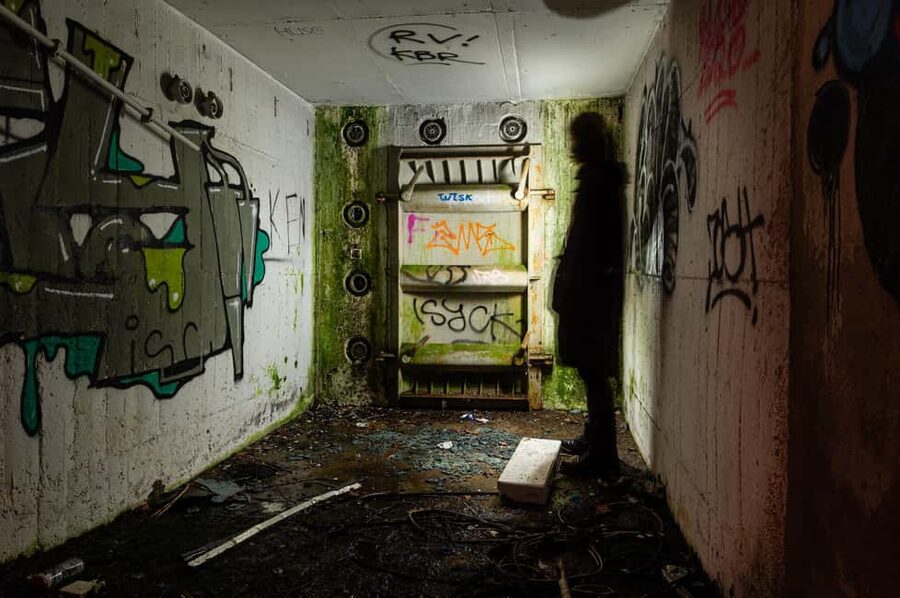
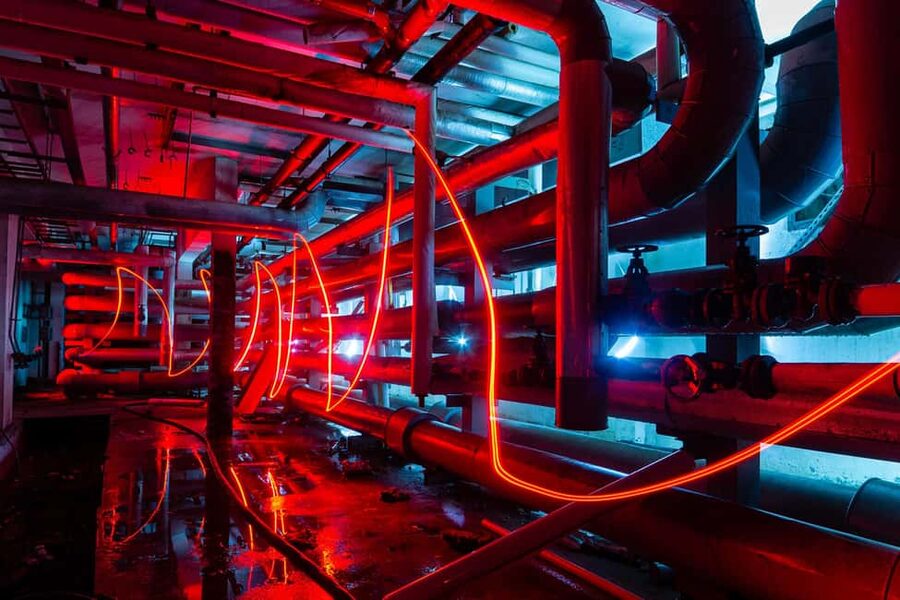
The underground sections give the tour its strongest sense of adventure. Torches are included, and you use them to move through dark passages and lower areas. The light picks out walls, rough surfaces, and graffiti that would disappear in ordinary darkness.
This is where the post-apocalyptic mood comes closest to the tour’s promise. You are not looking at a reconstructed bunker or a themed attraction. You are walking through a real abandoned site with limited light and an uncertain visual horizon.
The underground route also brings practical demands. Broken glass has been reported around the property, so sturdy shoes are important even though the official advice focuses mainly on comfortable clothing. Keep your feet covered, watch where you step, and do not rush to get a better photograph.
The bunker may not always be accessible. Access can change because of the condition of the property or safety restrictions, so you should not book this tour solely for a promised bunker visit. The underground experience can still be worthwhile, but the precise route is not fully guaranteed.
Same streets, a different century:
- Berlin Historical Highlights Walking Tour
★ 4.9 · 657 reviews - Berlin Private Complete History All Day Walking Tour
★ 5.0 · 474 reviews - Berlin: Cold War & Berlin Wall History Guided Bike Tour
★ 4.8 · 422 reviews - Berlin: Historic Boat Sightseeing City Center Tour
★ 4.5 · 415 reviews
Rooftops and unusual Berlin views
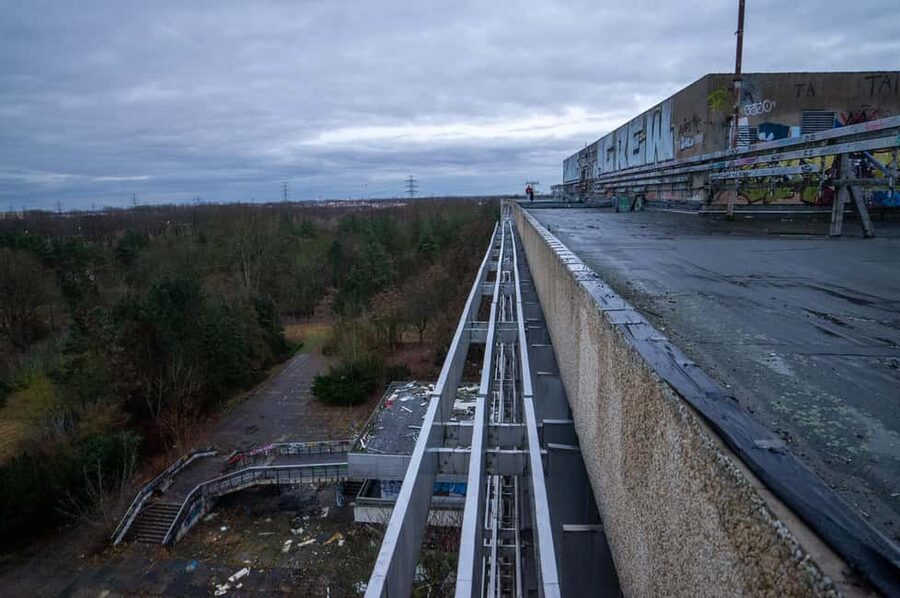
The tour also heads upward. Rooftop access gives you a different view of Berlin, away from the familiar monuments and grand central streets. From above, the abandoned complex becomes easier to understand as a large site, while the city beyond provides a reminder that these ruins are surrounded by modern life.
The rooftop section is also one of the best reasons to bring a camera. You can photograph the contrast between decaying buildings, open sky, and distant urban views. The guide can help you find better angles, but you should follow instructions closely and avoid unsafe edges or unstable surfaces.
The experience is not a dedicated photography workshop, yet photography is clearly part of its appeal. A tripod is recommended if you want sharper images in dark interiors or underground passages. A small tripod is more practical than a large one, especially with a group moving through tight spaces.
Why the guide matters here
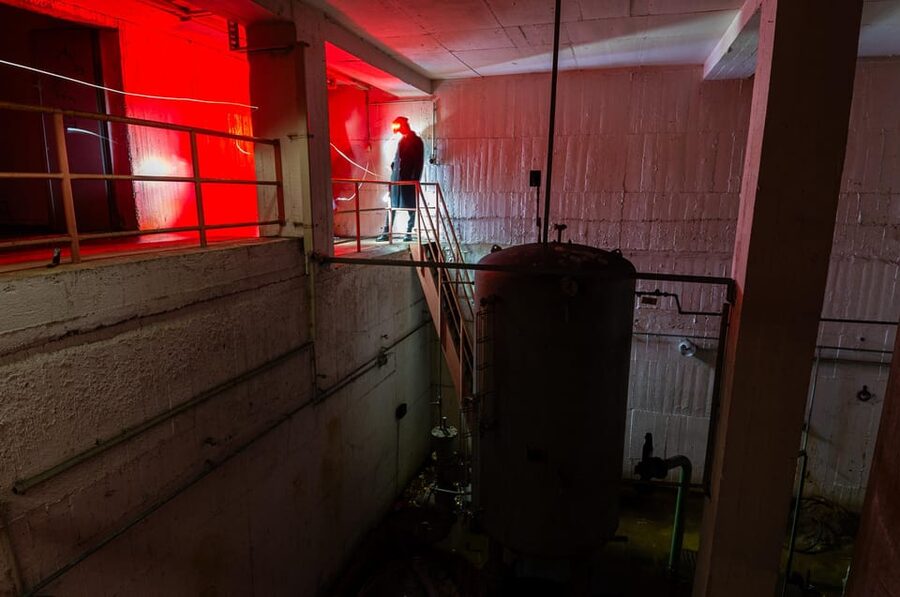
An abandoned hospital can be fascinating for ten minutes and confusing for the next hour. Yoorii’s job is to keep the visit focused. He explains the site’s connection to the Stasi, points out surviving details, and helps you find the stronger rooms instead of spending the whole session in corridors that look alike.
The guide’s personality also shapes the day. Yoorii has been described as enthusiastic, serious when needed, and able to use humor without losing the historical thread. He also watches the group, which matters when people are moving over damaged floors and into poorly lit areas.
The tour is conducted in English. If you want a discussion about East German institutions, secret-police structures, or the hospital’s former purpose, this format gives you a chance to ask questions directly.
The small group limit of six is a real advantage. In a larger group, people would spread out, photography would become awkward, and it would be harder for the guide to keep an eye on everyone. Here, you have a better chance to ask for a pause, check a detail, or get help with a photograph.
What to wear and what to leave behind
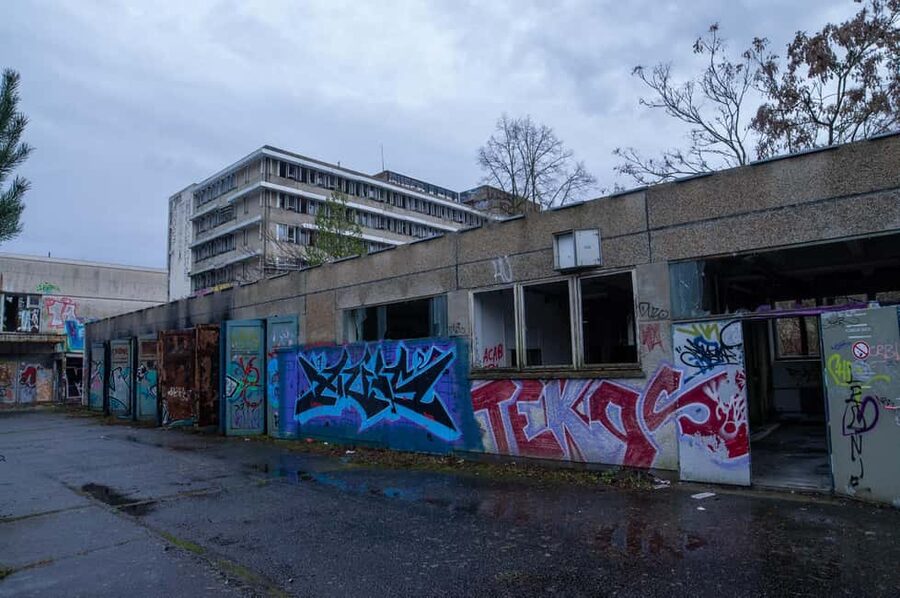
Take the practical warnings seriously. Wear comfortable clothes that you do not mind getting dirty. This is not a place for a tuxedo, high heels, or anything you need to keep spotless.
A cap or other head covering is recommended. The advice about a small bag is just as useful: do not bring a massive backpack. Large bags are clumsy in tight spaces and make it harder to move safely through the buildings.
Bring:
- Comfortable clothes that can handle dust and dirt
- Closed, sturdy footwear
- A cap or other head covering
- A camera, if you want photographs
- A small tripod, if you plan to shoot in low light
Torches are rented as part of the experience, so you do not need to provide the main light source. You should still keep your hands free where possible. The group may be moving through narrow or uneven sections, and a large amount of gear will become a burden.
Is $116 a fair price?
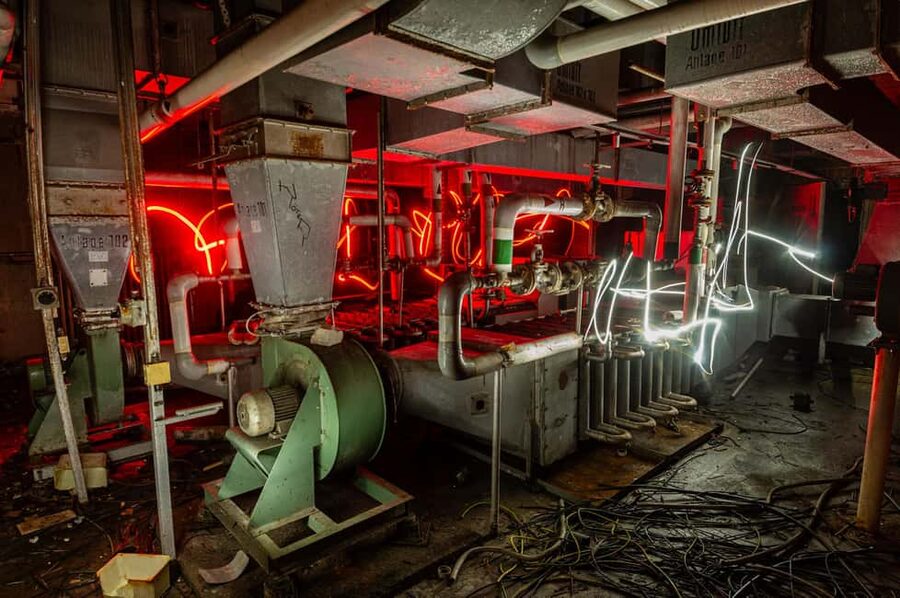
At $116 per person, this is not a cheap way to spend three hours in Berlin. The price needs to be judged against the guide, the very small group, the access to a difficult site, and the included torch rental.
I can see the value if you want more than a quick look at ruins. A good guide makes a large abandoned complex easier to understand and prevents you from losing time in empty areas. The historical explanation, underground access, rooftop views, and photography opportunities add variety that a simple self-guided walk might lack.
The price is harder to defend if the most interesting spaces are closed or badly damaged. One visitor found the property too broken down for the cost and was disappointed that the bunker was not accessible. That is a fair concern. The site changes over time, and the tour cannot restore demolished buildings or reopen unsafe areas.
My advice is to book this for the combination of urban exploration and history, not for a guaranteed collection of intact rooms. The guide and format offer real value, but the physical site is unpredictable. You are paying for guided access and interpretation in a changing ruin, not a preserved museum.
Who will enjoy this most
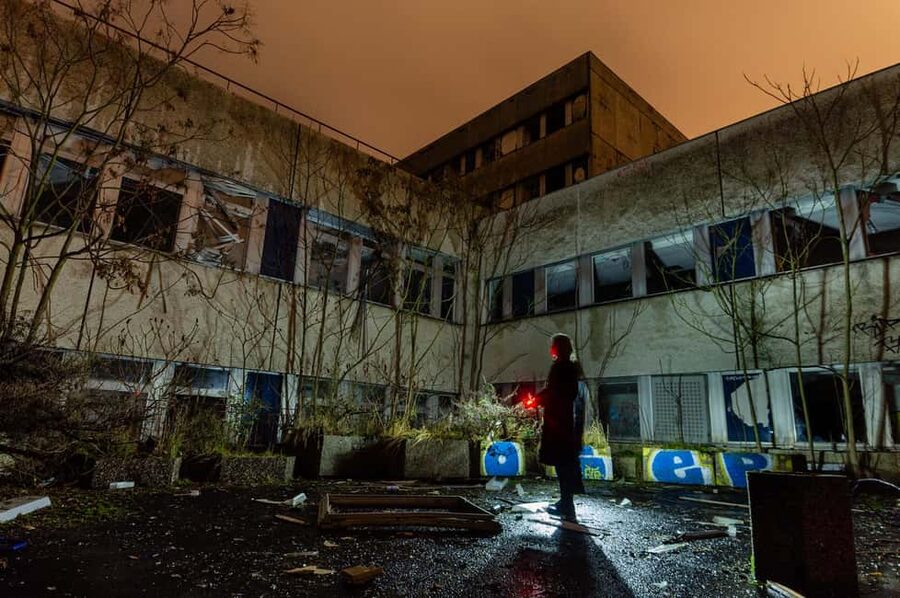
This tour suits adults and older children who like unusual history, photography, abandoned buildings, and active sightseeing. The minimum age is 10, but the setting may be too rough or unsettling for younger children even above that age.
You will probably enjoy it if you like exploring at a slow, observant pace. There are moments when the best part is not a dramatic room, but a floor, document, tunnel wall, or view that needs time to notice.
It is less suitable if you need smooth paths, clean facilities, or guaranteed access to every advertised type of space. The tour is not suitable for wheelchair users, pregnant women, people over 70, people with high blood pressure, or anyone weighing more than 130 kilograms. Baby strollers and bikes are not allowed.
The activity also requires a basic comfort with dirt, darkness, and uneven surroundings. You do not need specialist urbex skills, but you do need to listen and move carefully.
Booking flexibility and meeting details
The tour lasts three hours and runs in English. Starting times depend on availability, so check the schedule before planning the rest of your day.
You meet at S-Bahn Buch, at the exit on the Netto supermarket side. Turn left after coming downstairs. This is a useful detail to save before leaving, since arriving at the wrong exit could cost you time.
You can cancel up to 24 hours before the tour for a full refund. A reserve-now, pay-later option is also available, which helps if your Berlin plans are still moving around.
Should you book the Berlin Urbex Tour?
Book it if you want a small, guided look at Berlin’s abandoned Stasi hospitals and you are happy with an imperfect, changing site. The strongest parts are the guide’s personal attention, the underground passages, the old traces left in the buildings, and the unusual rooftop views.
Think twice if you expect a preserved hospital, a guaranteed bunker visit, or a polished attraction. The property has broken glass, fire damage, demolition, and restricted sections, and that limits what you may see.
For photographers, history fans, and people who would rather explore a forgotten place than queue for another famous monument, this is a memorable choice. Bring sensible clothes, keep your bag small, and treat the site with care. If those conditions suit you, the $116 price is easier to justify.
FAQ
Where does the Berlin Urbex Tour meet?
The meeting point is at the exit from S-Bahn Buch on the side facing the Netto supermarket. Turn left after coming downstairs.
How long does the tour last?
The tour lasts three hours.
What language is the tour conducted in?
The live tour is conducted in English.
How many people are in the group?
The group is limited to six participants.
Are torches provided?
Yes. Torch rental is included.
Can I bring a camera?
Yes. Photography is part of the experience, and you may bring a tripod if you want to take photographs in darker areas.
What should I wear?
Wear comfortable clothes that you do not mind getting dirty. A cap or another head covering is recommended.
Can I bring a large backpack?
No. The advice is not to bring a massive backpack. Large bags are difficult to manage in the abandoned buildings and tighter spaces.
Is the tour suitable for children?
Children under 10 are not permitted. The tour is also not suitable for pregnant women, wheelchair users, people over 70, people with high blood pressure, or people over 130 kilograms.
Can I cancel the booking?
Yes. You can cancel up to 24 hours in advance for a full refund. A reserve-now, pay-later option is also available.
Newest history tours we have reviewed in Berlin
- Berlin: Nazi History Walking Tour★ 4.8 · 33 reviews
- Berlin: History and Sightseeing with Kids (Free for Kids)★ 4.9 · 19 reviews
- Berlin: Historical Sights & Berlin Wall Tour with a Berliner★ 5.0 · 62 reviews
- Berlin (E)Bike Tour Historical Highlights in Small groups★ 4.5 · 24 reviews
- East Berlin Food & History Tour with Eating Europe★ 4.8 · 20 reviews
- Berlin: Historic Center Walking Tour with a Real Berliner★ 5.0 · 134 reviews
- Berlin Beers & Battlefields Tour: War History & German Beer★ 4.9 · 29 reviews
- Berlin: Guided Craft Beer & Cultural Tour With Snacks★ 5.0 · 68 reviews
Berlin History Tours, compared.



Berlin Private Complete History All Day Walking Tour
Read our review →
Cold War & Berlin Wall History Guided Bike Tour
Read our review →

Small group Potsdam: A Journey Through History and Palaces
Read our review →Browse the lists this tour appears in