
Review · LOCAL CULTURE & TRADITIONS TOURS
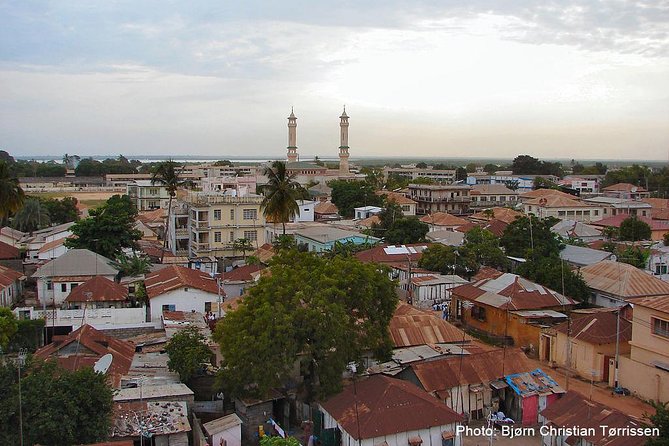
Banjul City Tour – Culture and history
Arch 22 gives this Banjul tour its most striking start. The 35-meter monument marks the 1994 military coup and appears on the back of the 100-dalasi note. From there, you move to the National Museum and Albert Market, where the city’s political past gives way to food, crafts, and daily trade.
I like the private vehicle option and the chance to shape the morning around your questions. I also like the market stop, where you can eat local food, look for gifts, and practice bargaining with help from a local guide. The main concern is reliability: some bookings have involved late pickups, crowded vans, or little commentary, despite the private-tour description.
Key points to know before booking
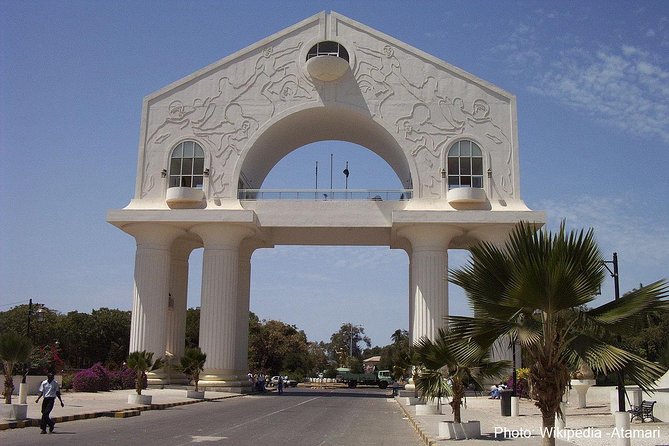
- Arch 22 marks the 1994 coup: The monument is both a city landmark and a direct reminder of Gambia’s recent political past.
- The elevator may not work: You might need to climb stairs to reach the top, so bring suitable shoes and allow extra time.
- Albert Market is the most hands-on stop: It combines food stalls, wholesale trade, retail shops, and tourist goods.
- Jimmy and Buba receive the strongest praise: These guides are noted for patience, flexibility, local knowledge, and help with shopping.
- The private-tour promise needs confirming: The advertised rate covers a group of up to four, while the description also mentions up to five, and some bookings were reportedly placed in crowded vans.
- Entrance fees are extra: Admission to Arch 22 and the National Museum is not included in the $58.07 group price.
What this Banjul tour is really designed to do
This is a compact introduction to Banjul, not a full-day survey of The Gambia. The basic route takes about three hours, with roughly an hour at Arch 22, an hour at the National Museum, and an hour at Albert Market. The experience is most useful early in your visit, when you want a quick grasp of the capital before exploring further.
The tour combines three different sides of Banjul. Arch 22 deals with national politics and military power. The museum puts that story into a wider historical and cultural setting. Albert Market brings you into ordinary city life, with food sellers, traders, craftspeople, and shoppers.
I would book this for a first morning in Banjul if you want someone to handle transport and explain the places as you go. It also suits cruise passengers and small groups who would rather not arrange separate taxis. At $58.07 per group of up to four, the price is reasonable if the vehicle is genuinely private and your group uses the full capacity. For one or two people, the value is less clear unless the guide adds useful local stops.
The description calls it a private activity, but the supplied experiences include reports of 16 to 19 people in a small van. That is a major difference in comfort and service. Before paying, confirm the exact vehicle, the number of people in your booking, and the pickup point in writing.
More Local Culture and Traditions Tours in the world:
- Amsterdam Food and Cultural Tour with Tastings
★ 5.0 · 4,315 reviews - Sevilla Food Tour: Tapas, Wine, History & Traditions
★ 5.0 · 3,468 reviews - Tromsø: Reindeer Camp and Sami Cultural Tour with Lunch
★ 4.7 · 3,326 reviews
Arch 22 and the political story behind it
Arch 22 is an enormous gateway-like monument on the Banjul to Serrekunda Highway. At 35 meters high, it is hard to miss, and its location makes it an obvious place to begin a city tour.
The monument was built to mark the military coup of 1994, which brought Yahya Jammeh to power. That fact gives the visit more weight than a simple photo stop. You are looking at a symbol tied to a turning point in modern Gambian politics, not just a decorative arch.
The structure was designed by Senegalese architect Pierre Goudiaby Atepa. His other work includes the BCEAO bank headquarters in Dakar and the ECOWAS building in Lomé, Togo. The guide can help connect Arch 22 to the region’s wider architectural and political setting, though the amount of explanation may depend heavily on who leads your tour.
The arch also appears on the back of the 100-dalasi banknote. Take a look at the note before or during the visit, because it gives you a small visual link between everyday Gambian currency and the monument in front of you.
There is a practical catch. The lift is not always working, so reaching the upper level may require climbing stairs. One particularly positive account describes a guide named Jimmy walking with a visitor all the way to the top when the elevator was out of service. That upper view can make the stop worthwhile, but you should not assume the lift will be available.
Admission is not included. The supplied information does not state the current entrance price, so ask the operator to confirm the fee before setting out. Also ask how much time is planned for the monument if you want to climb up, take photos, and hear the background properly.
The National Museum’s colonial and archaeological collection
The National Museum of The Gambia opened in 1985 and focuses on the country’s cultural and historical record. Its displays include an archaeological section and a historical section, with material connected to the colonial period and earlier Gambian life.
This is the stop that gives the tour its strongest educational value. Arch 22 tells you about a specific political event. The museum gives you a broader frame, helping you place colonial rule, local culture, and national development in the same story.
The museum’s exhibitions are associated with historian Hassoum Ceesay, a well-known Gambian historian. If you want more than surface-level sightseeing, this is where your questions matter most. Ask about the objects that interest you rather than simply walking through the rooms.
The visit is listed at about one hour, though the true length may depend on opening conditions, your guide, and how much discussion you want. Admission is extra, so include that cost in your planning.
The main weakness is the uneven commentary reported on some outings. A few groups found that guides offered little information unless they asked questions. I would arrive with several ready: How did colonial rule shape Banjul? What does the museum show about earlier Gambian societies? How did the events of 1994 affect the country? A willing guide can turn the museum into the heart of the morning.
Albert Market, where the tour becomes practical and personal
Albert Market is named after Prince Albert Saxe-Coburg and Gotha, Queen Victoria’s husband. Its name reflects the colonial period, but the market itself is a working commercial center with three main areas: wholesale and retail trade, food, and tourist goods.
This is the most active part of the route. You can sample local food, watch shoppers compare prices, and look for crafts or souvenirs. The market is generally open from 8 a.m. to 7 p.m., making the 9 a.m. start useful for a morning visit.
Bring small notes if you can. One praised guide, Jimmy, reportedly carried small bills and helped make change when a visitor had larger denominations. That kind of small assistance matters in a crowded market, where getting the right change can make purchases easier.
You should bargain, but keep it friendly. The point is not to win every price negotiation. It is to understand how the market works, choose something you genuinely want, and pay a fair amount without turning the exchange into a contest.
A guide is especially useful here because the market can feel confusing at first. The food area, retail stalls, and tourist section serve different purposes. You might find the most authentic experience by spending a little time watching ordinary trade before moving on to souvenirs.
The market can also test your patience. It may be crowded, noisy, and demanding of your attention. If you dislike shopping, tell the guide early and ask for a shorter market visit. If you like local food and bargaining, this may become your favorite part of the tour.
Some accounts also praise an extra stop at a fishing village or a boat crossing, but those places are not part of the stated three-stop route. Do not assume they are included. Ask before departure if you want any additional stops, and confirm any extra charges clearly.
More History Tours in the world:
- New York City: American Museum of Natural History Ticket
★ 4.5 · 15,447 reviews - History and Hauntings of Salem Guided Walking Tour
★ 5.0 · 14,564 reviews - Colosseum: Underground and Ancient Rome Tour
★ 4.7 · 12,691 reviews - Lisbon: History, Stories and Lifestyle Walking Tour
★ 4.8 · 10,902 reviews
Guides can make or break the morning
The best accounts focus on guides called Jimmy, Buba, or Bubba. Names appear in different forms, so confirm who will meet you. Jimmy is praised for patience, flexible detours, help at Albert Market, and a friendly approach to questions. Buba is described as punctual, open-minded, accommodating, and willing to adjust the outing around personal interests.
Those qualities fit this kind of tour. Banjul is more rewarding when you can ask why a monument matters, what a museum object represents, or how to approach a market purchase. A guide who simply drives between stops leaves much of the value on the table.
The service record is not uniform. Some bookings involved no commentary unless questions were asked. Others reported guides who were pleasant but unprofessional, or who gave little explanation. I would not book this expecting a polished scripted presentation every minute.
A good strategy is to tell the guide what you want at the start. You might want politics, colonial history, local food, shopping, photography, or a basic city orientation. The experience seems better suited to conversation than to a fixed lecture.
Transport, pickup, and the private-tour question
Pickup is offered anywhere in the city, with a listed start time of 9 a.m. Mobile tickets are available, and confirmation is provided when you book. The activity is described as private transportation, with a price of $58.07 per group.
That sounds simple, but port pickup has caused confusion. The meeting point may be outside the port gates rather than inside the terminal area. If you are arriving by ship, ask for an exact landmark and instructions for leaving the port. Do not rely on finding a vehicle by chance.
The reports also include late arrivals, poor vehicle condition, and overcrowding. One account describes 17 people packed into a small van, while another describes 16 visitors plus two guides and a driver. That does not match a private booking for four people.
These problems may reflect different departures, mixed bookings, or operational mistakes, but they are serious enough to address before the tour. Send a written message asking:
- Is the vehicle reserved only for your group?
- How many seats are in the vehicle?
- Where exactly will pickup occur?
- Who is the guide, and what is the guide’s phone number?
- Are any extra stops or fees planned?
The description alternates between a maximum of four and a maximum of five people. The price specifically says up to four, so treat four as the safe limit unless the operator confirms otherwise.
Price, admissions, and cancellation rules
At $58.07 for a group of up to four, this can be good value when the transport is private and the guide gives a proper introduction at each stop. Four people splitting the cost pay about $14.52 each before entrance fees, which is competitive for a private city outing.
For a solo visitor, the same price is less attractive, especially because museum and monument admission are separate. The value improves if you want pickup, a driver, help with market purchases, and the freedom to ask for modest adjustments to the route.
Be careful with unexpected add-ons. One serious complaint describes an attempt to charge $60 for two additional sites after the tour began. I cannot establish the circumstances, but the lesson is clear: agree on the route and all prices before getting into the vehicle. Extra sites should never be a surprise.
Free cancellation is available up to 24 hours before the 9 a.m. start time for a full refund. Changes or cancellations inside that 24-hour window are not accepted for a refund. The cutoff uses local time.
Who should book this Banjul experience?
I would recommend it to a small group that wants a short introduction to Banjul with transport handled. It is a good fit for people who enjoy asking questions, shopping in local markets, and learning through conversation.
It also suits families who want a flexible morning, provided the private vehicle arrangement is confirmed. The activity states that most people can participate, and service animals are allowed. It is near public transportation, though the tour itself includes private transport.
I would hesitate if you need a tightly timed, highly polished operation. The mixed record on pickup times, vehicle size, and commentary means you should confirm the practical details first. If you are traveling from a cruise ship, allow extra time around the port meeting point and get exact instructions in advance.
Should you book the Banjul City Tour?
Book it if you want the basic Banjul trio: a major political monument, a museum of national culture, and a local market. The price works well for up to four people, and guides such as Jimmy and Buba can add real warmth, flexibility, and useful help.
I would make the booking only after confirming the guide, vehicle, passenger count, pickup location, route, and admission costs. With those details settled, this can be a practical and personal first look at Banjul. Without them, the experience may be less private and less organized than promised.
FAQ
Where does the Banjul City Tour take place?
The tour takes place in Banjul, The Gambia, with visits to Arch 22, the National Museum of The Gambia, and Albert Market.
What time does the tour start?
The listed start time is 9 a.m.
How long does the tour last?
The estimated duration is between one and three hours. The three listed stops are each planned for about one hour.
Is pickup included?
Pickup is offered from anywhere in the city. If you are arriving at the port, confirm the exact meeting point because pickup may be outside the port gates.
Is the tour private?
The activity is described as private, with private transportation and participation limited to your group. The listed price covers up to four people, although another description mentions up to five, so confirm the limit before booking.
Are admission fees included?
No. Admission fees for Arch 22 and the National Museum are not included. Albert Market has no admission fee.
Can I cancel for a full refund?
Yes. You can cancel at least 24 hours before the local start time for a full refund. Cancellations or changes made within 24 hours are not eligible for a refund.
Newest history tours we have reviewed in the world
- Private Dublin Historical and Heritage Tour by Bike★ 5.0 · 30 reviews
- Dubrovnik by Night, History, Wine & Bites★ 5.0 · 41 reviews
- Enjoy Ancient Mostar★ 4.0 · 45 reviews
- Historical Walking Tour of Dublin★ 5.0 · 50 reviews
- DayTripper Dublin: A Guided City Walking Tour★ 5.0 · 90 reviews
- Ancient Old City– Finest tour of Dubrovnik★ 5.0 · 64 reviews
- Dublin LGBTQ Pride Historical and Cultural Walking Tour★ 5.0 · 91 reviews
- Interactive Living History in Dalkey Castle near Dublin City★ 5.0 · 133 reviews
Local Culture & Traditions Tours, compared.
Amsterdam Food and Cultural Tour with Tastings
Read our review →
Sevilla Food Tour: Tapas, Wine, History & Traditions
Read our review →
Tromsø: Reindeer Camp and Sami Cultural Tour with Lunch
Read our review →
Half Day Dominican Republic Cultural Tour : Small Group
Read our review →
Ultimate Melbourne Walking Tour: History, Laneways & Culture
Read our review →
Tromsø: Sámi Reindeer Sledding and Sami Cultural Tour
Read our review →
Kyoto Gion: 2-Hour Geisha Culture & History Walking Tour
Read our review →
Marrakech Historical and Cultural Tour – Half Day City Tour
Read our review →Browse the lists this tour appears in