
Review · SPAIN HISTORY TOURS
Alicante’s History and Highlights: Self-Guided Walking Tour
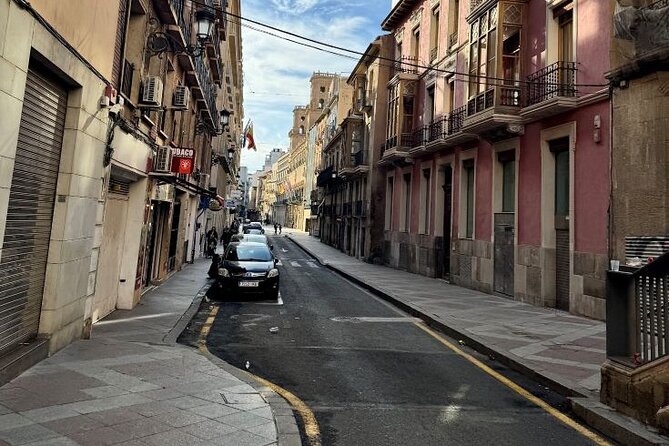
Alicante’s story comes alive through its public spaces, food stalls, churches, festival traditions, and wartime memories. This self-guided walk begins at El Adivinador and leads you through the city center for about two to three hours, ending where you started.
I like the freedom to pause or rewind, and I like how the route mixes famous sights with less obvious local stories, including the 1938 bombing and the Bonfire Festival. The main drawback is simple: you are relying on your own phone, battery, map reading, and headphones rather than a person who can answer questions on the spot.
Key points at a glance
- Alicante in one compact walk: Cover the Explanada, City Hall, old squares, Central Market, Casa Carbonell, and more.
- A flexible audio format: Pause for coffee, lunch, photos, or a rest without holding up a group.
- A useful first-day orientation: The route connects the waterfront, historic center, market district, and cultural sights.
- Local stories beyond the postcard views: Hear about the Hogueras Festival, Tardeo tradition, Jorge Juan, and the 1938 bombing.
- Good value at $11.99: One purchase gives you lifetime access, including offline maps, audio, and route data.
- English only: Bring your own smartphone and headphones. Entry fees for museums and attractions are extra.
Starting at El Adivinador by the harbor
The tour begins at El Adivinador, the striking sculpture at Pl. Puerta del Mar. It is a fitting place to start because you are close to the waterfront, the Explanada de España, and the old center. The sculpture’s name suggests a fortune teller or predictor, and its hopeful character sets up the tour’s main idea: Alicante is a city shaped by the sea, trade, celebration, conflict, and renewal.
The route is private in the practical sense that only your group uses the audio tour. You will not be joining strangers or matching the pace of a guide. Instead, your phone uses GPS to deliver directions and spoken commentary as you move.
That setup matters more than it may seem. If you want to stop for a photograph, duck into a café, or take a slower morning, you can pause the audio. If you miss a detail, you can rewind. A guided walk can be excellent, but it also keeps moving. Here, the city waits for you.
More History Walking Tours in Spain
- Barcelona: Tapas Walking Tour with Food, Wine, and History
★ 4.8 · 4,261 reviews - Barcelona Tapas Walking Tour: Food, Wine & History
★ 4.5 · 1,928 reviews - Madrid Historical Walking Tour
★ 5.0 · 721 reviews
The Explanada de España and Alicante’s seafront rhythm
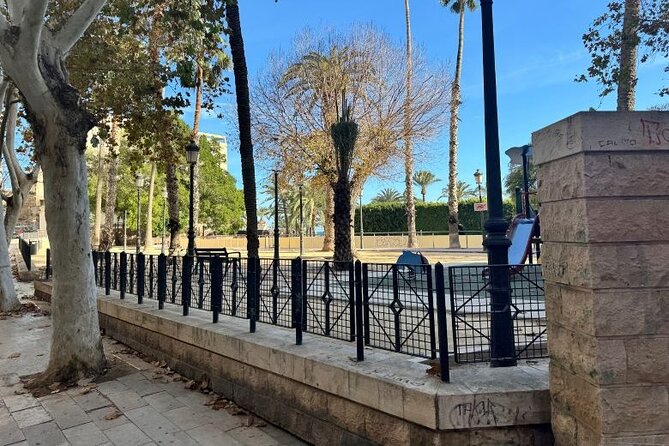
One of the first major sights is the Explanada de España, Alicante’s broad waterfront promenade. Palm trees line the route, while the famous mosaic pavement adds color underfoot. This is one of those places where the setting does much of the work, but the audio helps you notice how the promenade fits into daily life.
You will walk through a public space built for strolling, meeting friends, and watching the city pass by. It is not just a route between monuments. The Explanada gives you your first sense of Alicante as a Mediterranean city, with the sea nearby and public life spread outdoors.
I would pay attention to the ground as you walk. The mosaic pattern is one of the promenade’s most recognizable features, and the palms give the route a clear visual rhythm. This is also an easy opening section for anyone concerned about getting lost, since the promenade is broad and straightforward.
City Hall and the old administrative center
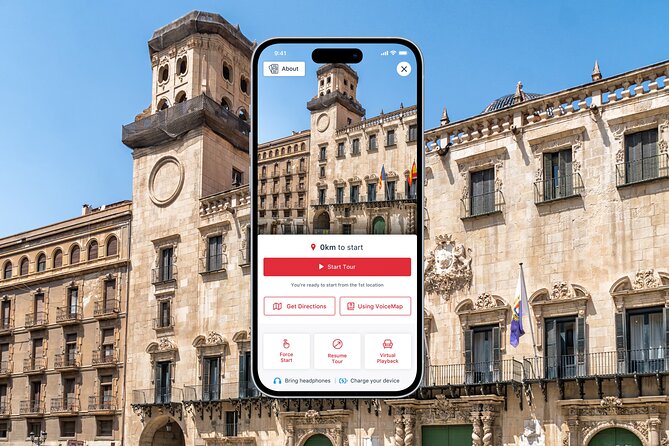
From the Explanada, the tour passes Alicante City Hall. The building provides a useful bridge between the city’s older identity and its modern civic life. You hear about Alicante’s administrative past and the way local government helped shape the city you see today.
This stop may appeal most if you like buildings for what they reveal about power and public life, not only for their appearance. City halls can look formal and grand, but they also explain how a place is governed and organized.
The audio format works well here because you can pause outside and take in the details before moving on. There is no suggestion that entrance is included, so treat this as an exterior stop unless you separately arrange access.
Plaza Santa Faz and the older streets
The route then moves toward Plaza Santa Faz, a historic square connected with Alicante’s medieval period. Here the walk becomes less about a single landmark and more about how old streets, small squares, and everyday activity fit together.
A square like this gives you a chance to slow down. Listen to the explanation, look at the surrounding buildings, and notice how local life continues in a place with centuries of history. The tour does not ask you to rush from one photo stop to the next.
The route also passes Plaça de la Santissima Faç, another square tied to the city’s past. The similar names may cause a little confusion, so keep the GPS directions open and listen carefully as you move between stops. The benefit is that you get more than one quick glimpse of Alicante’s older center.
More Self-Guided History Audio Tours in Spain:
- Taormina: Ancient Theater Skip-the-Line Ticket & Audio Guide
★ 4.5 · 2,412 reviews - Athens: Ancient Agora E-Ticket and Audio Tour
★ 3.9 · 413 reviews - Katakolo Port: Transfer to Ancient Olympia and VR Audio Tour
★ 4.1 · 403 reviews - Matera: Sassi di Matera Historical Self-Guided Audio Tour
★ 3.6 · 183 reviews
The Basilica of St Mary and layers of architecture
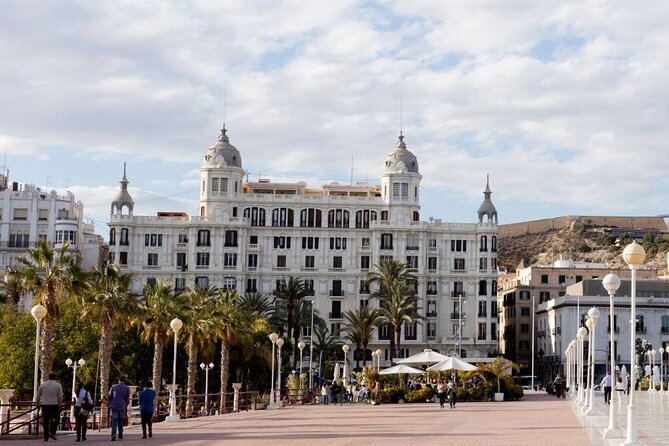
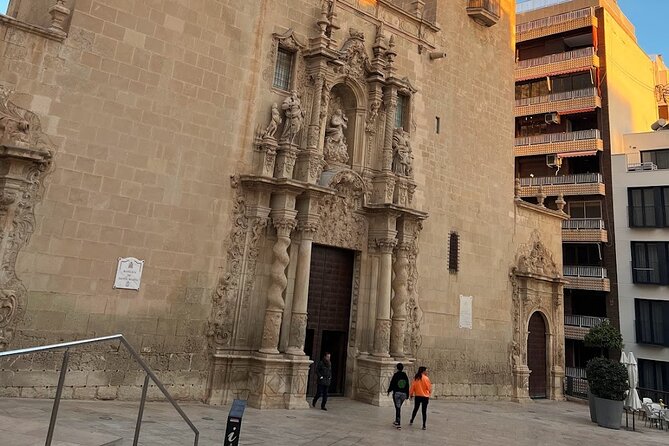
The Basilica of St Mary is one of the important church stops. Its architecture reflects the many periods that shaped Alicante, and the building helps explain how the city changed over time.
You should allow yourself a quiet pause here. Churches are often best understood from both the outside and the inside, but this tour does not include entrance fees to museums or other attractions. If the basilica requires a ticket or has restricted opening hours when you arrive, the audio still provides the surrounding context, but you may need to return separately.
This is a good example of the tour’s balance. It gives you a structured route and background information, but it does not replace every paid admission. You get the city orientation first, then decide which places deserve more of your time.
Central Market, where Alicante becomes a food city
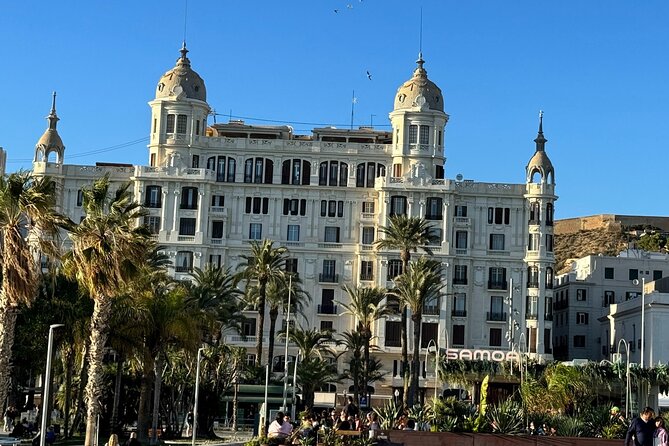
The Central Market is one of the most useful stops for anyone who wants to connect Alicante’s history with daily life. The route brings you into the city’s trade center, where food, color, spices, and local buying habits create a much more immediate experience than a monument alone.
I would plan a little extra time here. The stated walk takes about two to three hours, but the market is a natural place to pause for a snack or browse. The audio can be stopped while you look around, then restarted when you are ready.
This is also where the self-guided format earns its $11.99 price. You are not forced to pass through quickly because the group needs to keep moving. You can listen, explore, and resume at your own pace. The market is included as a sightseeing stop, but purchases and any food you choose are your responsibility.
The Bonfire Museum and Alicante’s festival culture
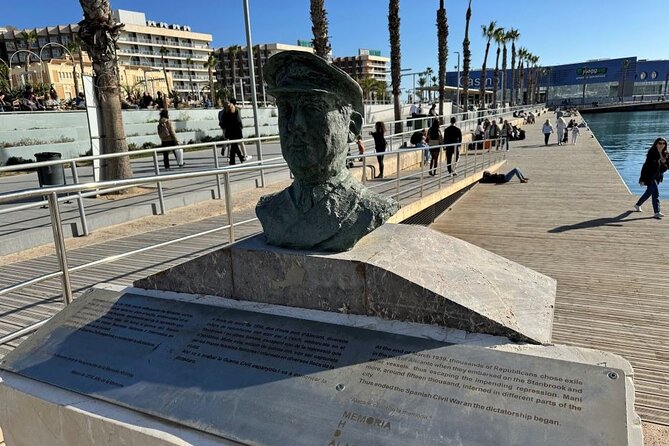
The Bonfire Museum explains the Hogueras Festival, one of Alicante’s defining celebrations. The tour also connects the festival with the city’s Tardeo tradition, an afternoon-to-evening social habit that adds to Alicante’s reputation as the City of Light.
This section gives the walk some personality. Alicante is not presented only as a collection of old buildings. You also hear about how people celebrate, gather, and use public space. That makes the city easier to understand during the rest of your stay.
The museum itself may require an entrance fee, and admission is not included. You can still hear the audio commentary from the route, but if the exhibits interest you, check the museum directly for access and opening information before planning your visit around it.
Casa Carbonell and a story of revenge
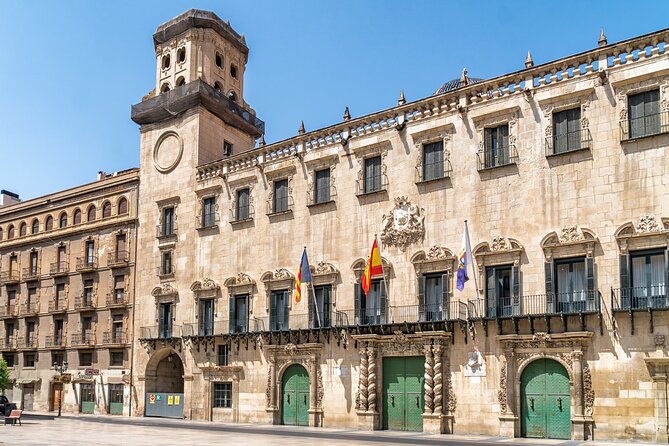
Casa Carbonell is one of the more memorable architectural stops. Its elegant appearance comes with an intriguing story of revenge, giving the building a human angle rather than leaving it as another attractive façade.
This is the kind of detail that helps an audio tour feel personal. Architecture becomes easier to remember when it is tied to ambition, rivalry, or a dramatic local story. You may not recall every date, but you are more likely to remember why the building mattered.
Take time to look up at the façade. The commentary is designed to be heard while you stand nearby, so do not feel pressure to keep walking during the explanation. The whole point of the route is to let you match the pace of the city.
Calle Jorge Juan and a local figure with a wide reach
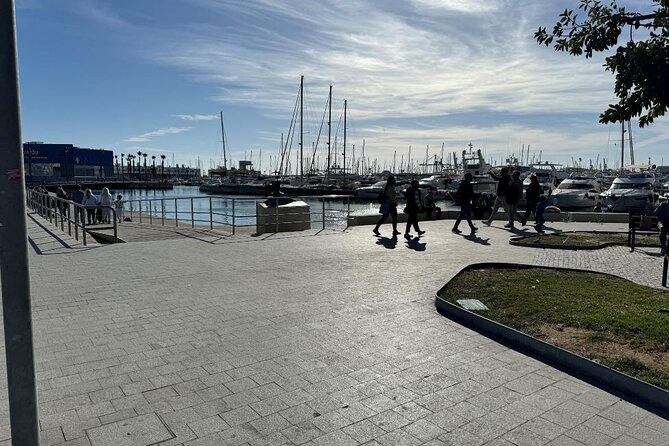
The walk continues along Calle Jorge Juan, named for an adventurous figure from Alicante. The audio covers his daring exploits and his contributions to the city’s legacy.
This stop widens the story beyond local streets. A named road becomes a prompt to learn about someone whose life reached beyond the immediate neighborhood. It also gives the route a change of pace after the market, museum, and grand buildings.
You do not need special preparation for this section. The directions are designed to lead you from one point to the next, and the GPS map remains available offline once downloaded. Still, keep your phone charged. A self-guided tour is only as useful as the device carrying it.
Plaza 25 de Mayo and the memory of 1938
The most serious stop is Plaza 25 de Mayo, where the tour addresses the tragic bombing of 1938. This changes the tone of the walk. After promenades, food, architecture, and festival customs, you are asked to consider the violence and loss that also shaped Alicante.
I value the inclusion of this stop because it prevents the city from being reduced to sunshine and holiday scenery. The square becomes a place of remembrance and resilience. Listen carefully here, and give yourself a moment before moving on.
A self-guided tour can be especially effective for a reflective stop like this. You are not required to respond publicly or keep pace with a group. You can pause the audio, look around, and continue when you are ready.
The Ruperto Chapi Statue and the final note
The tour ends at the Ruperto Chapi Statue, honoring the composer whose work influenced Alicante’s cultural life. It is a fitting close because the route finishes with art and music rather than a final shopping stop or a grand viewpoint.
The activity ends back at the starting point, making the route practical for a half-day plan. You finish near the waterfront and central sights, so you can continue with lunch, a museum visit, or another walk without arranging transport back from a distant neighborhood.
The circular format is useful if you are staying near the center or arriving by public transport. The start is near public transportation, and the route remains within Alicante’s central sightseeing area.
Why the self-guided format works
The clearest strength is control. You can begin at any time because the activity is available around the clock, listed from midnight to midnight every day during the operating period. You can stop for drinks, snacks, photos, or rest without asking permission.
The audio has also been praised for a calm, clear delivery with a little humor. That matters on a walk of this length. A rushed or theatrical narrator can become tiring, while a steady voice lets you look at the city as you listen.
The tour is also described as current and easy to follow. Directions are a key part of any GPS walk. Attractive commentary is not enough if you cannot find the next stop, so the route’s clear instructions are an important part of its value.
There is a practical benefit for people with limited walking ability: the commentary creates natural pauses at each stop. That does not mean the route is fully accessible, since the supplied details do not specify surfaces, slopes, benches, or step-free access. You should judge your own needs and plan breaks.
What $11.99 gets you
At $11.99 per person, this is inexpensive compared with a private guided walk. The value comes from repeat access rather than from a single scheduled use. You receive lifetime use before and after your booking date, plus offline audio, maps, and geodata in English.
That means you can use it to plan your first look at Alicante, then return to sections later. You might complete the walk in one morning, or split it around meals and other plans. The virtual playback option also lets you listen away from the route, which is useful if you want to preview the stops before heading out.
The tradeoff is that you provide the equipment and the discipline. Bring your own smartphone and headphones. Museum or attraction tickets are not included, and there is no live guide to answer a question or adjust the route for you.
Free cancellation is available if you cancel at least 24 hours before the local start time. Changes or cancellations inside that window are not refundable.
Who should book this Alicante walk?
I would choose this tour if you like exploring independently but still want a clear route and a sense of place. It suits first-time visitors who want an orientation, couples who prefer an unhurried walk, and repeat visitors looking for stories beyond the usual waterfront views.
It is also a good backup if a scheduled guided walk does not fit your plans. You are not tied to a group departure, and the low price keeps the risk small.
You may want something else if you prefer lively conversation, spontaneous recommendations, or detailed answers about every building. A person leading the walk can react to your interests in a way that recorded audio cannot.
Should you book this tour?
Book it if you want a low-cost, flexible introduction to Alicante that combines major sights with food culture, festival traditions, local figures, and a difficult wartime memory. The route is easy to fit around a larger holiday, and the ability to pause makes it more forgiving than a fixed group walk.
I would use it early in an Alicante stay, perhaps on your first or second full day. It will help you get your bearings and may point you toward places you want to revisit. Just bring headphones, charge your phone, and remember that the audio does not include admission to museums or other attractions.
FAQ
How long does the Alicante self-guided walking tour take?
The tour takes approximately two to three hours, depending on how often you pause and how long you spend at each stop.
What language is the tour offered in?
The tour is offered in English, including the audio, maps, and geodata.
Where does the tour begin?
It begins at El Adivinador, located at Pl. Puerta del Mar, 579, 03002 Alicante, Spain.
Where does the tour end?
The activity ends back at the meeting point, creating a circular route.
Do I need to meet a guide?
No. This is a self-guided GPS audio tour, so you follow the directions using your own smartphone.
Do I need to bring headphones?
Yes. Headphones are not supplied, so bring your own along with your smartphone.
Can I pause the tour?
Yes. You can pause and resume the audio as you wish, making it easy to stop for coffee, lunch, photos, or a rest.
Are museum admission fees included?
No. Tickets or entrance fees for museums and other attractions along the route are not included.
Can I use the tour offline?
Yes. Offline access to the audio, maps, and geodata is included in English.
What is the cancellation policy?
You can cancel for a full refund up to 24 hours before the experience start time. Cancellations or changes made less than 24 hours before the start time are not accepted for a refund.
Newest history tours we have reviewed in Spain
- Visita Guiada Por El Casco Histórico De Cuenca Y Su Catedral★ 5.0 · 45 reviews
- Mosque of Cordoba History Tour in English Tickets included★ 5.0 · 257 reviews
- Jerez de la Frontera History and Art Walking Tour★ 4.5 · 49 reviews
- 2 Hours Tour around Cádiz: History, anecdotes and curiosities★ 5.0 · 89 reviews
- The Authentic Bilbao Pintxos, Food & Wine Tour with a Local★ 5.0 · 360 reviews
- Bilbao Historical Small Group Tour★ 4.5 · 159 reviews
- Barcelona Jewish & Gothic Tour★ 5.0 · 18 reviews
- Andorra Original History and Sightseeing Tour (Private, Pickup)★ 5.0 · 350 reviews
Self-Guided History Audio Tours, compared.

Taormina: Ancient Theater Skip-the-Line Ticket & Audio Guide
Read our review →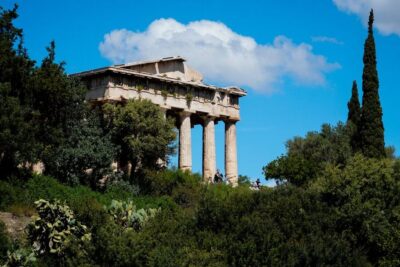
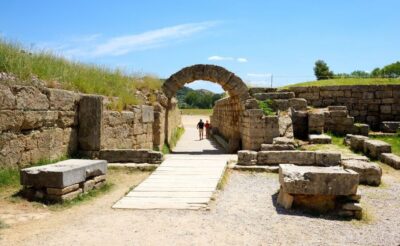
Katakolo Port: Transfer to Ancient Olympia and VR Audio Tour
Read our review →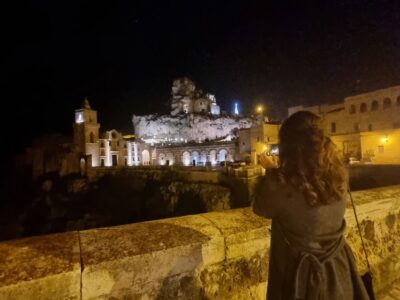
Matera: Sassi di Matera Historical Self-Guided Audio Tour
Read our review →
Self-Guided Ngilgi Cave Ancient Lands Experience
Read our review →
Hagia Sophia History Museum Entry with Audio Guide
Read our review →
Browse the lists this tour appears in