
Review · TIRANA HISTORY TOURS
“Tirana to Albania: Tracing a Historical Path Tour”
Tirana’s story is written in sharp contrasts: Ottoman mosques beside communist concrete, grand new buildings beside old market lanes, and a former dictator’s residence near cafés full of young Albanians. This three-hour walk with Klejdi connects those pieces in a way that helps you understand the city quickly.
I like the tour’s strong historical range, from Skanderbeg and the Ottoman period to Enver Hoxha’s dictatorship and today’s changing capital. I also like the route’s practical finish at New Bazaar, where you can continue with lunch and local shopping. The main drawback is pace: three hours is a lot of walking and many stops, so some places receive only a short introduction rather than a full visit.
Key points to know before booking
- A history-focused walk: Follow Tirana’s story from Ottoman rule through communism and into the modern era.
- Klejdi leads the experience: He guides in Albanian, English, French, or Italian and is known for taking time with questions.
- A useful first-day tour: The route gives you a map of central Tirana and helps you choose where to return later.
- Many sights, limited time: You pass or stop at more than 20 places during the three-hour route.
- A good food finish: The tour ends at New Bazaar, with traditional restaurants, produce stalls, and souvenirs nearby.
- Bring sensible shoes: This is a walking tour, with no transport between the stops.
Tirana’s story begins at the Orthodox Cathedral
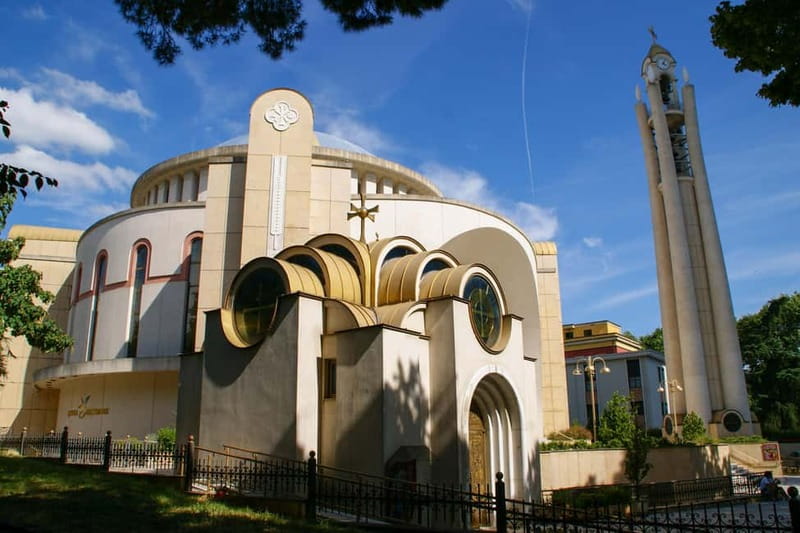
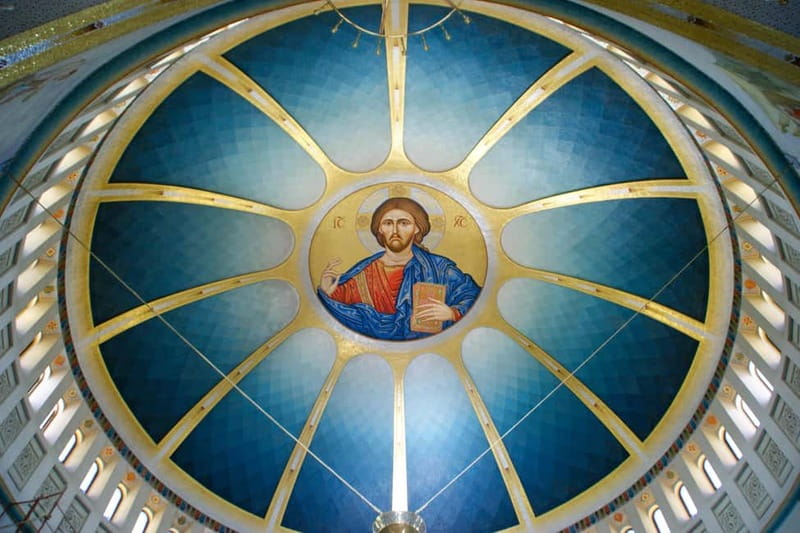
Meet at the entrance of the Resurrection of Christ Orthodox Cathedral, known locally as Ngjallja e Krishtit. If the weather is poor, the meeting point can be inside. This is a sensible place to begin because the cathedral gives you an immediate introduction to Tirana’s religious and architectural variety.
The cathedral is used for a photo stop, a visit, and the first guided explanation. Klejdi begins by setting the scene for the city, then leads you toward the center. If you have questions, ask them early. The guide’s strength is the conversational side of the tour, and previous guests describe him as warm, patient, and happy to spend time explaining details.
From here, the route quickly reaches Skanderbeg Square, the city’s main open space.
More History Tours in the world:
- New York City: American Museum of Natural History Ticket
★ 4.5 · 15,447 reviews - History and Hauntings of Salem Guided Walking Tour
★ 5.0 · 14,564 reviews - Colosseum: Underground and Ancient Rome Tour
★ 4.7 · 12,691 reviews
Skanderbeg Square puts Albania’s national story in view
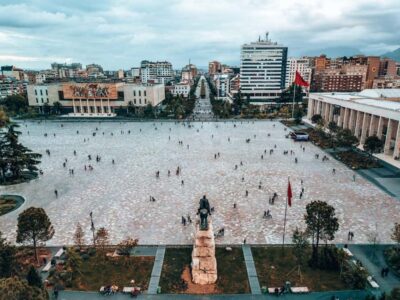
Skanderbeg Square is the natural center of Tirana. In the middle, the statue of Skanderbeg on horseback honors the fifteenth-century Albanian leader who is central to the country’s national identity.
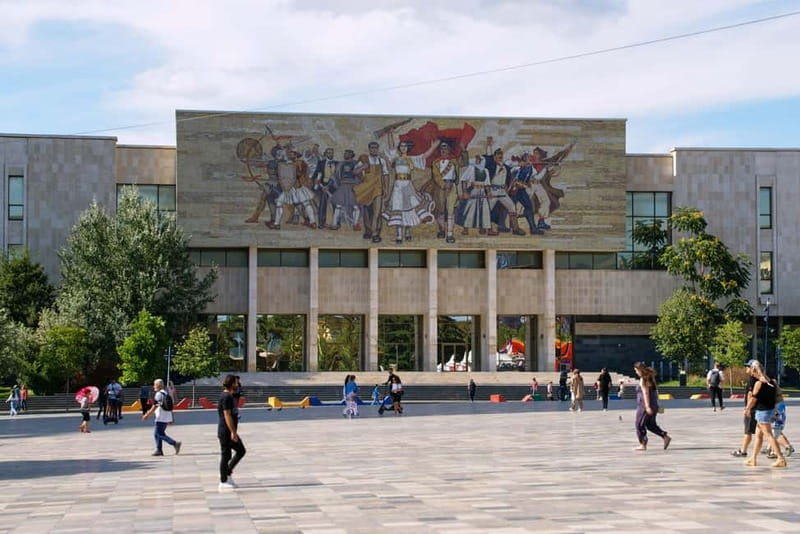
Look around the square before focusing on the statue. The National History Museum, Palace of Culture, Et’hem Bej Mosque, and Clock Tower all sit nearby. This concentration of major sights makes the square a useful orientation point, especially if Tirana is your first stop in Albania.
The National History Museum is covered as part of the guided walk and pass-by portion. You should not expect a full museum visit during this tour, since the schedule has many other stops. Still, the building gives Klejdi a place to explain Albania’s long political path and the way national history is presented in the capital.
The Palace of Culture adds another layer. It serves as a center for art and culture and helps show how central Tirana was reshaped during the communist period. The square itself is broad and busy, so stay aware of the group as the walk moves between buildings.
Ottoman Tirana at the Et’hem Bej Mosque
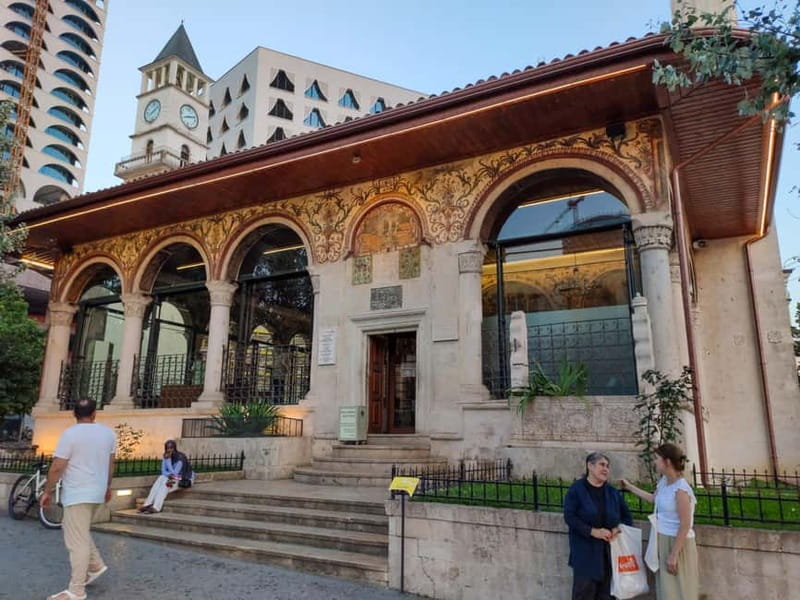
The Et’hem Bej Mosque is one of the most rewarding stops on the route. Its Ottoman design and detailed frescoes offer a quiet change from the open square and the heavy government architecture nearby.
The tour includes a visit, free time, and a guided explanation. Dress respectfully, and bring clothing suitable for entering a religious site. As with any active place of worship, access can depend on what is happening there at the time.
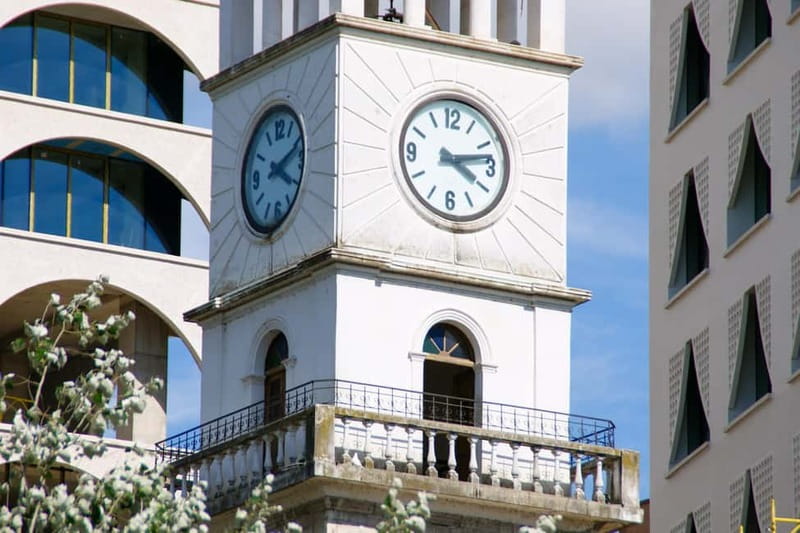
The nearby Clock Tower gives you another clear marker of old Tirana. The tour includes a photo stop and a walk-by, while the description also presents the option of climbing for views over the city. Confirm with Klejdi on the day whether the tower visit and climb are available as part of your departure. Either way, the tower is worth seeing because it helps you read the layout of the central district.
From Pedonalja to Tirana Castle
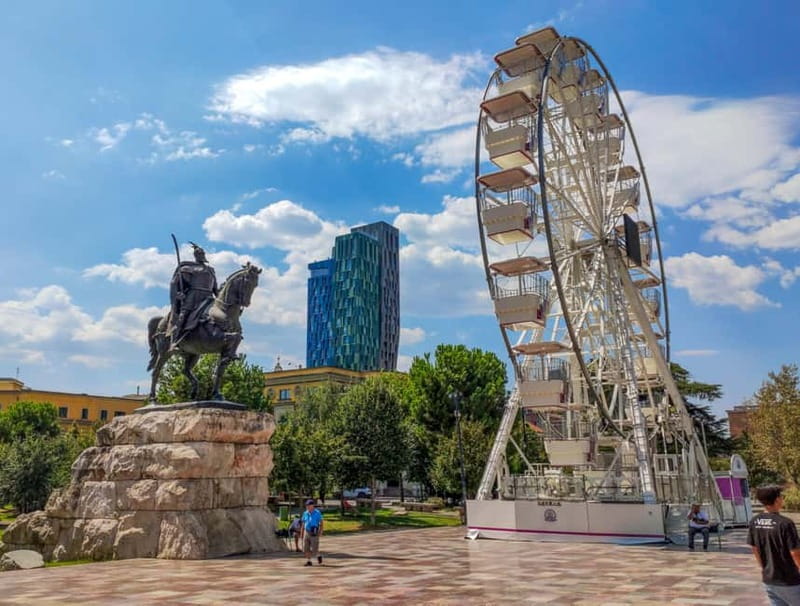
The pedestrian street known as Pedonalja gives the walk a change of pace. You leave the formal square behind and move through an area designed for strolling, looking, and people-watching.
Next comes Tirana Castle. This is not a medieval fortress in the usual European sense. It is a central cultural and shopping area with historic associations and modern commercial life. The tour includes a visit, time for photos, and shopping.
I like this part of the route because it shows how Tirana handles old places in a modern city. You are not seeing history sealed off from daily life. Shops, cafés, and public spaces now occupy much of the area. If you are hoping for a long archaeological explanation, this stop may feel brief. If you want to see how the city uses its historic center, it works well.
The route also includes Saint Paul Cathedral, with time to visit and look around. Together with the Orthodox Cathedral at the start and the mosques later in the walk, it reinforces Tirana’s religious variety.
Same streets, a different century:
- Lisbon: History, Stories and Lifestyle Walking Tour
★ 4.8 · 10,902 reviews - London Small Group Tour of Historical Pubs
★ 5.0 · 10,422 reviews - Prague: Oldtown, Medieval Underground & Dungeon History Tour
★ 4.3 · 10,277 reviews - Charleston’s Old South Carriage Historic Horse & Carriage Tour
★ 5.0 · 10,023 reviews
Communist memory at the Pyramid and Bunk’Art 2
The Pyramid of Tirana is one of the city’s most striking buildings. It was built as a museum dedicated to Enver Hoxha, Albania’s communist leader, and its unusual form still carries the weight of that period.
The stop includes a break, photos, and sightseeing. The pyramid is also used for cultural events today, so it is a useful example of Tirana trying to give a new purpose to a difficult symbol. I find this more interesting than simply labeling it an old communist building. You can see the argument between memory and reuse in one place.
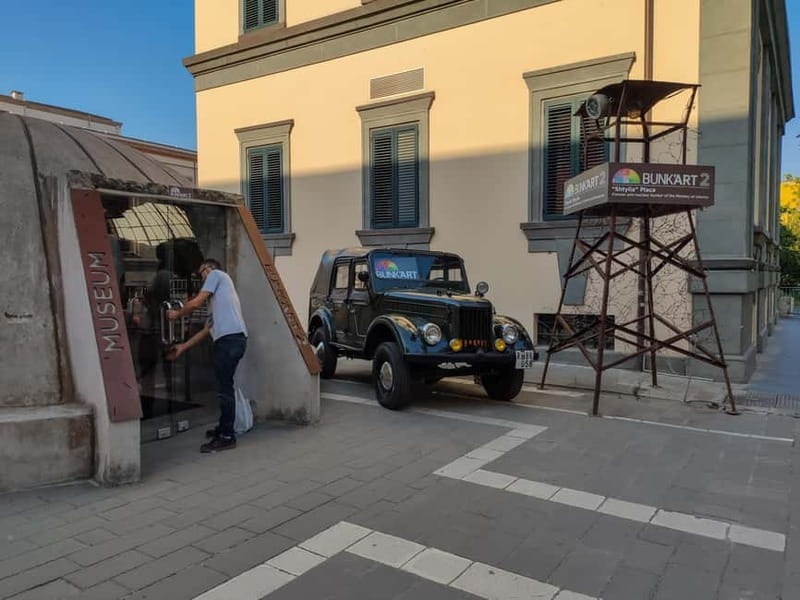
Bunk’Art 2 brings the dictatorship into sharper focus. This museum occupies a former bunker and covers political repression, secret police activity, and ordinary life under communist rule. The route description gives it a prominent place, but the stop may function as a guided introduction or pass-by depending on timing and access that day. If entering the museum is especially important to you, ask Klejdi how much time is available before the walk begins.
That point matters because Bunk’Art 2 deserves more than a hurried look. A full museum visit would require time, and this tour has many more stops ahead. The advantage of including it in the walk is that you learn where it is and why it matters, then you can return later if you want the full exhibits.
Blloku shows the capital after communism
Blloku once belonged to the communist elite and was closed to ordinary citizens during the dictatorship. Today, it is known for cafés, restaurants, bars, and boutiques.
This is one of the clearest places to see the difference between old Tirana and the city’s current identity. The route includes a break here, with breakfast at a stylish café, fresh pastries, and Albanian coffee. Since breakfast is not listed as included in the price, plan to pay for your own food and drink.
The stop is useful for more than refreshment. Blloku gives you a chance to ask Klejdi about daily life during the communist period and how the neighborhood changed afterward. It also gives your feet a short rest before the route continues.
Nearby, you pass Enver Hoxha’s former residence. The building is linked directly to the country’s dictatorship, but the tour is a walk-by and guided explanation rather than a guaranteed interior visit. This is another place where context matters more than architecture alone.
Postbllok and Mother Teresa Square

The Postbllok Memorial provides a focused reminder of authoritarian rule. It is designed for reflection, not casual sightseeing, and adds an emotional pause after the livelier streets of Blloku.
The route then continues to Mother Teresa Square. The square is home to the Polytechnic University and Palace of Congresses, with buildings that reflect fascist and modernist design influences. You get a useful lesson in how different governments left their mark on Tirana’s public spaces.
The square also offers a more open setting after several narrow streets and indoor stops. It is used for photos and a guided visit, so take a moment to look at the scale of the buildings around you. Klejdi can connect the architecture to the city’s political changes, which is one of the strongest reasons to take this walk with a guide rather than simply follow a map.
Modern Tirana around Air Albania Stadium
The Air Albania Stadium is the national stadium and a modern center for sport, concerts, and dining. The route passes by with a guided explanation.
This stop helps balance the tour. Much of the morning focuses on older buildings, political memory, and religious architecture. The stadium points to the capital’s present-day ambitions and its expanding entertainment district.
You may not spend long here, and the stadium is not presented as a full behind-the-scenes visit. Think of it as a quick look at contemporary Tirana rather than a stadium tour.
Mosques, Ottoman traces, and Sulejman Pasha Square
The Namazgah Mosque, also called the Grand Mosque of Tirana, is another major stop. The tour includes a photo stop, visit, and guided explanation. The supplied description refers to it as a major spiritual and cultural center once completed, so construction status and access may vary with the date of your tour.
The mosque also gives Klejdi another chance to explain Albania’s religious identity and the place of Islam in the country’s past and present. Combined with the Et’hem Bej Mosque and the two Christian cathedrals, it gives the walk a broad view of Tirana’s religious buildings.
The route then passes the Kapllan Pasha Tomb, one of the few remaining Ottoman structures in the city. It is a small but important reminder that Ottoman Tirana survives in fragments. Do not expect a huge monument. Its value is in what it represents and in how little of the older city remains visible.
Sulejman Pasha Square adds another Ottoman connection before the final stretch. The visit and guided walk here help tie together the earlier mosque stops and the city’s older urban story.
Finish at New Bazaar, where the city feels local
The tour ends at New Bazaar, or Pazari i Ri. This is a practical finish because you can stay in the area after the guide departs.
The market is a good place to look at fresh produce, browse souvenirs, and watch everyday commerce. It also offers a chance to eat Albanian food at a traditional restaurant. Lunch is not included, so you should budget separately.
Ending here is better than finishing at a government square or isolated monument. You can keep exploring, sit down for a meal, or use the market as a starting point for the rest of your day. Ask Klejdi for ideas before saying goodbye, especially if you want to return to Bunk’Art 2 or spend more time around the center.
Is $37 good value for three hours?
At $37 per person, the tour offers solid value if you want a guided orientation to central Tirana. The fee covers the guide and walking tour, but not meals, personal expenses, or likely entry costs for attractions that require separate admission.
The value comes from the amount of ground covered and the historical connections between the stops. You see the central square, Ottoman religious buildings, communist sites, Blloku, Mother Teresa Square, modern Tirana, and New Bazaar in one route. A short independent walk could cover some of the same streets, but it would not easily explain why these places belong in one story.
The tradeoff is depth. Three hours cannot provide full museum visits at Bunk’Art 2, the National History Museum, and every religious building. I would book this as an introduction, not as a replacement for visiting Tirana’s museums on your own.
The tour has free cancellation up to 24 hours before departure, and you can reserve now and pay later. It is wheelchair accessible, though you should still consider the long walking route and ask about access to individual buildings or the Clock Tower.
Who will enjoy this walk most?
I would choose this tour if you are in Tirana for a short stay, want history explained in plain language, or prefer to get your bearings before exploring alone. It suits families with older children and teenagers, especially those interested in political history. One French-speaking family with teenagers aged 14 and 16 found the format suitable, and the French option is useful if you do not want an English tour.
The route also works well for people who want a guide in French, Italian, Albanian, or English. Klejdi has been praised for answering many questions, contacting people before the meeting, adapting his explanations, and sometimes staying longer than planned. That suggests a personal style, but you should still allow for the official three-hour schedule.
I would be cautious if you dislike walking, want a slow museum day, or need guaranteed interior access at every stop. The route is ambitious. Comfortable shoes and weather-appropriate clothing are essential.
Should you book the Tirana historical path tour?
Book it if you want one knowledgeable local guide, a compact look at Tirana’s Ottoman, communist, and modern sides, and a finish near food and shopping. Klejdi’s patient, flexible approach is a major reason this experience works, especially if you enjoy asking questions rather than simply listening to a fixed script.
Skip it if your priority is spending several hours inside museums or visiting each attraction in depth. For most first-time visitors, though, this is a useful opening walk. Take it early in your stay, note the places you want to revisit, and save time after the tour for Bunk’Art 2, the National History Museum, or lunch at New Bazaar.
FAQ
Where does the tour begin?
Meet at the entrance of the Resurrection of Christ Orthodox Cathedral, also called Ngjallja e Krishtit. The meeting point can be inside the cathedral if the weather requires it.
Where does the tour finish?
The tour ends at New Bazaar, or Pazari i Ri, in central Tirana.
How long does the walking tour last?
The tour lasts three hours. Starting times depend on availability when you book.
What languages does the guide speak?
The tour is available in Albanian, English, French, and Italian. The experience provider is Klejdi.
Is the tour wheelchair accessible?
Yes, the activity is listed as wheelchair accessible. Access at individual buildings may vary, so ask about specific stops if needed.
Are food and personal expenses included?
No. The guide and walking tour are included, but personal expenses are not. Breakfast in Blloku and lunch near New Bazaar are separate costs.
What should I bring?
Bring comfortable shoes and clothing suited to the weather. The route includes several hours of walking between central Tirana sights.
Newest history tours we have reviewed in the world
- Bilbao Historical Tour in small group★ 4.7 · 52 reviews
- Bologna: Street Food Tour in the Historic Center★ 4.8 · 125 reviews
- CEBU: Cebu City Heritage and Uphill Guided Tour★ 4.2 · 31 reviews
- Bishkek : City Tour (History, Architects, Statues & Culture)★ 4.9 · 54 reviews
- Blenheim: Omaka Aviation Heritage Centre Admission Ticket★ 4.9 · 31 reviews
- Berlin: Nazi History Walking Tour★ 4.8 · 33 reviews
- Best of Baku: 4-Hour City Tour Historic and Modern Landmarks★ 4.7 · 63 reviews
- Belfast: Best of Belfast History, Culture & Art Walking Tour★ 4.9 · 158 reviews
Tirana History Tours, compared.
Guided tour in Tirana – discoveries, history, culture (in FRENCH)
Read our review →
Durres city & Golem beach, Sun & History Day Trip
Read our review →
Tirana Walking Tour: History, Culture &Gems by a Passionate Guide
Read our review →Browse the lists this tour appears in