Review · SPAIN HISTORY TOURS
San Sebastian E-bike trour: Basque History and Cultural.
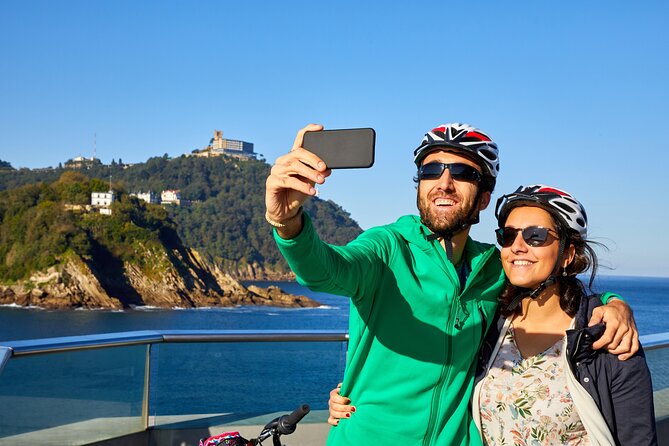
San Sebastián’s best sights stretch along its beaches, river, old streets, and hills, so an e-bike is a smart way to cover the city before your feet give out. This 2-hour-20-minute ride links Zurriola, La Concha, Ondarreta, the Wind Comb, and the Urumea River, with a local guide adding the stories that turn scenery into a place.
I like the small maximum group of 12, which makes it easier to hear the guide and stay together. I also like the mix of landmarks and local detail, from the cost of living in Gros to Basque politics, food, cider, and the legend tying San Sebastián to Japan.
The main consideration is city riding. Some parts can feel tricky when streets are busy, and you should be comfortable handling a bicycle. The tour needs good weather, though one group completed it in rain with good bikes and a flexible guide.
Key points to know before you book
- A full-city route in just over two hours: Cover the central bridges, Gros, both major beaches, the Wind Comb, the river, and several districts without a long day in the saddle.
- Local guides make the difference: Lorenzo, Jacob, Jake, Paulo, Paolo, Carlos, and Tarik are among the guides praised for clear English, humor, patience, and strong knowledge of San Sebastián and Basque culture.
- The e-bikes reduce the effort: The electric assistance helps you cover ground with less strain, but you still need basic cycling confidence.
- The route mixes famous and less obvious places: You get La Concha and the Kursaal, plus local neighborhoods, a former workers’ area, villas, palaces, and a secret passage.
- It is useful on your first day: The ride gives you a working map of San Sebastián and tips for restaurants, pintxos, cider, and places worth returning to.
- Plan around the weather: Free cancellation is available up to 24 hours before the start, and a poor-weather cancellation brings a new date or full refund.
Why an e-bike works so well in San Sebastián
San Sebastián, also called Donostia, rewards people who move around. Its compact center is easy to walk, but the full sweep from Gros to Ondarreta takes more time than a quick old-town stroll. A bicycle lets you connect the city’s different personalities in one outing.
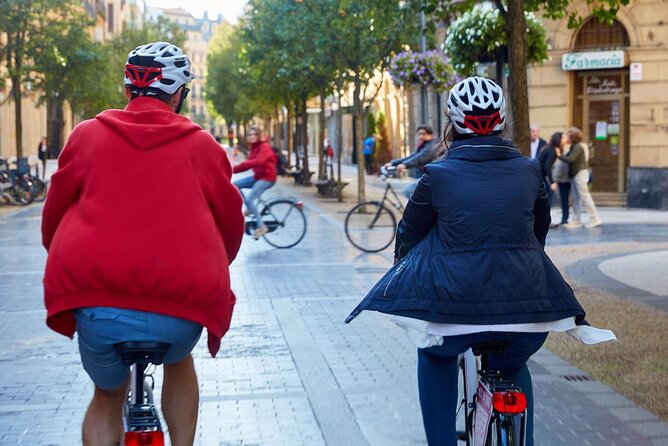
The electric assistance matters because the route is not simply a flat ride between tapas bars. You will follow beaches, cross bridges, pass through city neighborhoods, and reach the western end of the bay. The motor takes much of the hard work out of the ride, so you can pay attention to the guide and the views.
Do not read e-bike as no cycling required. You still steer, brake, follow the route, and ride around other people. One review called busy areas a little treacherous, while another suggested that some cycling experience is useful. A nine-year-old completed the route with a family, so the pace can work for younger riders, but comfort on a bicycle matters more than athletic ability.
The group limit of 12 is another useful detail. You are not joining a giant procession that blocks every bike path. A small group also gives you a better chance to ask about Basque culture, the local food scene, or the political subjects that shape the region.
More History Bike, Segway and Tuk-Tuk Tours in Spain
- Barcelona: 2.5-Hour Bike or E-Bike Historical Tour
★ 4.5 · 1,262 reviews - Madrid Historical Tour with Local Guide in Eco Tuk Tuk Private
★ 5.0 · 876 reviews - Segway Your Way Through Granada’s History: The Ultimate Ride
★ 5.0 · 334 reviews
Starting near Reyes Católicos and Buen Pastor Cathedral
The meeting point is La Bicicleta Donostia at Reyes Católicos Kalea 14, near the city center and public transportation. The ride begins by getting you settled on the bicycle before heading toward Buen Pastor Cathedral.
That opening is practical rather than flashy. You learn how the bike feels, get a first look at the central city, and begin with a major landmark before moving into the wider route. If this is your first morning in San Sebastián, that is useful: you start building a mental map right away.
The tour returns to the same meeting point at the end. This makes it easy to continue sightseeing, return to your hotel, or stop for food nearby. Reyes Católicos is also a convenient place to finish with pintxos or cider, and the guide can point you toward food options.
Santa Catalina Bridge and the city’s changing shape
The first formal stop is Puente de Santa Catalina, the city’s first bridge. You get about eight minutes here, enough to hear why the crossing matters and to look at the architecture around the river.
This is a good early stop because it explains how San Sebastián has grown. From the bridge, you can see emblematic buildings and the relationship between the river, central neighborhoods, and the expanding city. It is not only a photo stop. It gives the rest of the ride some structure.
The stop is short, so do not expect a long architectural lecture. The value comes from the guide connecting the bridge to the city’s development. Guides such as Lorenzo, Jacob, and Jake are particularly well suited to this kind of storytelling, bringing historical facts into the places where they happened.
Gros, Cataluña Plaza, and the everyday city
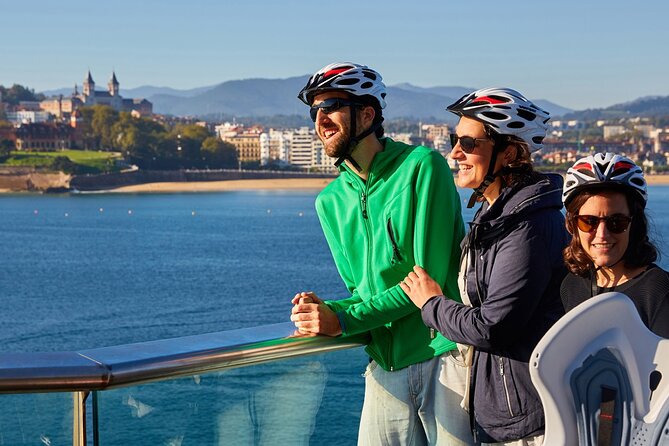
From the bridge, the route enters Gros, one of San Sebastián’s liveliest neighborhoods. At Cataluña Plaza, the guide discusses local life and the cost of living in this popular part of town.
This is one of the tour’s better choices. Many sightseeing rides stay focused on grand buildings and scenic overlooks. Here, you get a glimpse of what it means to live in the city, not just visit it. That helps explain why Gros feels different from the polished central areas and the resort-facing side of San Sebastián.
You spend around 10 minutes in this section. The guide also points out good places for people-watching. That kind of advice can improve the rest of your stay because it tells you where to linger after the scheduled sightseeing ends.
More Local Culture and Traditions Tours in Spain
- Sevilla Food Tour: Tapas, Wine, History & Traditions
★ 5.0 · 3,468 reviews - Taste of Malaga Tour : Tapas, History and Local Customs
★ 5.0 · 758 reviews - Málaga: 2h Walking Historical Tour–Art, Culture and Legends
★ 4.9 · 341 reviews - Tarragona and Sitges Small Group Tour – Roman History & Culture
★ 4.5 · 339 reviews
Zurriola Beach and the Kursaal
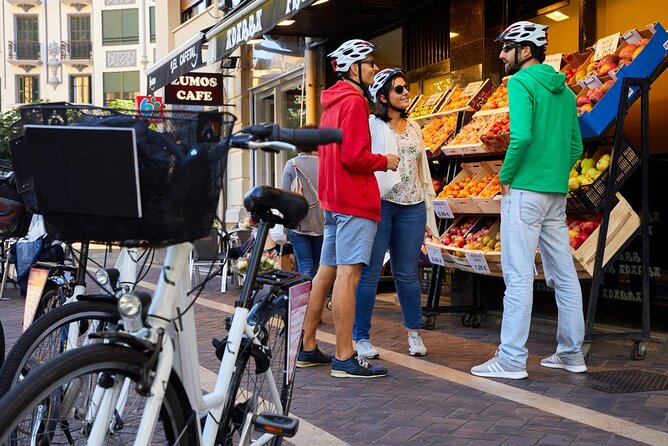
The route continues to Zurriola Beach, where you stop for views of the Bay of Biscay and the surfers. This is San Sebastián at its more open and energetic: broad sand, ocean air, and a beach culture that contrasts with the calm curve of La Concha.
The ride then passes the Kursaal, one of the city’s most important and debated modern buildings. Its location helps explain the boundary between the old town and the newer parts of San Sebastián. The building also carries a glamorous past, so the guide can shift from architecture to the city’s changing image.
Expect the Kursaal section to be more about context than a long interior visit. This is an outdoor cycling tour, and the focus is on how the building fits into the city. You will have time for photographs, but you are not booking a museum tour.
La Concha, the boulevard, and a local legend
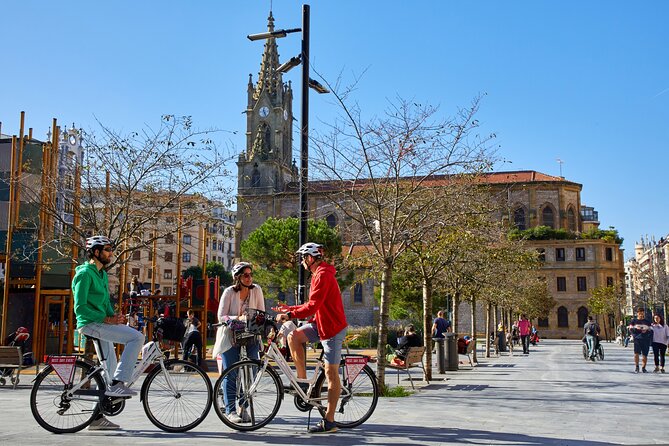
The ride follows the contemporary Boulevard toward La Concha Beach. This route shows the contrast between the old town and the newer city, then opens onto one of San Sebastián’s most famous views.
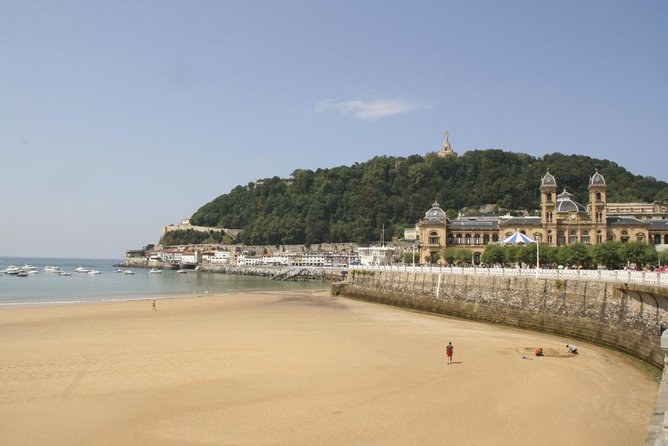
La Concha is a highlight for good reason. The bay curves in front of the city, and the combination of water, promenade, and architecture gives you a very different view from Zurriola. The stop lasts about 15 minutes, the longest scheduled pause, which gives you time to take photographs and listen without rushing.
The guide explains why so many small trees appear in this area and shares a local legend connected with Japan. That detail is exactly the sort of story you are unlikely to notice from a map or a quick walk. It gives the view a cultural layer without turning the stop into a formal history lesson.
You will also use the bidegorri, the bike path running along La Concha toward Miramar Palace and Ondarreta. The dedicated path makes this part more relaxed, although pedestrians and other cyclists still mean you should keep your attention on the route.
Ondarreta and the western end of the bay
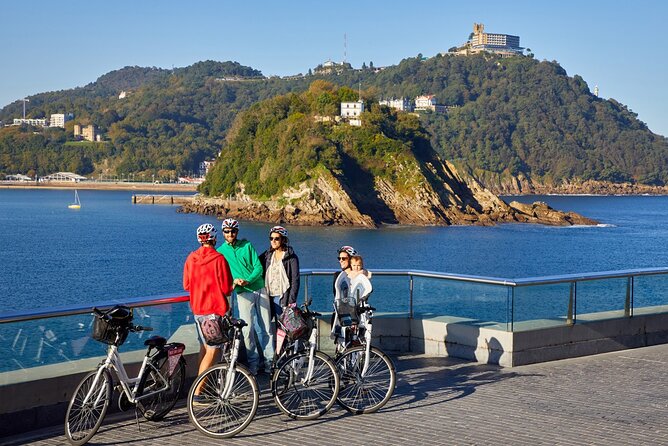
At Playa de Ondarreta, the guide explains the history of this beach. It is a quieter counterpoint to the more famous La Concha and another chance to see how the city changes as you move west.
The stop lasts about 10 minutes. That is enough to understand the beach’s place in San Sebastián, take in the setting, and continue without losing the rhythm of the ride. If you want a long beach visit, you will need to return on your own later.
From Ondarreta, the route continues toward the end of the bay, where the built city meets more open surroundings. The guide introduces modern Basque art before taking you through one of the city’s oldest and most genuine neighborhoods. You also pass through a secret passage connecting two parts of San Sebastián.
This section is valuable because it moves beyond the postcard version of the city. You see different sides of San Sebastián, including areas linked with working life and districts shaped by the aristocratic Belle Époque. The point is not to label one area better than another. It is to show you how several versions of the city exist close together.
The Wind Comb and views from the sea side
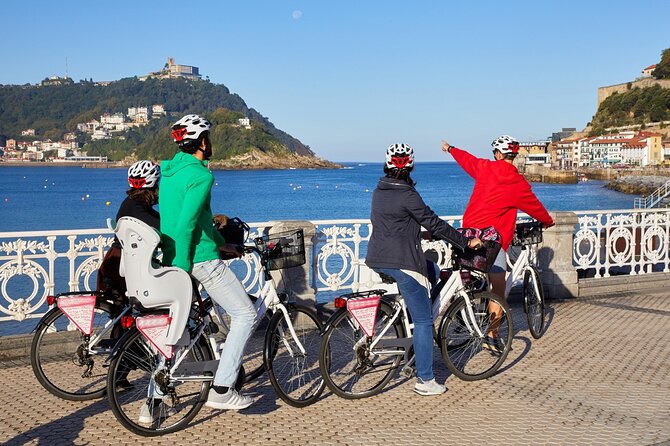
At the Peine del Viento, or Wind Comb, you stop for about five minutes. The site combines contemporary art with a powerful setting at the edge of the bay.
The view changes again here. La Concha gives you the classic sweep across the water. The Wind Comb gives you the city from another angle, with the ocean and art taking up more of the frame. It is a short stop, but it is one of the route’s most memorable photo opportunities.
The five-minute timing may feel brief if you want to study every piece of art. Think of it as an introduction. The tour gives you the location and the context, then lets you decide if you want to return later for a slower look.
The Urumea River, villas, and bourgeois San Sebastián
The return route follows the Urumea River back toward the center. Along the way, you pass villas and bourgeois palaces that reveal another chapter of the city’s past.
This is a calm way to finish the sightseeing loop. After beaches and city streets, the river gives the ride a slower visual rhythm. The buildings also help explain the city’s elegant reputation without keeping you confined to the best-known central avenues.
The guide continues weaving in history, politics, and culture rather than saving all the information for one long talk. That approach is one of the tour’s strongest features. You hear about a place while looking at it, so the details are easier to remember.
Basque culture, politics, and food between the stops
The title promises Basque history and culture, and the experience goes beyond dates and buildings. The guides discuss the Basque people, local identity, politics, daily life, and the feelings that have shaped the region.
That subject can be complicated. A good guide needs to make it understandable without pretending every issue is simple. Jacob was praised for offering an outsider’s view of the passions and political emotions behind Basque culture. Lorenzo was also singled out for clear historical talks and excellent English. Guides such as Jake and Paulo add humor and practical advice to the ride.
Food is part of the conversation too. San Sebastián is famous for pintxos and cider, and the guide can offer suggestions before you leave. This is not a dedicated food tour, so you should not expect tastings or a meal. The benefit is knowing where to continue eating after the bicycles are returned.
What the $59.28 price gets you
At $59.28 per person, the tour offers a useful amount of sightseeing for a moderate half-day price. You get the bicycle, a professional guide, and a route that would take more effort to organize independently.
The real value is time. In 2 hours 20 minutes, you reach places spread across the city and avoid spending your stay figuring out which bike paths connect them. You also get interpretation in English, which can add meaning to buildings and neighborhoods that might otherwise blur together.
The price does not include tips, food, or admission tickets, though the listed stops are free. Since this is a sightseeing ride rather than an attraction with an entrance fee, most of what you pay covers the bike, planning, and guide.
I would book it early in a San Sebastián stay. The activity is often reserved about 20 days ahead, and its practical value is greatest before you have already wandered through the city. You can use the route as a guide for the rest of your visit.
Who should book this ride
This is a strong choice for first-time visitors who want a broad introduction without spending half a day walking. It also suits families, couples, and active adults who like seeing a city from several angles.
You should be comfortable riding a bicycle and paying attention in busy areas. The e-bike makes the physical side easier, but it does not remove the need to steer and brake. Most people can participate, and a nine-year-old completed the route with family members, but cycling confidence remains the key test.
It is less suitable if you want a slow beach day, a food-focused outing, or a private architectural tour. The pace keeps moving, and the stops are short. You see many places, then choose which ones deserve a return visit.
The experience is offered in English with a mobile ticket. The group can reach a maximum of 12 people. Free cancellation applies up to 24 hours before the start, while poor weather may lead to a new date or full refund. A rain story from one outing shows that the tour can cope with wet conditions, but the official policy makes clear that good weather is required.
Should you book the San Sebastián e-bike tour?
Book it if you want a clear first look at the whole city, enjoy light cycling, and care about the story behind Basque culture. The route is well chosen: Zurriola gives you the ocean and surf, La Concha supplies the classic view, Ondarreta and the Wind Comb add variety, and the river brings you back through elegant districts.
I would especially choose it for your first day or first morning. Guides such as Lorenzo, Jacob, Jake, and Paulo combine history with useful food and city advice, and the small group keeps the ride personal.
Skip it if busy urban cycling makes you uneasy or if you prefer spending an hour at each stop. For most visitors who want to cover ground without exhaustion, the $59.28 cost is fair, the route is varied, and the e-bike turns San Sebastián into an easy city to understand.
FAQ
How long does the San Sebastián e-bike tour last?
The tour lasts approximately 2 hours and 20 minutes.
Where does the tour begin and end?
It begins at La Bicicleta Donostia, Reyes Católicos Kalea 14, 20006 Donostia / San Sebastián. The tour ends back at the same meeting point.
Is the tour offered in English?
Yes. The experience is offered in English and uses a mobile ticket.
What is included in the price?
The price includes use of the bicycle and a professional guide. Tips are not included.
How large is the group?
The tour has a maximum of 12 participants.
What happens if the weather is poor?
The experience requires good weather. If the operator cancels because of poor weather, you can receive a different date or a full refund. You can cancel for a full refund up to 24 hours before the start time.
Newest history tours we have reviewed in Spain
- Bilbao Historical Tour in small group★ 4.7 · 52 reviews
- Barcelona Tapas Tour, Taverns, History & Local Culture★ 5.0 · 25 reviews
- Barcelona Historical 3-Hour Bike Tour★ 4.7 · 222 reviews
- Barcelona: Market, Tasty Tapas/Food and Gothic History Tour★ 4.7 · 48 reviews
- Barcelona: Cemetery Tour – Gothic Graves & Local History★ 4.9 · 33 reviews
- Barcelona & Chocolate Amatller History and Culture + Activity and Tasting★ 4.9 · 173 reviews
- Barcelona: The Spanish Civil War Historical Walking Tour★ 4.9 · 239 reviews
- Barcelona: 3-Hour Esoteric, Spiritual & Historical Tour★ 5.0 · 34 reviews
Local Culture & Traditions Tours, compared.
Amsterdam Food and Cultural Tour with Tastings
Read our review →
Sevilla Food Tour: Tapas, Wine, History & Traditions
Read our review →
Tromsø: Reindeer Camp and Sami Cultural Tour with Lunch
Read our review →
Half Day Dominican Republic Cultural Tour : Small Group
Read our review →
Ultimate Melbourne Walking Tour: History, Laneways & Culture
Read our review →
Tromsø: Sámi Reindeer Sledding and Sami Cultural Tour
Read our review →
Kyoto Gion: 2-Hour Geisha Culture & History Walking Tour
Read our review →