
Review · JAPAN HISTORY TOURS
World Heritage Shirakawa-go and Experience Tours from Kanazawa
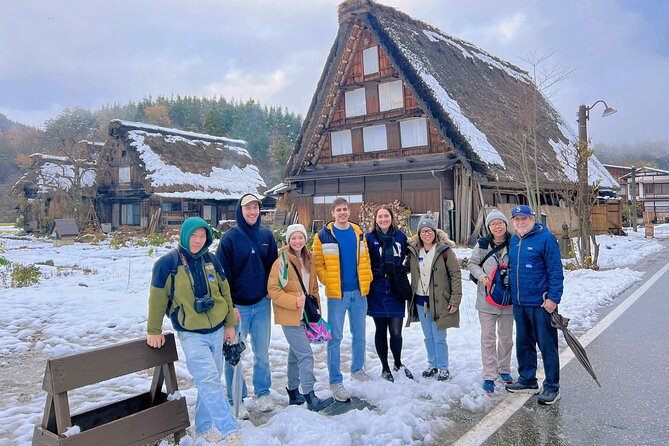
Shirakawa-go is the star here: a mountain village of steep gassho-zukuri farmhouses, with roofs shaped like hands pressed together in prayer. The tour gets you there early, then adds Kanazawa’s Kenrokuen Garden, gold leaf, and a hands-on craft session without asking you to arrange several train and bus connections.
I like the two very different settings in one day, from snowy mountain villages to refined city gardens. I also like the guides’ active role. Yasushi is known for history, humor, and smooth organization, while Aiko brings warm explanations and plenty of energy. The main drawback is the pace: nine and a half hours, several stops, and long road time can feel packed. Lunch is on your own, and late arrivals cannot join midway.
Key points to know before booking
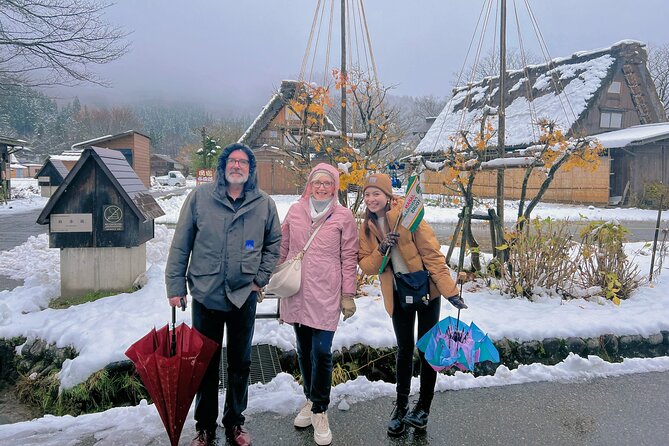
- Early access to Shirakawa-go: You get roughly two hours in the UNESCO-listed village before the largest crowds arrive.
- A useful Ogimachi viewpoint: The old castle site gives you a broad look over the farmhouses and surrounding mountains.
- Kanazawa in one afternoon: Kenrokuen, Higashi Chaya, gold leaf, and a Japanese craft activity follow the morning village visit.
- Guides who add real value: Yasushi and Aiko are frequently praised for clear English, humor, history, and keeping the day on track.
- Crafts are included: Your activity is Japanese sweets making or Daruma painting, depending on the craftsperson’s schedule, plus a gold leaf experience.
- Fixed meeting point: You must meet at Kanazawa Station West Plaza at 7:50 am. Hotel pickup is not provided.
Why this day trip works so well
This is a smart choice if you have only one day to connect Shirakawa-go and Kanazawa. On your own, Shirakawa-go takes planning. You need to think about highway buses, departure times, seat availability, and the return trip. Here, transport is handled in an air-conditioned vehicle with Wi-Fi, and an English-speaking guide fills the road time with cultural background.
The route also has a strong rhythm. Shirakawa-go gives you rural Japan and old farmhouses. Kanazawa then shifts to formal gardens, traditional crafts, gold leaf, and the old geisha district of Higashi Chaya. You are not spending the whole day looking at similar buildings.
The price is $122.45 per person. That is reasonable if you value a direct ride, a guide, Kenrokuen admission, and two craft-based activities. It is less compelling if you already have transport arranged or want long, unhurried visits. The tour covers a lot, but it is designed as an efficient introduction rather than a slow exploration of every stop.
The maximum group size is 38 people, so this is not a private outing. The vehicle keeps the day simple, but you should expect a shared tour with a fixed schedule.
More UNESCO World Heritage Tours in Japan
- World Heritage Kyoto & Nara Uji Authentic Matcha Experience
★ 5.0 · 1,573 reviews - Kanazawa: World Heritage Shirakawa-go Morning Guided Tour
★ 4.9 · 988 reviews - Hiroshima Peace (Heiwa) Walking Tour at World Heritage Sites
★ 5.0 · 872 reviews
Meeting at Kanazawa Station at 7:50 am
The tour begins at Kanazawa Station West Plaza, Short-term Car Park, at 7:50 am. This is the only pickup point. There is no hotel pickup or drop-off, so leave enough time to find the correct area and arrive before departure.
That early start is important. Shirakawa-go is much more enjoyable before the heaviest foot traffic arrives. Several guides, including Yasushi, use the journey to explain Japanese history, mythology, and local customs. Yasushi has also been described as a former school teacher, which helps explain the clear, story-based presentation.
The drive is not dead time. You may receive multilingual audio guidance in English, Spanish, French, Italian, German, Portuguese, or Ukrainian, along with live help from the English and Japanese-speaking guide. Wi-Fi is available on the bus, and the vehicle is air-conditioned. One useful detail from the day is that the bus may have a restroom, though the supplied tour details formally promise the vehicle and Wi-Fi rather than a guaranteed onboard restroom.
Two hours among Shirakawa-go’s prayer-shaped roofs
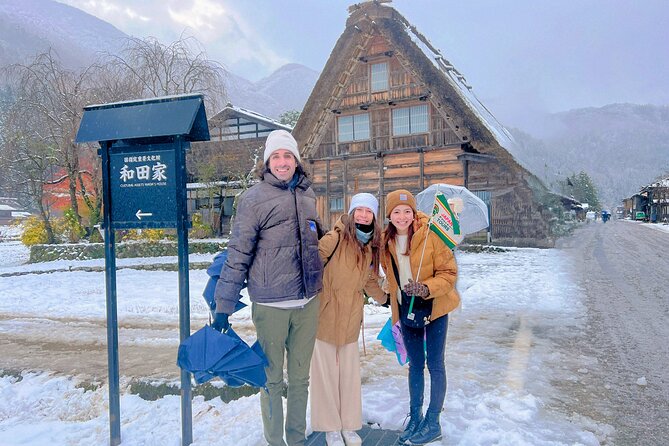
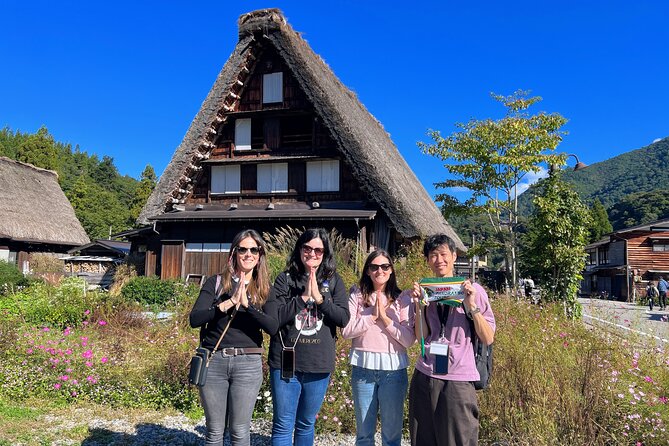
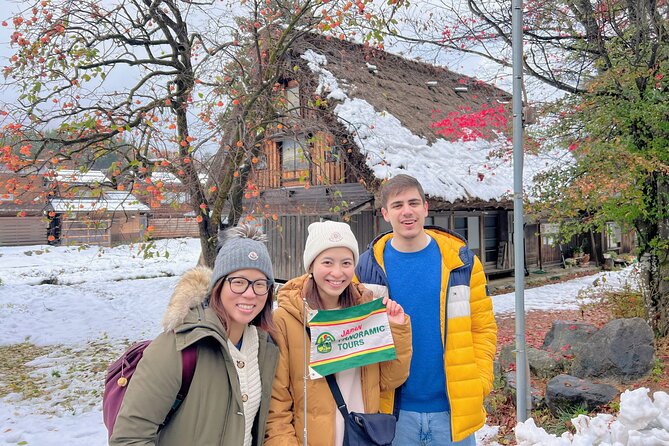
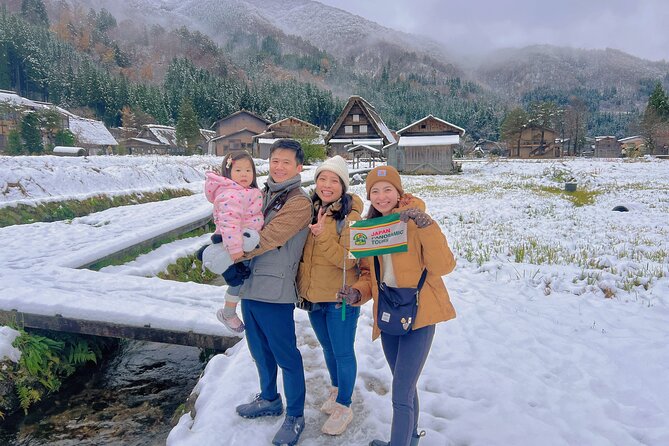
Shirakawa-go is a Japanese mountain settlement best known for its gassho-zukuri houses. Their sharply pitched roofs were built to handle heavy snow, and their form gives the village its storybook appearance. The village is part of the UNESCO World Heritage site known as the Historic Villages of Shirakawa-go and Gokayama.
You have about two hours to explore. That is enough time to walk through the central area, look closely at the traditional houses, browse local shops, and stop for lunch on your own. A small museum for local artists has been singled out as a worthwhile stop, especially if you want locally made items at sensible prices.
The freedom here matters. You are not kept in a single tight group for every minute. The guide provides direction and context, then gives you time to see the village at your own pace. You might use that time for photographs, a meal, a small museum visit, or simply a quiet walk past the houses.
The limitation is that two hours goes quickly. If you want to enter every available building, eat a full meal, shop, and walk widely, you will need to choose. Lunch is not included, and one piece of practical feedback points to a possible timing issue: the available meal window may feel early for some people. Bring a little patience and keep an eye on the meeting time.
Weather can change the feel of Shirakawa-go. Rain, snow, or poor road conditions may alter the schedule, and the operator may replace activities if conditions make part of the plan impossible. There is no refund for every itinerary change, though a weather cancellation by the operator can lead to another date or a full refund.
The Ogimachi Castle Old Site viewpoint
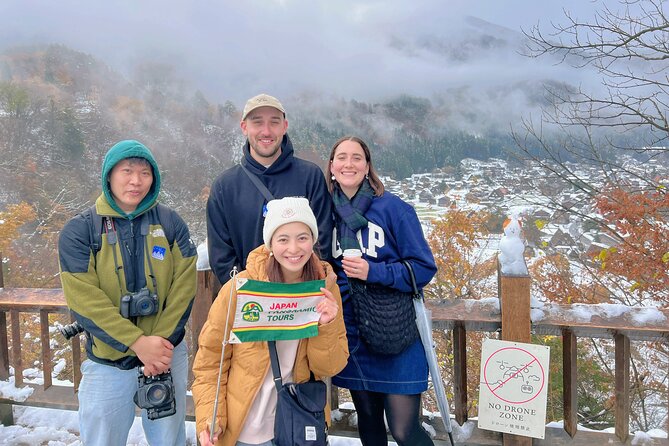
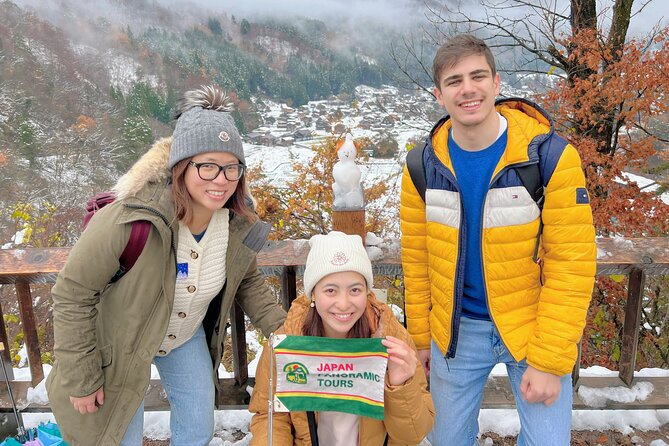
After the village, the tour stops for about 20 minutes at the Ogimachi Castle Old Site Scenic Lookout. This is not a preserved castle visit. It is a viewpoint above Ogimachi, the main settlement in Shirakawa-go.
The stop gives you the broad picture that you cannot get from street level. From above, the clustered farmhouses, fields, river area, and mountain setting make more sense. If you enjoy photography, this is one of the most useful short stops of the day.
Twenty minutes is enough for the view and a few photographs, but not for a long walk. Wear shoes suited to moderate walking, especially if the path is wet. The tour asks for a moderate level of physical fitness, and this stop is one reason why.
Same streets, a different century:
- Kyoto: Fushimi Inari, Kinkakuji, Bamboo Grove 1 Day Bus Tour
★ 4.8 · 4,316 reviews - Tokyo: Imperial Palace and Shogun Historical Walking Tour
★ 5.0 · 2,251 reviews - Kyoto Gion: 2-Hour Geisha Culture & History Walking Tour
★ 5.0 · 1,186 reviews - Tokyo Castle & Imperial PalaceーShogun Walking Tour
★ 4.7 · 1,068 reviews
Kenrokuen Garden and Kanazawa’s quieter side
The afternoon moves into Kanazawa with a one-hour visit to Kenrokuen Garden, one of Japan’s three most famous gardens. Its appeal changes with the seasons, so your experience depends on the time of year, weather, and what is in bloom.
You can expect a carefully arranged garden rather than a single dramatic sight. The pleasure comes from strolling, seeing how water, trees, paths, and open spaces fit together, and noticing how the garden’s mood shifts in different weather. One guide’s commentary can help you understand what you are seeing instead of simply walking through attractive scenery.
One hour is enough for a good introduction, but it may leave you wishing for more. The garden is the sort of place where you can easily spend several peaceful hours if you move slowly. The tour’s advantage is access within a wider day; its cost is limited time.
Kenrokuen is included in the price, which strengthens the value. You do not need to buy admission separately or work out how to fit the garden around the Shirakawa-go bus schedule.
Making wagashi or painting a Daruma doll
At the Ishikawa Local Products Center, you spend about 50 minutes on a hands-on cultural activity. Depending on the craftsperson’s schedule, you may make traditional Japanese sweets with a wagashi professional or paint a Daruma doll.
This is one of the best parts of the day for anyone who prefers doing something to simply looking at things. Wagashi making connects food with seasonal Japanese design and careful handwork. Daruma painting gives you a colorful object to take home and a simple way to learn about a familiar Japanese symbol.
The exact activity is not guaranteed. The schedule depends on the available craftsperson, so book this tour for the general experience rather than one specific craft. Weather or operating changes can also affect activities. In one reported case, heavy rain caused the sweets activity to be skipped, with the group moving to another planned experience.
That flexibility is practical, but it also means you should not treat every activity as fixed. Ask the guide what is happening that day if the schedule changes.
Gold leaf in Kanazawa
Kanazawa is closely tied to gold leaf craft, and the stop at Kanazawa Bikazari Asano gives you about 40 minutes to try it yourself. You learn about the traditional gold leaf process and make a small decorated item, such as a postcard.
The activity gives context to the gold leaf you will see around Kanazawa. This is not just a demonstration from behind a rope. You get to take part, and the finished piece becomes a personal souvenir rather than another shop-bought object.
The time is short, so do not expect a full craft apprenticeship. Think of it as a well-chosen introduction. It also adds variety after the garden, and the practical format works well for families and anyone who wants a break from walking.
A short walk through Higashi Chaya
The final city stop is Higashi Chaya District, one of Kanazawa’s largest geisha districts. You have about 30 minutes to see the traditional streets and old-style architecture, with time to try the area’s famous gold leaf ice cream if you wish.
Half an hour is enough to get a feel for the district, but not enough for a relaxed meal, extensive shopping, and a long visit inside every building. The stop is best treated as a compact orientation walk. You can note places you want to revisit later if you have another day in Kanazawa.
The itinerary information places Kanazawa Station as both the meeting and finish point, while Higashi Chaya is also listed as a stop. Since the order can change with traffic, weather, and operating conditions, listen carefully for the day’s final instructions. The activity ends back at the original meeting point.
Guides, group size, and the pace of the day
The guide can make or break a packed day. Yasushi is repeatedly praised for strong English, humor, history lessons, organization, and his habit of helping with photographs. Aiko is also highlighted for her enthusiasm, warmth, and ability to explain Japanese culture in an engaging way. Ciel is another guide named in the tour feedback.
These details matter because the road portions are long. A quiet guide would leave the day feeling like a transport service. A good guide turns the bus into a moving classroom and helps you understand why the village, garden, crafts, and geisha district belong in the same regional story.
The shared vehicle can hold up to 38 people. That is a sizable group, and you should expect some waiting while people return to the bus. The benefit is a lower price and a straightforward route. The tradeoff is less personal attention than on a small-group or private tour.
You need moderate physical fitness. The day includes village walking, a viewpoint, garden paths, craft activities, and a city district. No hotel pickup is included, and late arrivals are not accepted, so this tour rewards careful planning.
Who should book this tour?
I would choose this day for a first visit to Kanazawa when you want to see Shirakawa-go without transport worries. It also suits visitors with limited time who want a broad taste of rural architecture, Japanese gardens, local crafts, and Kanazawa culture.
Families may like the mix of views, sweets or Daruma painting, gold leaf, and the short city walk. First-time visitors can also benefit from the guide’s historical explanations, especially on the long ride.
I would hesitate if your priority is slow travel. Two hours in Shirakawa-go, one hour in Kenrokuen, and 30 minutes in Higashi Chaya provide a useful introduction, but not much room for wandering off schedule. Independent visitors who already know Kanazawa may prefer to spend a whole day in one place.
The free cancellation policy allows cancellation up to 24 hours before the start time for a full refund. Changes made inside that window are not accepted, and weather or operating problems can force substitutions. Read those conditions carefully before booking.
Should you book the Shirakawa-go and Kanazawa tour?
Book it if you want a well-packed regional overview with transport, admission, a guide, and hands-on activities included. The strongest reasons are the early Shirakawa-go visit, the Ogimachi viewpoint, the clear cultural commentary from guides such as Yasushi and Aiko, and the chance to try gold leaf and a local craft in the same day.
Skip it if you want long meals, a slow Kenrokuen visit, or complete control over your route. At $122.45, the value comes from convenience and variety, not from lingering. For a first day in Kanazawa, that is a fair trade.
FAQ
Where does the tour start?
The tour starts at Kanazawa Station West Plaza, Short-term Car Park, at 7:50 am.
Where does the tour finish?
The activity ends back at the meeting point in Kanazawa.
Is hotel pickup included?
No. Hotel pickup and drop-off are not provided, and no extra pickup service is available.
How long does the tour last?
The tour lasts approximately 9 hours and 30 minutes.
Is lunch included?
No. Lunch is not included. You have free time to eat on your own at Shirakawa-go.
What languages are available?
The tour includes an English and Japanese-speaking professional guide. Multilingual audio guidance is available in English, Spanish, French, Italian, German, Portuguese, and Ukrainian.
What activities are included?
The tour includes admission to Kenrokuen Garden, a Japanese sweets-making activity or Daruma painting, and a gold leaf experience.
Can the itinerary change?
Yes. The order may change because of traffic, weather, or operating conditions. If a place is closed or an activity cannot run, an alternative place or a gift may be offered.
What is the cancellation policy?
You can cancel at least 24 hours before the start time for a full refund. Cancellations or changes made less than 24 hours before the start time are not accepted for a refund.
Newest history tours we have reviewed in Japan
- Authentic Sapporo: Nijo Market Seafood Lunch & History Tour★ 4.8 · 20 reviews
- Asakusa: 3.5-hour Big-picture History Walk★ 4.7 · 39 reviews
- Asakusa: A Big-picture History Walk to Know Japan★ 4.6 · 77 reviews
- 2.5-Hour Nagoya Tour: Castle History, Local Food & City View★ 4.5 · 36 reviews
- 1-Day Tour from Nagoya: Hiking the Historic Nakasendo Trail★ 4.9 · 34 reviews
- Tokyo: Nikko World Heritage Private Day Trip Hotel Pick-up★ 4.8 · 145 reviews
- 2.5 Hour Private History and Culture Tour in Himeji Castle★ 5.0 · 185 reviews
- From Tokyo: Nikko World Heritage Sight Full Day Private Tour★ 4.9 · 127 reviews
UNESCO World Heritage Tours, compared.
Bali: Tanah Lot UNESCO World Heritage Sites Full-Day Tour
Read our review →
World Heritage Kyoto & Nara Uji Authentic Matcha Experience
Read our review →

UNESCO’s Ayutthaya Historical Park: Full-Day Tour from Bangkok
Read our review →
Rotterdam: Kinderdijk UNESCO World Heritage Entry Ticket
Read our review →
From Busan: Gyeongju UNESCO World Heritage Guided Day Tour
Read our review →
Morning World Heritage Cruise on the Gordon River from Strahan
Read our review →Browse the lists this tour appears in