
Review · BERLIN HISTORY TOURS
East Berlin Food & History Tour with Eating Europe
East Berlin’s story is best understood one bite at a time. This three-hour walk links currywurst, döner, Syrian food and Vietnamese tacos with the neighborhoods and communities that helped shape modern Berlin.
I like the mix of street food and serious history, and I like that the meal is spread across several small stops instead of one long restaurant sitting. Guides such as Clara and Anastasia have earned praise for explaining both the food and the people behind it. The main drawback is that the route requires steady walking and is not suitable for wheelchair users or people with mobility impairments.
Key points at a glance
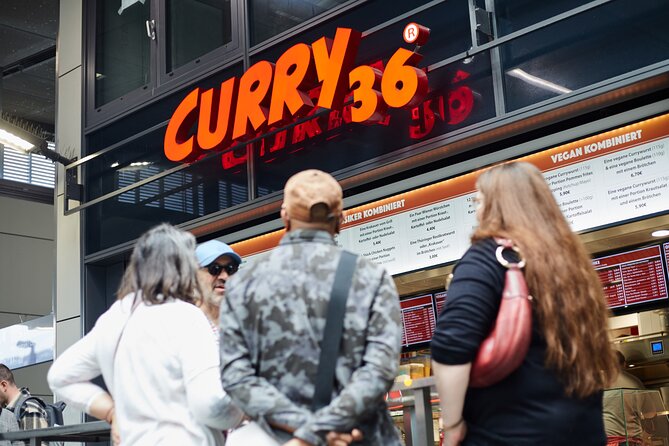
- Currywurst at a train station: Try one of Berlin’s signature snacks in the sort of everyday setting where it makes the most sense.
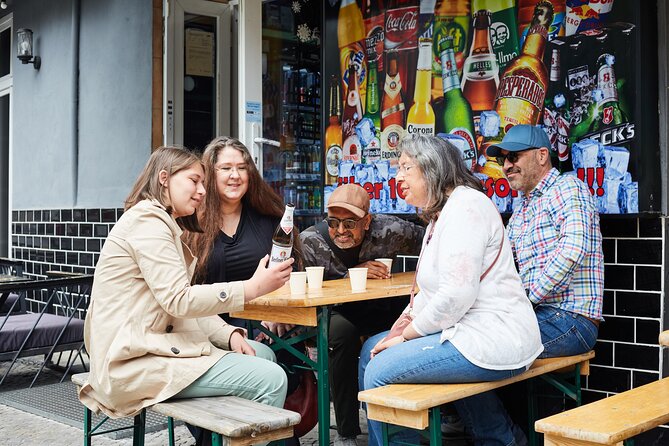
- Syrian food with personal stories: Taste smoked-aubergine metabal at a family supper club, with craft beer and background about the food’s journey to Berlin.
- Vietnamese chicken tacos: TyTy Tacos adds a playful Berlin twist to Vietnamese flavors.
- History between the bites: Follow about 80 years of East Berlin through key sites, wall art and former or current club zones.
- Döner and Turkish sweets: Finish with two foods that explain Berlin’s Turkish-German food culture better than a museum label can.
- Practical three-hour format: The tour includes food, water, Club Mate, a local craft beer and an English-speaking guide for $104 per person.
Why this East Berlin walk works
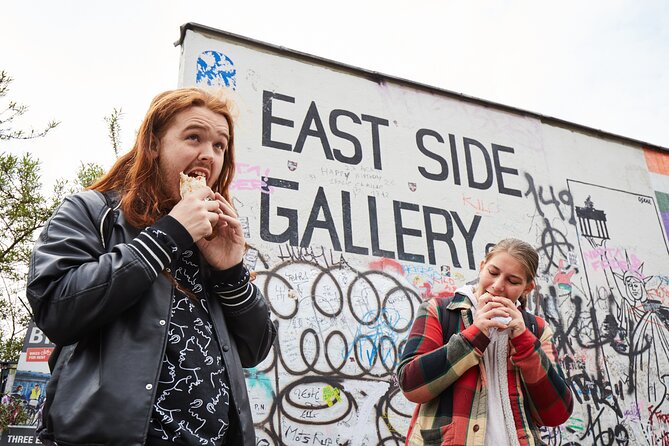
A standard city tour can leave you looking at Berlin’s past from a distance. This one gives you a plate, a paper wrapper or a small cup of something to hold while the guide explains how the city changed.
East Berlin was once shaped by communist rule, division and the Berlin Wall. Today, the same broad area is associated with international food, street art, nightlife and new communities. The tour’s real strength is the connection between those two versions of the city. You are not just sampling dishes. You are seeing how migration and daily life altered the character of Berlin.
I especially like the way the food is used as a map. Currywurst points to Berlin’s own fast-food tradition. Döner shows the importance of Turkish-German culture. Syrian dishes reflect newer arrivals, while Vietnamese food connects to another important chapter in Berlin’s immigrant story. The result is a short but useful lesson in how a city eats.
The tour is in English and lasts three hours. That is long enough to cover several stops without taking over your day. It also makes a good opening activity if you are new to Berlin, since you get neighborhood context, meal ideas and practical suggestions for the rest of your visit.
More History Tours in Berlin:
- Berlin: 3-Hour World Heritage Cruise to Potsdam
★ 4.5 · 1,569 reviews - Berlin: History of the Third Reich Guided Walking Tour
★ 4.7 · 791 reviews - Berlin: Berlin Charité Guided History Tour
★ 4.4 · 660 reviews
Meeting your guide at the train station
The meeting point is inside the main hall. Walk toward the McDonald’s, then continue to track 8 and take the escalator down to the platform. The group meets in front of the bakery, where the guide will carry a purple Eating Europe bag.
This detail matters. Train stations can be confusing, especially when you are trying to find a platform rather than a street address. Give yourself extra time and look for the bakery on the platform, not outside the station.
The setting also fits the tour. You begin in an ordinary piece of Berlin transport infrastructure, then move into a food story rooted in working neighborhoods, migration and public life. Guides have included Clara, Anastasia and Carla. The exact guide depends on the date, but the strongest feedback has focused on guides who explain the personal background of the food stops rather than simply naming ingredients.
Wear flat, comfortable shoes. This is a walking tour, not a series of seated tastings with a few minutes between them.
Currywurst where Berlin grabs a quick meal
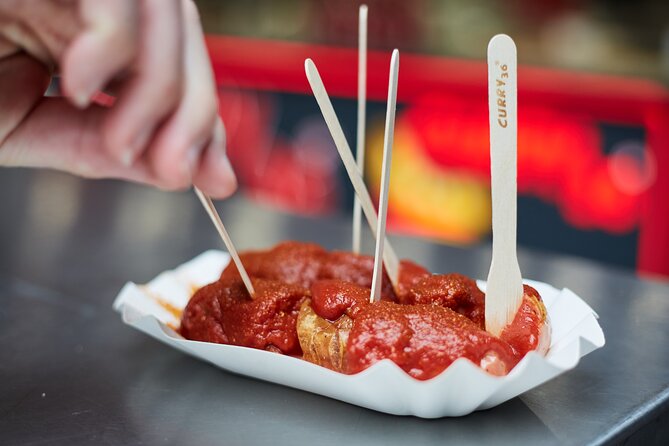
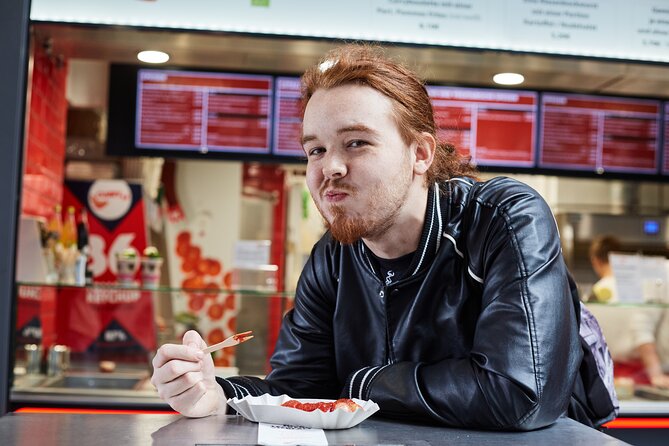
Currywurst is the obvious first taste. Berlin would feel incomplete without it, and the tour places this dish in a train station setting, where quick, inexpensive food belongs.
The basic idea is simple: sausage, sauce and curry seasoning. What makes it worth trying here is the cultural setting. Currywurst is not fine dining, and it does not need to be. It is a fast, casual food tied to Berlin’s postwar identity and everyday routines.
A train station stop also helps you understand the dish as locals might encounter it, rather than treating it as a carefully staged tourist sample. Expect a practical tasting rather than a formal meal. You will have several more foods ahead, so the portions are designed as part of a progressive lunch.
If you have never tried currywurst, this is a good introduction. If you already have a favorite stand, keep your expectations sensible. The point is not to prove that one sausage is the only correct version. It is to place an iconic Berlin food inside the city’s wider story.
Syrian flavors at a family supper club
The Syrian stop adds a different tone. You can expect metabal, a dip made with smoked aubergine, tahini and garlic. The smoky eggplant and sesame paste give it a soft, savory character, and it offers a clear contrast with the sharper, saltier profile of currywurst.
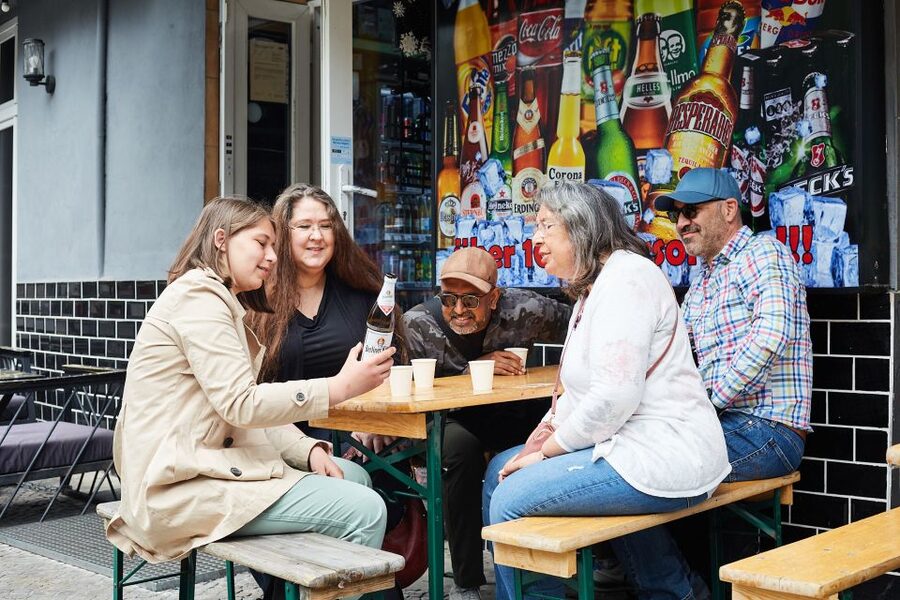
The setting is described as a family supper club, with craft beer and stories. That is important. A dish can tell you something about migration, but personal stories help explain how food becomes part of a new city. You may hear about the people connected with the place and the path by which Syrian cooking found a home in Berlin.
The craft beer is included, along with water. You also receive Club Mate, a sparkling tea popular in Berlin. Since extra drinks are not included, do not assume that every beverage you might want during the afternoon is covered.
This stop may be one of the most rewarding for people who like food with a human connection. It is less about checking off a national cuisine and more about seeing how a family-run food business fits into East Berlin today.
Same streets, a different century:
- Berlin Historical Highlights Walking Tour
★ 4.9 · 657 reviews - Berlin Private Complete History All Day Walking Tour
★ 5.0 · 474 reviews - Berlin: Cold War & Berlin Wall History Guided Bike Tour
★ 4.8 · 422 reviews - Berlin: Historic Boat Sightseeing City Center Tour
★ 4.5 · 415 reviews
Vietnamese chicken tacos and Berlin-style invention
The Vietnamese chicken tacos at TyTy Tacos are the tour’s most unexpected bite. Tacos are not a traditional Vietnamese dish, so the appeal is the combination itself: Vietnamese flavors presented through a format associated with another food culture.
That kind of fusion says something useful about Berlin. The city’s food scene is not made only of old national recipes served in fixed forms. Cooks adapt, borrow and experiment. A Vietnamese taco can reflect the city’s newer food habits just as clearly as a more traditional dish reflects its origins.
This stop should suit you if you enjoy trying food that does not fit neatly into one category. It may be less satisfying if you want every tasting to be strictly traditional. The tour is interested in Berlin as a meeting place, and TyTy Tacos makes that point in a particularly direct way.
Because offerings can change by day or season, the exact taco preparation may not always be identical. The listed inclusion is Vietnamese chicken tacos, but the company notes that stops and tastings can vary.
East Berlin’s past between the food stops
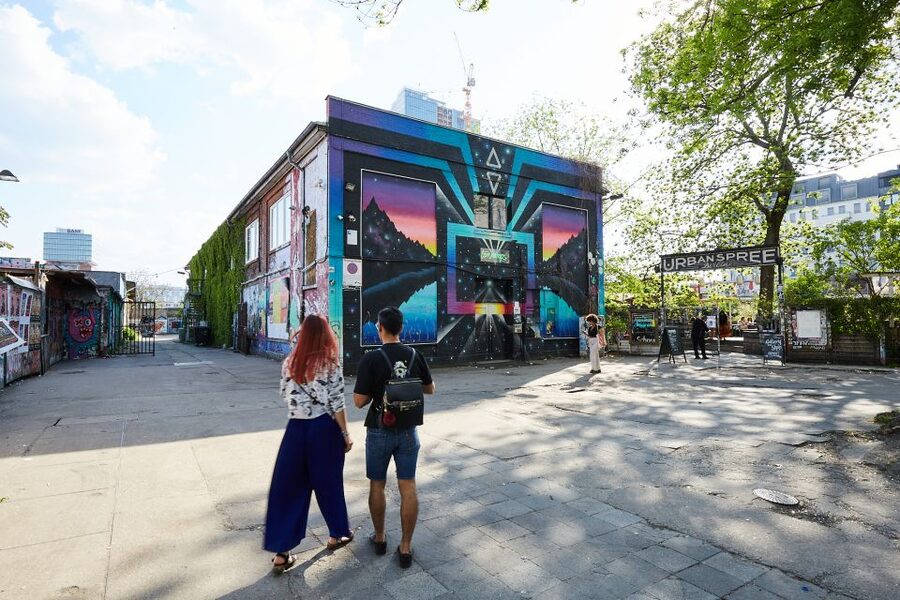
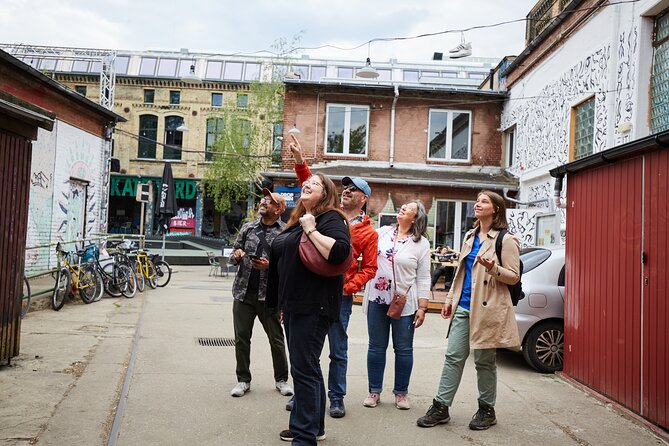
The food is only half the tour. As you walk, the guide traces roughly 80 years of Berlin history through key sites, wall art and club zones.
You are not getting a full history course, and three hours cannot cover every chapter. You are getting a focused route through the change from a controlled communist district to a place known for independent culture, international communities and nightlife.
The wall art matters because Berlin’s past is still visible in public space. The club zones matter for a different reason. They show how areas once marked by division and neglect can take on new uses. The guide’s job is to connect these physical signs with the people who live, work and eat there now.
This is where the quality of the guide makes a real difference. Clara has been praised for explaining local areas, food types and the personal histories of the places visited. Anastasia has also been singled out for combining good food choices with interesting historical detail. Those are the qualities to hope for: clear context, a sense of place and enough detail to make the walk feel specific.
The route should appeal to anyone who wants more than a list of famous sights. You will still need a separate visit for Berlin’s major museums and memorials, but this tour gives you a street-level frame for understanding the city.
Döner, shawarma and the Turkish-German story

The döner or shawarma wrap is another major food stop. In Berlin, döner is not merely a convenient sandwich. It is part of the city’s Turkish-German identity and one of its most widely recognized everyday foods.
The inclusion may be either a döner kebab or a shawarma wrap, so do not book expecting one precise version. Both fit the tour’s larger point: Berlin’s modern food culture was shaped by people who brought their cooking traditions, adapted them to local life and built businesses around them.
This is also a useful reminder that food history is rarely tidy. A wrap sold in Berlin may draw on several traditions, local ingredients and changing tastes. The guide can help you separate the broad cultural story from the simplified version often repeated in tourist material.
The portion is another part of the value. At $104 per person, this is not a cheap lunch. But the included food covers a succession of substantial tastings: currywurst, Syrian metabal, chicken tacos, a döner or shawarma wrap, caramelized nuts and a Turkish sweet, along with drinks. You are paying for the guide, the route and the explanation as much as for the food.
Turkish sweets and caramelized nuts to finish
The final tastes shift the mood toward something sweet. Mixed caramelized nuts provide a snack with crunch and a sugary coating, while the Turkish treat offers a more traditional finish to the Turkish-German food section.
These last samples help pace the tour. You are not moving from one heavy meal to another. Instead, the route alternates between savory and sweet foods, with enough variety to keep the three hours interesting.
Do not expect a dessert course in a full restaurant sense. This is a walking food tour, so the finish is likely to be a compact tasting rather than a long sit-down serving. That is a benefit if you want to keep exploring afterward, but it may disappoint you if you are looking for one large final meal.
Is $104 a fair price?
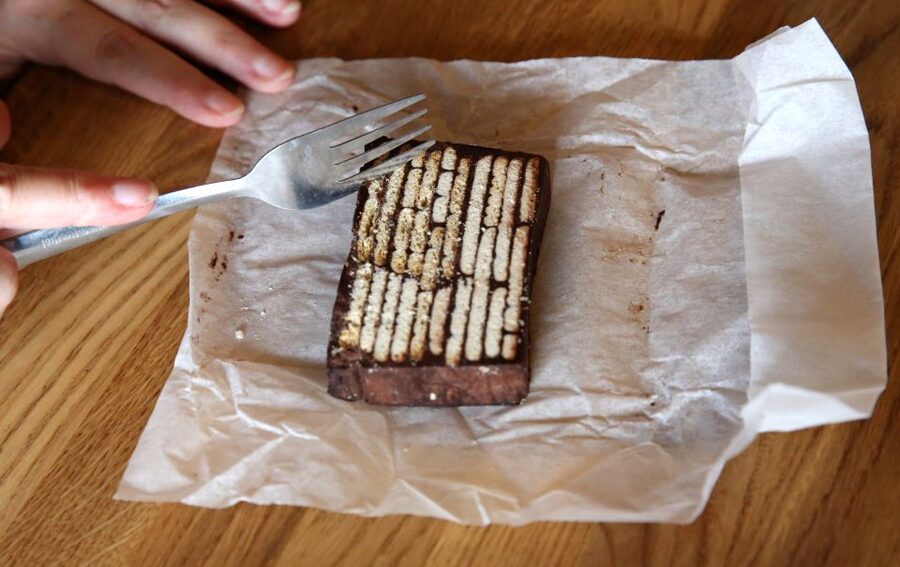
At $104 per person, this tour is priced above a casual self-guided food crawl. The value depends on how much you want the history and local explanation.
If you simply want currywurst, döner and a sweet, you can spend less by ordering them yourself. You would not, however, get the organized route, the Syrian family supper club context, the Vietnamese taco stop, the history of East Berlin or the guide’s food recommendations.
The included drinks improve the calculation. Club Mate, local craft beer and water are covered, as are the listed tastings. You should still budget for any additional drinks.
I would consider the price reasonable for a first visit to Berlin, particularly if you enjoy small-group food experiences and want help making sense of East Berlin. It is less compelling for a repeat visitor who already knows the area, unless the international food angle is new to you.
The tour requires at least two participants. If that minimum is not met, the company will contact you about rescheduling or reimbursement. Children under four can join without a ticket, but no food is included for them. Paid food tickets apply from age four.
Dietary needs, pace and practical limits
Vegetarian and gluten-free requests can be noted when booking or sent by email. The company says it will do its best to accommodate dietary needs where possible, but the food stops can change and severe or life-threatening allergies are not suitable for this activity.
That warning deserves attention. If you have a serious allergy, this is not the right setting for taking chances. Ask before booking if your needs are more complicated than a simple substitution.
The walk is not suitable for wheelchair users or people with mobility impairments. The route includes station access and several food stops, so you should expect regular movement rather than a fixed base.
Cancellation is flexible up to 24 hours before the start for a full refund, and you can reserve now and pay later. Starting times depend on the date, so check availability before building the rest of your day around it.
Who should book this East Berlin food tour?
I would choose this for a first-time Berlin visitor who wants a quick orientation with real food attached. It is also a good fit if you like hearing how dishes arrived in a city and how immigrant communities shaped local habits.
History fans who prefer street scenes to long museum visits should enjoy the wall art, key sites and club areas. So should anyone who wants a guide to explain why East Berlin looks and eats differently today than it did during the divided years.
You may want to skip it if you need a fully accessible route, have severe food allergies, dislike fusion food or prefer to spend three hours at one restaurant. It is also not the best choice if you want a complete account of Berlin history. The tour gives you a lively, food-led introduction, not a substitute for the city’s major historical museums and memorials.
Should you book it?
Book this tour if you want a meal-sized introduction to East Berlin with history running through every stop. The strongest reason to go is the combination of personal food stories, immigrant communities and major Berlin staples, not any single tasting.
I would book early in a Berlin stay, then use the guide’s Food & the City insider tips to shape later meals. Choose it with comfortable shoes, an open mind about fusion cooking and realistic expectations about changing stops. For $104, it is worthwhile when you value context and a guided route as much as the food itself.
FAQ
How long does the East Berlin Food & History Tour last?
The tour lasts three hours.
What language is the tour conducted in?
The live tour is conducted in English.
What foods are included?
The listed tastings include a döner kebab or shawarma wrap, metabal made with smoked aubergine, tahini and garlic, Vietnamese chicken tacos, currywurst, mixed caramelized nuts and a Turkish sweet.
Which drinks are included?
Club Mate, local craft beer and water are included. Extra drinks are not included.
Can the food stops change?
Yes. The tastings and stops can vary by day or season, so the exact selection may not always be identical.
Where does the tour meet?
Go into the main hall, walk toward the McDonald’s, continue to track 8 and take the escalator down. Meet in front of the bakery on the platform. The guide will carry a purple Eating Europe bag.
Can dietary requirements be accommodated?
Vegetarian, gluten-free and some other dietary needs can be requested by email or added when booking. The company cannot take responsibility for severe or life-threatening food allergies.
Is the tour suitable for wheelchair users?
No. The activity is not suitable for wheelchair users or people with mobility impairments.
What is the cancellation policy?
You can cancel up to 24 hours before the tour for a full refund. You can also reserve your place and pay later.
Newest history tours we have reviewed in Berlin
- Berlin: Nazi History Walking Tour★ 4.8 · 33 reviews
- Berlin: History and Sightseeing with Kids (Free for Kids)★ 4.9 · 19 reviews
- Berlin: Historical Sights & Berlin Wall Tour with a Berliner★ 5.0 · 62 reviews
- Berlin: Urbex Abandoned Places & History Tour★ 4.8 · 18 reviews
- Berlin: Historic Center Walking Tour with a Real Berliner★ 5.0 · 134 reviews
- Berlin (E)Bike Tour Historical Highlights in Small groups★ 4.5 · 24 reviews
- Berlin: Guided Craft Beer & Cultural Tour With Snacks★ 5.0 · 68 reviews
- Berlin Beers & Battlefields Tour: War History & German Beer★ 4.9 · 29 reviews
Berlin History Tours, compared.




Berlin Private Complete History All Day Walking Tour
Read our review →
Cold War & Berlin Wall History Guided Bike Tour
Read our review →

Small group Potsdam: A Journey Through History and Palaces
Read our review →Browse the lists this tour appears in