
Review · BERLIN HISTORY TOURS
Berlin (E)Bike Tour Historical Highlights in Small groups
Berlin’s historic center is spread out, and this small-group e-bike tour gives you a practical way to connect the major sites without spending half the day on foot or waiting for buses. You can pedal yourself, or ride in a traditional rickshaw if cycling is not right for everyone in your party. I like the broad route and the easy mix of famous sights with less cheerful, but important, places such as the Nazi book-burning memorial and Hitler’s bunker site.
I also like the thoughtful setup for mixed-age groups. Rickshaws carry up to two people, so grandparents, younger children, and less-mobile companions can stay with the group. The main drawback is that this is a fast overview, not a series of long museum visits. One equipment complaint also noted an e-bike losing power, so check your bike before setting off.
Key points to know before booking
- A wide Berlin Mitte route: See the TV Tower, Museum Island, Brandenburg Gate, Reichstag, Berlin Wall, Checkpoint Charlie, and other major sights in 210 minutes.
- A useful mixed-group option: E-bikes and rickshaws let cyclists and non-cyclists travel together.
- A maximum of six people: The small group makes it easier to hear the guide and ask questions.
- A guide-led history tour: Guides explain Berlin’s architecture, politics, art, daily life, Nazi past, and Cold War years.
- A photo-friendly outing: There are frequent stops, and guides can take pictures for you.
- A central starting point: Meet at Weinbergsweg 6, near U-Bahn Rosenthaler Platz.
Why a bike works well for Berlin’s scattered sights
Berlin’s central sights are close enough to feel connected on a map, but far enough apart to make walking tiring. The TV Tower and Museum Island sit north and east of the central government quarter, while Checkpoint Charlie, Potsdamer Platz, the Berlin Wall, and the Brandenburg Gate stretch across a broad part of Mitte.
An e-bike solves that problem without turning the outing into a workout. You cover more ground than on foot, but you still travel at street level and see the city between the landmarks. I like that balance. A bus can move you quickly, but it skips the small visual changes between districts. A bike or rickshaw keeps you close to the streets, buildings, memorials, and everyday Berlin life.
The tour lasts three and a half hours. That is enough time to build a useful mental map of central Berlin, but not enough for long visits inside the Reichstag, Berlin Cathedral, or the museums. Treat this as an orientation tour and a historical sweep, not as a substitute for separate museum tickets.
More History Bike, Segway and Tuk-Tuk Tours in Berlin:
- Berlin: Cold War & Berlin Wall History Guided Bike Tour
★ 4.8 · 422 reviews - Berlin: Guided Bike tour of the Berlin Wall and Third Reich
★ 5.0 · 160 reviews - Berlin Wall History Small Group Cycling Tour
★ 4.9 · 152 reviews
Starting at Rosenthaler Platz
The meeting point is Weinbergsweg 6, near the U-Bahn station Rosenthaler Platz. This is a handy place to begin because it sits in a lively part of Mitte, with cafés, shops, bars, street art, and Weinbergspark nearby.
Give yourself time to find the exact address. Rosenthaler Platz is easy to reach by public transport, but the square has several streets feeding into it. Comfortable shoes are still a good idea, even though you will spend much of the tour riding. You will get on and off for stops, photos, and short explanations.
The group is limited to six participants. That matters on a bike tour. You are less likely to lose the guide in traffic, and it is easier to ask about a building or a difficult part of Berlin’s past. The tour is offered in English, and Levent has also led it in Dutch.
TV Tower and Museum Island
The first major sight is the Berlin TV Tower, the tall concrete landmark rising above Alexanderplatz. From street level, it gives you an immediate sense of Berlin’s postwar East German character. The tower is not simply a viewing attraction. It is also a marker of the former East Berlin skyline and a useful point of orientation.
From there, the route continues toward Museum Island. This island in the Spree holds Berlin’s major museum complex, along with the Berlin Cathedral. You will have time for a guided explanation and photos, but the tour does not include a museum visit. If you want to see the Pergamon Museum, Neues Museum, or another collection inside, plan a separate visit.
I like this early section because it links old royal Berlin with the city’s socialist-era center. You are not seeing isolated monuments. You are watching Berlin change from one street and district to the next.
Unter den Linden and the book-burning memorial
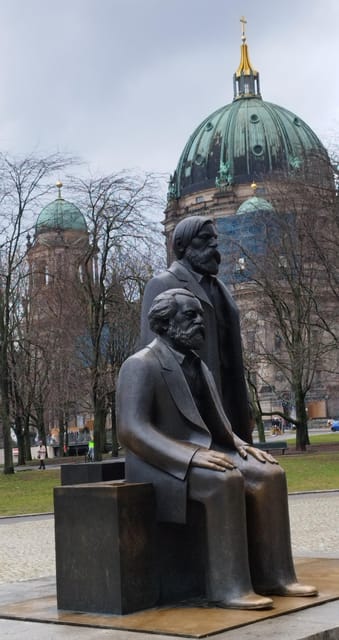
The route follows Unter den Linden, Berlin’s grand boulevard. Its name refers to the rows of linden trees that line the avenue. The boulevard connects Museum Island with the Brandenburg Gate and the government district, making it one of the most useful streets for understanding central Berlin.
A stop at the memorial for the Nazi book burning of May 10, 1933 adds a serious note. The memorial recalls the public destruction of books by Jewish, political, and other writers whose ideas the Nazi regime rejected. The site is easy to miss if you pass quickly, which is one reason a guide adds value here.
This is a brief stop, not a long memorial visit. You will get historical context and a photo opportunity, then continue through the city. I appreciate that the tour includes places that are not always on a first-time visitor’s short list.
More History Tours in Berlin:
- Berlin: 3-Hour World Heritage Cruise to Potsdam
★ 4.5 · 1,569 reviews - Berlin: History of the Third Reich Guided Walking Tour
★ 4.7 · 791 reviews - Berlin: Berlin Charité Guided History Tour
★ 4.4 · 660 reviews - Berlin Historical Highlights Walking Tour
★ 4.9 · 657 reviews
Checkpoint Charlie and the Cold War
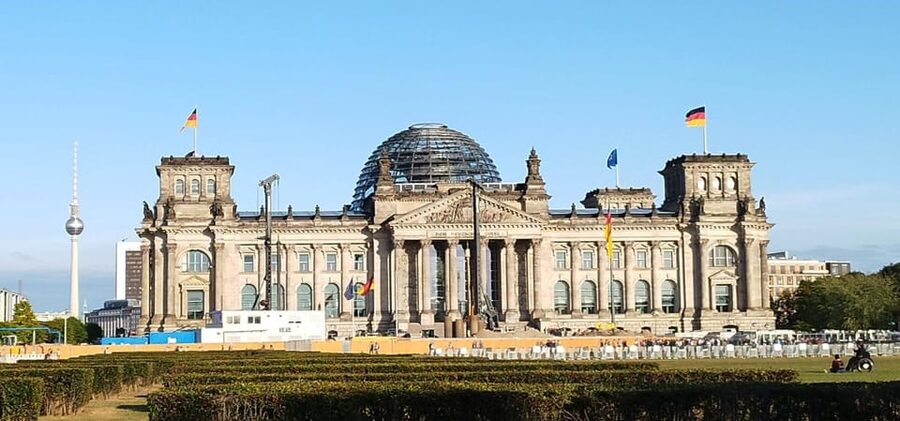
Checkpoint Charlie is one of Berlin’s best-known Cold War locations. It was the crossing point between the American and Soviet sectors, and its name became a symbol of the divided city.
The site today is busy with visitors, photographs, and nearby attractions. The guardhouse display is a reconstruction, so it is best understood as a reminder of the former crossing point rather than an untouched Cold War scene. A guide can help separate the real history from the modern presentation.
The bike format is useful here because you do not need to spend a long time in one crowded spot. You stop, hear the explanation, take pictures, and continue. If Cold War history is a major reason for your Berlin visit, use this tour to get the basic story, then add a longer visit to a wall museum or documentation center later.
Hitler’s bunker site and the Holocaust Memorial
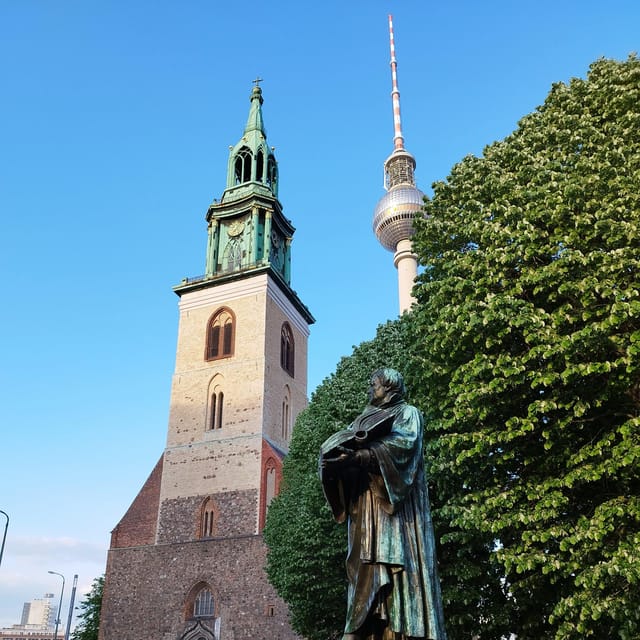
The former Führerbunker site is another difficult but important stop. Adolf Hitler spent the final weeks of his life in the bunker during the last days of the Second World War. The bunker itself is not open to visitors, and the location is marked in a restrained way rather than with a dramatic monument.
That restraint is useful. It keeps the focus on the historical facts and avoids turning the site into a spectacle. The guide’s explanation matters here, since the location can otherwise seem like an ordinary patch of city landscape.
Nearby, the Holocaust Memorial presents 2,711 concrete blocks across an open field. You can walk among them during the stop, though the tour’s time limits mean you will not have an unlimited visit. The memorial is intentionally unsettling and changes as you move through it. I recommend paying attention to how the blocks rise and fall around you rather than treating it as only a photo backdrop.
These two stops require a respectful mood. The tour includes many pleasant streets and scenic views, but Berlin’s story cannot be told honestly without confronting Nazi crimes and the Holocaust.
The Berlin Wall and Topography of Terror
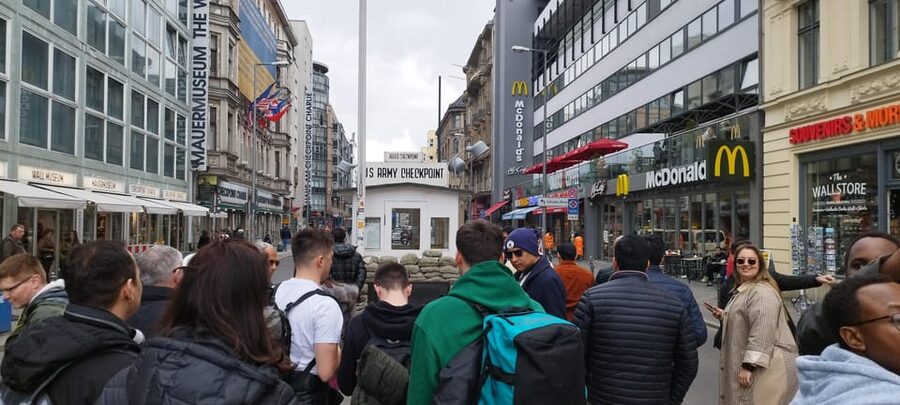
The itinerary includes a Berlin Wall stop, where you learn about the barrier’s role in dividing East and West Berlin. The exact wall location and stopping arrangements can vary with street conditions, but the purpose is clear: to explain how a city was physically split and how that division shaped daily life.
The Wall was not just a political line. It cut through streets, neighborhoods, transport routes, and families. Seeing the remaining traces or marked route on a bike helps you understand the scale of the division better than a single photograph can.
The Topography of Terror continues the story of dictatorship. It occupies the site of the former SS and Gestapo headquarters and focuses on Nazi persecution and state terror. The tour includes a photo stop and a short explanation, not an extended exhibition visit.
If you want to read the displays in detail, return independently. The value of seeing it during this outing is that it places the site within the wider route, between the former Nazi government center and the later Cold War city.
Potsdamer Platz and the Brandenburg Gate
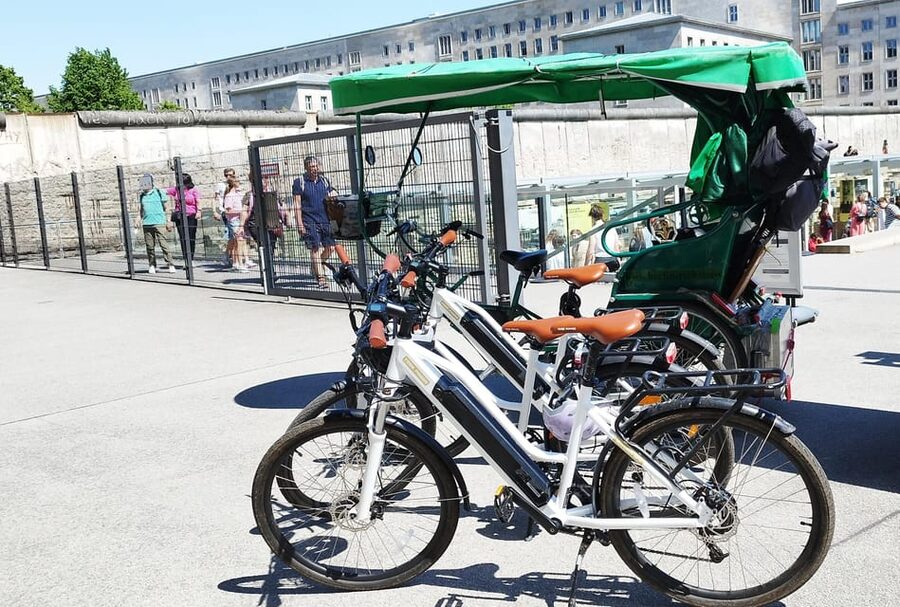
Potsdamer Platz represents Berlin’s modern rebuilding. Once damaged and divided, the area became a major construction zone after reunification. Today, it is a large commercial and office district with striking contemporary architecture.
You may see it as a quick scenic stop rather than a full architectural tour. Still, it provides a useful contrast with the older buildings along Unter den Linden and the government quarter. Berlin’s appeal comes partly from these sharp changes in style and purpose.
The Brandenburg Gate is the tour’s best-known landmark. Once a royal entrance, it later became a Cold War symbol and then a sign of reunified Germany. The gate is especially meaningful because it sat near the former border between East and West Berlin.
There is usually a good opportunity for photos here. The guide can also help position the gate within the history of the surrounding area, rather than leaving you with only the standard postcard view.
Reichstag and the return through central Berlin
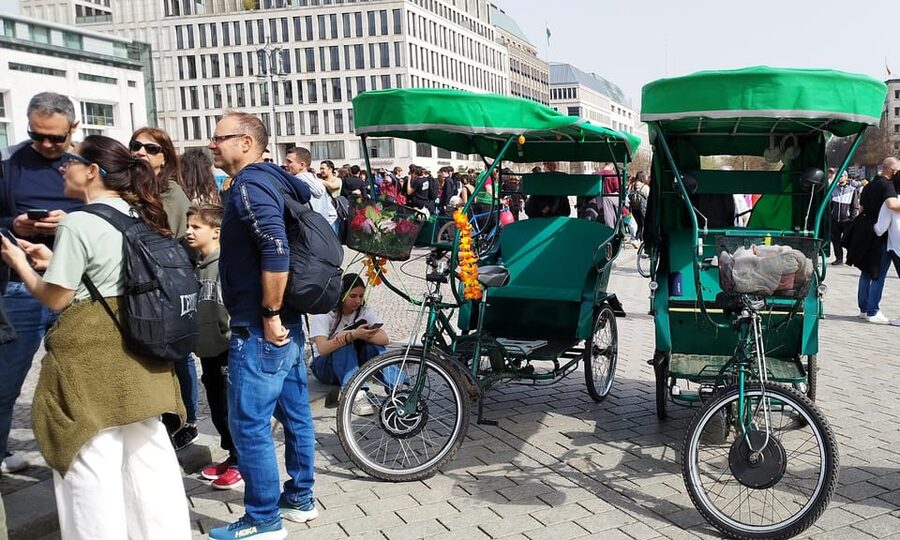
The Reichstag is home to Germany’s federal parliament. Its historic exterior and modern glass dome reflect the country’s attempt to connect its past with a democratic present.
The stop is primarily for photos and explanation. Entry to the building is not included in this ride, and a separate visit requires its own arrangements. Even from outside, the building is worth seeing because it sits at the center of Berlin’s modern political district.
After the Reichstag, the group returns toward Weinbergsweg 6. By this point, you will have crossed a large part of Mitte and seen how royal, Nazi, Cold War, socialist, and reunified Berlin overlap in a relatively compact central area.
E-bike or rickshaw: choosing the right seat
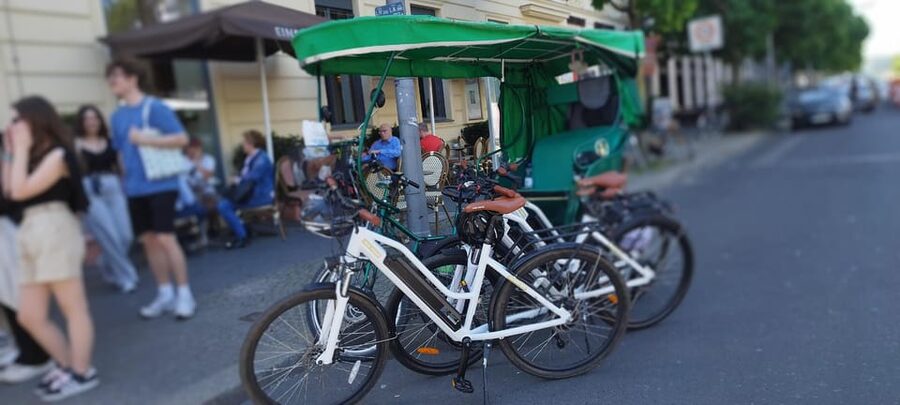
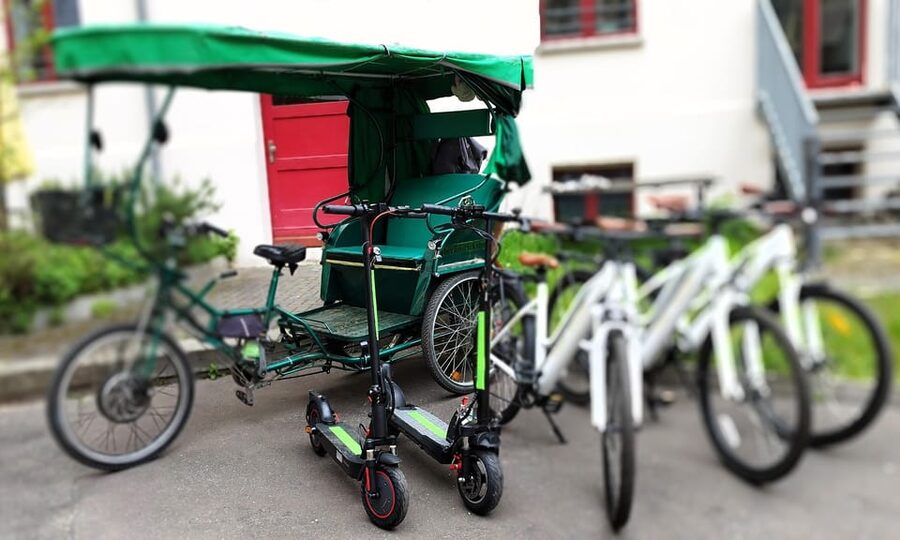
The e-bike is best if you want to move under your own power and enjoy the feeling of covering the city directly. The electric assistance should make the long route more manageable, but you still need to be comfortable riding in an urban setting.
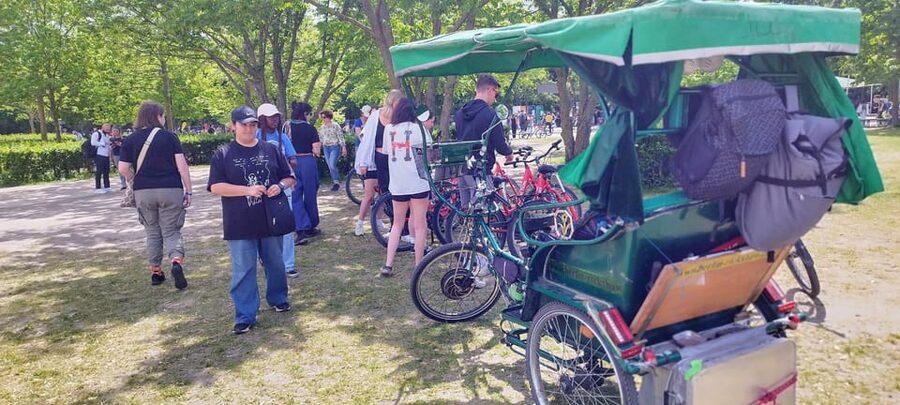
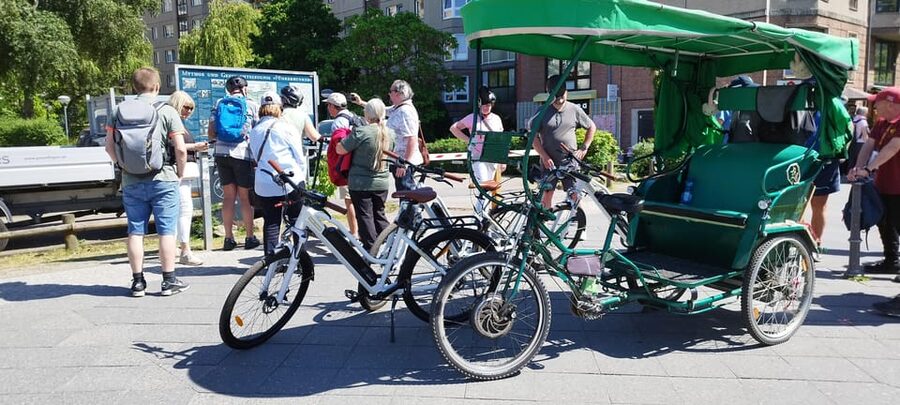
The rickshaw is the better choice for a companion who cannot cycle, is under 14, or simply prefers to sit. Each rickshaw holds up to two people, and the design requires only a few steps to board. The ride gives you a close view of the monuments and keeps less-mobile members of your group part of the same outing.
The arrangement is especially helpful for families with grandparents and children. You do not need to split the party between a long walking route and a separate transport plan. Ask about your transport choice when booking, particularly if several people in your group need rickshaw seats.
One point deserves attention: one poor experience involved e-bike power failing during the ride, along with an unhelpful response from the organizer. Most of the available feedback is positive, but I would inspect the battery and controls before leaving Weinbergsweg. If something feels wrong, raise it at once, while there is still time to fix the problem.
Guide style, photos, and group comfort
The guides are expected to explain history, architecture, art, culture, and daily life in English. One particularly praised guide, Levent, led a Dutch-language tour with an enthusiastic style. Another guide named Jakob received strong praise, while the bike handoff and equipment process on one occasion was described as chaotic.
The tour includes many photo stops, and the guides can take pictures for you. That is a small but useful service, especially for families or couples who otherwise have to rely on passing strangers. Bring your own phone or camera, and tell the guide if a particular group photo matters to you.
Free bottled water is included. You should still wear comfortable shoes and dress for the weather, since the tour includes outdoor stops and short walks beside the bikes or rickshaw.
At $82 per person, the tour is not the cheapest way to see Berlin. I think the price makes the most sense when you value the guide, the small group, the broad route, and the option to include a non-cyclist. A family that would otherwise need several transport connections can get real value from the convenience.
If you are a confident cyclist and already know the city, you may prefer to rent a bike and explore independently for less. You would give up the historical explanations, organized route, rickshaw option, and help with photos.
Should you book this Berlin e-bike tour?
I would book it for a first or second day in Berlin, especially if you want to get your bearings quickly. The route covers nearly all the major historic sights in Mitte, and it gives you a useful list of places to revisit at your own pace.
It is a particularly good match for families, small groups of friends, and parties with mixed mobility. Choose the rickshaw if someone cannot cycle or if you want the gentlest possible ride. Choose the e-bike if you want an active tour and are comfortable on city streets.
I would skip it if you want long museum visits, detailed time at each memorial, or a quiet, slow look at one neighborhood. For most first-time visitors who want context, variety, and a practical way to cross central Berlin, this is a sensible and enjoyable introduction, with the usual need to check the equipment before departure.
FAQ
How long does the Berlin e-bike and rickshaw tour last?
The tour lasts 210 minutes, or three and a half hours.
Where does the tour begin and end?
It begins and ends at Weinbergsweg 6, near U-Bahn Rosenthaler Platz in Berlin.
How many people can join the group?
The tour is limited to six participants.
Is the tour offered in English?
Yes. The listed live tour language is English.
Who is the rickshaw option suitable for?
The rickshaw is suitable for grandparents, younger children, people under 14, less-mobile companions, and anyone who prefers not to ride a bike. Each rickshaw can accommodate up to two people.
Which Berlin sights are included?
The route includes the TV Tower, Museum Island, Unter den Linden, the May 10, 1933 book-burning memorial, Checkpoint Charlie, Hitler’s bunker site, the Holocaust Memorial, a Berlin Wall stop, the Topography of Terror, Potsdamer Platz, the Brandenburg Gate, and the Reichstag.
Newest history tours we have reviewed in Berlin
- Berlin: Nazi History Walking Tour★ 4.8 · 33 reviews
- Berlin: History and Sightseeing with Kids (Free for Kids)★ 4.9 · 19 reviews
- Berlin: Historical Sights & Berlin Wall Tour with a Berliner★ 5.0 · 62 reviews
- Berlin: Urbex Abandoned Places & History Tour★ 4.8 · 18 reviews
- Berlin: Historic Center Walking Tour with a Real Berliner★ 5.0 · 134 reviews
- East Berlin Food & History Tour with Eating Europe★ 4.8 · 20 reviews
- Berlin: Guided Craft Beer & Cultural Tour With Snacks★ 5.0 · 68 reviews
- Berlin Beers & Battlefields Tour: War History & German Beer★ 4.9 · 29 reviews
History Bike, Segway & Tuk-Tuk Tours, compared.
Historical Singapore Bike Tour on Full-Sized Bicycles
Read our review →
Charlotte’s Ultimate Southern Charm Historical City Cart Tour
Read our review →

Asheville Historic Downtown Guided Electric Bike Tour with Scenic Views
Read our review →
Private Guided Historic Electric Cart Tour of St. Augustine
Read our review →
60-Minute Guided Segway History Tour of Savannah
Read our review →
Historic Athens: Small Group Electric Bike Tour
Read our review →
90 Minute Historic Uptown Neighborhood Segway Tour of Charlotte
Read our review →Browse the lists this tour appears in