Review · BERLIN HISTORY TOURS
Berlin: Private Bike Tour of the Berlin Wall and Third Reich
Berlin’s past is spread across a wide city, and a bicycle is a smart way to connect it. In about three hours, this private tour moves from medieval Nikolaiviertel to the Wall, Nazi military remains, the government district, Holocaust memorials, and Checkpoint Charlie. You cover far more ground than you could on foot, while still stopping often enough to understand what you’re seeing.
I like the private format, since your guide can adjust the pace and focus for your group. I also like the mix of famous places and quieter sites, especially the Günter Litfin Memorial, Invalidenfriedhof, and Humboldthain Flak Tower. The main drawback is that three hours is tight for such a serious and wide-ranging subject, and several stops are brief.
Key points about this Berlin bike tour
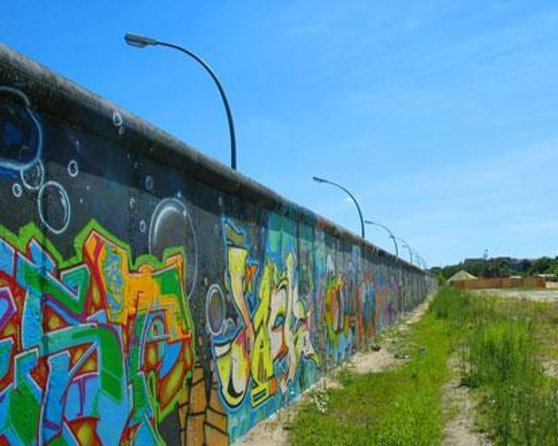
- A broad route in three hours: Connect Berlin Wall sites, Nazi-era locations, government buildings, and memorials by bike.
- Private and flexible: Your guide designs the route, so your group can place more weight on the Wall, the Third Reich, or Berlin’s democratic history.
- Strong Wall locations: The Berlin Wall Memorial, Mauerpark, Günter Litfin Memorial, and Invalidenfriedhof show different parts of the border system.
- English includes Checkpoint Charlie: The famous Cold War crossing is specifically included on the English version.
- Bikes and helmets are provided: Children are welcome, and infant seats can be arranged on request.
- Best for groups of four or more: The price is $107.42 per person, and the tour requires at least four people.
Why a bicycle works so well in Berlin
Berlin’s key sights are not packed into one small historic center. The Wall once cut through neighborhoods, parks, cemeteries, and government land, so the most useful sites are scattered. A bicycle lets you follow those connections instead of seeing isolated monuments one at a time.
The route includes many short stops, generally around five to fifteen minutes. That keeps the ride moving, but it also means you should expect an overview rather than a long lecture at every site. I see this as a good trade for anyone who wants to understand how the city fits together.
The tour is private, so you are not tied to the interests or pace of a large group. You can ask for more attention to the Cold War, Hitler’s rise, Berlin’s Jewish history, or the city’s postwar division. The Free Berlin concept also means each guide creates a route of their own, so the exact order and emphasis can vary.
More Private History Tours in Berlin
- Berlin Private Complete History All Day Walking Tour
★ 5.0 · 474 reviews - Berlin Private Half-Day Walking Tour: Discover the German Capital’s History
★ 5.0 · 244 reviews - The History of Berlin: WWII PRIVATE Walking Tour With Locals
★ 5.0 · 209 reviews
From Nikolaiviertel to the New Synagogue
The meeting point is Free Berlin Bike Tours & Rental at Poststraße 11, near the center of Berlin. The first stop, Nikolaiviertel, gives you a useful warning about Berlin: even its oldest-looking quarter has a complicated past.
Nikolaiviertel is described as Berlin’s only real old town, but much of what you see today has been rebuilt. The area suffered heavy bombing during the Second World War, so this short stop raises a basic question: what does old Berlin really mean when war and rebuilding have changed the city?
That makes it a useful opening. You begin with questions about survival, reconstruction, and historical authenticity before moving into the twentieth-century subjects that dominate the ride.
At the New Synagogue, the focus shifts to civil courage during Kristallnacht, the night of broken glass. You’ll hear how a police officer helped protect the building. The stop lasts only about five minutes, so it is more of a sharp introduction than a full visit to the synagogue.
You should also expect to pass or stop at a memorial for people deported and murdered during the Holocaust. It was designed during the East German period and offers a different visual and political approach from the better-known memorial near Brandenburg Gate. The precise order of these memorial stops can vary with the guide’s route.
Experiencing the Wall at Bernauer Strasse and Mauerpark
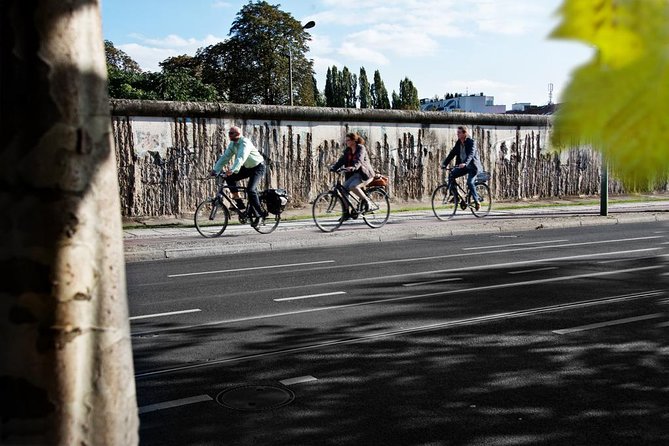
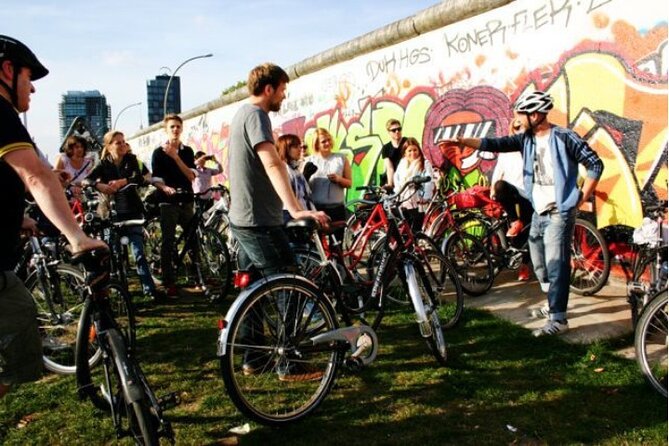
The Berlin Wall Memorial is one of the most useful stops on the tour because it preserves more than a single painted section of concrete. Here, you can better understand how the border worked, how it divided streets and homes, and why it was so hard to cross.
The stop is listed at about ten minutes, which is enough for a clear explanation and a look at the surviving structures. It is not enough for every exhibit or story in the area, so you may want to return later if the Wall becomes your main interest.
Mauerpark adds another layer. Today it is associated with a Sunday flea market, but its earlier role was far more severe. The park occupies former border ground and helps explain East Germany’s repeated attempts to create a controlled, secure frontier.
I like this pairing. The Wall Memorial explains the physical border, while Mauerpark shows how the border shaped ordinary urban space. You are not only looking at a slab of concrete. You are seeing where authorities tried to control movement through an entire city.
Humboldthain and the military side of Nazi Berlin
Humboldthain Flak Tower is one of the most striking stops. It was built as a huge anti-aircraft fortress and air-raid shelter during the Nazi period. The structure also offers a panoramic view, linking military architecture with the modern city around it.
The tour uses the site to discuss Nazi building methods and ambitions. That is valuable because Nazi Berlin was not just about speeches and political offices. It also involved massive construction projects, defensive works, and plans to reshape the capital through architecture.
The ten-minute stop cannot cover every detail of the tower. Access and walking conditions may also affect what you can see, so dress for the weather and wear practical clothing. The tour operates in all weather, and you will be outdoors for the full ride.
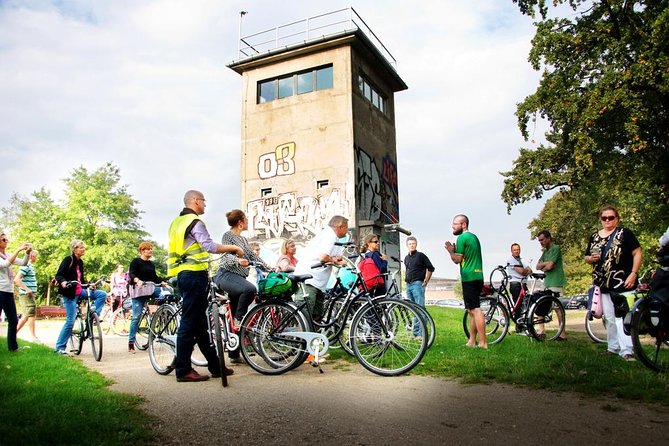
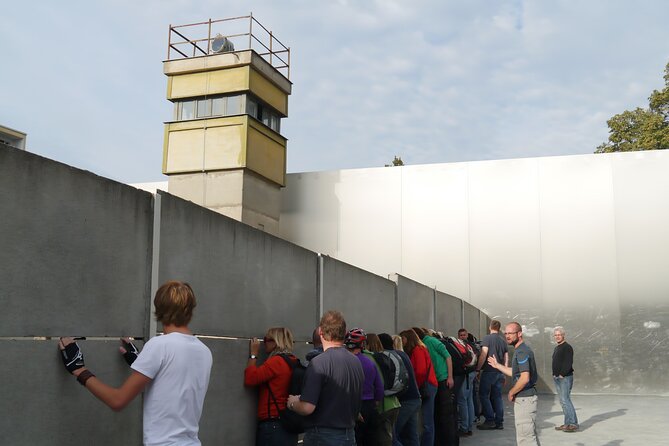
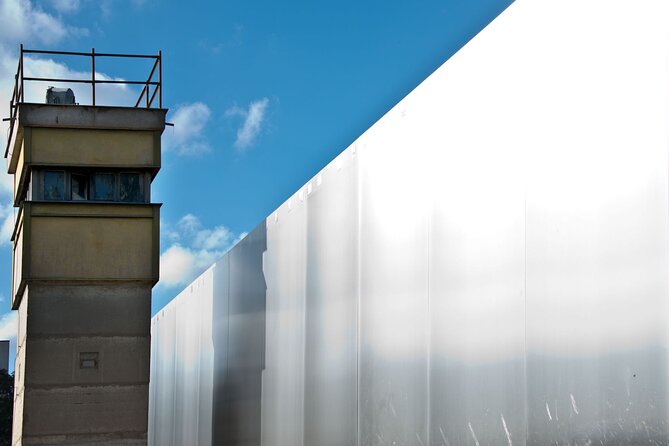
At the Günter Litfin Memorial, you see an original watchtower preserved in memory of Günter Litfin, identified as the first person shot at the Wall. This is one of the more personal Wall stops. The tower gives the border a human scale, while the story makes clear that the Wall was enforced with lethal force.
More Private History Tours in Germany
- Private Taxi Tour City East & West History and Architecture 3-4h
★ 5.0 · 42 reviews - Private Tour: Jewish Heritage Walking Tour of Berlin
★ 5.0 · 29 reviews - Private Berlin WWII and Cold War History Tour with Local Expert Guide
★ 5.0 · 28 reviews - Nuremberg: 1.5-Hour Private Tour through Historical Old Town
★ 4.8 · 283 reviews
Invalidenfriedhof and Berlin’s divided ground
Invalidenfriedhof is a cemetery with a particularly uneasy history. It was created for important figures in German military history, but the Wall later cut directly through the burial ground.
That physical division makes the cemetery a powerful place to discuss how political systems decide whom to honor and whom to question. Some people buried there are remembered for military achievement, while others require a more critical look. The tour’s short stop allows your guide to raise those questions without turning the cemetery into a simple parade of names.
This is also a good example of why a private tour can be useful. If you are interested in military history, the guide can give this area more attention. If your group is more interested in the Wall’s human stories, you can keep moving toward the next sites.
Spreebogen Park and the Reichstag
At Spreebogenpark, you get a broad view of Germany’s government district. The stop also opens a discussion of Albert Speer, Hitler’s architect, and his plan for a Great Hall large enough to hold 180,000 people.
That number is hard to grasp until you look across the open area and consider the scale of the planned capital. The site links Nazi architectural fantasies with the democratic institutions that occupy Berlin today. It is a useful contrast, and one of the tour’s more thoughtful transitions.
The Reichstag is next. You’ll discuss Hitler’s seizure of power and Germany’s democratic development from outside the building. The tour does not include entry to the Reichstag, so do not book this ride expecting to visit the dome or interior.
Still, an exterior explanation has value. The building connects the end of the Weimar Republic, the Nazi period, the division of Berlin, and today’s federal government. Your guide can place those changes in sequence while you remain on the route.
Holocaust memorials and the bunker site
The tour includes the Memorial to the Murdered Jews of Europe near Brandenburg Gate. Its field of concrete blocks is deliberately open to interpretation, and the scale makes it hard to treat as just another stop for a photograph.
The tour also refers to memorials for other major victim groups of the Holocaust. The information provided does not specify every exact stop or duration, so your guide’s route may determine which memorials receive the most attention. This broader view matters because Nazi persecution targeted several groups, not only one.
At the Führerbunker site, you see little more than a parking area. That is intentional. Hitler spent his final weeks in the bunker and died there by suicide, but the site was later concealed and built over. Your guide explains why there is no grand museum or preserved entrance marking the spot.
For many people, this is one of Berlin’s most revealing places. The lack of a dramatic monument reflects a deliberate choice not to create a shrine. It also shows how Berlin handles a location tied to dictatorship and mass murder without turning it into a spectacle.
Checkpoint Charlie and the Cold War finish
Checkpoint Charlie is included on the English version of the tour and is one of Berlin’s most famous Cold War locations. It was a border crossing associated with the United States and the Soviet Union, and tensions there once came close to a direct military confrontation.
This is the most recognizable stop on the route, but it is not necessarily the most authentic-looking. The area is busy with tourism and modern commercial activity. The value comes from understanding what happened there, not from expecting an untouched border post.
The guide connects the checkpoint to the risk of a third world war in the center of Berlin. That makes it a strong ending because the tour has moved from Nazi dictatorship to divided Europe and then to the political order that followed.
The East Side Gallery is also named among the tour’s possible significant points. Since the detailed route does not place it among the numbered stops, ask before departure if you specifically want it included. The private format gives you a better chance of shaping the itinerary, but the tour cannot cover every Berlin Wall site in three hours.
Price, timing, and what you receive
The price is $107.42 per person, with a minimum of four people. That means the minimum group cost is $429.68 before any applicable booking changes. For a private three-hour tour with a guide, bicycle, and helmet included, the price can make sense when four people share the experience and want a focused route.
The value is less clear for a solo visitor or a pair, since the minimum group requirement applies. Group discounts are available, which may improve the cost for a larger party. You should compare the total group price rather than judging the per-person figure alone.
The tour offers several departure times, though the exact choices depend on the date you select. It ends back at the starting point, and hotel pickup, food, and drinks are not included.
The ride operates in all weather. Berlin’s weather can change quickly, so bring suitable clothing rather than assuming a pleasant day. Children must be accompanied by an adult, and infant seats can be provided on request.
English and German are available. Dutch, French, and Spanish may be possible on request, while Checkpoint Charlie is specifically part of the English version. Confirmation arrives at booking, and you can cancel for a full refund up to 24 hours before the start time.
Who should book this Berlin ride?
I would choose this tour if you want a big-picture introduction to Berlin’s twentieth-century history and prefer moving through the city rather than sitting in a classroom. It is especially useful for families, small groups, and history-focused visitors who want to ask questions and adjust the emphasis.
You should also book it if walking long distances would slow you down. One clear advantage of cycling is speed: you can reach several distant sites in the time it would take to walk between a few of them.
I would be more cautious if you want long museum visits, detailed Holocaust education, or entry into the Reichstag. The tour stays outside and keeps a brisk rhythm. Some stops last only five minutes, so you will need to accept short explanations in exchange for broad coverage.
Should you book the Berlin Wall and Third Reich bike tour?
Book it if you want Berlin’s Wall and Nazi-era sites placed into one connected route. The private setup, flexible itinerary, supplied bikes, and strong mix of major and lesser-known locations give you more than a standard sightseeing loop.
Before booking, confirm your preferred language and ask whether East Side Gallery can be included. Also make sure your group has at least four people and is comfortable cycling in uncertain weather.
For a first look at Berlin’s difficult past, this is a practical choice. For a detailed study of one subject, choose a specialist museum visit or a longer dedicated tour instead.
FAQ
How long is the private Berlin bike tour?
The tour lasts approximately three hours.
What is the price?
The listed price is $107.42 per person. Group discounts are available, and the tour operates with a minimum of four people.
Where does the tour start?
It starts at Free Berlin Bike Tours & Rental, Poststraße 11, 10178 Berlin, Germany.
Where does the tour finish?
The activity ends back at the meeting point.
Are bicycles and helmets included?
Yes. The use of a bicycle and helmet is included.
Is the tour private?
Yes. Only your group participates in the activity.
Is the tour available in English?
Yes. English and German are offered. Dutch, French, and Spanish may also be possible on request.
Is Checkpoint Charlie included?
Checkpoint Charlie is included on the English version of the tour.
Can children join the tour?
Yes. Children are welcome, but they must be accompanied by an adult. Infant seats can be provided on request.
More WWII and D-Day Tours in Berlin
- Vienna: World War II Historical Walking Tour
★ 4.8 · 1,772 reviews - Zagreb: City & History Walking Tour & WW2 Tunnels
★ 4.9 · 1,202 reviews - Pearl Harbor History Remembered Tour from Ko Olina
★ 5.0 · 1,009 reviews - Hiroshima Peace (Heiwa) Walking Tour at World Heritage Sites
★ 5.0 · 872 reviews
More WWII and D-Day Tours in Germany
- Berlin: History of the Third Reich Guided Walking Tour
★ 4.7 · 791 reviews - Berlin: Guided Bike tour of the Berlin Wall and Third Reich
★ 5.0 · 160 reviews - Berlin: Nazi History Walking Tour
★ 4.8 · 33 reviews - Eagle’s Nest-Berchtesgaden-Obersalzberg Private Half Day WWII Historical Tour
★ 5.0 · 64 reviews
Newest history tours we have reviewed in Berlin
- Berlin Food & Cultural Tour: Must-Try German & Berliner Classics★ 5.0 · 51 reviews
- Private Tour: Jewish Heritage Walking Tour of Berlin★ 5.0 · 29 reviews
- Small-Group Historical Bike Tour in Berlin★ 4.5 · 103 reviews
- Historic center of Berlin – Tour in Italian★ 5.0 · 143 reviews
- East Berlin Food & History Tour with Eating Europe★ 5.0 · 204 reviews
- Private Berlin WWII and Cold War History Tour with Local Expert Guide★ 5.0 · 28 reviews
- Where It All Began: Berlin’s Queer & Trans History Tour★ 5.0 · 27 reviews
- Explore Berlin History and Highlights Sightseeing Walking Tour★ 5.0 · 81 reviews
WWII & D-Day Tours, compared.
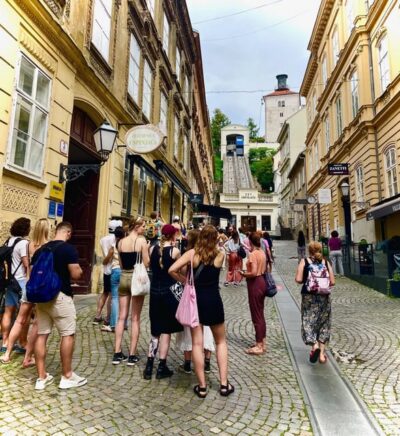
Zagreb: City & History Walking Tour & WW2 Tunnels
Read our review →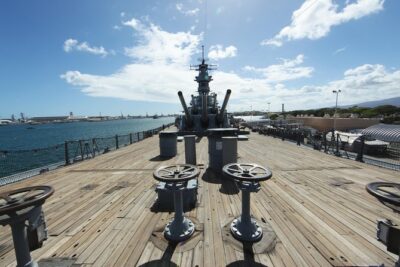
Pearl Harbor History Remembered Tour from Ko Olina
Read our review →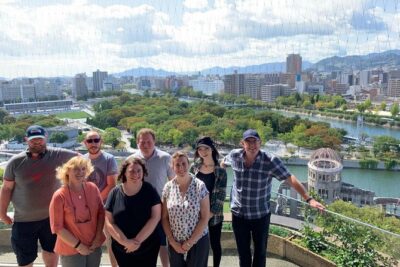
Hiroshima Peace (Heiwa) Walking Tour at World Heritage Sites
Read our review →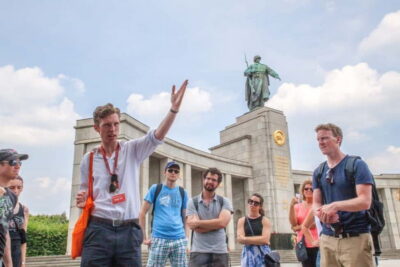
Pearl Harbor & USS Arizona Small-Group Tour [Early Access]
Read our review →
Anne Frank and the Jewish History of Amsterdam Private Tour
Read our review →