Review · BERLIN HISTORY TOURS
Private Berlin WWII and Cold War History Tour with Local Expert Guide
Berlin’s most powerful history lesson happens outdoors, block by block. This private walk links the Nazi government quarter, the Berlin Wall era, and today’s rebuilt Mitte, so you can see how one city carries several difficult pasts at once. You’ll visit the Brandenburg Gate, Holocaust Memorial, Führerbunker site, Checkpoint Charlie, and Museum Island, with a guide connecting the places rather than treating them as isolated photo stops.
I especially like the private format, which lets you ask questions, change the pace, and spend more time on the subjects that matter to you. The included currywurst break also gives the four-hour walk a useful pause and a taste of an everyday Berlin classic. The main caution is distance: this is a serious walk, and cold weather, icy streets, or limited mobility can make the day harder.
Key points at a glance
- A four-hour route through Nazi and Cold War Berlin: The walk connects the Führerbunker site, Holocaust Memorial, Palace of Tears, and Checkpoint Charlie.
- A private guide who can adjust the day: Guides such as Dimitri, Eleni, Lucian, Despina, Peter, and Simon have adapted routes, pace, and explanations to suit individual groups.
- Currywurst included: You get a traditional Berlin snack during the Wilhelmstrasse portion of the walk.
- Major sights plus less familiar corners: The route can include the Missing House on Große Hamburger Strasse and Heckmann Höfe, not just the standard landmarks.
- Mostly an outdoor history lesson: Admission fees are not the central value here. You pay for context, conversation, navigation, and a custom route.
- Strong overall rating with one serious service complaint: The experience is rated 4.8 from 29 reviews and recommended by 97 percent of travelers, but one booking failure was reported and should be taken seriously.
Why this walk makes Berlin’s past easier to understand
Berlin can feel like a history book spread across a large city. A memorial may explain one chapter, a surviving building another, and a modern office block can hide the place where an important event happened. A private guide helps you connect those points while you walk.
This tour focuses on two periods that shaped modern Berlin: the Nazi era and the Cold War division between East and West. You’ll also see older architecture and present-day neighborhoods, which keeps the route from becoming a grim march from one memorial to the next.
The route starts on Oranienburger Strasse in Mitte, near the New Synagogue and Palace of Tears. It then moves through government buildings and memorials around the Brandenburg Gate and Wilhelmstrasse before continuing toward Checkpoint Charlie, Bebelplatz, Museum Island, and the Mitte quarter.
That is a lot for four hours. The exact order and time at each point can change because the tour is private and customizable. If your group wants more Nazi-era history, tell the guide early. If the Cold War is your main interest, ask for more time around the Palace of Tears and Checkpoint Charlie.
More Private History Tours in Berlin
- Berlin Private Complete History All Day Walking Tour
★ 5.0 · 474 reviews - Berlin Private Half-Day Walking Tour: Discover the German Capital’s History
★ 5.0 · 244 reviews - The History of Berlin: WWII PRIVATE Walking Tour With Locals
★ 5.0 · 209 reviews
Oranienburger Strasse and the New Synagogue
Your meeting point is Oranienburger Strasse 28 to 30, a central location with nearby public transportation. The street is a good opening because it immediately introduces Berlin’s layered past.
The New Synagogue, also known as Centrum Judaicum, is one of Berlin’s most important Jewish landmarks. Its Moorish-style architecture makes it an obvious photo stop, but the building also points to the Jewish life that existed here before the Nazi period and to the work of preserving memory today.
You should expect to admire the exterior rather than treat this part as a full museum visit. The listed time is about 20 minutes, and the tour’s main purpose is to place the building within the city’s story.
This is also a good moment to tell your guide what you want from the next four hours. Several guides, including Despina and Simon, have adjusted the route for first-time visitors and personal interests. The more specific you are, the more useful the private format becomes.
The Palace of Tears and the mechanics of a divided city
The Palace of Tears is one of the most revealing stops because it deals with ordinary people caught in the machinery of the Cold War. This former border crossing at Friedrichstrasse station handled departures from East Berlin to the West. Families said goodbye here, often without knowing when they would meet again.
Inside, the preserved 1960s interior gives the place a plain, almost bureaucratic feel. Floor tiles, a wall clock, and period design details help you picture the setting better than a photograph alone. The exhibition also covers attempts to flee from the Soviet-occupied eastern sector into the Allied-controlled western sectors.
The tour allows about 20 minutes here. That is enough for an introduction, though not for an extended museum study. If the Cold War is your priority, this is one of the places where you may want to ask for extra explanation.
The private setup matters at a stop like this. You can ask about escape attempts, border procedures, or daily life in divided Berlin without worrying about holding up a large group. Guides have also been praised for bringing photographs and visual references, which can help you picture streets and barriers that have disappeared.
The Reichstag and Brandenburg Gate
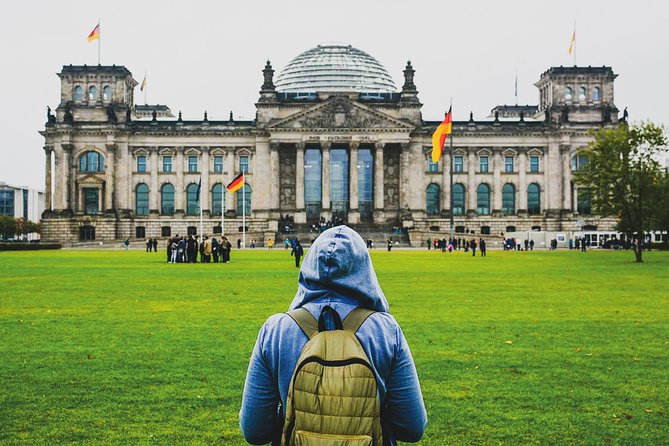
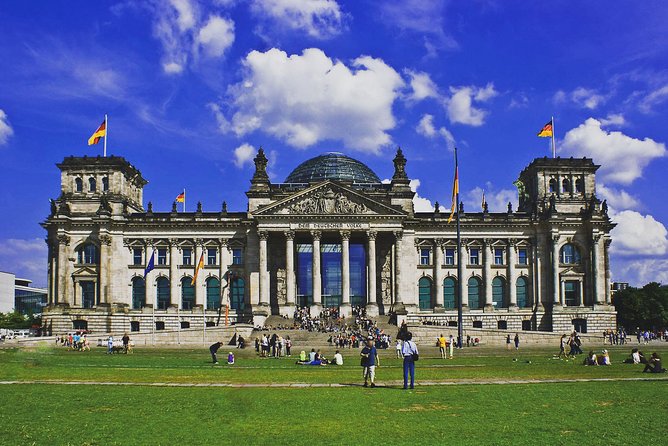
The Reichstag provides a contrast to the more somber stops. Its grand architecture reflects Germany’s political story, from imperial government through the Nazi period, wartime destruction, division, and reunification.
The tour does not list entry to the Reichstag dome, so plan on seeing the building from outside. That is still worthwhile, especially when your guide explains how this landmark fits into Berlin’s changing political identity.
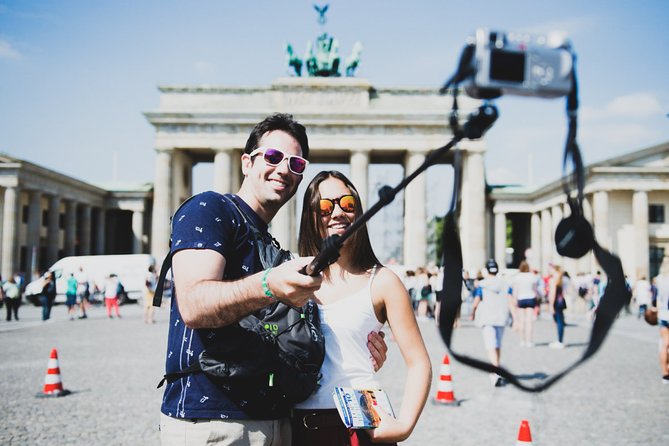
A short walk brings you to the Brandenburg Gate, perhaps Berlin’s most recognizable monument. It was once a royal entrance, later became a symbol of division, and eventually appeared in the celebrations surrounding German reunification.
You’ll have time for photographs here, but do not expect a long formal visit. The Brandenburg Gate is usually busy, and its value comes from the story attached to it as much as from the columns and quadriga above.
This section of the walk also helps you understand geography. The gate, Reichstag, Holocaust Memorial, and former Nazi government district are close enough to connect on foot. A guide can show you how political power, public memory, and tourism now occupy the same few blocks.
More Private History Tours in Germany
- Private Taxi Tour City East & West History and Architecture 3-4h
★ 5.0 · 42 reviews - Private Tour: Jewish Heritage Walking Tour of Berlin
★ 5.0 · 29 reviews - Berlin: Private Bike Tour of the Berlin Wall and Third Reich
★ 5.0 · 23 reviews - Nuremberg: 1.5-Hour Private Tour through Historical Old Town
★ 4.8 · 283 reviews
The Holocaust Memorial and the Führerbunker site
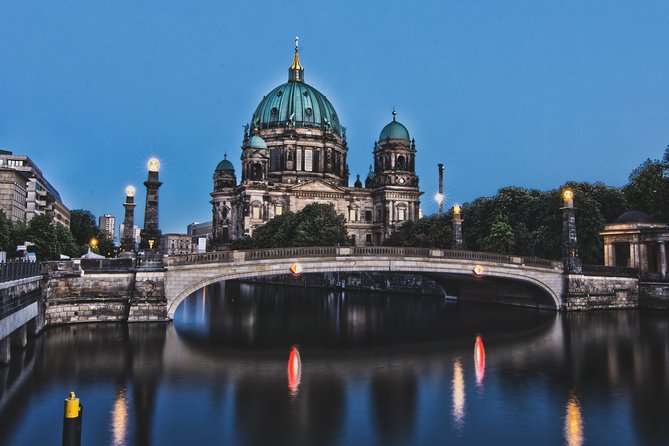
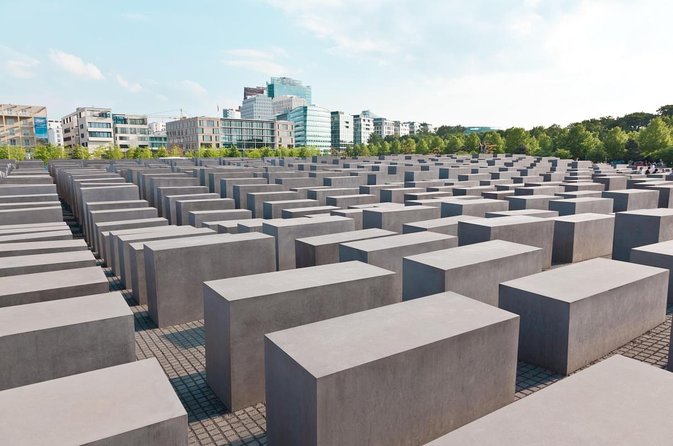
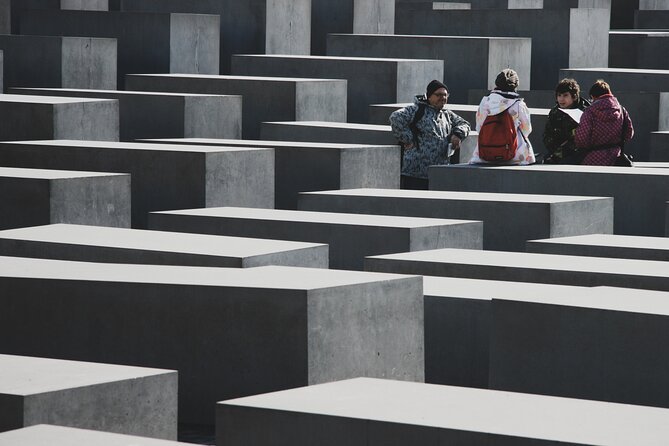
The Memorial to the Murdered Jews of Europe is one of Berlin’s most moving public spaces. Its field of gray concrete stelae changes as you walk through it. Some are low and easy to see over, while others create narrow corridors and a more enclosed feeling.
You should give this place your attention rather than treating it as a quick photograph. The memorial is deliberately open to interpretation, but its location and purpose make it a central part of Berlin’s effort to confront the murder of Europe’s Jews.
The nearby Führerbunker site is less visually dramatic. The bunker itself is not open as a historic attraction, and the location is marked in a low-key way rather than presented as a shrine. That restraint is important. Your guide supplies the context about Hitler’s final days, the Nazi leadership, and the end of the war while the surrounding modern city carries on around you.
The listed time at each of these stops is about 20 minutes. In practice, a private guide may spend more or less time depending on your questions. This is one reason to avoid expecting a rigid schedule. You are buying a guided interpretation of the streets, not a series of long indoor admissions.
Wilhelmstrasse and the currywurst pause
Wilhelmstrasse was at the center of Nazi government power, making it a natural place to discuss how the regime operated. Today, much of the area looks different, which makes the guide’s explanation especially useful. Without context, you could easily walk past modern buildings and miss the significance of the street.
This is also where you stop for currywurst, a sausage served with curry sauce. The snack is included, while additional food and drinks are not. A tea or coffee is optional and at your own expense.
The food break is more than a small extra. Four hours of walking can wear you down, and a familiar local snack gives you time to sit, ask questions, and reset before the second half. It also adds an everyday Berlin detail to a tour otherwise focused on major political events.
Do not book this expecting a full meal. Currywurst is a quick street-food serving, not a restaurant lunch. If you need more food, plan to buy it separately.
Checkpoint Charlie and the Cold War story
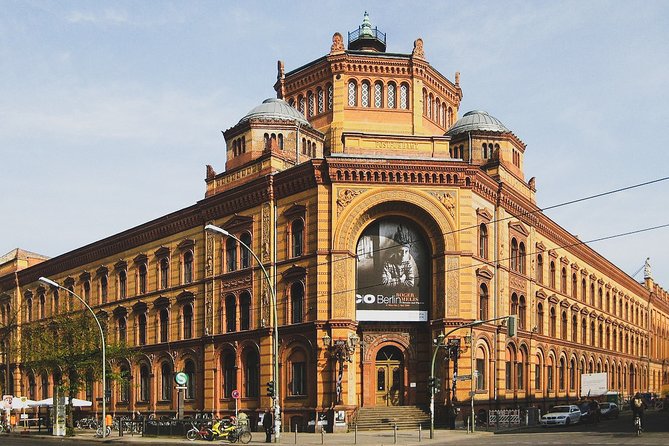
Checkpoint Charlie was the best-known crossing between East and West Berlin. The guardhouse and souvenir displays now sit in a much more commercial setting than the original border point, so the historical explanation matters here.
A guide can help you separate the real border crossing from later tourist additions. You’ll learn why this location became such a strong symbol of confrontation between the United States and the Soviet Union, and why it remains emotionally important even after the Wall disappeared.
The stop is scheduled for about 20 minutes. That works well for an overview, photographs, and questions. It may feel short if you want a detailed account of the Berlin Wall, escape tunnels, or the political crises of the Cold War. Tell your guide what interests you before arriving, since the itinerary can be reshaped.
This is one of the more crowded and commercial points on the route. If you prefer quieter reminders of the Wall, ask whether your guide can adjust the walk toward less familiar places. The tour’s flexibility is most valuable when you use it actively.
Bebelplatz and Museum Island
Bebelplatz combines striking architecture with a painful memory. The square is surrounded by important buildings and was the site of the Nazi book burning in 1933. A memorial beneath the pavement recalls the event with empty bookshelves, a stark reminder of censorship and the destruction of ideas.
This stop works well after Checkpoint Charlie because it shows that Nazi control was not only about military force or government offices. Propaganda, fear, and attacks on culture were also central to the regime.
From there, the route continues toward Museum Island, a UNESCO-listed group of five major museums. The tour does not include museum admission, and the schedule allows about 20 minutes. Think of this as an orientation visit rather than a museum tour.
You’ll see the ensemble from outside and hear how the island fits into Berlin’s cultural and architectural story. If you plan to visit one of the museums later, this introduction can help you choose where to spend your time. The guide can also offer advice about what to do after the walk.
Missing House and Heckmann Höfe
The final portion brings you into Mitte, where the tour shifts from headline sights to smaller urban clues. The Missing House on Große Hamburger Strasse refers to a building erased by wartime destruction and later change. Its absence becomes the point, showing how a gap in a street can carry historical meaning.
Heckmann Höfe offers another change of pace. This series of courtyards is more picturesque and intimate than the large squares and political monuments earlier in the day. It gives you a look at the quieter side of central Berlin.
These stops are valuable because they prevent the tour from becoming only a checklist. You see how history appears in grand memorials, surviving buildings, empty spaces, and ordinary courtyards.
The walk finishes back at the original meeting point. You can also use the guide’s local advice to plan the rest of your stay, including places to eat, routes around Berlin, and things worth seeing the next day.
What the private format is worth at $129
At $129 per person, this is not the cheapest way to see Berlin’s landmarks. The price makes more sense if you want a private conversation, a flexible route, and a guide who can explain how the sites fit together.
There are no major admission tickets included because the walk is built around public spaces and exterior viewpoints. The included value is the private guide, the currywurst, route planning, historical explanation, and advice for the rest of your visit.
The price is easier to justify for a small group that would otherwise book several separate activities. It is also useful for a family or mixed-interest group because the guide can slow down, skip a point, or change the focus.
For one person or a couple on a tight budget, a group walking tour may cost less. You would give up privacy and some control over the pace. Group discounts may be available, so check the final price for your party rather than assuming the per-person rate tells the whole story.
Walking distance, weather, and guide quality
The physical demand is the main practical issue. You should have a moderate level of fitness and be ready to walk for roughly four hours, with stops along the way. Several guides have allowed breaks and adjusted their pace, including for a participant who had difficulty walking, but you should still explain any limits before the tour begins.
Wear comfortable shoes and check the forecast. One winter tour took place on an icy December morning, while another evening walk was described as freezing. Cold weather can make an outdoor history tour much less enjoyable, especially around large open squares.
The guide is the heart of the experience. Named guides praised for their personal approach include Dimitri, Eleni, Lucian, Despina, Peter, Simon, Demetrios, and Demetrios in various bookings. Do not assume you can guarantee a particular person unless the provider confirms it, but you can ask when booking.
The strongest guide traits are clear from the experience: patience, strong command of Nazi and Cold War subjects, good pacing, personal stories, photographs, and the ability to answer many questions without losing the thread of the day. Some guides have extended the tour when the group needed more time, though you should not count on extra hours.
The overall score is 4.8 from 29 reviews, with 97 percent recommending the activity. There is one serious complaint about a guide failing to appear and later saying the booking had been forgotten. The provider said that guide was removed and that a full refund was issued. That response is reassuring, but the incident still means you should confirm the meeting details and contact information before setting aside your day.
Free cancellation is available up to 24 hours before the start time. Changes or cancellations inside that window are not accepted for a refund.
Who should book this Berlin history walk?
I would choose this tour for a first visit to Berlin when you want a strong orientation without spending the entire day inside museums. It is particularly suitable if you want both World War II and Cold War subjects in one route.
It also fits families and small groups with mixed interests. The private guide can explain difficult topics at an appropriate level, pause for questions, and keep the pace manageable.
You may want a different plan if you dislike long walks, want detailed museum interiors, or prefer to explore one period in depth. Four hours is enough for a broad introduction, not a specialist seminar on the Nazi regime or the Berlin Wall.
Should you book it?
Book this private walk if you want Berlin’s major historical sites tied together by a real conversation. The best value comes from using the customization: tell your guide whether you care most about Nazi government, Jewish Berlin, the Wall, escape stories, architecture, or present-day Mitte.
Bring good shoes, warm layers when needed, and enough time to stop for questions. At $129 per person, it is a considered purchase, but the private pace, currywurst break, and local guidance make it a sensible choice for a small group seeking a focused first look at Berlin.
Skip it if you want a low-cost highlights walk or a full museum day. For everyone else, this offers a thoughtful way to get your bearings while facing the city’s hardest history directly.
FAQ
How long does the private Berlin history tour last?
The tour lasts approximately four hours. Some bookings have lasted longer when the group needed extra time, but the scheduled duration is about four hours.
Where does the tour begin and end?
You meet your private guide at Oranienburger Strasse 28 to 30 in Berlin. The walk ends back at the same meeting point.
What sights are included?
The route can include the New Synagogue, Palace of Tears, Reichstag Building, Brandenburg Gate, Holocaust Memorial, Führerbunker site, Wilhelmstrasse, Checkpoint Charlie, Bebelplatz, Museum Island, the Missing House, and Heckmann Höfe.
Is currywurst included?
Yes. A traditional Berlin currywurst is included. Extra food and drinks, such as tea or coffee, are not included.
Is this a private activity?
Yes. Only your group participates, and the itinerary can be customized to your interests and preferences.
Can I cancel for a full refund?
Yes, if you cancel at least 24 hours before the local start time. Cancellations or changes made less than 24 hours before the experience are not refundable.
More WWII and D-Day Tours in Berlin
- Vienna: World War II Historical Walking Tour
★ 4.8 · 1,772 reviews - Zagreb: City & History Walking Tour & WW2 Tunnels
★ 4.9 · 1,202 reviews - Pearl Harbor History Remembered Tour from Ko Olina
★ 5.0 · 1,009 reviews - Hiroshima Peace (Heiwa) Walking Tour at World Heritage Sites
★ 5.0 · 872 reviews
More WWII and D-Day Tours in Germany
- Berlin: History of the Third Reich Guided Walking Tour
★ 4.7 · 791 reviews - Berlin: Guided Bike tour of the Berlin Wall and Third Reich
★ 5.0 · 160 reviews - Berlin: Nazi History Walking Tour
★ 4.8 · 33 reviews - Eagle’s Nest-Berchtesgaden-Obersalzberg Private Half Day WWII Historical Tour
★ 5.0 · 64 reviews
Newest history tours we have reviewed in Berlin
- Berlin Food & Cultural Tour: Must-Try German & Berliner Classics★ 5.0 · 51 reviews
- Private Tour: Jewish Heritage Walking Tour of Berlin★ 5.0 · 29 reviews
- Small-Group Historical Bike Tour in Berlin★ 4.5 · 103 reviews
- Historic center of Berlin – Tour in Italian★ 5.0 · 143 reviews
- East Berlin Food & History Tour with Eating Europe★ 5.0 · 204 reviews
- Berlin: Private Bike Tour of the Berlin Wall and Third Reich★ 5.0 · 23 reviews
- Where It All Began: Berlin’s Queer & Trans History Tour★ 5.0 · 27 reviews
- Explore Berlin History and Highlights Sightseeing Walking Tour★ 5.0 · 81 reviews
WWII & D-Day Tours, compared.
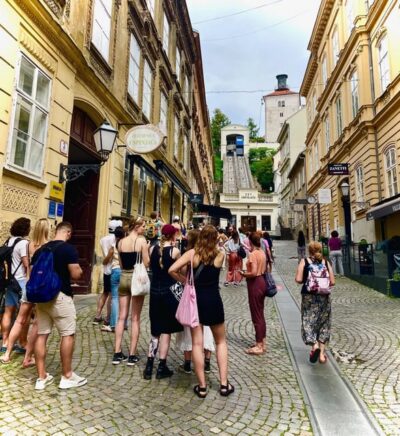
Zagreb: City & History Walking Tour & WW2 Tunnels
Read our review →
Pearl Harbor History Remembered Tour from Ko Olina
Read our review →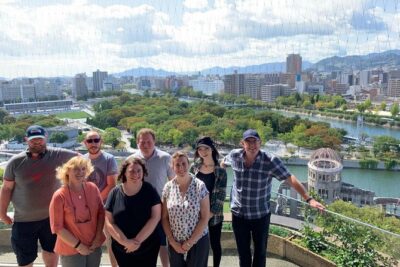
Hiroshima Peace (Heiwa) Walking Tour at World Heritage Sites
Read our review →
Pearl Harbor & USS Arizona Small-Group Tour [Early Access]
Read our review →
Anne Frank and the Jewish History of Amsterdam Private Tour
Read our review →