Review · BERLIN HISTORY TOURS
Berlin: Guided Bike tour of the Berlin Wall and Third Reich
Berlin’s hardest history makes more sense when you ride through the places where it happened. This three-hour bike tour links the Berlin Wall, Nazi-era sites, Holocaust memorials, and the modern government district, with a guide explaining how the city changed around them. The Wall Memorial and former death strip are especially useful because you can see the border system, not just a lonely slab of concrete.
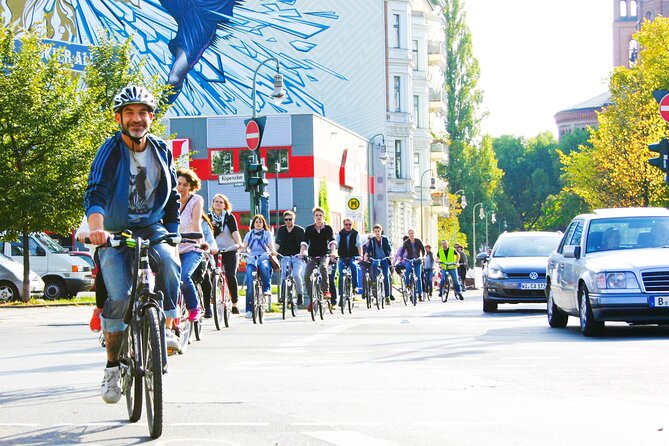
I like the easy pace, practical city bikes, and the way cycling lets you cover far more ground than a walking tour. I also like the personal style of guides such as Paul, a native of West Berlin, and Simone, who brings thoughtful questions about memory and responsibility into the tour. The main catch is that the route is flexible, so you may not visit every stop listed in the advertised outline.
- About 13 kilometers of mostly easy riding: Berlin is flat, and the pace includes regular stops.
- A serious look at the Wall: See border remains, escape stories, watchtowers, and the former death strip.
- Nazi history with a citywide view: The flak tower, Führerbunker, Reichstag, and Holocaust Memorial connect sites that are spread across Berlin.
- Routes can change: The Free Berlin concept lets each guide shape the ride, so mention your must-see locations at the start.
- Small groups when possible: The maximum is 15 people, with some larger bookings split into smaller groups.
- Useful family setup: Bikes, helmets, baskets, and infant seats on request make this workable for families.
Why Berlin’s history works well from a bicycle
This is not a quick ride past famous buildings with a few dates tossed in. The route uses Berlin itself as the classroom. You move from the old city center to Jewish history, from the Wall’s border zone to Nazi military remains, then toward the Reichstag and the Cold War crossing at Checkpoint Charlie.
That movement matters. Berlin’s past is scattered across a large, mostly flat city, and a bicycle helps connect the pieces. You can ride through ordinary streets, parks, and neighborhoods where the meaning is easy to miss from a tour bus.
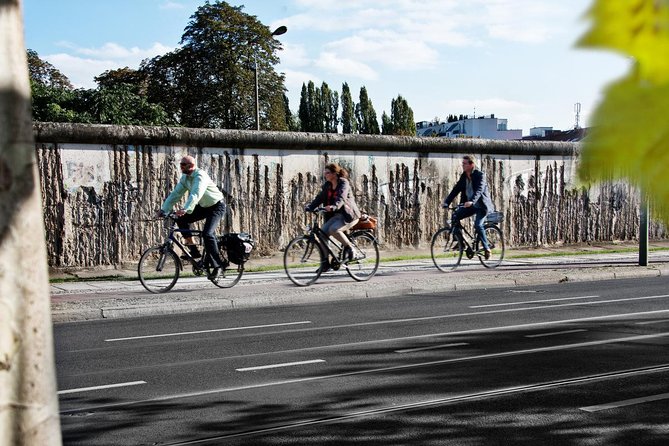
The riding is not presented as a sporting challenge. One family covered roughly 13 kilometers at an easy pace, with plenty of breaks, and found it comfortable for children aged 10, 14, and 17. Still, you need to feel reasonably secure on a bicycle. The group may use main roads and cycle lanes, and one rider found city traffic a little daunting. Guides such as Theo and Constantine kept groups together, gave clear instructions, and waited at red lights.
You receive a city bike and helmet. Reviews also mention a rear basket or basket carriage, handy for a water bottle, coat, or small bag. Food and drinks are not included, so bring water, especially in warm weather.
Starting in Nikolaiviertel, Berlin’s reconstructed old center
The meeting point is Free Berlin Bike Tours & Rental at Poststraße 11, near public transportation. The ride begins in Nikolaiviertel, the area promoted as Berlin’s only real old town.
The useful question here is not simply how old the neighborhood looks. Much of Berlin was badly damaged during the Second World War, and Nikolaiviertel was rebuilt after the destruction. Your guide uses the opening stop to explain what survived, what was reconstructed, and how war changed the center.
You get about 10 minutes here, so do not expect a full architectural walk. Think of it as a quick orientation to Berlin’s long story before the ride turns toward the city’s more painful twentieth-century chapters.
More WWII and D-Day Tours in Germany
- Berlin: History of the Third Reich Guided Walking Tour
★ 4.7 · 791 reviews - The History of Berlin: WWII PRIVATE Walking Tour With Locals
★ 5.0 · 209 reviews - Berlin: Nazi History Walking Tour
★ 4.8 · 33 reviews
The New Synagogue and a brief lesson in civil courage
At the New Synagogue, also known as Stiftung Neue Synagoge Berlin, the guide tells the story of a police officer who helped protect the building during the Night of Broken Glass. The stop is short, around five minutes, but the subject is powerful.
This is one of the tour’s strengths: it connects large political events with individual choices. You are not only hearing about persecution in broad terms. You are also asked to consider what one person did when Jewish buildings and communities were under attack.
The stop is viewed from outside, and admission is not part of the ride. If Jewish Berlin is a major reason for booking, you should plan separate time for museums and memorials after the tour.
The Wall Memorial and Mauerpark: the most useful part of the ride
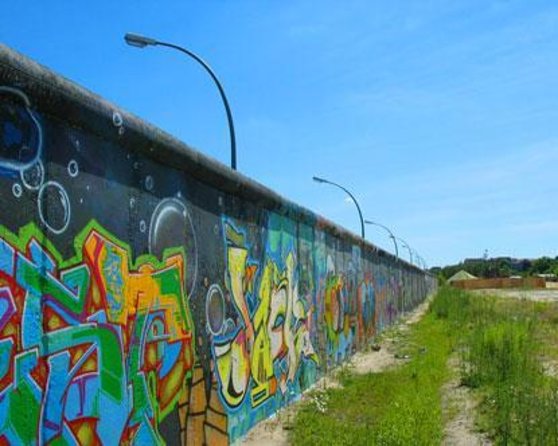
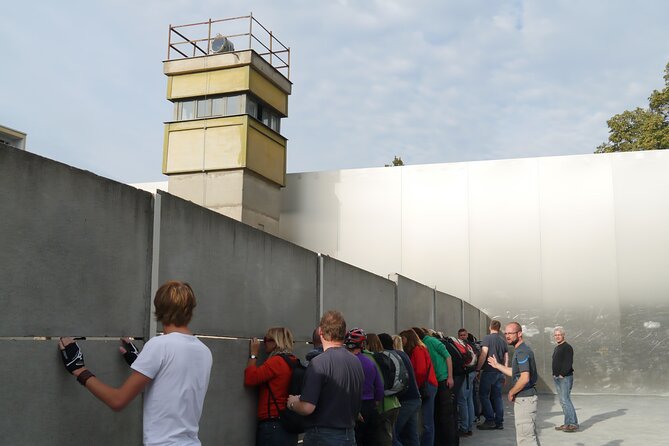
The Berlin Wall Memorial is likely the central stop. The guide explains that only a few places still allow you to understand how the Wall actually worked. Here, the focus is not merely on the remaining concrete. You see the wider border arrangement and learn how the barrier cut through homes, streets, cemeteries, and daily life.
The tour’s use of the word edutainment points to its teaching style. Guides ask questions, invite discussion, and use the physical setting to make the facts easier to grasp. Paul, who grew up in West Berlin, has used personal memories to explain the differences between East and West Berlin before and after reunification.
Mauerpark follows naturally. The park is now known for its Sunday flea market and open public life, but its location once reflected the division of the city. The guide shows how a place shaped by the Wall became an area for music, markets, and free expression.
You get only about 10 minutes at each stop. That is enough for a clear introduction, not enough for a full visit. If you want time to read every panel at the Wall Memorial, return on your own. One practical mistake is to postpone the Wall until after this tour, expecting a long stop, and then discover that the tour provides only an overview.
Humboldthain Flak Tower and the machinery of Nazi Berlin
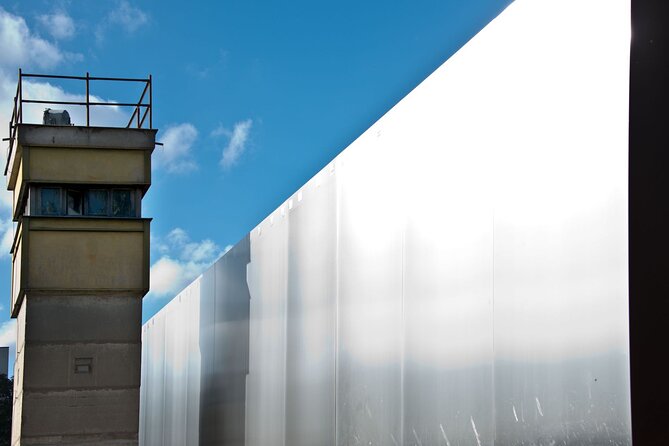
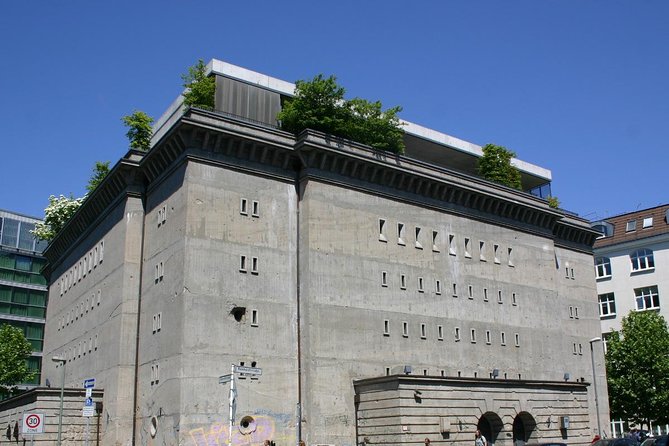
At Humboldthain, a former flak tower reveals the scale of Nazi military construction. The structure served as an air-raid shelter and a fortress, and it also offers a panoramic view over Berlin.
This stop helps you see how ideology became physical. Nazi planning was not only about speeches and uniforms. It also involved enormous concrete structures, military defense, and grand plans for remaking the capital.
The tower stop lasts about 10 minutes. The view is valuable because it lets you look across a city that was once divided by political systems and marked by wartime destruction. If climbing or uneven ground is involved, the supplied information does not specify the exact access arrangements, so ask your guide before leaving the meeting point if this matters to you.
More WWII and D-Day Tours in Berlin:
- Vienna: World War II Historical Walking Tour
★ 4.8 · 1,772 reviews - Zagreb: City & History Walking Tour & WW2 Tunnels
★ 4.9 · 1,202 reviews - Pearl Harbor History Remembered Tour from Ko Olina
★ 5.0 · 1,009 reviews - Hiroshima Peace (Heiwa) Walking Tour at World Heritage Sites
★ 5.0 · 872 reviews
Günter Litfin and Invalidenfriedhof: escape stories along the border
The Günter Litfin Memorial preserves an original watchtower in memory of Günter Litfin, described as the first person shot at the Wall. The stop is brief, about five minutes, but it puts a human name on the Wall’s violence.
At Invalidenfriedhof, the story shifts to a cemetery for Prussian military figures. The Wall once cut through the burial ground, and the cemetery’s position near former checkpoints and a canal makes it useful for discussing escape attempts.
This part of the route is less polished than a standard monument tour, which is exactly why it works. You see how the border ran through spaces that were not designed as memorials. The history feels tied to ordinary geography: water, graves, roads, and watch posts.
Spreebogenpark and the Reichstag: from dictatorship to democracy
Spreebogenpark gives you a broad view of Germany’s government district. From here, the guide discusses Albert Speer’s plans for Hitler’s rebuilt capital, including the proposed Great Hall, which was intended to hold 180,000 people.
The scale of that plan is hard to understand from a history book. Looking across the government area gives the idea a physical setting, even though the building was never completed. The guide can show how Nazi architecture aimed to express power through size and spectacle.
At the Reichstag, the discussion turns to Hitler’s rise to power and Germany’s democratic development. You do not go inside the building on this tour. The stop is an exterior explanation, usually around five minutes, so treat it as context rather than a visit to the parliament.
That shift from Nazi dictatorship to present-day government is one of the route’s best ideas. Berlin does not hide the tension between its past and its current political identity. You see the modern institutions in the same central district where older plans sought to erase democracy.
Holocaust memorials and the Führerbunker
The route includes memorials for major victim groups of the Holocaust, including the Memorial to the Murdered Jews of Europe. The large field of concrete blocks near Brandenburg Gate is not explained as a simple object with one official meaning. Guides may encourage you to consider how the design affects your sense of scale, confusion, absence, and memory.
Allow about 10 minutes here. That is enough to enter the memorial and form an impression, but not enough to visit the underground information center in any depth. If this is your main reason for booking, plan a separate visit.
The nearby Führerbunker stop is deliberately strange. Today, there is no dramatic ruin to enter. You see a parking area and hear why the site was covered and left without a prominent structure.
This is a useful lesson in how memorial choices work. Some places are marked with large monuments. Others are kept plain, partly to avoid turning a site connected with Hitler into a shrine. The guide’s explanation gives meaning to what appears to be an unremarkable patch of city.
Checkpoint Charlie and the Cold War finale
Checkpoint Charlie appears on the English version of the tour. It was the best-known crossing point associated with the Cold War and a place where American and Soviet forces faced one another during a dangerous confrontation.
The stop lasts about 10 minutes. The guide explains why tensions here came close to triggering a much larger conflict and how the crossing functioned within divided Berlin.
This is also a place where expectations matter. The present-day checkpoint display is not the original border station in its Cold War form. If you are hoping for a preserved border complex, you may find the site less powerful than the Wall Memorial. Its value comes from location and explanation, not from an intact historical setting.
The Free Berlin route: useful freedom, real uncertainty
Each guide designs a route under the Free Berlin concept. That gives the ride a personal feel. Paul, Simon, Juliette, Theo, Simone, Peter, Yonis, Jacob, and Constantine are among the guides praised for clear explanations, humor, local perspective, and safe group handling.
The tradeoff is simple: the published route is a guide, not a guarantee. A guide may skip listed sites, change the order, or substitute another place because of traffic, weather, city events, or group interests. A marathon, for example, led to an alternate route that still combined historical stops and local stories.
I recommend telling the guide at the start if the Holocaust Memorial, Checkpoint Charlie, the Reichstag, or the Wall Memorial is essential to you. The provider has acknowledged that asking about must-see locations helps guides shape the ride more effectively.
Price, group size, and who gets good value
At about $42.34 per person, the tour is fairly priced if you want a guided overview across several parts of Berlin. The fee covers the bike, helmet, and professional guide, but not food or drinks.
The value comes from combining transport and interpretation. You are not paying only for a rental bike, and you are not spending three hours walking between sites. You cover a wide area while hearing the connections between the Wall, Nazi rule, Jewish persecution, the Holocaust, and modern Germany.
The maximum group size is 15, with a minimum of four. A group of 12 felt large to one rider, while another booking was split into smaller groups when numbers reached 22. Smaller groups make street riding, questions, and stop-by-stop discussion easier, so ask how the day’s groups will be arranged if that is important to you.
Children are welcome, and infant seats can be provided on request. Children must be accompanied by an adult. The tour runs in English or German, depending on the option selected, and operates in all weather, so bring suitable clothing.
Free cancellation is available up to 24 hours before the start time. The tour requires a minimum number of participants, and if that minimum is not met, you are offered another date or experience, or a full refund.
Should you book this Berlin bike tour?
Book it if you want a lively first look at Berlin’s twentieth-century history and are comfortable with a moderate city ride. It suits families with older children, history-minded visitors, and anyone who prefers seeing neighborhoods rather than moving between monuments by bus.
You should also book it if you value a guide’s personal angle. Paul’s West Berlin memories, Simone’s thoughtful approach to remembrance, and Simon’s clear explanations show how much the quality of the day depends on the person leading it.
Skip it if you need a fixed route with long visits inside museums or memorials. The flexible format is part of the appeal, but it also means a listed site may not appear. For the best result, arrive ready to ride, ask for your priority stops, and reserve separate time for the Wall Memorial and Holocaust Memorial if you want more than a short introduction.
FAQ
How long is the bike tour?
The tour lasts approximately three hours.
What is the tour price?
The listed price is $42.34 per person.
What is included in the price?
A bicycle, helmet, and professional guide are included. Food and drinks are not included unless specifically stated.
Where does the tour start and finish?
It starts at Free Berlin Bike Tours & Rental, Poststraße 11, 10178 Berlin, Germany, and returns to the same meeting point.
Is the tour offered in English?
Yes. The experience is offered in English, and it also operates in German depending on the option selected.
Is Checkpoint Charlie included on every tour?
Checkpoint Charlie is included only in the English version, and the Free Berlin route concept means the guide may adjust the route. Ask at the start if it is a priority.
Can children join the tour?
Yes. Children are welcome, but they must be accompanied by an adult. Infant seats can be provided on request.
How many people can join?
The minimum is four participants, and the maximum is 15 travelers.
Does the tour operate in bad weather?
Yes. It operates in all weather conditions, so you should dress appropriately.
Can I cancel for a full refund?
You can cancel at least 24 hours before the start time for a full refund. Cancellations or changes made less than 24 hours before the start time are not accepted for a refund.
More History Bike, Segway and Tuk-Tuk Tours in Berlin
- Berlin (E)Bike Tour Historical Highlights in Small groups
★ 4.5 · 24 reviews - Historical Singapore Bike Tour on Full-Sized Bicycles
★ 5.0 · 1,421 reviews - Charlotte’s Ultimate Southern Charm Historical City Cart Tour
★ 5.0 · 1,347 reviews - Barcelona: 2.5-Hour Bike or E-Bike Historical Tour
★ 4.5 · 1,262 reviews
More Cold War and Communism Tours in Berlin
- Berlin: Cold War & Berlin Wall History Guided Bike Tour
★ 4.8 · 422 reviews - Berlin Wall History Small Group Cycling Tour
★ 4.9 · 152 reviews - Berlin: Historical Sights & Berlin Wall Tour with a Berliner
★ 5.0 · 62 reviews - Prague: Communism History and Nuclear Bunker Guided Tour
★ 4.7 · 2,417 reviews
Newest history tours we have reviewed in Berlin
- Berlin: Nazi History Walking Tour★ 4.8 · 33 reviews
- Berlin: History and Sightseeing with Kids (Free for Kids)★ 4.9 · 19 reviews
- Berlin: Historical Sights & Berlin Wall Tour with a Berliner★ 5.0 · 62 reviews
- Berlin: Urbex Abandoned Places & History Tour★ 4.8 · 18 reviews
- Berlin (E)Bike Tour Historical Highlights in Small groups★ 4.5 · 24 reviews
- East Berlin Food & History Tour with Eating Europe★ 4.8 · 20 reviews
- Berlin: Historic Center Walking Tour with a Real Berliner★ 5.0 · 134 reviews
- Berlin: Guided Craft Beer & Cultural Tour With Snacks★ 5.0 · 68 reviews
WWII & D-Day Tours, compared.
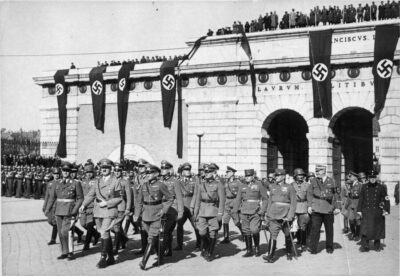
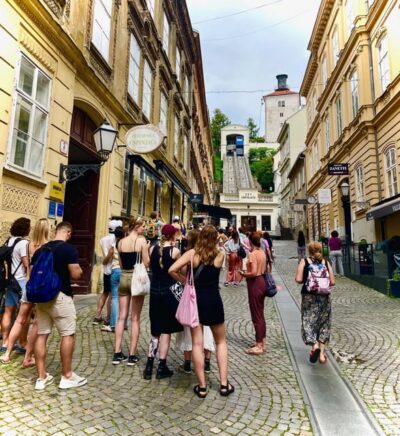
Zagreb: City & History Walking Tour & WW2 Tunnels
Read our review →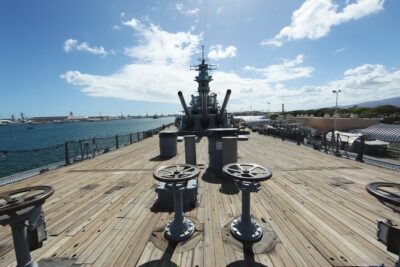
Pearl Harbor History Remembered Tour from Ko Olina
Read our review →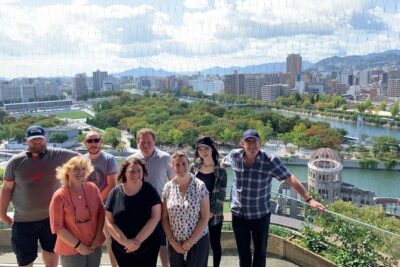
Hiroshima Peace (Heiwa) Walking Tour at World Heritage Sites
Read our review →
![Pearl Harbor & USS Arizona Small-Group Tour [Early Access]](https://media.myhistoryguide.com/wp-content/uploads/pearl-harbor-uss-arizona-small-group-tour-early-access-400x267.jpg)
Pearl Harbor & USS Arizona Small-Group Tour [Early Access]
Read our review →
Anne Frank and the Jewish History of Amsterdam Private Tour
Read our review →