
Review · LOCAL CULTURE & TRADITIONS TOURS
History and Culture in my Belgrade
Belgrade’s story is not tidy, and that is exactly what makes this walk worthwhile. In about three hours, you move from a grand Orthodox church to buildings damaged in the 1999 bombing, then through old streets shaped by Ottoman, Yugoslav, and modern Serbian life. Marija connects the dates to daily life, rather than leaving you with a parade of names and battles.
I like the small-group format, advertised for no more than six people, and the stop for Serbian foods and drinks. The tour also finishes at a fine viewpoint over the Sava and New Belgrade, giving you a useful sense of the city’s layout. The main consideration is pace: 12 numbered stops in three hours means some visits are brief, and the walk may feel full for anyone who prefers a slower morning.
Key points to know before booking
- A compact route with real range: You see churches, government buildings, parks, a mosque, a kafana, old neighborhoods, and a river view in one morning or afternoon.
- Marija puts modern Serbia beside older history: The tour covers medieval rulers, Ottoman rule, Yugoslavia, the 1990s, and current customs.
- The tasting stop is more than a snack: You try rakija, wine, natural juices, jam, slatko, and honey while hearing about Serbian hospitality.
- The route ends at Kosančićev Venac: Plan your next stop from there, since the tour does not return to St. Mark Church.
- Three start times help with planning: You can fit it around a morning arrival, lunch, or another Belgrade activity.
- The value depends on your style: At $90.11 per person, it is not a bargain walk, but the price includes a private-feeling group, guiding, and food and drink samples.
Why this walk gives you a useful first look at Belgrade
I like city walks that explain how different eras sit beside one another. This one does that in a small area. You begin near St. Mark Orthodox Church, pass the Serbian Parliament and Nikola Pasic Square, cross the main pedestrian zone, then turn into Dorcol and the older quarter near the Danube side of central Belgrade.
The route is not built around one grand monument. Instead, it shows you how Belgrade works: Orthodox traditions, government power, war memory, cafés, student life, Ottoman traces, old restaurants, street art, and river views all appear in quick succession.
Marija is the named guide, and the strongest praise centers on her way of explaining difficult subjects in plain language. That matters here. Serbian and Balkan history can become confusing fast, especially when Yugoslavia, the 1990s, and present-day Serbia enter the same conversation. A guide who can link those periods to buildings and streets makes the walk far easier to follow.
You should also expect a conversational approach rather than a silent march between monuments. The tour is offered in English, and the small format gives you a better chance to ask about customs, food, religion, or current life.
More Local Culture and Traditions Tours in the world:
- Amsterdam Food and Cultural Tour with Tastings
★ 5.0 · 4,315 reviews - Sevilla Food Tour: Tapas, Wine, History & Traditions
★ 5.0 · 3,468 reviews - Tromsø: Reindeer Camp and Sami Cultural Tour with Lunch
★ 4.7 · 3,326 reviews
St. Mark Church starts the story
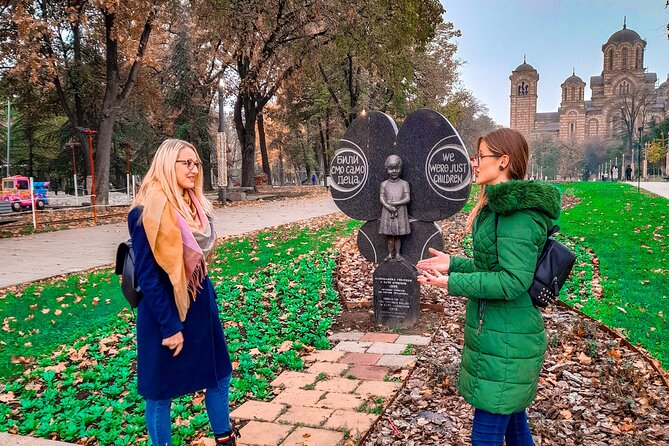
Meet in front of St. Mark Orthodox Church on Bulevar kralja Aleksandra. The church is described as the second largest in Belgrade, and it gives the tour a fitting opening: religion, Serbian rulers, and national history all meet here.
You spend about 20 minutes at the church. Marija enters with you and explains customs connected with Serbian Orthodox culture and religion. She also points out the remains of one of Serbia’s major medieval rulers, giving the first part of the tour a direct link to the country’s older past.
The free admission keeps the stop simple. Still, this is not a long church visit, so you should think of it as an introduction rather than a full architectural tour. If you want extended time for photographs or quiet reflection, you may need to return on your own.
The RTS building and the difficult 1990s
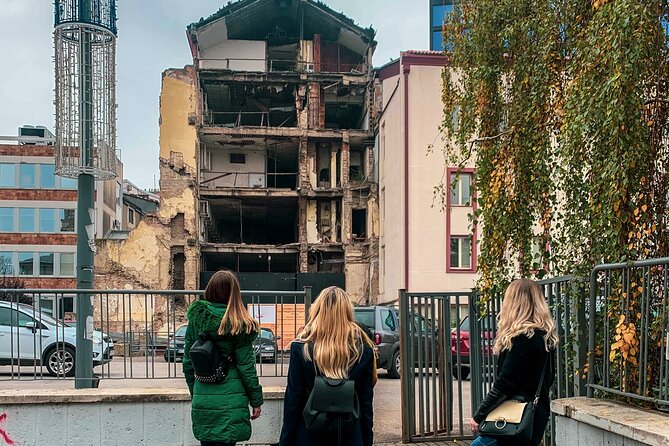
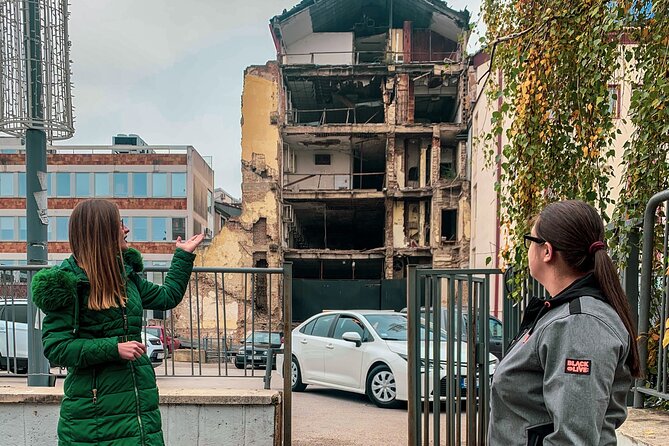
The next stop, the Radio Television of Serbia buildings, changes the tone. Here you see damage from the 1999 bombing and hear about the tragic events connected with the site.
The stop lasts about 20 minutes. Marija also discusses Yugoslavia, the Serbian economy, and modern daily life. This is one of the tour’s most useful features because it refuses to place Belgrade’s recent past in a sealed-off museum box. The effects of the 1990s still shape how people understand politics, media, economics, and national identity.
You should come prepared for serious subject matter. The tour does not treat this as a quick photo stop. It asks you to look at a damaged building and consider the human cost behind it.
Tasmajdan Park and the National Assembly
Tasmajdan Park offers a short pause after the heavier material. You have about 15 minutes to see the park and hear about its mysteries and underground passages. The setting provides a change of rhythm, though the time is brief.
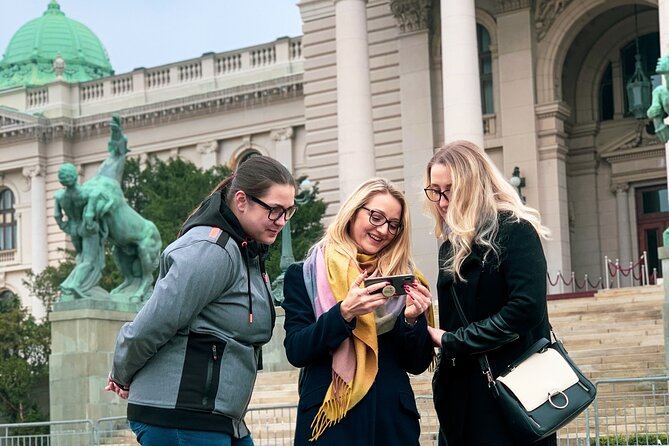
From there, the walk reaches the House of the National Assembly of the Republic of Serbia. You spend about 10 minutes learning why this monumental building became associated with political power struggles and the country’s biggest protests. The unusual game of thrones reference points to the building’s role in political drama, not a fantasy attraction.
This is a good example of the walk’s method. You are not simply told that a building is important. You hear how it has functioned as a stage for power, public anger, and change.
More History Tours in the world:
- New York City: American Museum of Natural History Ticket
★ 4.5 · 15,447 reviews - History and Hauntings of Salem Guided Walking Tour
★ 5.0 · 14,564 reviews - Colosseum: Underground and Ancient Rome Tour
★ 4.7 · 12,691 reviews - Lisbon: History, Stories and Lifestyle Walking Tour
★ 4.8 · 10,902 reviews
Nikola Pasic Square and Belgrade’s social habits
Nikola Pasic Square is described as the youngest square in the city. The stop lasts around 10 minutes and includes the fountain, along with an explanation of contemporary customs among young people in Belgrade.
That detail helps keep the tour from becoming a history lecture. A city is also made by how people meet, celebrate, tease one another, and use public spaces. The fountain’s connection to local youth customs gives you a small, lively piece of present-day Belgrade.
You also pass the only hotel in Serbia listed among historic hotels worldwide. The stop is brief, but it adds another layer to the city’s public life and architectural past.
Serbian flavors in Čumićevo sokače
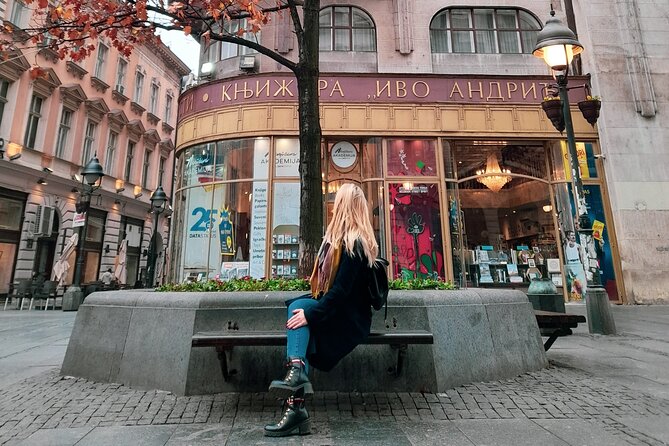
The food and drink tasting is the tour’s clearest break from monument watching. In Čumićevo sokače, a small local store in Belgrade’s design district, you try domestic rakija, wine, natural juices, jam, slatko, and honey.
You also hear about older customs, Serbian hospitality, and the local way of saying cheers. This is useful because food gives you a way into culture that a list of dates cannot. Rakija, for example, is not presented only as a strong drink to sample. It is part of the social side of Serbian life.
The stop lasts about 30 minutes, making it one of the longer pauses on the route. If you do not drink alcohol, the natural juices, jam, slatko, and honey give you other things to try. The supplied details do not specify how much of each item you receive, so think of this as a tasting rather than a meal.
At $90.11, this stop matters when judging value. You are paying for a guide-led walk and local samples, not just access to sights. If you enjoy food as a way to understand a place, the price makes more sense. If you want only a fast orientation walk, it may feel high.
Republic Square and the main pedestrian zone
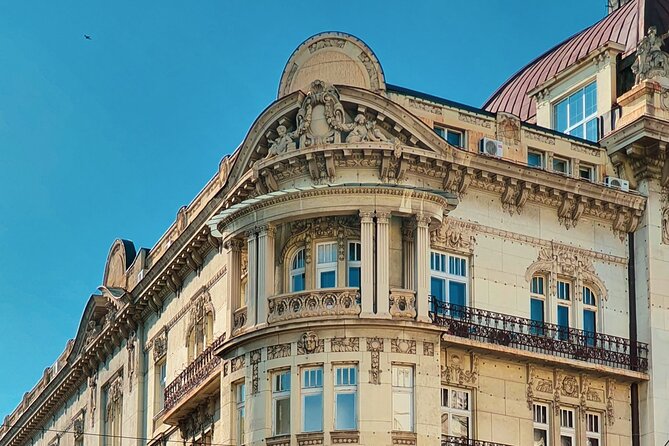
Republic Square brings you into one of central Belgrade’s busiest public spaces. You spend about 10 minutes taking in its atmosphere before crossing the main pedestrian zone.
This section is useful for getting your bearings. You encounter street musicians, cafés, and the everyday social energy of central Belgrade. It also helps you see the contrast between formal civic buildings earlier in the walk and the more relaxed spaces people use for meeting and going out.
The route does not linger long here. I would mark the pedestrian zone as a place to revisit after the tour if you want café time or a slower look at the street life.
University of Belgrade and Students’ Square
At the University of Belgrade, the route reaches Students’ Square and its park. The stop lasts about 10 minutes and focuses on education in Serbia.
This is a modest stop, but it broadens the tour’s subject. Belgrade is not only churches, rulers, war, and government. Universities help explain the city’s young population and its public culture. The square also gives you another type of public space, different from Republic Square and Tasmajdan Park.
Because the walk covers so much ground, expect a short explanation rather than a full university visit. You admire the square and park from the route.
Dorcol, the mosque, and an old kafana
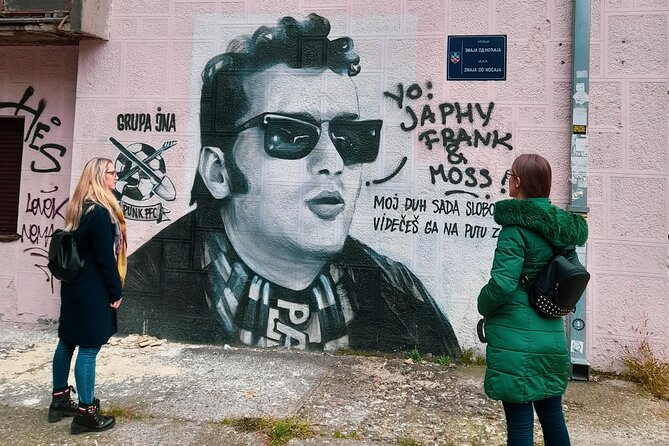
Dorcol is one of the more atmospheric parts of the walk. You pass through the neighborhood, see distinctive graffiti, and hear stories from its past. The area helps you shift from official Belgrade into a district where street details and older layers carry more weight.
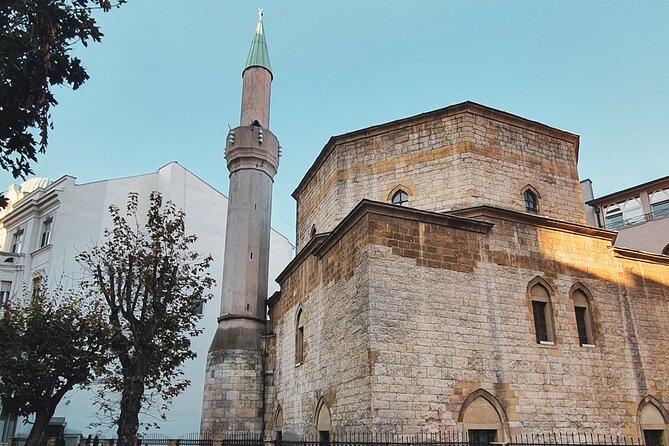
Next comes Bajrakli Mosque, also known as Bayraklee Mosque. It is the only preserved mosque in Belgrade from the 273 that once existed, and the stop explains nearly five centuries of Ottoman influence in Serbia. This is an important correction to any overly simple picture of Serbian identity. Orthodox traditions are central, but Ottoman rule also left a lasting mark on language, food, architecture, and memory.
The mosque visit lasts about 15 minutes. The information provided does not promise an interior visit, so you should expect to see the site and hear its story rather than plan on a long religious tour.
Nearby, Znak Pitanja, or Question Mark, gives you a look at the architecture of Belgrade’s oldest kafana, a traditional restaurant. You spend about 10 minutes here. A kafana is more than a place to eat. It belongs to the social history of the city, where food, drink, music, and conversation have long met.
Kosančićev Venac and the final river view
The walk ends in Kosančićev Venac, one of Belgrade’s oldest areas. Cobblestoned streets, cultural heritage, and an Orthodox church shape this final section.
The best payoff comes at the viewpoint. You see New Belgrade, the Sava River, and traditional Serbian splavs, the floating river venues that are part of the city’s modern identity. The view lets you compare the old center with the newer districts across the water.
The route finishes at Kosančićev venac 22, not back at St. Mark Church. That is useful to remember when arranging lunch, transport, or your next sightseeing stop. The final location also gives you a practical sense of where Belgrade’s older core meets the river.
Group size, timing, and walking pace
The experience is listed as a small tour with a maximum of six people, while the additional booking information gives a broader maximum of 15. I would confirm the actual group size when booking if the intimate format is especially important to you.
Three start times make the tour easy to fit into a short stay. You can use it near the beginning of your visit to get orientation and collect tips for the rest of your Serbian holiday. The guide is also positioned to help you understand what to see and do after the walk.
The tour lasts about three hours and includes many short stops. Most stops are between 10 and 20 minutes, with 30 minutes for tasting. You should be comfortable walking through central neighborhoods and changing subjects often. The information provided says most people can participate and that the route is near public transportation, but it does not give a detailed accessibility description.
Who should book it?
I would choose this tour if you want a strong first introduction to Belgrade and prefer context over a checklist of grand sights. It suits you especially well if you are curious about Serbia’s recent past, religious traditions, local food, and the way old and new parts of the city fit together.
It may be less suitable if you want long interior visits, a dedicated architecture tour, or plenty of free time at each stop. The schedule is full, and some locations receive only 10 minutes.
The price is $90.11 per person. That is a serious cost for a three-hour city walk, but the value improves if you make use of the small group, the English explanations, the tasting, and the practical advice for the rest of your trip. Free cancellation is available up to 24 hours before the start time, which gives you some flexibility.
Book it early if your dates are fixed. It is booked, on average, 40 days ahead, suggesting that the small-group format can fill well before arrival.
FAQ
Where does the tour begin?
It begins in front of St. Mark Orthodox Church at Bulevar kralja Aleksandra 17 in Belgrade, Serbia.
Where does the tour end?
The tour ends at Kosančićev venac 22, Belgrade 11000, Serbia.
How long does the experience last?
It lasts approximately three hours.
What language is the tour offered in?
The tour is offered in English.
How many people can join?
The highlights describe a maximum group size of six people. The additional booking information gives a maximum of 15 participants, so confirm the expected group size when booking if this matters to you.
Are food and drinks included?
The route includes a tasting of domestic rakija, wine, natural juices, jam, slatko, and honey at a local store in Čumićevo sokače.
Are admission tickets required at the stops?
The listed stops show free admission. The supplied information does not list extra entrance fees.
Can I cancel for a full refund?
Yes. You can cancel at least 24 hours before the experience start time for a full refund. Cancellations or changes made less than 24 hours before the start time are not accepted for a refund.
Newest history tours we have reviewed in the world
- Enjoy Ancient Mostar★ 4.0 · 45 reviews
- Private Dublin Historical and Heritage Tour by Bike★ 5.0 · 30 reviews
- Dubrovnik by Night, History, Wine & Bites★ 5.0 · 41 reviews
- DayTripper Dublin: A Guided City Walking Tour★ 5.0 · 90 reviews
- Ancient Old City– Finest tour of Dubrovnik★ 5.0 · 64 reviews
- Historical Walking Tour of Dublin★ 5.0 · 50 reviews
- Dublin LGBTQ Pride Historical and Cultural Walking Tour★ 5.0 · 91 reviews
- Interactive Living History in Dalkey Castle near Dublin City★ 5.0 · 133 reviews
Local Culture & Traditions Tours, compared.
Amsterdam Food and Cultural Tour with Tastings
Read our review →
Sevilla Food Tour: Tapas, Wine, History & Traditions
Read our review →
Tromsø: Reindeer Camp and Sami Cultural Tour with Lunch
Read our review →
Half Day Dominican Republic Cultural Tour : Small Group
Read our review →
Ultimate Melbourne Walking Tour: History, Laneways & Culture
Read our review →
Tromsø: Sámi Reindeer Sledding and Sami Cultural Tour
Read our review →
Kyoto Gion: 2-Hour Geisha Culture & History Walking Tour
Read our review →
Marrakech Historical and Cultural Tour – Half Day City Tour
Read our review →Browse the lists this tour appears in