
Review · SPAIN HISTORY TOURS
Tarragona: Roman Heritage Guided Walking Tour
Tarragona’s Roman past is not sealed away in one museum. It runs through the modern city, with ancient walls beside today’s streets and the Circus vaults hidden under the old center. This two-hour walk gives you a clear route through that layered past before finishing at the Amphitheater by the sea.
I like the low $17 price, which includes the guided walk and Circus entrance, and I like the mix of physical ruins, a city model, and a 3D audiovisual display. Guide Adrià has earned praise for clear, heartfelt explanations. The main concern is time: two hours can feel short, especially if the group is large or the weather is poor.
Key points at a glance
- The oldest Roman walls outside Italy: Begin beside Tarragona’s massive Roman defenses and learn why Rome chose this hill above the Mediterranean.
- Circus vaults beneath the old city: Enter the surviving underground spaces linked to chariot racing and see how Roman monuments now share space with modern homes.
- A useful city model: The large model helps you picture ancient Tarraco before you walk among its scattered remains.
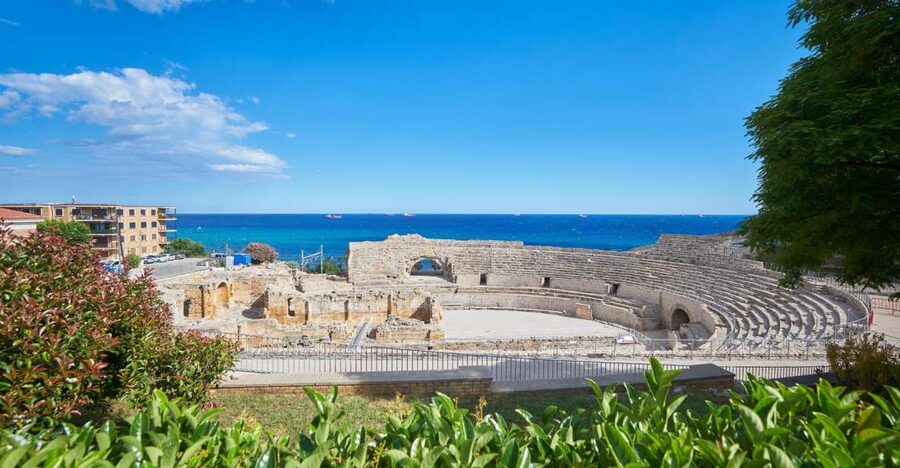
- A sea-facing Amphitheater: Finish where gladiator contests and animal hunts once took place, with open views toward the Mediterranean.
- A strong guide can make the difference: Adrià has been praised for simple, well-organized explanations and real pride in Tarragona.
- A brisk, affordable format: At two hours and $17, this is a good introduction, but not a slow archaeological study.
Starting beside Tarragona’s Roman walls
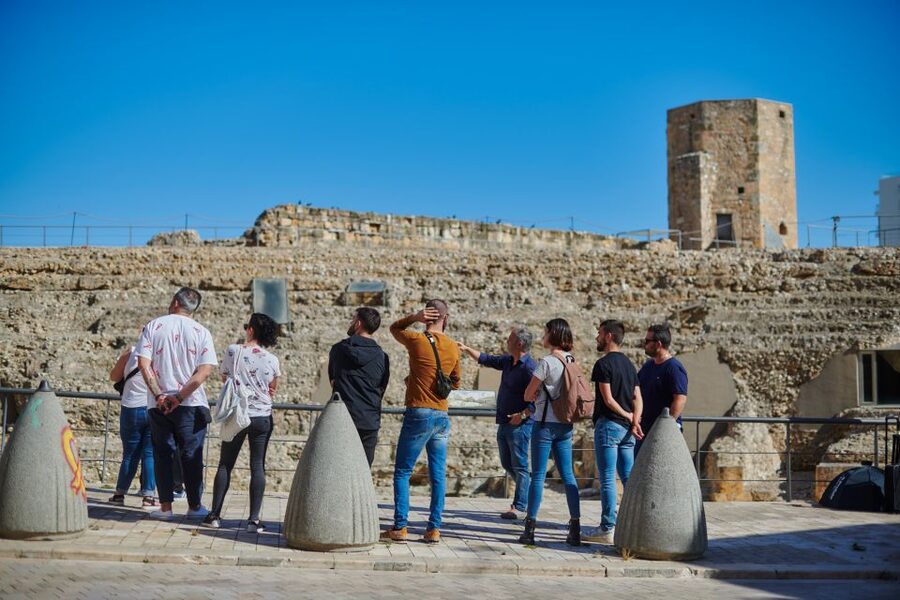
You meet at the Itinere office next to the Roman walls, arriving about 10 minutes before the start. This is a sensible meeting point because the first site is right there, and the walls immediately give you a feel for Tarragona’s scale and importance.
The Romans called the city Tarraco, and its position on a hill beside the Mediterranean made it a useful base for controlling the peninsula. Your guide explains why this location mattered and how Tarragona functioned as Rome’s gateway into Hispania.
The walls are the right place to begin. They are not a small fragment tucked behind a modern building. They provide a solid first look at Roman military planning, and their position helps you understand the city’s natural defenses. You are told that they are the oldest Roman walls outside Italy, a detail that puts Tarragona high on the list for anyone interested in Roman sites beyond Rome itself.
I would pay close attention here rather than rushing ahead for photographs. The opening explanation gives the rest of the walk a frame. Without it, the ruins can seem scattered. With it, the walls become the edge of a planned Roman city.
The guide language is Catalan or Spanish, so choose this tour only if you can follow one of those languages comfortably. There is no listed English option. That point matters more than the low price if you need detailed explanations in English.
More History Walking Tours in Spain
- Barcelona: Tapas Walking Tour with Food, Wine, and History
★ 4.8 · 4,261 reviews - Barcelona Tapas Walking Tour: Food, Wine & History
★ 4.5 · 1,928 reviews - Madrid Historical Walking Tour
★ 5.0 · 721 reviews
Seeing Roman Tarraco beneath the modern city
From the walls, the route continues into Tarragona’s historic center. This is where the tour’s main idea becomes clear: the Roman city has not disappeared. It has been covered, reused, and built around.
Roman monuments sit among current houses, streets, and squares. You may pass from an ordinary-looking urban space into a place with ancient foundations or underground remains. That contrast is one of Tarragona’s pleasures. You are not walking through a separate archaeological park with a clean boundary between old and new. You are seeing how the modern city grew over the Roman one.
The guide uses a large city model to show how Tarraco once looked. This is one of the most useful parts of the experience because ruins on their own rarely explain a whole city. A model can show the relationship between the walls, Circus, Amphitheater, streets, and other buildings in a way that individual stones cannot.
You learn what different buildings were used for, not only what they looked like. That practical context helps you understand the city as a working Roman center, with spaces for public events, movement, defense, and civic life.
I especially like this stop for first-time visitors. It gives you a mental map before the tour reaches the larger monuments. If you later explore Tarragona on your own, the model should help you recognize how the Roman remains fit together.
The drawback is that the old center can be noisy. One recent departure had several groups leaving at the same time, with roughly 20 people in each group. If your guide is speaking while other groups are nearby, it may be harder to catch every point. Stay close enough to hear, and try not to drift toward the back of the group.
Entering the Circus vaults beneath the streets
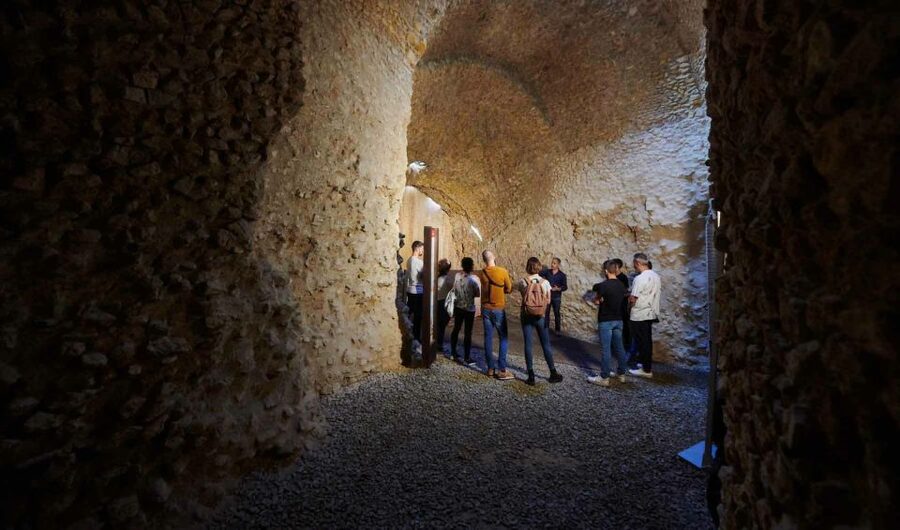
The included Circus entrance is the clearest value in the $17 price. The Circus was the Roman venue for chariot races, and the surviving vaults let you see the supporting spaces beneath the former racing complex.
This is not simply a walk past a sign explaining that races once happened here. You enter the vaults and get a sense of the hidden structure beneath the public spectacle. The guide connects the underground spaces to the excitement of the races above, helping you picture the movement of horses, chariots, crowds, and officials.
For many people, this will be the most distinctive part of the tour. Tarragona’s Roman remains are woven into the city, and the Circus vaults make that fact physical. You are below the modern streets, in a place that once supported one of the Roman world’s favorite forms of mass entertainment.
The Circus also gives the guide a chance to explain how Roman buildings worked. A stadium was not only an open arena. It needed corridors, support spaces, access routes, and a structure strong enough to hold large crowds. The vaults reveal that less glamorous but essential side of Roman public life.
You should wear comfortable shoes. The tour is entirely on foot, and the mix of city pavement and historic areas calls for sensible footwear. Large bags and luggage are not allowed, so leave suitcases elsewhere before arriving. That rule is especially important if you are coming directly from a train or hotel check-out.
Using the 3D exhibit before the final monument
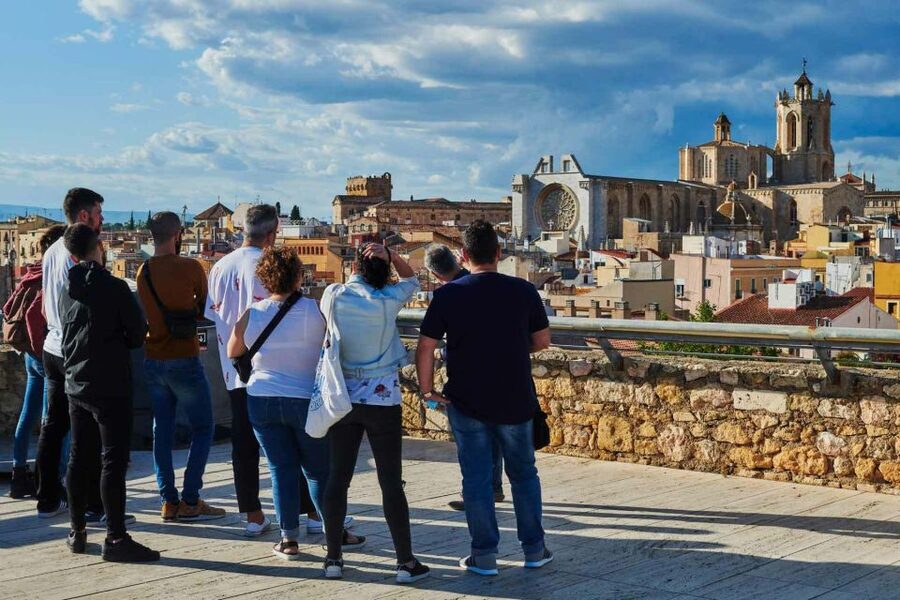
Before heading to the Amphitheater, you watch an audiovisual exhibit with 3D images. This breaks up the walking and gives you another way to picture the ancient city.
The exhibit is particularly useful if you find it hard to read ruins from foundations and fragments. A reconstructed image can show what the buildings may have looked like and how public spaces were used. One visitor singled out the Tarragona video as a favorite part of the tour, and I can see why. It gives the eye a complete picture after you have spent time looking at partial remains.
The audiovisual section also helps keep the tour accessible to people with different interests. Someone drawn to architecture may enjoy the model and reconstruction. Someone more interested in daily life may appreciate the explanation of how Roman buildings served the city. The tour does not rely on ruins alone.
Still, this is a compact experience. The video and model are useful, but they also take time from the walking route. If you want long pauses at each monument, two hours will feel tight. One local-language review called the tour complete but too short and suggested three hours would be better. That is a fair criticism, especially for visitors who like to ask many questions.
Same streets, a different century:
- Madrid Essential: Historic Center, Plaza Mayor & Royal Palace
★ 5.0 · 6,416 reviews - Sevilla Food Tour: Tapas, Wine, History & Traditions
★ 5.0 · 3,468 reviews - Valencia Old Town Tour with Wine & Tapas in 11th Century Historic Monument
★ 5.0 · 3,234 reviews - Madrid Tapas & Taverns Small Group Food & History Tour
★ 5.0 · 2,664 reviews
Reaching the Amphitheater above the Mediterranean
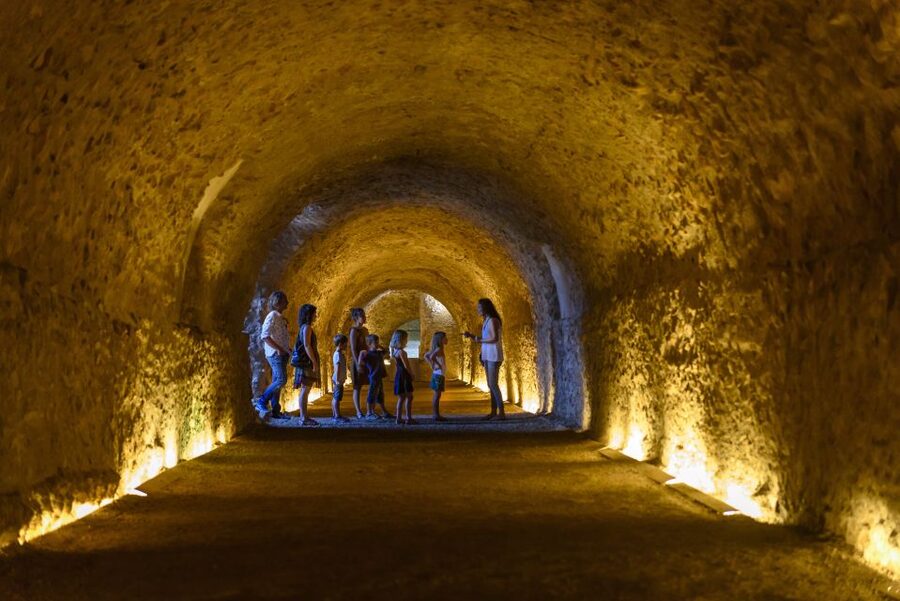
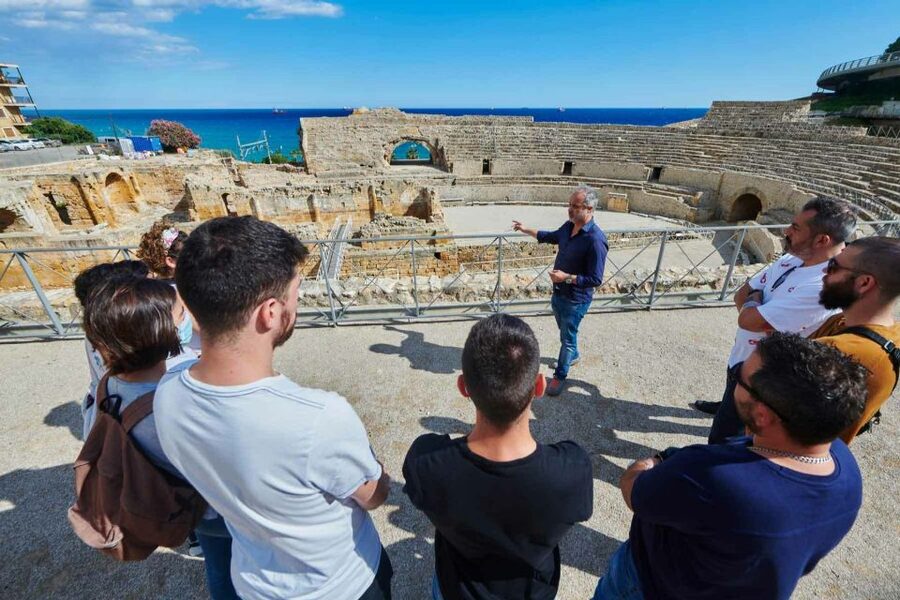
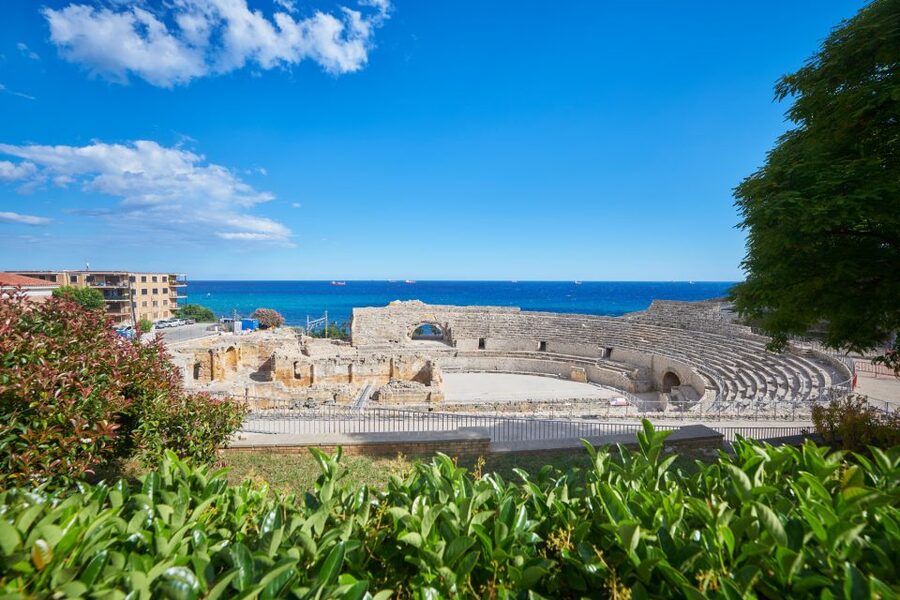
The final major stop is Tarragona’s Amphitheater, set beside the sea. This location gives the tour its best visual finish. After the enclosed Circus vaults and the busy historic center, you reach an open monument with views toward the Mediterranean.
The guide explains the gladiator fights and animal hunts held here in Roman times. These events were designed for large audiences, and the Amphitheater’s position makes its public role easy to grasp. You are not only looking at an old arena. You are considering how Roman authorities used spectacle to entertain crowds and display power.
The setting also adds a human detail to the history. The site is not an abstract ruin in a textbook. It is a real place where people watched violent contests, cheered, waited, and went home. The sea beyond it creates a striking contrast with the harsh events once staged inside.
I would save a little attention for the modern history of the stadium as well. The tour reviews its story through to the present day, so the Amphitheater is treated as a site with more than one chapter. That broader view is valuable. Ancient monuments do not stop having a story after the Roman period ends.
The Amphitheater is also a good place to ask final questions, if time allows. The guide may need to keep the group moving, so do not expect an unhurried photography session. You can enjoy the views, but the main purpose remains the guided explanation.
The guide can shape the whole experience
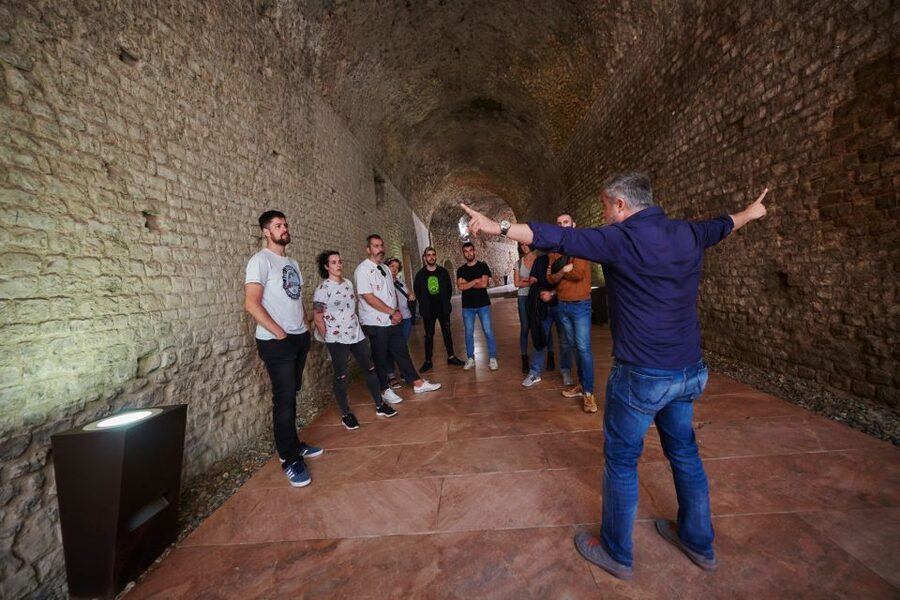
The named guide Adrià has received especially warm praise for clear explanations, strong knowledge of the city, and visible pride in his home region. That combination matters on a walking tour. Tarragona has many Roman remains, but the quality of the explanation determines how well those pieces connect.
A good guide should help you follow the story from Roman military base to public city, then from Circus entertainment to Amphitheater spectacle. Adrià has been described as engaging and easy to understand, and one group found the visit so absorbing that it seemed too short.
The tour is offered in Catalan or Spanish. That language choice creates a more local feel for people who understand either language, but it limits the audience. You should be realistic about your listening ability, particularly in the old center where noise from other groups may interfere.
The experience is wheelchair accessible, which is an important practical point. Even so, the tour covers historic areas and several different settings, so you may want to confirm the precise route and access needs when booking. The supplied information confirms accessibility but does not give a detailed site-by-site description.
Is two hours enough for Tarragona?
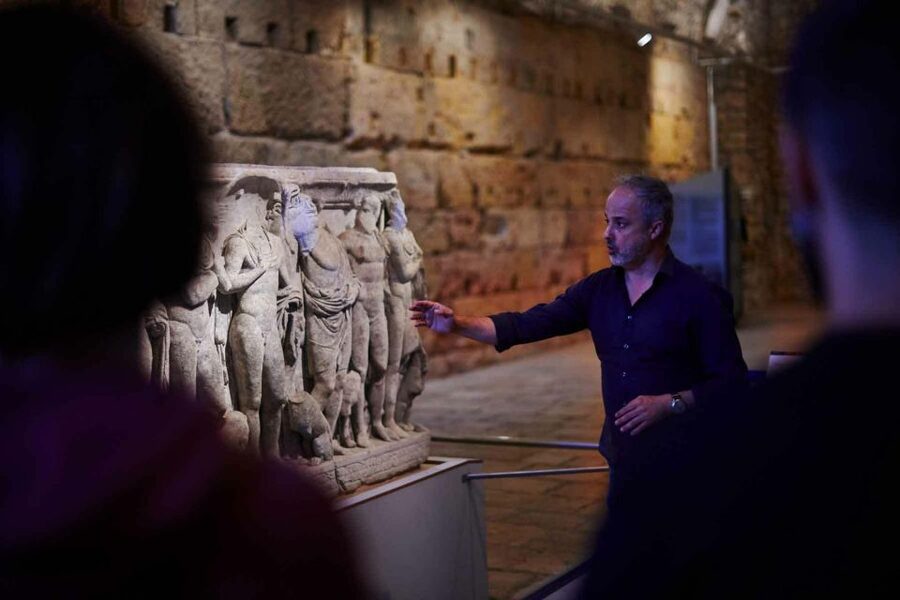
Two hours is enough for a strong introduction. You will see the Roman walls, enter the Circus, learn how the city was arranged, watch the 3D exhibit, and visit the Amphitheater. For a visitor with only part of a day in Tarragona, that is a useful amount of history in a compact format.
It is not enough for an exhaustive study. The route includes several major ideas, and each one could support a longer visit. You may have to choose between lingering over a detail, taking photographs, and asking questions.
The pace may also change with the group. A small, attentive group can move efficiently. A crowded departure can produce noise and slow transitions. One account described three groups of about 20 people starting around the same time, so timing and crowd conditions may affect how easy it is to hear.
Bad weather can matter too. A January tour continued during heavy rain and was still judged acceptable, but rain is not ideal for an outdoor walking route. Bring suitable clothing for the forecast, and wear shoes that remain comfortable on wet streets.
What the $17 price really gets you
At $17 per person, this tour offers good value if you want an organized introduction rather than a private, slow-paced archaeological visit. The price includes the official guided tour and entrance to the Circus, while the Roman walls, city model, audiovisual presentation, and Amphitheater are built into the route.
The value comes from the connections. You are not paying only to enter one monument. You are paying for a guide to explain why the walls were built, how the city functioned, what the Circus vaults supported, and how the Amphitheater was used.
I would compare it with the cost of exploring without a guide. You could walk through Tarragona independently, but the scattered Roman remains may not make much sense at first. This tour gives you the basic structure in two hours, then leaves you free to return to the places that interest you most.
The tradeoff is personal attention. The price is low partly because this is a shared group walk. If you want a private guide, long pauses, or a highly specialized discussion of Roman architecture, this may not be the right format.
Free cancellation up to 24 hours before the activity and the option to reserve without paying immediately make it easier to fit into a changing itinerary. Check the available start times before booking, since the tour lasts two hours and timing can affect the rest of your day.
Who should book this Roman walking tour?
I would recommend it to first-time visitors who want to understand Tarragona’s Roman core without spending a full day at archaeological sites. It suits history fans, cruise or short-stay visitors, and anyone who prefers a guide to connect monuments that are spread through a living city.
It is also a good choice if you want a tour that mixes different formats. You walk outdoors, enter the Circus vaults, study a model, watch a 3D presentation, and finish at a major monument. That variety keeps the two hours moving.
Families and mixed-interest groups may appreciate the straightforward storytelling and visual material, though the language requirement still applies. The tour is wheelchair accessible, and comfortable shoes are essential for everyone.
I would be more cautious if you need English, dislike group tours, or want time for detailed photography. I would also avoid scheduling it too tightly before another fixed activity. The advertised length is two hours, but crowds, questions, and weather can affect the pace.
Final call: book it for the big picture
Book this tour if you want a reasonably priced, well-organized introduction to Tarragona’s Roman identity. The walls, Circus vaults, city model, audiovisual exhibit, and sea-facing Amphitheater create a useful sequence, and guide Adrià has shown the kind of clear, proud storytelling that can make ancient stones readable.
Skip it only if you need English commentary, a private experience, or a longer archaeological session. For everyone else, $17 is a fair price for a brisk route through Tarragona’s most important Roman sights. Arrive early, bring comfortable shoes, leave large bags behind, and stay near the guide if several groups are departing together.
FAQ
How long does the Tarragona Roman Heritage Guided Walking Tour last?
The tour lasts two hours.
How much does the tour cost?
The listed price is $17 per person.
Where is the meeting point?
Meet at the Itinere office next to the Roman walls. Arrive 10 minutes before the activity begins.
What languages does the guide speak?
The tour is offered in Catalan and Spanish.
Is entrance to the Circus included?
Yes. Entrance to the Circus is included with the guided tour.
Which Roman sites are visited?
The tour covers the Roman walls, the Circus vaults, Tarragona’s historic center, and the Amphitheater. It also includes a large city model and an audiovisual exhibit with 3D images.
Is the tour wheelchair accessible?
Yes, the activity is listed as wheelchair accessible.
What should I bring, and what is not allowed?
Bring comfortable shoes. Luggage and large bags are not allowed.
Newest history tours we have reviewed in Spain
- Visita Guiada Por El Casco Histórico De Cuenca Y Su Catedral★ 5.0 · 45 reviews
- Mosque of Cordoba History Tour in English Tickets included★ 5.0 · 257 reviews
- Jerez de la Frontera History and Art Walking Tour★ 4.5 · 49 reviews
- 2 Hours Tour around Cádiz: History, anecdotes and curiosities★ 5.0 · 89 reviews
- The Authentic Bilbao Pintxos, Food & Wine Tour with a Local★ 5.0 · 360 reviews
- Bilbao Historical Small Group Tour★ 4.5 · 159 reviews
- Barcelona Jewish & Gothic Tour★ 5.0 · 18 reviews
- Andorra Original History and Sightseeing Tour (Private, Pickup)★ 5.0 · 350 reviews
History Walking Tours, compared.

History and Hauntings of Salem Guided Walking Tour
Read our review →

Freedom Trail History Small Group Walking Tour
Read our review →
Historic Charleston Guided Sightseeing Walking Tour
Read our review →
Tapas Walking Tour with Food, Wine, and History
Read our review →
Savannah History and Haunts Candlelit Ghost Walking Tour
Read our review →
A History of Terror – Belfast City Centre Walking Tour
Read our review →Browse the lists this tour appears in