
Review · JAPAN HISTORY TOURS
Shuri+Naha: Cycling Tour Explore Water Heritage with E-Bike
The most surprising part of this Shuri e-bike tour is how quickly Naha gives way to quiet water. From the Makishi Monorail area, you ride past ordinary homes, old stone steps, forest springs, and small waterfalls before reaching the castle town of Shuri. It is a useful reminder that Okinawa’s past is not locked inside a museum.
I like the close look at local water life, and I like the stop at a confectionery that preserves sweets linked to the Ryukyu royal court. Guides such as Aki, Sally, Maki, and Jo-Jo have been praised for clear explanations and careful riding support. The main drawback is simple: three hours is not long enough for a slow visit at every stop, and the route includes hills, wet areas, and rocky footing.
Key points to know before you ride
- Quiet springs in central Naha: Follow rivers and forest water sources that feel far removed from the city.
- A small five-person group: The limited size makes it easier to ask questions and stay together on local streets.
- Ryukyu sweets with a story: Watch traditional confectionery being made and sample the finished product.
- Shuri’s castle-town setting: Ride past red roofs, stone pillars, sacred places, and old cobbled routes.
- Electric assistance for the hills: The motor helps on the climb toward Shuri, then the return is mostly downhill.
- Bring proper shoes: Athletic shoes are required in spirit, since wet roads, steps, and rocky areas can be slippery.
From Makishi station to Shuri by bicycle
The tour begins at the e-charity bike shop beside Makishi Post Office, about a one-minute walk from Makishi Monorail Station. This is a handy meeting point if you are staying around Kokusai Street or using the monorail to reach central Naha.
You receive an electric-assisted bicycle and a helmet fitted with an intercom system. The quick briefing covers safe riding and helps the group settle into a common pace. With no more than five participants, the guide can keep an eye on everyone and explain things without shouting across a large pack.
The e-bike matters here. Shuri rises above central Naha, and the route is not a flat riverside cruise from start to finish. You still need to pedal and steer, but the electric motor takes the sting out of the hills. That makes the tour a good choice if you want to cover more ground than you could comfortably manage on a standard rental bike.
You must be able to ride a bicycle. The tour is not suitable for wheelchair users or people who cannot cycle. Children from one to five years old may ride in a child seat attached to a parent’s bicycle, but you should check with the staff before booking.
More History Bike, Segway and Tuk-Tuk Tours in Japan
- Historical Kyoto E-Bike Tour
★ 5.0 · 181 reviews - Sakurajima Century Lava Climb Journey with E-bike
★ 5.0 · 54 reviews - Tokyo: 3-Hour Bike/E-Bike Tour of the City’s Hidden Gems
★ 5.0 · 47 reviews
Water, homes, and the everyday side of Okinawa
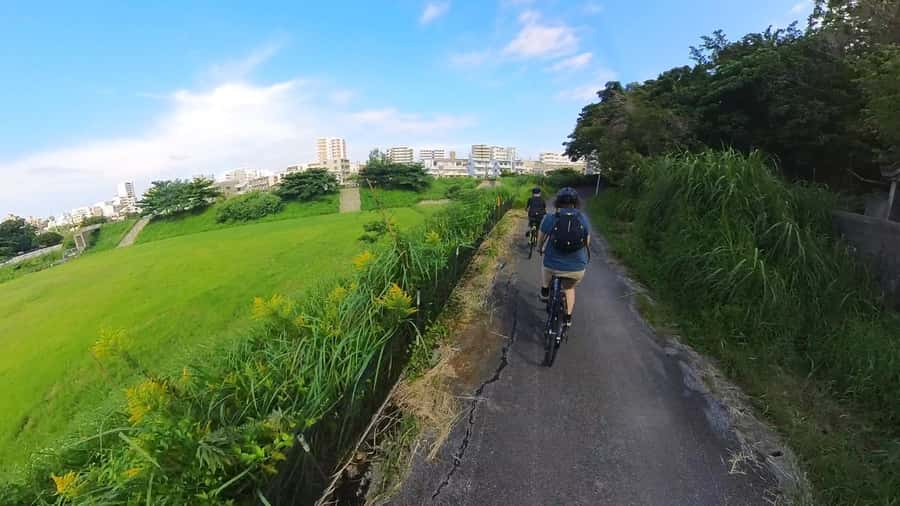
One of the tour’s strengths is that it does not begin with a grand monument. You ride along the riverside through areas where traditional and modern homes sit next to one another. The route offers a look at daily Okinawan life, not just the polished sights presented for visitors.
You may pass people going about their day, and a simple greeting can bring a smile in return. That small contact is part of the appeal. You are not sealed inside a vehicle or moving from one major attraction to the next. The bicycle places you at street level, where details are easier to notice.
This is also where the guide’s role becomes important. English and Japanese tours are available, and the intercom lets the guide speak while the group rides. The most useful guides do more than point out a building. They connect the water, homes, roads, and old settlement patterns to the larger story of Okinawa.
The route is not designed for speed. You should expect pauses for explanation, short photo stops, and changes in surface. If you prefer a smooth, fast ride with few stops, this may feel too leisurely. If you want to understand how a city works beyond its main shopping street, the pace makes sense.
Sashikasa Hija and the surprise of city springs
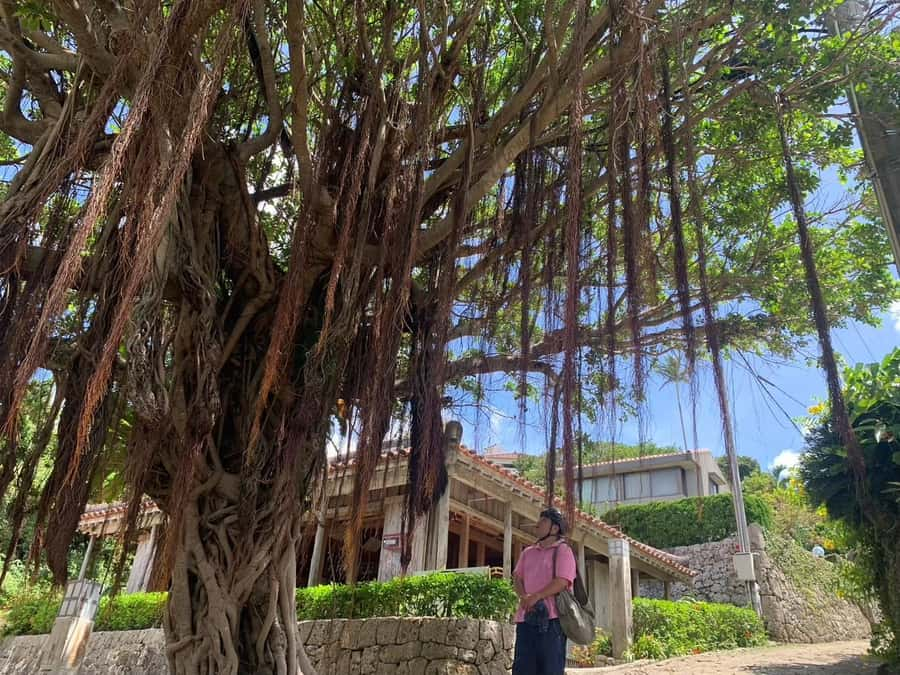
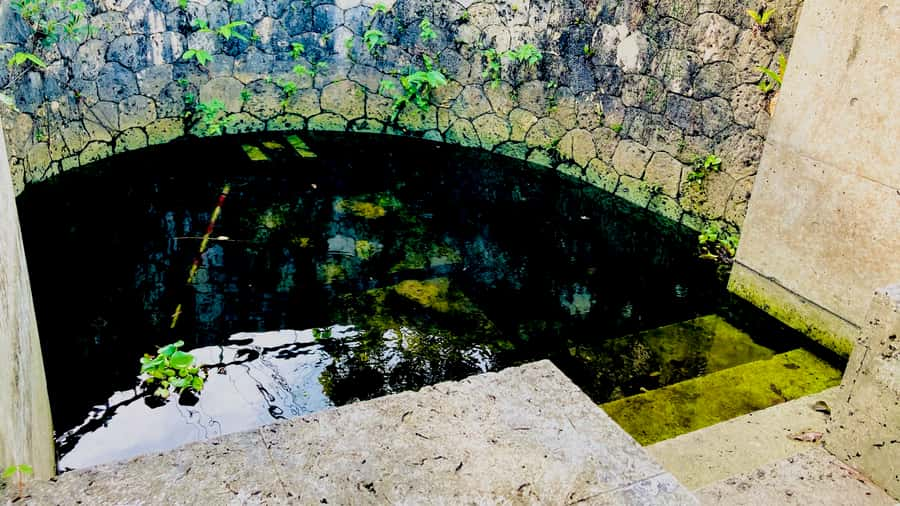
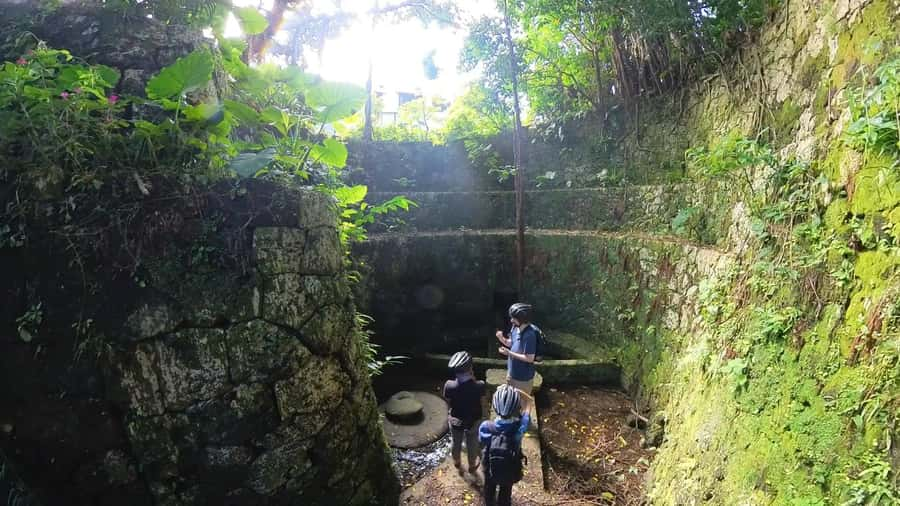
A major early stop is Sashikasa Hija, written in the tour details as 指司笠樋川. The route reaches it by way of old stone steps and ancient trees. It is close to the active city, yet the mood changes sharply once you descend.
A perennial spring feeds the area, and you can hear a small waterfall. The sound of moving water creates a quiet pause in the ride. This stop is valuable because it shows why springs mattered to local communities. Water was not simply scenery. It shaped settlement, work, and the rhythm of ordinary life.
You should take care on the steps and around the water. The tour specifically warns that some places are close to water and rocky areas, and surfaces can be slippery. High heels and sandals are poor choices. Wear shoes with a firm sole and enough grip for walking beside the bicycle.
The stop also gives the tour its strongest contrast. A monorail runs overhead near the main streets, yet old trees, stonework, and flowing water remain nearby. You get a brief sense of how several eras of Naha occupy the same space.
A second spring, birdsong, and a slower pace
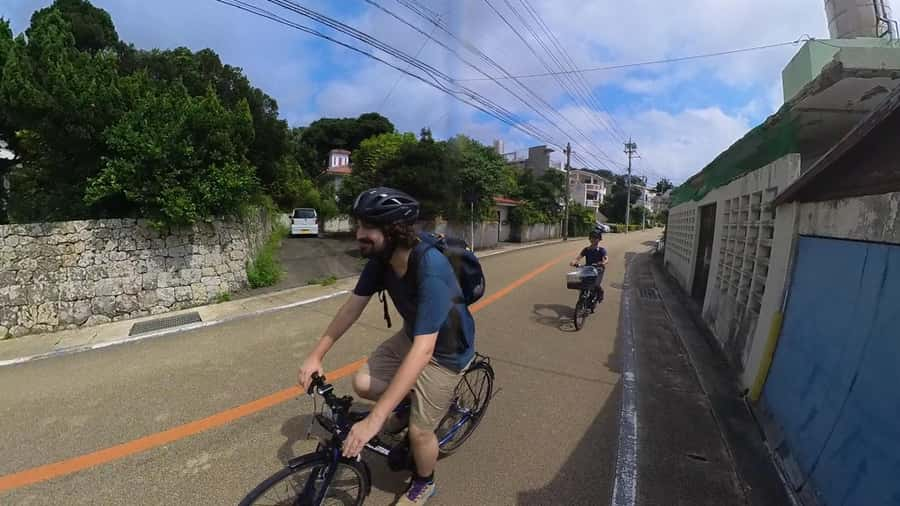
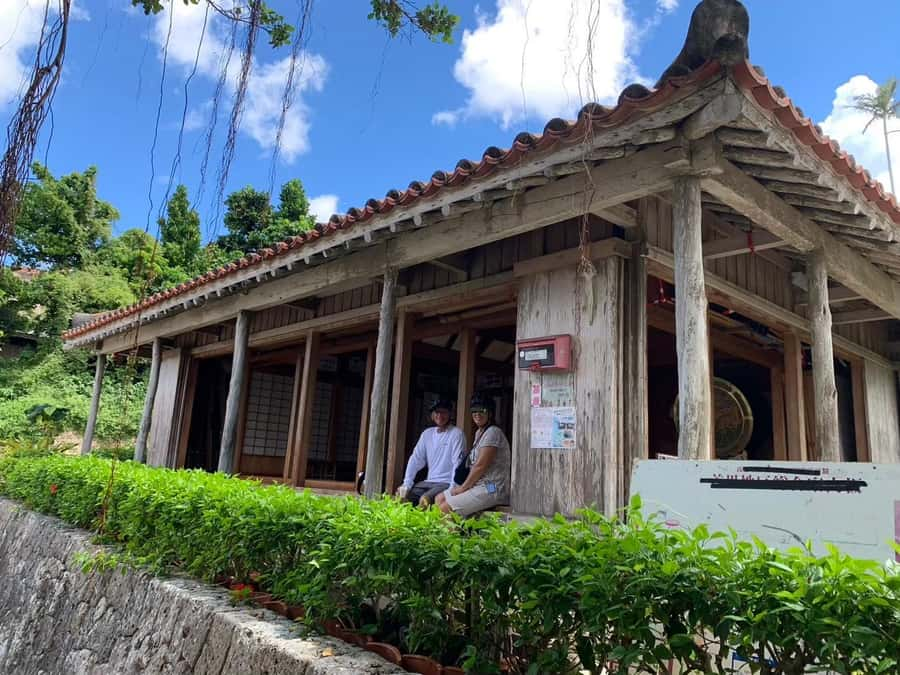
After riding through residential streets, the group reaches another spring. This one is described as a place where waterfowl gather from the forest. The setting is quiet enough that water and birdsong become the main sounds.
I like this part of the route because it gives the tour a pause without turning the stop into a formal attraction. You are not simply checking off a viewpoint. You have time to notice the natural features that still survive among homes and roads.
Do not expect a long nature walk. This is a cycling tour, and the schedule has to include the springs, sweets, Shuri, and the ride back within three hours. Still, the short break can feel restorative, especially after the first hills or on a warm day.
The tour also has a practical environmental angle. Electric bicycles reduce the effort needed to reach Shuri, while cycling avoids adding another vehicle to Naha’s crowded streets. The experience is not a wilderness outing, but it offers a lighter way to see the city.
Same streets, a different century:
- Kyoto: Fushimi Inari, Kinkakuji, Bamboo Grove 1 Day Bus Tour
★ 4.8 · 4,316 reviews - World Heritage Shirakawa-go and Experience Tours from Kanazawa
★ 5.0 · 4,049 reviews - Tokyo: Imperial Palace and Shogun Historical Walking Tour
★ 5.0 · 2,251 reviews - World Heritage Kyoto & Nara Uji Authentic Matcha Experience
★ 5.0 · 1,573 reviews
Handmade Ryukyu sweets and a taste of court tradition
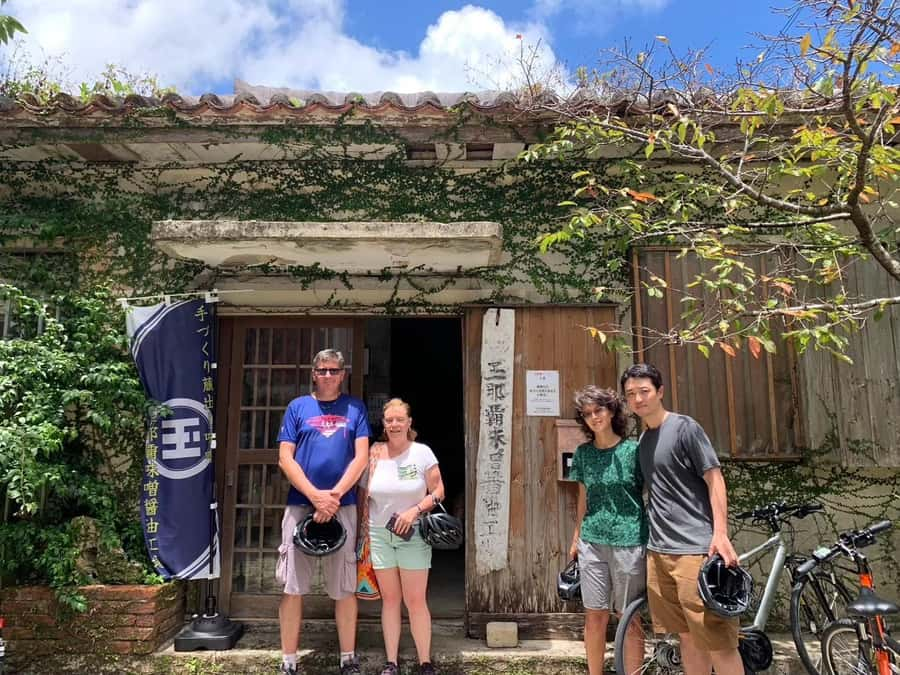
The food stop is one of the most distinctive features. You visit a shop that keeps recipes associated with the Ryukyu Kingdom era and makes each sweet by hand. The shop has preserved its production methods across generations, and you can see the confectionery process before tasting the result.
This is not presented as a full meal or a broad food tour. Think of it as a focused cultural stop with a small taste. The value lies in the connection between food and history. A traditional sweet can tell you something about ceremony, hospitality, ingredients, and social rank in a way that a wall label often cannot.
The stop has also been described as a small bakery visit where handmade treats are prepared and wrapped. That makes it especially appealing if you enjoy seeing how local products are made rather than buying a packaged souvenir without context.
Timing may affect how much of the production process you see. The tour promises an opportunity to observe and taste, but it does not state that every stage will be underway on every departure. Keep your expectations realistic, and enjoy the stop for what it is: a brief, personal connection to an old Okinawan food tradition.
Shuri’s vermilion gate and the climb above Naha
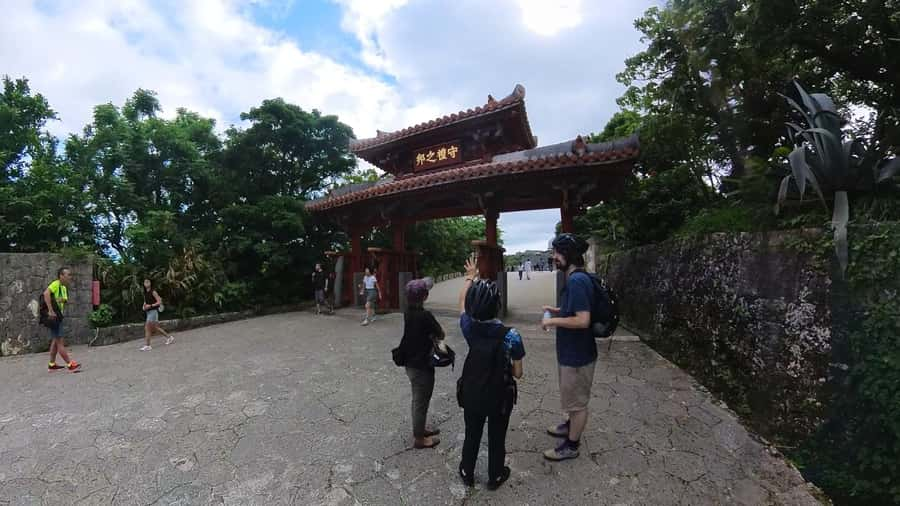
The route then reaches the gate that serves as a major symbol of Okinawa. Its vermilion color and balanced design make it an obvious photo stop. The gate was known by common people as Ue no Ayamon Ii no Ayashō, or Beautiful Gate Above.
This is the moment when the ride shifts from water heritage to royal Shuri. You can take commemorative photos, but the guide can also explain why the gate carries such weight in Okinawan identity. The strong color and formal design announce that you are entering a place tied to the former Ryukyu Kingdom.
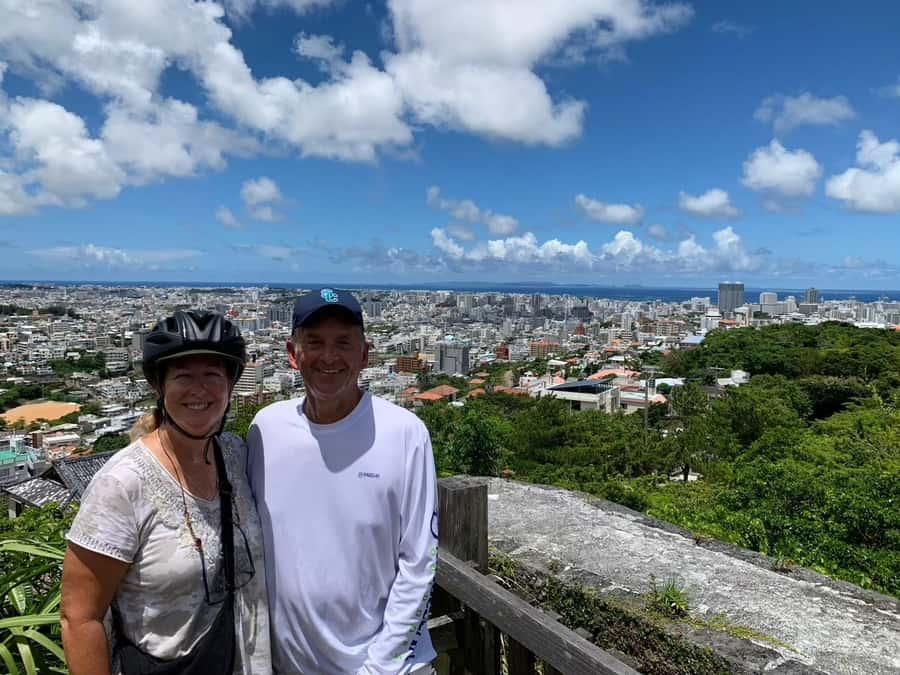
From here, the e-bike earns its keep. You slowly climb toward higher ground, with views across Naha City. Red-tiled roofs, guardian figures, stone pillars, and remnants of a castle-town setting appear along the way.
The climb is manageable with electric assistance, but it is still a climb. You should not book this expecting to sit back without effort. You will pedal, make turns, and ride on streets that may not feel as easy as a dedicated bike path.
The reward is the change in view. From street level, the city can feel dense and modern. From the Shuri hills, the red roofs and stone details give the area a different character. The guide may encourage you to look for these small features rather than rushing toward the next landmark.
Shuri Castle and the spiritual side of the route
Shuri Castle served as the capital of the Ryukyu Kingdom, and the tour explores its surrounding streets, cobbled routes, temples, and sacred shrines. The point is not only to photograph a famous gate. You also get a sense of how royal power, religion, and ordinary town life were linked.
The sacred places are important because Okinawan culture has its own religious traditions and local beliefs. A short guided explanation can help you read the setting with more care. Without context, an old shrine or stone path may look like a quick photo stop. With context, it becomes part of the area’s living memory.
The tour does not promise a long, independent visit inside every castle building. Its focus is the wider Shuri area and the cultural setting around the former royal capital. If your main goal is a detailed museum visit, you may need extra time on your own after the ride.
That limitation is also a benefit. The bicycle allows the guide to connect separate sites that would feel scattered on foot. You move from water sources to homes, from sweets to royal gates, and from hilltop views to sacred places in one clear route.
The downhill return to Makishi
After the Shuri section, the return ride heads downhill. This is the easiest stretch physically, and you can feel the wind as you coast back toward the original shop.
The downhill section should not be treated as a race. You still need to follow the guide, watch the road, and handle turns safely. The intercom system helps the group stay together, but you are responsible for controlling the bicycle.
Back at the shop, you return the bicycles and helmets, and the three-hour outing ends. The location near Makishi Monorail Station makes it easy to continue exploring Naha afterward. You can spend the rest of the day around Kokusai Street or use the monorail for another part of the city.
Is $87 a fair price?
At $87 per person, this is not the cheapest way to see Naha. You are paying for a guide, an electric-assisted bicycle, a helmet with intercom communication, route planning, and a small group capped at five people.
The value improves if you would otherwise rent a bike and try to find the springs and Shuri sites yourself. The route is not just a list of famous places. It links water sources, local streets, food tradition, royal history, and scenic points into one three-hour experience.
The small group also matters. A large cycling group can spend much of its time waiting at crossings or trying to hear the guide. With five people or fewer, the guide can offer more direct help, especially on hills, narrow streets, and uneven surfaces.
The price is harder to justify if you already plan to spend a full day at Shuri Castle and prefer to explore every site slowly. You may get more from this tour if you value local context and efficient movement over a long, unhurried castle visit.
Guides, weather, and practical details
The tour operates in English and Japanese. Guides named Aki, Sally, Maki, and Jo-Jo have been singled out for polite service, clear explanations, strong local knowledge, and careful support. Aki’s English has been described as easy to follow, while Sally was praised for making Okinawa’s nature and history clear.
Those details matter on a cycling tour. You want a guide who can explain road conditions, keep the group together, and adjust the pace when needed. The available comments point to a friendly and attentive guiding style, though individual guide assignments can change.
Weather is a real factor in Okinawa. If the chance of rain rises above 70 percent or severe weather is expected, the plan may change. You should be contacted from three days before the tour through the day before if conditions require a change.
Wear athletic shoes and comfortable clothing. Do not bring high heels or sandals. Camera mounts and mobile phone holders are not included, so plan to carry your phone securely rather than expecting the bicycle to provide a mounting system.
Free cancellation is available up to 24 hours before departure for a full refund, and you can reserve now and pay later. Check the available start times when booking because the activity lasts three hours.
Should you book this Shuri cycling tour?
Book it if you want to see Naha through its water sources, neighborhood streets, food traditions, and Shuri history in one compact outing. It suits confident cyclists, couples, small families with an approved child seat, and anyone who likes a guide-led route with plenty of context.
I would especially choose it early in a Naha stay. The tour gives you a useful sense of how central Naha, the springs, and Shuri fit together, and you can return to the castle area later if you want more time.
Skip it if you cannot ride, need step-free access, dislike hills, or want a long indoor museum visit. For everyone else, the combination of e-bike assistance, a five-person limit, quiet springs, handmade sweets, and a downhill finish offers strong value at $87.
FAQ
Where does the cycling tour begin?
It begins at the e-charity Naha Kokusai Street main shop, next to Makishi Post Office. The shop is about a one-minute walk from Makishi Monorail Station.
How long does the tour last?
The activity lasts three hours, including the cycling route, guided stops, the sweets visit, time around Shuri, and the return to the bike shop.
What languages are available?
The tour is offered in English and Japanese, with a live tour guide.
How many people can join the group?
The tour is limited to five participants, making it a small-group experience.
Is an electric bicycle included?
Yes. Electric-assisted bicycle rental, a helmet, and an intercom system for the guided tour are included.
What should I wear?
Wear athletic shoes or similar footwear. High heels and sandals are not recommended because some roads, steps, rocky areas, and places near water may be slippery.
Can young children join?
Children aged one to five may use a child seat attached to a parent’s bicycle. You should consult the staff for details before booking.
Newest history tours we have reviewed in Japan
- [30 minutes] Rickshaw tour around Asakusa [History, sightseeing, Tokyo Skytree]★ 5.0 · 38 reviews
- Tokyo: Asakusa & Sensoji ー Oldest Temple Walking Tour (2hrs)★ 5.0 · 213 reviews
- Private sake pairing@ancient underground★ 5.0 · 27 reviews
- Private Tour Through the Tokyo National Museum & Ukiyo-e★ 4.7 · 17 reviews
- Tokyo: Customized Private Historical Guided Photoshoot Tour★ 5.0 · 25 reviews
- Tokyo: Imperial Palace, the history of Japan (ENGLISH GUIDE)★ 5.0 · 77 reviews
- (Ticket Included) Explore Osaka Castle & Museum of History★ 4.8 · 21 reviews
- Tokyo: Edo Castle & East Garden of the Imperial Palace Tour★ 4.7 · 112 reviews
History Bike, Segway & Tuk-Tuk Tours, compared.

Historical Singapore Bike Tour on Full-Sized Bicycles
Read our review →
Charlotte’s Ultimate Southern Charm Historical City Cart Tour
Read our review →

Asheville Historic Downtown Guided Electric Bike Tour with Scenic Views
Read our review →
Private Guided Historic Electric Cart Tour of St. Augustine
Read our review →
60-Minute Guided Segway History Tour of Savannah
Read our review →
Historic Athens: Small Group Electric Bike Tour
Read our review →
90 Minute Historic Uptown Neighborhood Segway Tour of Charlotte
Read our review →Browse the lists this tour appears in