
Review · SPAIN HISTORY TOURS
Santiago: Historic Walking Tour and Highlights
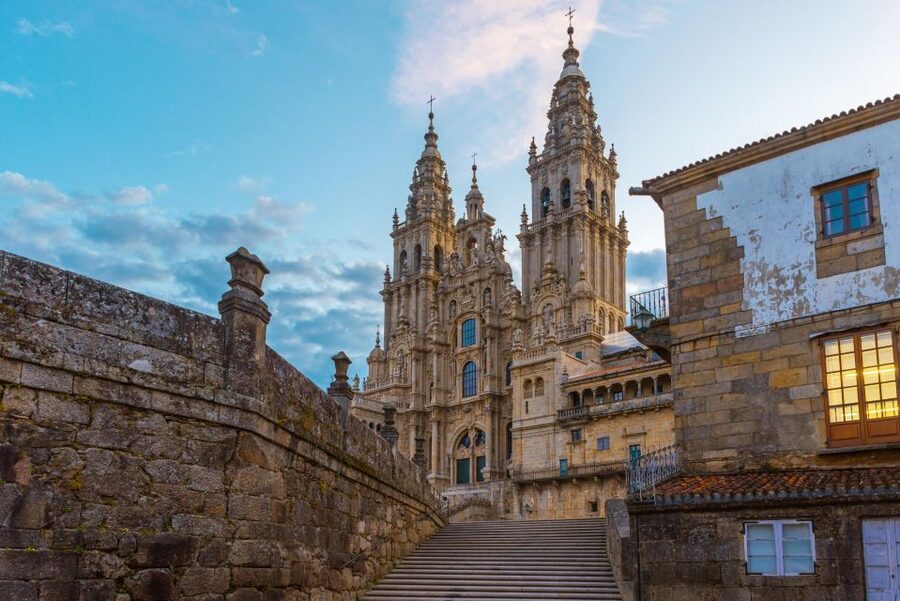
Santiago de Compostela makes its first impression with stone: arcades, church towers, narrow lanes, and the vast Cathedral of Santiago gathered around Obradoiro Square. This two-hour walk gives you the city’s essential story, from the Camino and the apostle Santiago to Galicia’s traditions and university life, without asking you to spend a full day on your feet.
I like the small group of no more than 10 and the route’s good mix of famous sights and quieter corners. I also like that guide Alex brings together architecture, monarchy, faith, and everyday Galician culture rather than treating the cathedral as a single isolated monument. The main consideration is that monument and museum entry is not included, and several sights are viewed from outside.
Key points to know
- A strong first look at Santiago: The route links Alameda Park, the old lanes, major squares, and the cathedral in two well-used hours.
- Guide Alex may be your guide: He is repeatedly praised for clear storytelling, humor, local recommendations, and his ability to explain the Camino.
- Small groups matter here: With a maximum of 10 people, it should be easier to hear the guide in narrow streets and busy squares.
- The cathedral is mainly an exterior stop: You see and discuss the cathedral, but entrance fees to monuments and museums are not covered.
- The tour ends near local food life: The Mercado de Abastos adds a useful final look at Santiago beyond religious monuments.
- Bring proper shoes and rain gear: The tour runs rain or shine and includes cobbled streets and outdoor walking.
Why Santiago is best understood on foot
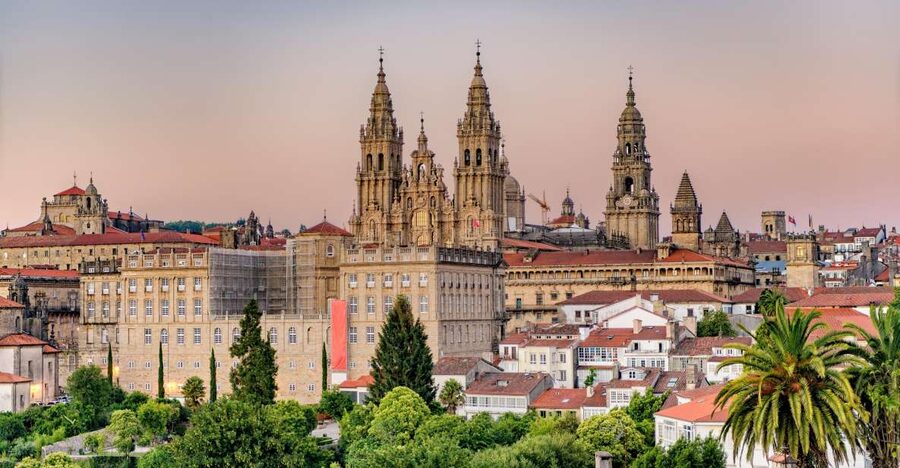
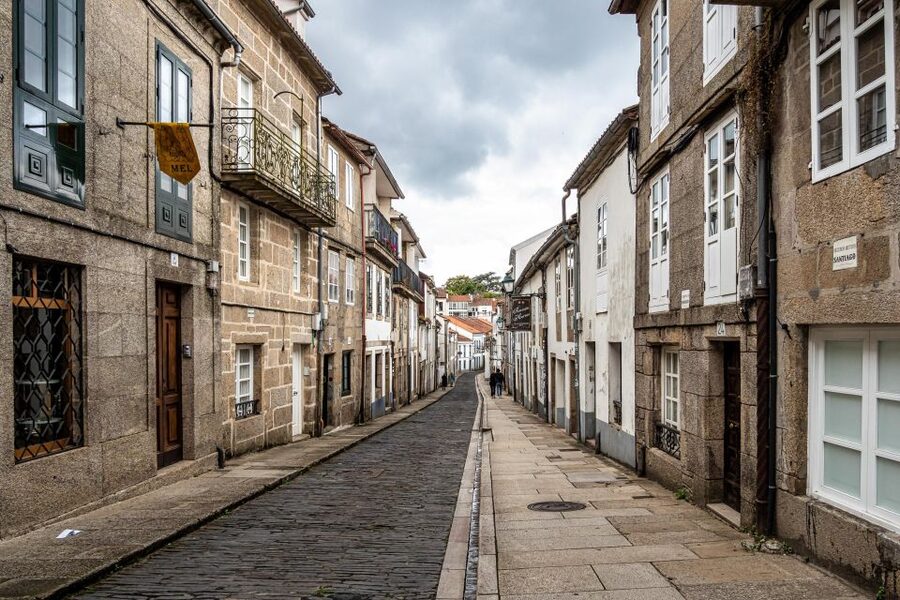
Santiago is not a city you should rush through from one landmark to the next. Its character comes from the way the streets lead into one another, how a small chapel opens onto a large square, and how pilgrimage routes meet ordinary city life.
This tour begins at the main entrance of the Capela do Pilar, or Pilar Church. Look for the guide with a distinctive black backpack and clear identification. That meeting point is practical because the walk quickly moves into Alameda Park, then toward the old center.
The route is especially useful if you have just arrived in Santiago and want to get your bearings. In two hours, you receive a broad introduction to the city’s religious past, architectural setting, student life, legends, and food culture. You can then return to the places that interest you most.
The pace should suit most reasonably active walkers, though the tour is not suitable for wheelchair users or people with mobility impairments. Wear shoes with a good grip. Santiago’s old streets are made for walking, but comfort matters more than style here.
More History Walking Tours in Spain
- Barcelona: Tapas Walking Tour with Food, Wine, and History
★ 4.8 · 4,261 reviews - Barcelona Tapas Walking Tour: Food, Wine & History
★ 4.5 · 1,928 reviews - Madrid Historical Walking Tour
★ 5.0 · 721 reviews
Alameda Park begins the story
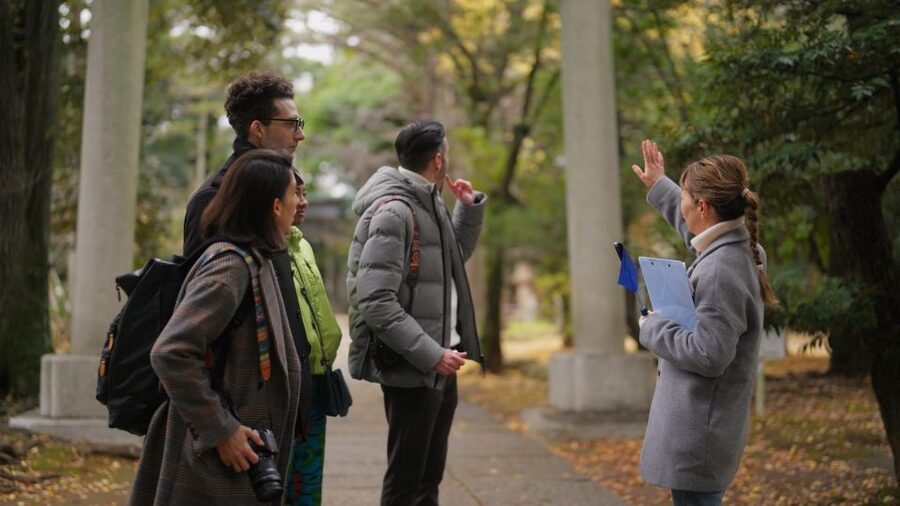
Alameda Park provides a gentler opening than starting directly in front of the cathedral. You have space to walk, pause for photographs, and hear about Santiago before entering the densest part of the Old Town.
The park stop also helps place the city in a wider setting. Instead of focusing only on pilgrims and churches, the guide can begin connecting Santiago with local daily life and its university tradition. That broader approach is one of the tour’s strengths.
Give yourself a moment to take photographs here. The tour includes a guided visit and sightseeing stop, but the schedule is still only two hours. You should enjoy the views without expecting a long, leisurely park visit.
Rúa do Franco and the city’s social side
From Alameda Park, the walk continues along Rúa do Franco. This street is part of the central pedestrian experience and helps shift the tour from open space to the close, winding lanes of the Old Town.
Rúa do Franco is also a useful counterpoint to the solemnity of the cathedral. Santiago is a working university city, not only a sacred destination. The street gives the guide a chance to talk about the relationship between pilgrims, residents, students, restaurants, and the old stone center.
You pass along this section rather than stopping for a major interior visit. That is worth knowing if you want long explanations at every site. The route aims to connect many places, so each stop is selective.
Praza de Fonseca and the university atmosphere
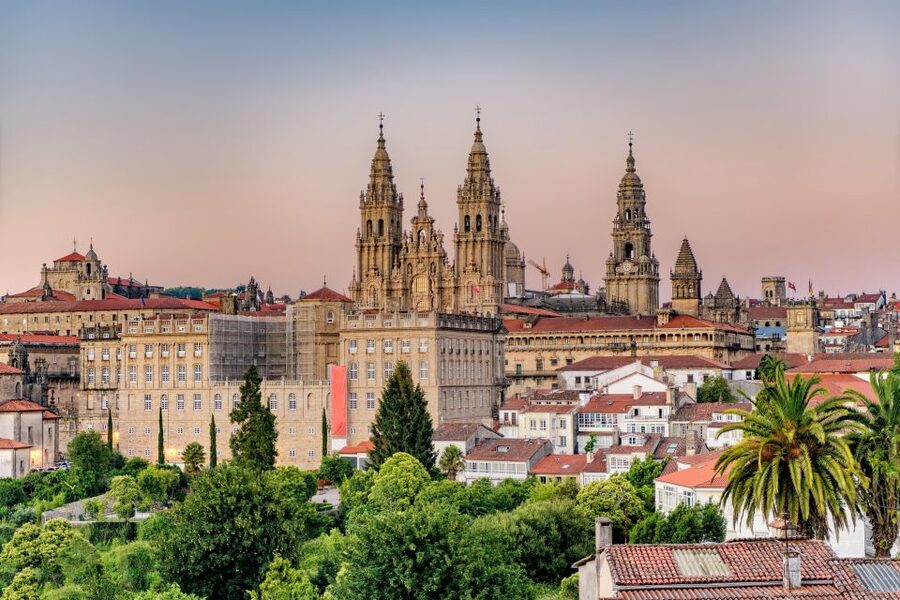
Praza de Fonseca adds another layer to the walk. Here, the focus can shift toward Santiago’s academic identity and the old institutions that helped shape the city.
This stop matters because it keeps the tour from becoming a simple church crawl. The city’s university life is part of its character, and the guide presents Santiago as a place where tradition and student energy share the same streets.
If you are interested in architecture, pay attention to the way the square fits into the older center. The guide’s value here is not just naming buildings. It is explaining how different parts of Santiago relate to one another.
Same streets, a different century:
- Madrid Essential: Historic Center, Plaza Mayor & Royal Palace
★ 5.0 · 6,416 reviews - Sevilla Food Tour: Tapas, Wine, History & Traditions
★ 5.0 · 3,468 reviews - Valencia Old Town Tour with Wine & Tapas in 11th Century Historic Monument
★ 5.0 · 3,234 reviews - Madrid Tapas & Taverns Small Group Food & History Tour
★ 5.0 · 2,664 reviews
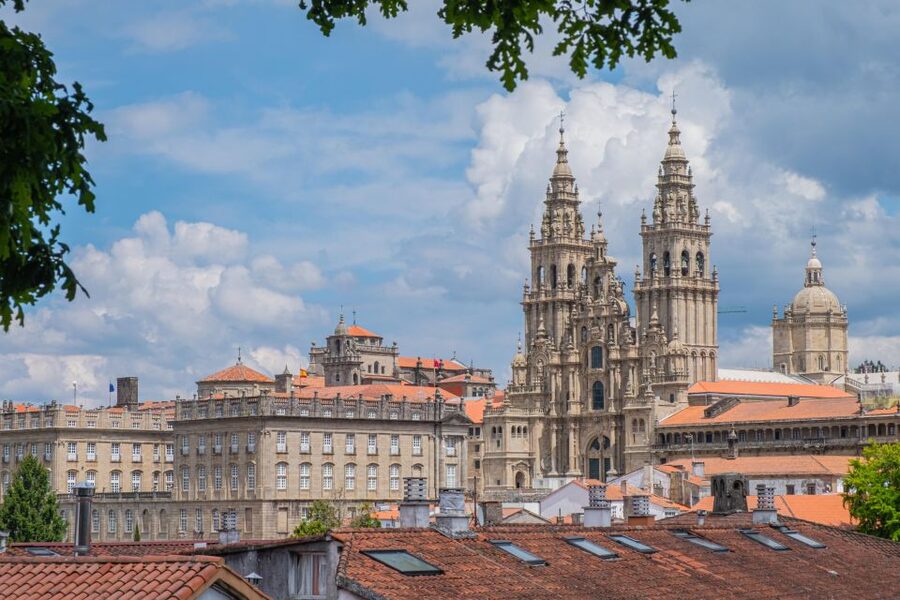
Obradoiro Square, Santiago’s grand arrival point
Plaza del Obradoiro is the emotional center of the tour. The square opens wide in front of the Cathedral of Santiago, giving you the scale needed to understand why this is the destination for so many pilgrims.
This is one of the best photo stops on the route. It is also where the tour’s themes come together: the Camino, religious devotion, royal power, local identity, and the built legacy of Santiago.
The guide can help you read the square rather than simply photograph it. Look around before focusing on the cathedral alone. The surrounding buildings shape the experience, and the square works because the architecture creates a shared setting for arriving pilgrims, residents, and people visiting for the day.
The tour does not include a cathedral entrance. You see the cathedral from the outside and hear its story during the walk. If you want to go inside, visit a museum, or explore a monument more deeply, plan that separately and budget for any entrance fee.
Meeting the Cathedral of Santiago
The Cathedral of Santiago is the route’s main landmark and the reason many people first come to the city. It is presented as the final destination of the Camino, with the apostle Santiago at the heart of the city’s religious story.
One useful feature of this tour is its wider explanation of pilgrimage. The guide does not treat the Camino as a walking route alone. You hear about its spiritual meaning, the apostle’s role, Galicia’s history, and the relationship between the Church, monarchy, and pilgrims.
If religious history is your main interest, tell the guide early. The route covers a lot in a short period, and one person who joined the walk wanted more time on the apostle’s evangelizing work. That is a fair limitation of any two-hour overview. You get the main framework, not a full specialist lecture.
The cathedral stop is listed as a photo and sightseeing point, with no included entry. That makes the tour a good orientation before an independent cathedral visit, but less suitable if you want an inside tour built into the price.
Quintana de Vivos and the changing mood of the Old Town
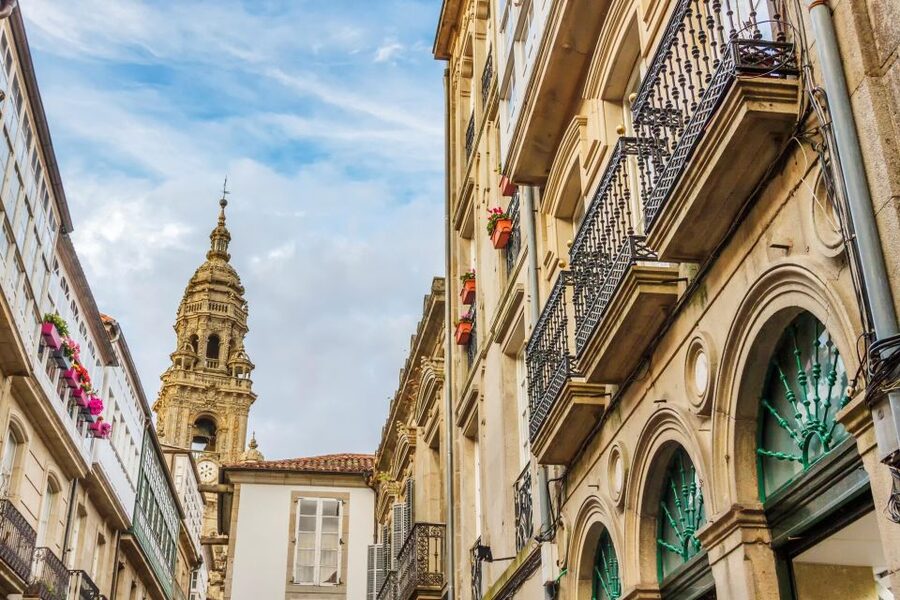
The walk continues to Quintana de Vivos Square. This square gives you another view of Santiago’s monumental center and a chance to compare its mood with the broader openness of Obradoiro.
The route through Quintana helps show how the Old Town is organized around a series of public spaces. You move from one setting to another, with the cathedral and surrounding religious buildings appearing from different angles.
The guide also brings legends and local tradition into these streets. That storytelling makes a difference. Stone buildings can blur together after a while, especially on a rainy day, but a good story gives each square a distinct identity.
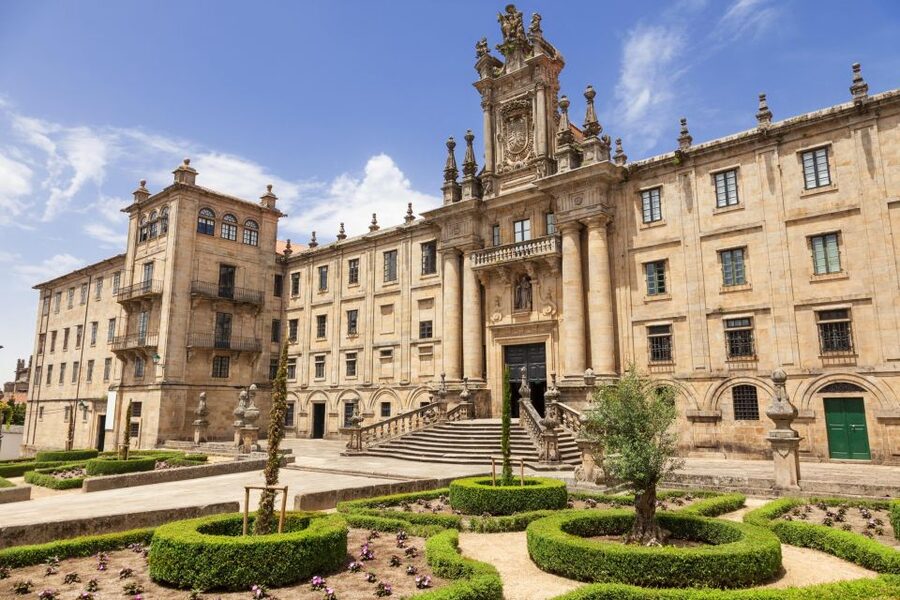
Praza das Praterías and layers of faith
Praza das Praterías is another major square on the cathedral route. Here, the focus remains on architecture, religious tradition, and the long connection between Santiago and pilgrimage.
The stop is guided sightseeing rather than an included monument visit. You should expect explanations from the square and nearby streets, not a museum-style examination of every detail.
I like this part of the route because it keeps the religious story connected to the public city. Santiago’s faith is not hidden away in one building. It appears in the squares, lanes, convents, churches, and the movement of people through the center.
Churches, convents, and stories between the big squares
Several additional stops take you past old churches, convents, and other historic sites. The supplied route names some of these stops only by their activity, not by specific building, so you should not book this expecting a fixed list of interiors or a detailed monument-by-monument schedule.
That lack of exact detail is not necessarily a problem. It gives the guide some room to respond to the group and the conditions on the day. Still, if one particular church or monastery is essential to you, ask before booking.
This middle section is where the walk feels most like an introduction to the Old Town rather than a checklist. You pass through streets filled with tradition and stories, and the guide explains how Santiago’s past continues to shape its present.
Guide Alex receives especially strong praise for this kind of storytelling. He is described as entertaining, creative, and able to connect Santiago with the wider history of Galicia. He also points out additional places to see and restaurants to try, which is useful if this walk takes place near the start of your stay.
The Mercado de Abastos finishes with local flavor
The final named stop is the Mercado de Abastos de Santiago, the city’s food market. This is a smart ending because it takes you away from a purely monumental version of Santiago.
The market visit offers a look at local food culture and everyday commerce. It is listed as a break and guided food-market visit, so you have a chance to change pace after the churches and squares.
Do not expect a full food tour based on the information provided. The market is part of the sightseeing route, but food tastings are not listed as included. Treat it as a place to see and perhaps return to, rather than as a meal built into the tour.
For many people, the market is also a useful practical stop. After hearing about Santiago’s sacred traditions, you see another part of what keeps the city going day by day.
The guide can make or break this short walk
A two-hour route through Santiago covers a lot. The guide must decide what to explain, what to skip, and how to keep the group moving. This is where Alex’s style appears to fit the experience particularly well.
He is repeatedly described as warm, entertaining, creative, and clear. His strongest quality is the ability to connect small details with a larger picture: Galicia, the Camino, the cathedral, local culture, architecture, and the relationship between faith and political power.
He also gives practical follow-up advice. Expect recommendations for additional sights and restaurants, and possibly a map of places to eat and visit. That can add real value, especially if Santiago is your base for several days.
The guide speaks Spanish and English. Ask for clarification if a historical or religious point moves quickly. The subject is broad, and a small group makes questions easier than they would be on a large coach tour.
Is $19 a fair price?
At $19 per person, this is a good-value orientation walk if you want a local guide and a compact introduction to central Santiago. The price includes the guide and all listed fees and taxes, while entrance fees to monuments and museums are extra.
The value comes from the route and the interpretation. You could walk through Obradoiro, Quintana, and Praterías on your own, but you would miss much of the connection between the Camino, Galicia, the cathedral, and the city’s university life.
It is less of a bargain if your main goal is to enter the cathedral or visit several interiors. Those costs are not included, and the tour does not promise a long visit inside any monument.
The group limit of 10 also matters. You are paying for a shared walk, but not for a crowd of dozens. That should make it easier to hear stories and ask questions while keeping the price below that of a private tour.
Who should book this Santiago walk?
I would choose this tour for a first visit, a short stay, or the first morning of a longer trip. It gives you enough context to make later independent visits more meaningful.
It also suits people who have completed or are preparing for the Camino. The route treats pilgrimage as a spiritual and cultural experience, not only as a route on a map.
Families may find the storytelling helpful. A child who is tired after walking the Camino can still follow a guide who uses humor, stories, and questions rather than delivering a long formal lecture.
You should think twice if you have serious mobility limits. The tour is not suitable for wheelchair users or people with mobility impairments, and the Old Town includes outdoor walking on stone streets.
Wear comfortable clothing and shoes, and dress for the weather. The tour runs rain or shine, so a wet day will not automatically cancel the walk.
Should you book it?
Book this walk if you want a lively overview of Santiago’s sacred and everyday sides for $19, especially with a small group and a guide such as Alex. The mix of Obradoiro, the cathedral, Quintana, Praterías, old churches, university surroundings, and the food market gives you a useful first map of the city.
Skip it if you only want cathedral entry, a specialist architectural tour, or a fully accessible route. For everyone else, it is a sensible way to start in Santiago, then return on your own to the sites that deserve more time.
FAQ
How long does the Santiago walking tour last?
The tour lasts two hours.
What languages does the guide speak?
The tour is available in Spanish and English.
Where does the tour begin?
Meet at the main entrance of the Capela do Pilar, also called Pilar Church. The guide wears a distinctive black backpack and is properly identified.
What places are included in the walking route?
The route includes Alameda Park, Rúa do Franco, Praza de Fonseca, Obradoiro Square, the Cathedral of Santiago, Quintana de Vivos Square, Praza das Praterías, several historic churches and convents, and the Mercado de Abastos de Santiago.
Is entry to the cathedral included?
No. Entrance fees to monuments and museums are not included. The cathedral is visited as a sightseeing and photo stop from the walking route.
How large is the group?
The tour is a small-group experience limited to 10 participants.
What should I wear and bring?
Bring comfortable shoes, comfortable clothes, and clothing suitable for the weather. The tour takes place outdoors and runs rain or shine.
Is the tour suitable for wheelchair users?
No. The activity is not suitable for wheelchair users or people with mobility impairments.
Newest history tours we have reviewed in Spain
- Visita Guiada Por El Casco Histórico De Cuenca Y Su Catedral★ 5.0 · 45 reviews
- Mosque of Cordoba History Tour in English Tickets included★ 5.0 · 257 reviews
- Jerez de la Frontera History and Art Walking Tour★ 4.5 · 49 reviews
- 2 Hours Tour around Cádiz: History, anecdotes and curiosities★ 5.0 · 89 reviews
- The Authentic Bilbao Pintxos, Food & Wine Tour with a Local★ 5.0 · 360 reviews
- Bilbao Historical Small Group Tour★ 4.5 · 159 reviews
- Barcelona Jewish & Gothic Tour★ 5.0 · 18 reviews
- Andorra Original History and Sightseeing Tour (Private, Pickup)★ 5.0 · 350 reviews
History Walking Tours, compared.
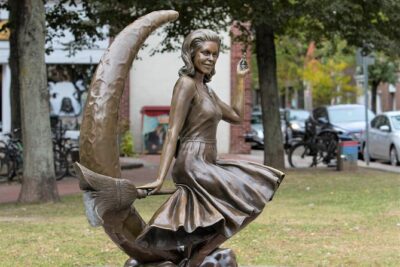
History and Hauntings of Salem Guided Walking Tour
Read our review →
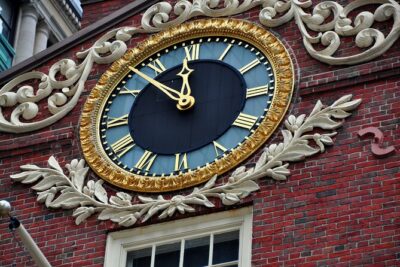
Freedom Trail History Small Group Walking Tour
Read our review →
Historic Charleston Guided Sightseeing Walking Tour
Read our review →
Tapas Walking Tour with Food, Wine, and History
Read our review →
Savannah History and Haunts Candlelit Ghost Walking Tour
Read our review →
A History of Terror – Belfast City Centre Walking Tour
Read our review →Browse the lists this tour appears in