
Review · ROME HISTORY TOURS
Rome: Five Shapes of Pasta Cooking Class in Ancient Tavern
Rome’s Five Shapes of Pasta Cooking Class turns a meal into a three-hour workshop. Inside the old Osteria Cucina, you’ll roll pasta dough with a wooden pin, learn several classic shapes, and sit down to eat the pasta you made. Chef Emanuele leads the class, with Angelo also praised for his warm, lively teaching.
I like two things right away: you make five distinct pasta shapes, not just one basic noodle, and the meal includes prosecco, local cheese, two pasta dishes, wine, and tiramisu. The main consideration is physical: rolling dough, cutting pasta, and shaping filled pieces require standing and hand work, so this is not suitable for people with mobility impairments.
Key points at a glance
- Five classic shapes: Make ravioli, agnolotti del plin, tortellini, cappelletti, and fettuccine by hand.
- An old Roman setting: The class takes place in Osteria Cucina, a late-1800s tavern with its original marble osteria sign.
- Two sauces and a full meal: Your pasta is served with two different Italian sauces, followed by dessert.
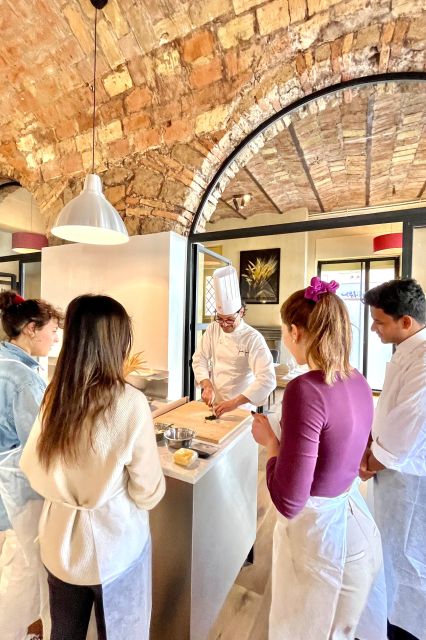
- More than a demonstration: You roll the dough, cut it safely, fill pasta, and shape it yourself with help from the chefs.
- A social evening: Prosecco, cheese, wine, music, and a shared table keep the three hours relaxed and lively.
- Good booking flexibility: The class costs $67.19 per person, allows free cancellation up to 24 hours before the start, and offers reserve now, pay later booking.
Why this pasta class feels different from a standard cooking demo
Many cooking classes give you a quick demonstration, a turn at one task, and a plate prepared mostly by someone else. This one is built around hands-on work. You start with dough and finish with dinner.
The class covers five shapes with different folding and cutting methods. That matters because pasta making is not one skill. Fettuccine teaches you to manage a thin sheet and cut even strands. Ravioli adds filling and sealing. Tortellini and cappelletti require small folds, while agnolotti del plin introduces another traditional filled shape.
You do not need to arrive as a skilled home cook. The instruction is designed for beginners, and the chefs move around the tables to help with rolling, filling, and shaping. The teaching style is energetic rather than formal. Music, humor, and plenty of conversation are part of the evening, which helps take the pressure off if your first tortellini looks more like a tiny parcel than a perfect ring.
Chef Emanuele is the main name associated with the class, while Angelo also leads sessions. Both are described as attentive and good at correcting mistakes without making people feel awkward. That is useful in a class where the dough can become too thick, the filling can spill, or a pasta shape can refuse to hold.
More Ancient History Tours in Italy
- Colosseum: Underground and Ancient Rome Tour
★ 4.7 · 12,691 reviews - Colosseum & Ancient Rome with Arena Floor Option I Max 6 People
★ 5.0 · 3,306 reviews - Rome: Colosseum, Ancient Rome Tour or AudioGuided Tour
★ 4.4 · 2,879 reviews
Entering Osteria Cucina, Rome’s old tavern classroom
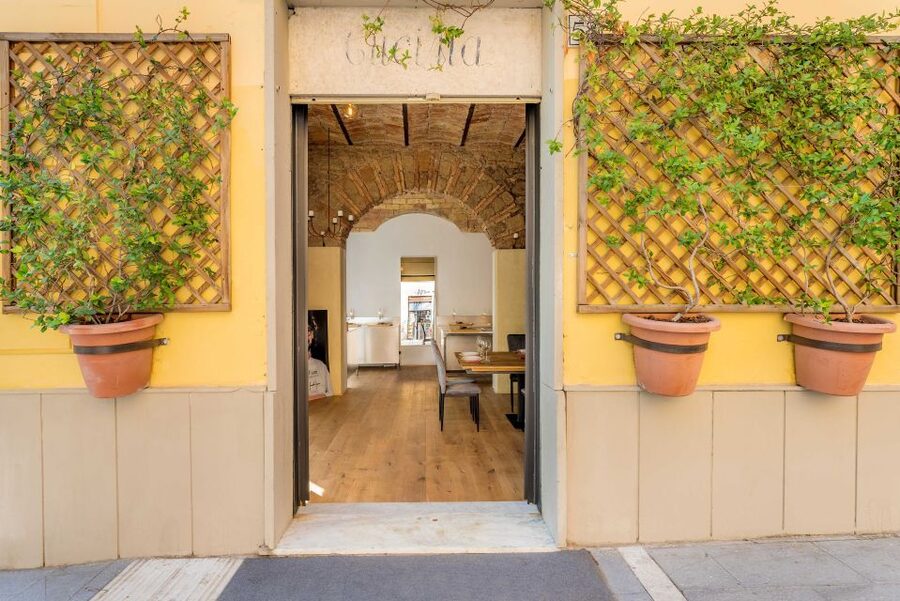
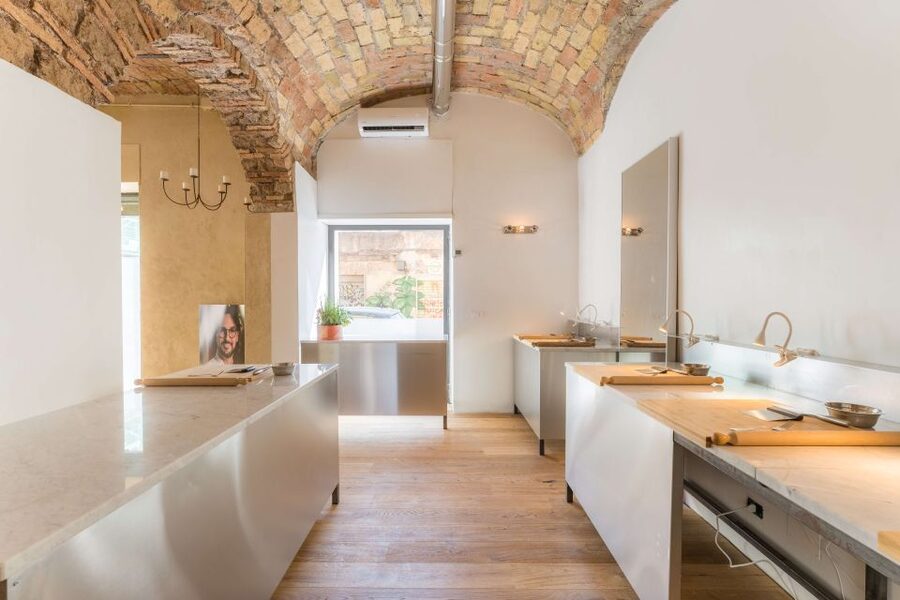
The meeting point is an old osteria called Cucina. Look for the original marble osteria sign above the entrance. The space was founded in the late 1800s and later converted into a cooking school, so it has more character than a modern studio kitchen.
That setting gives the class some sense of place. You are not simply sitting in a bright room fitted out for tourists. You are cooking in a former tavern with a connection to Rome’s dining culture, even though the experience itself focuses on fresh pasta rather than a specific Roman menu.
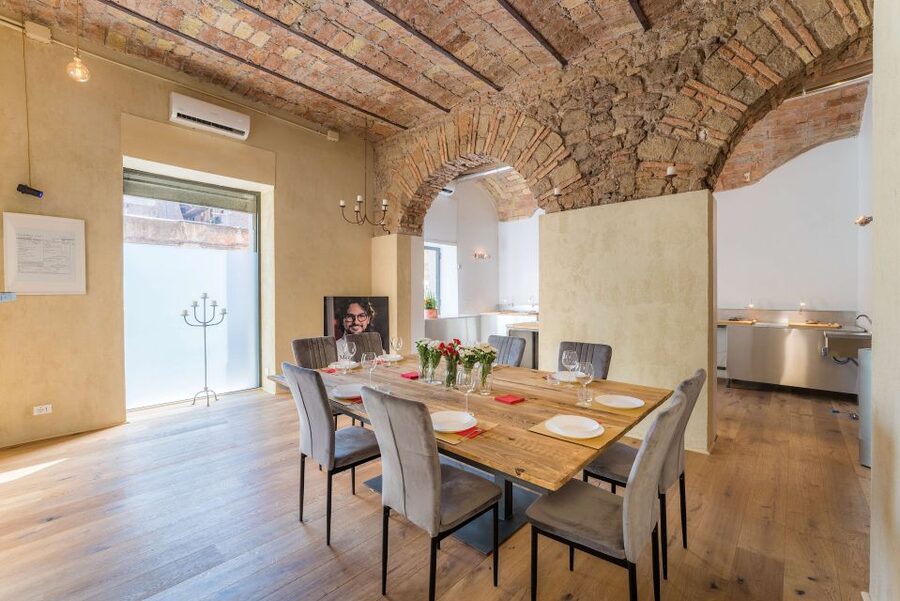
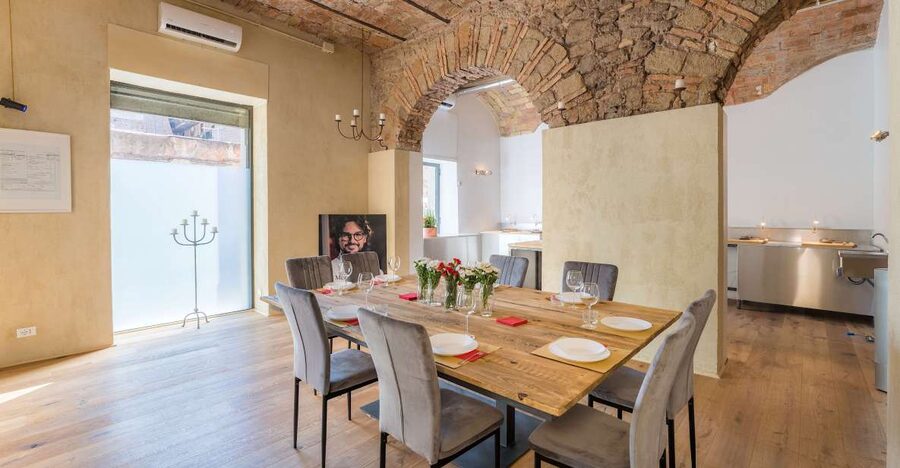
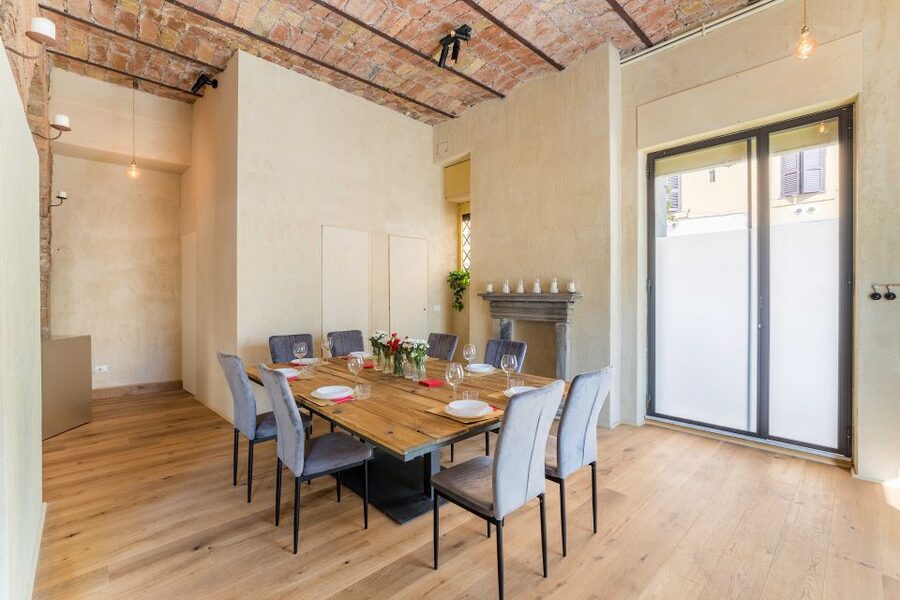
The dining and cooking area is arranged for a small group, with room for hands-on work and a shared meal afterward. The small-group format is important. With a stated limit of 10 participants, the chefs can make the rounds and give practical help. A class of this size also makes it easy to chat with people from other countries without turning the evening into a crowded production line.
The space is described as clean, organized, and attractively decorated. It also has a dressed dining table for the meal, so the evening moves naturally from workshop to dinner rather than ending as soon as the dough is shaped.
Starting with prosecco, cheese, and pasta dough
The class begins with an appetizer of local Italian cheese and fresh prosecco. This is a good touch for two reasons. First, it gives you something to enjoy while the class gets organized. Second, it sets the tone as a social meal rather than a strict lesson.
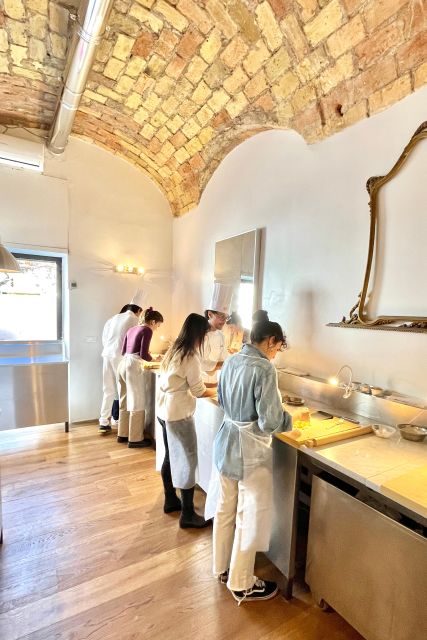
The chef then explains the dough and demonstrates the professional technique for rolling a thin sheet with a wooden pin. You will work the dough by hand and learn how thin it should become before cutting or filling it. Rolling with a pin takes more control than using a machine, but it also gives you a better feel for the dough.
Do not expect to rush through this section. The thickness of the sheet affects every shape that follows. If it is too thick, filled pasta becomes heavy. If it is too thin, it can tear during folding. The chef’s corrections here are among the most practical parts of the class because you can use the same skill at home.
Food safety is also addressed. The experience includes safe cutting procedures, and the cooking school is HACCP certified for food hygiene and safety, with certification noted from 2020. That does not turn the class into a safety lecture, but it is reassuring when several people are working with knives, flour, fillings, and shared equipment.
Making ravioli, agnolotti, tortellini, cappelletti, and fettuccine
The heart of the experience is the pasta-making session. You work through five shapes, each with its own method.
Fettuccine is the most familiar and gives you a useful lesson in cutting. You begin with a thin sheet, dust it as needed, and cut strands that can be cooked and served with sauce. Even this simple shape benefits from instruction, since uneven thickness affects both cooking time and texture.
Ravioli introduces filling and sealing. You place filling on the dough, fold or cover it, press out air, and cut the pieces. The edges need to be firmly sealed, but not crushed. This is a good point to ask questions if you want to repeat the technique at home.
Agnolotti del plin is a less familiar shape for many people. Its small folded form takes patience and careful finger work. Making it alongside ravioli shows you that filled pasta comes in many regional styles, not just the square parcels most people know.
Tortellini and cappelletti bring more folding. You shape small pieces of dough around filling and form them into compact parcels. The first few may look uneven. That is normal, and the chefs help you adjust the amount of filling and the pressure used to seal the edges.
The class is not about producing five perfect rows for a photograph. It is about learning the hand movements. You will likely finish with a mix of tidy and slightly lopsided pieces, all of which can still become a very good dinner.
Some sessions may include variations such as cocoa tagliatelle or ingredient adjustments. The exact pasta details can vary, so you should treat those as possible extras rather than guaranteed parts of every class.
More Ancient History Tours in Rome
- Colosseum Underground & Ancient Rome Guided Tour
★ 4.5 · 2,590 reviews - Pantheon Elite Guided Tour – Rome’s Iconic Ancient Temple
★ 5.0 · 1,447 reviews - Ancient Rome: Colosseum Underground Group Tour
★ 4.5 · 1,059 reviews - Colosseum Express Guided Tour and Ancient Rome Admission Included
★ 4.0 · 1,008 reviews
Two sauces turn your pasta into dinner
After the shaping work, the chefs cook and serve two different kinds of Italian fresh sauce with the handmade pasta. The sauces are explained as part of the class, so you are not only learning how to make pasta but also how to pair it with a finished dish.
This is where the class earns much of its value. You are not sent home with a ball of dough and a recipe card. You taste how different shapes work with sauce, and you see how fresh pasta behaves after cooking. The meal helps connect the technique to the final result.
Dietary needs can sometimes be handled with adjustments. One participant with a garlic allergy received altered ingredients for filled pasta and a separate sauce. That suggests the kitchen can be responsive, but you should tell the provider about allergies before booking or as early as possible. Do not assume every request can be met on the night.
The meal includes two handmade pasta plates, so you get a chance to taste different shapes and sauces rather than filling up on only one course. Wine is served with dinner, adding to the relaxed, communal feel.
Express tiramisu to finish the evening
Dessert is an express tiramisu preparation. The chef demonstrates the quick method, and the class finishes by tasting it together.
This is not a full pastry course, and the word express matters. You are learning a practical shortcut rather than spending an hour building a traditional dessert from scratch. Still, it is a fitting end to the class because it gives you one more Italian recipe to try at home.
The pacing is generous enough to include food throughout the experience: cheese and prosecco at the start, pasta during the main meal, wine at dinner, and tiramisu afterward. If you are booking an evening class, you should treat it as dinner rather than an activity before dinner.
Each participant also receives a complimentary Professional Chef Hat with the Pastificio Faini logo. It is a small souvenir, but a fun one, especially for families and couples who want something tangible from the class.
The teaching style and group atmosphere
Emanuele is described as funny, encouraging, and highly involved. Angelo receives similar praise for making people feel comfortable and helping children and adults take part. The chefs use music and humor to keep the room moving, and they make an effort to learn names and check on each person.
That approach suits people who want a lively evening rather than a quiet, technical workshop. You may cook, laugh, listen to music, and talk with the people at your table while the chefs demonstrate each step.
The class also works well for teenagers and older children who can follow food-preparation instructions. Families have used it as a way to give children a hands-on activity during a Rome visit, and the friendly teaching style helps younger participants feel involved.
Couples can book it for an anniversary or honeymoon evening, but it is not a private romantic dinner. You will share the room and meal with the rest of the group. That is part of the appeal for some people, but less suitable if you want a quiet, intimate experience.
Is $67.19 a good value?
At $67.19 per person, the class is fairly priced for a three-hour activity that includes instruction, an appetizer, prosecco, local cheese, two pasta dishes, wine, dessert, and the chef hat. You are also paying for a meal and a practical skill, not just a short food tasting.
The value is strongest if you would otherwise book both a cooking class and dinner. The class supplies both in one evening. It also gives you several techniques to take home, including dough rolling, safe cutting, filling, sealing, and shaping.
The value is weaker if you dislike group activities or are mainly looking for a traditional restaurant meal. You will spend part of the evening standing, handling dough, and waiting for each stage to be explained. The food is the reward, but the process is the main event.
The reserve now, pay later option makes it easier to fit into a changing Rome schedule. Free cancellation up to 24 hours before the start also gives you some protection if plans shift. Starting times vary, so check availability before arranging other evening plans.
Practical points before you book
The class lasts three hours and begins and ends at the same Osteria Cucina meeting point. The instruction is available in English and Italian.
Pets are not allowed. The activity is not suitable for people with mobility impairments, and the hands-on format may also be tiring for anyone who has difficulty standing, rolling dough, or using a knife.
Tell the provider about food allergies in advance. The kitchen has shown it can adapt ingredients and prepare a separate sauce, but advance notice is the sensible approach.
Wear something comfortable and suitable for cooking. Specific clothing requirements are not provided, but flour, dough, and sauce are part of the work. You should also leave room in your evening schedule, since the class includes a full meal rather than a quick tasting.
Who should book the Five Shapes of Pasta class?
I would choose this for first-time pasta makers, couples, families with older children, and anyone who wants a break from museums and monuments. It gives you a practical look at Italian food culture without requiring advanced cooking skills.
It is especially good for people who enjoy learning by doing. You will get more from it if you want to repeat the recipes at home and pay attention to the chef’s small corrections.
I would skip it if you want a private class, a quiet dinner, or a highly specialized culinary course. The atmosphere is social and energetic, and the class covers many shapes in three hours, so it cannot spend a long time on one technique.
Should you book it?
Yes, if you want one of Rome’s more hands-on food experiences. The combination of an old tavern setting, five pasta shapes, two sauces, prosecco, wine, dinner, and tiramisu gives you a full evening for a sensible price.
Book it early if you have a fixed schedule, and mention allergies before arrival. If you have limited mobility or prefer a polished restaurant meal over flour-covered teamwork, choose something else. For everyone else, this is a useful, cheerful way to leave Rome with a full stomach and pasta skills you can actually use.
FAQ
How long does the pasta cooking class last?
The class lasts three hours. Starting times vary, so check the available time slots when booking.
What pasta shapes will I make?
You will make ravioli, agnolotti del plin, tortellini, cappelletti, and fettuccine.
Is the meal included in the price?
Yes. The class includes an appetizer with prosecco and Italian cheese, two handmade pasta dishes with different sauces, wine with the meal, and dessert with an express tiramisu preparation.
What languages are available?
The class is offered in English and Italian.
Where does the experience start and finish?
It starts at the old Osteria Cucina, identified by the original marble osteria sign above the entrance. The activity ends back at the same meeting point.
Is the class suitable for people with mobility impairments?
No. The activity is listed as unsuitable for people with mobility impairments. Pets are also not allowed.
More Pasta Experiences in Rome
- Milan: Fresh Pasta and Tiramisù Class in A Historical Home
★ 4.9 · 195 reviews
More Cooking Classes in Rome
- Undiscovered Charleston: Half Day Food, Wine & History Tour with Cooking Class
★ 5.0 · 948 reviews - Florence Cooking Course with Historic Local Market Visit
★ 4.5 · 151 reviews - Mojo Workshop Cooking Class in Ancient Canarian Village
★ 4.9 · 127 reviews - Syracuse: Traditional Cooking Class & Ancient Market Visit
★ 4.9 · 72 reviews
Newest history tours we have reviewed in Rome
- Rome: Colosseum and Ancient Rome Guided Walking Tour★ 4.5 · 95 reviews
- Secrets of Rome: Historical True Crime Small Group Tour★ 4.9 · 85 reviews
- Rome: Private Colosseum Experience and Ancient Ruins Tour★ 4.6 · 25 reviews
- Rome Secrets: Dark History & Tasty Bites Tour★ 5.0 · 37 reviews
- Rome: Rome at Night Evening Historical Walking Tour★ 4.9 · 24 reviews
- Rome: Introduction to the Colosseum and Ancient City Tour★ 4.8 · 75 reviews
- Rome: Guided Tour of Colosseum and Ancient Rome★ 4.9 · 74 reviews
- Rome: Guided Group Colosseum & Ancient City Tour★ 4.8 · 62 reviews
Ancient History Tours, compared.
Colosseum: Underground and Ancient Rome Tour
Read our review →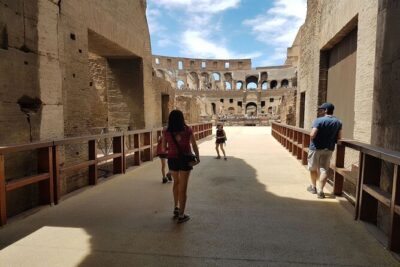
Colosseum & Ancient Rome with Arena Floor Option I Max 6 People
Read our review →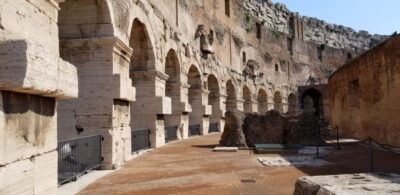
Colosseum, Ancient Rome Tour or AudioGuided Tour
Read our review →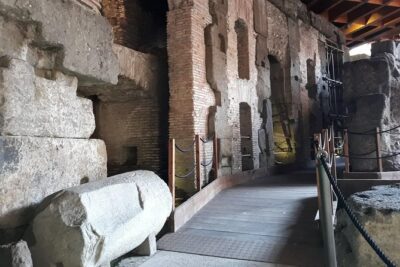
Colosseum Underground & Ancient Rome Guided Tour
Read our review →
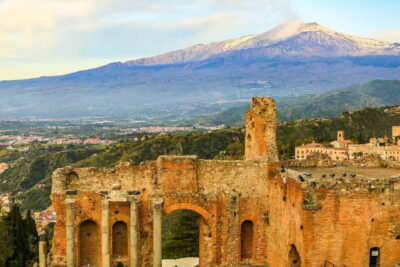
Taormina: Ancient Theater Skip-the-Line Ticket & Audio Guide
Read our review →
Discover the Ancient Ruins of Pompeii: Day Trip from Rome
Read our review →
Discover Matera, the ancient city – English tour
Read our review →Browse the lists this tour appears in