
Review · CHARLESTON HISTORY TOURS
Undiscovered Charleston: Half Day Food, Wine & History Tour with Cooking Class
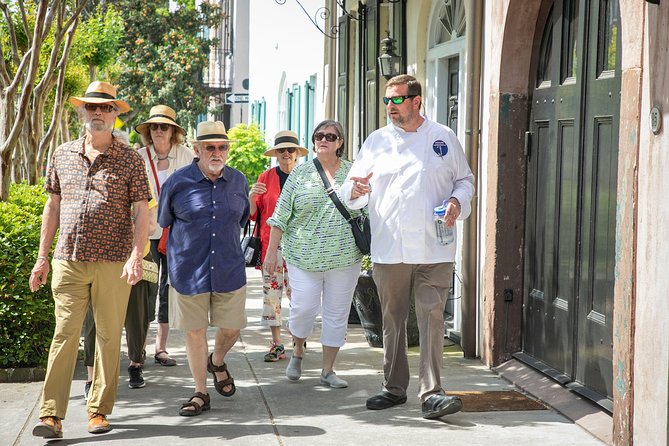
Charleston’s food story is the real star here. Chef Forrest Parker leads you from the Pineapple Fountain through the historic district, linking buildings, streets, crops, enslaved cooks, and Lowcountry dishes before turning those stories into lunch. I like the food-first history and the small-group format, which gives the walk a personal feel rather than a script read to a crowd.
I also like that the meal is more than a restaurant stop. Parker cooks in front of you, explains his methods, pairs each course with wine, and sends you home with the recipes. The main consideration is physical and practical: you’ll walk for about 90 minutes, the tour needs decent weather, and the food team must know about allergies or special diets in advance.
Key points to know before booking
- Chef-led history walk: Forrest Parker is both your guide and cook, with Charleston’s food culture shaping the route and stories.
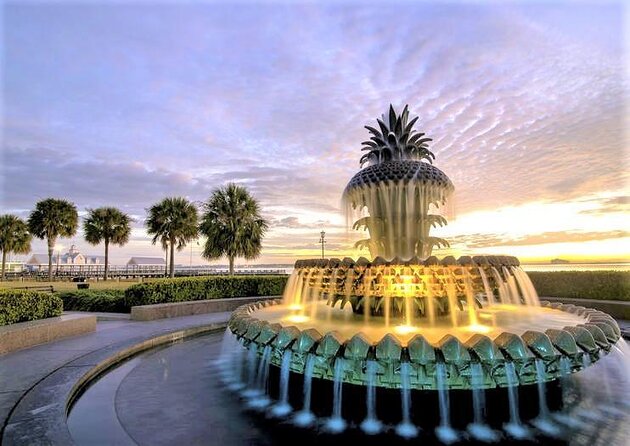
- Waterfront to Rainbow Row: You begin at the Pineapple Fountain and see major sights along with less familiar corners of the historic district.
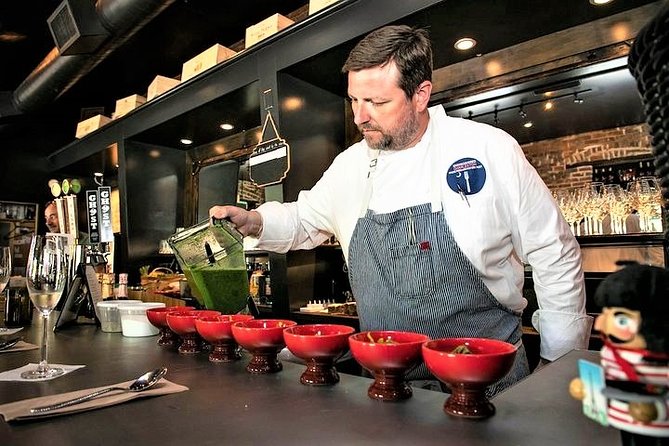
- Three-course Lowcountry lunch: Parker demonstrates three recipes before serving the meal at Bistro Au Vin.
- Wine matched to the food: Each course comes with a tasting pour, with additional wine available for purchase.
- Small groups: The maximum is 11 people, a useful size for questions and a more relaxed cooking demonstration.
- Recipes to take home: You leave with copies of Parker’s recipes, so the tour continues in your own kitchen.
Why Charleston food makes a better guide than a standard city walk
Charleston can be easy to admire without understanding. You see pastel facades, church steeples, ironwork, and waterfront views, but the city’s food tells you who lived here, who worked here, and how cultures met, often under deeply unequal conditions.
Parker uses Lowcountry cooking as the thread. You’ll hear how crops, local ingredients, African cooking traditions, European influences, and the labor of enslaved people shaped the dishes Charleston now claims as its own. That approach gives the architecture more meaning. A building is not just an old facade when you understand the cooks, merchants, workers, and households connected to it.
This is also why the tour feels different from a standard food crawl. You are not simply moving from one tasting stop to another. The walk builds a story, then the lunch lets you taste part of it.
Parker’s tone matters, too. His public persona is warm, funny, and willing to address uncomfortable parts of Charleston’s past. You should expect humor, but not a polished version of history that skips over slavery or cultural appropriation. Several comments about the tour point to his habit of sharing hard truths alongside the jokes, which is a good fit if you want Charleston presented with some honesty.
More Cooking Classes in Charleston:
- Florence Cooking Course with Historic Local Market Visit
★ 4.5 · 151 reviews
Starting at the Pineapple Fountain
The meeting point is the Pineapple Fountain at 1 Vendue Range, beside Charleston Waterfront Park. The start time is 9:00 a.m., and the activity ends back at the same general meeting point after lunch and the walk.
The fountain is a practical place to begin because it puts you near the harbor and the historic center. You’ll start with the city’s waterfront setting, then move into streets where Charleston’s public image and private past overlap.
The route includes Waterfront Park and Rainbow Row, two of the city’s best-known sights. The value comes from the context Parker adds. You might already know that Rainbow Row is photogenic. You’ll get more from the stop if the guide connects the buildings and streets to the people, commerce, food, and social systems that shaped the area.
You should wear comfortable shoes and be ready for a moderate amount of walking. The tour is not described as strenuous, but 90 minutes on city streets can feel long in heat, rain, or uncomfortable footwear. Charleston’s weather can change quickly, and the operator may alter the order of the walk and meal when conditions demand it.
The 90-minute walk through food and history
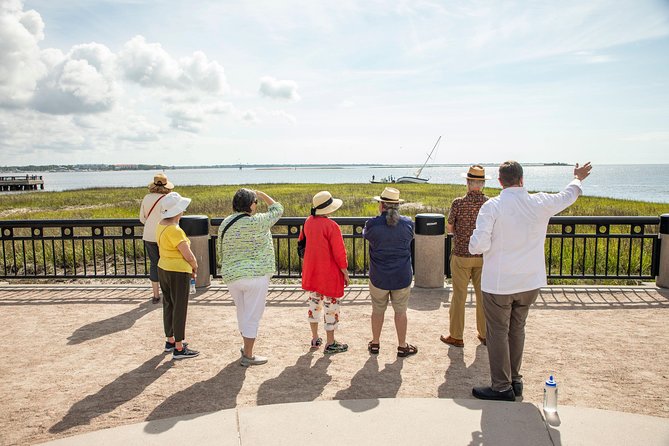
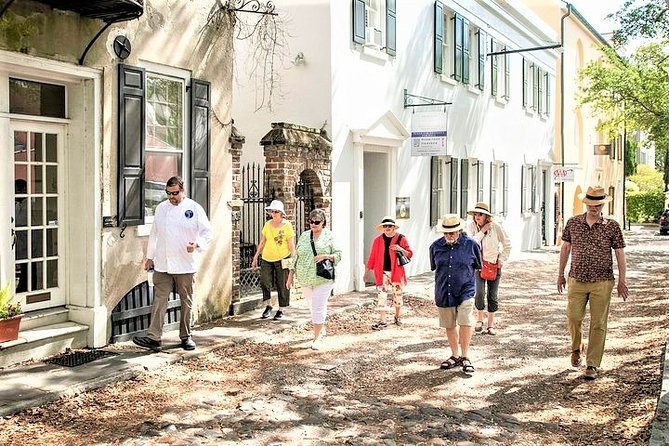
The walking portion is the first half of the experience in the usual plan. Parker leads you through the historic district, covering major sights while also pointing out places you might pass without a second glance.
The route is designed around connections. Instead of treating architecture as a separate subject from food, Parker explains how Charleston’s buildings, crops, kitchens, markets, and social classes affected one another. You may hear about a recipe created by an enslaved chef that still influences local menus. That kind of detail gives Lowcountry food a human source and a complicated history.
This makes the walk especially useful early in your Charleston stay. You get an overview of the city, but you also gain a set of ideas to watch for later. After the tour, a plate of shrimp and grits is no longer just a regional specialty. You have a better sense of the ingredients, techniques, and cultural forces behind it.
The route can also include lesser-known streets and locations in the French Quarter. That helps balance the famous sights. You’ll still see places you want to photograph, but you’ll spend time noticing details that are easy to miss when you explore alone.
Do keep your expectations sensible. This is not a full architectural survey of Charleston, and the walk is not meant to cover every major landmark. Its purpose is narrower and more useful for food lovers: it explains the city through cooking and the people connected to it.
From city streets to the cooking demonstration
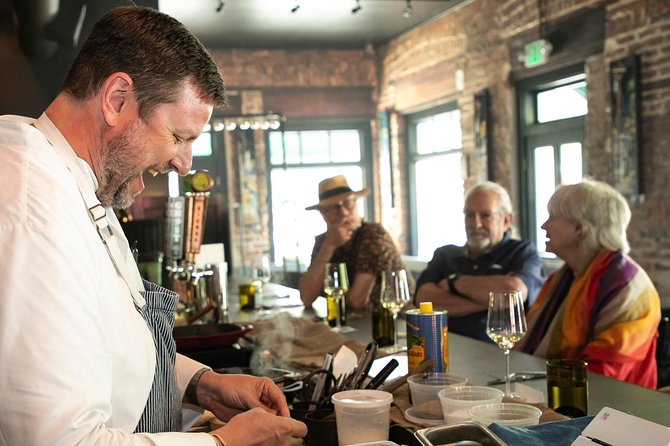
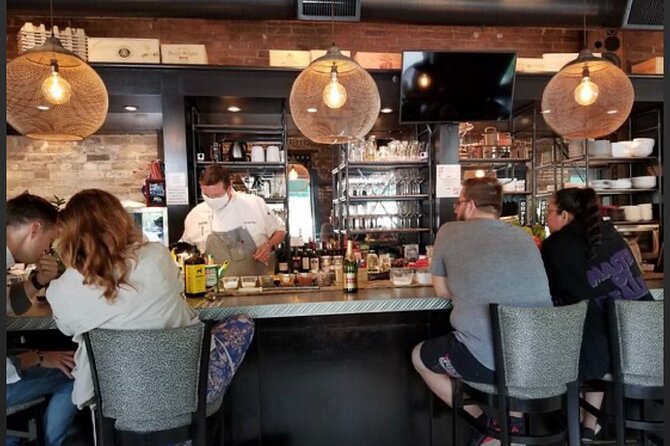
After the walk, you settle in at a cozy bistro, identified as Bistro Au Vin. The second part shifts from listening to watching and eating. Parker demonstrates three recipes based on Lowcountry classics, using heritage ingredients and techniques developed over more than two decades of cooking.
This is not a hands-on class in the usual sense. The description centers on a demonstration, with Parker preparing the dishes in front of you. You can watch the steps, ask questions, and hear why he uses particular methods before the food reaches the table.
That format works well after a walking tour. You do not have to worry about handling knives or following a recipe while also trying to listen. You can focus on the cooking, the stories, and the meal.
The setting also seems more intimate than a large restaurant dining room. Group size is capped at 11 people, and several accounts describe groups of four to eight. That should make it easier to see the demonstration and join the conversation. A larger group is still possible, so do not assume every departure will feel private.
More Workshops and Classes in Charleston:
- Dubai Evening Heritage Safari by Vintage G Class Al Marmoom Oasis
★ 5.0 · 1,500 reviews - Amsterdam: 3-Course Meal in Historic 1st Class Waiting Rooms
★ 4.5 · 292 reviews - Crafting Heritage Batik Painting Workshops
★ 5.0 · 164 reviews
What lunch may reveal about Lowcountry cooking
The precise menu can vary, but the food is built around three recipes and Lowcountry ingredients. Shrimp and grits has received particular praise, and other meals have included gazpacho. The dishes are presented as interpretations of regional classics rather than a generic Southern lunch.
The best part is the connection between plate and place. Parker explains the dishes as he prepares them, so you learn not only what you are eating but why it belongs to Charleston. The meal becomes a final chapter in the walking tour.
Wine pairings are included with the courses. Bistro Au Vin provides tasting pours selected to match the food, and additional wine is available for purchase. If you prefer not to drink, sweet tea and filtered water are offered, along with coffee or tea.
I would treat the wine as a bonus, not the sole reason to book. The main value is the combined walk, demonstration, and meal. The pairings add a social and culinary layer, but you can still enjoy the tour without alcohol.
One important point: this is not a restaurant where you simply order from a menu. Parker is preparing a set three-course meal for the group. That gives the lunch a stronger sense of occasion, but it also means you should communicate dietary needs before arrival.
Allergies and special diets need advance notice
The cooking operation handles meat, shellfish, eggs, dairy, nuts, and gluten. Common dietary requests can be accommodated, including vegetarian, vegan, pescatarian, dairy-free, nut-free, and celiac-friendly meals, provided the chef is told ahead of time.
This warning deserves attention. The operator specifically notes that the kitchen is not a standard restaurant and may not be prepared for an unannounced restriction. Contact the provider directly before the tour if you need a change to the planned menu.
That advance step is especially important for serious allergies. Do not rely on mentioning an allergy once the demonstration begins. Send the information in advance and confirm that the request has been received.
How much value does the half-day format offer?
The supplied details do not include a ticket price, so I cannot judge the exact dollar value. I can explain what you are paying for: a 90-minute guided walk, a chef-led cooking demonstration, a three-course lunch, wine pairings, and recipe copies, all within about four hours.
That is a stronger package than a basic sightseeing walk or a short tasting tour. You are getting a guide, a meal, instruction, and a cultural lesson in one booking. The small maximum group size also matters because a cooking demonstration loses appeal when you can barely see or hear.
The value is best for someone who would otherwise book both a historic walking tour and a special lunch. If you only want quick tastings or a low-cost introduction to Charleston, this may feel like more time and structure than you need.
I also like the take-home recipes. They do not replace the chef’s technique, but they give you a practical reminder of the meal. If you enjoy cooking, that small extra can make the tour more useful long after your trip.
Weather, timing, and the practical details
The activity begins at 9:00 a.m. and lasts roughly four hours. Since the walk comes before lunch in the normal order, eat a light breakfast and arrive ready to walk. You will not want to start with a heavy meal before a hot city stroll.
The tour requires good weather. If rain or other poor conditions force a cancellation, you are offered another date or a full refund. In difficult weather, the order may be reversed, with lunch first and the walk later if conditions improve. That flexibility has a clear benefit: you may still enjoy much of the experience instead of losing the whole day to a storm.
Free cancellation is available up to 24 hours before the start time. Canceling or changing the booking within 24 hours is not accepted for a refund. The operator also requires a minimum number of people, so a departure could be canceled if that number is not reached.
The tour is offered in English. Service animals are allowed, and the starting point is near public transportation. Guests should have a moderate level of fitness. Most important, the maximum group size is 11, which keeps the format smaller than many city tours.
The age rule is a little unusual. People must generally be 21 or older, except for older teenagers attending with their parents. If your party includes anyone under 21, confirm eligibility before booking.
Who will enjoy this Charleston tour most
I would recommend it to you if food is one of the main reasons you visit Charleston, but you also want a better grasp of the city’s past. It suits couples, friends, birthday groups, and families with older teenagers who enjoy sitting down for a proper meal after sightseeing.
It is also a strong choice for repeat visitors. You may have already seen Waterfront Park and Rainbow Row, but the culinary angle can give familiar streets a new purpose. Parker’s off-the-main-route stories are useful if you want more than the standard postcard version of Charleston.
The tour is less suited to people seeking a fast food crawl, a fully hands-on cooking class, or a flexible menu with many choices. You should also think twice if your party dislikes walking, has difficulty with a four-hour schedule, or wants a private tour guaranteed for only your group. The maximum is 11, but the tour is not described as private.
The guide’s personality is part of the package. Parker is funny, outgoing, and direct. If you prefer a quiet, academic walk with little conversation, his energetic style may not be your match. If you like stories, humor, cooking advice, and a guide who connects food to difficult history, it should fit well.
Should you book Undiscovered Charleston?
Book it if you want one well-shaped morning that combines Charleston history, Lowcountry food, and a chef-prepared lunch. The strongest reasons are the unusual food-based route, Parker’s role as both guide and chef, the three-course meal with wine pairings, and the recipes you take home.
Before booking, confirm the current price, tell the kitchen about allergies, check the weather forecast, and plan for a 90-minute walk. I would choose this early in a Charleston visit so the stories and dishes can shape the rest of your time in the city.
Skip it if you want a cheap sampler, a short stroll, or a completely hands-on class. For food-minded visitors who value context as much as flavor, this is a thoughtful use of four hours and one of the more distinctive ways to meet Charleston.
FAQ
Where does the tour begin?
The tour begins at the Pineapple Fountain at 1 Vendue Range in Charleston, South Carolina.
What time does the tour start?
The scheduled start time is 9:00 a.m.
How long is the walking portion?
The historic walking tour lasts about 90 minutes. The full activity lasts approximately four hours.
Is lunch included?
Yes. Chef Forrest Parker demonstrates three recipes and serves a three-course lunch prepared with Lowcountry ingredients.
Are wine and nonalcoholic drinks included?
Wine tasting pours paired with the food are included. Sweet tea, filtered water, coffee, and tea are available for people who do not want wine. Additional wine can be purchased separately.
Can the tour accommodate food allergies or special diets?
Common dietary needs, including vegetarian, vegan, pescatarian, dairy-free, nut-free, and celiac-friendly requests, can be accommodated when arranged in advance. Contact the provider before the tour, since unannounced requests may not be possible to prepare.
Newest history tours we have reviewed in Charleston
- Semi-private SMALL group Historic Walking Tours w/certified guide★ 5.0 · 224 reviews
- Private Morning Sail, Dolphin and History Tour on Mystique★ 5.0 · 84 reviews
- Private Photo Session in Historic Charleston★ 5.0 · 123 reviews
- Private Historic Horse & Carriage Tour of Charleston★ 5.0 · 103 reviews
- Charleston’s Best Highlights: History, Culture & Architecture★ 5.0 · 422 reviews
- Charleston Horse & Carriage Historic Sightseeing Tour★ 4.5 · 460 reviews
- Charleston’s Historic Residential Horse and Carriage Tour★ 4.5 · 668 reviews
- Charleston: Old Walled City Historical Walking Tour★ 4.7 · 705 reviews
Charleston History Tours, compared.
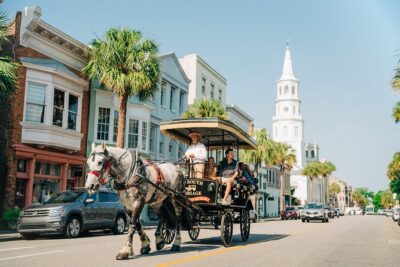
Charleston’s Old South Carriage Historic Horse & Carriage Tour
Read our review →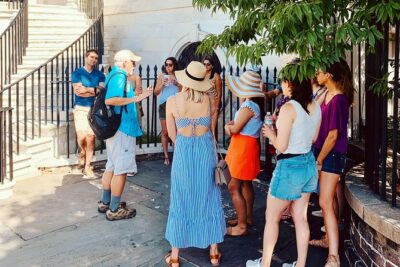
Historic Charleston Guided Sightseeing Walking Tour
Read our review →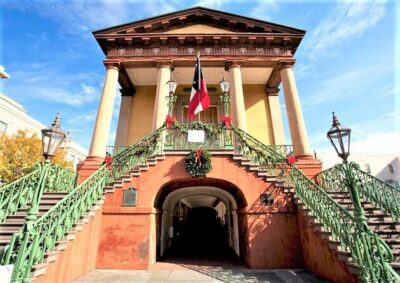
Charleston Horse-Drawn Carriage Tour: Explore Historic Charleston
Read our review →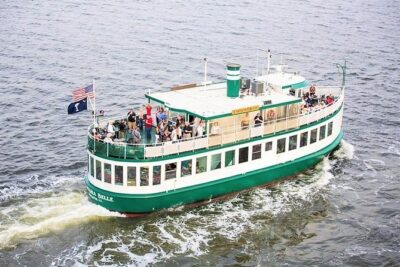
Charleston Harbor History Day-Time or Sunset Boat Cruise
Read our review →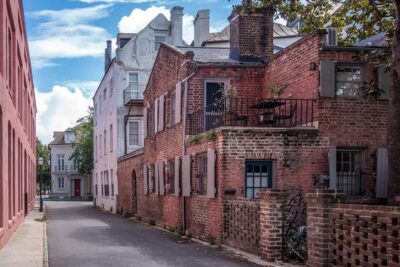
Hidden Alleyways and Historic Sites Small-Group Walking Tour
Read our review →
Charleston historical walking tour with a Professor of History at The Citadel
Read our review →
Historical Downtown Tour by Horse-drawn Carriage
Read our review →Browse the lists this tour appears in