
Review · ITALY HISTORY TOURS
Sicilian cooking class in the historic baglio Florio Adamo
The best part of this cooking class is the setting: you prepare Sicilian food inside the former Florio factory, a 19th-century country estate with an old kitchen and winemaking equipment. Liliana welcomes you, while Vito often leads the hands-on cooking. This feels far removed from a polished city restaurant.
I like the family recipes and the use of fresh ingredients from the company’s own farm. I also like the small-group, practical format, where you make dishes by hand rather than watch a chef work from across the room. The main thing to consider is transport: car rides are not part of the price, though pickup may be arranged separately.
Key points at a glance
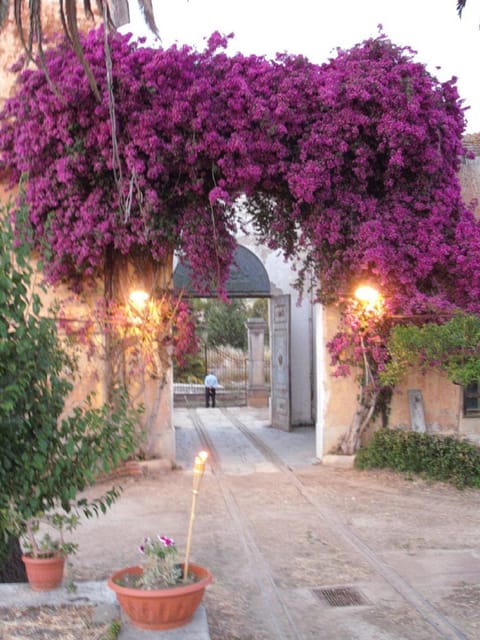
- Cook in a former Florio winery: The old baglio gives the class a strong sense of place, with historic equipment and a spacious 19th-century kitchen.
- Make several Sicilian dishes: You may prepare caponata, arancine, bruschetta, fresh pasta, almond pesto, and ricotta cassatelle.
- Use Perciasacchi flour: This ancient wheat, produced by the company, is used for handmade pasta.
- Learn from Liliana and Vito: Liliana welcomes you and explains the estate, while Vito is often the hands-on cooking guide.
- Eat what you prepare: The class ends with a shared meal, Sicilian wines, and the chance to take the prepared food with you.
- Allow time for transport planning: The class lasts 3.5 hours, but separate car service must be arranged if you need it.
Cooking inside the former Florio factory
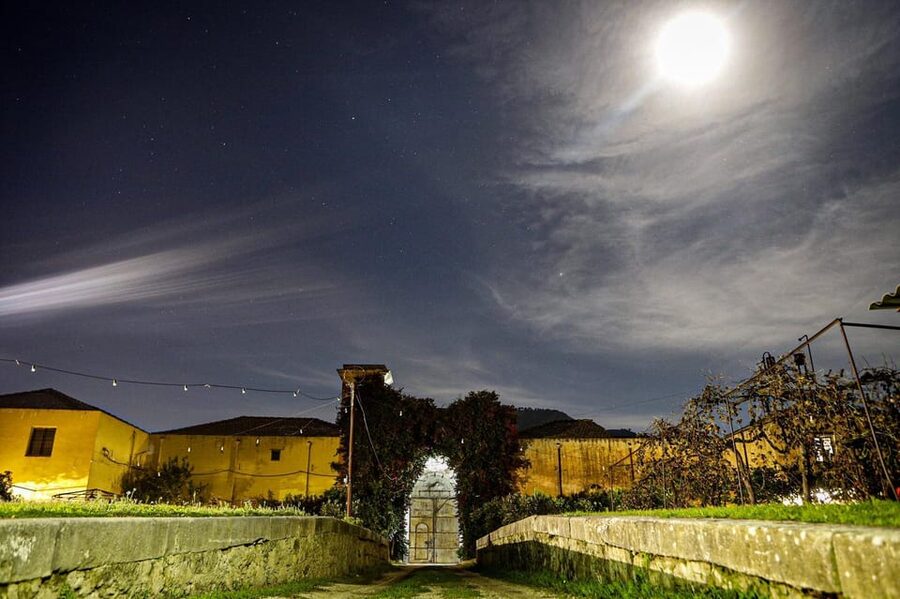
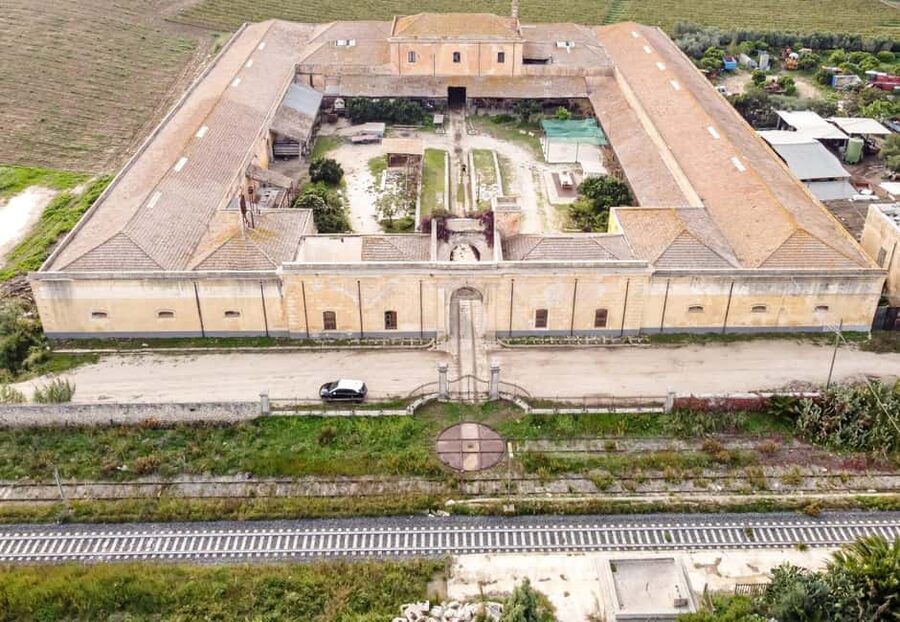
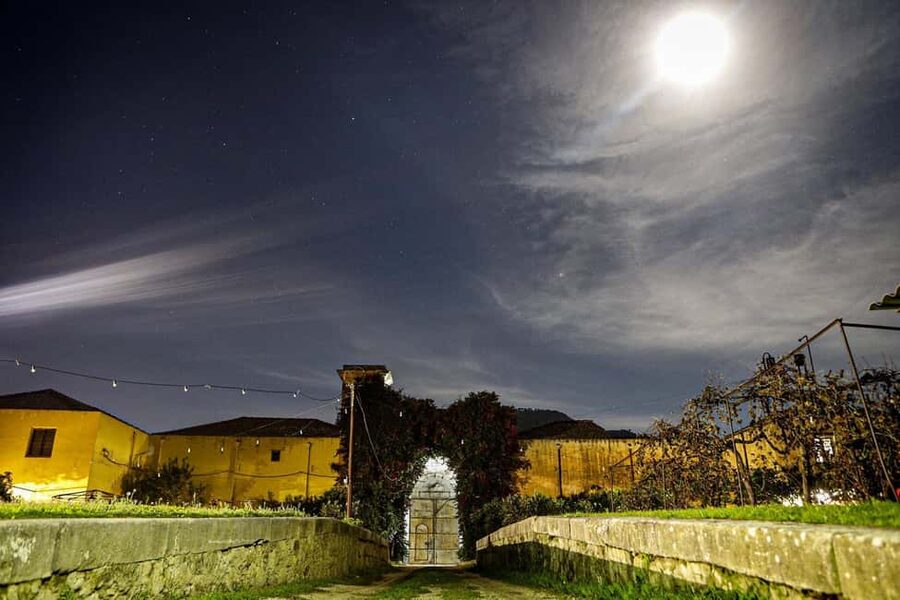
This is not a cooking class in a modern culinary school. You arrive at the former Florio factory, part of a traditional Sicilian baglio, or fortified farm estate, where old winemaking equipment and the bones of the former business remain part of the setting.
Liliana welcomes you beneath the old porch and introduces the place before the cooking begins. The building is still being restored in parts, so do not expect a finished luxury venue. That unfinished quality is part of the appeal for many people. You see an old working property, not a stage set designed only for visitors.
The cooking takes place in a spacious 19th-century kitchen or outdoor cooking area, depending on the setup. The surroundings give the class a clear connection to rural Sicily. You are not simply preparing generic Italian food. You are working with ingredients and recipes tied to this farm and to the family’s way of cooking.
If you enjoy old agricultural buildings, wine estates, and places with visible layers of use, this setting adds real value. If you prefer sleek counters, spotless showroom kitchens, and formal instruction, the rustic character may feel less polished than expected.
More Cooking Classes in Italy:
- Florence Cooking Course with Historic Local Market Visit
★ 4.5 · 151 reviews - Rome: Five Shapes of Pasta Cooking Class in Ancient Tavern
★ 5.0 · 102 reviews - Syracuse: Traditional Cooking Class & Ancient Market Visit
★ 4.9 · 72 reviews
A hands-on lesson with Liliana and Vito
The teaching style is direct and practical. You work with the ingredients instead of merely watching a demonstration. Liliana and Vito guide you through the recipes, explain the ingredients, and help you with the techniques.
Liliana is the main point of welcome and often teaches the Sicilian cooking traditions. Vito is frequently the hands-on instructor. He also explains the winery and the story of the family business, giving the class a wider sense of place. Vincenzo may handle the pickup and introduction to the estate.
The cooking follows methods passed from Liliana’s mother and grandmother. The class does not rely on machines for the handmade pasta. That matters because pasta-making here is not just a recipe. You learn the feel of the dough, the pace of working it, and the reason an old family method still has a place in the kitchen.
The atmosphere is informal and social. Traditional Italian music may play in the background, and wine is served as you work. You should expect a relaxed lesson rather than a timed professional kitchen drill.
Start with caponata, arancine, and bruschetta
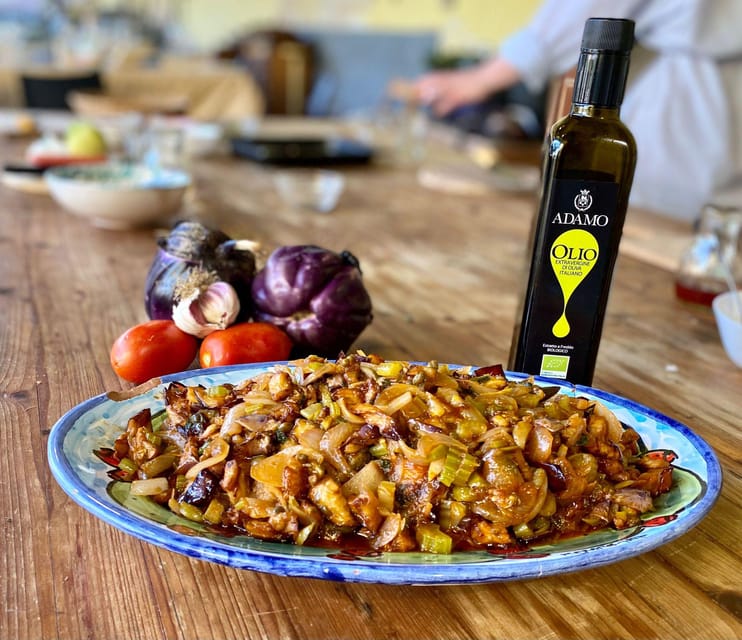
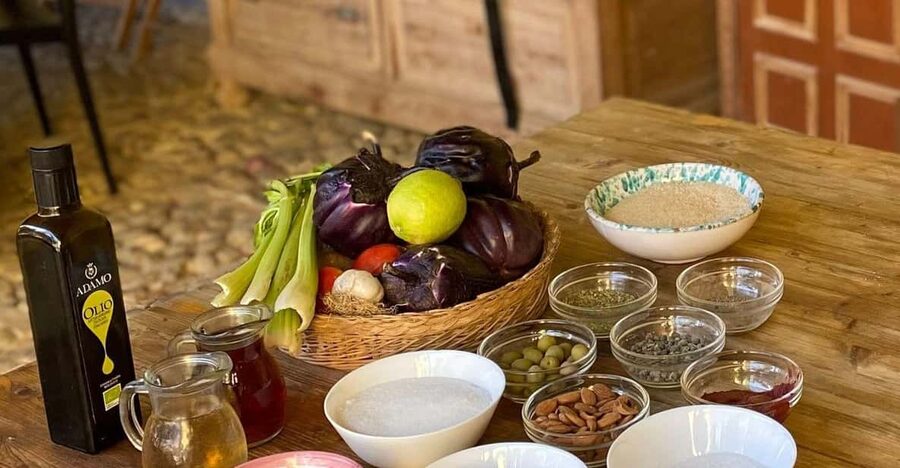
The first part of the meal centers on Sicilian appetizers. You will prepare at least two, with eggplant caponata and arancine among the possible choices.
Caponata is one of the most useful dishes to learn because it captures the sweet-and-sour character of Sicilian cooking. Eggplant forms the base, but the finished dish depends on the balance of vegetables, seasoning, and cooking time. This is the kind of recipe that can taste ordinary when rushed and memorable when handled carefully.
Arancine offer a different lesson. These rice balls are shaped, filled, and cooked until crisp. The work is more hands-on, and the result is satisfying because you see the dish change from a mixture of ingredients into a finished snack.
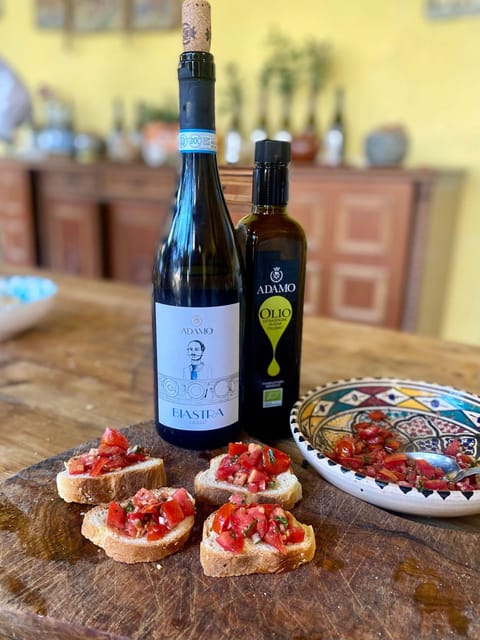
You may also prepare tomato bruschetta with mint and basil from the garden. It is a simple course, but simple food leaves little room to hide poor ingredients. Fresh herbs, good tomatoes, and local olive oil do most of the work.
One especially unusual touch is the possible use of fried apple in an appetizer. It adds a sweet note to the savory food and shows that the cooking is not limited to the most familiar tourist versions of Sicilian cuisine.
Handmade pasta with Perciasacchi flour
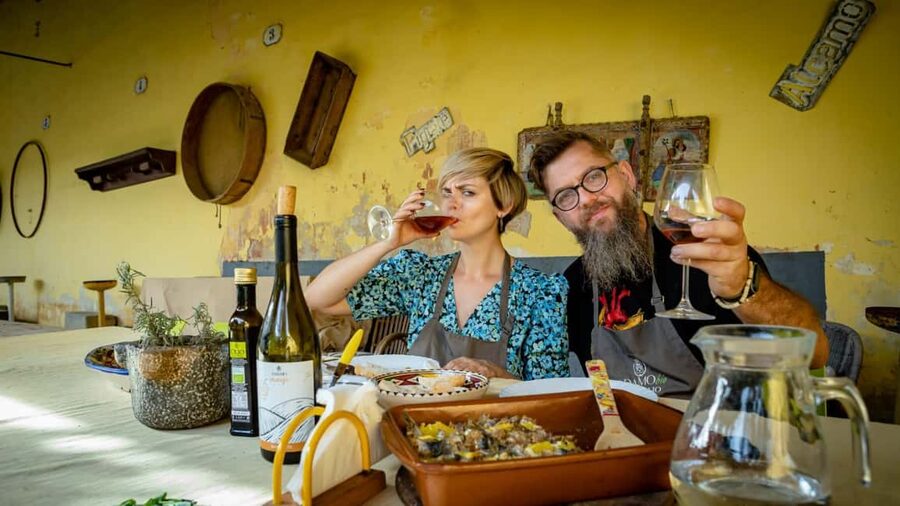
The pasta course is the heart of the class for many people. You work with Perciasacchi flour, an ancient Sicilian wheat produced by the company. The pasta is made by hand, without machines, following the method passed down through the family.
The flour is not just a marketing detail. It gives the lesson a stronger local link than a standard pasta workshop using ordinary commercial flour. You get to handle an ingredient grown and used within the same family business.
The pasta may be shaped into busiate, a twisted form associated with western Sicily. Shaping the strands by hand takes patience, but it also gives you a technique you can repeat at home without special equipment.
The pasta is paired with a sauce such as almond pesto. This is a good match for the class because almonds are central to Sicilian cooking, and the sauce shows how a few local ingredients can create a full, satisfying dish.
Expect guidance rather than exact restaurant-style precision. The point is to understand the method and produce food you can enjoy at the table. If you are looking for a formal lesson with detailed written instruction for every gram, you may want to ask in advance what recipes or notes are provided.
More Workshops and Classes in Italy:
- Milan: Fresh Pasta and Tiramisù Class in A Historical Home
★ 4.9 · 195 reviews - Rome: Ancient Mosaic Making Workshop
★ 5.0 · 29 reviews - Cooking Class in a Historic Home in the Heart of Brindisi
★ 4.7 · 28 reviews - Bolognese Cooking Class with Margherita in the Historic Center
★ 5.0 · 26 reviews
Ricotta cassatelle for dessert
Dessert brings a classic Sicilian finish. You may prepare fresh ricotta cassatelle, small fried pastries filled with ricotta.
This course gives you another useful technique: working with pastry, filling, and hot cooking rather than stopping after the savory food. The fresh ricotta keeps the dessert tied to Sicily’s dairy tradition, while the fried pastry makes it feel festive and substantial.
The dessert also completes the structure of the meal. You begin with small savory dishes, move to handmade pasta, and finish with a sweet course. You are not leaving after one recipe and a quick taste. The class is designed as a full meal.
The amount of food can be generous. Some people have enough prepared food left for another meal, although the exact amount depends on the menu and group. You can take what you prepare with you at the end, which is useful if you are staying nearby and do not want the experience to end when you leave the table.
The meal, wine, and olive oil tasting
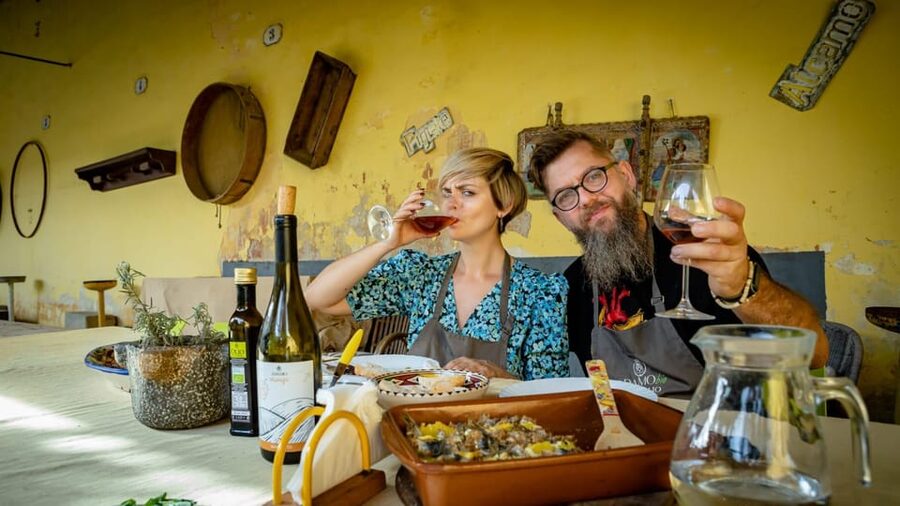
Once the cooking is done, you sit down and eat the food you prepared. This shared meal is an important part of the experience. You can compare the dishes, try different combinations, and see how the recipes work together as a Sicilian menu.
Adamo’s white and red wines are served with the food, and rosé may also be available. Wine is part of the company’s identity, so the tasting feels connected to the place rather than added as a generic extra.
You may also sample local olive oil. That gives you a chance to compare the oil with the fresh vegetables, herbs, pasta, and bread used during the class.
The wine makes the class more relaxed, but keep the timing in mind if you are driving afterward. The activity information says car rides are not included, and transport needs to be handled separately. If pickup is important, contact the provider before booking and give your location or a clear reference point. The pickup arrangements can vary.
Why the old estate matters
The location changes the character of the meal. A pasta class in a city restaurant can teach you a useful recipe, but this class links food with agriculture, wine, family work, and the old machinery of a Sicilian estate.
The former Florio factory is connected to an Italian family business with a long working tradition. Liliana and Vito explain the property and the importance of the winery to the family. You are given more than a kitchen lesson, but the extra context remains tied to the food.
The estate is not presented as a fully restored monument. Parts may still be under renovation, and the surroundings can feel rough around the edges. I see that as a fair trade for a place that still feels like a working family property rather than a formal attraction.
For photographers and anyone interested in old farm buildings, the setting offers more to notice than the cooking table alone. For someone who wants a perfectly finished venue, this may be the one aspect that feels less comfortable.
How the $94 price works out
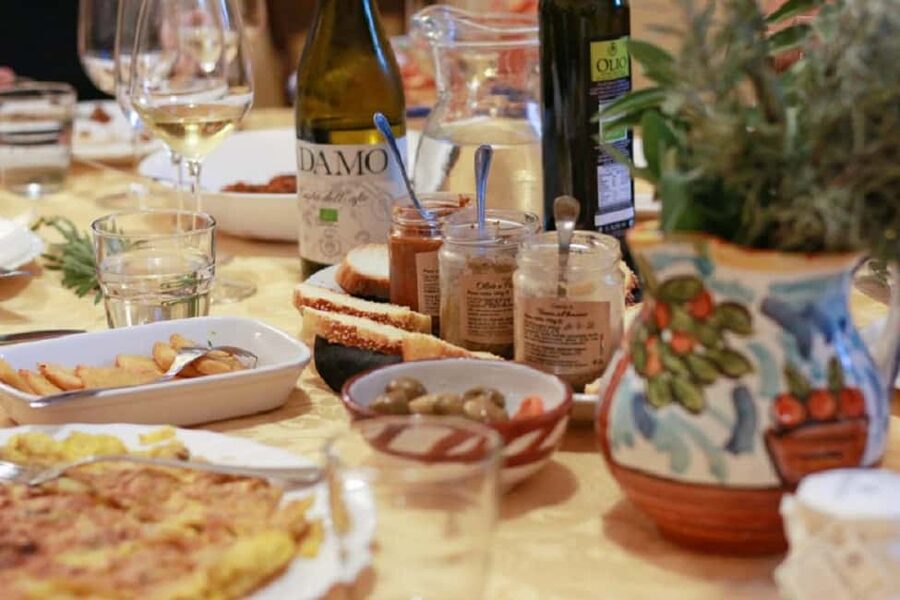
At $94 per person, the class is not the cheapest way to eat in Sicily. You could order caponata, pasta, dessert, and wine for less at a local restaurant, especially away from major tourist centers.
The value here comes from the full package. You get 3.5 hours of instruction, food preparation, a substantial meal, wine, access to the former winery, and contact with the family business. You also leave with the techniques and, according to the activity details, the food prepared together.
The price makes the most sense if you want an experience that combines cooking and place. If you only want a meal, skip the class and eat at a restaurant. If you want to learn how Sicilian dishes are made and understand the setting where the ingredients and wine belong, the cost is reasonable.
The high rating of 5 from 27 reviews reflects consistent praise for the hosts, food, and setting. The strongest pattern is not one particular dish. It is the combination of warm instruction, generous hospitality, handmade food, and an authentic old estate.
Who should book this class
I would recommend it to couples, families, and small groups who enjoy eating slowly and taking part in the preparation. It suits people who want a practical Sicilian memory rather than another sightseeing stop.
It is also a good fit if you are staying in western Sicily and want to connect the food with a family winery and farm. The class works especially well for anyone curious about caponata, busiate, almond pesto, or traditional desserts.
You should think twice if you have strict dietary restrictions that have not been discussed in advance. The menu includes wheat, almonds, ricotta, fried foods, and wine, and the supplied information does not promise substitutions.
The activity is listed as wheelchair accessible, but the estate is historic and may include older surfaces or areas under renovation. If you use a wheelchair, confirm the exact route and cooking area before booking.
English is the listed tour language. The class is intended for English-speaking participants, so you should be able to follow explanations from Liliana or Vito.
Free cancellation is available up to 24 hours before the start time, and you can reserve now and pay later. That gives you some flexibility, but transport still needs separate attention.
Is this Sicilian cooking class worth booking?
Book it if you want to cook, eat, and spend time in a real family-run wine estate. The strongest reasons are the handmade Perciasacchi pasta, the family methods, the old Florio setting, and the chance to eat the dishes with Adamo wine.
Do not book it only because you want a quick demonstration or a polished restaurant environment. This is a rustic, social experience with a property that may still show signs of renovation.
For most food-focused visits to western Sicily, I would make room for it. Confirm the pickup plan, ask about the exact menu, and arrive ready to work with your hands. The caponata, pasta, and cassatelle are good reasons to come, but the real value is learning how they fit into the life of a Sicilian family estate.
FAQ
Where does the cooking class take place?
The class takes place at the former Florio factory, a historic baglio and family winery property in Sicily.
How long does the experience last?
The cooking class lasts 3.5 hours.
What language is the class offered in?
The listed tour language is English.
Who leads the cooking class?
Liliana welcomes you and teaches Sicilian cooking traditions. Vito often leads the hands-on cooking and explains the winery and family business. Vincenzo may assist with the welcome and pickup.
What food will I prepare?
You will prepare at least two appetizers, which may include eggplant caponata and arancine. The class also includes handmade pasta with Perciasacchi flour, a sauce such as almond pesto, and a Sicilian dessert such as fresh ricotta cassatelle. Bruschetta with tomato, mint, and basil may also be included.
What is Perciasacchi flour?
Perciasacchi is an ancient wheat used to make the fresh pasta in the class. The flour is produced by the company.
Is wine included?
Yes. The meal is served with the company’s white and red wines, with rosé also mentioned as a possible tasting.
Is transportation included?
Car rides are not included in the price. Pickup may be arranged separately, and you can provide your location or a nearby reference point when contacting the provider.
Can I cancel or pay later?
You can cancel up to 24 hours before the activity for a full refund. The reserve-now, pay-later option lets you book without paying immediately.
Newest history tours we have reviewed in Italy
- Guided Cultural Tour of the Godfather Film in Messina★ 5.0 · 31 reviews
- SU NURAXI BARUMINI Unesco World Heritage Site★ 5.0 · 129 reviews
- Picnic aperitif in the vineyard of an ancient trullo in Martina Franca★ 5.0 · 21 reviews
- Brescia the Unexpected: History, Local Stories & a drink★ 5.0 · 31 reviews
- Bologna historical art walking tour with hidden gems and tastings★ 5.0 · 108 reviews
- Bolognese Cooking Class with Margherita in the Historic Center★ 5.0 · 26 reviews
- Best of Bologna in one day : Food, architecture, art and history★ 5.0 · 27 reviews
- Private or semi-private tour of the historic center of Bologna★ 5.0 · 34 reviews
Cooking Classes, compared.
Undiscovered Charleston: Half Day Food, Wine & History Tour with Cooking Class
Read our review →
Florence Cooking Course with Historic Local Market Visit
Read our review →
Mojo Workshop Cooking Class in Ancient Canarian Village
Read our review →
Five Shapes of Pasta Cooking Class in Ancient Tavern
Read our review →
Syracuse: Traditional Cooking Class & Ancient Market Visit
Read our review →
Cooking Class in a Historic Home in the Heart of Brindisi
Read our review →
Bolognese Cooking Class with Margherita in the Historic Center
Read our review →
Historic Market Food Tour and Biscuit Cooking Class
Read our review →Browse the lists this tour appears in