
Review · RIO DE JANEIRO HISTORY TOURS
Rio: Olympic Boulevard, Museum of Tomorrow & History Tour
Rio’s past and future meet on this half-day route through central Rio de Janeiro. You’ll see the Valongo Wharf, a UNESCO World Heritage site tied to Brazil’s African history, then walk along Olympic Boulevard to Eduardo Kobra’s enormous mural and the futuristic Museum of Tomorrow. I like that museum admission and hotel transport are included, and that guides such as Emma and Pedro have been praised for clear, engaging history lessons. The main caution is pace: four hours covers a lot, and past departures have had transport and guide-coordination problems.
- Valongo Wharf: Learn about the forced arrival of Africans in Brazil at one of Rio’s most important historical sites.
- Eduardo Kobra’s mural: See five ethnic groups represented in a huge, colorful geometric work.
- Museum of Tomorrow: Explore a striking science museum focused on the future of the planet and humanity.
- Saint Benedict Monastery: Step from a plain exterior into a richly decorated Baroque interior.
- Olympic reminders: See the Rio 2016 Olympic Cauldron along the route.
- Confeitaria Colombo: End among art nouveau mirrors, stained glass, and imported tiles, except on Sundays.
A Four-Hour Walk Through Rio’s Changing Center
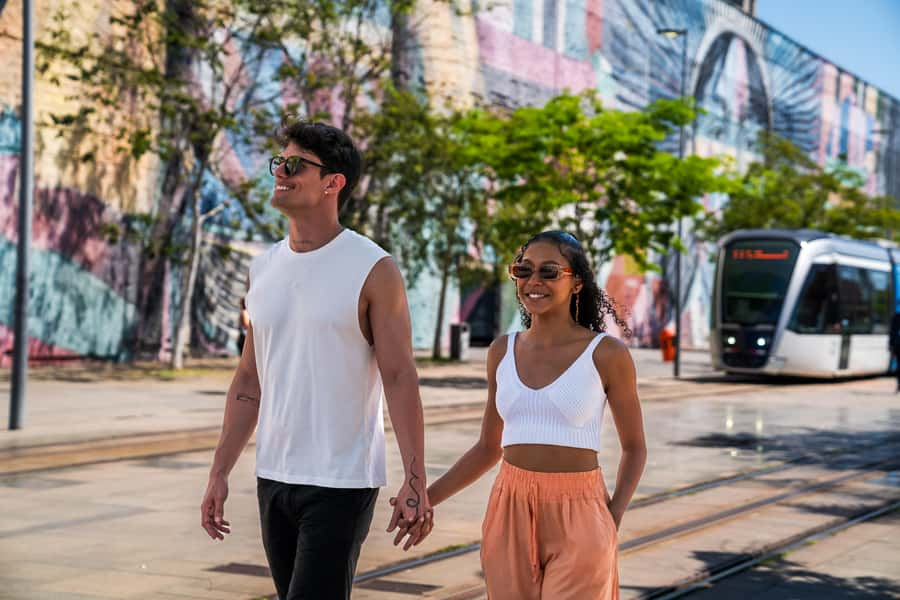
This tour works because it refuses to treat Rio as only beaches and mountain views. The South Zone hotels are the base, but the action takes place downtown, where colonial power, African heritage, modern art, Olympic redevelopment, and futuristic design sit close together.
You begin with hotel pickup between about 8:10 and 8:55 AM. The exact time depends on your hotel, so contact the operator if you do not receive confirmation. Pickup and return are offered from hotels in Copacabana, Ipanema, Leblon, and Leme. If you are staying in a hostel or bed-and-breakfast, you will be directed to a nearby hotel.
Transport is by air-conditioned van with a maximum capacity of 19 people. That is not a tiny private tour, but it is more manageable than a large coach. Keep in mind that the vehicle may serve more than one tour, so listen carefully when the guide explains the return arrangements.
The tour lasts four hours, including transport, walking, explanations, and the museum visit. You should wear comfortable shoes. There is a moderate amount of walking, and this is not a route for someone hoping to spend a long, slow time at every stop.
Valongo Wharf and the African Roots of Rio
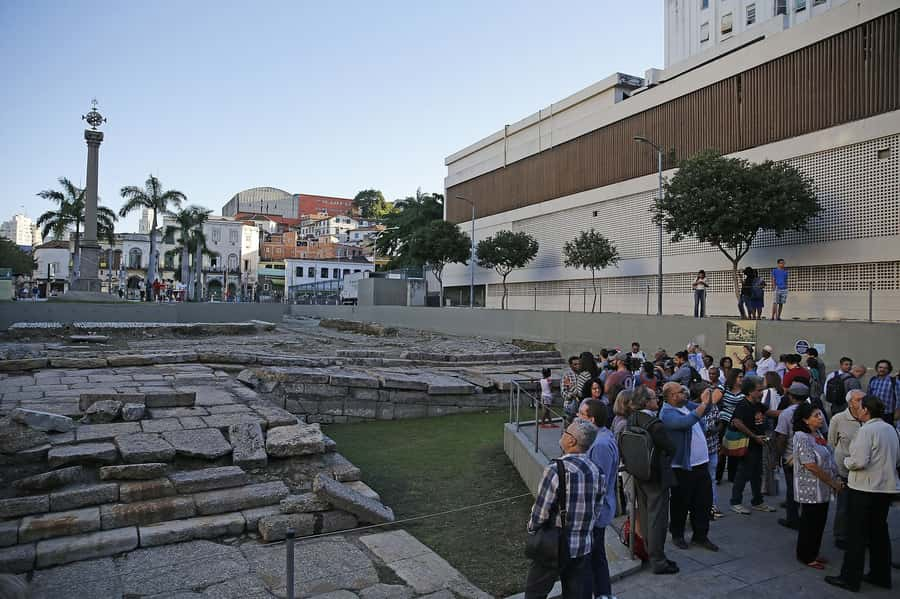
The first stop is Valongo Wharf, an essential place for understanding Brazil beyond its postcard image. The site was connected to the arrival and sale of enslaved Africans, making it one of the clearest physical reminders of the Atlantic slave trade in Rio.
The value here depends heavily on the guide. A good explanation helps you understand why the wharf matters, how African people shaped Brazilian culture, and why this place received UNESCO World Heritage status. Without context, it can look like a modest archaeological site. With context, it becomes a central point in Rio’s story.
I would pay close attention at this stop rather than treating it as a quick photo opportunity. The tour description specifically places African influence at the center of the visit, which gives the route more substance than a simple sightseeing circuit.
This is also where the tour begins to show its range. You are not just looking at old buildings. You are being asked to connect Brazil’s past with its music, food, religion, language, and population today.
More Museum and Gallery History Tours in Brazil:
- New York City: American Museum of Natural History Ticket
★ 4.5 · 15,447 reviews - Paris: Louvre Museum Entry with History of Mona Lisa
★ 3.9 · 2,823 reviews - Venice’s Best: Basilica, Doge’s Palace, Gondola & History Gallery
★ 4.5 · 2,478 reviews
Eduardo Kobra’s Five Faces on Olympic Boulevard
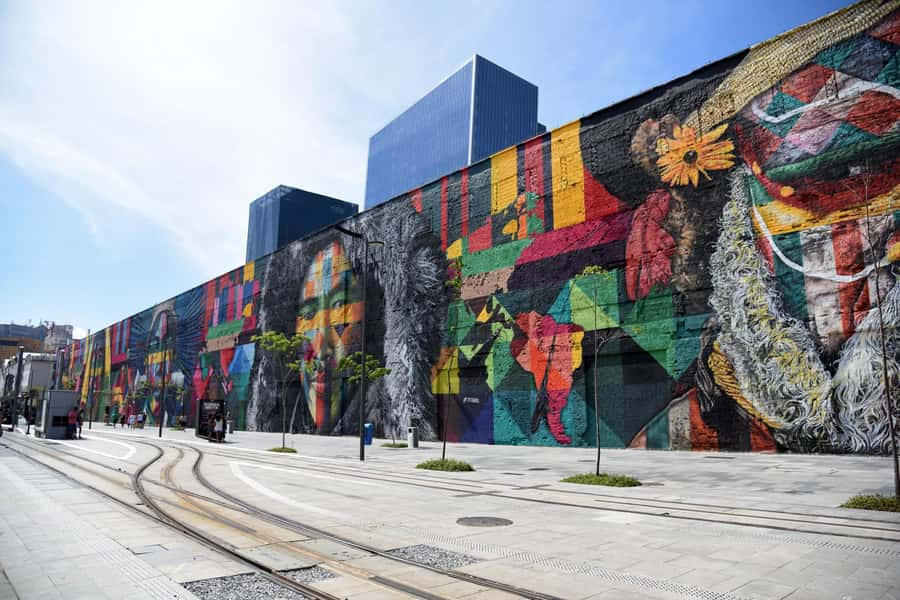
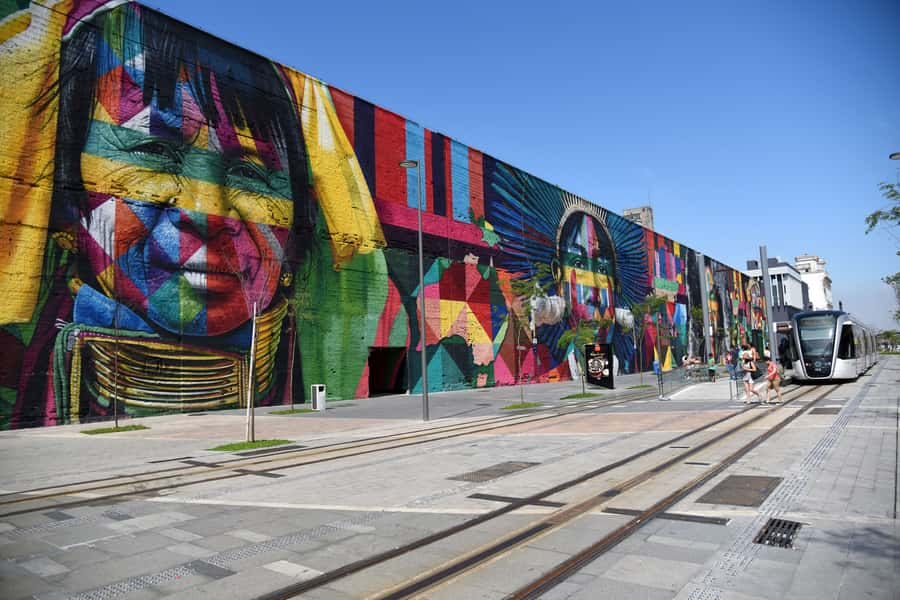
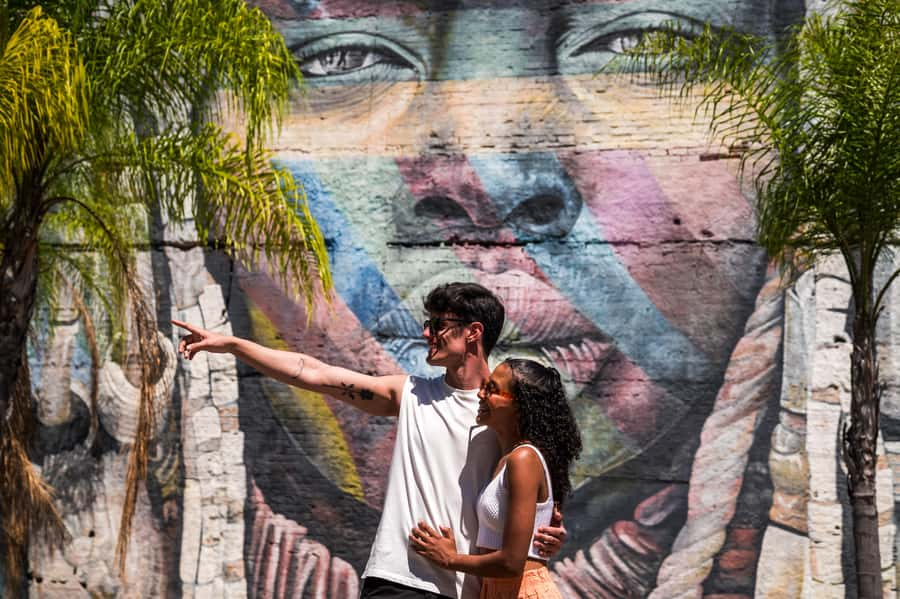
From Valongo Wharf, you continue toward Olympic Boulevard and Eduardo Kobra’s large mural. The work presents five human faces representing five ethnic groups, set against bold geometric color.
It is a striking change of mood after the serious history of the wharf. The mural gives you a strong visual stop and one of the clearest photo opportunities on the route. Kobra’s work is made to be seen at a large scale, so this is not the same as passing a small painting in a gallery.
You will have time for pictures, but do not expect a dedicated art lecture lasting half an hour. The tour has several stops ahead, and the guide must keep the group moving. I like this part because it shows how central Rio has been reshaped with public art and Olympic-era projects.
The Olympic Boulevard walk also links the stops together. You are not simply being driven from one attraction to the next. For a short tour, that connection matters. It helps you see the area as a changing part of the city rather than a collection of unrelated sites.
The Museum of Tomorrow’s Futuristic Question
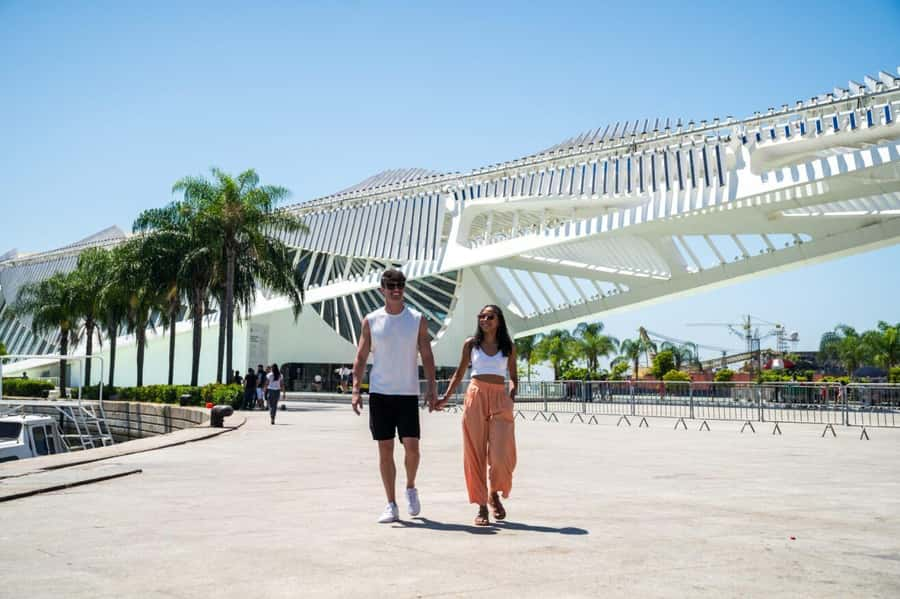
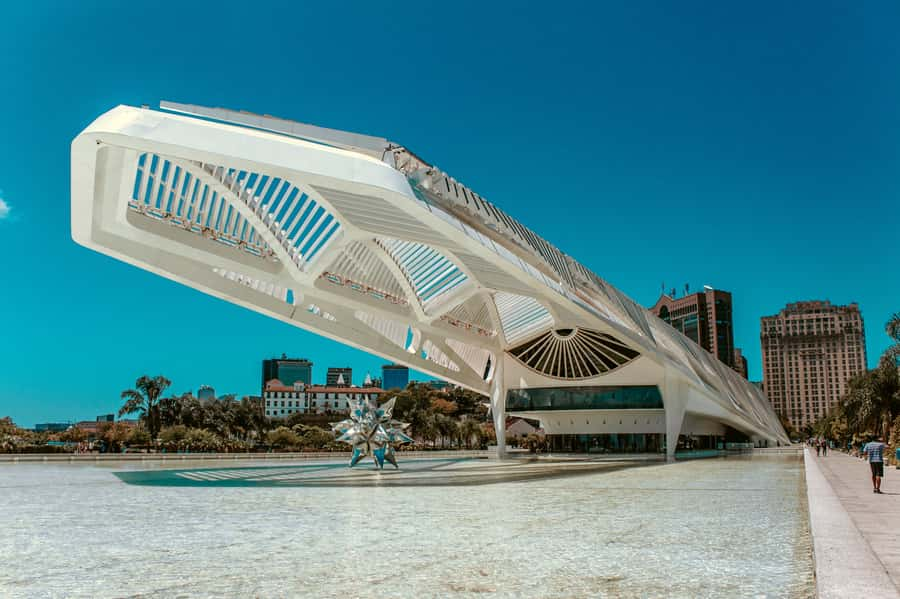
The Museum of Tomorrow is the centerpiece for many people booking this outing. Its white, futuristic structure sits beside the waterfront and looks unlike the older buildings elsewhere on the route.
Inside, the museum focuses on science, technology, the planet, and possible futures for humanity. The goal is not only to display objects. It asks you to think about how people are shaping the world and what choices may come next.
Admission is included in the tour price, which is important because the museum is one of the costlier scheduled elements. You receive a guided introduction, then have the chance to explore at your own pace. That flexibility was a clear strength for Elliot, who enjoyed being able to move through the museum independently after the group portion.
Allow enough energy for this stop. The museum is not simply a building to photograph from outside. If you rush through it, you lose much of the value. At the same time, the four-hour schedule means you should not expect an entire morning devoted to every exhibit.
The museum is also a useful contrast with Valongo Wharf. One stop asks you to face Brazil’s difficult past. The other asks you to consider the future. The route is strongest when you notice that contrast rather than seeing the museum as an isolated modern attraction.
Saint Benedict Monastery: Plain Outside, Golden Inside
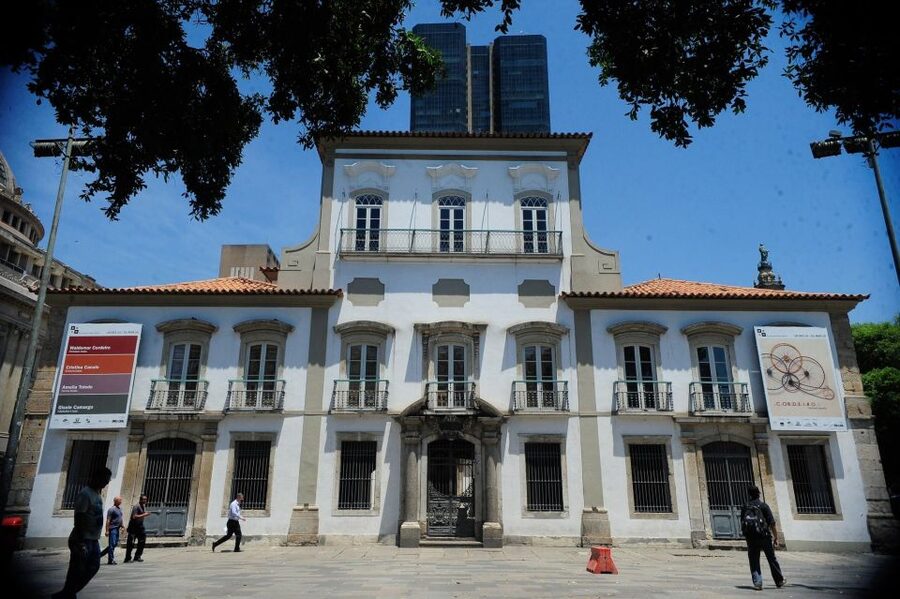
After the modern waterfront, the tour moves to the Monastery of Saint Benedict. Its exterior is relatively simple, so the interior can surprise you. Inside, the Baroque decoration is covered with golden ornament.
This stop rewards a slower look upward and across the details. The contrast between the restrained outside and the elaborate inside is the main point. It also gives the tour an architectural pause after the scale and color of the mural and museum.
You should not expect a long religious service or a private monastic visit. The attraction is the historic church interior and the chance to see how colonial-era religious wealth was expressed through decoration.
Pedro was praised for explaining Brazilian history clearly, and this is the sort of stop where a strong guide makes a real difference. The gold, carvings, and Baroque design are easier to appreciate when you understand the period and the role of religious institutions in Rio.
More History Tours in Brazil:
- Maria Fumaça – Wines and History
★ 4.0 · 242 reviews - Rio de Janeiro: Historic Rio and Santa Teresa Half-Day Tour
★ 4.4 · 228 reviews - São Paulo: Downtown Historical Bike Tour
★ 4.9 · 191 reviews - Scenic Train ride to historical cities of Morretes and Antonina
★ 4.0 · 188 reviews
The Olympic Cauldron and Praça XV
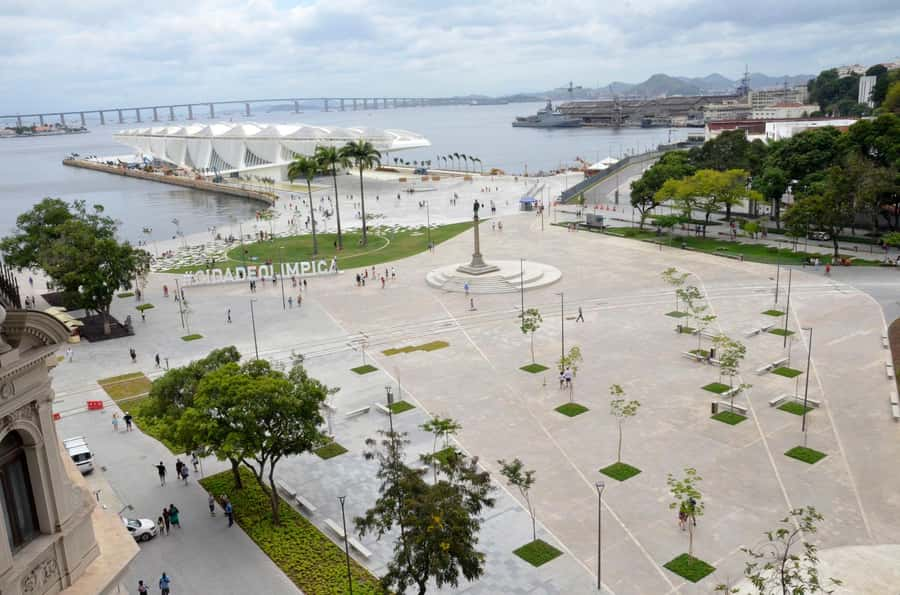
The Rio 2016 Olympic Cauldron appears before the final historic section. Created by American artist Anthony Howe, it uses a reflective kinetic sphere structure. Its moving, light-catching form is a reminder of the Games and adds another modern design note to the route.
The cauldron is a brief stop, but it helps tie the Olympic Boulevard section together. You have already seen Kobra’s mural and the renovated waterfront, so the cauldron feels like part of a wider public-art and urban-renewal story.
At Praça XV, the focus shifts back to political history. You will see one of the former headquarters of the Brazilian Empire and hear about important events connected with the square. This is a useful point for understanding how Rio functioned as a seat of power.
Do not expect Praça XV to feel like a preserved historical set. It is part of an active downtown area, and the surrounding city can feel more practical than picturesque. That is part of its value. You are seeing Rio’s working center, not a polished theme park version of the past.
Confeitaria Colombo and a Proper Rio Finish
The final stop is Confeitaria Colombo, one of Rio’s famous historic cafés. Its interior features art nouveau decoration, large stained-glass panels, mirrors, and tiles imported from France, Portugal, and Belgium.
This is the most atmospheric stop on the route. The café connects food, design, and social history in one place. At the beginning of the twentieth century, it was among Rio’s prestigious meeting places, and its ornate interior still gives the visit a sense of occasion.
Food and drinks are not included. You can buy something separately, such as a coxinha de frango or a brigadeiro. A coxinha is a Brazilian savory snack shaped like a small chicken thigh, while brigadeiro is a soft chocolate sweet. If you want to sample something local, this is a much better setting than grabbing an anonymous snack at a transport stop.
There is one important scheduling issue: Confeitaria Colombo is closed on Sundays. The rest of the tour may still operate, but this final stop will not be available as described. If the café is important to you, avoid booking this tour on Sunday or confirm exactly what replaces it.
Guides, Group Size, and the Pace
The tour is offered in English, Spanish, and Portuguese. Guide quality matters greatly here because the route includes difficult history, architectural details, public art, and a science museum.
Pedro was praised for his dedication to Brazilian history and for explaining the country in an informative way. Tracy specifically valued how much she learned from him. Emma was also described as friendly, and the museum’s flexible, self-guided portion worked well under her tour.
There have also been serious complaints about organization. One departure involved a guide getting lost, rushing the group after losing time, and creating confusion about the vehicle at the end. Another involved passengers being left behind while the guide hurried to another commitment, followed by a long wait for an Uber arranged by the company.
These incidents do not prove that every departure will have the same problem, but they are useful warnings. Confirm the pickup time before the morning of the tour. At the end, make sure the guide knows where you are going and that you are physically back in the correct vehicle before it leaves.
The maximum group size is 19. That keeps the group smaller than a big bus tour, but it is still large enough for the pace to feel fixed. If you want long conversations at every stop or lots of time for photography, a private guide would suit you better.
Is $67 a Fair Price?
At $67 per person, the price is reasonable if you want several central Rio sights in one morning and need transportation from the South Zone. The cost includes hotel pickup and drop-off, a professional guide, the air-conditioned van, taxes, and admission to the Museum of Tomorrow.
You are paying for convenience as much as admission. Reaching downtown from Copacabana, Ipanema, Leblon, or Leme on your own takes planning, and this tour gives you a route that links sites many first-time visitors might otherwise visit separately.
Food and drinks at Confeitaria Colombo cost extra. The tour also does not promise a full museum day, a long meal, or a private pace. Its value is strongest for someone who wants an organized introduction to central Rio.
The free cancellation period lasts until 24 hours before departure, and you can reserve now and pay later. The tour needs a minimum number of participants, so a cancellation for low enrollment is possible. In that case, you are offered another date or a full refund.
Children under five go free if they do not occupy a seat. Children must be accompanied by an adult, and unaccompanied minors are not allowed.
Who Should Book This Rio Tour?
I would choose this outing if you have limited time in Rio and want more than beaches, Sugarloaf Mountain, and Christ the Redeemer. It gives you a useful introduction to central Rio and combines art, architecture, African-Brazilian history, science, and food culture.
It suits first-time visitors who prefer an organized route, people staying in the South Zone, and anyone interested in Rio’s urban renewal around Olympic Boulevard. It is also a good fit if you want museum admission handled in advance but still prefer to explore the Museum of Tomorrow at your own pace.
You may want another option if you dislike fixed schedules, have mobility concerns related to moderate walking, or want a quiet, detailed visit at each site. The tour operates rain or shine, so bring suitable clothing and shoes for the conditions.
Final Verdict: A Strong Route With One Practical Warning
I like the design of this tour. Valongo Wharf gives it moral and historical weight, Kobra’s mural adds color, the Museum of Tomorrow brings a clear modern focus, Saint Benedict Monastery supplies architectural surprise, and Confeitaria Colombo ends the morning with Brazilian food and old-world decoration.
The strongest guides, including Pedro, Emma, and Emanuella, can turn the route into a useful lesson in Brazil’s past and present. The weaker departures show why you should confirm pickup details and stay alert during the final transfer.
Book it if you want a broad, well-priced introduction to downtown Rio in four hours. Skip it if your ideal morning means lingering at one museum or moving at your own pace. And if Confeitaria Colombo is a priority, do not schedule the tour on Sunday.
FAQ
How long does the tour last?
The tour lasts four hours, including transportation, walking, guided commentary, and the Museum of Tomorrow visit.
What languages are available?
Live tour commentary is available in English, Spanish, and Portuguese.
Is hotel pickup included?
Yes. Pickup and drop-off are available from hotels in Copacabana, Ipanema, Leblon, and Leme. The usual pickup window is between 8:10 AM and 8:55 AM, but you should contact the provider to confirm your exact time.
What if I am staying in a hostel or bed-and-breakfast?
You will be informed of the nearest hotel for pickup and drop-off.
Is admission to the Museum of Tomorrow included?
Yes. The ticket to the Museum of Tomorrow is included in the tour price.
Is food included at Confeitaria Colombo?
No. Food and drinks are available for purchase separately at Confeitaria Colombo.
Does the tour operate on Sundays?
The tour operates rain or shine, but Confeitaria Colombo is closed on Sundays. Confirm the Sunday itinerary with the provider if visiting the café matters to you.
Newest history tours we have reviewed in Brazil
- Scenic Train ride to historical cities of Morretes and Antonina★ 4.0 · 188 reviews
- Germanic Route – Cultural and historical in Ilhota, Blumenau and Pomerode★ 4.5 · 67 reviews
- Rio: Historical Walking Tour★ 4.7 · 32 reviews
- Rio de Janeiro: Historical Downtown and Lapa Walking Tour★ 4.4 · 32 reviews
- Salvador Historic Walking Tour – Pelourinho★ 4.8 · 62 reviews
- Historic City Tour Manaus by car with 3 stops.★ 4.9 · 18 reviews
- From Foz do Iguazu: Triple Frontier Landmark Ticket★ 4.4 · 136 reviews
- Florianopolis: Walking Tour – History, Art and Gastronomy★ 5.0 · 21 reviews
Museum & Gallery History Tours, compared.
Louvre Museum Entry with History of Mona Lisa
Read our review →
Venice’s Best: Basilica, Doge’s Palace, Gondola & History Gallery
Read our review →
American Museum of Natural History Admission Ticket
Read our review →
Guided African American History Tour with Reserved Museum Entry
Read our review →
POLIN Museum of the History of Polish Jews Ticket
Read our review →
Bell Tower & St Mark’s Square History Gallery Ticket
Read our review →
Field Museum of Natural History Ticket or VIP Tour
Read our review →Browse the lists this tour appears in