
Review · GERMANY HISTORY TOURS
“Rotes Bier” and “Blaue Zipfel”. A historical-culinary walk
Nuremberg’s food tells a surprisingly good city story. On this two-hour walk, you follow questions about small bratwurst, red beer, and gingerbread through the old town, with bites and sips along the way. It is part food tour, part local-history lesson, and part walking tour.
I like the close link between each stop and a specific food tradition. I also like the pace: short walks between historic sights, with time for questions. The main drawback is simple: the tour is held in German, and the small snacks may feel modest if you arrive expecting a full meal.
Key points at a glance

- Small sausages with a real story: Learn why Nuremberg Bratwurst is so short and what the name bratwurst means.
- Red beer at the finish: The walk ends at Hausbrauerei Altstadthof, known for its local Rotbier.
- Gingerbread with local meaning: Taste Nuremberg Lebkuchen while hearing why the city is famous for it.
- Old town sights between tastings: The route connects the Alte Rathaus, Hauptmarkt, Trödelmarkt, Unschlitthaus, and St. Sebaldus Church.
- Food questions go beyond the plate: The guide covers ravioli, meat consumption, the Devil’s Kitchen, and the English Garden’s connection to Nuremberg.
- Good value for a short tour: At $29 per person, you get a guide, walking tour, snacks, and beer in two hours.
Why this food walk works so well in Nuremberg
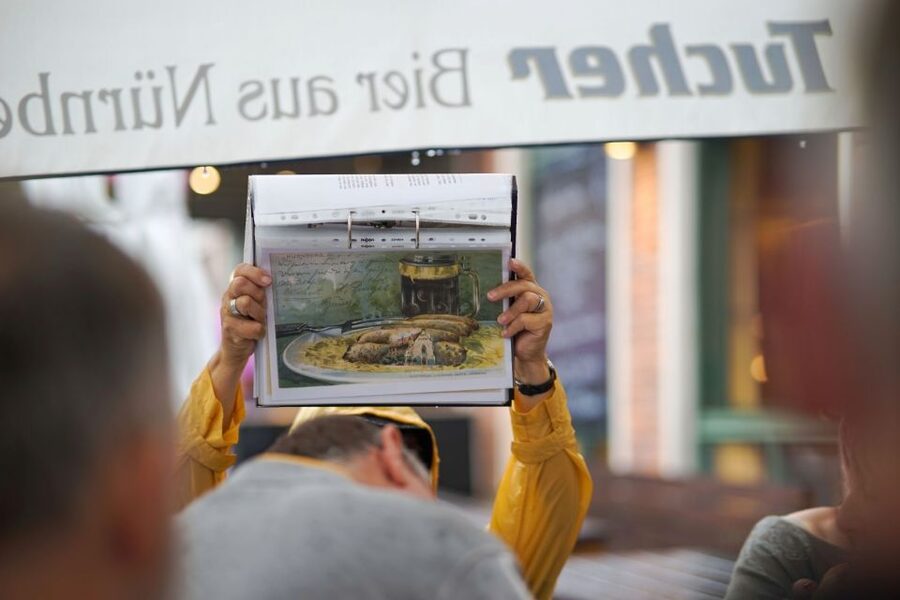
Many city food tours simply move from one snack to the next. This one uses food as a way to explain Nuremberg. You are not only handed a sausage and told it is local. You hear why it is small, how cooks worked, and what food meant to people in the city.
That approach gives the tour a useful shape. At one stop, you may be thinking about medieval cooking. A few minutes later, you are tasting bratwurst or gingerbread. The food keeps the historical talk practical and easy to remember.
The guide also leaves room for questions. Sonja, one of the guides praised for this experience, is described as clear, witty, and well spoken. Another recent participant from Nuremberg still learned new things, which is a good sign if you already know the city or have visited before.
The format is especially helpful on a first day in town. You get a quick introduction to the old center, learn which foods deserve your attention, and finish with a local beer. It does not replace a full museum visit or a dedicated restaurant meal, but it gives you a useful starting point.
More History Walking Tours in Germany
- Leipzig: 1.5-Hour Historical Walking Tour in German
★ 4.7 · 2,217 reviews - Berlin: History of the Third Reich Guided Walking Tour
★ 4.7 · 791 reviews - Trier: Guided Old Town Highlights and History Walking Tour
★ 4.7 · 687 reviews
Starting at the Alte Rathaus
Meet your guide in front of the main entrance of the Alte Rathaus, or Old Town Hall. Look for the picture folder and the green logo of Geschichte Für Alle e.V., the organization running the tour.
This is a practical meeting point because you begin in the middle of Nuremberg’s old town. You do not need transportation once the tour starts. From here, the guide sets up the main theme: how food, trade, cooking, and daily life connect to the buildings around you.
The opening stop is guided rather than focused on a tasting. That is helpful because it gives the food stops some context instead of rushing straight to the first bite.
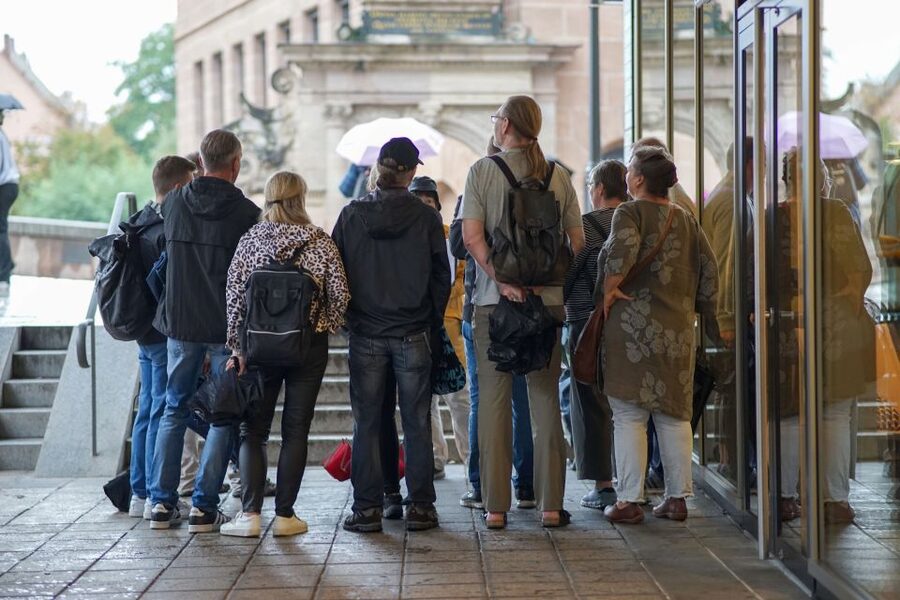
Wear shoes you can walk in. The route is made on foot, with short stretches of about three to ten minutes between stops. The tour is listed as wheelchair accessible, though you should still dress for the weather and expect the walk to go ahead in rain or shine.
Bratwurst Röslein and the mystery of the small sausage
After roughly five minutes on foot, you reach Bratwurst Röslein. This is the first major food stop and one of the clearest reasons to book the tour.
Nuremberg Bratwurst is notably small. That is not an accident or a modern marketing trick. The guide explains why the sausages have this size and how the name bratwurst fits into the story. You get to taste a real Nuremberg Bratwurst while learning the background behind it.
I like this kind of explanation because it turns a familiar dish into something worth noticing. If you have eaten bratwurst elsewhere in Germany, the contrast becomes even clearer. Instead of treating all sausage as the same, the tour points you toward the details that make Nuremberg’s version distinct.
This is also where the tour’s limits begin to show. The tastings are samples, not a full lunch. If you are hungry, plan to eat before or after the walk. At $29, the price remains fair because it includes several stops, a guide, food, and beer, but you should think of the food as a series of tastes rather than a substantial meal.
Hauptmarkt: food, trade, and Nuremberg’s public center
The walk continues for about three minutes to Hauptmarkt, Nuremberg’s main market square. The guide combines sightseeing with another tasting here, so you get both a look at an important public space and a chance to connect it with local food.
The tour asks how much meat Nuremberg citizens ate and what that says about life in the city. Questions like this make the stop more useful than a quick photo opportunity. Food can show wealth, access, custom, and social difference. You do not need to memorize dates to see how daily meals can explain a city.
Hauptmarkt also makes a good place to pause because the route remains easy to follow. You are never far from the previous stop, and the next locations are reached by short walks. This keeps the two-hour schedule moving without making it feel like a forced march.
The guide may also address Nuremberg’s cooking traditions and the city’s long relationship with food production. Since the tour is in German, you will get the most from it if you are comfortable listening to spoken German for a sustained period.
More Food and History Tours in Germany:
- Bamberg: Guided Historical Culinary Tour
★ 4.6 · 461 reviews - Sevilla Food Tour: Tapas, Wine, History & Traditions
★ 5.0 · 3,468 reviews - Victoria Guided Food and History Tour
★ 5.0 · 2,015 reviews - Gastown Historic Walking Food Tour
★ 5.0 · 1,863 reviews
Gingerbread at Hauptmarkt 2
Another short walk brings you to Hauptmarkt 2 for a food tasting centered on Nuremberg gingerbread. This is one of the highlights for anyone with a sweet tooth, but the value is more than the sample itself.
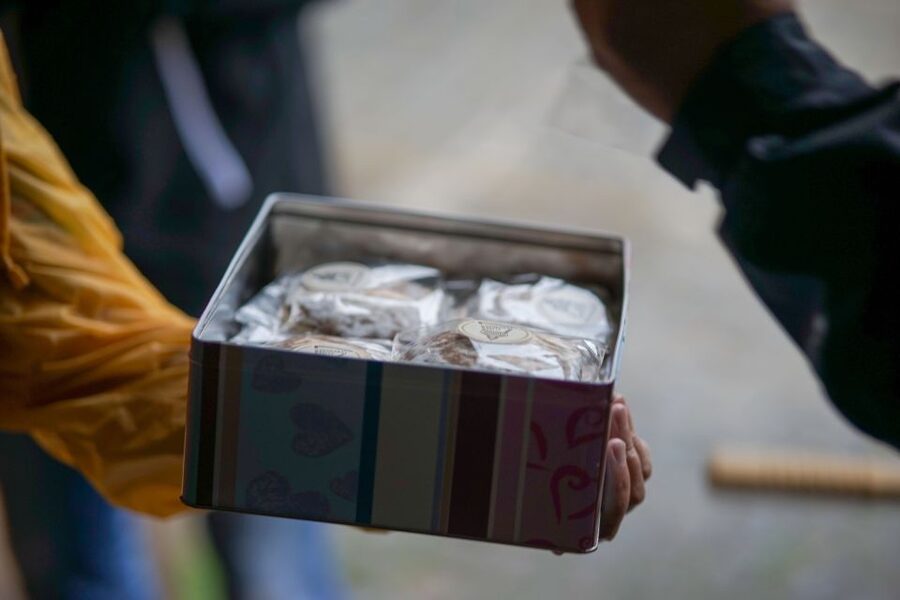
Nuremberg Lebkuchen has a strong local identity. The guide explains what makes the city’s gingerbread special and why it earned such a reputation. You taste the product while hearing the story, which is far more useful than buying a box without knowing what separates one version from another.
The gingerbread stop also balances the savory parts of the route. You have already considered sausages and meat. Now the focus shifts to baking, spice, and the city’s sweet traditions.
The tour’s food samples received slightly more mixed treatment than its explanations. One recent participant thought the snacks could be more substantial, while still considering the bratwurst, gingerbread, and beer excellent. That is a fair warning. Come for the local tastes and the stories, not for a succession of generous portions.
Trödelmarkt and the city’s cooking questions
After another five-minute walk, the route reaches Trödelmarkt 13. Here, the guide keeps the food theme moving through historical questions about what people cooked and ate.
One unusual topic is the connection between Nuremberg cooks and ravioli. That detail is a reminder that cooking traditions do not stay neatly inside modern national borders. The tour uses such questions to show that ideas about food traveled and changed over time.
The guide also explains what the Devil’s Kitchen means. The phrase gives the tour one of its more memorable turns, especially because it links a colorful expression to the practical world of cooking and food preparation.
This part of the walk is less about a single famous dish and more about the way food appears in language, local stories, and city life. I like that change of pace. If every stop were only a famous food, the experience would feel like a tasting menu with buildings between courses.
Unschlitthaus and the practical side of old food culture
The route then takes you to Unschlitthaus after another short walk. This stop includes more guided commentary and a tasting.
The name and location give the guide a chance to discuss the practical side of food in an old city. The tour’s questions about meat consumption and cooking are especially useful here because they move the subject away from modern restaurant culture. You begin to think about storage, supply, work, and access to food.
The exact sample served at every point is not specified, so you should not expect a fixed restaurant-style menu. What is clear is that several tastings are built into the route, with local snacks served along the way.
This stop is also a reason to keep your schedule flexible after the tour. The food is designed to support the talk, not to fill you up. If you want a full plate of sausages, plan a separate meal nearby.
St. Sebaldus Church and food in the wider city story
The next stop is St. Sebaldus Church, reached after about ten minutes on foot. It is the longest walk between listed stops, though still short by normal city-walking standards.
The church adds a different kind of setting to the route. Instead of hearing about food only in markets or food businesses, you consider it beside one of Nuremberg’s major historic buildings. The guide continues the food-focused commentary and includes another tasting.
This combination is one of the tour’s strengths. You are not confined to a restaurant or brewery. You move through public squares, old buildings, and religious landmarks while keeping one clear subject in view.
The church stop may appeal most to you if you like local history presented through ordinary life. The tour is not only about grand events or famous architecture. It asks what people cooked, how much they ate, and how food traditions survived.
Altstadthof Brewery and the final red beer
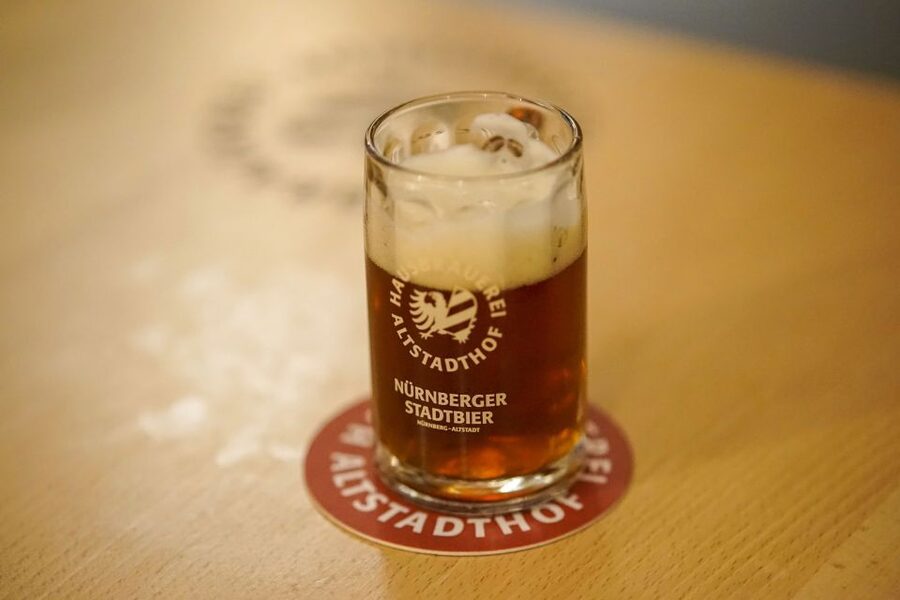
The final stop is Hausbrauerei Altstadthof, home of the Rotbierstüberl, brewery, and whisky distillery. This is where the tour returns to its title theme with a tasting of Nuremberg red beer, or Rotbier.
Red beer has a distinctive place in Nuremberg’s brewing tradition. The color and flavor make it different from the pale lagers many people expect when they order beer in Germany. The tour lets you try it in the setting of a local brewery rather than treating it as an abstract historical fact.
Ending at the brewery makes practical sense. You finish with a local drink, and you are free to remain nearby for more food or another beer if you want to continue the evening. The official tour ends there, so do not assume that additional drinks or a full meal are included.
The beer is included in the $29 price, along with the guide, walk, and snacks. For a two-hour activity with multiple tastings, that is a reasonable deal, particularly if you value the explanations as much as the food. If you want a long brewery visit or a large meal, you will need a different kind of experience.
What the $29 price really covers
At $29 per person, this is priced below many lengthy food tours, but the short duration matters. You are paying for a compact two-hour introduction, not an entire afternoon of dining.
The value comes from the combination of several elements:
- A guided route through central Nuremberg
- Food samples at several stops
- A Nuremberg Bratwurst
- Local gingerbread
- Red beer at Altstadthof Brewery
- Historical explanations and time for questions
I think the price works best for a first visit or for anyone who wants a structured introduction before exploring independently. You get a clear sense of local specialties without committing to a costly dinner.
The value is less convincing if you mainly want large portions. The snacks are described as modest, and one recent participant specifically wished they were more substantial. Eat something beforehand if you tend to get hungry, especially if your tour starts close to a normal meal time.
Who should book this experience?
I would choose this tour if you enjoy food with a story attached. It suits visitors who want to understand why Nuremberg is known for small sausages, gingerbread, and red beer rather than simply checking those items off a list.
It is also a good fit for repeat visitors. The route covers familiar central sights, but the food questions give you a fresh angle. A local resident on one recent tour still learned new details, so you do not need to be a first-time visitor to get value from it.
German ability is the key practical issue. The live guide speaks German, and all of the explanations are built around spoken commentary and questions. If you do not understand German, the tastings may still be pleasant, but you will miss the main point of the experience.
You should also be comfortable walking for two hours in changing weather. The tour operates rain or shine, and comfortable shoes plus weather-appropriate clothing are essential.
Should you book the Nuremberg food walk?
Book it if you want a short, affordable introduction to Nuremberg through local dishes and old-town sights. The strongest features are the clear explanations, the chance to ask questions, and the way each tasting connects to a particular food tradition.
Skip it if you want a full meal, a long brewery session, or a tour in English. The snacks are samples, and the German-only format is not a minor detail. For German speakers who like history, food, and a little humor in the same walk, this is a smart two-hour choice.
FAQ
Where does the tour start?
Meet the guide in front of the main entrance of the Alte Rathaus at Rathausplatz 5. Look for the picture folder and the green logo of Geschichte Für Alle e.V.
Where does the tour finish?
The tour finishes at Hausbrauerei Altstadthof, specifically the Rotbierstüberl, brewery, and whisky distillery.
How long does the tour last?
The walking tour lasts two hours.
What language is the tour in?
The live tour guide speaks German. German is the listed language for the experience.
Is beer included?
Yes. Beer is included, with the final stop at Altstadthof Brewery featuring local red beer.
What food is included?
The experience includes snacks and tastings. The listed highlights include Nuremberg Bratwurst and Nuremberg gingerbread.
Is the tour wheelchair accessible?
Yes, the activity is listed as wheelchair accessible.
Does the tour operate in bad weather?
Yes. The tour takes place rain or shine, so bring weather-appropriate clothing and wear comfortable shoes.
Newest history tours we have reviewed in Germany
- Historic Dresden Private Walking Tour★ 5.0 · 32 reviews
- Walking Through Dresden’s Past with Dr. Fraser Macdonald★ 5.0 · 72 reviews
- Berlin Food & Cultural Tour: Must-Try German & Berliner Classics★ 5.0 · 51 reviews
- Private Tour: Jewish Heritage Walking Tour of Berlin★ 5.0 · 29 reviews
- Small-Group Historical Bike Tour in Berlin★ 4.5 · 103 reviews
- Historic center of Berlin – Tour in Italian★ 5.0 · 143 reviews
- East Berlin Food & History Tour with Eating Europe★ 5.0 · 204 reviews
- Private Berlin WWII and Cold War History Tour with Local Expert Guide★ 5.0 · 28 reviews
Food & History Tours, compared.
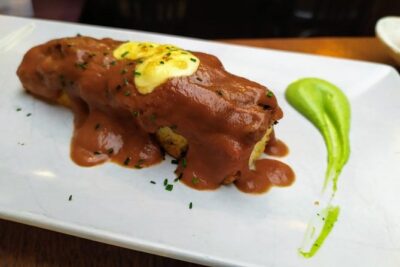
Sevilla Food Tour: Tapas, Wine, History & Traditions
Read our review →

Dublin Historical Centre Food Tour with 8 Food Tastings & Drinks
Read our review →


Boston Pizza Lovers Food and History Walking Food Tour
Read our review →
Rome Food Tour in the Historic Centre with 8+ Food Tastings
Read our review →Browse the lists this tour appears in