
Review · MEXICO CITY HISTORY TOURS
Mexico City: Historical walking tour of Tenochtitlan
Mexico City’s historic center makes far more sense when someone connects the ruins, churches, palaces, and murals into one story. Professor Cristina Ríos leads this walk from the Aztec capital of Tenochtitlan through Spanish rule and early Mexican independence, with careful attention to art, architecture, and the people behind the buildings. I especially like the small groups of three to 10 and the way Cristina can adjust the pace and answer questions. The main limitation is that you do not enter the Templo Mayor Museum or most of the interiors, so this is a guided orientation rather than a full museum tour.
I also like the practical finish at the Palace of Fine Arts, where you can continue exploring on your own. Expect a fact-filled morning, plenty of walking, and a guide who brings books, architecture, murals, and political history into the same conversation. If you prefer a short tour with only a few headline sights, Cristina’s detailed approach may feel like a lot.
At a glance
- 700 years in three hours: Follow Mexico City from Tenochtitlan and the Aztec era through Spanish colonization and the early Republic.
- Professor Cristina Ríos leads the walk: Her background in history and art history makes the architecture and murals easier to understand.
- Templo Mayor from the outside: You see the models and archaeological zone, but museum admission is not included.
- Casa de los Azulejos gets proper attention: The exterior and José Clemente Orozco mural receive a detailed explanation.
- Small-group format: Groups are limited to 10, with headsets used when more than seven people join.
- Optional Mexican sweets: You may stop at the old Dulcería Celaya, with food and drinks paid separately.
Why this walk gives Mexico City a clear shape
Mexico City’s Centro Histórico can feel like several cities piled on top of each other. Aztec foundations sit beside Spanish churches. Nineteenth-century palaces share blocks with modern shops. Murals add another layer, often telling stories about power, workers, religion, and national identity.
This tour gives you a way to read those layers. Cristina does not simply point out a church and name its date. She explains why the building belongs where it does, what earlier structure occupied the site, and how Mexico City changed as political power shifted.
I would choose this tour early in a Mexico City visit. It gives you a useful map in your head before you return to the museums and buildings alone. Several people who took the tour also used Cristina’s recommendations for later sightseeing, food, books, and places they would otherwise have walked past.
The tour costs $43 per person. That is fair value if you want a serious guide and a connected account of the city rather than a quick list of landmarks. Since museum tickets, food, and drinks are extra, budget for those separately. You are paying mainly for Cristina’s time, preparation, explanations, and ability to respond to questions.
More History Walking Tours in Mexico
- Historic Downtown Walking Tour
★ 5.0 · 1,289 reviews - Mexico City: Historic Downtown Walking Tour
★ 4.8 · 1,039 reviews - Walking Tour of the Historic Center of Mexico City
★ 5.0 · 870 reviews
Starting at Templo Mayor and the Centro Cultural España
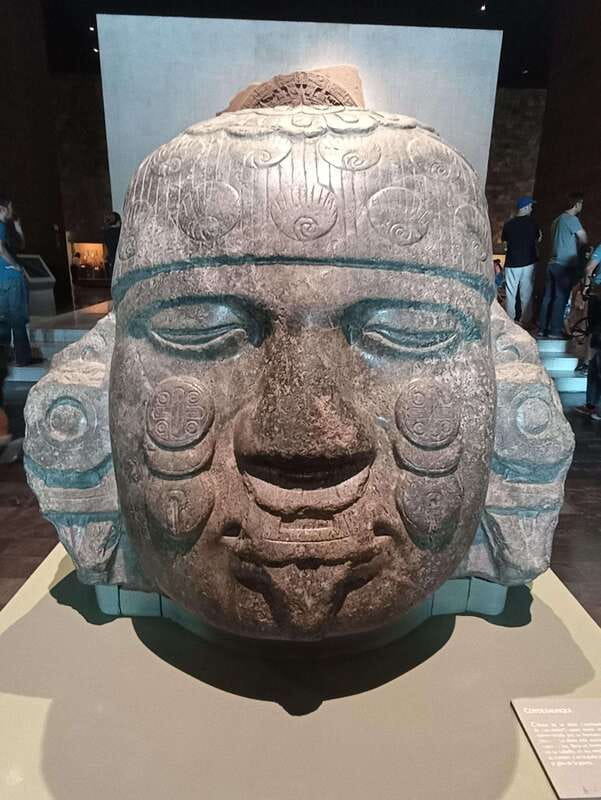
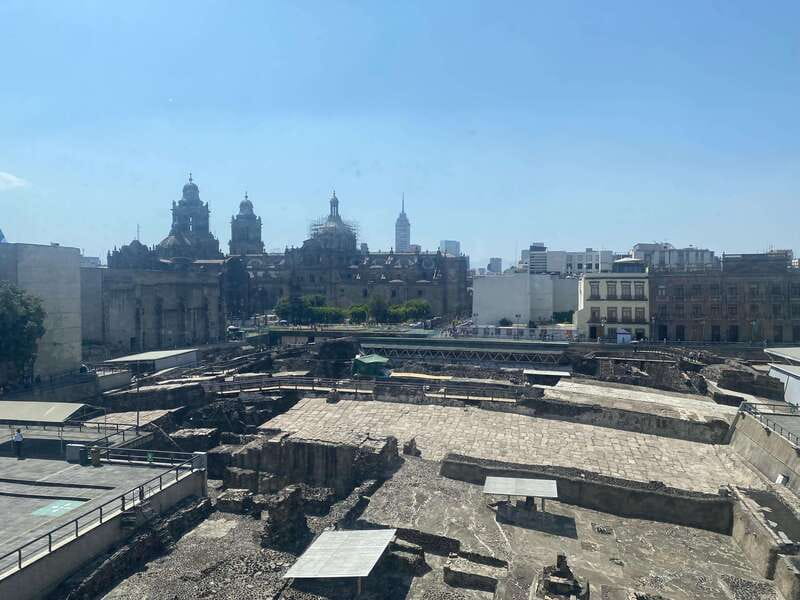
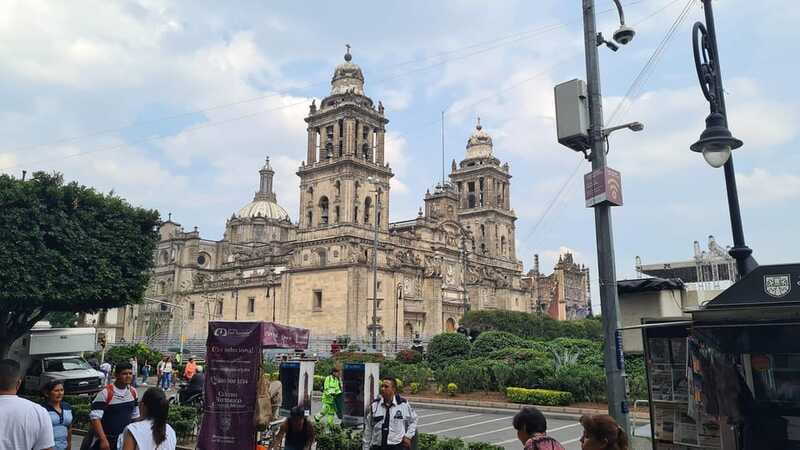
Meet at the entrance of the Centro Cultural España at Guatemala 18. The walk begins with models and an outside view of the Templo Mayor archaeological zone. You do not enter the Templo Mayor Museum or the excavation area on this tour.
That distinction matters. If you want to see the artifacts and walk through the museum galleries, plan a separate visit. The tour instead uses the site as a starting point for understanding Tenochtitlan, the city built on the former lake basin and the foundation beneath modern Mexico City.
The opening stop lasts about 40 minutes. That is enough time for Cristina to explain the city’s founding and the importance of the ceremonial center without rushing through the basics. Bring questions. The tour works best when you are willing to pause over details rather than simply collect photographs.
The meeting point is in a busy central area, so give yourself time to find Guatemala Street and the cultural center. Wear shoes suited to several hours on pavement. A hat, sunglasses, and sunscreen are sensible for the morning, since parts of the walk are outdoors.
The Cathedral and the layers behind it
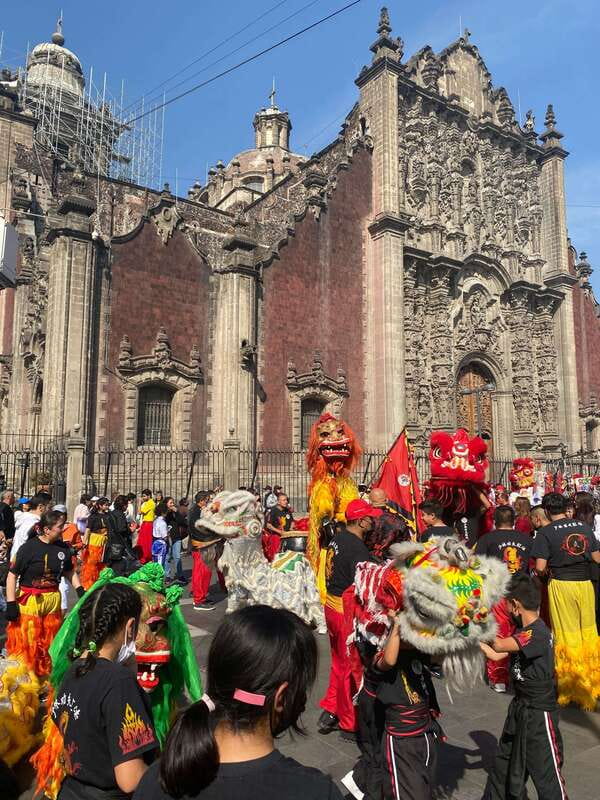
From Templo Mayor, the route continues toward the Metropolitan Cathedral. The building is one of the city’s major landmarks, but the more interesting lesson is how it fits into the older city around it.
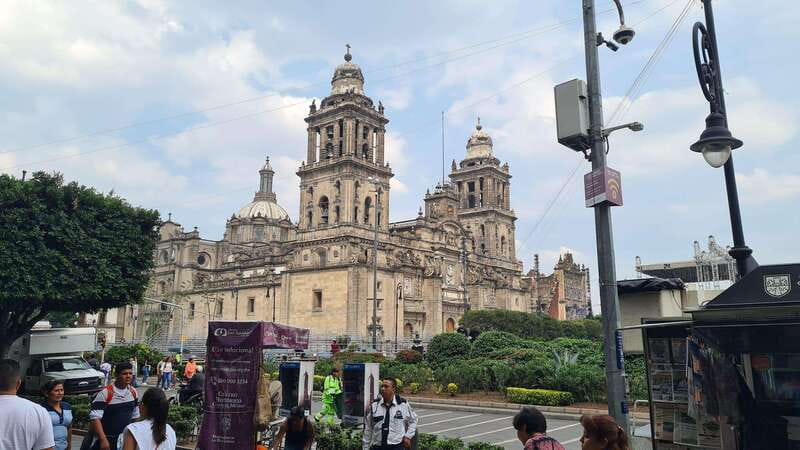
The cathedral stop lasts about 20 minutes. Cristina explains the building and its setting, including the relationship between Spanish religious power and the earlier Aztec center. This is where the tour’s larger idea becomes clear: Mexico City is not a clean sequence of separate periods. Each era reused, covered, or reinterpreted what came before.
The route also takes you behind the cathedral to the Animas del Purgatorio area and the Calmecac site museum at the Centro Cultural España. The Calmecac was connected to elite education in the Mexica world. Seeing this less obvious site helps balance the tour, since you are not only looking at the grand cathedral facade.
This portion may appeal most to people who enjoy context. If you want only famous photo stops, the side locations may seem less immediate. I think they are valuable because they show how much history is tucked behind the main square.
Cortés’s lodgings and the difficult colonial story
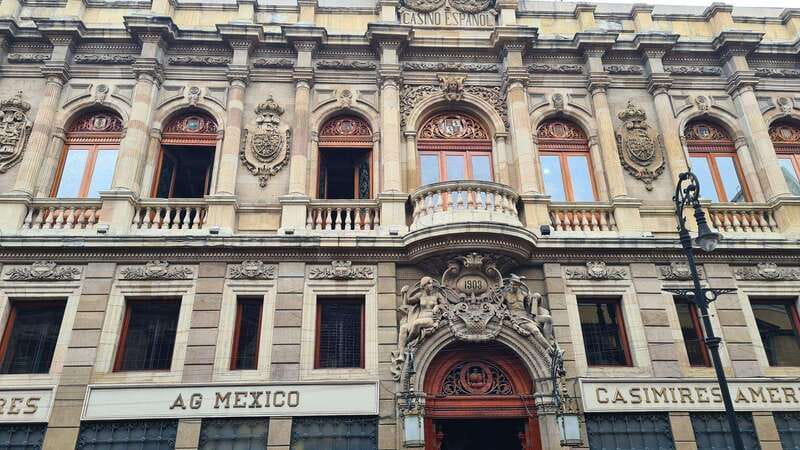
The next stop focuses on the old Axayacatl Palace, associated with the former houses of Moctezuma and the lodgings of Hernán Cortés. This is a compact stop, but it carries a great deal of historical weight.
Cristina uses the site to explain the encounter between the Mexica world and the Spanish invaders. The point is not simply to identify a building connected to Cortés. It is to understand how Spanish power took hold in a city that already had its own institutions, schools, religion, engineering, and political order.
One particularly useful detail from the walk is the possibility of seeing Cortés’s tomb or another nearby site outside the main route when conditions and timing allow. Do not count on an extra stop, but Cristina has been known to add local details when the group’s interests and schedule make it possible.
This is a good example of why a small group matters. With only a few people, you can ask about contested history, colonial society, or the way Mexico remembers the conquest. A larger group would make that kind of exchange harder.
Same streets, a different century:
- Historic Center Food Tour in Mexico City
★ 5.0 · 1,263 reviews - Mexico City Historical Centre Food Tour with 7 Authentic Tastings
★ 5.0 · 723 reviews - Historical and Cultural Walking Tour of San Miguel de Allende
★ 5.0 · 641 reviews - Historical and Cultural Walking Tour of San José del Cabo
★ 5.0 · 576 reviews
Iturbide Palace and the Church of San Francisco
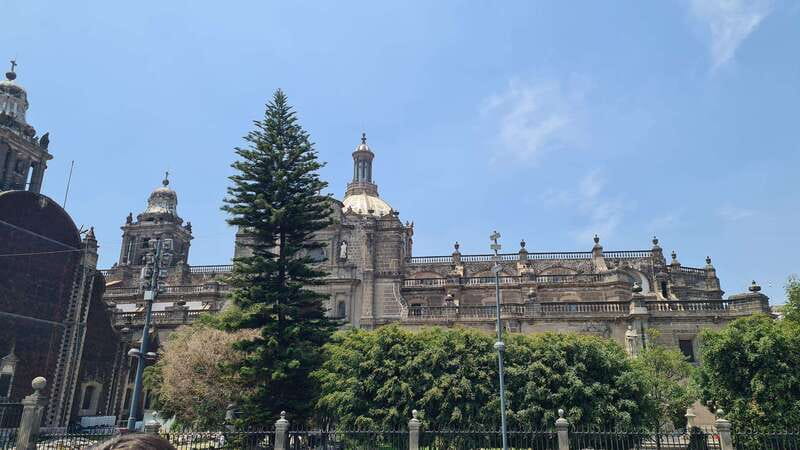
The Iturbide Palace, now the Banamex Cultural Center, brings the tour into the architecture of the colonial period and the early nation. The building’s elegant exterior helps show how wealth and status were displayed in the city.
The visit here lasts around 20 minutes. Cristina’s approach includes architecture, but she also places each building in its political setting. You learn to look at materials, ornament, scale, and location as clues about who controlled the city and how they wanted to be seen.
The Church of San Francisco follows, with about 20 minutes devoted to the facade. Since this is an exterior stop, do not expect an interior visit. Still, the facade gives Cristina plenty to discuss, especially if you enjoy reading the details of a building instead of passing it by as a backdrop.
This part of the walk is best for adults and older teenagers who are willing to listen closely. The information is not watered down. One past participant described the tour as more suited to an adult audience with some interest in architectural styles, which is a fair warning. Children under 10 are not permitted.
Casa de los Azulejos and the Orozco mural
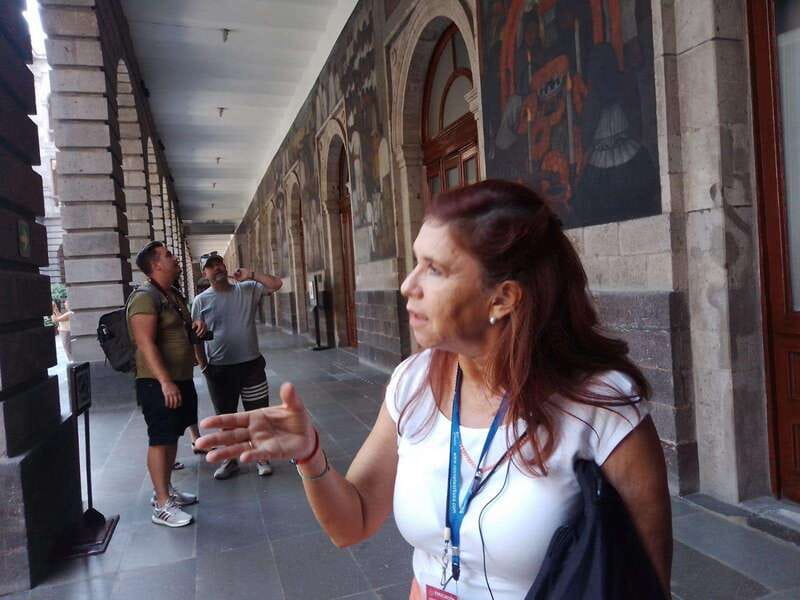
Casa de los Azulejos is one of the most memorable stops on the route. The blue-and-white tiled exterior is easy to photograph, but the inside adds another reason to enter when possible.
The tour includes a look at the José Clemente Orozco mural inside, with about 30 minutes of explanation. This is where art history becomes central. Cristina helps you look beyond the surface image and understand how the mural fits into the story of post-revolutionary Mexico and its public art.
The route information describes the mural visit as inside Casa de los Azulejos, but the general admission policy says tickets are not included. Ask Cristina or the booking provider how entry is handled on your date, and bring money for any required admission or purchases.
I like this stop because it changes the pace. You have been looking at ruins, churches, and facades. Now you get a major work of Mexican mural art, with enough time to discuss what you are seeing. If you plan to return to the building later for a meal or a longer look, the tour gives you useful background first.
Finishing at Bellas Artes
The final stop is the Palace of Fine Arts, reached after a pass-by lasting about 30 minutes in the itinerary. The tour ends here, which is convenient for continuing your day in the historic center.
The building is important for its architecture and its role in Mexican cultural life. Cristina places it in the larger timeline that begins with Tenochtitlan and moves through colonial rule, independence, and modern Mexico. You get the setting and explanation, but the tour does not function as a full interior visit to the palace.
Set aside extra time if you want to explore Bellas Artes properly on your own. You may also want to visit the Templo Mayor Museum separately, since this walk only views the archaeological area from outside. One smart plan is to take the walking tour in the morning, have lunch nearby, then return to one of the museums with the historical framework fresh in your mind.
What the guide adds
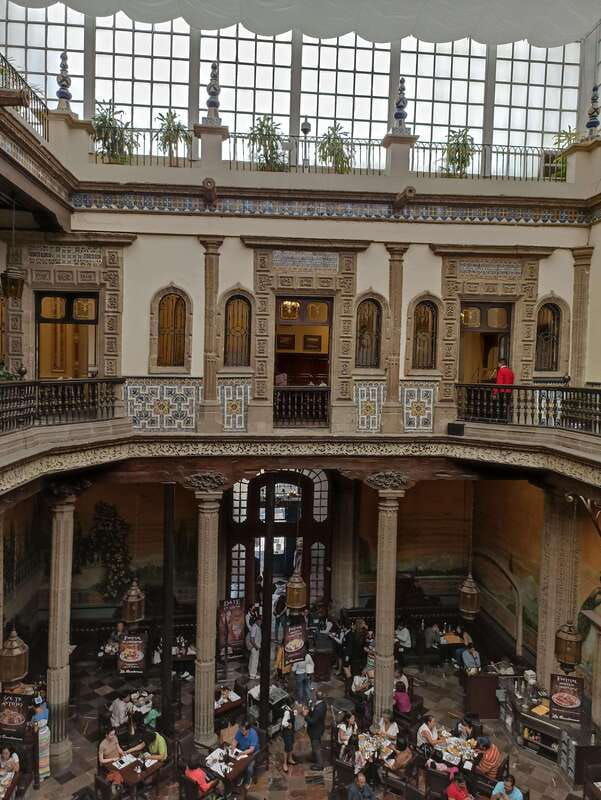
Professor Cristina Ríos is the main reason to book this particular walk. She speaks English and Spanish, and the feedback about her teaching is remarkably consistent: she explains clearly, handles detailed questions, and brings strong energy to the subject.
Her strengths cover several fields at once. She discusses Aztec and Mesoamerican culture, Spanish colonization, Mexican independence, architecture, murals, customs, and local places to eat. That range means you are not stuck with a single narrow version of the city.
She also adapts. One booking became a private tour when only one participant joined, and the route was adjusted to suit that person’s interests. Other people received recommendations for additional places and reading. Those extras are not guaranteed, but the small-group setup makes personal questions much easier.
When the group is larger than seven, headsets are provided. That helps around noisy streets and crowded areas. In smaller groups, you may not need them, but the guide still carries audio equipment as part of the tour setup.
Pace, access, and practical comfort
The walk lasts three hours and includes several stops of about 20 to 40 minutes. You should be comfortable walking through the historic center and standing while Cristina explains a site.
The route is listed as wheelchair accessible. Even so, the tour includes city streets, outdoor viewpoints, and historic buildings, so it is sensible to confirm current access details if you use a wheelchair or have mobility concerns.
Morning timing is a plus. The cooler part of the day is more comfortable for an outdoor walk, and you finish early enough to visit Bellas Artes, Templo Mayor, or another nearby attraction. Bring water, comfortable shoes, sun protection, and a hat.
Food and drinks are not included. The optional stop at Dulcería Celaya adds a pleasant local touch if you want to sample traditional Mexican sweets, but you pay for anything you buy. It is also fine to skip it if you would rather keep moving.
The tour allows free cancellation up to 24 hours before the start, and you can reserve now and pay later. Those policies are useful if your Mexico City plans are still shifting.
Who should book it
I would book this tour if you want Mexico City’s history explained as one long story. It suits adults, older teens, architecture fans, art lovers, and anyone who wants more than a quick walk around the Zócalo.
It is especially useful on your first day or two in the city. You get bearings, learn which sites deserve a return visit, and receive ideas for food and further sightseeing.
I would choose something else if you mainly want interior access, long museum visits, or a lighthearted stroll with little historical detail. The Templo Mayor Museum is not included, most stops are viewed from outside, and Cristina’s explanations can be dense.
Should you book the Tenochtitlan walking tour?
Book it for the guide and the connected story, not for a checklist of admissions. At $43, it is a good buy if Professor Cristina Ríos is available and you enjoy detailed history, art, and architecture.
Plan a separate visit to the Templo Mayor Museum and Bellas Artes, wear comfortable shoes, and leave room for questions. If you want to understand how an Aztec capital became colonial Mexico City and then modern Mexico City, this three-hour walk gives you a strong starting point.
FAQ
How long does the Tenochtitlan walking tour last?
The tour lasts three hours.
Where does the tour meet?
Meet at the entrance of the Centro Cultural España at Guatemala 18, near the Templo Mayor area.
Where does the tour finish?
The walk finishes at the Palace of Fine Arts.
Does the tour enter the Templo Mayor Museum?
No. The tour views the models and archaeological zone from outside. Museum entry is not included.
Who guides the tour?
Professor Cristina Ríos leads the tour. It is offered in English and Spanish.
How large are the groups?
Groups are limited to 10 participants. Headsets are provided when more than seven people join.
What landmarks are included?
The route includes Templo Mayor, the Metropolitan Cathedral, the Calmecac site area, the former Axayacatl Palace and Cortés lodgings, Iturbide Palace, the Church of San Francisco facade, Casa de los Azulejos, and the Palace of Fine Arts.
Is food included?
No. Food and drinks are not included. Traditional Mexican sweets at Dulcería Celaya are an optional extra.
Is the tour suitable for children?
Children under 10 are not permitted.
What should I bring?
Bring comfortable shoes, a hat or sunglasses, and sunscreen. Be prepared for several hours of walking and standing.
Newest history tours we have reviewed in Mexico
- Private Half Day Cultural Tour to Mayan Ruins and Cenote★ 4.5 · 31 reviews
- Otoch Mayan Experience Tour: Cultural & Historical Adventure★ 3.5 · 18 reviews
- Experience Cozumel Historical Center Mayan and Beach Experience★ 5.0 · 20 reviews
- Colima Volcano Cultural Tour: Coffee Plantation, Hacienda and Comala Magic Town★ 5.0 · 30 reviews
- Private Tour in Chichen Itza Official History Guide★ 5.0 · 36 reviews
- 5 Days Mayan Heritage History Tour★ 4.5 · 31 reviews
- Calakmul Ancient Maya City Tour – From Campeche★ 4.5 · 24 reviews
- Calakmul Ancient Maya City Tour From Xpujil★ 4.5 · 38 reviews
History Walking Tours, compared.
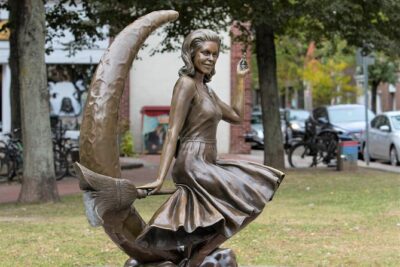
History and Hauntings of Salem Guided Walking Tour
Read our review →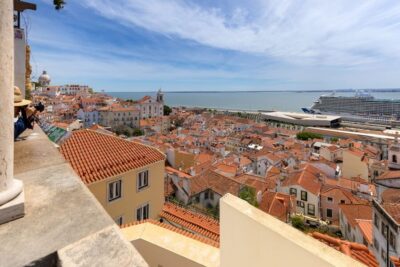

Freedom Trail History Small Group Walking Tour
Read our review →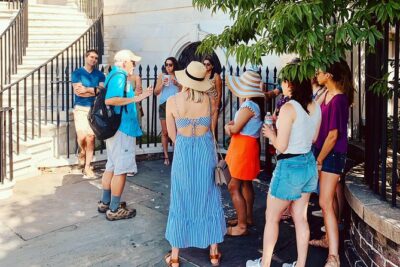
Historic Charleston Guided Sightseeing Walking Tour
Read our review →
Tapas Walking Tour with Food, Wine, and History
Read our review →
Savannah History and Haunts Candlelit Ghost Walking Tour
Read our review →
A History of Terror – Belfast City Centre Walking Tour
Read our review →Browse the lists this tour appears in