Review · MEXICO CITY HISTORY TOURS
Historic Downtown Walking Tour
Mexico City’s historic center makes the most sense when you walk it. Beneath the grand plazas and polished façades are layers of Aztec, Spanish colonial, Catholic, and modern Mexican history, and this three-hour route ties those layers together without asking you to cross the city. I especially like the stop at Templo Mayor, where ancient ruins sit beside the cathedral, and the chance to step inside the Metropolitan Cathedral rather than only admire its front.
I also like the practical finish near the National Museum of Art, with the route passing the striking Palacio Postal and Palacio de Bellas Artes along the way. The main thing to consider is pace: some guides move quickly, and a larger-than-expected group can make it harder to hear or keep up on crowded streets.
Key points to know before you book
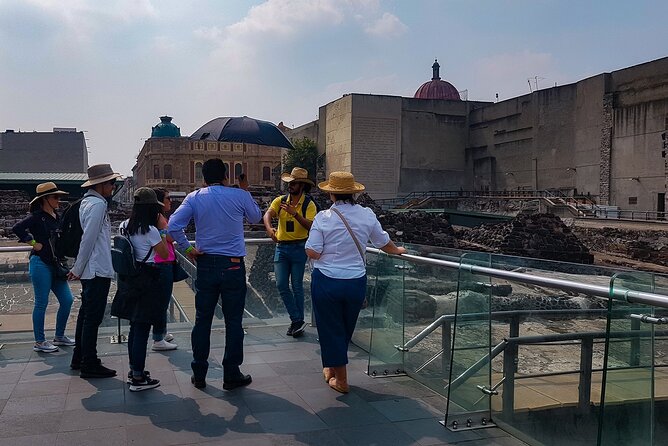
- Ancient Mexico beside modern Mexico: See the Zócalo and Templo Mayor before moving through the colonial and 20th-century center.
- A useful first-day orientation: The route covers major sights in about three hours and helps you decide where to return later.
- Strong guide feedback: Emiliano, Mar, Estefania, Nadia, Mariel, Sandra, and others are praised for clear explanations and useful food suggestions.
- Mostly an exterior introduction: You see only some of the Templo Mayor ruins, so plan a separate museum visit if Aztec archaeology interests you.
- Walking is the point: Expect a moderate physical effort, crowded streets, and a fairly brisk pace.
- Good value at $26.53: The price is low for three hours with a certified local guide, though gratuity and any separate museum admission are extra.
Why this is a smart first look at Mexico City
This is not a tour that tries to cover every corner of central Mexico City. Instead, it follows a compact stretch through the Centro Histórico, linking major sights that can feel disconnected when you visit them on your own.
That structure matters. The cathedral makes more sense when you have just heard about the Aztec city beneath the modern center. Palacio de Bellas Artes feels more meaningful after you have seen the older colonial architecture around it. A guide can point out how the city changed from the Aztec capital to the Spanish colonial capital and then into the modern Mexican capital.
The route also gives you a working map. Afterward, you know where the Zócalo is, how to reach Bellas Artes, where the National Museum of Art sits, and which places deserve a longer visit. Several guides also offer suggestions for food and later sightseeing, which can save you from spending your first afternoon wandering without a plan.
The tour is offered in English or Spanish, with English specifically available for this experience. Guide quality appears to be one of its strongest features. Emiliano is praised for clear English, strong storytelling, and a good mix of history, politics, and culture. Mar is noted for an easy pace, food advice, and strong explanations of pre-Hispanic history. Estefania and Nadia are also described as friendly, clear, and engaging.
Still, the experience can vary with the guide and the group. One guide may project clearly across a noisy plaza, while another may speak too fast. If hearing every detail matters to you, stay near the guide and speak up early if the group begins to spread out.
More History Walking Tours in Mexico
- Mexico City: Historic Downtown Walking Tour
★ 4.8 · 1,039 reviews - Walking Tour of the Historic Center of Mexico City
★ 5.0 · 870 reviews - Historical and Cultural Walking Tour of San Miguel de Allende
★ 5.0 · 641 reviews
Starting at the Zócalo, Mexico City’s great public room
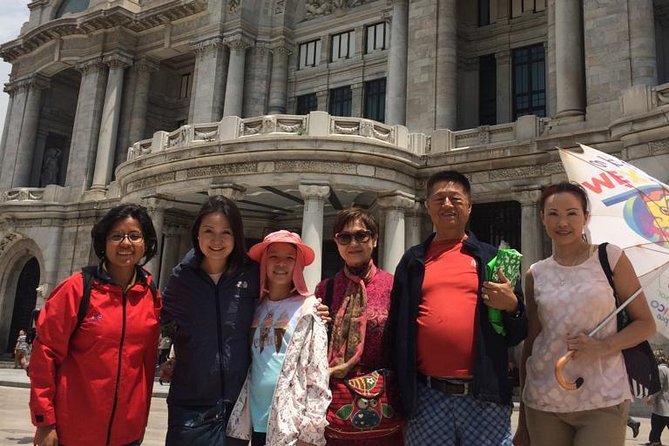
The meeting point is at C. de Monte de Piedad 11, beside the Zócalo. This is a sensible starting point because the main square is the symbolic center of Mexico City and a natural place to begin the city’s story.
You spend about 15 minutes here. That is enough for an introduction to the square and its role as the heart of the capital, but not enough for an extended architectural study. The value is the setting. You begin among some of the city’s most important civic and religious buildings, with the guide explaining how the square has served different powers and communities over time.
The Zócalo can be noisy and crowded. That is part of the experience, but it creates a practical challenge. Keep your eyes on the guide, especially if the group is large or the plaza is full. A guide who uses a visible marker or holds up a sign is easier to follow than one who simply walks ahead.
This first stop is also a good test of the pace. The route covers a lot in three hours, so you should expect more explanation and orientation than lingering photo time.
Templo Mayor, where Aztec Mexico meets the colonial city
From the Zócalo, the route moves to Plaza Manuel Gamio and the remains of Templo Mayor. You spend about 30 minutes here, and this is likely the most important stop for understanding the city before Spanish rule.
The ruins are visible outdoors, but this tour does not give you a full museum visit. You see part of the archaeological site and learn how the ancient Aztec city relates to the streets and buildings around it. The contrast is striking: old stonework, colonial structures, and the present-day capital all occupy the same small area.
I would treat this portion as an introduction, not a complete archaeological tour. If the Aztec period is a major reason for your visit, return to the Templo Mayor museum with more time. The walking tour gives you the essential setting and context, then leaves room for a deeper visit later.
This is also where a guide’s teaching style matters most. A good explanation can turn a set of ruins into a story about how the city was built, conquered, rebuilt, and remembered. Guides such as Mar and Emiliano receive especially strong praise for making pre-Hispanic history understandable without burying you in dates.
Inside the Metropolitan Cathedral
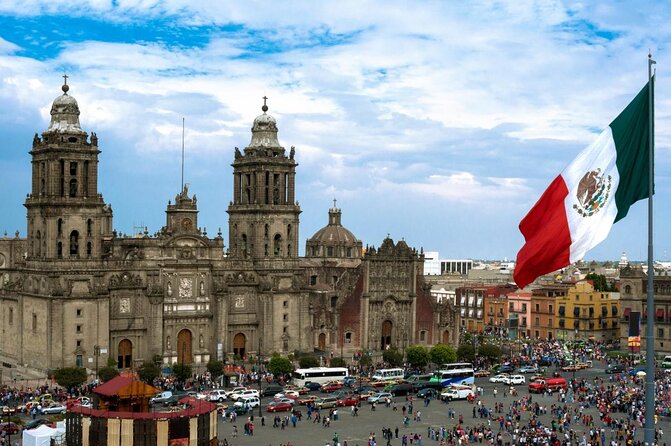
The next stop is the Mexico City Metropolitan Cathedral, where the group spends about 30 minutes. The tour includes entry inside, which gives you more than a quick exterior photograph.
The cathedral is central to understanding the Spanish colonial and Catholic chapters of Mexico City. Your guide provides context about its place in Mexican religious life and helps you read the building as part of the larger historic center, not as an isolated monument.
Thirty minutes is a useful amount of time for a first visit. You can look around, hear the main explanations, and ask questions without turning the tour into a full church-art study. If you prefer quiet reflection, remember that this is a group visit with a fixed schedule.
The cathedral also helps balance the Templo Mayor stop. Within a short walk, you move from the remains of the Aztec capital to the center of colonial Catholic power. That quick transition is one of the route’s strongest features.
More Old Town and Historic Centre Walks in Mexico
- Historic Center Food Tour in Mexico City
★ 5.0 · 1,263 reviews - Mexico City Historical Centre Food Tour with 7 Authentic Tastings
★ 5.0 · 723 reviews - Private Walking Tour Gems of the Historic Center of Mexico City
★ 5.0 · 87 reviews
Plaza Manuel Tolsá and the city’s grand public art
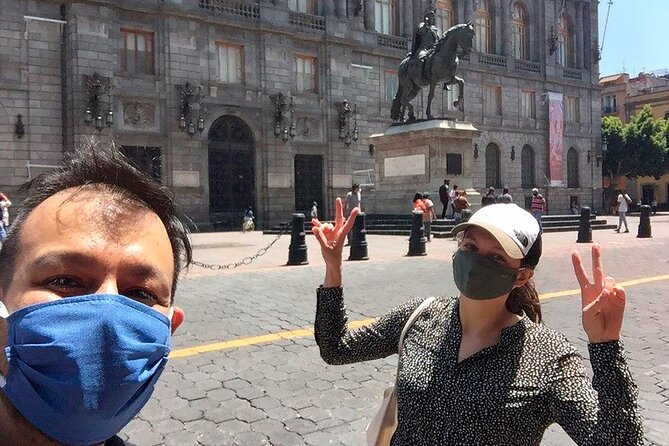
The stop at Plaza Manuel Tolsá lasts about 10 minutes. It is brief, but it gives the tour a change of rhythm after the cathedral.
The square is known for an emblematic statue in Mexico City’s story. Your guide explains its place in the city while you take in the surrounding architecture. Ten minutes will not allow for a long visit, but it is enough to understand why the plaza belongs on a walking route through the center.
This is a good example of the tour’s overall design. Some stops are major attractions with longer explanations. Others work as short visual markers that connect one part of downtown to the next. If you want detailed attention at every square, you may find the schedule fast. If you want a well-organized introduction, the variety keeps the walk moving.
Palacio Postal, an unexpectedly ornate post office
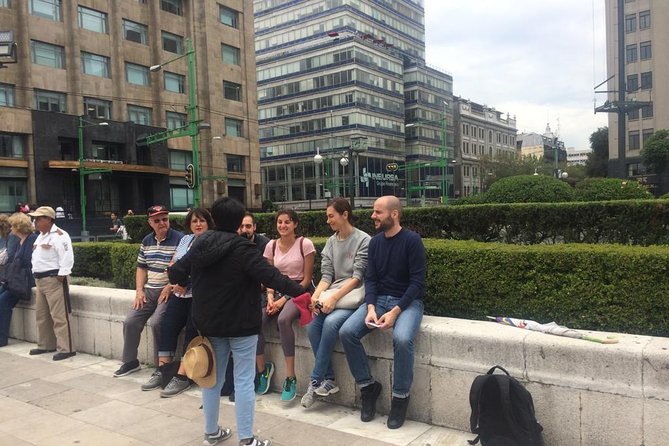
The route then enters Palacio Postal for about 15 minutes. A post office may sound like an odd sightseeing stop, but this building is included precisely because it is unusually decorative.
The interior offers a welcome change from the open plazas and monumental religious buildings. You get a quick look at one of Mexico City’s more glamorous public interiors, along with an explanation of its architectural importance.
This stop is short, so expect a focused visit rather than time to study every detail. Have your camera ready, but listen too. The point is not only that the building is attractive. It shows how Mexico City used public architecture to express confidence, refinement, and modern ambition.
Palacio de Bellas Artes and the end near El Caballito
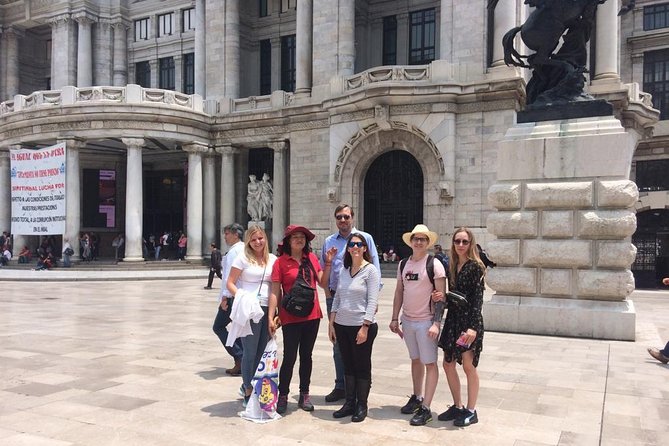
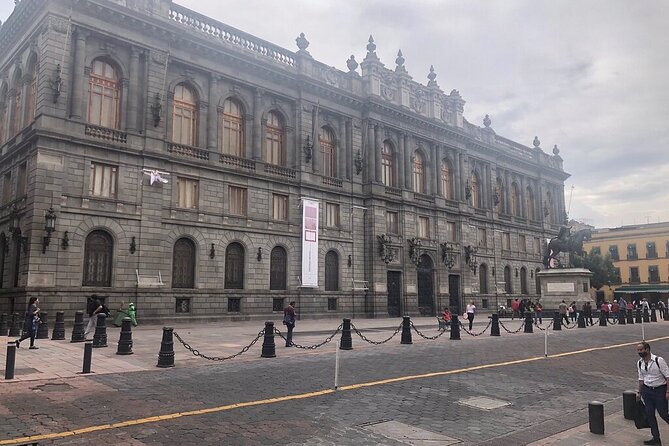
The final major stop is Palacio de Bellas Artes, the pale art nouveau landmark that became one of the symbols of 20th-century Mexico City. The official schedule allows about 15 minutes here.
You will see the building and hear about its place in the city’s artistic and architectural life, but this walking tour is not a full visit to the museum or performance spaces. If you want to spend time with murals or exhibitions inside, plan a separate visit.
The tour ends near the El Caballito statue, in front of the National Museum of Art, at C. de Tacuba 8. This is a useful ending point because you are close to another major museum and several central streets. You can continue sightseeing, find lunch, or return to a place that deserves more time.
The finish also makes the tour practical for your first day. You do not end in an obscure corner or at a transport stop far from the action. You finish near two important cultural sights and can use the guide’s recommendations to shape the rest of your day.
How much walking and how fast?
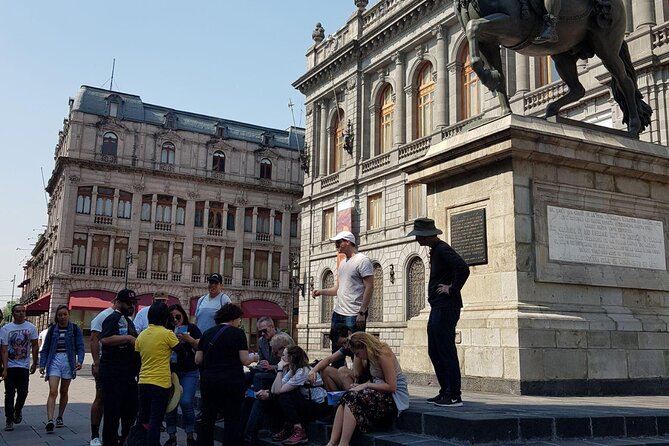
The experience lasts about three hours and requires a moderate level of fitness. The route is on foot, with standing at plazas, ruins, and buildings. You should wear comfortable shoes and expect to walk at a steady pace rather than stop for long breaks.
The route itself is not described as strenuous, and one guide is praised for keeping the pace comfortable. But another experience was less smooth because the guide moved ahead quickly and the group lost sight of her in crowded streets. That is a useful warning, especially for families or anyone who walks slowly.
A larger group can also affect how much you hear. The tour is promoted as small-group, with one description citing a cap of 15, while the additional information lists a maximum of 25. Some groups may also be divided into smaller units. I would confirm the expected group size when booking if an intimate setting is important to you.
The best strategy is simple: stand close to the guide, keep the group in view, and ask for a repeat if traffic or plaza noise swallows an explanation. Guides who project clearly, such as Emiliano, make a real difference.
What the $26.53 price buys you
At $26.53 per person, this is a good-value orientation tour. You receive more than three hours on foot with a certified local guide and visit several of the center’s major landmarks. The price is especially reasonable if this is your first time in Mexico City and you want the basic framework before paying for separate museum visits.
The value comes from connection, not admission tickets. The listed stops are public places or part of the walking route, and the tour does not function as a package of paid museum entries. You are paying for the guide’s explanations, route planning, local context, and answers to questions.
Tips are not included. Gratuity is optional but appreciated, so budget for it if the guide gives you a strong experience. Food is also not included, though you may receive recommendations and can buy something separately.
The tour allows group discounts, which can make it more attractive for families or friends traveling together. Free cancellation is available up to 24 hours before the start time. Changes or cancellations inside that window are not refunded.
Who will get the most from this walk?
I would book this as one of the first activities of a Mexico City visit. It gives you a basic timeline, a sense of direction, and a list of places to revisit. The tour is particularly useful if you want history explained in plain language rather than reading labels alone.
It suits:
- First-time visitors who want a clear introduction to Centro Histórico
- Families who need history presented in short, lively sections
- Couples and solo visitors who prefer a guided start
- Museum fans who want help choosing which interiors deserve more time
- Anyone who wants local food and sightseeing suggestions
It may not suit you if you want a slow photography walk, a specialist archaeology tour, or a full visit inside every building. The schedule is compact, and some stops are short.
The subject matter is also broad. You move from Aztec history to Catholic architecture, public sculpture, ornate civic design, and modern art. That variety is useful, but it means no single period receives exhaustive attention.
Guide quality makes the difference
The strongest pattern in the experience is the quality of the guides. Emiliano is repeatedly singled out for clear English, a strong voice, good pacing, and storytelling that makes the past easier to follow. Mar is praised for friendliness, cultural insight, food suggestions, and a particularly good grasp of pre-Hispanic Mexico. Estefania and Nadia are also described as approachable, clear, and engaging.
That matters because the route itself is compact. A weak guide would leave you looking at buildings without understanding how they fit together. A strong guide turns six stops into a usable story about Mexico City.
The feedback is not uniformly perfect. One experience involved a guide who spoke too quickly and was less engaging. Another visitor felt the group was large and found it hard to hear. There was also a complaint about a guide spending unusual attention on Frida Kahlo and Diego Rivera. These are reminders that the exact experience depends on the guide assigned and the day’s group.
The overall rating is 4.9 from 1,289 reviews, with 98 percent recommending it. That is a strong record, but I would still treat the tour as a flexible introduction rather than a guaranteed private-style experience.
Should you book the Historic Downtown Walking Tour?
Yes, if you want a well-priced first orientation to Mexico City and are comfortable with a fairly brisk group walk. The route covers the Zócalo, Templo Mayor, the Metropolitan Cathedral, Plaza Manuel Tolsá, Palacio Postal, and Bellas Artes in a logical three-hour arc.
Book it early in your stay, then use the rest of your visit to return to the places that catch your attention. Give yourself extra time later for the Templo Mayor museum, the National Museum of Art, or Palacio de Bellas Artes if you want to go inside.
I would skip it only if you already know the historic center well or prefer slow, specialist visits. For most first-time visitors, the combination of major sights, clear historical context, and useful local recommendations makes $26.53 a sensible start.
FAQ
How long does the Historic Downtown Walking Tour last?
The tour lasts approximately three hours.
Where does the tour begin?
It begins at C. de Monte de Piedad 11 in Centro Histórico, near the Zócalo.
Where does the tour end?
It ends near the El Caballito statue, in front of the National Museum of Art at C. de Tacuba 8.
Is the tour offered in English?
Yes. The experience is offered in English, and the tour information also lists Spanish as an available language.
What sights are included?
The route includes the Zócalo, Plaza Manuel Gamio and the Templo Mayor ruins, the Metropolitan Cathedral, Plaza Manuel Tolsá, Palacio Postal, and Palacio de Bellas Artes.
Does the tour enter the Metropolitan Cathedral?
Yes. The itinerary includes going inside the Metropolitan Cathedral.
Are museum entrance fees included?
The listed route does not require a separate museum visit, and the Templo Mayor portion shows outdoor ruins. The information about museum admission is unclear, so confirm the policy for any optional museum entry before booking.
What happens if I need to cancel?
You receive a full refund if you cancel at least 24 hours before the start time. Cancellations or changes made less than 24 hours before the start time are not refunded.
Newest history tours we have reviewed in Mexico
- Private Historic City Tour + Street Food of Oaxaca – Best Rated★ 5.0 · 53 reviews
- Coba Private Tour – Ancient Ruins & Refreshing Cenote Swim★ 5.0 · 85 reviews
- Private Walking Tour Gems of the Historic Center of Mexico City★ 5.0 · 87 reviews
- Private Tour Mexico City – Best Rated★ 5.0 · 220 reviews
- Walking Tour in Mexico City for Exploring their Cultural Heritage★ 5.0 · 245 reviews
- Historical & Cultural Walking Tour of San Miguel de Allende★ 4.8 · 225 reviews
- Tour to Teotihuacan with visit to ancient caves and CDMX transportation★ 5.0 · 130 reviews
- Chichen Itza Guided Historical Tour with Lunch Included★ 4.5 · 112 reviews
Old Town & Historic Centre Walks, compared.
Madrid Essential: Historic Center, Plaza Mayor & Royal Palace
Read our review →
Live Fado Show with Port Wine in Historic Center
Read our review →
Valencia Old Town Tour with Wine & Tapas in 11th Century Historic Monument
Read our review →
Prague Old Town, Medieval Underground and Dungeon Historical Tour
Read our review →
Cartagena: Historic Center and Getsemaní Shared Walking Tour
Read our review →
Old Town Walking Tour History and Tales in Edinburgh
Read our review →