
Review · COLOMBIA HISTORY TOURS
Medellin Historic Walking Tour
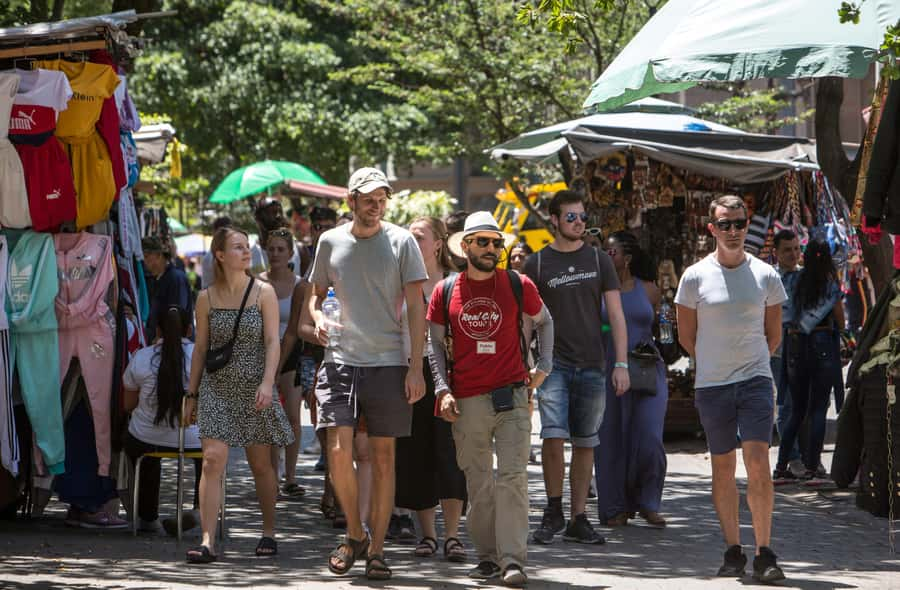
Medellín’s downtown makes the most sense when someone connects its monuments, streets, art, and painful past. This 210-minute walk does that, moving from the old railway area through Alpujarra, El Hueco, Plaza Botero, and San Antonio Park. It is less about ticking off sights and more about understanding Paisa culture and the city’s sharp changes.
I like the local point of view, especially when guides such as Dio, German, Hernan, and Julio add personal stories to the history. I also like the practical advice: restaurant suggestions, activity ideas, and help finding your way back to places you want to explore.
The main drawback is that downtown Medellín has fewer grand monuments than some historic European centers. One visitor also found that Sunday closures meant missing some art, so check the day of your visit if museums or indoor attractions matter to you.
Key points to know before you go
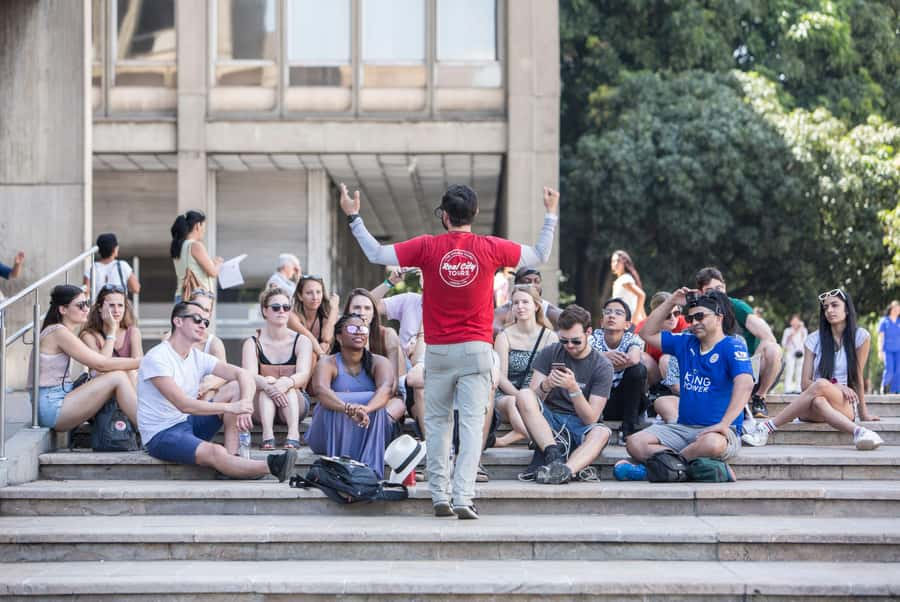
- A four-stop core route: Alpujarra, Plaza Botero, Parque Berrío, and San Antonio Park give you a clear introduction to central Medellín.
- Guides make the difference: Suzy, Carolina, Dio, German, Hernan, Pablo, and Julio are among the guides praised for clear English, warmth, and strong local knowledge.
- Good first-day activity: The route helps you get oriented, find places to eat, and decide what deserves a longer visit.
- Street life is part of the tour: El Hueco brings shops, food, pedestrians, and the working rhythm of downtown into the experience.
- Budget-friendly value: At $14 per person, you receive a three-and-a-half-hour guided introduction, group photo, and local recommendations.
- Plan around Sunday: Some art or indoor attractions may not be open, and museum entry is not included.
Why this downtown walk is useful early in your trip
I would put this tour near the beginning of a Medellín stay. The city center can feel busy and hard to read at first, but the route gives you a basic map in your head. You see where the metro fits into the city, how public spaces connect, and which areas you may want to revisit on your own.
The tour also deals with more than postcard views. Medellín’s story includes industrial growth, violence, recovery, public art, and changing ideas about city life. A local guide can explain how those subjects connect to the streets in front of you.
The English guiding is a major part of the value. Guides including Suzy and Carolina have been praised for clear speech and friendly communication, while Dio and Julio are especially well suited to people who like a lively presentation with plenty of questions. German and Hernan bring a strong sense of local pride and personal connection to the city.
You should expect to walk for most of the 210 minutes, with pauses for photos, explanations, free time, and a possible food stop. Wear comfortable shoes, carry water, and leave room in your schedule rather than booking a tight activity immediately afterward.
More History Walking Tours in Colombia:
- Cartagena: Historic Center and Getsemaní Shared Walking Tour
★ 4.9 · 2,716 reviews - Cali: Walking tour of the historic center
★ 5.0 · 69 reviews - Cali: Walking tour of the historic center
★ 4.9 · 18 reviews
Meeting at Alpujarra and starting with the railway
The meeting point is the pedestrian bridge at Alpujarra metro station. That is a useful starting place because you begin near one of Medellín’s key transport links rather than in an isolated attraction. Make sure you allow enough time to find the bridge. One person arrived late after a map estimate proved too optimistic, although the tour team sent WhatsApp messages to help with the reunion.
The first major stop is the Ferrocarril de Antioquia, the old railway station area. The guided visit lasts about 30 minutes and sets up the city’s connection with transport, trade, and expansion. This is not simply a photo stop. It gives you a way to see Medellín as a place shaped by movement between the valley and the wider Antioquia region.
Next comes the Monumento a La Raza. The monument offers another chance to discuss regional identity and the people represented in public art. Your guide’s explanation matters here because monuments can be difficult to understand from appearance alone.
These opening stops are best for context. If you want a fast list of famous attractions, they may feel slow. If you want to understand why the city developed as it did, they are a strong beginning.
Plaza de las Luces and the working center
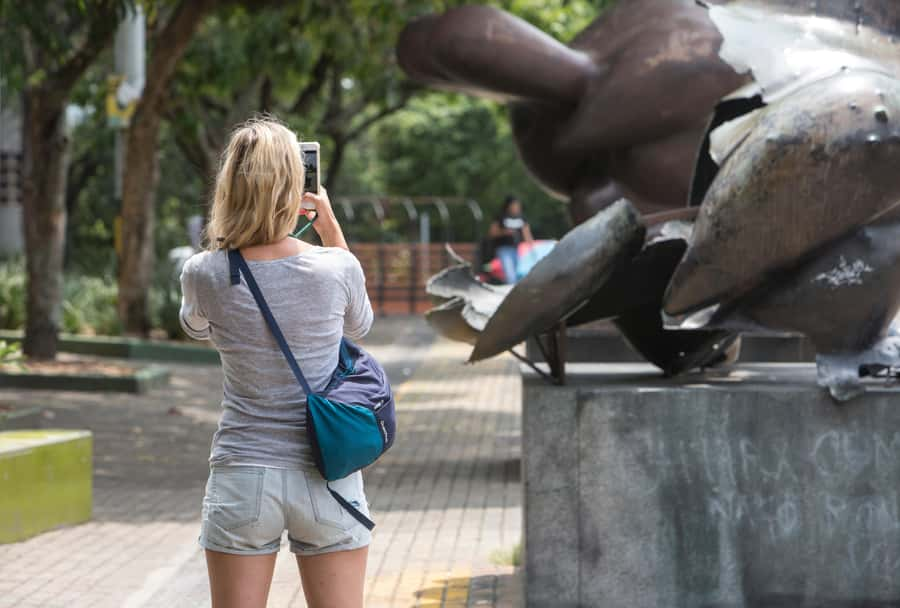
Plaza de las Luces brings you into a more modern public space. The tour pauses for photographs and explanation, giving you a look at how Medellín has used public design and redevelopment to change parts of its center.
From there, the walk continues to El Hueco. This is one of the more street-level parts of the route, with shops, pedestrians, small businesses, and food. The itinerary allows time for street food, though food itself is not included in the $14 price. Think of this as a chance to observe and perhaps buy something, not a formal meal.
I like this section because it keeps the tour grounded. You are not only looking at monuments. You are seeing how downtown works for people who shop, sell, commute, and eat there. At the same time, El Hueco can feel crowded and hectic. Stay close to the guide and keep your belongings secure, as you would in any busy city center.
National Palace Mall and a useful pause
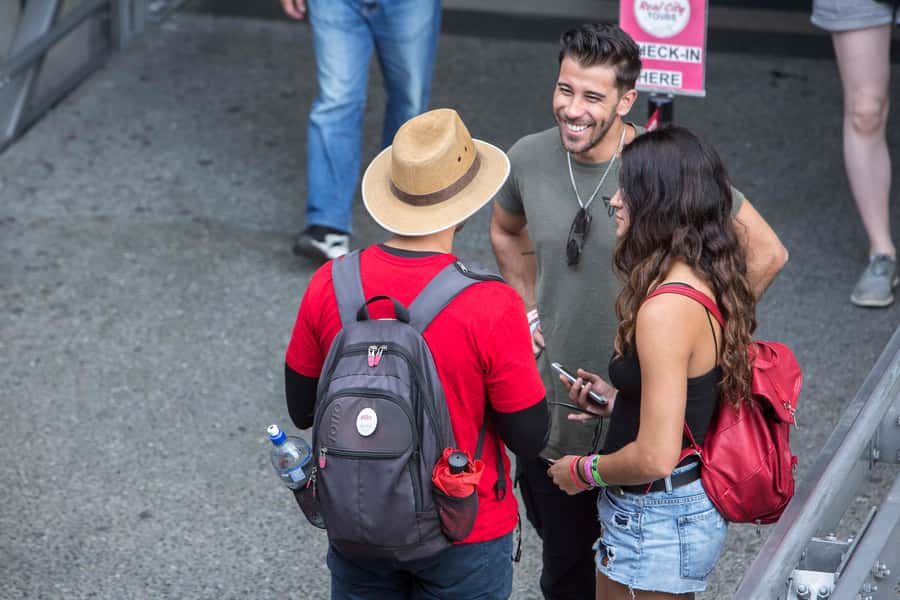
The National Palace Mall provides a break, photo opportunity, and guided visit. It adds a different texture to the route, moving from open plazas and streets into a commercial setting.
This is also a practical point in the tour. By this stage, you have been walking and taking in a lot of information. A pause lets you catch your breath, ask questions, or use free time before the walk continues.
Do not expect every stop to be a major attraction in the traditional sightseeing sense. The value here comes from the way the guide links ordinary places to the city’s wider story. If you prefer a tour made only of grand buildings, this section may seem modest. If you enjoy seeing how local life fits around historic areas, it works well.
More History Tours in Colombia:
- Shared Medellín Downtown Tour with Wireless Audio
★ 4.8 · 315 reviews - Shared Tour Cali’s Historical Downtown
★ 4.8 · 143 reviews - Historical Shared Tour Salsa, Graffiti & Resistance in Cali
★ 5.0 · 107 reviews - Shared Tour of Bogota’s Historic Downtown (La Candelaria)
★ 4.7 · 100 reviews
Ermita de la Veracruz and the move toward Botero

The Ermita de la Veracruz is one of the route’s religious and historic stops. You visit the church, hear its story, and continue on foot toward the central art district.
This section helps show the layers of Medellín. Older religious buildings sit close to commercial streets, public squares, transport routes, and newer urban projects. Your guide can point out those contrasts while you walk instead of presenting the city as a collection of separate sights.
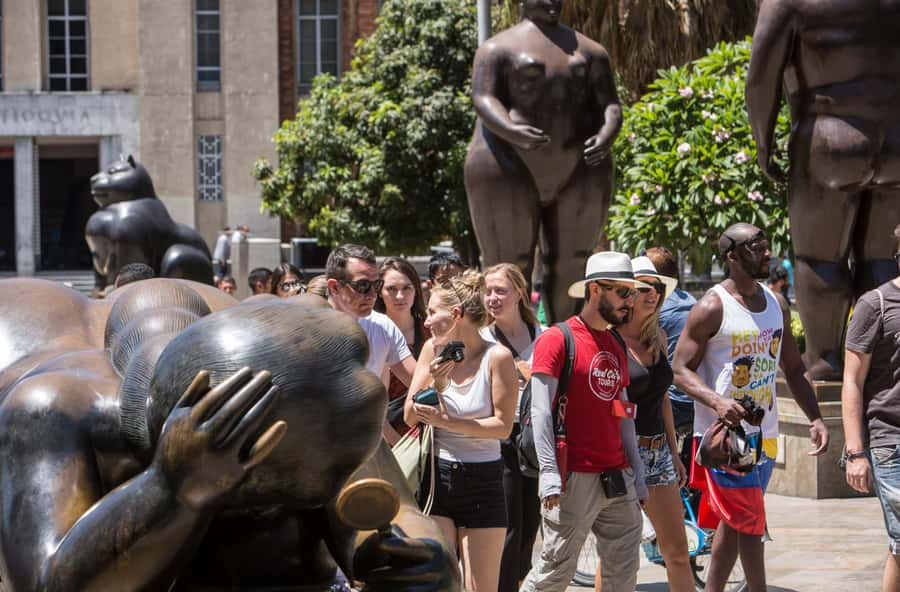
The route then reaches Plaza Botero, the best-known art stop on the walk. Fernando Botero’s large sculptures fill the square, and the guide explains why these works matter to Medellín and Colombian art. You receive time for photos and free exploration, which is welcome because the sculptures reward a slower look.
Keep your expectations realistic. Plaza Botero is a public square, not a complete museum visit. The tour may explain the art and its setting, but museum entry is not included. If you want more art, ask the guide what to see next and check opening times, especially on Sunday.
Plaza Botero, public art, and the unnamed stop
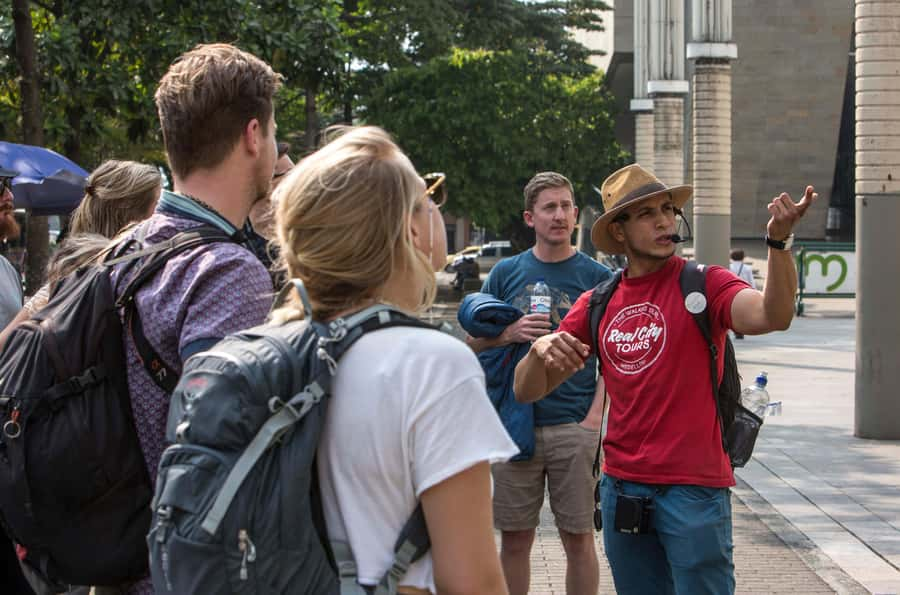
Plaza Botero is likely the visual high point of the tour. The sculptures are easy to recognize, but a guide adds meaning by discussing the artist, the city, and the role of public art in central Medellín.
After Botero Square, the route includes an additional stop described as a less obvious local attraction. The exact site is not specified, so you should not book this tour expecting a named secret landmark. Its purpose is to add another layer to the walk and show you something you might not find by following a standard sightseeing map.
That uncertainty can be a plus if you like leaving room for discovery. It can be a minus if you want a fixed list of famous places. Ask your guide questions as you go, since the guides are encouraged to share suggestions for further activities.
Parque Berrío and San Antonio Park
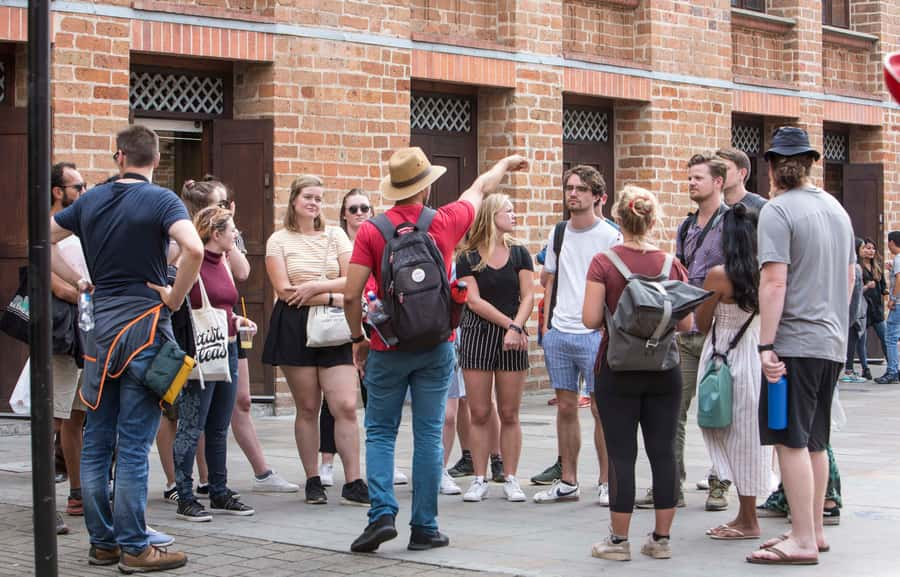
Parque Berrío is another central public space and a good place to watch Medellín’s daily rhythm. The guide uses the square to explain the city and its people, while you take photographs and continue on foot.
The final stop is San Antonio Park, where the tour ends. This gives you a clear endpoint rather than leaving you somewhere unfamiliar. It is also a useful location from which to continue exploring, eat, or return by public transport, though the tour does not include metro tickets.
The finish at San Antonio Park keeps the experience focused on central Medellín. It does not cover every neighborhood or offer the hillside views associated with other city outings. For those, you would need a separate activity. This tour is about downtown, public spaces, art, commerce, and history.
The guides are the main reason to book
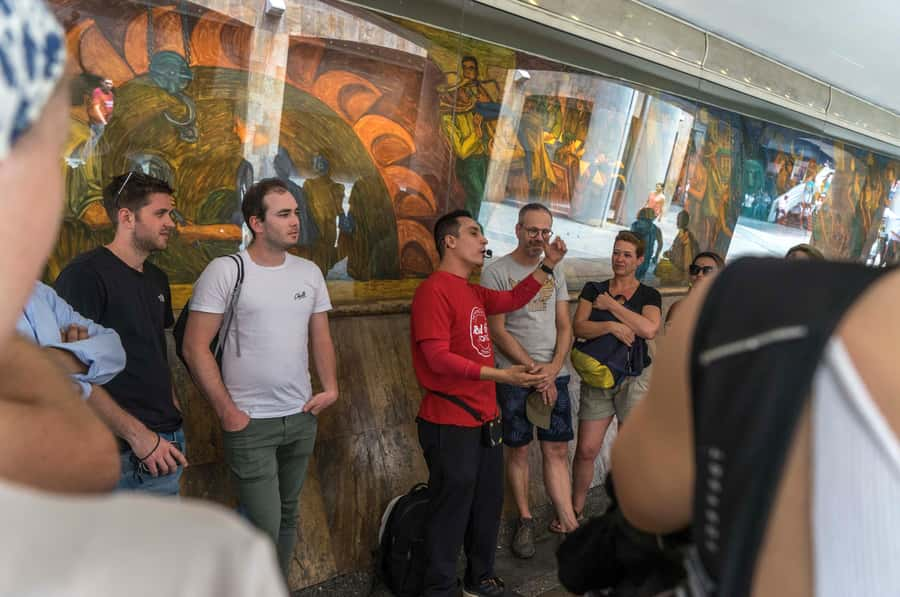
The route is solid, but the guide will shape your experience more than any single stop. The strongest feedback centers on guides who explain the city clearly, answer questions fully, and connect major events with their own lives.
Julio is described as especially engaging, with detailed answers and a talent for involving solo participants. Dio is a good match if you want serious history presented with energy. He has also shared personal memories of Medellín’s troubled years, which can make the subject more human and less like a textbook.
Hernan is praised for learning names early and balancing historical detail with humor. German is described as friendly and enthusiastic, with strong information about the city. Suzy brings energy and clear English, while Pablo is known for being open, funny, and willing to allow time for food, purchases, and photographs.
You cannot select a particular guide from the information provided, so book for the route and format rather than one promised personality. Still, the range of guide strengths is a good sign for anyone who values conversation over a memorized speech.
What the $14 price really buys you
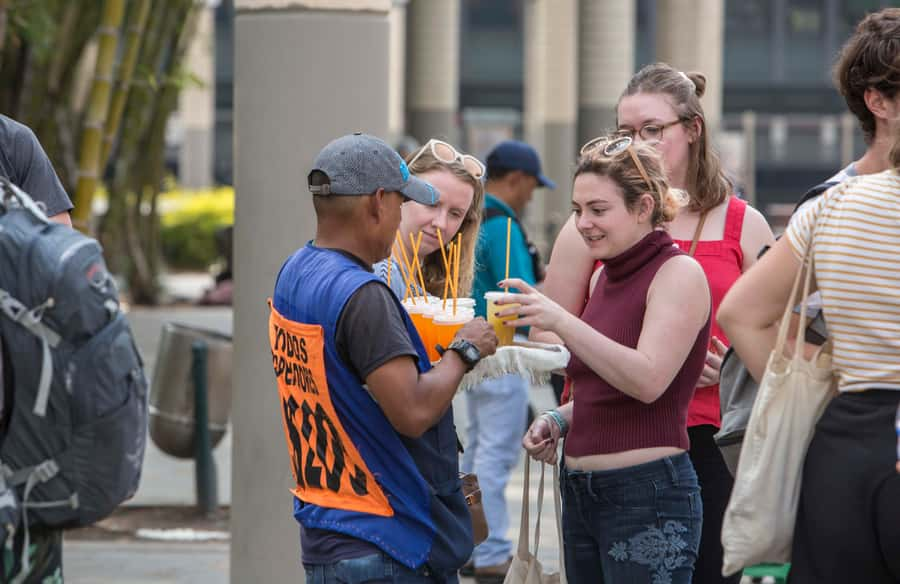
At $14 per person, this is a strong-value introduction if you use the full three and a half hours. You receive an English-speaking guide, a group picture, restaurant recommendations, activity suggestions, and local tips. The cost does not cover metro tickets, lunch, or museum entry, so keep a little extra money available.
The value is greatest for first-time visitors and people traveling alone. You get a planned route, a local contact, and ideas for the rest of your stay without paying for a private guide.
There is one point worth checking before booking. One person noted that Real City Tours may offer a free version when booked directly. The activity described here is priced at $14, so compare the direct option and the booking conditions before paying. A low price is useful, but the exact format and inclusions should match your plans.
You also receive instant confirmation and can cancel up to 24 hours in advance for a full refund. The reserve-now, pay-later option helps if your schedule is still changing. The tour is offered Monday through Sunday, subject to the available starting times.
Who will enjoy this walk most
I recommend it to first-time visitors who want history and local context before exploring on their own. It also suits solo visitors, couples, and families who prefer a social group activity to a private tour.
You will get the most from it if you enjoy walking, asking questions, and seeing ordinary city life alongside major sights. It is also useful if you want restaurant advice or ideas for later in your visit.
You may want something else if you are mainly seeking panoramic views, mountain neighborhoods, nightlife, or a museum-focused afternoon. The tour stays in central Medellín and does not include a broad tour of the whole city.
The route is listed as wheelchair accessible, but the experience still involves walking between multiple city-center stops. If you have specific mobility needs, confirm the route details before booking.
Should you book the Medellín Historic Walking Tour?
Book it if you want a well-priced introduction to downtown Medellín, especially on your first day or two. The combination of local guides, public art, personal stories, El Hueco, Plaza Botero, and practical recommendations gives you more than a simple photo walk.
I would choose a weekday if seeing indoor art or attractions matters to you, since Sunday access can be limited. I would also arrive early at the Alpujarra metro bridge and keep the rest of the day flexible.
This is not a grand-monument tour, and some stops are more about city life than famous sights. But if you want to understand how Medellín changed and how Paisa culture fits into the city today, the $14 price is easy to justify.
FAQ
How long does the Medellín Historic Walking Tour last?
The tour lasts 210 minutes, or three and a half hours.
How much does the tour cost?
The listed price is $14 per person.
Where does the tour meet?
The meeting point is on the pedestrian bridge at Alpujarra metro station.
Where does the tour finish?
The tour ends at San Antonio Park in Medellín.
What language is the tour conducted in?
The tour is conducted in English by a live bilingual tour guide.
Is museum admission included?
No. Museum entrance is not included in the tour price.
Are metro tickets and lunch included?
No. Metro tickets and lunch are not included.
Can I cancel and receive a refund?
Yes. You can cancel up to 24 hours before the activity for a full refund.
Newest history tours we have reviewed in Colombia
- Cartagena Instagrammable History★ 4.5 · 29 reviews
- Chiva Private Cultural Tour with Audio Guide in Buga★ 5.0 · 49 reviews
- Cali: Walking tour of the historic center★ 5.0 · 69 reviews
- Historical tour Bogota★ 5.0 · 72 reviews
- Medellín: Flower Farm & Silletero History Tour★ 4.3 · 23 reviews
- Shared Tour of Bogota’s Historic Downtown (La Candelaria)★ 4.7 · 100 reviews
- Santa Marta A Historical & Street food Experience★ 4.7 · 41 reviews
- Mangroves, cultural fishing, black heritage town and lunch★ 4.5 · 29 reviews
History Walking Tours, compared.

History and Hauntings of Salem Guided Walking Tour
Read our review →

Freedom Trail History Small Group Walking Tour
Read our review →
Historic Charleston Guided Sightseeing Walking Tour
Read our review →
Tapas Walking Tour with Food, Wine, and History
Read our review →
Savannah History and Haunts Candlelit Ghost Walking Tour
Read our review →
A History of Terror – Belfast City Centre Walking Tour
Read our review →Browse the lists this tour appears in