

Review · LISBON HISTORY TOURS
Lisbon: 3-Hour The Slave Trade – An Historical Walking Tour
Lisbon’s grand squares and Age of Discovery monuments tell only part of the city’s story. This walking tour uses familiar streets, churches, public buildings, and Alfama lanes to explain how Portugal helped create the Atlantic slave trade and how slavery shaped Lisbon’s wealth and daily life. Rui Fernandes, an African guide with academic training in history, political science, and economics, leads the tour with unusual depth.
I like the small-group format, which makes it easier to ask difficult questions, and I like the way the walk connects history to places you might otherwise pass without a second thought. The main consideration is time: the subject is broad, and the tour can run closer to three and a half hours, so do not schedule a tight appointment afterward.
- Walk through Alfama and central Lisbon while linking streets, churches, squares, and monuments to slavery.
- Hear Portugal’s role explained clearly, from the beginnings of Atlantic slavery to abolition and African liberation movements.
- Ask questions throughout the tour, with Rui making room for discussion rather than delivering a rushed speech.
- Expect a relaxed walking pace, with little steep uphill walking according to the experience details.
- Take one coffee and restroom break, a useful pause during a serious and information-heavy morning or afternoon.
- Pay about $35 per person for a specialized three-hour history tour with a maximum group size of six.
Why this Lisbon history tour matters
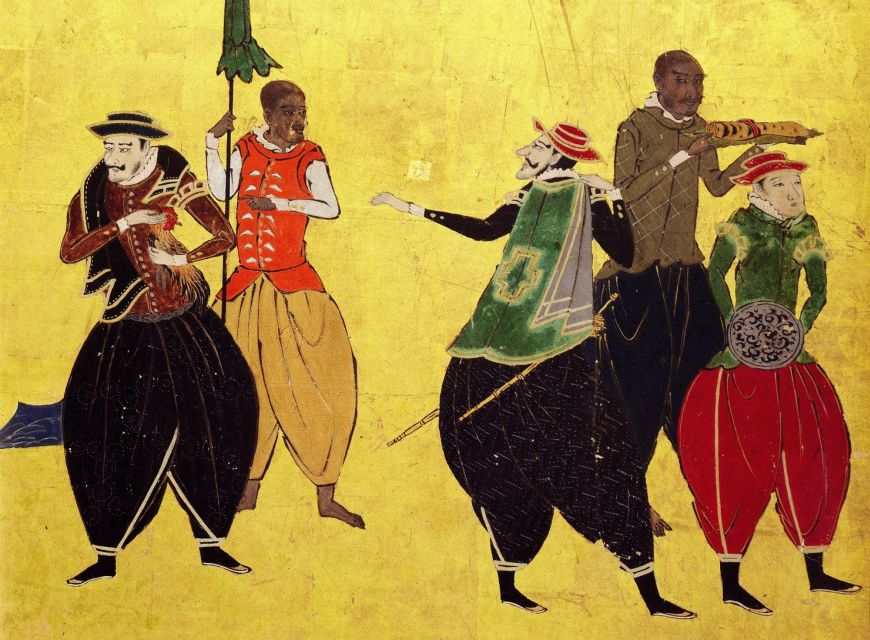
Many sightseeing walks in Lisbon focus on tiled facades, viewpoints, seafood, and the Age of Discovery. Those subjects matter, but the usual story can leave out the human cost behind Portugal’s overseas expansion.
This tour puts slavery at the center. It explains that Portugal began the Atlantic slave trade in the first half of the 15th century under the guidance of Prince Henry the Navigator. Over the following four centuries, between 12 and 14 million Africans were sold into slavery and carried across the Atlantic to the Americas.
You will not simply hear a timeline. You will look at Lisbon through the institutions, buildings, streets, and commercial growth connected with this past. That changes the way you read the city. A monument that first appears to celebrate exploration can also raise questions about who paid the price for that expansion and who was left out of the public story.
I value the tour because it does not treat slavery as a distant subject that happened somewhere else. It connects Portugal’s role to economics, religion, politics, colonial rule, racism, and present-day society. The tone is serious, but the purpose is educational rather than sensational.
Starting in Alfama at Largo do Chafariz de Dentro
You meet the guide at Largo do Chafariz de Dentro, a square in Lisbon’s Alfama district. This is a practical starting point because Alfama is the city’s oldest neighborhood, and its narrow streets provide an immediate sense of how close the past remains to ordinary urban life.
The opening part of the walk sets up the wider story. You learn about the origins of slavery in the Iberian Peninsula before the Atlantic trade developed. That background matters because Portugal did not invent human bondage from nothing, yet it helped transform older forms of slavery into a vast ocean-going system tied to commerce, empire, and plantation labor.
Expect to move between back streets and more prominent city avenues. The contrast is useful. Major squares and impressive buildings show the public face of power, while smaller streets help you think about how enslaved people lived and worked in historical Lisbon.
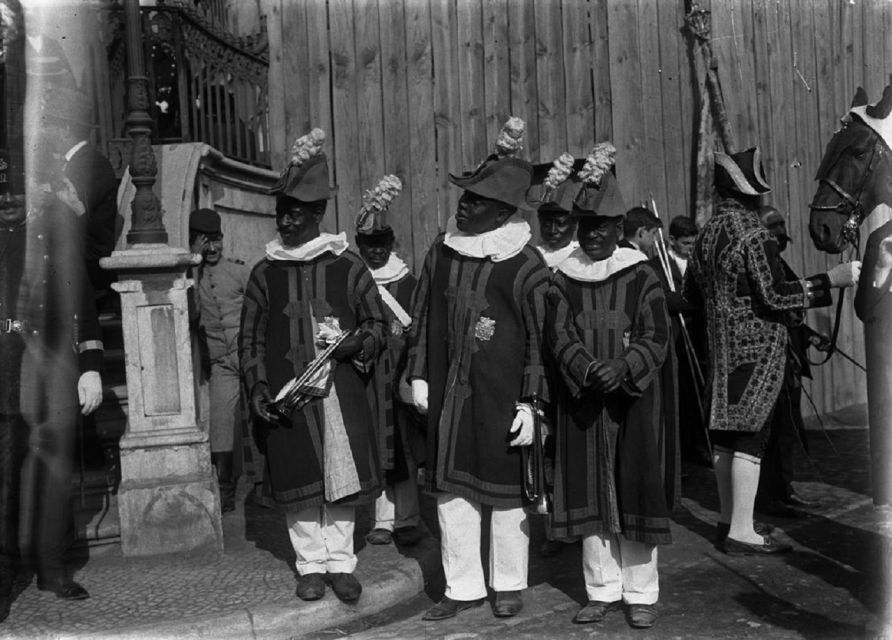
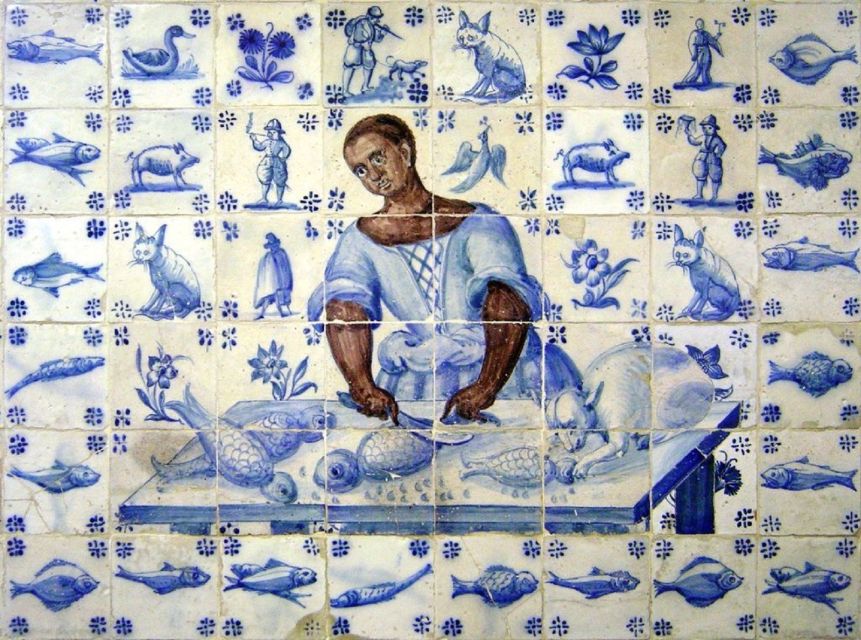
The route is not presented as a simple list of monuments. Rui connects places to changing political and economic conditions. He may use historical images to help you picture settings that no longer look as they once did. This visual support is especially helpful when discussing people whose lives left few visible traces in the modern city.
More History Walking Tours in Lisbon
- Lisbon: History, Stories and Lifestyle Walking Tour
★ 4.8 · 10,902 reviews - Lisbon: Private Dark History Walking Tour with Drinks
★ 4.8 · 387 reviews - Lisbon Essential Walking Tour: History, Stories and Lifestyle
★ 5.0 · 316 reviews
Reading Lisbon’s monuments with a wider lens
The middle part of the tour focuses on the relationship between Lisbon’s public landmarks and Portugal’s overseas expansion. You hear about the Age of Discovery, the growth of maritime trade, and the role of Brazil in Portugal’s colonial economy.
This is where the tour offers something that a general city walk often cannot. Instead of treating exploration as a string of heroic voyages, it explains the systems that made those voyages profitable. Enslaved Africans were not a footnote to the trade. Their forced labor and sale formed part of a long economic structure that affected Portugal, Brazil, Africa, and the wider Atlantic world.
You also discuss the day-to-day experience of enslaved people living in Lisbon. That shift from large historical events to ordinary life is important. Numbers and dates can tell you the scale of the crime, but details about work, status, control, and survival help you understand what the system meant for individuals.
The route includes churches, squares, monuments, and buildings with connections to this history. The supplied information does not identify every stop in advance, so you should not expect a printed checklist of famous sights. The value lies in the guide’s explanation of what you are seeing and what has been forgotten or left unmarked.
One useful practical point: the walk is described as mostly flat or with only modest inclines. Lisbon’s cobblestones still call for sensible shoes, but this is not presented as a punishing hill walk. Wear comfortable footwear and prepare to stand while listening.
From Portugal’s trade to colonial rule in Africa

The story broadens beyond the Atlantic crossing. The tour covers the end of the slave trade in Portugal, Portuguese colonies in Africa, and the struggle for liberation led by African nationalists.
That wider scope gives the walk a stronger political frame. Ending the slave trade did not end colonialism, forced labor, racial hierarchy, or unequal power. By tracing the connection between earlier slavery and later colonial rule, Rui helps you see Portugal’s history as a long sequence rather than a set of isolated chapters.
This section may be especially useful if your knowledge of Portugal comes mainly from architecture, food, or maritime exploration. You hear how Brazil mattered to Portugal, how African colonies fit into the imperial system, and how African resistance challenged Portuguese rule.
The subject is painful, and a good guide needs to balance precision with care. Rui’s approach, based on the information available about his background and the experience, is both academic and personal. He is an African guide, and he sometimes connects the material to his own family history. That does not replace historical evidence, but it can make the discussion feel more immediate and human.
You should also be prepared for the tour to raise questions that do not have comfortable answers. It addresses how societies remember violence, how national pride can shape public history, and how the effects of slavery and colonialism continue into the present.
Rui Fernandes and the value of a small group
The guide makes a major difference here. Rui Fernandes is described as a licensed local guide with a background in history, political science, and economics. His English is reported as clear, and the structure of the walk allows time for questions.
That last point is important. A subject this broad can easily become a lecture. Instead, you are encouraged to ask about Portugal, Lisbon, the slave trade, colonialism, religion, economics, and the way this past appears in modern society.
The group is advertised as small, with the important information setting a maximum of six participants. Another part of the booking information refers to groups of up to eight, so it is sensible to confirm the current limit when you reserve. Either way, this is intended to be a personal experience rather than a large procession.
A small group also helps with the practical side of the walk. You can hear the guide more easily in city streets, stop without blocking a large crowd, and ask for clarification. Rui is also able to remember names and include people in the conversation, details that matter during a serious discussion.
This format suits you if you enjoy asking questions and following an idea beyond the first answer. It may be less suitable if you prefer a quick overview with only a few facts at each stop.
More History Walking Tours in Portugal
- Historic Walking Tour Through Lisbon’s Oldest Neighborhood
★ 5.0 · 233 reviews - Lisbon Fado History Cultural Walking Tour
★ 5.0 · 118 reviews - Lisbon: Historical Walking Tour with Jeronimos Monastery
★ 4.5 · 71 reviews - Lisbon: Jewish History in Portugal Guided Walking Tour
★ 4.6 · 52 reviews
The coffee break and the pace of the walk
One coffee break and one restroom break are included. That sounds minor, but it is welcome during a tour that can last three hours and sometimes closer to three and a half.
The break also gives you a chance to process the subject. Some participants have enjoyed stopping at a cafe for coffee and pastel de nata. The exact cafe is not specified, so treat that as part of the guide’s route rather than a guaranteed food tasting.
The walking pace is generally relaxed. The route includes time to listen, look at images, ask questions, and absorb complicated information. It is not a speed tour designed to cover every central Lisbon sight.
On a hot day, shade and pacing become important. The guide has adjusted the walk to help the group find shade, according to the experience details. Still, bring water and dress for the weather. Comfortable shoes are specifically recommended, and pets are not allowed.
The meeting point is in Alfama, but hotel pickup and hotel drop-off are not included. You need to make your own way to Largo do Chafariz de Dentro and arrange your return afterward. Build in extra time before the start, especially if you are unfamiliar with Lisbon’s steep streets and public transportation.
What you will learn, and what you will not
The tour covers a great deal:
- The origins of slavery in the Iberian Peninsula
- Portugal’s role in the birth of the Atlantic slave trade
- The Age of Discovery and its economic foundations
- The lives of enslaved people in Lisbon
- Brazil’s importance to Portugal
- The abolition of the slave trade in Portugal
- Portuguese colonies in Africa
- African nationalist movements and liberation struggles
- The continuing effects of slavery and colonialism
This is not an attraction with exhibits, costumes, or a formal museum collection. The city itself is the setting, and the guide provides the interpretation.
You should not expect the tour to settle every question about the Atlantic slave trade in three hours. The subject reaches across continents and centuries. Still, the walk gives you a solid framework for understanding Portugal’s part in it, and it can help you make better sense of museums, monuments, and later reading.
The use of historical pictures is another useful feature. Lisbon has changed greatly, and visual references can show how streets and buildings were used in earlier periods. They also help bring forward people who are not represented in the grand architecture around you.
Is $35 a fair price?
At about $35 per person, this is priced like a standard small-group walking tour, but its value comes from its subject and the guide’s preparation rather than from access to a ticketed attraction.
You are paying for about three hours with a specialist guide, a limited group, local taxes, and a coffee and restroom pause. There is no hotel transportation, meal, or museum admission included. If you want a long list of included extras, this is not that kind of tour.
I think the price is fair for someone who wants a serious historical introduction to Lisbon. A general free walk may show you the same central streets, but it is unlikely to give equal attention to slavery, colonial economics, African resistance, and the daily lives of enslaved people.
The value is also higher if you take the tour early in your stay. The guide can offer suggestions for food, shops, public transportation, and other places to visit. More importantly, the historical context may change how you understand the rest of your time in the city.
Free cancellation up to 24 hours before the start and a reserve-now, pay-later option make the booking fairly flexible. The experience is offered in English.
Who should book this walking tour?
I would recommend it to anyone with a serious interest in Portuguese history, Atlantic history, colonialism, African history, or the way cities remember difficult events.
It is particularly useful for:
- First-time visitors who want more than the usual Age of Discovery story
- Students and teachers interested in slavery, empire, or international history
- People with family or personal connections to the African diaspora
- Visitors who prefer discussion and context over quick sightseeing
- Anyone who wants to understand Lisbon’s prosperity in a fuller way
You do not need a specialist background. Rui explains the material for a general audience and makes room for questions. The main requirement is a willingness to give the subject your attention.
This is not the best choice if you want a light, entertainment-first activity, a fast tour of every major sight, or a short stop between tightly scheduled plans. The material is serious, and the walk needs time.
Should you book it?
Book this tour if you want to understand Lisbon beyond its scenic streets and celebrated maritime past. The combination of Alfama, central city landmarks, a small group, and a guide who brings academic preparation and personal perspective makes the experience unusually focused.
The strongest reasons to go are Rui’s clear, patient explanations, the chance to ask questions, and the way the route connects Portugal’s past to the city you see today. Allow three to three and a half hours, wear good shoes, and leave space afterward to think about what you have heard.
At $35, it is a good use of part of a Lisbon itinerary for readers who value serious history and direct conversation. If that sounds like your kind of sightseeing, I would make room for it.
FAQ
How long does the Lisbon slave trade walking tour last?
The scheduled duration is three hours. It may run closer to three and a half hours, so leave extra time before your next plan.
Where does the tour meet?
Meet your guide at Largo do Chafariz de Dentro, a square in Lisbon’s Alfama district.
Who leads the tour?
The tour is led by Rui Fernandes, a licensed local guide with a background in history, political science, and economics. The tour is conducted in English.
How many people are in the group?
The important information describes a maximum of six participants. Another booking detail refers to groups of up to eight, so confirm the current group limit when booking.
What subjects does the tour cover?
It covers the origins of slavery in Iberia, Portugal’s role in the Atlantic slave trade, the Age of Discovery, enslaved life in Lisbon, Brazil, abolition, Portuguese colonies in Africa, and African liberation movements.
Is a break included?
Yes. One coffee break and one restroom break are included. A cafe stop may include coffee and a pastel de nata, but a specific cafe is not guaranteed.
Is hotel pickup included?
No. Hotel pickup and hotel drop-off are not included. You need to reach Largo do Chafariz de Dentro on your own.
What should I bring?
Bring comfortable shoes. The walk takes place on city streets and includes cobbled areas. Pets are not allowed.
Can I cancel the booking?
Yes. You can cancel up to 24 hours in advance for a full refund. A reserve-now, pay-later option is also available.
More Three-Hour Tours in Lisbon
- Berlin: 3-Hour World Heritage Cruise to Potsdam
★ 4.5 · 1,569 reviews - Edinburgh: 3-Hour Historical Walking Tour in Italian
★ 4.7 · 734 reviews - 3-Hour Porto Jewish Heritage Walking Tour with Local Guide
★ 4.5 · 396 reviews - 3-Hour Atlanta Beltline Food, Street Art and History Tour
★ 5.0 · 345 reviews
Newest history tours we have reviewed in Lisbon
- Lisbon: Historical Walking Tour with Jeronimos Monastery★ 4.5 · 71 reviews
- Lisbon Sunset Sailing – Small Group (max 10) Wine & History★ 4.8 · 41 reviews
- Queer Lisbon History Tour: scene/history★ 4.9 · 20 reviews
- Lisbon: Private Historic Tour by Eco Tuk Tuk★ 5.0 · 78 reviews
- Lisbon: Sunset Sailing with Portuguese Wine and History★ 5.0 · 270 reviews
- Lisbon with Tukxi: Historical Secrets by Tuk-Tuk★ 4.8 · 96 reviews
- Lisbon: Tuk-Tuk Tour Historical Alfama old town private tour★ 4.7 · 30 reviews
- Lisbon: Historic City Tour by Tuk-Tuk★ 5.0 · 116 reviews
History Walking Tours, compared.

History and Hauntings of Salem Guided Walking Tour
Read our review →

Freedom Trail History Small Group Walking Tour
Read our review →
Historic Charleston Guided Sightseeing Walking Tour
Read our review →
Tapas Walking Tour with Food, Wine, and History
Read our review →
Savannah History and Haunts Candlelit Ghost Walking Tour
Read our review →
A History of Terror – Belfast City Centre Walking Tour
Read our review →Browse the lists this tour appears in