
Review · JAPAN HISTORY TOURS
Kanazawa: World Heritage Shirakawa-go & Two Local Experience
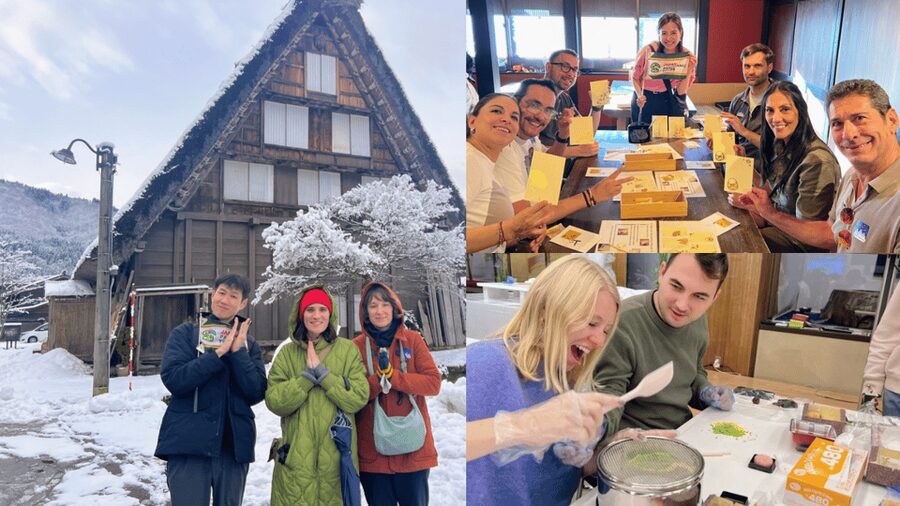
Shirakawa-go is the star here: a mountain village of steep gassho-zukuri houses, reached without the hassle of arranging buses yourself. I like that the tour gets there in the morning, before the village becomes more crowded, and that guides such as Yasushi and Aiko add useful stories rather than simply pointing at buildings. I also like the afternoon mix of Kenrokuen Garden, wagashi making or Daruma painting, and gold-leaf craft.
The drawback is the pace. You cover a lot in nine hours, with about two and a half hours in Shirakawa-go and shorter visits in Kanazawa. If you want long, unhurried time in every district, this will feel tight. If you want to see the region’s major sights and try local crafts in one day, the packed schedule is the point.
Key points at a glance
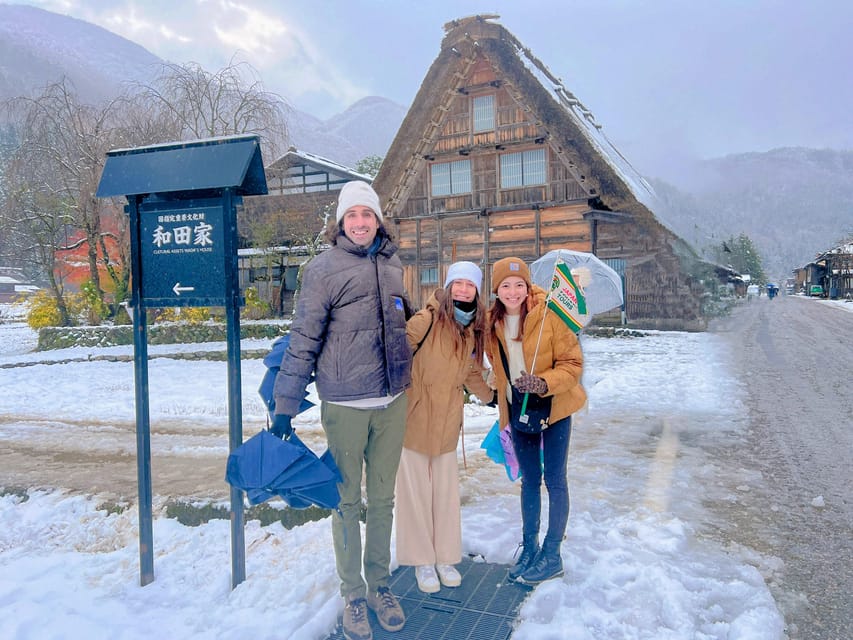
- Early Shirakawa-go arrival: Reach the UNESCO village in the morning, with time to walk, take photos, shop, and sample local foods.
- Two very different places in one day: Pair rural gassho-zukuri houses with Kanazawa’s polished garden, geisha district, and traditional crafts.
- Guiding that adds context: English-speaking guides including Yasushi, Aiko, Keita, Ciel, and Nagomi explain history, customs, food, and language.
- Hands-on Kanazawa crafts: Make Japanese sweets or paint a Daruma doll, then create a postcard with real gold leaf.
- Comfortable long-distance transport: The air-conditioned coach has free Wi-Fi, regular ventilation, and an antibacterial coating.
- Good value at $116: Transport, guide service, Kenrokuen admission, and both craft fees are included, while lunch is your responsibility.
Why this pairing works so well
Kanazawa and Shirakawa-go are close enough to combine, but they offer sharply different views of Japan. Shirakawa-go gives you rural architecture, mountain scenery, and a village shaped by heavy snowfall. Kanazawa gives you formal gardens, former entertainment streets, and crafts refined over generations.
That contrast makes this more useful than a simple sightseeing transfer. You spend the morning among steep thatched roofs and small lanes, then return to a city where gold leaf, confectionery, gardens, and geisha culture remain part of daily tourism and local identity.
I especially like the balance between looking and doing. You are not only shown Kenrokuen or Higashi Chaya District. You also make something with your own hands. The craft sessions are modest in scale, but they give the afternoon a human touch and leave you with a small reminder of Kanazawa.
The tour costs $116 per person. That is a fair price if you value convenience and interpretation. A public-bus plan would require you to coordinate the Kanazawa to Shirakawa-go route, manage return times, pay separate admissions, and arrange your own route between Kanazawa sights. Here, the coach, guide, Kenrokuen admission, wagashi or Daruma activity, and gold-leaf activity are bundled together.
Lunch, drinks, and extra snacks are not included. That is sensible because Shirakawa-go has several choices and people eat at different speeds, but you need to budget for it.
More UNESCO World Heritage Tours in Japan
- World Heritage Shirakawa-go and Experience Tours from Kanazawa
★ 5.0 · 4,049 reviews - World Heritage Kyoto & Nara Uji Authentic Matcha Experience
★ 5.0 · 1,573 reviews - Kanazawa: World Heritage Shirakawa-go Morning Guided Tour
★ 4.9 · 988 reviews
The 8:00 AM departure from Kanazawa Station
The meeting point is the Kanazawa Station West Plaza short-term car park at 1-chōme-6-802 Hirooka. Check-in is at 7:50 AM, and the bus leaves at 8:00 AM. Look for the green and white Japan Panoramic Tours flag.
This is not a meeting point where you should arrive at the last second. The tour states that latecomers and no-shows do not receive refunds or itinerary changes, so allow time to find the west side of the station and the correct car park.
Once aboard, expect an air-conditioned coach with free Wi-Fi. The ride to Shirakawa-go takes roughly 80 minutes, depending on traffic and conditions. That time is useful because the guide can explain the area before you arrive. Yasushi is particularly good at using the drive for stories about Kanazawa, Japanese culture, and local customs, while some guides use pictures, quizzes, and practical advice to keep the ride lively.
Audio guidance is available in Spanish, French, Italian, German, Portuguese, and Ukrainian. The live guiding is in English and Japanese. If you use an audio headset, you can follow at your own pace while still joining the group for walks and instructions.
Shirakawa-go and its steep thatched roofs
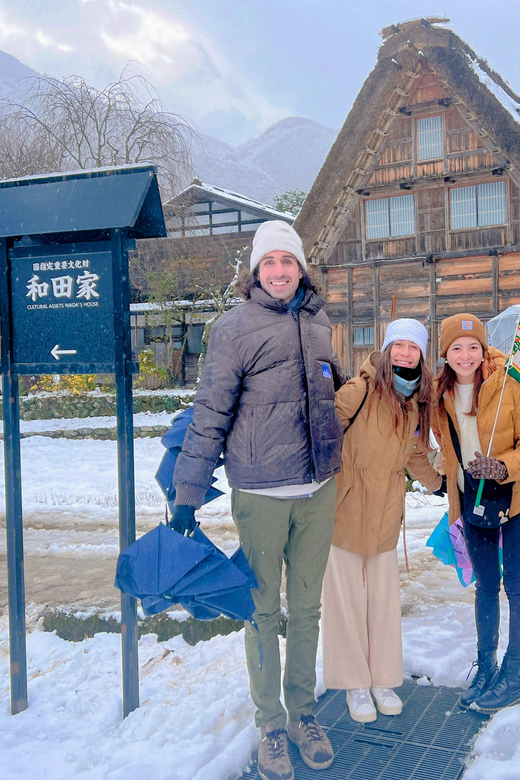
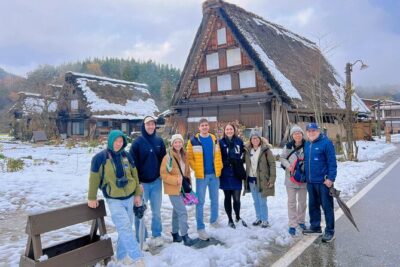
Shirakawa-go was added to the UNESCO World Heritage list in 1995. Its famous gassho-zukuri houses have sharply pitched roofs designed for the region’s heavy snow. The architecture is not simply decorative. It reflects how local families adapted homes and farm spaces to a demanding mountain climate.
You get about 2 hours and 20 minutes to 2 hours and 30 minutes here, depending on the day’s running order. The guide begins with an orientation walk, then you have time to explore more freely. That split works well. You learn what you are looking at, then you can wander, shop, take photos, and stop for food without needing to remain beside the guide every minute.
The village is at its most dramatic in winter, when snow gathers on the roofs and surrounding hills. Spring greenery, autumn color, and clear summer skies give it a different character. Weather matters a lot here, so keep your expectations flexible. The itinerary may change because of traffic, weather, or operating conditions.
Wear comfortable shoes. You will walk outdoors on village streets and paths, and winter conditions can make footing less easy. A waterproof layer is useful in wet weather, though the tour information specifically requires only comfortable footwear.
You can buy lunch independently in Shirakawa-go. Local specialties mentioned for the area include Hida beef and Doburoku ice cream. Some visitors also seek out the village’s pudding and other regional snacks. Since lunch is not included, you can choose between a full meal and quick bites, but do not spend all your time in a restaurant. Two and a half hours passes quickly.
One useful point: the group returns to the coach after the village visit, so keep track of the meeting time. Shirakawa-go rewards wandering, but this is a scheduled day trip rather than an overnight stay.
Kenrokuen Garden, where the afternoon changes pace
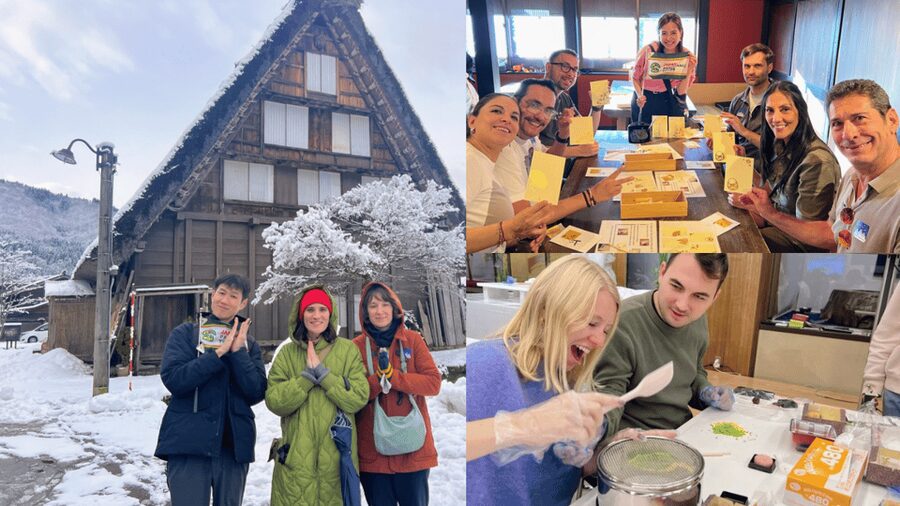
Back in Kanazawa, the tour visits Kenrokuen Garden for about an hour. Admission is included, and a guided walk helps you notice details you might otherwise pass without understanding.
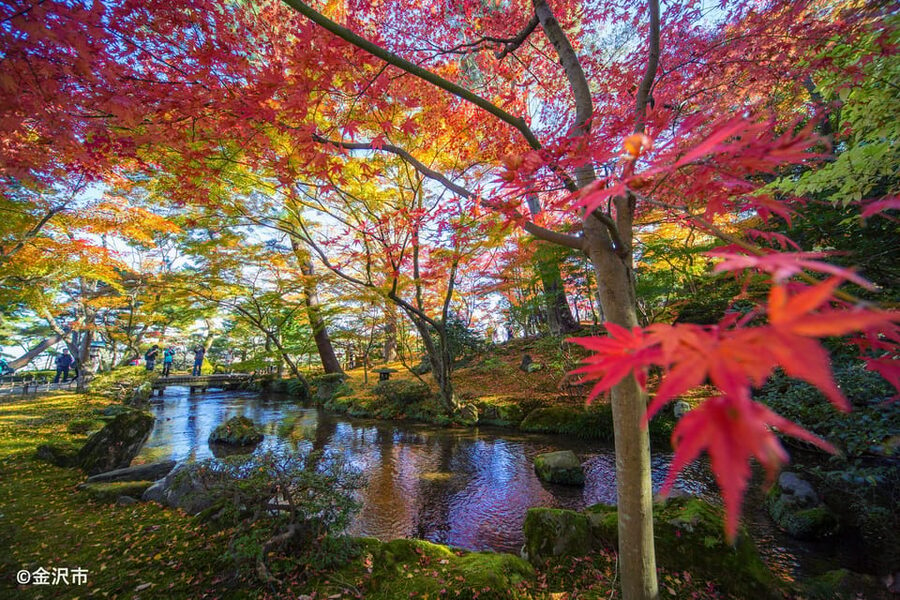
Kenrokuen is known as one of Japan’s three great gardens. Its appeal comes from the way it combines many garden qualities in one place: water, trees, flowers, stones, bridges, teahouses, and quieter corners. The design gives you a series of changing viewpoints rather than one single grand vista.
The garden looks different every season. Snow can make the carefully shaped trees and dark stones feel spare and graphic. Spring brings flowers, while summer and autumn change the color and texture of the plantings. Clear weather is useful, but even cloudy conditions can suit the garden’s quieter mood.
This is one place where a guide adds real value. Aiko, Yasushi, and the other guides explain why particular garden elements are positioned as they are and how Japanese garden design uses movement, framing, and concealment. You still have room to enjoy the paths at your own pace, but you are less likely to miss the meaning behind the arrangement.
The schedule also includes a walk near Kanazawa Castle. The exact order can change, so treat it as part of the Kanazawa sightseeing section rather than a promise of a long castle tour.
Same streets, a different century:
- Kyoto: Fushimi Inari, Kinkakuji, Bamboo Grove 1 Day Bus Tour
★ 4.8 · 4,316 reviews - Tokyo: Imperial Palace and Shogun Historical Walking Tour
★ 5.0 · 2,251 reviews - Kyoto Gion: 2-Hour Geisha Culture & History Walking Tour
★ 5.0 · 1,186 reviews - Tokyo Castle & Imperial PalaceーShogun Walking Tour
★ 4.7 · 1,068 reviews
Making wagashi, or painting a Daruma
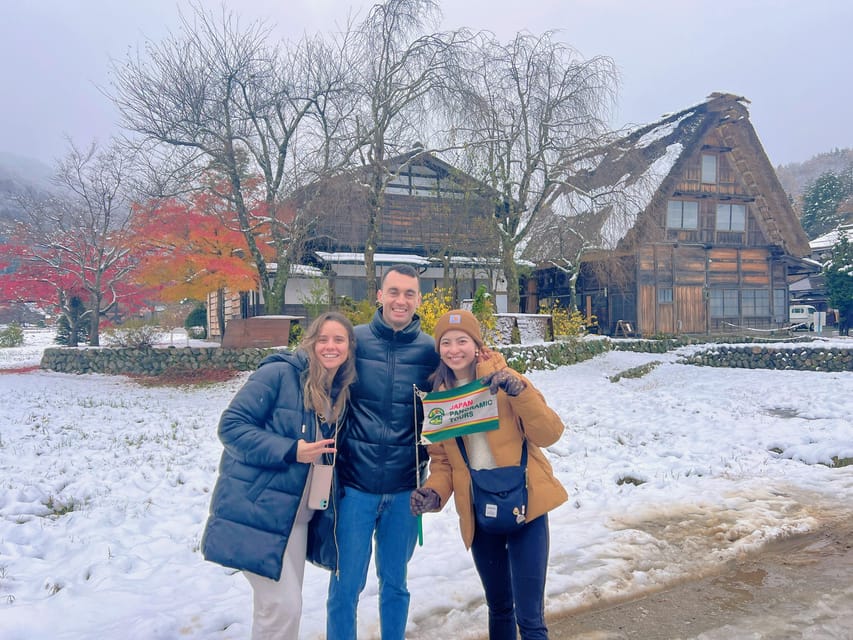
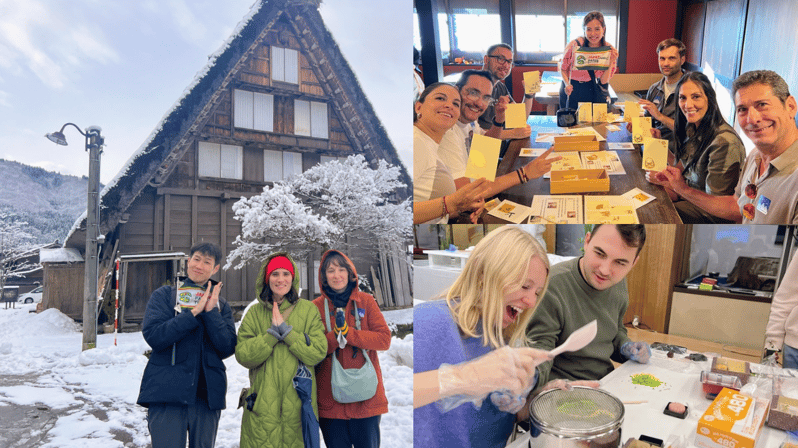
The local workshop is one of the tour’s most appealing additions. Depending on the craftsperson’s schedule, you either make Japanese sweets with an artisan or paint a Daruma doll.
Wagashi are traditional Japanese sweets, often shaped with seasonal or nature-based designs. Making them yourself gives you a better sense of the precision involved. The finished sweets can be taken home as a souvenir, although you may be tempted to eat them sooner.
The Daruma option is more relaxed and playful. You paint your own doll and take it with you. This is a good choice for families, couples, and anyone who prefers a creative activity to a demonstration. It also works for people who do not think of themselves as artistic. The aim is participation, not perfect brushwork.
I would not choose this tour solely for the workshop. It is a short cultural activity, not an extended class with a master artisan. One participant found the Daruma painting less interesting than watching an artist work and explain the technique. That is a fair criticism. If you prefer detailed instruction and observation, the craft may feel simple. If you like making a small souvenir, it breaks up the sightseeing nicely.
The exact activity depends on the artisan’s schedule, so do not book expecting wagashi with certainty. You will receive one of the two listed experiences.
Gold leaf in Higashi Chaya District
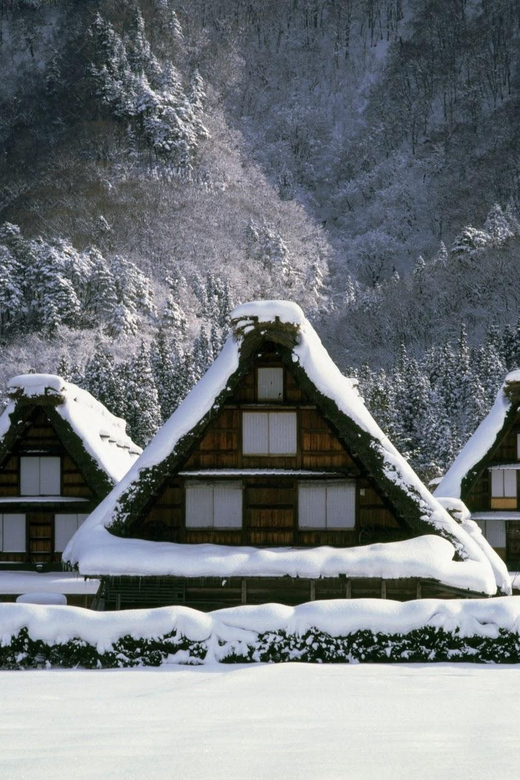
The final major stop is Higashi Chaya District, one of Kanazawa’s historic entertainment areas. Traditional teahouses once hosted geisha performances here, and the district remains associated with shamisen music, drums, refined wooden buildings, and old-style streets.
The tour allows time to walk and shop, followed by a gold-leaf activity. Kanazawa produces about 99 percent of Japan’s gold leaf, making this more than a generic souvenir class. It connects directly to the city’s most important craft tradition.
You make a postcard by applying gold leaf. The activity is short, around 30 minutes, but it gives you a tangible keepsake and a chance to handle the material rather than only seeing it behind glass. The group may also get a look at how gold leaf is produced, which helps explain why the craft has such a strong place in Kanazawa.
Gold-leaf ice cream is another popular local treat in the district. It is not included, so you pay separately if you want to try it. The gold does not transform the flavor, of course, but it is an amusing way to sample Kanazawa’s signature craft. If you are watching your spending, the postcard activity already gives you the more lasting experience.
Higashi Chaya is a beautiful place to browse, but the time is limited, often around 25 to 30 minutes for the district visit. You will not have hours to enter every shop or explore every side street. Treat this as an introduction, then return on another day if the area catches your interest.
The guides make the tight schedule work
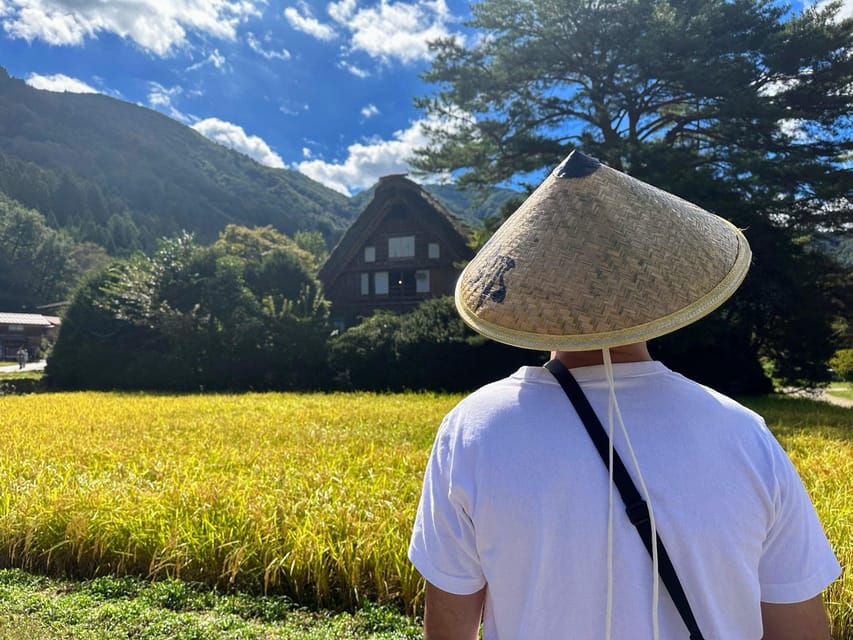
The strongest part of the experience is the guiding. English-speaking guides such as Yasushi and Aiko are frequently praised for clear explanations, humor, energy, and care with the group. Keita, Ciel, and Nagomi also lead tours, so the exact personality of your day depends on the assigned team.
Yasushi is described as especially strong at explaining Japanese history and culture in accessible English. He uses photos and a scrapbook at times, takes pictures for the group, and adds food suggestions along the way. Aiko is known for keeping people included, using quizzes, answering questions, and explaining details in Kenrokuen that are easy to miss alone.
That does not mean every minute is a formal lecture. The best moments seem to come from the mix of short explanations, free time, questions, and light conversation. You can listen closely when context matters, then explore independently when you want a quiet moment.
The audio system gives you another option. It is helpful if you prefer information in your own language, though the live guide remains the main source of personal interaction.
What the nine-hour day feels like
This is a full day, but the timetable has natural breaks. The long coach rides let you rest, Shirakawa-go provides open-air walking time, Kenrokuen slows the pace, and the crafts give you a seat after several sightseeing stops.
Still, you should expect a broad introduction rather than an in-depth study of either destination. One hour in Kenrokuen is enough for a guided route, not every corner of the garden. Around two and a half hours in Shirakawa-go gives you a strong first look, but an extra hour would appeal to anyone who wants longer photo stops or a slower meal.
The return trip is scheduled for the Kanazawa Station West Plaza parking area. The listed final coach segment is about 10 minutes, but the full day’s timing can shift. Traffic, weather, and closures may change the order, and an alternative place may be substituted if a planned stop is closed.
The coach has regular ventilation and an antibacterial coating. That will not change the sights, but it adds comfort on a long day, especially in winter or during wet weather.
Who should book this tour?
I would choose this for a first visit to Kanazawa, especially if you have only one free day and want to see Shirakawa-go without arranging separate transport. It suits solo visitors who want an easy way to reach the village, families who appreciate built-in activities, and couples who like mixing scenery with food and crafts.
It is also a good fit if you enjoy learning the meaning behind places. The guide’s explanations make Kenrokuen and the traditional districts more rewarding than a quick photo stop.
I would hesitate if your priority is independence, long meals, or serious photography. The group schedule controls your departure times, and the popular stops receive limited time. Someone staying several days in Kanazawa may prefer to visit Kenrokuen and Higashi Chaya independently, then take a separate Shirakawa-go bus for a longer stay.
Free cancellation is available up to 24 hours before departure, and you can reserve now and pay later. Those terms help if your Japan plans are still shifting, but they do not protect a late arrival at the meeting point.
Should you book it?
At $116, this is a strong one-day value if you want transport, guiding, admission, and hands-on activities handled together. The most important choice is not the price. It is deciding how much structure you want.
Book it if you want Shirakawa-go early in the day, clear English guidance, a comfortable coach, and a quick but meaningful introduction to Kanazawa’s garden and crafts. Skip it if you already know the city well or would rather spend a whole day moving at your own speed.
For most first-time visitors with limited time, I would book the full-day version rather than a half-day outing. Shirakawa-go supplies the big scenery, while wagashi or Daruma painting and gold leaf give the day its local flavor.
FAQ
Where does the tour meet?
Meet at the Kanazawa Station West Plaza short-term car park at 1-chōme-6-802 Hirooka, Kanazawa. Look for the green and white Japan Panoramic Tours flag.
What time should I arrive?
Check-in is at 7:50 AM, with departure at 8:00 AM. Latecomers and no-shows are not eligible for refunds or schedule changes.
How long does the tour last?
The tour lasts about nine hours. The exact timing can change because of traffic, weather, closures, or operational needs.
Is lunch included?
No. Lunch, extra food, and drinks are not included. You have free time to buy lunch independently in Shirakawa-go.
What languages are available?
The live tour guide speaks English and Japanese. Audio guidance is available in Spanish, French, Italian, German, Portuguese, and Ukrainian.
Is transportation included?
Yes. Transportation is by air-conditioned coach with free Wi-Fi. The coach also has regular ventilation and an antibacterial coating.
Which craft activities are included?
You receive a Japanese wagashi-making activity or a Daruma-painting activity, depending on the craftsperson’s schedule. You also receive a gold-leaf craft activity in Kanazawa.
What should I bring?
Wear comfortable shoes because the day includes walking in Shirakawa-go, Kenrokuen Garden, Kanazawa Castle areas, and Higashi Chaya District. Pets are not allowed.
Newest history tours we have reviewed in Japan
- [30 minutes] Rickshaw tour around Asakusa [History, sightseeing, Tokyo Skytree]★ 5.0 · 38 reviews
- Tokyo: Asakusa & Sensoji ー Oldest Temple Walking Tour (2hrs)★ 5.0 · 213 reviews
- Private sake pairing@ancient underground★ 5.0 · 27 reviews
- Private Tour Through the Tokyo National Museum & Ukiyo-e★ 4.7 · 17 reviews
- Tokyo: Customized Private Historical Guided Photoshoot Tour★ 5.0 · 25 reviews
- Tokyo: Imperial Palace, the history of Japan (ENGLISH GUIDE)★ 5.0 · 77 reviews
- Tokyo: Edo Castle & East Garden of the Imperial Palace Tour★ 4.7 · 112 reviews
- (Ticket Included) Explore Osaka Castle & Museum of History★ 4.8 · 21 reviews
UNESCO World Heritage Tours, compared.
World Heritage Shirakawa-go and Experience Tours from Kanazawa
Read our review →
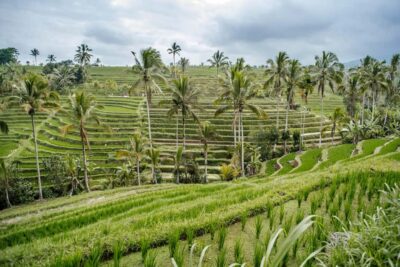
Bali: Tanah Lot UNESCO World Heritage Sites Full-Day Tour
Read our review →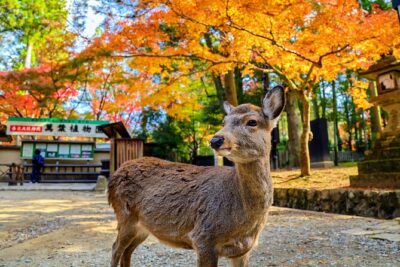
World Heritage Kyoto & Nara Uji Authentic Matcha Experience
Read our review →

UNESCO’s Ayutthaya Historical Park: Full-Day Tour from Bangkok
Read our review →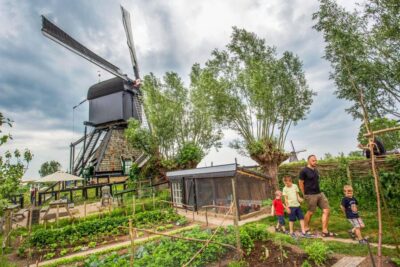
Rotterdam: Kinderdijk UNESCO World Heritage Entry Ticket
Read our review →
From Busan: Gyeongju UNESCO World Heritage Guided Day Tour
Read our review →Browse the lists this tour appears in