
Review · HIROSHIMA HISTORY TOURS
Hiroshima: Peace Walking Tour of World Heritage Sites
Hiroshima’s most important sights are close together, but the meaning behind them is not always easy to grasp alone. This five-hour walking tour gives you a clear route through the Peace Memorial Museum, Peace Park, Atomic Bomb Dome, and Orizuru Tower, while local guides such as Yasue, Yuji, Etsko, and Yuki add personal stories and context.
I like the thoughtful shift from difficult history to a paper-crane activity and wide city views. I also like the included lunch, often Hiroshima-style okonomiyaki, which gives the day a relaxed ending. The main drawback is emotional: the museum can be crowded and upsetting, and five hours may feel brisk if you want to read every display.
Key points at a glance
- Personal local storytelling: Guides including Yasue, Yuji, Etsko, Yuki, and Fumiko explain Hiroshima with warmth, patience, and strong local knowledge.
- The core Peace sites: You visit the Peace Memorial Museum, Peace Memorial Park, and UNESCO-listed Atomic Bomb Dome with a guide.
- A gentler second half: Origami crane making and the Orizuru Tower observatory offer a hopeful change of pace.
- Lunch included: The meal is often Hiroshima’s famous okonomiyaki, though food choices can be limited.
- Small-group feel: Private and small-group options are available, making it easier to ask questions and pause when needed.
- Strict timing: Arrive at least 10 minutes early. More than 15 minutes late means you cannot join, and no refund or rescheduling is offered.
Why a guide matters in Hiroshima
Hiroshima is easy to walk around, but it is not always easy to understand. Plaques and museum labels give you facts. A good guide helps connect those facts to the streets, trees, shrines, buildings, and people around you.
That human element is the strongest reason to book this tour. Guides speak about the bombing, the city’s recovery, and the continuing call for peace. Some guides have family or local connections to Hiroshima. Eri, for example, has spoken about her grandmother being affected by the bombing. Other guides, including Yuji and Yasue, are praised for explaining painful subjects clearly while leaving room for questions.
The tone is serious but not bleak. The tour does not treat Hiroshima as a place frozen in 1945. You learn about destruction, but also about survival, rebuilding, and the city’s present-day peace work.
That balance matters. A self-guided visit can leave you moving from one memorial to the next without knowing why a particular tree, shrine, or monument matters. Here, the guide gives the sites a human scale.
More History Walking Tours in Japan
- Tokyo: Imperial Palace and Shogun Historical Walking Tour
★ 5.0 · 2,251 reviews - Kyoto Gion: 2-Hour Geisha Culture & History Walking Tour
★ 5.0 · 1,186 reviews - Tokyo Castle & Imperial PalaceーShogun Walking Tour
★ 4.7 · 1,068 reviews
Starting near Kamiya-cho-nishi Station
The meeting point is in front of the mont-bell store near Kamiya-cho-nishi Station. It is about a one-minute walk from the station, which makes this a practical starting point if you are arriving by Hiroshima’s tram system.
Your guide will hold an orange sign marked Magical Trip Tour. Arrive at least 10 minutes before the stated departure time. This is not a tour where you can casually catch up at the next stop. An arrival more than 15 minutes late means you cannot join, with no refund or new date offered.
The walking itself is manageable for most people, but this is still a full half-day on your feet. Wear comfortable shoes and bring water, especially in warm weather. Additional drinks and food are not included, though you can buy them along the way or at the lunch stop.
Shirakami-sha Shrine adds an unexpected beginning
The first stop is Shirakami-sha Shrine, with about 25 minutes set aside for a visit. This gives the day a cultural opening before the focus turns fully to the atomic bombing.
Your guide can show you the proper way to enter and behave at the shrine. That small lesson is useful if you are unfamiliar with Japanese shrine customs. Fiona, one participant, especially appreciated being shown how to enter and receive a blessing.
The shrine also reminds you that Hiroshima was a living city with ordinary religious and community life before the bombing. That context helps prevent the day from becoming only a sequence of wartime facts.
This stop is short, so do not expect a long shrine tour. Its value comes from the contrast it creates with the memorial sites that follow.
The Peace Memorial Museum requires time and care
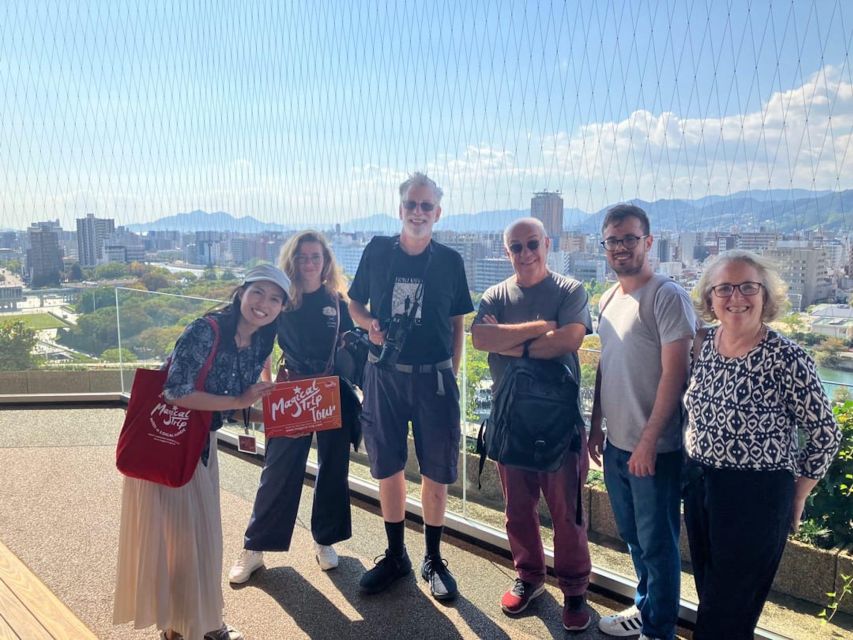
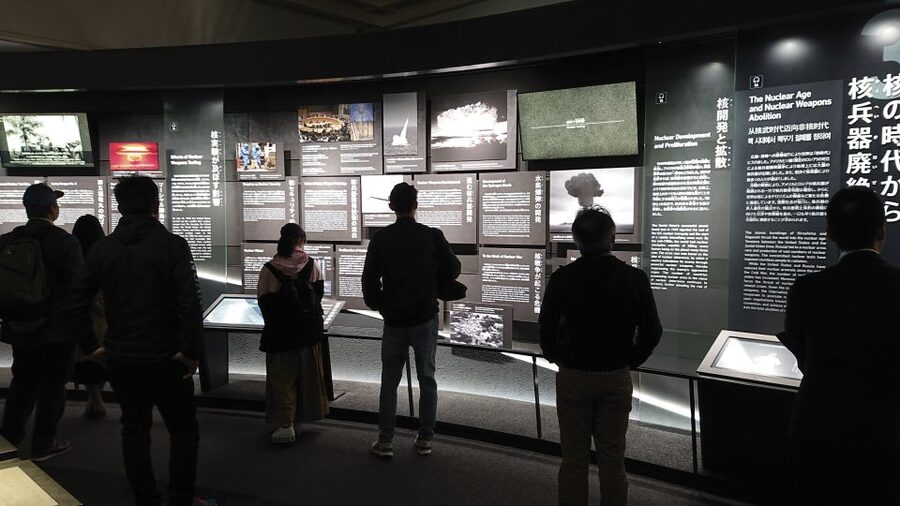
The Hiroshima Peace Memorial Museum is the emotional center of the tour. You spend about an hour inside with your guide, learning about the atomic bomb, its victims, and the ways survivors coped afterward.
The museum contains personal belongings, photographs, testimonies, and explanations of what happened to Hiroshima’s residents. The material can be hard to absorb. This is not a light sightseeing stop, and you should allow yourself to move slowly when you need to.
One good feature of a small guided group is the chance to ask questions without feeling lost. Guides such as Kippei have allowed people to move through the museum at their own pace and take a break when the material becomes too much. That sensitivity is important. The best guide does not rush you through grief simply to keep the schedule.
There is a practical tradeoff. The museum can become extremely crowded, especially at busy times. When that happens, you may need to move faster than you would like. A guide can explain the key displays and help you understand the main story, but cannot remove the crowds.
If you want to study every label and artifact in detail, plan to return on your own if possible. One guide even helped arrange a return visit for someone who wanted more time. Do not assume this will always be possible, but it shows why it is useful to tell your guide early if a second visit matters to you.
More UNESCO World Heritage Tours in Japan
- World Heritage Shirakawa-go and Experience Tours from Kanazawa
★ 5.0 · 4,049 reviews - World Heritage Kyoto & Nara Uji Authentic Matcha Experience
★ 5.0 · 1,573 reviews - Kanazawa: World Heritage Shirakawa-go Morning Guided Tour
★ 4.9 · 988 reviews - Hiroshima Peace (Heiwa) Walking Tour at World Heritage Sites
★ 5.0 · 872 reviews
Peace Memorial Park puts the museum in context
After or around the museum visit, the tour continues through Hiroshima Peace Memorial Park. The park is not just a green space between attractions. It brings together memorials, monuments, riverside views, and places connected to the city’s peace message.
Your guide explains how the park relates to Hiroshima’s past and present. You may hear about people, sites, and events that are easy to miss when walking through alone. The park also gives you a little breathing room after the museum’s intense interior.
This is where the tour’s larger idea becomes clear. Hiroshima remembers the bombing, but it also uses that memory to promote peace. Guides often connect the city’s recovery with its message to the rest of the world.
The park is mostly visited on foot, so comfortable shoes matter. The pace is guided, but you should tell your guide if you need a pause. The experience works best when you have enough mental space to listen rather than simply hurry from one location to another.
The Atomic Bomb Dome is powerful because it remains
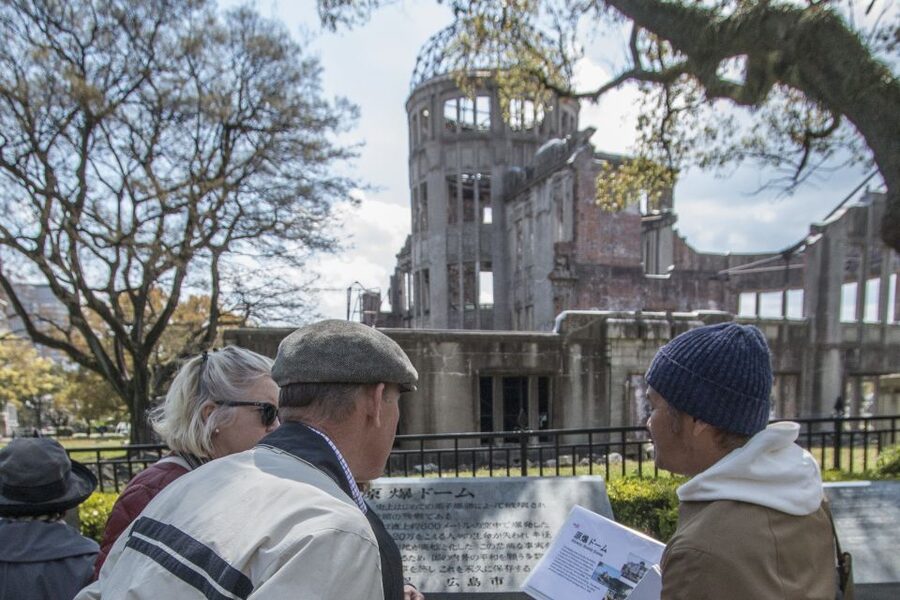
The UNESCO-listed Atomic Bomb Dome is the tour’s most recognizable site. Its damaged structure remains beside the river, close to the modern city that grew around it.
A guide adds meaning here by explaining what the building was before the bombing and why it was preserved. The contrast is stark: an old structure marked by destruction, with Hiroshima’s renewed streets and buildings continuing around it.
You do not simply take a photograph and move on. The guide connects the dome to the wider story of the blast, the people nearby, and the city’s decision to keep the ruin as a memorial.
This stop can feel quieter than the museum, but it is no less serious. The open air lets you reflect without the volume of indoor exhibits. It is also a good point to ask questions that may have occurred to you earlier.
Orizuru Tower changes the mood
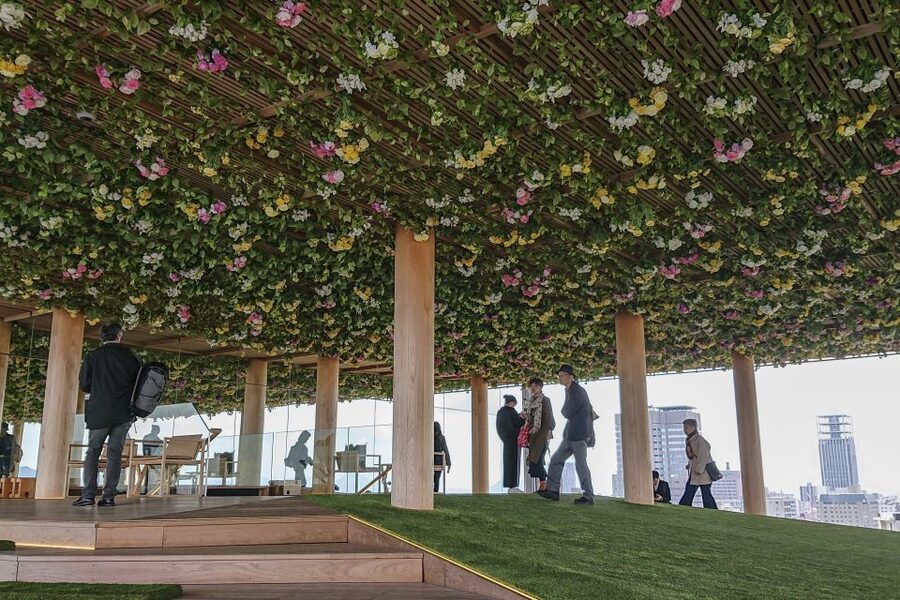
Orizuru Tower provides a clear change of pace. You go up to the observatory area for broad views over Hiroshima, then learn about the paper crane as a symbol of peace.
The view is valuable because it shows Hiroshima as a functioning, rebuilt city rather than only a historical site. You can feel the scale of the modern city and see how much life exists beyond the memorial zone.
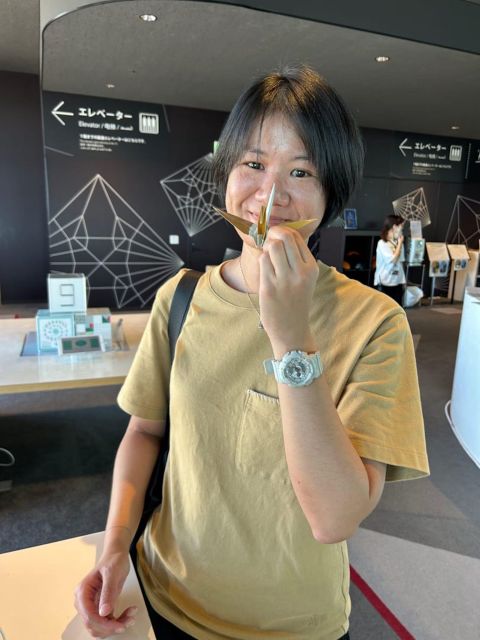
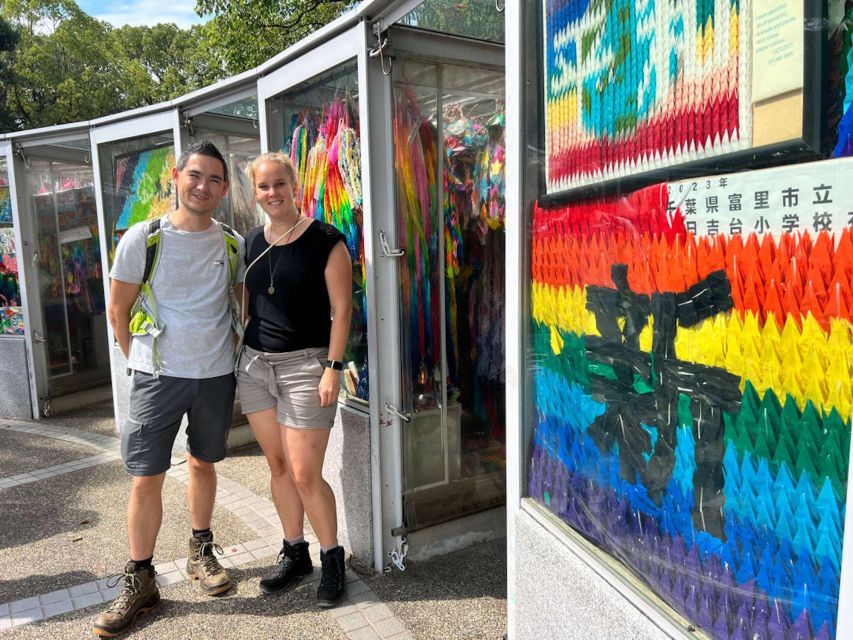
The origami activity is simple but meaningful. You fold a paper crane and make a wish for peace. At some point, you may add your crane to the building’s collection. One particularly memorable part of the experience is watching a paper crane spiral down to join thousands of others in the tower’s glass wall.
This is not a long craft workshop, and you do not need to be good at origami. The guide helps you through it. The activity gives your hands something to do after a morning of difficult images, without turning the subject into entertainment.
The tower ticket is included. One useful detail is that the ticket may allow you to return for sunset, though you should confirm the current entry conditions on the day.
Lunch brings the day back to ordinary life
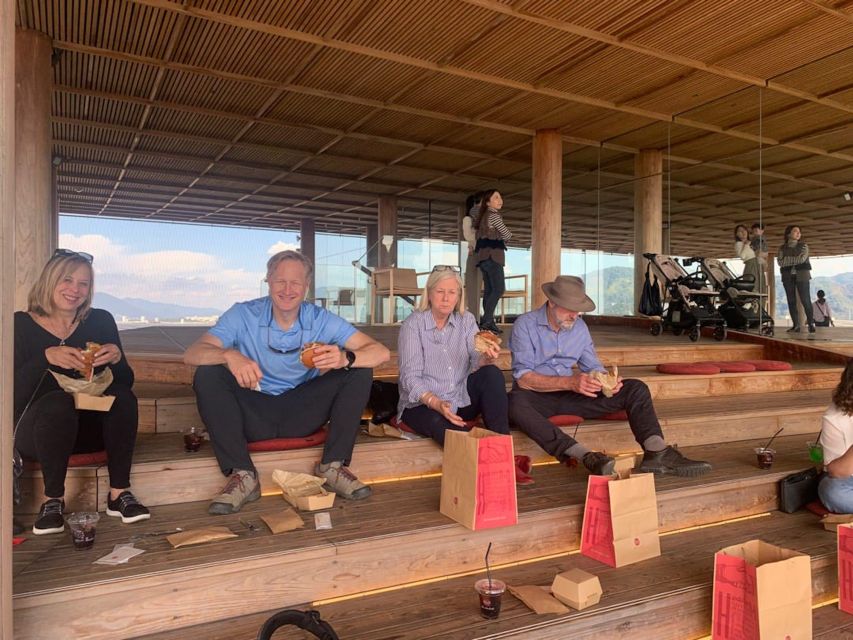
Lunch is included, and it usually features Hiroshima’s famous okonomiyaki, a savory layered pancake-style dish. Eating after the memorial visits is a sensible choice. It lets you talk with the guide, ask follow-up questions, and shift gradually back into normal sightseeing.
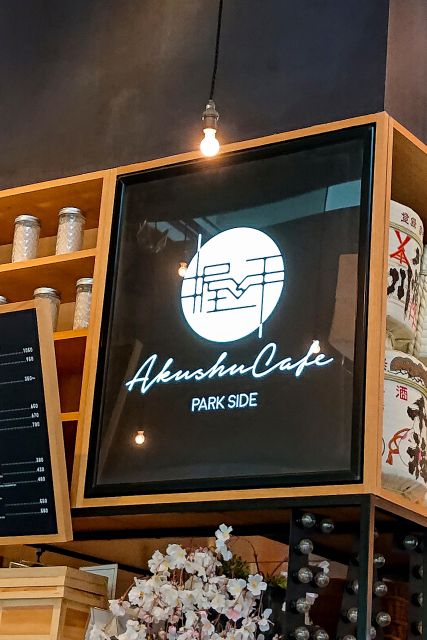
The stated finish is Akushu Cafe inside Hiroshima Orizuru Tower. The meal is part of the experience rather than an afterthought, and several guides have used it as a relaxed time to continue the conversation.
Food is the main area where you need to plan carefully. Vegetarian choices are limited because many Japanese restaurants are not fully equipped for vegetarian menus. Gluten intolerance is specifically listed as unsuitable for this tour. Allergy-free meals cannot be guaranteed, and kitchens are not operated by MagicalTrip.
If you have an allergy or dietary request, tell the operator at least one day before the tour. Requests made on the day cannot be accommodated. One person also wished for more choice in the okonomiyaki flavor after eating the dish the day before, so this is not the best pick if you need a highly flexible menu.
How the five hours are paced
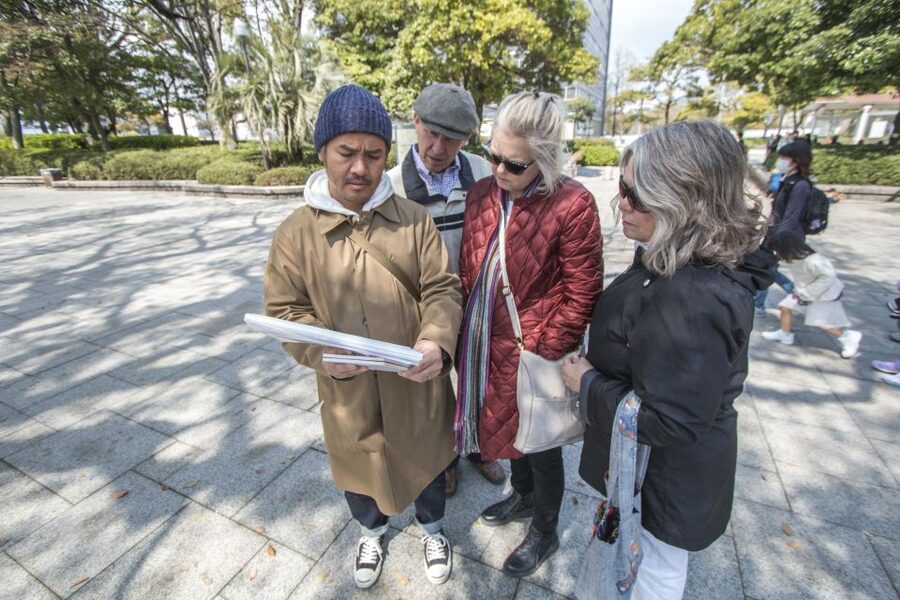
The experience lasts 270 minutes, or about four and a half hours, and combines walking, museum time, outdoor memorials, the tower, origami, and lunch. The published stop plan gives substantial time to the museum, park, and dome, but the actual pace can change with crowd levels and the group.
That makes the tour a good fit for a first visit or a day trip when you want the main Hiroshima sights in one organized block. It is less suitable if you prefer to spend half a day inside the museum alone.
The private and small-group formats are worth considering. A smaller group makes it easier to hear the guide, ask questions, and take a short pause. It also helps the tour feel personal when the subject becomes emotional.
English is the tour language. Guide quality can vary by individual, but the guides named in the feedback include Yasue, Yuji, Etsko, Yuki, Fumiko, Kippei, Naoya, Aki, Risa, and Yasu. Their shared strengths are clear explanations, patience, and a local point of view.
Is the $92 price fair?
At $92 per person, this is not the cheapest way to see Hiroshima’s memorial district. You are paying for more than admission tickets, though.
The price includes entry to the Peace Memorial Museum and Orizuru Tower, lunch, a five-hour English-speaking guide, and tour photos. It also saves you the work of planning the route between the shrine, museum, park, dome, tower, and meal.
The strongest value is the interpretation. If you already know the history well and prefer to read at your own pace, you may find the price harder to justify. If this is your first visit, the guide can help you understand what you are seeing and avoid missing smaller details.
The included meal also helps. You are not paying for a guide and then having to arrange lunch separately while still processing the morning’s subject.
Free cancellation up to 24 hours before the start and the option to reserve now and pay later make the booking less rigid. Still, the strict late-arrival rule means you should build in extra time to reach the meeting point.
Who should book this Hiroshima tour?
I would choose this tour if you want a structured introduction to Hiroshima and prefer hearing the story from a local English-speaking guide. It suits first-time visitors, families with older children or teenagers, and anyone visiting for only a day.
It is also a good choice if you want more than the museum. The shrine, park, Atomic Bomb Dome, tower, origami, and lunch create a fuller picture of Hiroshima than a single museum visit can provide.
Families should know that the museum content is serious. Teenagers may find the guided explanation more engaging than reading alone, but younger children may struggle with the subject.
People with strict dietary needs should think twice. The meal has limited vegetarian options, gluten intolerance is listed as unsuitable, and allergy-free food cannot be promised.
Should you book it?
Book this tour if you want context, personal stories, and a carefully arranged route through Hiroshima’s main peace sites. The strongest parts are the local guides, the sensitive handling of the museum, the paper-crane activity, and the included lunch.
Skip it if you want complete control over your museum pace, need a reliably flexible meal, or prefer to explore quietly without a schedule. For most first-time visitors, though, the $92 cost is reasonable because it combines admissions, food, transport-free walking between nearby sights, and several hours of thoughtful guidance.
FAQ
How long does the Hiroshima Peace Walking Tour last?
The tour lasts 270 minutes, or about four and a half hours.
What language is the tour offered in?
The live tour guide speaks English.
Where does the tour meet?
Meet in front of the mont-bell store near Kamiya-cho-nishi Station. It is about a one-minute walk from the station.
How do I identify the guide?
Your guide will hold an orange sign marked Magical Trip Tour.
What happens if I arrive late?
You should arrive at least 10 minutes before the tour begins. Arrivals more than 15 minutes late cannot join, and no refund or rescheduling is offered.
Are admission tickets included?
Yes. Entry to the Hiroshima Peace Memorial Museum and Orizuru Tower is included.
Is lunch included?
Yes. Lunch is included, and it is often Hiroshima-style okonomiyaki. Additional food and drinks are not included.
Can the tour accommodate vegetarian meals or food allergies?
Vegetarian choices are limited. You must report dietary requests or allergies at least one day before the tour, but allergy-free meals and all dietary restrictions cannot be guaranteed. The activity is not suitable for people with gluten intolerance.
Newest history tours we have reviewed in Japan
- Tokyo: Asakusa & Sensoji ー Oldest Temple Walking Tour (2hrs)★ 5.0 · 213 reviews
- Private sake pairing@ancient underground★ 5.0 · 27 reviews
- [30 minutes] Rickshaw tour around Asakusa [History, sightseeing, Tokyo Skytree]★ 5.0 · 38 reviews
- Private Tour Through the Tokyo National Museum & Ukiyo-e★ 4.7 · 17 reviews
- Tokyo: Customized Private Historical Guided Photoshoot Tour★ 5.0 · 25 reviews
- Tokyo: Imperial Palace, the history of Japan (ENGLISH GUIDE)★ 5.0 · 77 reviews
- (Ticket Included) Explore Osaka Castle & Museum of History★ 4.8 · 21 reviews
- Tokyo: Edo Castle & East Garden of the Imperial Palace Tour★ 4.7 · 112 reviews
UNESCO World Heritage Tours, compared.
World Heritage Shirakawa-go and Experience Tours from Kanazawa
Read our review →
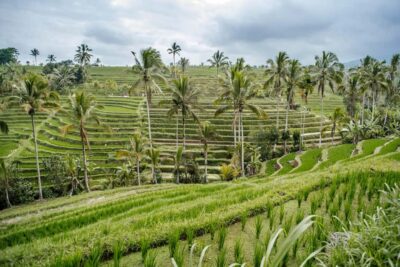
Bali: Tanah Lot UNESCO World Heritage Sites Full-Day Tour
Read our review →
World Heritage Kyoto & Nara Uji Authentic Matcha Experience
Read our review →
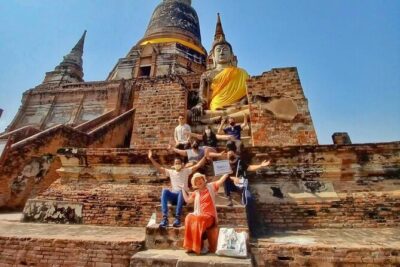
UNESCO’s Ayutthaya Historical Park: Full-Day Tour from Bangkok
Read our review →
Rotterdam: Kinderdijk UNESCO World Heritage Entry Ticket
Read our review →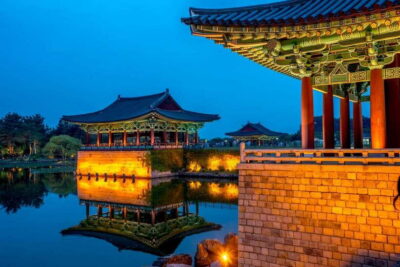
From Busan: Gyeongju UNESCO World Heritage Guided Day Tour
Read our review →Browse the lists this tour appears in