
Review · PERU HISTORY TOURS
Walking tour in the Historic Center of Arequipa
Arequipa’s best surprise may be how much variety fits into a two-hour walk. You begin with white-stone churches and colonial arcades, then pass old courtyards, look toward three volcanoes, meet llamas and alpacas, and finish in San Lazaro, the city’s first settlement. This is not just a square-and-church stroll.
I like the tour’s mix of city history and everyday Peru, especially the stop at Mundo Alpaca and the views from Grau Bridge. I also like its practical timing: it gives you a useful first look at Arequipa before you return to places that deserve more time, such as Santa Catalina Convent.
The main thing to understand is the price. The $10 booking fee covers your reservation, but the operator asks for a voluntary tip at the end, and one guide explained that 30 to 50 soles per person is expected. Optional museums and convent visits cost extra, so the final amount may be higher than the headline price.
Key points at a glance
- A broad two-hour introduction: Cover the Plaza de Armas, Company cloisters, old mansions, city gardens, Grau Bridge, Mundo Alpaca, and San Lazaro on foot.
- More than colonial architecture: The route includes llamas, alpacas, suri, and vicuñas, plus a chance to learn about their fibers.
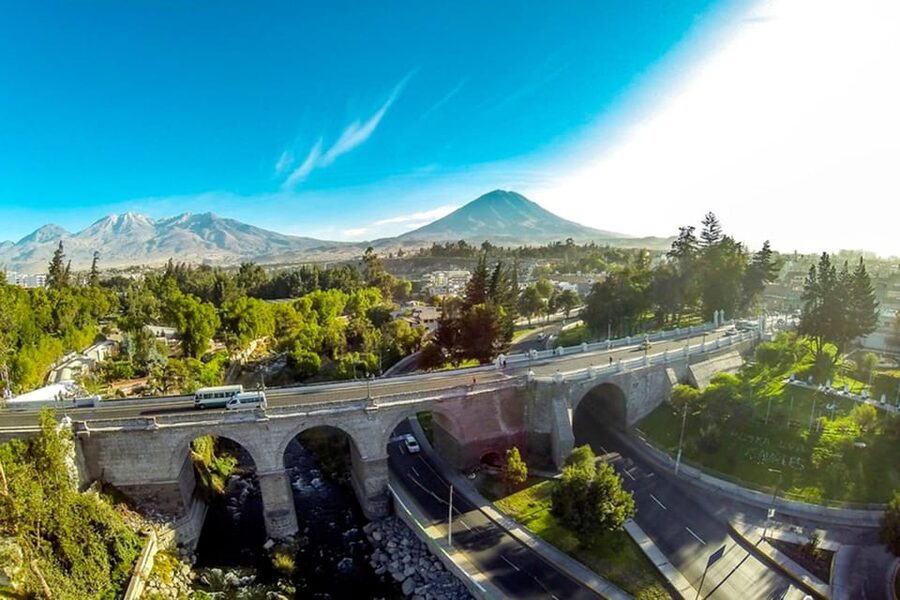
- Three volcano views: From the Grau Bridge area, you may see Misti, Chachani, and Pichu Pichu.
- Strong guide element: Guides including Edgar, Johan, Beatriz, Francisco, and Jorge Echeandia have been praised for humor, local knowledge, and helpful food suggestions.
- Pay attention to the tip policy: You pay $10 when booking, then are asked for a voluntary tip to help cover the guide and maintenance at places visited.
- Best for first-time visitors: The walk helps you get oriented, though the pace can feel quick if you want lots of photographs.
Starting near the Plaza de Armas
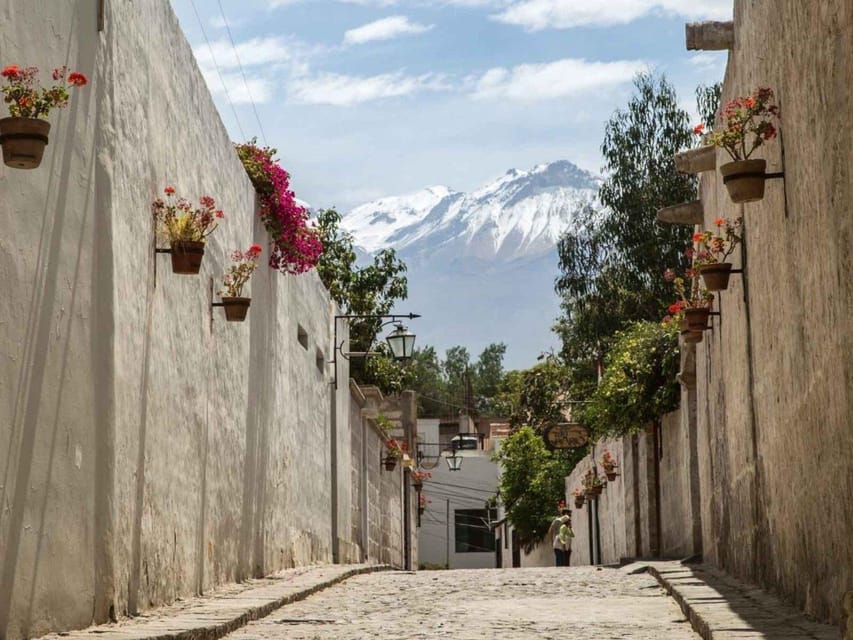
The meeting point is at Santa Catalina Street 204, only one block from Arequipa’s Plaza de Armas. Look for the guide holding an umbrella. The coordinates are -16.3967191, -71.53667879999999, which is useful if you prefer to confirm the location on a map before setting out.
The starting point is convenient for a first morning or afternoon in Arequipa. You are already in the historic center, so there is no need for transport, and the walk returns to the same address. The tour is offered in English or Spanish, depending on the guide and departure.
I would arrive a few minutes early. One booking had a delayed start because the guide was not immediately at the meeting point and the organizer did not answer the first call. The group eventually connected with the guide, but this is a reminder to keep the meeting instructions and contact details handy.
The umbrella is meant to make the guide easy to spot. It also gives you a simple landmark in the busy center, where a small difference in street position can matter.
More Old Town and Historic Centre Walks in the world:
- Madrid Essential: Historic Center, Plaza Mayor & Royal Palace
★ 5.0 · 6,416 reviews - Lisbon: Live Fado Show with Port Wine in Historic Center
★ 4.7 · 4,166 reviews - Valencia Old Town Tour with Wine & Tapas in 11th Century Historic Monument
★ 5.0 · 3,234 reviews
Reading the Plaza de Armas
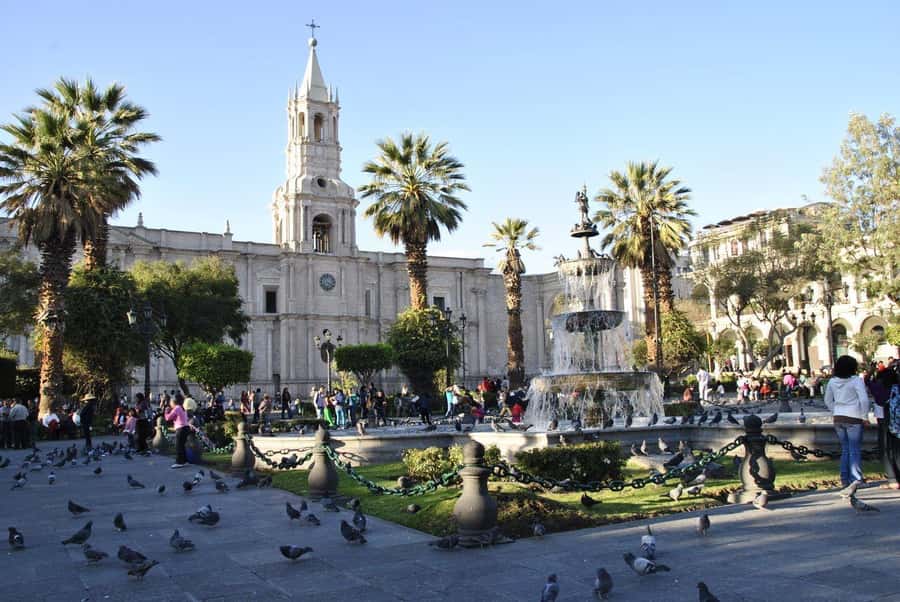
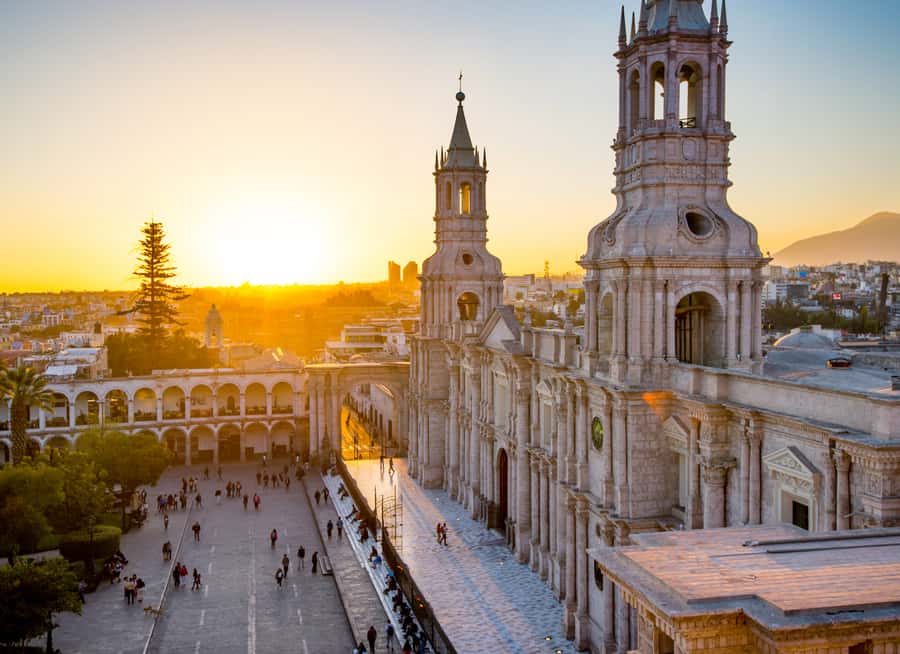
The tour begins at Arequipa’s main square, where the guide explains the city’s past through its arcades, portals, and surrounding buildings. This is a good place to learn how Arequipa presents itself: as a colonial city shaped by local stone, Catholic architecture, trade, earthquakes, and the surrounding volcanoes.
The square is more useful with explanation than with a quick photograph. Look at the repeated arches and the way the buildings frame the open space. A guide can point out details you might otherwise pass without noticing, including the relationship between the religious buildings and the civic center.
This first section also helps you get your bearings. After the tour, you should know where the Plaza de Armas sits in relation to Santa Catalina Street and the nearby streets that lead toward churches, markets, restaurants, and museums.
The guide’s personality matters here. Edgar was praised for mixing history with humor and for answering questions throughout the walk. Johan received similar praise for being funny and engaging, while Jorge Echeandia was singled out for giving a great deal of information in a short time. The exact guide varies, but the experience depends heavily on who leads your group.
The Company cloisters and white-stone architecture
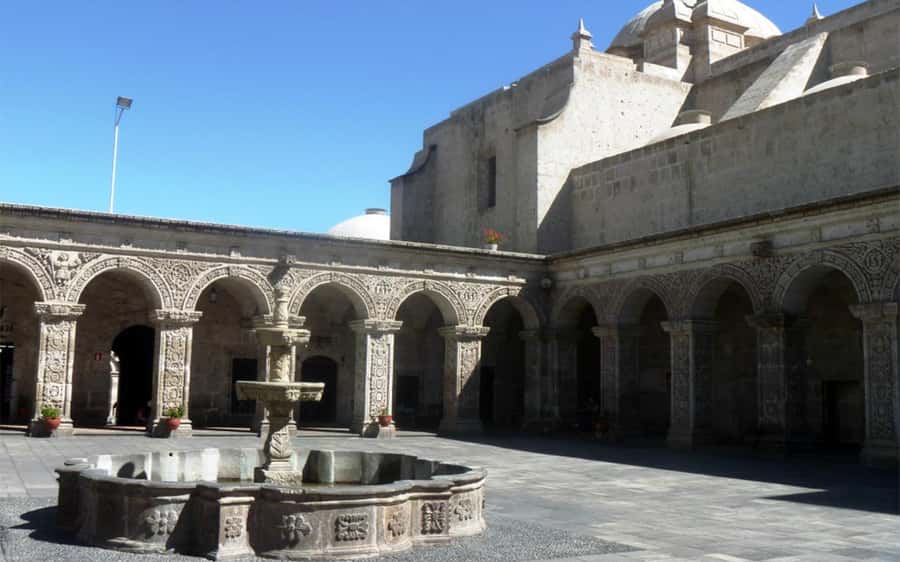
Next comes the cloisters of the Company, one of the most attractive architectural stops on the route. The carved stonework, arches, and religious details show why Arequipa is often called the White City. The visit gives you a closer look at the craftsmanship rather than leaving you with only a broad explanation of colonial style.
The Company complex is also a useful lesson in how architecture can carry several layers of meaning. A guide may explain the religious symbols, the purpose of the cloisters, and the way local materials shaped the city’s appearance. Beatriz, for example, was praised for explaining the meaning behind religious art and architecture in clear terms.
This is one point where you should manage your expectations. The walking tour is designed to cover many places, not to provide a long, detailed examination of every building. If you want extended time inside a major monument, Santa Catalina Convent deserves a separate visit.
The tour can arrange entry to Santa Catalina or other museums, including the Juanita mummy museum, for an extra charge. These visits may also involve hiring an internal guide. Treat them as optional additions, not as part of the basic two-hour route.
Old mansions, courtyards, and city gardens
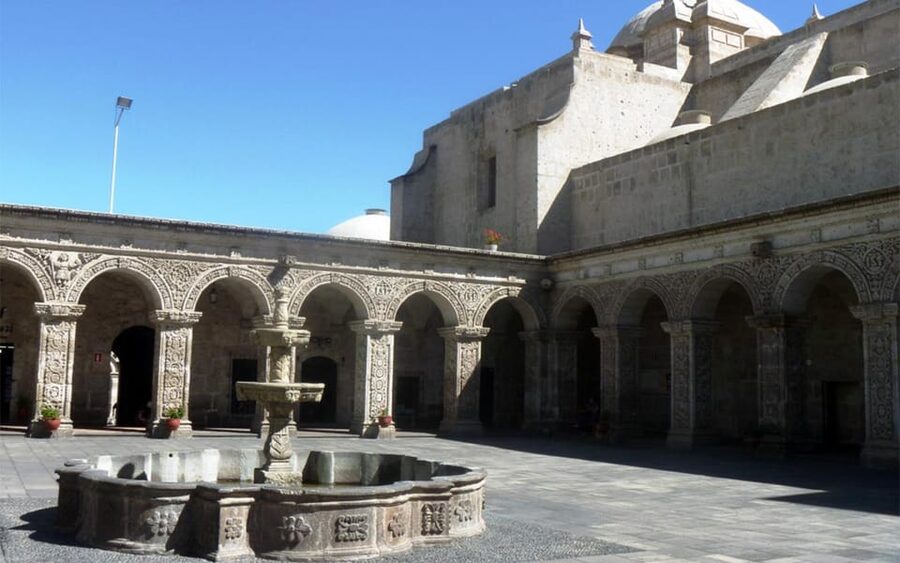
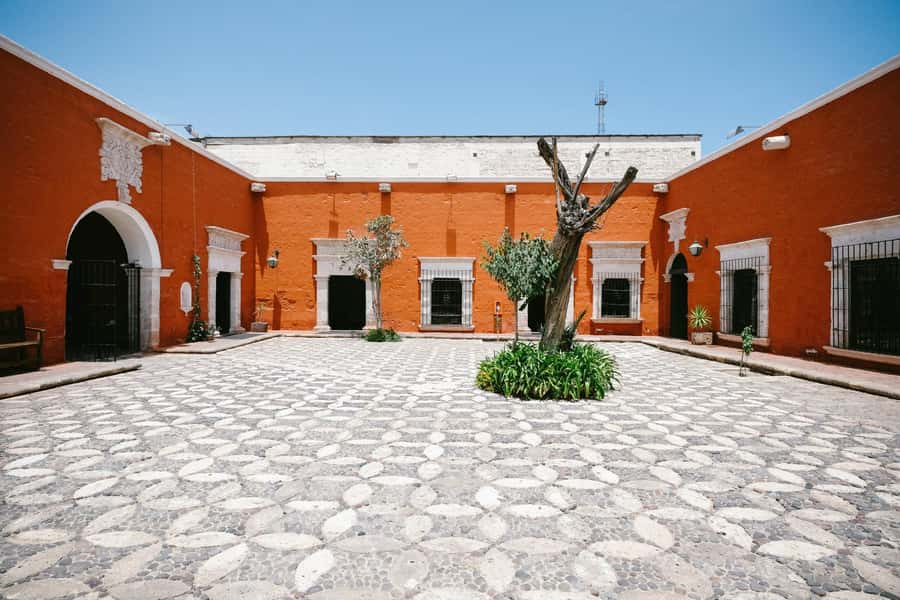
Between the headline sights, the walk passes older mansions and traditional gardens near the center. These quieter spaces help break up the sequence of churches and squares. You may see attractive courtyards and hotel viewpoints, and one guide took the group to the top of a hotel for a broad view over the city.
I like this middle section because it shows Arequipa as a lived-in place rather than an outdoor museum. The city’s old character survives in details such as inner courtyards, stone doorways, garden spaces, and buildings that still serve modern purposes.
A guide may also point out current life in the center. One group saw a long line of people waiting to renew national identity cards. That kind of detail is easy to miss when you move only between famous monuments, but it gives the walk a more grounded feel.
The tradeoff is time. A two-hour route with many stops cannot give you long pauses at every courtyard or viewpoint. One participant found the pace rushed and had little time for photographs. If photography is your main goal, tell the guide early and accept that you may see fewer details.
More History Walking Tours in the world:
- History and Hauntings of Salem Guided Walking Tour
★ 5.0 · 14,564 reviews - Lisbon: History, Stories and Lifestyle Walking Tour
★ 4.8 · 10,902 reviews - Boston: Freedom Trail History Small Group Walking Tour
★ 5.0 · 6,450 reviews - Historic Charleston Guided Sightseeing Walking Tour
★ 5.0 · 6,216 reviews
The Grau Bridge volcano view
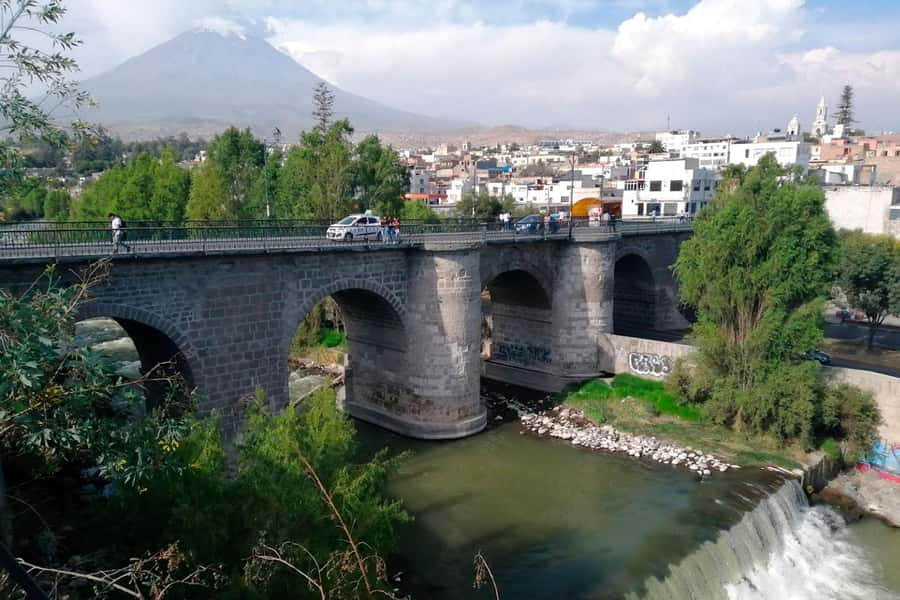
The route then reaches a strategic viewing point near Grau Bridge. From here, the guide may point out Misti, Chachani, and Pichu Pichu. These volcanoes are not just scenic backdrops. They help explain Arequipa’s setting and the strong connection between the city, its dry highland surroundings, and volcanic stone.
The view is one of the walk’s most memorable changes of pace. After crowded streets and close architectural details, you get an open look outward. An afternoon booking may offer a different quality of light than a morning one, but the supplied details do not promise a particular view at every departure, so weather and visibility will matter.
I would not treat this as a dedicated volcano excursion. You are getting a city viewpoint, not a mountain trip. Still, it adds something a standard historic-center walk often lacks. You learn where Arequipa sits in relation to its major peaks, then continue on foot without spending time in a vehicle.
Mundo Alpaca and Arequipa’s camelids
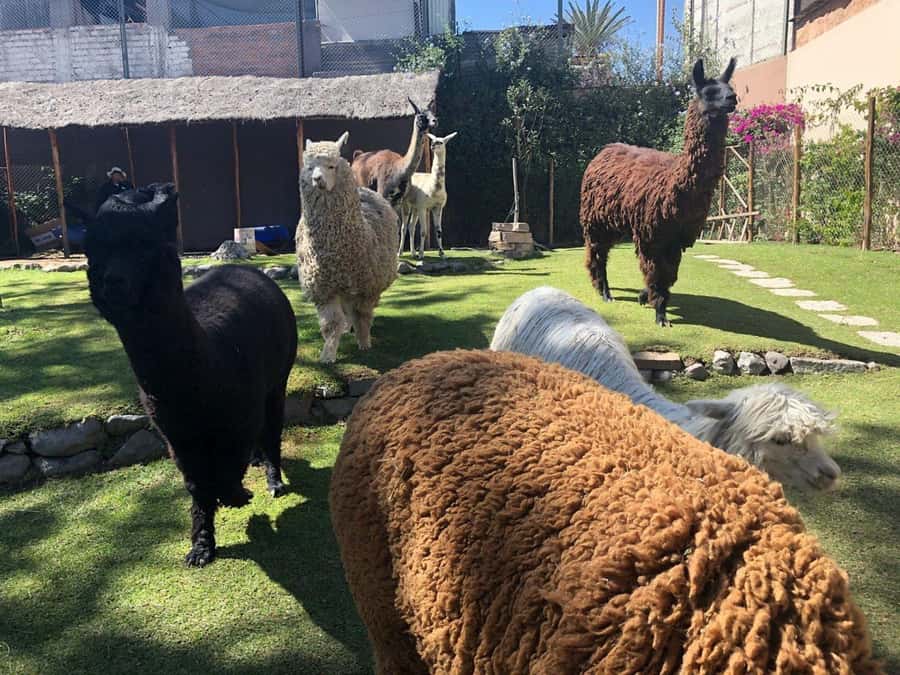
Mundo Alpaca is the tour’s most unexpected stop. Here you can see an old breeding farm for camelids, including llamas, alpacas, suri, and vicuñas. Some groups have also fed llamas and alpacas, and one particularly popular moment was seeing a baby llama and alpaca.
This part gives the walk a direct connection to Andean life and local textiles. You can learn about the fibers and, if you wish, buy fabric made from them. The shopping is optional, but the stop is more than a store visit because you can see the animals connected to the products.
The small camelid area makes the tour appealing to families and to anyone who wants a change from churches and stone facades. It also gives you a practical reason to compare alpaca products carefully. If you plan to shop, ask about the fiber and the difference between alpaca, suri, and vicuña products before buying.
Do not expect a large wildlife park. This is a small zoo and breeding site within a city walking route. Its value is the close connection between the animals, the fiber trade, and Arequipa’s regional identity.
San Lazaro, the city’s first settlement
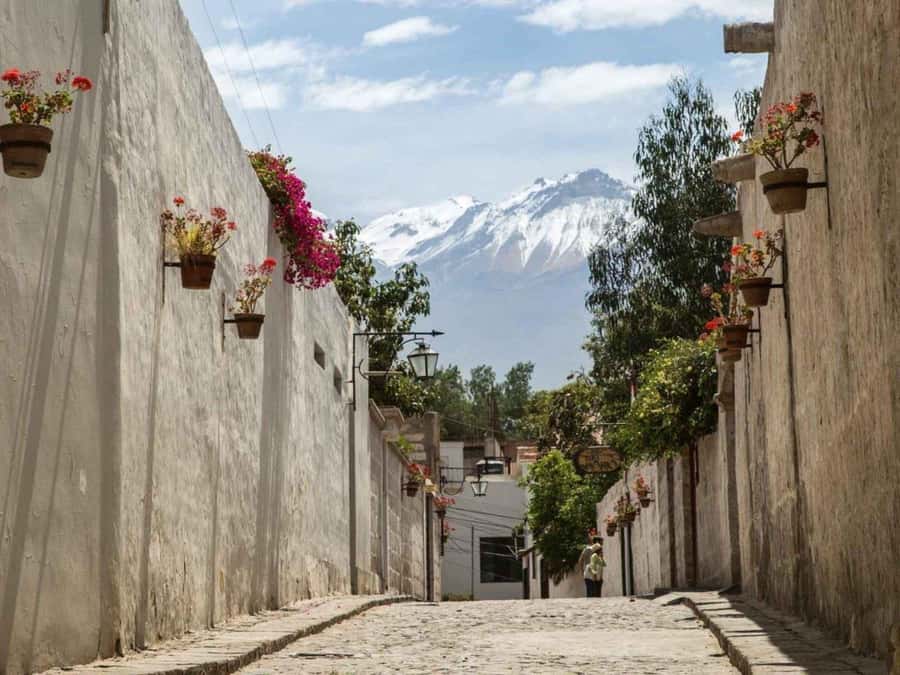
The final major neighborhood is San Lazaro, described as the first town where the White City was founded. Its smaller streets and older character provide a contrast with the formal Plaza de Armas.
San Lazaro works well near the end of the route because you have already learned the broad story of Arequipa. Here, the guide can connect the city’s beginnings with the physical layout of the neighborhood. It is a place to slow down mentally, look at the street pattern, and notice how the oldest parts of the city differ from the grand civic center.
The tour finishes back near Santa Catalina Street and the Plaza de Armas. That return is useful. You can continue directly to a meal, a museum, or your hotel, and you should have enough orientation to explore independently over the next day or two.
Guides, pace, and the value of local explanation
The strongest part of this experience is the guide. Several guides have received praise for clear storytelling, humor, and practical help. Edgar was described as especially good with history, questions, and restaurant suggestions. Francisco was praised for knowing the city well and for including the market. Beatriz was noted for explaining religious art, while other guides have added food tastings, cocktail samples, or cheese helada to the walk.
Those extras are not listed as guaranteed elements, so do not book expecting a tasting. Consider them possible additions that depend on the guide, timing, and group.
The tour’s rating is 4.4 from 180 reviews, which suggests a generally strong experience with some unevenness. The main weakness is not the route itself, but the combination of a short schedule and a large amount of information. You may leave with a good grasp of Arequipa, but you will not have time to study every stop at leisure.
Group size can also affect the experience. One group of about 30 included only two people who paid for the booking, which suggests that this may operate alongside a wider free-walking-tour crowd. A large group can make it harder to hear, move quickly through narrow areas, or stop for photographs.
What the $10 price really means
At $10 per person, the tour looks inexpensive for a guided introduction to central Arequipa. The value is good if you want a local orientation, a volcano viewpoint, the camelid stop, and a short list of places to revisit on your own.
But read the payment arrangement carefully. The $10 is described as a reservation payment. At the end, you are asked to leave a voluntary tip that helps pay the guide and maintenance costs at places visited. One booking reported an expected tip of 30 to 50 soles per person and felt that this was high for a so-called free walk.
That does not automatically make the tour poor value. Even with the tip, the total may still be modest for two hours of guiding. You should simply budget for it honestly rather than treating the reservation fee as the full cost.
Entry to Santa Catalina Convent, the Juanita mummy museum, or other museums is separate. The basic route gives you the outside and general context, while a paid visit lets you spend more time inside selected attractions.
Practical advice before you book
Wear comfortable shoes. The entire experience is on foot, and the route combines streets, courtyards, viewpoints, neighborhoods, and the camelid center. Carry water and leave room in your schedule if you want photographs.
Ask at the start how long the group will spend at each stop. This helps you decide when to listen closely and when to take pictures. If you want to visit Santa Catalina or the Juanita museum, confirm the extra price before entering.
The tour is offered with free cancellation up to 24 hours before the start, and you can reserve now and pay later. Starting times depend on availability. These terms help if your Arequipa plans may change, but they do not alter the tip or optional-entry arrangements.
I would choose this walk early in a stay. It gives you a mental map of the center, introduces the major landmarks, and helps you decide which places deserve a longer visit.
Should you book this Arequipa walking tour?
Book it if you want a fast, varied introduction to Arequipa and like learning through a guide’s stories. It suits first-time visitors, people with only a short stay, families interested in llamas and alpacas, and anyone who wants volcano views without arranging a separate outing.
Skip it if you prefer slow museum visits, quiet photography, or a clearly fixed all-inclusive price. In that case, explore the Plaza de Armas and main monuments at your own pace, then pay separately for the sites that matter most.
For most visitors, I think the route earns its place in an Arequipa itinerary. The combination of colonial stonework, San Lazaro, three volcano viewpoints, and Mundo Alpaca gives you a fuller picture of the city than a basic central-square walk. Just arrive knowing that the $10 is not the whole payment and that the guide may keep the pace brisk.
FAQ
Where does the walking tour begin?
It begins at Santa Catalina Street 204, one block from the Plaza de Armas of Arequipa.
How do I recognize the guide?
The guide will have an umbrella in their hand at the meeting point.
How long does the tour last?
The advertised duration is approximately two hours. One booking described a walk lasting two and a half hours.
Is the tour conducted in English?
Yes. The tour is available with a live guide in English or Spanish.
What places are included in the route?
The route includes the Plaza de Armas, the Company cloisters, old mansions and gardens, a volcano viewpoint near Grau Bridge, Mundo Alpaca, and the San Lazaro neighborhood.
Which volcanoes might I see?
The viewpoint may offer views of Misti, Chachani, and Pichu Pichu.
Can I see llamas and alpacas?
Yes. Mundo Alpaca includes a small camelid zoo with llamas, alpacas, suri, and vicuñas.
Are Santa Catalina Convent and the museums included?
Visits to Santa Catalina Convent, the Juanita mummy museum, and other museums can be arranged with an extra payment. Internal guides may also require a separate fee.
Is the $10 reservation the full cost?
No. The operator asks for a voluntary tip at the end to help cover guide service and maintenance at places visited. One booking reported that 30 to 50 soles per person may be expected.
Can I cancel the booking?
Yes. You can cancel up to 24 hours in advance for a full refund. You can also reserve now and pay later.
Newest history tours we have reviewed in the world
- Bologna: Street Food Tour in the Historic Center★ 4.8 · 125 reviews
- Bilbao Historical Tour in small group★ 4.7 · 52 reviews
- CEBU: Cebu City Heritage and Uphill Guided Tour★ 4.2 · 31 reviews
- Bishkek : City Tour (History, Architects, Statues & Culture)★ 4.9 · 54 reviews
- Blenheim: Omaka Aviation Heritage Centre Admission Ticket★ 4.9 · 31 reviews
- Berlin: Nazi History Walking Tour★ 4.8 · 33 reviews
- Best of Baku: 4-Hour City Tour Historic and Modern Landmarks★ 4.7 · 63 reviews
- Belfast: Best of Belfast History, Culture & Art Walking Tour★ 4.9 · 158 reviews
Old Town & Historic Centre Walks, compared.
Madrid Essential: Historic Center, Plaza Mayor & Royal Palace
Read our review →
Live Fado Show with Port Wine in Historic Center
Read our review →
Valencia Old Town Tour with Wine & Tapas in 11th Century Historic Monument
Read our review →
Prague Old Town, Medieval Underground and Dungeon Historical Tour
Read our review →
Cartagena: Historic Center and Getsemaní Shared Walking Tour
Read our review →
Old Town Walking Tour History and Tales in Edinburgh
Read our review →
Philadelphia Old City Historic Walking Tour with 10+ Top Sites
Read our review →Browse the lists this tour appears in