
Review · MEXICO CITY HISTORY TOURS
Walking Tour in Mexico City for Exploring their Cultural Heritage
Mexico City’s past is packed into a few walkable blocks, and this tour gives you the best first look at it. You move from the Zócalo and the ruins of Tenochtitlan to Spanish colonial buildings, murals, and the grand Palacio de Bellas Artes. I like the clear historical sweep and the chance to see so much without arranging several separate museum visits.
I also like the small maximum of 20 people, the English-language guiding, and the modest $25 price. Guides such as Sofía, Carmina, Diana, David, and Jesús have been praised for explaining art and history clearly and answering questions. The main drawback is simple: you need to walk for up to three hours, and the tour offers only a quick look at each major stop.
Key points at a glance
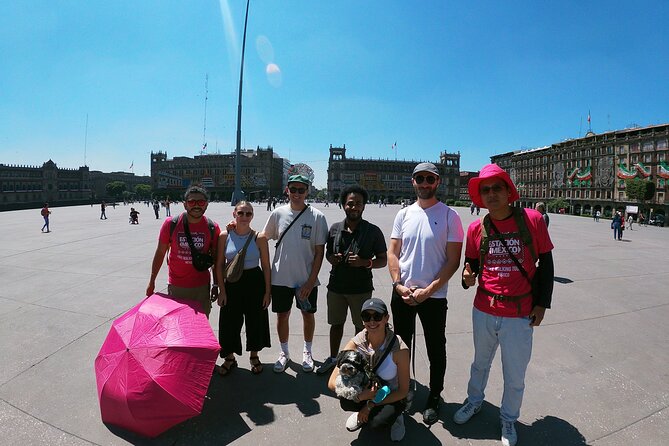
- The Zócalo sets the story: Begin at Mexico City’s great central square, where government, public celebrations, traditions, and social movements meet.
- Ancient and modern history share the route: See Templo Mayor ruins beside the colonial center, then move toward 20th-century art and architecture.
- Bellas Artes is the grand finish: The tour ends near one of Mexico City’s most recognizable buildings and its important murals.
- Guides shape the experience: Past guides including Diana, David, Carmina, Sofía, Jesús, Marco, and Ulysses have been praised for strong explanations and warm personalities.
- Good value for a first morning: At $25, you get two to three hours of orientation and a useful base for exploring the center on your own.
- Plan for steady walking: The route is not designed for a slow, sit-down museum visit. Wear comfortable shoes and bring water.
Why this $25 walking tour works as a first look
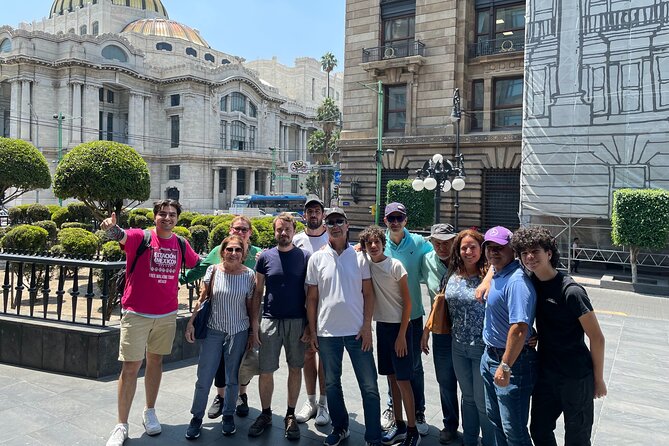
I see this tour as an orientation walk rather than a full museum experience. In two to three hours, you get the main story of Mexico City’s historic center: Mexica foundations, Spanish rule, national government, muralism, and modern architecture.
That range is the strongest reason to book it early in your stay. After the walk, you will have a better sense of which buildings and museums deserve more of your time. You may also pick up useful suggestions about places to eat and other things to see. One guide, for example, was praised for offering food tips at the end, while another adjusted the pace to suit the group.
The price matters here. At $25 per person, the tour costs less than many specialized city walks, yet it covers several of the center’s most important sights. The value comes from the explanations. You can walk around the Zócalo on your own for free, but a guide helps connect the ruins, government buildings, churches, murals, and public squares into one understandable story.
The route is offered in English and starts at 9:00 a.m. That early time is useful if you want to see the center before spending the afternoon inside museums or continuing to another part of the city. The tour is usually booked about eight days ahead, so you should reserve early if your dates are fixed.
More History Walking Tours in Mexico
- Historic Downtown Walking Tour
★ 5.0 · 1,289 reviews - Mexico City: Historic Downtown Walking Tour
★ 4.8 · 1,039 reviews - Walking Tour of the Historic Center of Mexico City
★ 5.0 · 870 reviews
Starting at the Zócalo, where Mexico City tells its biggest story
The tour begins at P.za de la Constitución 463, beside the Zócalo in Centro Histórico. This is the right place to start because the square is not just an open plaza. It is the political and ceremonial heart of the city.
Your guide explains how the area has been used for government, public gatherings, social movements, traditions, and festivals. That gives the square more meaning than a quick photograph from the edge. I would pay attention to the way the buildings around you reflect different periods of Mexican history.
The route includes the great cathedral, described as the largest on the continent, as well as the main office of Mexico’s federal government. These sights help explain the power held by this small section of the city. The cathedral represents the Catholic and Spanish colonial order, while the government buildings show the continuing importance of the square in national life.
The Zócalo can be visually and politically busy, so a guide is useful here. You are not simply checking off a plaza. You are learning why this particular space has been the setting for public life over many centuries.
The stop lasts about 30 minutes, with no admission charge listed. That timing is enough for an overview, but not for a detailed visit inside every building. If you want long interior visits, plan to return on your own.
Templo Mayor reveals the city beneath the city
The next major stop is Museo del Templo Mayor, where you see the ruins of the central temple of ancient Tenochtitlan. The visit is scheduled for about 20 minutes and is listed with free admission.
This is one of the most important parts of the route because it changes the way you see the modern center. Colonial streets and monumental government buildings can make Mexico City seem primarily Spanish in character. Templo Mayor brings the Mexica world back into view.
Your guide explains the ancient city of Tenochtitlan, the Aztecs, and Mexica culture. Even a short stop can help you understand that the colonial center was built over an older capital with its own religious, political, and urban traditions.
The limited time is also the main constraint. Twenty minutes gives you a strong introduction, not a full museum visit. If ancient Mexico interests you most, I would treat this stop as a preview and return for a longer look. The tour’s value is that you learn what you are seeing before deciding how much more time to spend there.
This is a good example of why the guide matters. Ruins can be hard to read without context. A well-prepared explanation helps you connect stones and foundations with the culture that created them.
Santo Domingo shows two layers of Mexico
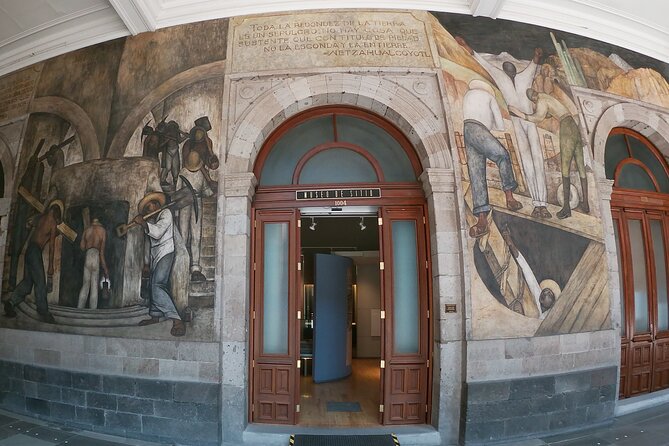
At Plaza de Santo Domingo, the tour shifts from ancient Mexica culture to the Spanish colonial past and the beginnings of the Mexican muralist movement. The stop lasts about 30 minutes and is also listed as free.
This square gives you a useful contrast. The route does not present Mexican history as one smooth story. Instead, it shows the layers that shaped the capital: the older Mexica world, Spanish rule, and later efforts to create a distinctly Mexican national culture through public art.
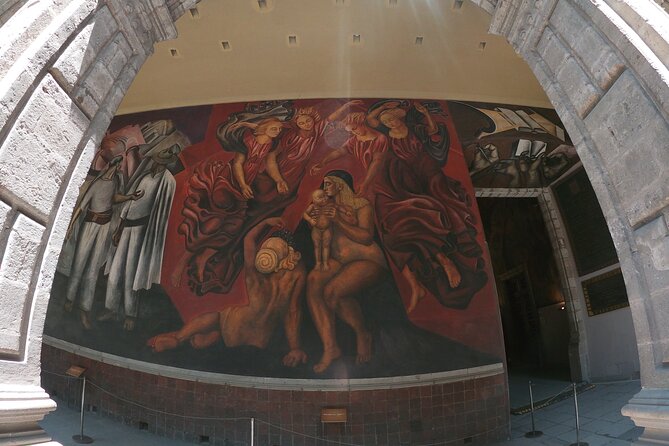
The reference to muralism is important. Mexico’s murals were not simply decoration. They helped place history, politics, workers, Indigenous cultures, and national identity in public spaces where ordinary people could see them. Your guide can help you look for the ideas behind the images rather than treating them as colorful backdrops.
This is also a good stop for questions. Several of the praised guides on this route have been singled out for making the walk interactive and for welcoming questions. David, for example, was noted for presenting a large amount of information in an exciting way, while Diana was praised for explaining how art and history connect.
More Local Culture and Traditions Tours in Mexico
- Historical and Cultural Walking Tour of San Miguel de Allende
★ 5.0 · 641 reviews - Historical and Cultural Walking Tour of San José del Cabo
★ 5.0 · 576 reviews - Historical & Cultural Walking Tour of San Miguel de Allende
★ 4.8 · 225 reviews
Museo Nacional de Arte brings in Mexico’s 20th-century architecture
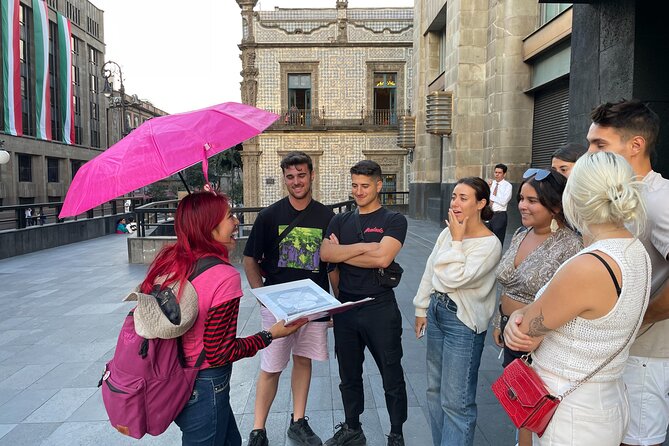
The Museo Nacional de Arte marks another change in the city’s visual story. Here, the tour turns toward modern architecture from the 20th century. The planned stop lasts about 30 minutes and carries no separate admission charge according to the tour details.
You should think of this as a guided introduction, not a full art museum visit. Thirty minutes is enough to appreciate the building, understand its place in the center, and hear how modern Mexico reshaped its public image. If you are fond of architecture, this may be one of the stops that sends you back later.
The route’s art focus becomes especially helpful here. A guide who can explain both the building and its cultural setting gives you more than a list of dates. You begin to see how Mexico City used architecture, museums, and murals to express national identity.
I would keep your expectations realistic. The schedule moves briskly, and the tour covers several sites. You will not have time to study every gallery or work at length. Still, the stop helps tie the earlier history to the city you see today.
The tiled palace adds a quick visual surprise
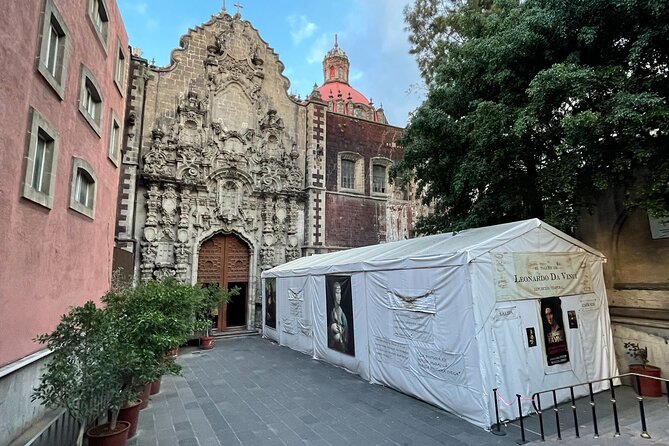
The walk also includes a beautiful palace known for its tiles, widely recognized as Casa de los Azulejos. This kind of stop is valuable because it gives the route a change of pace. After ruins, government buildings, churches, and museums, you get a building whose appeal is immediately visual.
The tiled exterior is one of those details that can be easy to pass without knowing its importance. A guide points it out as part of the center’s architectural story and helps you notice how decorative design shaped the streetscape.
The available details do not give this stop a separate duration, so expect it to be a brief part of the walk rather than a long interior visit. If you want photographs, have your camera ready and listen for the guide’s explanation before the group moves on.
Bellas Artes gives the tour a fitting finish
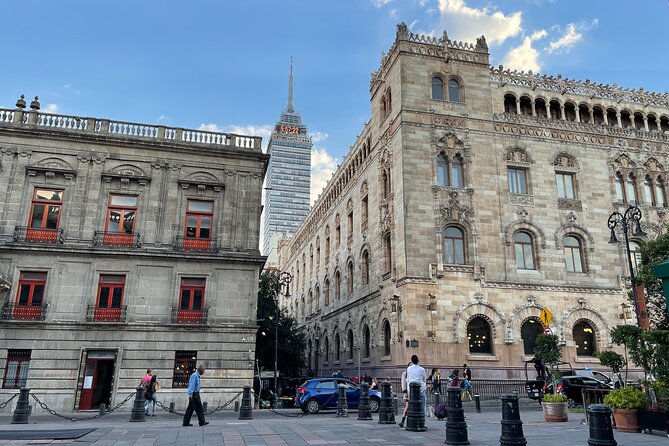
The final destination is Palacio de Bellas Artes, one of Mexico City’s best-known buildings. The tour finishes close to it at Av. Juarez 39, rather than ending back at the Zócalo.
This is a practical ending. You are left near a major cultural attraction, with the rest of the day open for a longer visit. The palace is also a fitting conclusion because it brings together architecture, performance, and the mural tradition introduced earlier in the walk.
One guide was praised specifically for explaining the murals at Bellas Artes. That detail is worth noting because the building can look impressive from the outside, but the murals give it much of its cultural weight. If art is not usually your main interest, a strong explanation can make the work easier to approach. Diana, in particular, was praised for making the art feel accessible even to someone who did not normally think of themselves as an art person.
The tour information says a place with murals will be visited during the activity. It does not promise a long, private museum session, so think of the stop as an introduction. You may want to return afterward if Bellas Artes becomes a priority.
Guides are the biggest part of the experience
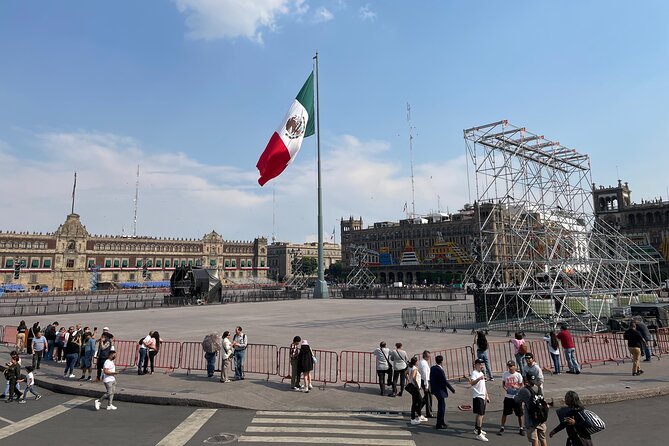
The route is fixed, but the guide can change its tone and value. Past guides named in the feedback include Sofía, Carmina, Jesús, Ulysses Warryor, Diana, David, and Marco.
The strongest pattern is their ability to explain a lot of history without turning the walk into a dull lecture. Carmina was praised for answering questions with energy. Jesús was described as both entertaining and well informed. Ulysses was noted for being polite, friendly, and educational.
Diana’s strength was the connection between art and history, especially at Bellas Artes. David was praised for handling a very small group and making the experience feel personal. Marco was noted for allowing the group to move at its own pace and for offering extra sightseeing tips afterward.
You should not expect the exact same guide on every departure, and the tour details do not guarantee a particular person. Still, the range of praised guides suggests that the company has several people who can handle the route well.
A small group helps. The maximum is 20 people, and some departures may be much smaller. A group of that size makes it easier to hear the guide, ask questions, and keep moving through crowded streets.
Walking conditions, timing, and what to bring
This is a genuine walking tour. You should be able to walk for up to three hours, with no suggestion of a vehicle transfer between stops. Comfortable shoes are essential.
The route includes public squares, historic streets, exterior viewing, and museum or cultural stops. You may spend some time standing while the guide speaks. Bring water, especially if you are not used to long city walks.
The 9:00 a.m. start gives you a full afternoon afterward, but it also means getting to the Zócalo on time. The meeting point is near public transportation, which makes the start practical, though you should still allow time to find P.za de la Constitución 463.
Service animals are allowed, and most people can take part. The information does not provide detailed mobility guidance, so anyone with specific access needs should confirm the route directly before booking.
Food and drinks are not included. That is no surprise for a short walking tour, but you should plan your own breakfast, water, and post-tour meal. The end near Bellas Artes gives you a useful place to continue your day, though the tour itself does not arrange lunch.
Who will get the most from this tour
I would recommend this walk to first-time visitors who want to understand the historic center before exploring it alone. It is also a good fit for history lovers who want to connect ancient Tenochtitlan, colonial Mexico, national government, muralism, and modern architecture in one morning.
Solo visitors may appreciate the chance to ask direct questions and, if the group is small, get a more personal walk. Couples and families can use it as a shared introduction before choosing museums or neighborhoods for the next few days.
You may want something else if you prefer long museum visits, a food-focused walk, or a slow route with many breaks. This experience covers a lot of ground and gives each stop limited time. Its strength is range, not depth at any single site.
Should you book this Mexico City walk?
Book it if you want a useful first-day introduction to the historic center at a reasonable price. The route covers the Zócalo, cathedral, federal government buildings, Templo Mayor, Santo Domingo, Museo Nacional de Arte, the tiled palace, and Bellas Artes, while the guides add the context that makes those places easier to understand.
I especially like it for the morning of your first full day. You can learn the basic story, note the buildings you want to revisit, and finish near Bellas Artes with the afternoon free.
Skip it only if three hours of walking feels too demanding or if you already know the center well. For most first-time visitors, the $25 fee is a sensible way to get oriented before spending more time and money on the city’s museums and neighborhoods. Free cancellation is available up to 24 hours before the 9:00 a.m. start, which gives you some flexibility.
FAQ
How much does the walking tour cost?
The tour costs $25 per person.
How long does the tour last?
The experience lasts approximately two to three hours.
What time does the tour start?
The tour starts at 9:00 a.m.
Where does the tour begin?
It begins at P.za de la Constitución 463 in Centro Histórico, near the Zócalo.
Where does the tour end?
It ends at Av. Juarez 39, near the Palace of Fine Arts.
Is the tour offered in English?
Yes. The tour is offered in English.
How many people can join the tour?
The maximum group size is 20 people.
Newest history tours we have reviewed in Mexico
- Private Walking Tour Gems of the Historic Center of Mexico City★ 5.0 · 87 reviews
- Private Tour Mexico City – Best Rated★ 5.0 · 220 reviews
- Private Historic City Tour + Street Food of Oaxaca – Best Rated★ 5.0 · 53 reviews
- Coba Private Tour – Ancient Ruins & Refreshing Cenote Swim★ 5.0 · 85 reviews
- Historical & Cultural Walking Tour of San Miguel de Allende★ 4.8 · 225 reviews
- Chichen Itza Guided Historical Tour with Lunch Included★ 4.5 · 112 reviews
- Ancient Chacchoben Mayan Ruins & Mayan Experience from Costa Maya★ 5.0 · 96 reviews
- Tour to Teotihuacan with visit to ancient caves and CDMX transportation★ 5.0 · 130 reviews
Local Culture & Traditions Tours, compared.

Amsterdam Food and Cultural Tour with Tastings
Read our review →
Sevilla Food Tour: Tapas, Wine, History & Traditions
Read our review →
Tromsø: Reindeer Camp and Sami Cultural Tour with Lunch
Read our review →
Half Day Dominican Republic Cultural Tour : Small Group
Read our review →
Ultimate Melbourne Walking Tour: History, Laneways & Culture
Read our review →
Tromsø: Sámi Reindeer Sledding and Sami Cultural Tour
Read our review →
Kyoto Gion: 2-Hour Geisha Culture & History Walking Tour
Read our review →
Marrakech Historical and Cultural Tour – Half Day City Tour
Read our review →Browse the lists this tour appears in