
Review · KATHMANDU HISTORY TOURS
UNESCO Seven World Heritage Tour in Kathmandu
Kathmandu’s seven UNESCO heritage sites are spread across a wide valley, and seeing them all in one day takes stamina, planning, and a very good driver. This private-car tour gives you the rare chance to connect them in one long sweep, from the Monkey Temple at sunrise hours to the great Buddhist stupa of Boudhanath.
I like two things here: entry fees and hotel transport are included, and your guide can adjust the pace around your interests. Guides such as Shanti, Pankaj, Kabita, and Sarita have been especially praised for clear explanations, patience, and help with photographs or shopping. The drawback is simple: this is a packed 12-hour day with plenty of steps and walking.
Key points at a glance
- Seven UNESCO heritage areas in one day: You visit Kathmandu Durbar Square, Swayambhunath, Boudhanath, Pashupatinath, Patan, Bhaktapur, and Changu Narayan.
- A private car saves valuable time: Kathmandu traffic can be slow, so having a driver between sites matters.
- Changu Narayan adds a quieter stop: The hilltop temple feels more removed from the city than the major squares.
- The guides are a major part of the experience: Shanti, Pankaj, Kabita, Sarita, and Som are praised for history, religion, flexibility, and personal care.
- You need comfortable shoes: Swayambhunath alone has 365 stairs, and several sites involve uneven courtyards and long walks.
- Lunch is not included: Bhaktapur has many places to eat, and you choose where to stop.
Why this one-day route works
The tour solves Kathmandu’s main sightseeing problem: the important places are not gathered in one tidy center. Patan lies south of Kathmandu, Bhaktapur sits farther east, Changu Narayan is beyond Bhaktapur, and the major Buddhist and Hindu sites are elsewhere in the valley.
A private vehicle lets you move between these places without arranging taxis at every turn. Your driver handles the difficult traffic while your guide keeps the day organized. That matters because the tour is not just a collection of famous monuments. It is a long chain of courtyards, temples, monasteries, shrines, markets, and sacred spaces.
The usual day begins around 7 a.m. and ends in the evening, though the exact rhythm can change with traffic and your interests. The private format is a real advantage. You are not locked into the same pace as a large group, and guides have adjusted time for shopping, photographs, or a shorter finish when needed.
At $180 per person, the cost is not low for a day in Nepal. But it covers a private vehicle, an English-speaking guide, hotel pickup and drop-off, and the required entry fees for the seven heritage sites. For a solo visitor or a couple with only one free day, that bundle can be fair value. Group discounts may improve the price for larger parties.
More UNESCO World Heritage Tours in the world:
- World Heritage Shirakawa-go and Experience Tours from Kanazawa
★ 5.0 · 4,049 reviews - From Tirana: Berat UNESCO Heritage & Belshi Lake Tour
★ 4.9 · 3,863 reviews - Bali: Tanah Lot UNESCO World Heritage Sites Full-Day Tour
★ 4.7 · 1,947 reviews
Swayambhunath and the three Buddhas
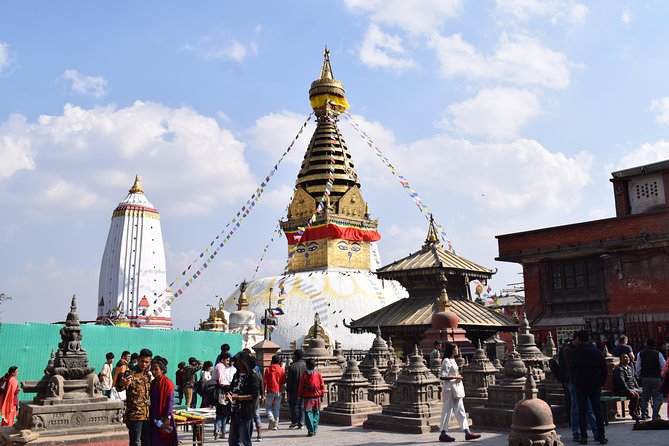
Your first major stop is Swayambhunath, commonly called the Monkey Temple. The stupa sits on a hill above Kathmandu, reached by a stairway of 365 steps. The climb is the first physical test of the day, but it also gives you a broad view over the city.
At the top, you can walk around the stupa, spin prayer wheels, and see Buddhist and Hindu worship existing side by side. Smaller shrines and religious images fill the approach, so the site rewards slow looking even when the schedule is tight.
The stop is listed at about 15 minutes, though your private guide may give you more time if the day allows. The short visit means you should decide what matters most to you. If you want photographs and a quick explanation, the schedule works. If you want a quiet circuit around the stupa, you may need to ask for extra time.
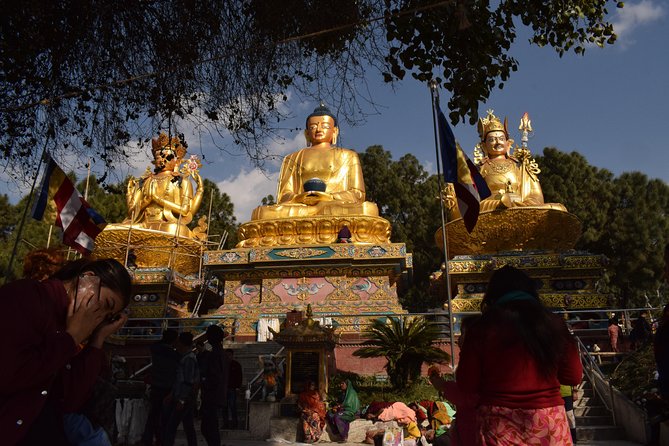
The nearby Amideva Buddha Park is a brief stop at the end of the Swayambhunath visit. Three large Buddha statues make an immediate impression, and the park is easy to overlook if you are exploring alone. It is scheduled for about 10 minutes, so treat it as a quick visual pause rather than a separate major attraction.
Kathmandu Durbar Square and Kumari Chowk
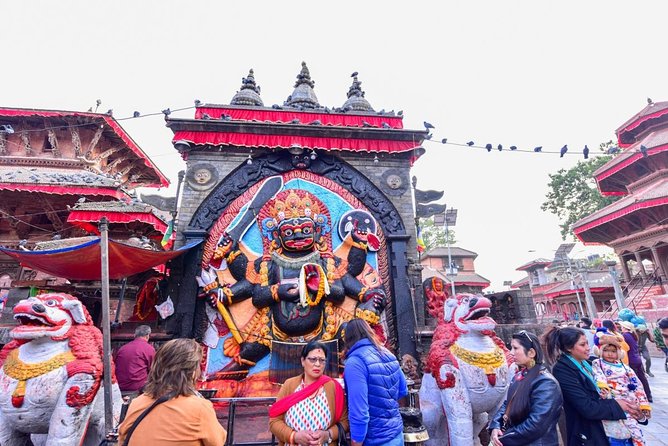
Kathmandu Durbar Square introduces you to the old royal center of the capital. Earthquake damage and ongoing rebuilding are visible in parts of the square, but there is still plenty to see in the surviving and restored buildings, courtyards, shrines, and carved details.
Your guide is especially useful here because the square can feel like a jumble of religious and royal structures. Ask questions as you go. The value of this stop comes from connecting the architecture to Nepal’s royal past and to the religious practices that still shape the square.
Kumari Chowk is one of the most memorable smaller stops. It is a courtyard inside a red-brick, three-story building that was once home to the Kumari, a girl selected to serve as the city’s living goddess until puberty.
The visit is scheduled for about 10 minutes. You may find the courtyard more rewarding when your guide explains the role of the Kumari instead of treating it as a quick photograph. Keep your expectations realistic. This is a short stop within a very full day, not a long cultural presentation.
Patan’s carved stone and Buddhist courtyard
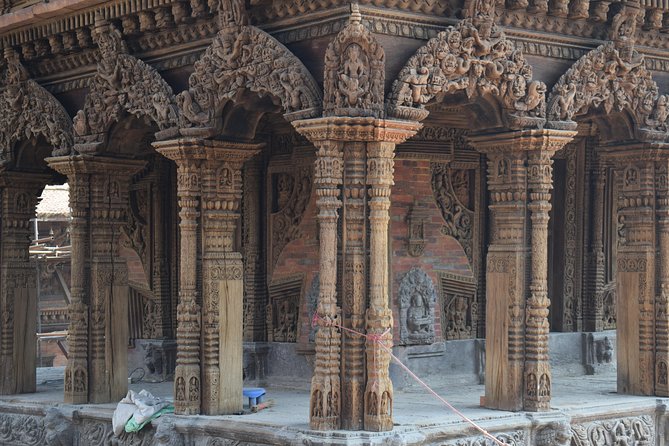
The route then moves to Patan Durbar Square in Lalitpur, an old royal courtyard known for Newar architecture. The square brings together brick buildings, carved timber, metalwork, and temples in a more concentrated setting than some of the other stops.
The Krishna Temple is a highlight. Its stone construction and 21 shrines make it different from the pagoda-style buildings you will see elsewhere. The central square is scheduled for about 25 minutes, giving you enough time to see the major structures and hear the basic story from your guide.
The Golden Temple, or Hiranya Varna Mahavihar, is a 12th-century pagoda-style temple with bronze and silver details. It is a working religious place, not simply an architectural display. The visit lasts about 10 minutes, so watch your footing and look closely at the smaller carvings and courtyard details.
Patan Museum occupies Keshav Narayan Chowk. The museum adds useful context to the temples outside, with displays connected to local traditions, art, and history. The schedule allows about 15 minutes. That is enough for an introduction, but not for a slow museum visit.
This is one point where the packed itinerary becomes clear. You see the main setting and get a guided explanation, but you will not study every object in depth. If Patan interests you most, consider returning on your own later.
More History Tours in the world:
- New York City: American Museum of Natural History Ticket
★ 4.5 · 15,447 reviews - History and Hauntings of Salem Guided Walking Tour
★ 5.0 · 14,564 reviews - Colosseum: Underground and Ancient Rome Tour
★ 4.7 · 12,691 reviews - Lisbon: History, Stories and Lifestyle Walking Tour
★ 4.8 · 10,902 reviews
Bhaktapur’s Nyatapola and Fifty-Five Windows
Bhaktapur is often the day’s visual high point. The old city retains many traditional houses and structures, and its squares feel more unified than the scattered sites in modern Kathmandu. You get time to walk through the historic center rather than simply step out of the car for one monument.
Nyatapola Temple is a five-level pagoda with strong vertical lines and detailed sculpture. It is one of the tallest pagodas in the valley and shows the skill behind Newar temple design. The listed visit is about 10 minutes, but the steps and surrounding square give you a sense of the city’s scale.
Dattatreya Temple sits in Dattatreya Square. It is traditionally said to have been built from the wood of a single tree, an unusual detail that makes this stop easy to remember. The temple and square offer another view of Bhaktapur beyond its best-known central monuments.
The Palace of Fifty-Five Windows is one of the most striking structures in Bhaktapur’s Durbar Square. Its name comes from the carved windows across the palace facade. The scheduled visit is about 10 minutes, giving you time to appreciate the exterior and hear how it fits into the old royal complex.
Siddha Pokhari is a human-made pond near the old city gate. It is a short, five-minute stop, useful as a change of pace after the temples and palace courtyards. Lunch follows in Bhaktapur, but it is not included in the tour price. You choose from the available eateries, so tell your guide what kind of meal and setting you prefer.
Changu Narayan, the quieter hilltop temple
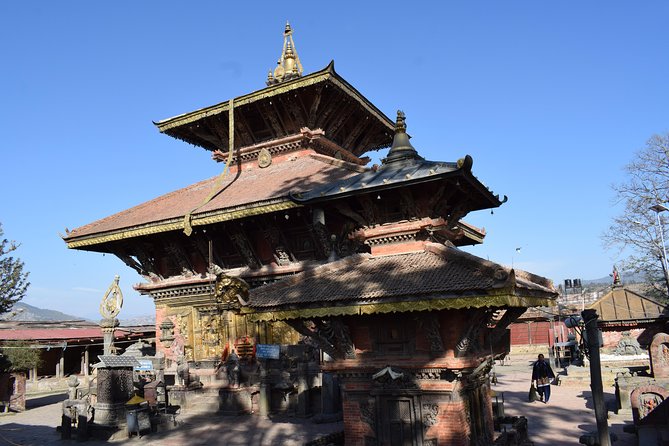
Changu Narayan is the most remote stop on the route and one of the most important. The temple dates to Nepal’s Licchavi period and contains stone and wood carvings that reward close attention.
The schedule gives you about one hour here, which is more generous than the short stops in Patan and Bhaktapur. That extra time helps because the temple is not just a quick photo stop. Your guide can explain the older carvings, the temple design, and the site’s place in the valley’s religious past.
I like this part of the route because it breaks up the succession of busy squares. The setting feels more removed, and the temple gives you a chance to look carefully instead of simply checking another famous place off your list.
The trip to Changu Narayan also shows why a private car is useful. Reaching a remote hilltop site by arranging separate transport would take more effort and time. You still need to walk, but the vehicle takes care of the long connection between major areas.
Pashupatinath and the sacred Bagmati area
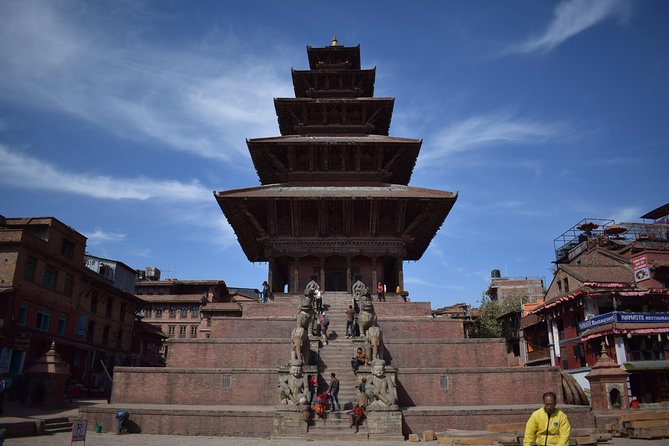
Pashupatinath is one of Nepal’s largest temple complexes, covering about 0.64 hectares and containing more than 500 temples and shrines. Even with one hour here, you are seeing only part of a very large religious area.
This is a place to listen carefully to your guide. Hindu and Buddhist traditions overlap across Kathmandu Valley, but Pashupatinath has its own strong identity and customs. The complex is a living religious center, so behave with care, dress smart casual, and follow instructions about where you may go.
The route can also include views of Hindu cremation activity by the river. That may be confronting, but it is an important part of understanding the site as a place of worship and funeral practice, rather than as a monument arranged for sightseeing.
One hour is enough for a meaningful introduction, but it will not cover every shrine. You may want more time if religious traditions and local ceremonies are your main interest.
Boudhanath, the final great circle
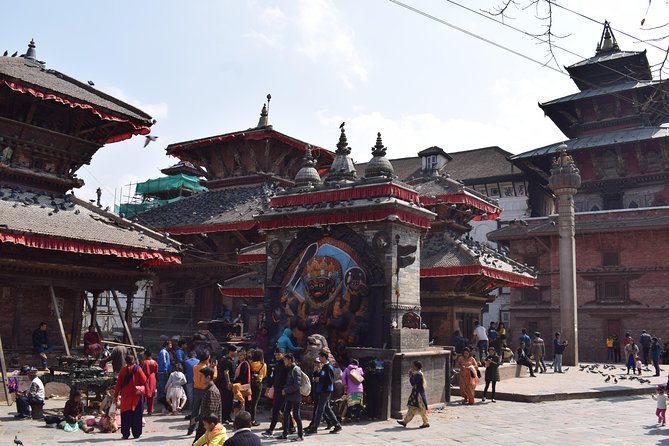
Boudhanath is the final listed stop and receives about one hour. The great stupa is about 36 meters tall, with more than 50 monasteries, or gompas, around it. Its broad circular form makes it a natural place to end a day of sacred architecture.
You can walk around the stupa, watch the prayer wheels, and take in the surrounding monasteries and shops. After a full day, the circular route gives you a simple way to slow down and absorb what you have seen.
The timing is helpful. Boudhanath is not a stop that works well as a five-minute photograph. One hour lets you walk the circuit and ask your guide about Buddhist practice, the stupa’s design, and the role of the surrounding gompas.
By this point, you may be tired. That is not a flaw in the site, but it is a limitation of the one-day plan. If you start the morning already worn out, the final hour may feel less rewarding than it deserves.
What the guide and driver add
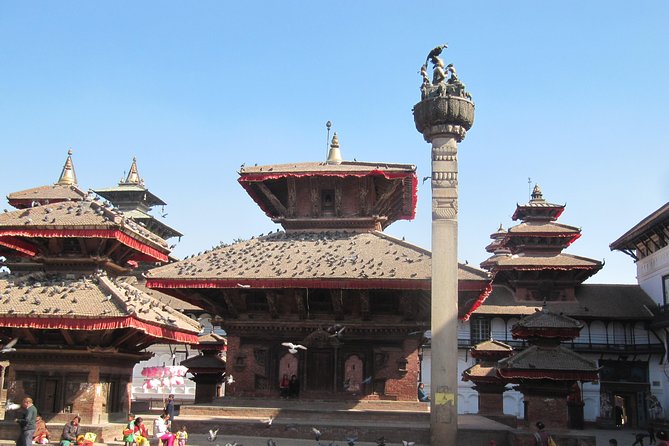
The strongest part of the experience is the human service. Guides including Shanti, Pankaj, Kabita, Sarita, and Som are praised for explaining Hinduism, Buddhism, architecture, local history, and present-day Nepal in clear English.
The best guides do more than recite dates. They adjust the schedule, answer questions, help with photographs, reduce unwanted attention from vendors, and explain what you are seeing in context. Shanti has been especially praised for helping with photographs and shopping, while Kabita is noted for giving couples room to set their own pace.
The driver matters just as much. Kathmandu traffic can make short distances take a long time, and several people specifically praised drivers for safe, calm handling of the roads. A clean, comfortable car makes the repeated transfers easier, especially after climbing steps and walking through stone courtyards.
The private format also lets you ask for small changes. You may be able to spend longer at a favorite site or add a short shopping stop, though fitting all seven UNESCO areas into one day still requires discipline.
Is $180 a fair price?
The price is $180 per person. That includes the private vehicle, English-speaking guide, hotel pickup and drop-off, and entry fees at the seven heritage sites. Lunch and tips are extra.
I would judge the price by the time you have, not just by the number on the page. If you have several days in Kathmandu, you could spread these places across separate outings and spend more time at each. If you have one free day, the private car and guide save you from arranging transport and researching the sites yourself.
For solo visitors, the cost is harder to justify than for a small group sharing the private vehicle. Group discounts may help. The strongest value comes when you want a guided cultural overview and need to cover a lot of ground quickly.
Who should book this day?
You should consider this tour if you are visiting Kathmandu for the first time, have only one sightseeing day, or want a clear introduction before exploring independently. It also suits people who want cultural and religious context instead of simply taking photographs.
You should be prepared for a long day, many steps, and a steady flow of information. Wear your most comfortable walking shoes, bring water and sun protection, and use smart casual clothing for the religious sites.
If you prefer slow museum visits, long meals, or spontaneous wandering, this itinerary may feel too compressed. You can ask for adjustments, but seven heritage areas in one day will always be a fast overview.
The tour is private, and most people can participate, but the 365 stairs at Swayambhunath and the amount of walking deserve serious thought. Free cancellation is available up to 24 hours before the start time. Changes or cancellations within 24 hours are not refunded.
Should you book it?
Book this tour if your goal is to see all seven UNESCO heritage areas efficiently and understand what you are looking at. The private car, included entries, hotel transport, and strong guide service make the day practical, especially for first-time visitors with limited time.
Skip it if you want to give each square and temple a full morning. For everyone else, this is a demanding but sensible first look at Kathmandu Valley. You will not master the valley in 12 hours, but you will leave knowing where to return and what deserves a slower visit.
FAQ
How long does the UNESCO Seven World Heritage Tour last?
The tour lasts approximately 12 hours. The day commonly begins around 7 a.m. and continues into the evening, depending on traffic and the pace of your group.
What sites are included?
The route includes Swayambhunath, Amideva Buddha Park, Kathmandu Durbar Square and Kumari Chowk, Patan Durbar Square, the Golden Temple, Patan Museum, Bhaktapur, Nyatapola Temple, Dattatreya Temple, the Palace of Fifty-Five Windows, Siddha Pokhari, Changu Narayan, Pashupatinath, and Boudhanath.
Does the tour visit all seven UNESCO heritage sites?
Yes. The seven heritage areas are Kathmandu Durbar Square, Swayambhunath, Patan Durbar Square, Bhaktapur, Changu Narayan, Pashupatinath, and Boudhanath.
Is transportation included?
Yes. A private vehicle and hotel pickup and drop-off are included.
Are entry fees included?
Yes. The required entry fees for the seven heritage sites are included in the tour price.
Is lunch included?
No. Lunch is not included. The tour stops in Bhaktapur, where you can choose from several eateries.
Is this a private tour?
Yes. Only your group participates in the activity, and the guide can adjust the pace around your interests when the schedule allows.
What should I wear and bring?
Smart casual clothing is recommended. Bring comfortable walking shoes, water, and sun protection. Swayambhunath includes 365 stairs, and several other stops involve considerable walking.
What is the cancellation policy?
You can cancel up to 24 hours before the experience for a full refund. Cancellations or changes made less than 24 hours before the start time are not accepted or refunded.
Newest history tours we have reviewed in the world
- Bologna: Street Food Tour in the Historic Center★ 4.8 · 125 reviews
- Bilbao Historical Tour in small group★ 4.7 · 52 reviews
- CEBU: Cebu City Heritage and Uphill Guided Tour★ 4.2 · 31 reviews
- Bishkek : City Tour (History, Architects, Statues & Culture)★ 4.9 · 54 reviews
- Blenheim: Omaka Aviation Heritage Centre Admission Ticket★ 4.9 · 31 reviews
- Berlin: Nazi History Walking Tour★ 4.8 · 33 reviews
- Best of Baku: 4-Hour City Tour Historic and Modern Landmarks★ 4.7 · 63 reviews
- Belfast: Best of Belfast History, Culture & Art Walking Tour★ 4.9 · 158 reviews
UNESCO World Heritage Tours, compared.
World Heritage Shirakawa-go and Experience Tours from Kanazawa
Read our review →
Bali: Tanah Lot UNESCO World Heritage Sites Full-Day Tour
Read our review →
World Heritage Kyoto & Nara Uji Authentic Matcha Experience
Read our review →
UNESCO’s Ayutthaya Historical Park: Full-Day Tour from Bangkok
Read our review →
Rotterdam: Kinderdijk UNESCO World Heritage Entry Ticket
Read our review →
From Busan: Gyeongju UNESCO World Heritage Guided Day Tour
Read our review →Browse the lists this tour appears in