
Review · CANADA HISTORY TOURS
Toronto: Distillery District Historic Walking Tour
Toronto’s Distillery District is not just a pretty place for dinner and photos. Beneath the cobblestones and restored brick buildings is the story of a young city powered by whiskey, business risk, family rivalry, and more than a little drinking. This one-hour walking tour connects the polished district you see today with the industrial complex that once helped build Toronto.
I like two things here. First, the guides make the past feel close, especially when explaining how near the lake once sat to the original property. Second, you can see the architecture from the outside and, when access allows, from inside buildings that are not normally open to the public. The main consideration is that one hour passes quickly, so this is an introduction rather than a full study of the district.
- The Gooderham & Worts story: Learn how a local distillery grew into one of the world’s largest.
- Victorian industrial buildings: See thick walls, old work spaces, and carefully preserved architecture.
- Toronto’s early years: Hear stories about a young city, trade, business, alcohol, and social change.
- Strong guide-led experience: Guides including Erik, Nicole, Devin, Tom, and Eric are known for lively storytelling and humor.
- Easy one-hour walk: The route is manageable, wheelchair accessible, and generally suited to people age 10 and older.
- Good before or after exploring: Finish the tour with time for the district’s restaurants, bars, shops, galleries, sculptures, and theaters.
Why the Distillery District Tells Toronto’s Story

The Distillery District is one of Toronto’s newest attractions and one of its oldest surviving industrial sites. That contrast gives the tour its appeal. Today, you find independent restaurants, bars, boutiques, galleries, outdoor sculptures, and theaters. The buildings still carry the look of a working 19th-century factory complex.
The tour explains how the Gooderham & Worts Distillery grew alongside Toronto. The company became a giant in the spirits business, and the district’s buildings reveal the scale of that operation. This was not a small neighborhood brewery. It was a major industrial concern tied to jobs, shipping, trade, families, and the growth of the city itself.
I especially like the way the tour links physical details to larger changes. The location of the waterfront is not just a geography lesson. It helps you understand how Toronto expanded and how land was added along the lake. A building, wall, or street can seem decorative until the guide explains what it once did.
Meeting at 11 Gristmill Lane
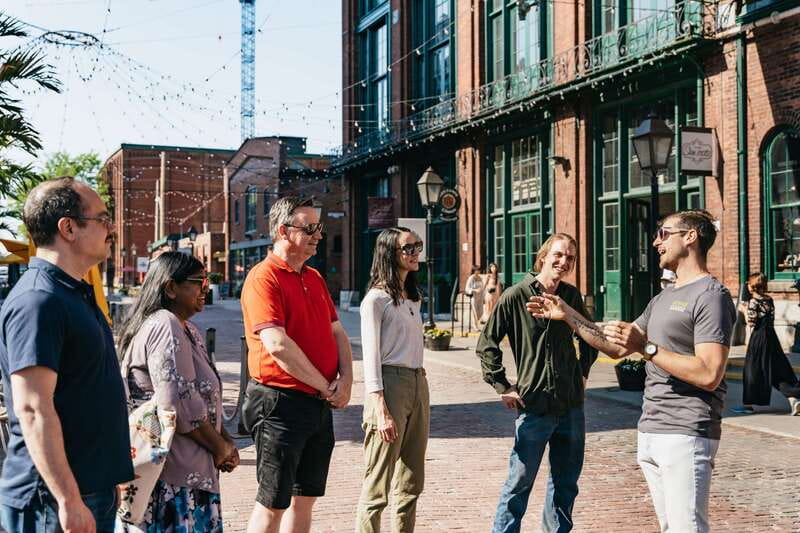
The starting point is the Go Tours Canada office at 11 Gristmill Lane, inside the Distillery District. The office is near the Red Heart at Parliament Street and Mill Street. Give yourself enough time to find the meeting point, especially if you are arriving while the district is busy.
You do not need complicated equipment. Bring comfortable shoes, a camera, and a passport or other identification. The walk is described as easy, and the experience is wheelchair accessible. Even so, the district’s cobblestone streets may be worth considering if you use a mobility aid, so check the route details with the operator when booking.
The tour is offered in English with a live guide. Guide names reported across different departures include Erik, Eric, Nicole, Devin, Tom, Sarah, David, Milo, Josh, Gavin, Graham, and others. The repeated strength of the guiding team is clear: they rely on storytelling, questions, local details, and humor rather than delivering a dry list of dates.
More History Walking Tours in Canada
- Gastown Historic Walking Food Tour
★ 5.0 · 1,863 reviews - Vancouver: Gastown Historical Walking Food Tour
★ 4.8 · 539 reviews - Quebec City: Old Quebec Historical Walking Tour
★ 4.8 · 409 reviews
Inside the Victorian Industrial Buildings
The architecture is the first thing you notice, but the tour helps you read it. The Distillery District preserves the largest collection of Victorian industrial architecture in North America. Its brick buildings, narrow lanes, and cobbled surfaces create a setting that feels very different from modern downtown Toronto.
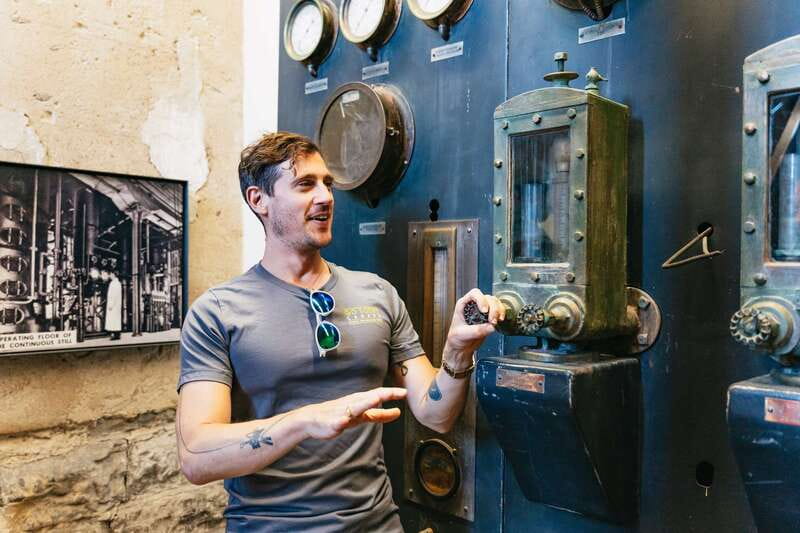
The useful part is seeing the site as a workplace rather than as a backdrop. You learn to think about storage, production, transportation, and the people who kept the operation running. A white building with walls said to be about a meter thick has made a strong impression on past participants, and details like that give the architecture practical meaning.
One appealing feature is the chance to see some interiors or restricted areas when access permits. That can turn a familiar stroll into a more revealing visit. Do not assume every building will be open on every departure, but the tour is designed to discuss the architecture from both inside and outside.
Bring your camera, but keep it in its place during the storytelling. The best details may not be the grandest views. Look for construction methods, old industrial features, and the way the buildings fit together. The guide’s explanation is what turns a collection of attractive facades into a working historic site.
Gooderham & Worts, From Success to Decline
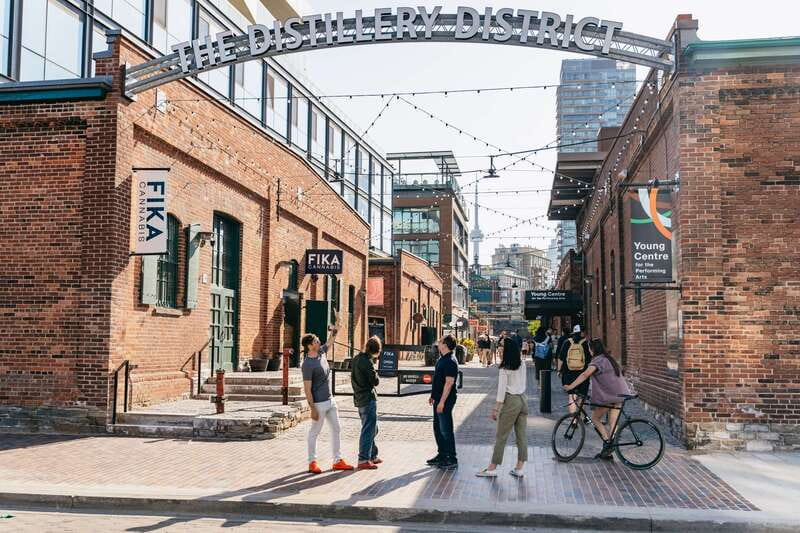
The central story is the rise and fall of Gooderham & Worts. The company became one of the largest distilleries in the world, a surprising fact if you know the district mainly as a shopping and dining area.
The tour follows the company’s growth and explains how its fortunes were tied to Toronto’s own development. You hear about business decisions, family interests, and the pressures that eventually brought the distillery’s long run to an end. The operation stopped distilling in 1990, a useful reminder that this is not a frozen 19th-century relic. It remained part of the city’s working story well into the modern era.
The tale includes more than whiskey. One guide explained how the site also produced antifreeze, and the business created jobs with social effects that reached beyond the factory gates. The role of women in the workforce is one example. These details make the tour more useful than a simple account of founders and production figures.
The company’s success also came with complications. You hear about business intrigue and the rough habits of a young city where alcohol was part of daily life and commerce. The result is a more honest picture than a polished heritage tale. Toronto’s growth had money, ambition, opportunity, and excess all mixed together.
Toronto’s Early Wild Years
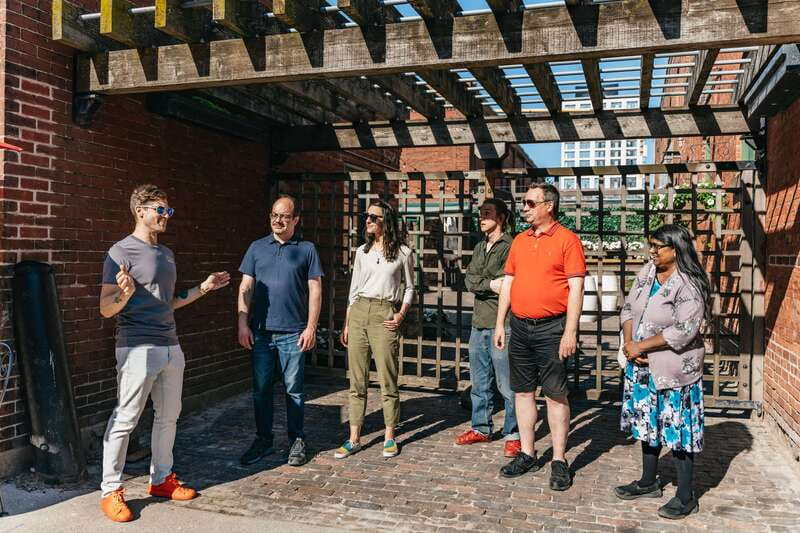
The tour presents Toronto as a young, inebriated city, not the orderly modern metropolis you see today. That framing gives the history some humor, but it also explains why a distillery could become so important.
The city’s early years involved trade, construction, movement of goods, and rapid change around the waterfront. Gooderham & Worts benefited from that setting, while also helping create jobs and economic activity. The story moves between company history and urban history, so you get a clearer sense of how the district fitted into Toronto’s growth.
The best guides use jokes without turning the tour into a comedy routine. Erik has been praised for mixing historical facts with deliberately corny humor. Nicole, Devin, Tom, Eric, and others have also been singled out for being warm, energetic, and willing to answer questions.
That matters because the site can be visually impressive but hard to understand on your own. You can walk the same lanes several times and still miss why they mattered. A good explanation gives you a framework for exploring the district after the tour ends.
Same streets, a different century:
- Victoria Guided Food and History Tour
★ 5.0 · 2,015 reviews - Evening Gourmet Tour 5 Course Dinner – History and Food in Old Quebec City
★ 5.0 · 496 reviews - Combo Historical and Food Tour of Old Quebec
★ 5.0 · 360 reviews - Pete’s Historic Walking Tour
★ 5.0 · 321 reviews
A One-Hour Route With a Quick Pace

The full experience lasts one hour and begins and ends at Go Tours Canada in the district. The compact schedule works well if you are fitting the area between other Toronto plans. It also means the guide must keep the story moving.
You will walk through the Distillery District rather than ride between stops. The level is easy, and the tour is generally recommended for people age 10 and older. It should suit families with older children, couples, solo visitors, and locals who want to understand a familiar place more clearly.
Small groups can make the experience especially personal. Several departures have continued even when only one or two people were booked, giving the guide time to answer questions and adjust the pace. Group size can vary, so you should not expect a private tour every time. Still, the format allows for conversation rather than a distant lecture.
Rain does not automatically ruin the experience. The tour can include indoor areas, and a past departure in heavy rain stayed mostly inside. You should still dress for the weather and wear shoes that can handle wet cobblestones.
What You Get for $20
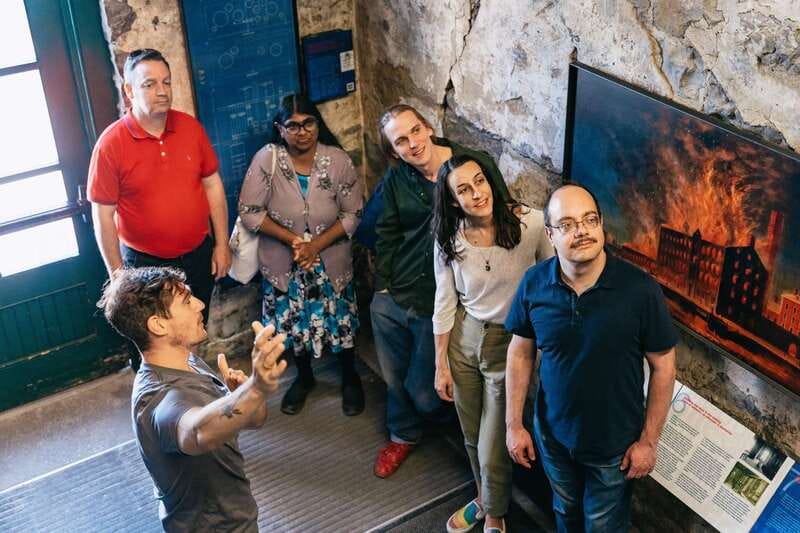
At $20 per person, this is a fairly modest cost for a guided introduction to one of Toronto’s most distinctive districts. You are paying for an hour with a professional guide, the walking tour, and sales tax. The value comes from interpretation, not from an included meal, drink, or admission package.
I think the price makes the most sense if you are new to the Distillery District or care about architecture and local history. Without a guide, you can still enjoy the shops, restaurants, public art, and buildings. With a guide, you gain the business and social story that is easy to miss.
Do not book this particular tour expecting alcohol tasting. The standard experience does not include a spirits flight. If tasting is important to you, the operator offers a separate Prohibition & Spirits Walking Tour that adds Prohibition and district history with a flight of spirits at the end.
Some older departures ended with chocolate or beer sampling, but those extras are not part of the stated inclusions for this tour. Treat them as possible past arrangements, not something to count on. The reliable value is the guided history and architecture.
What to Do After the Tour
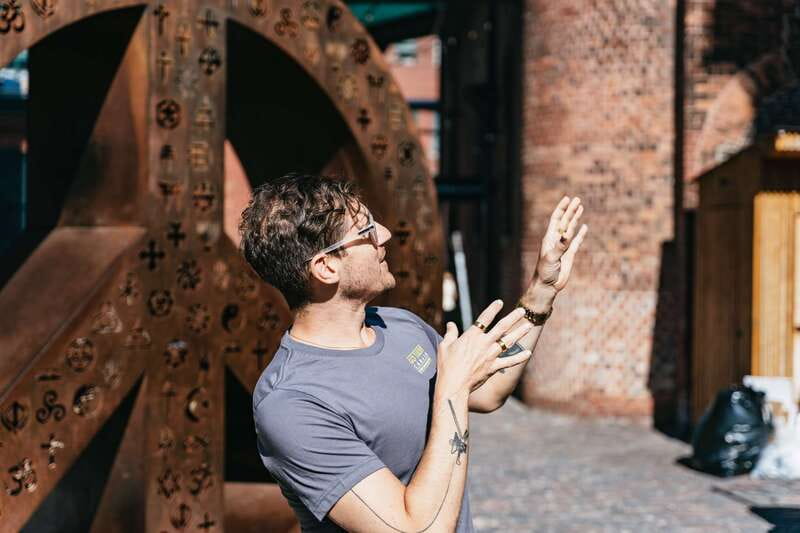
The tour ends back at Go Tours Canada, leaving you in a good position to continue exploring. The district is lined with independent restaurants, bars, boutiques, galleries, theaters, and outdoor sculptures.
I would plan to stay for at least a little while after the walk. The guide may point out places worth seeing, and several guides have offered practical suggestions for making better use of the area. The district works well as a flexible stop because you can follow the tour with food, shopping, art, or simply another walk through the lanes.
The tour also gives you a better way to look at the public spaces. After learning what the buildings once did, the restaurants and galleries feel less like a collection of modern businesses and more like new uses inside an old industrial framework.
Who Will Like This Tour Most
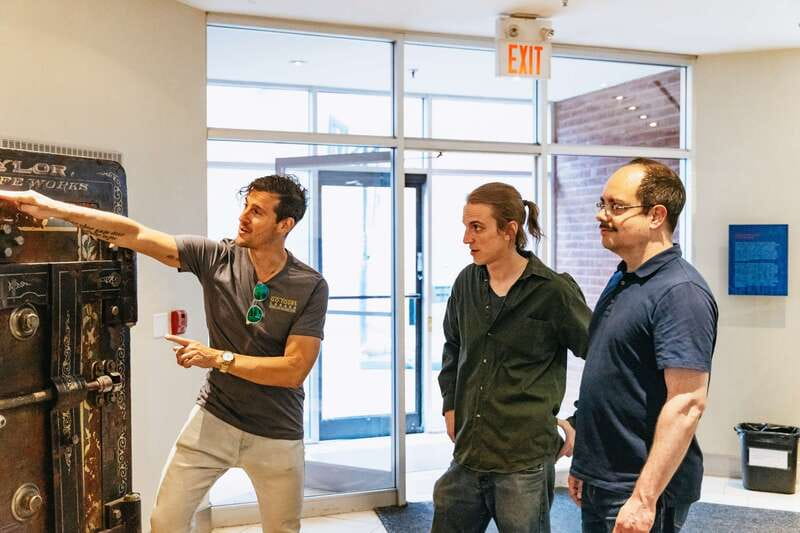
Book this if you want a short, focused history lesson with plenty of visual context. It is a strong choice for a first visit, but locals can benefit too. Repeated visits to the district do not necessarily reveal its industrial past, and the guides are good at connecting familiar sights with new information.
It suits you best if you enjoy:
- Architecture with a practical story behind it
- Local business and city history
- Light humor mixed with serious information
- Easy walking rather than a long, demanding route
- Time to explore restaurants and shops afterward
- A tour where you can ask questions
It may be less suitable if you want a long museum-style visit, a formal whiskey tasting, or a detailed tour lasting several hours. You will get a lively overview in 60 minutes, not an exhaustive examination of every building.
Practical Booking Advice
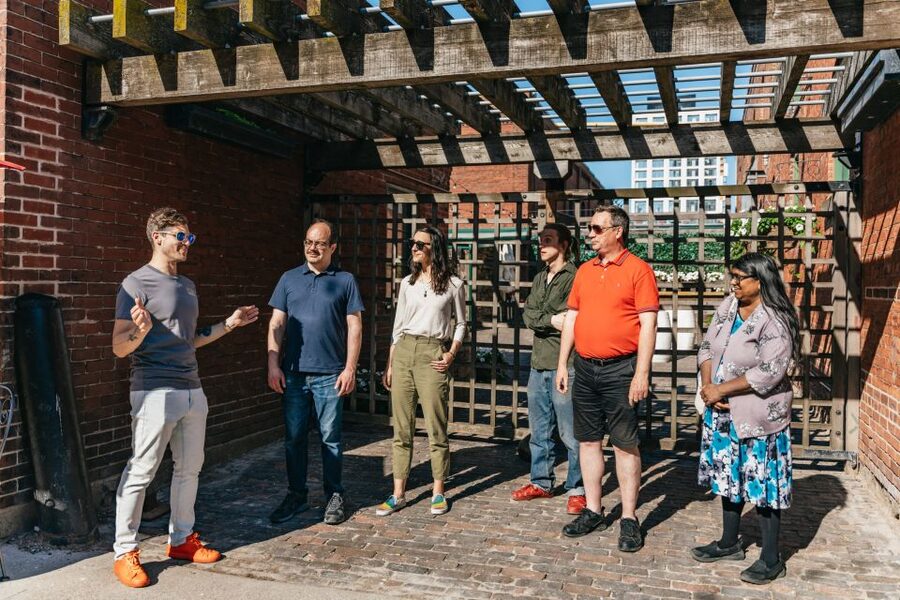
The tour allows free cancellation up to 24 hours before departure for a full refund, and you can reserve now and pay later. Starting times vary, so check availability for your date.
Wear comfortable shoes even though the walking level is easy. Bring identification and a camera. If you have mobility concerns, the activity is listed as wheelchair accessible, but the historic cobblestone setting is still worth discussing with the operator before you arrive.
For the best experience, arrive ready to listen and ask questions. Guides such as Erik, Nicole, Devin, Eric, and Tom have been praised for answering questions and keeping small groups engaged. The district is easy to photograph, but the details about changing shorelines, thick walls, factory work, and the company’s decline are what you are paying to hear.
Should You Book It?
Yes, if you want the Distillery District to mean more than attractive brick buildings and a convenient place to eat. For $20, this one-hour tour gives you a clear introduction to Gooderham & Worts, Toronto’s early growth, and the people and businesses tied to the site.
Book it early in your visit so you can use the guide’s suggestions afterward. Choose the separate Prohibition and spirits option if tasting matters to you. Otherwise, the historic walking tour is the better pick for architecture, local context, and a compact look at one of Toronto’s most unusual neighborhoods.
FAQ
Where does the Distillery District walking tour start?
The meeting point is the Go Tours Canada office at 11 Gristmill Lane, inside the Distillery District. It is near the Red Heart at Parliament Street and Mill Street.
How long does the tour last?
The guided walking tour lasts one hour.
Where does the tour finish?
The tour returns to Go Tours Canada in the Distillery District.
What language is the tour offered in?
The tour is offered in English with a live tour guide.
How much does the tour cost?
The listed price is $20 per person, including sales tax.
Is alcohol tasting included?
No. The standard tour does not list alcohol tasting as an inclusion. A separate Prohibition & Spirits Walking Tour includes a flight of spirits.
Is the tour wheelchair accessible?
Yes, the activity is listed as wheelchair accessible.
How difficult is the walking?
The walking level is described as easy. Comfortable shoes are recommended.
Is the tour suitable for children?
The tour is generally recommended for people age 10 and older.
Can I cancel the booking?
Yes. You can cancel up to 24 hours in advance for a full refund. You can also reserve now and pay later.
Newest history tours we have reviewed in Canada
- Historic Walking Tour of Charlottetown★ 5.0 · 211 reviews
- Horse Drawn Historical Guided Tour★ 5.0 · 24 reviews
- From Calgary to Waterton National Park Nature History and Wonders★ 5.0 · 22 reviews
- Heritage Park Admission★ 4.5 · 155 reviews
- Toronto: Niagara Falls & NOTL Heritage Town Guided Day Tour★ 4.8 · 28 reviews
- Toronto: Dark History Nighttime Walking Tour★ 4.7 · 273 reviews
- Vancouver: Guided Food and City History Tour★ 4.5 · 53 reviews
- Quebec City’s History in Virtual Reality★ 4.5 · 141 reviews
History Walking Tours, compared.
History and Hauntings of Salem Guided Walking Tour
Read our review →

Freedom Trail History Small Group Walking Tour
Read our review →
Historic Charleston Guided Sightseeing Walking Tour
Read our review →
Tapas Walking Tour with Food, Wine, and History
Read our review →
Savannah History and Haunts Candlelit Ghost Walking Tour
Read our review →
A History of Terror – Belfast City Centre Walking Tour
Read our review →Browse the lists this tour appears in