
Review · ANCIENT HISTORY TOURS
Polonnaruwa Ancient City Private Day Tour (Hidden Gems)
Polonnaruwa is easiest to appreciate with someone who can connect its scattered ruins into one story. This private tour takes you from the old royal center to quiet monasteries, Hindu shrines, enormous stupas, and the remarkable Gal Vihara Buddha statues, with guide Tharindu, Tarry, or another Live Lanka Tours guide leading the way.
I like the private format, since you can ask questions and set the pace instead of trailing behind a large group. I also like the range of stops: you get major sights such as the Vatadage and Royal Palace, plus less-visited places such as Pabalu Vehera and Deepa Uyana. The main catch is cost planning: the $30 tour price does not include the $30 site entry fee, private transport, food, or tips.
Key points at a glance
- A private guide brings the ruins together: Tharindu and Tarry are praised for strong knowledge of Polonnaruwa, clear English, patience, and enthusiasm.
- The route covers far more than the Sacred Quadrangle: You visit royal buildings, Buddhist monasteries, Hindu temples, stupas, gardens, and a huge reservoir.
- Gal Vihara is the visual high point: Four famous rock-cut Buddha images give the tour its most memorable stop.
- The 6 to 7 hour schedule is full: The listed stops add up to roughly six and a half hours, including a 90-minute meal break.
- Transport needs careful checking: Private transportation and an air-conditioned vehicle are not included, though one booking was completed in an air-conditioned car.
- The total cost is closer to $60 before food and transport: The $30 tour fee and $30 admission charge should be treated as separate expenses.
Why a private tour helps at Polonnaruwa
Polonnaruwa is not one compact ruin you can see in a quick walk. The ancient capital spreads across a large archaeological zone, with monuments separated by roads and open ground. That makes a guide and vehicle useful, especially under Sri Lanka’s strong midday sun.
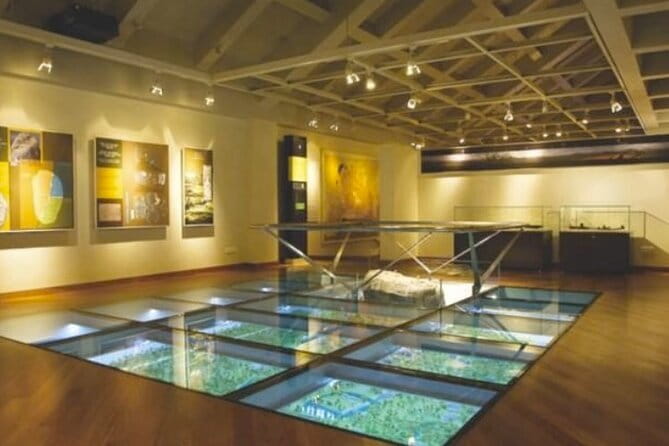
This experience begins at the Archaeological Museum, near the main entrance. Starting there is sensible. You get a short introduction to the city and its objects before seeing the buildings in their original setting. The museum visit lasts about 30 minutes, but the admission fee is not included.
The private format is the strongest reason to choose this experience. You have only your own group, so you can ask why a building mattered, stop for a closer look, or spend less time at a site that does not grab you. The guides associated with this tour, including Tharindu and Tarry, are praised for their patience, English, historical detail, and enthusiasm. One guide even let the tour run beyond the planned time because he was so keen to explain the city.
That enthusiasm can be a benefit, but it can also make a long day feel longer. One four-hour temple outing left its participants tired toward the end, and this itinerary is longer still. Go in expecting a serious sightseeing day, not a quick tuk-tuk circuit.
More Ancient History Tours in the world:
- Colosseum: Underground and Ancient Rome Tour
★ 4.7 · 12,691 reviews - Colosseum & Ancient Rome with Arena Floor Option I Max 6 People
★ 5.0 · 3,306 reviews - Rome: Colosseum, Ancient Rome Tour or AudioGuided Tour
★ 4.4 · 2,879 reviews
From museum displays to the Palace of King Parakramabahu
The Archaeological Museum gives you the first layer of context. You can expect displays about the old capital, its monuments, and the objects connected with medieval Sri Lanka. Since the admission charge is separate, confirm the current combined cost for the museum and heritage area before you arrive.
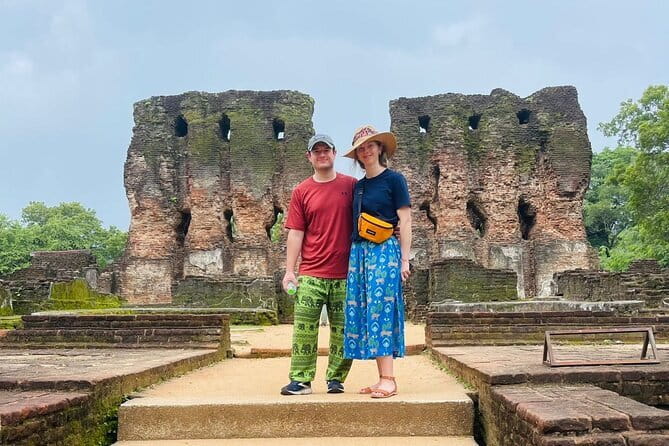
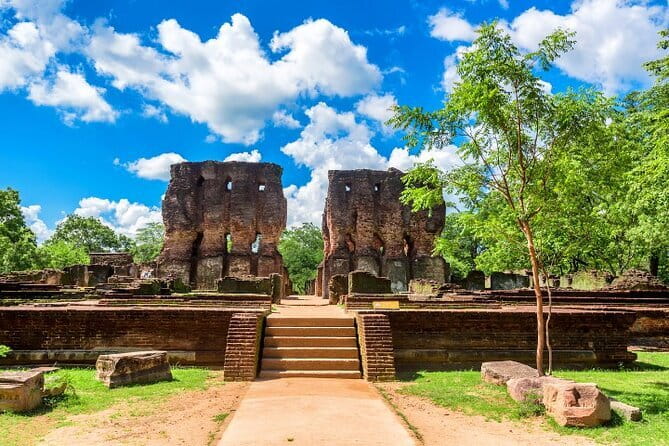
From there, the tour moves to the Palace of King Parakramabahu. The remains are impressive even though the original structure is gone. This was once described as a seven-story royal residence built for King Parakramabahu I, one of Polonnaruwa’s most important rulers.
You have about 30 minutes here. That is enough for a guide to explain the layout and the palace’s place in the wider royal complex, but not enough for a slow architectural study. I would listen closely to the guide at this stop, since the surviving walls need explanation to make their former scale clear.
The Vatadage and the Sacred Quadrangle
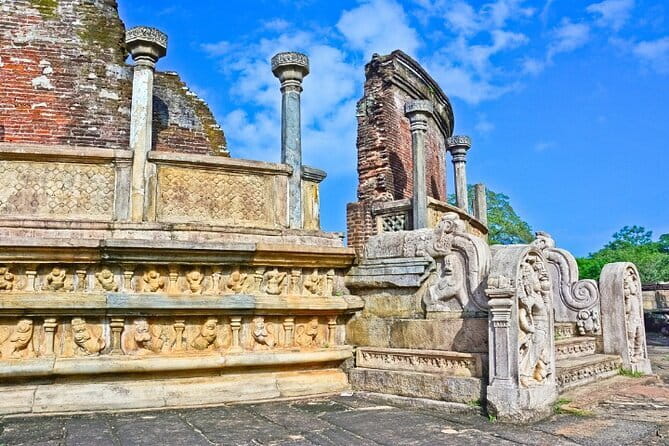
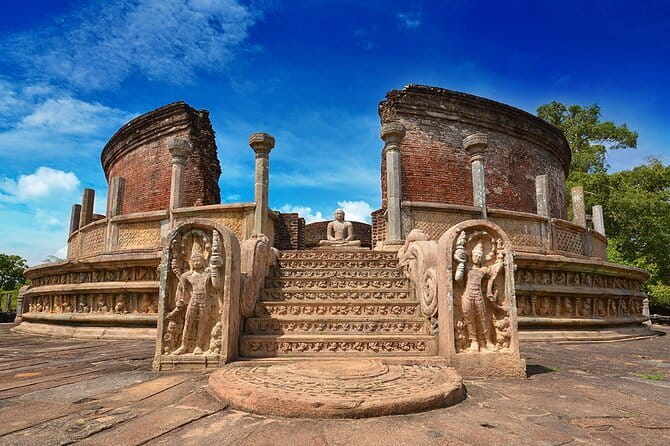
The Polonnaruwa Vatadage is one of the tour’s central sights. This circular relic house was built to protect a sacred stupa and is known for its carved stone details, stairways, and carefully arranged design. You have about 45 minutes here, making it one of the longer heritage stops.
This is the place where a private guide can add real value. The Vatadage rewards attention to small details, but the site can look like a collection of stones if you do not know what you are seeing. Your guide can point out the design and religious purpose instead of leaving you to take a few photographs and move on.
The admission ticket is not included. You also need to follow the usual temple etiquette at Buddhist monuments. The supplied information does not set out a dress code, but respectful clothing is a sensible choice for religious places.
The tour then visits Shiva Devalaya No. 2, a well-preserved Hindu temple dedicated to Shiva. The 15-minute stop is short, but it gives the day an important change of tone. Polonnaruwa was not only a Buddhist center. South Indian and Dravidian influence is visible here, showing the city’s wider cultural links.
A Hindu blessing was a highlight for one booking, but the details of that experience are not guaranteed. Treat it as a possible cultural moment, not a promised part of the schedule.
Pabalu Vehera, Rankoth Vehera, and the scale of devotion

Pabalu Vehera is a 15-minute stop at a stupa associated with the reign of King Parakramabahu I. It is less famous than some of Polonnaruwa’s major monuments, which is part of its appeal. Your guide can help explain why its design and history matter, even though the visit is brief.
Rankoth Vehera follows, also for about 15 minutes. It is the largest stupa in Polonnaruwa and was built during the reign of King Nissanka Malla in the 12th century. Its size gives you a better sense of the resources and religious ambition behind the old capital.
Short stops are useful for variety, but they can feel rushed if you want detailed photographs or quiet time. If one of these stupas interests you more than expected, ask your guide whether the schedule can be adjusted. The private format gives you more flexibility than a fixed group outing, although the guide may need to keep the overall day on track.
More Private History Tours in the world:
- Private Historical Walking Tour of York
★ 5.0 · 1,324 reviews - Private Guided Historic Electric Cart Tour of St. Augustine
★ 5.0 · 1,194 reviews - Istanbul: Acemoglu Historical Turkish Bath w/Private Options
★ 4.6 · 1,190 reviews - From Cairo: Private Full-Day Tour of Historical Alexandria
★ 4.1 · 1,155 reviews
Alahana Pirivena and Gal Vihara
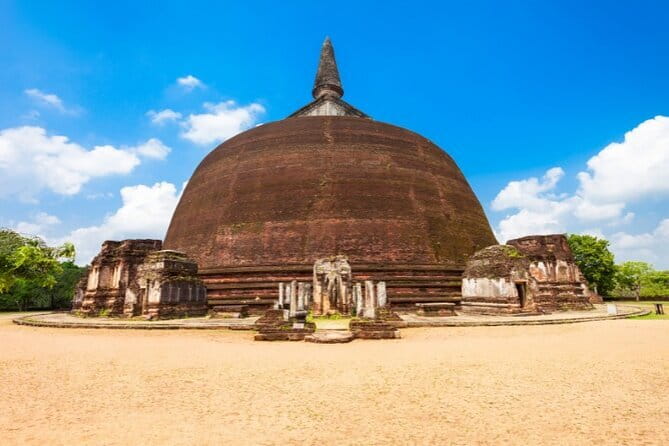
The Alahana Pirivena Complex is one of the most important monastic stops. King Parakramabahu I built it in the 12th century as a center connected with Buddhist learning and religious life. You have around 30 minutes here.
This stop helps explain that Polonnaruwa was not only a place of kings and grand monuments. It was also a center of study, worship, and organized monastic life. I would pay attention to how your guide describes the relationship between the monastery, the rulers, and the wider city.
Then comes Gal Vihara, the major highlight for many visitors. This 12th-century site is known for its exceptional rock-cut Buddha statues, commissioned during the reign of King Parakramabahu I. The images are carved directly into the rock, and their scale and finish make them easy to remember long after the smaller ruins blur together.
You have about 30 minutes at Gal Vihara. That is enough to see the main images and hear their story, though a photography enthusiast may want more time. This is another place where respectful behavior matters. Follow your guide’s instructions around the statues and avoid treating the religious site as a simple photo backdrop.
Thivanka Image House and the long lunch break
The Thivanka Image House is a short 15-minute stop. Built during the reign of King Parakramabahu I, it is known for its size, Buddhist artwork, and historical importance. The visit is brief, so your guide’s explanation will be especially useful.
The schedule then allows 90 minutes for a traditional Sri Lankan rice-and-curry meal at Priyamali Gedara Road. The meal itself is listed as free in the stop details, but lunch is not included in the tour price. That wording means you should budget separately for your food.
A long lunch break is welcome after several hours among the ruins. Sri Lankan rice and curry usually comes with rice and several curries, but the exact menu and price are not provided here. Ask before ordering if you have dietary concerns or want to know what is included.
The break also creates a natural reset before the final section of the tour. Without it, the number of monuments could become a blur. With it, you have a chance to cool down, eat, and return to the history with more attention.
The king’s statue, pleasure garden, and reservoir sunset
The Statue of Parakramabahu I is about 12 feet tall and depicts the king in royal dress. You have 30 minutes here. The statue is a useful final reminder of the ruler who shaped much of Polonnaruwa’s building program and water management.
Next comes Deepa Uyana, also called King Nissankamalla’s Pleasure Garden. This was designed as a retreat for relaxation and entertainment. After so many temples, stupas, and monastic ruins, the garden offers a calmer view of royal life.
The final stop is the Parakrama Samudraya View Point. This huge reservoir is also known as the Sea of Parakrama. Watching the sunset here brings the day back to one of Polonnaruwa’s central achievements: managing water on a scale that supported the ancient capital.
The sunset stop lasts about 30 minutes and is free according to the tour details. Sunset timing will depend on the day and the schedule, so do not assume the light will be perfect every time. Still, ending beside the reservoir gives the tour a welcome change from stone monuments and enclosed religious spaces.
What the $30 price really covers

At $30 per person, the tour fee is reasonable for a private, guide-led day, but it is not the full cost. The separate site admission is listed as $30 per person, which effectively doubles the base price before transport, lunch, and gratuities.
Included in the tour is bottled water. The following are not included:
- The $30 entry fee for the archaeological site
- Private transportation
- An air-conditioned vehicle
- Breakfast
- Lunch
- Snacks
- Tips
This is the biggest practical issue to settle before booking. The meeting point is the Archaeological Museum, and the activity ends back there. You need to arrange your own way to the starting point and confirm how you will move between the spread-out monuments.
One booking used an air-conditioned car and found it very useful in the midday heat. Since private transport and an air-conditioned vehicle are officially excluded, do not assume that car is part of the standard package. Ask Live Lanka Tours what vehicle options and prices are available for your date.
The tour is often booked well in advance, with an average booking lead time of 49 days. That does not mean last-minute bookings are impossible. Two people arranged a guide shortly before reaching the ancient city and spent the rest of the day with Tharindu. Still, advance planning gives you a better chance of getting the guide and transport arrangement you want.
Who will enjoy this day most
I would choose this tour if you want the history explained rather than simply photographed. It suits couples, families, and small groups who prefer private conversation and a flexible pace. It is also a good fit if you want to see both famous places and smaller stops without building the route yourself.
History lovers will get the most from it, especially if you enjoy questions about kings, Buddhist institutions, Hindu influence, architecture, and water engineering. The guides are praised for answering questions and adding stories beyond the basic monument names.
You should think twice if you want a light half-day outing. The listed schedule runs for roughly 6 to 7 hours, and the stop times add up to about six and a half hours before any extra driving. Heat, walking, and repeated temple visits may wear you down.
Mobility needs also deserve a direct conversation with the provider. The information says most people can participate, but it does not give a detailed accessibility plan. Since the ancient city covers a wide area and includes multiple monuments, ask about the walking required if that is important for your group.
Booking advice and cancellation
Confirmation is provided when you book, and the tour is private for your group only. It is near public transportation, though you still need to confirm the best way to reach the museum.
Free cancellation is available if you cancel at least 24 hours before the local start time. Cancellations or changes made less than 24 hours before the experience are not refunded or accepted.
Should you book the Polonnaruwa Ancient City Private Day Tour?
Book it if you want a guide who can make sense of Polonnaruwa’s wide archaeological area and you value a private pace. The strongest features are the range of sites, the chance to ask questions, the excellent Gal Vihara stop, and guides such as Tharindu and Tarry, who are praised for their history knowledge, English, patience, and enthusiasm.
Before paying, confirm three things: the $30 admission fee, the transport arrangement, and whether an air-conditioned car can be added. If you are comfortable with the extra costs and a full day in the heat, this is a useful way to see Polonnaruwa without having to organize its scattered monuments yourself.
FAQ
How long does the Polonnaruwa private tour last?
The tour lasts approximately 6 to 7 hours. The listed stops total about six and a half hours, including a 90-minute meal break.
What is the tour price?
The listed price is $30 per person. The $30 archaeological site admission fee is not included, so budget for that separately.
Is transportation included?
No. Private transportation and an air-conditioned vehicle are not included. Confirm available transport options with Live Lanka Tours before booking.
Where does the tour start and finish?
It starts at the Archaeological Museum in Polonnaruwa, at meeting point WXRX+PHC. The activity ends back at the same meeting point.
Is this a private tour?
Yes. Only your group participates in the activity.
Is lunch included?
No. Lunch is not included in the tour price. The itinerary allows about 90 minutes for a traditional rice-and-curry meal, but you should pay for the meal separately.
Can I cancel for a full refund?
Yes, if you cancel at least 24 hours before the experience start time. Cancellations and changes made less than 24 hours before the start time are not refunded or accepted.
Newest history tours we have reviewed in the world
- Enjoy Ancient Mostar★ 4.0 · 45 reviews
- Private Dublin Historical and Heritage Tour by Bike★ 5.0 · 30 reviews
- Dubrovnik by Night, History, Wine & Bites★ 5.0 · 41 reviews
- Historical Walking Tour of Dublin★ 5.0 · 50 reviews
- DayTripper Dublin: A Guided City Walking Tour★ 5.0 · 90 reviews
- Ancient Old City– Finest tour of Dubrovnik★ 5.0 · 64 reviews
- Dublin LGBTQ Pride Historical and Cultural Walking Tour★ 5.0 · 91 reviews
- Interactive Living History in Dalkey Castle near Dublin City★ 5.0 · 133 reviews
Ancient History Tours, compared.
Colosseum: Underground and Ancient Rome Tour
Read our review →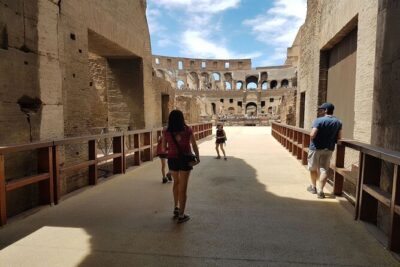
Colosseum & Ancient Rome with Arena Floor Option I Max 6 People
Read our review →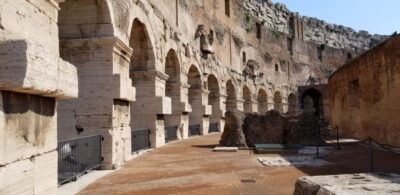
Colosseum, Ancient Rome Tour or AudioGuided Tour
Read our review →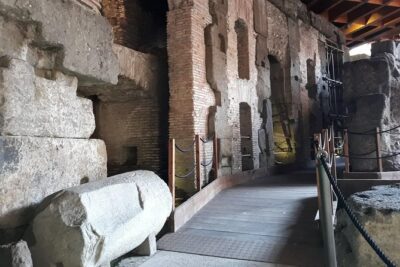
Colosseum Underground & Ancient Rome Guided Tour
Read our review →
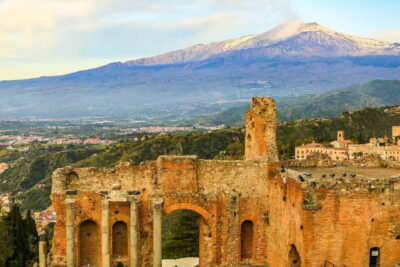
Taormina: Ancient Theater Skip-the-Line Ticket & Audio Guide
Read our review →
Discover the Ancient Ruins of Pompeii: Day Trip from Rome
Read our review →
Discover Matera, the ancient city – English tour
Read our review →Browse the lists this tour appears in