
Review · PHILADELPHIA HISTORY TOURS
Philadelphia: History, Highlights & Revolution Walking Tour
Philadelphia’s revolutionary story comes alive on foot, one historic block at a time. This 150-minute Old City walk links Independence Hall, the Liberty Bell, Elfreth’s Alley, Betsy Ross House, and Benjamin Franklin’s grave with the less tidy human stories behind America’s founding.
I like the special presentation at the Museum of the American Revolution, especially its focus on George Washington’s wartime tent. I also like the small-group feel and the guides’ ability to adjust the pace and answer questions. The main drawback is that most stops are viewed from outside, so you should plan extra time to visit the interiors of Independence Hall and the museum afterward.
Key points to know before you book
- A strong first look at Old City: You cover the major revolutionary landmarks in one walk, useful if you have only half a day in Philadelphia.
- The museum presentation adds substance: You see a special presentation featuring George Washington’s wartime tent and receive discounted museum admission afterward.
- The guides make the difference: John, Adam, Tom, David, Nina, Caroline, PJ, and others have been praised for clear storytelling, humor, patience, and thoughtful answers.
- The route includes more than famous names: Elfreth’s Alley, Carpenters’ Hall, the President’s House site, and Benjamin Franklin’s burial place add texture to the familiar story.
- It is a walking tour with real city logistics: Wear comfortable shoes, allow for weather, and use a garage rather than street parking.
- Your ticket supports a local cause: Part of the booking goes to a local community organization, though the supplied details do not name it.
Why this Philadelphia history walk works
Philadelphia’s historic district can feel like a checklist if you tackle it alone. Independence Hall, the Liberty Bell, Congress Hall, Carpenters’ Hall, Franklin’s grave, and Betsy Ross House all sit within a compact area, but their connections are not always clear from the street.
This tour gives you a useful order and a running explanation. You begin at the Signer Statue in Signer’s Garden, then move through Independence Mall and Independence National Historical Park before heading into Old City. That sequence helps you see the founding period as a series of choices, arguments, buildings, and people rather than one smooth patriotic story.
I especially like the human scale of the route. You hear about famous leaders, but also about workers, residents, enslaved people, religious communities, and other people whose work helped shape the new nation. The President’s House site is important here. It explains both the two presidents who lived there and the people whose lives were tied to that household and the early government.
The guides are central to the experience. John has been praised for making complicated events clear and engaging. Adam is noted for answering questions in detail and bringing textbook material to life. Tom has a lively style and is particularly good at drawing the group into the story. Nina has also handled mixed-age groups well, including a family with a teenager and two adult sons.
You should not expect the same guide every time, so the tone may vary. The common thread is strong command of Philadelphia’s history, an easy manner, and a willingness to respond to questions. That matters on a historical walk because the best moments often come when you ask why a building mattered or whose voice is missing from the usual version of the story.
More History Walking Tours in the USA
- History and Hauntings of Salem Guided Walking Tour
★ 5.0 · 14,564 reviews - Boston: Freedom Trail History Small Group Walking Tour
★ 5.0 · 6,450 reviews - Historic Charleston Guided Sightseeing Walking Tour
★ 5.0 · 6,216 reviews
From Signer’s Garden to Independence Mall
Meet your guide at the Signer Statue in Signer’s Garden. Arrive with enough time to find the statue and settle in, since the tour starts on foot and does not include a vehicle transfer between sights.
The opening stretch leads through Independence Mall and Independence National Historical Park. Here, the guide sets the political and social scene for the American Revolution and the creation of the United States. You get a broad introduction before the route narrows toward the buildings where the major events unfolded.
This part is more about orientation than entering attractions. You will pass the key sites and hear their stories, but the experience does not promise an interior tour of every building. That distinction matters if you have come specifically to tour Independence Hall inside.
The route is a good fit for first-time visitors who want a clear framework before returning to individual museums. It also works well for people with only a morning or afternoon in Philadelphia. Several people have found the tour useful as a half-day introduction, then used the rest of their visit to explore the interiors at their own pace.
Independence Hall, Congress Hall, and the work of government
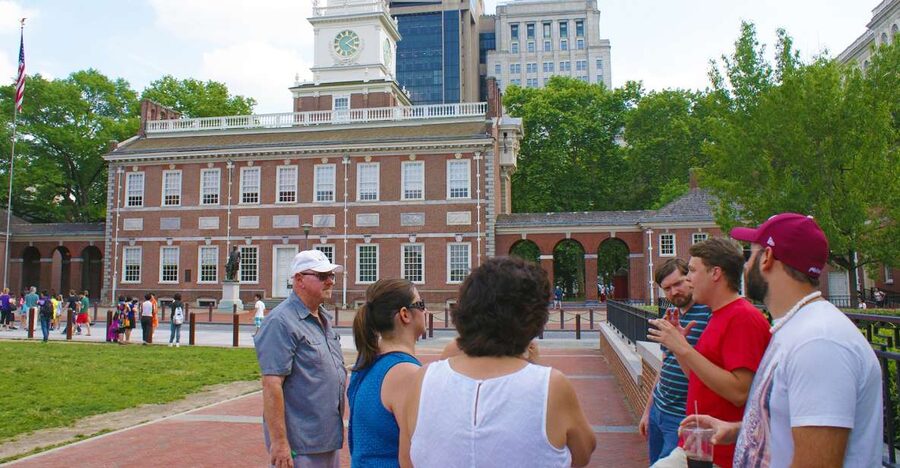
Independence Hall is the symbolic center of the walk. This is where the Declaration of Independence and the United States Constitution were created. From the outside, the building gives you a strong sense of place, but the guide’s explanation is what connects the brick and white trim to the arguments that took place inside.
You then see Congress Hall, which adds an important second chapter. Philadelphia served as the nation’s capital for a time, and this building helps show that the new government was still being assembled after independence had been declared.
I appreciate this pairing because it avoids treating the Revolution as a single dramatic moment. Independence Hall represents the decision to break away and establish a new political order. Congress Hall points to the hard work that followed: governing, arguing, and testing the new system.
If you want a detailed architectural visit, plan a separate entrance-based visit later. The walking tour gives you context and exterior views, not unlimited time inside each landmark. That is a reasonable trade for a route covering so many locations in just two and a half hours.
The Liberty Bell and the power of a symbol
The Liberty Bell is one of the clearest photo stops on the route. Your guide explains its place in the story of American freedom and why it became such a lasting symbol.
You should think of this as a guided viewing rather than a long museum visit. The bell is famous, and the area can be busy, so your time here is used efficiently. You get the historical meaning, a chance for photographs, and a better sense of how the bell fits into Philadelphia’s larger story.
I like that the tour does not let the bell carry the whole visit. It is an important symbol, but the walk keeps moving toward less obvious sites and more complicated stories. That makes the experience more useful than a quick stop for a photograph alone.
Same streets, a different century:
- New York City: American Museum of Natural History Ticket
★ 4.5 · 15,447 reviews - Charleston’s Old South Carriage Historic Horse & Carriage Tour
★ 5.0 · 10,023 reviews - Beneath The Streets Underground History Tour
★ 4.5 · 8,006 reviews - Big Island in a Day: Volcanoes Waterfalls Sightseeing and History
★ 5.0 · 6,569 reviews
Carpenters’ Hall and the early political network
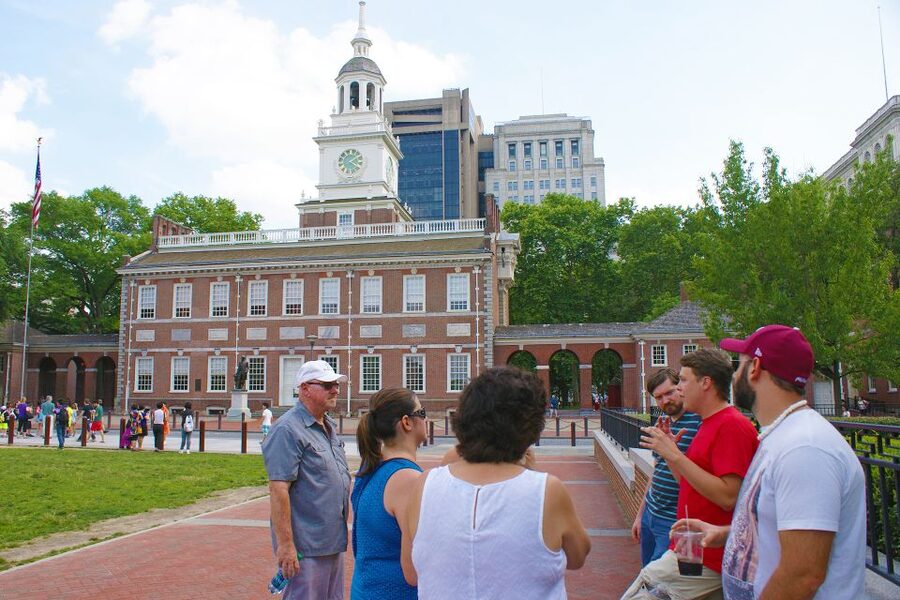
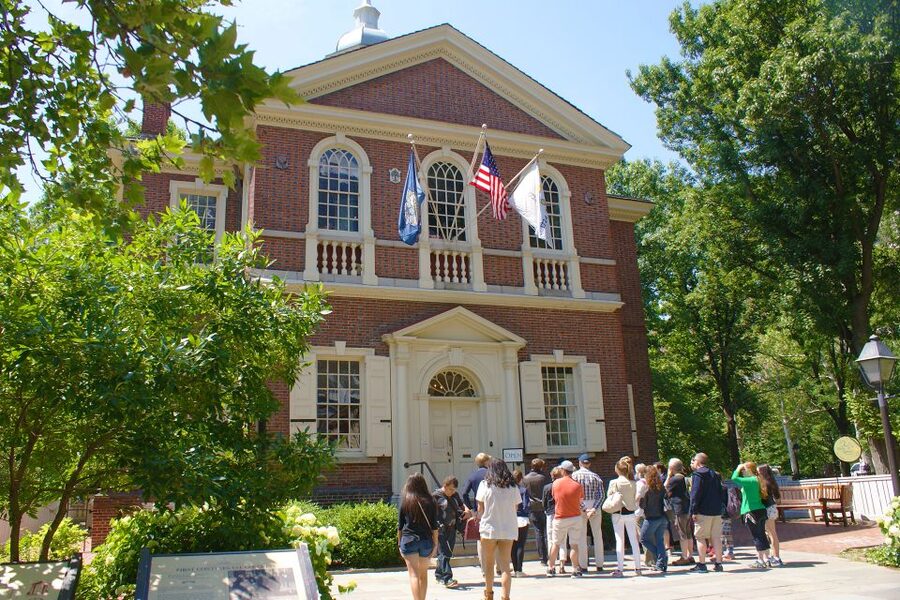
Carpenters’ Hall is another stop that rewards explanation. Its importance comes from the meetings held there during the period when colonial leaders were trying to decide how to respond to Britain.
The building also helps broaden the story beyond the most famous names. Political change did not happen only in grand state buildings. It took place in meeting rooms, trade organizations, churches, homes, and private conversations across the city.
You will see the exterior and hear the site’s role in the period. As with Independence Hall, you should not assume the walk includes a full interior visit. If Carpenters’ Hall is high on your list, check its opening arrangements separately after the tour.
The Museum of the American Revolution presentation
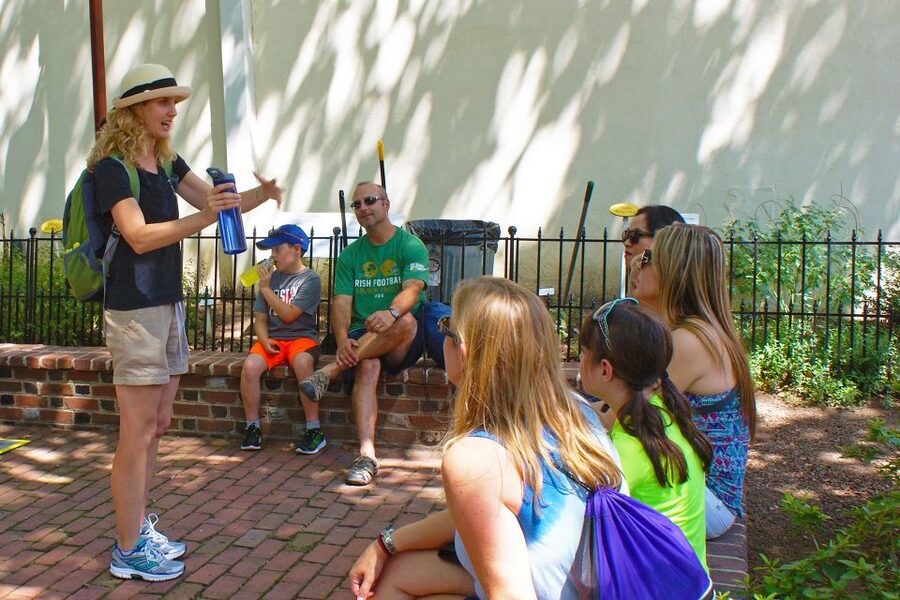
The museum portion is one of the strongest practical features. The tour includes a special presentation at the Museum of the American Revolution, centered on the tent used by George Washington during the war.
That object gives the military side of the Revolution a physical focus. Instead of hearing only about campaigns and dates, you get a sense of the conditions under which Washington worked. The presentation also helps break up the outdoor walking with an indoor historical element.
You receive discounted admission to the museum after the tour. This is valuable because the outdoor route can only introduce the subject. The museum gives you the chance to spend more time with artifacts, exhibitions, and the wider story.
The wording of the experience makes clear that the presentation is included, while full museum admission is discounted rather than included. Budget for that extra ticket if you want to stay and explore the museum afterward.
This stop can also make the tour more appealing to people who want more than a row of famous addresses. The museum portion adds a focused object, a change of setting, and a chance to continue learning once the walking tour ends.
The President’s House site and stories left out of schoolbooks
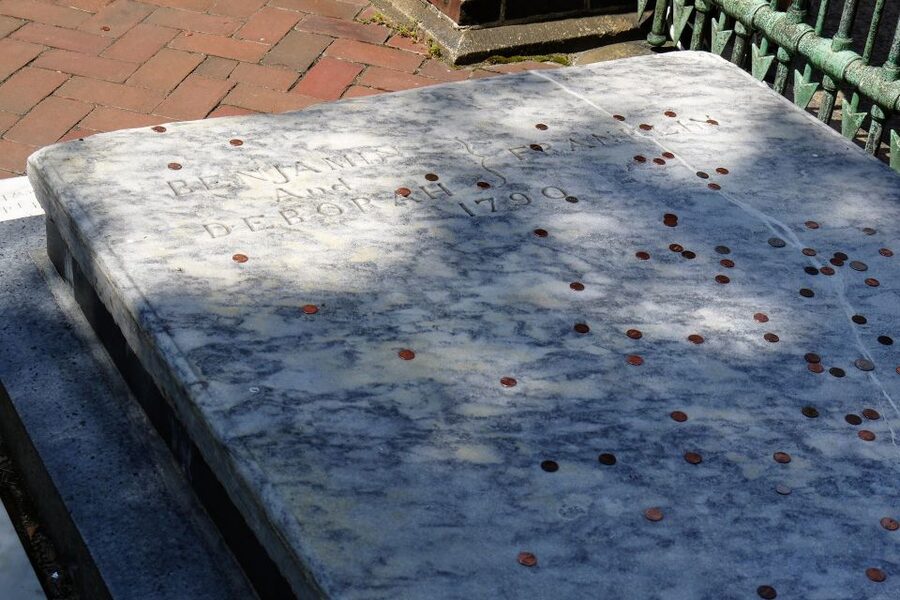
The recreated President’s House site is a thoughtful stop. The guide discusses the two presidents who lived there and the people who played important roles around them.
This is where the tour’s broader approach becomes clearest. Founding-era Philadelphia is not only a story of presidents, delegates, generals, and famous patriots. The city’s early government depended on many people whose names were not placed on the most familiar monuments.
You move up the steps into the recreated site, so be ready for a short change in level. The stop works especially well for anyone who wants the story presented with more context and less hero worship. It also gives families and students a useful way to question the gap between national ideals and the lives of people living under those ideals.
Elfreth’s Alley, Philadelphia’s oldest residential street
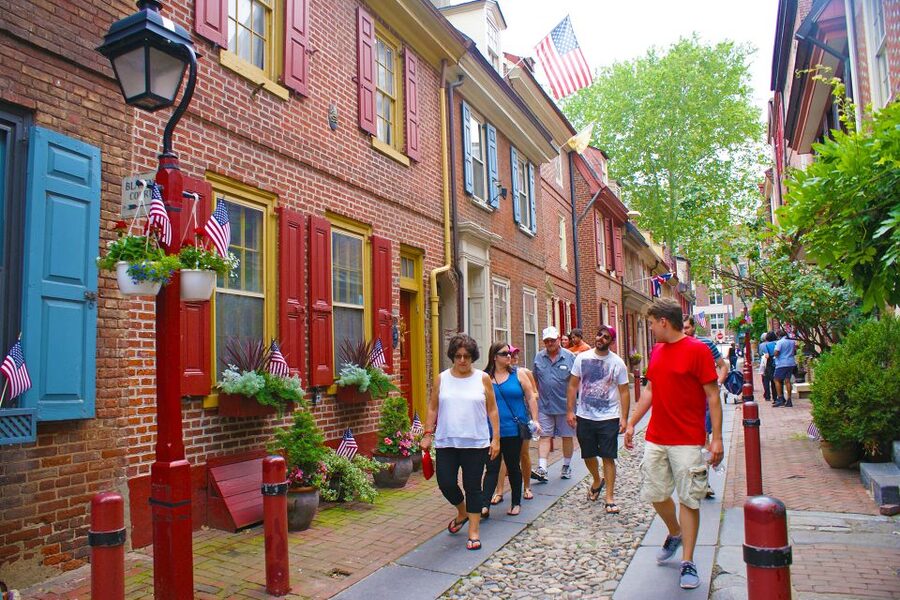
Elfreth’s Alley changes the mood of the walk. This narrow residential street is recognized as the nation’s oldest continuously inhabited residential street, and its small brick houses offer a close look at everyday urban Philadelphia.
The alley is not another grand political building. That is exactly why it belongs on the route. After hearing about constitutions and war, you see the kind of compact neighborhood where ordinary city life continued around those events.
It is also one of the most photogenic parts of the tour. Keep in mind that this remains a residential street, so the best approach is to admire the architecture while respecting the people who live there.
The stop gives the tour balance. You are not simply moving from one monument to the next. You are seeing the streetscape that made Philadelphia a working city, not just a stage for national history.
Betsy Ross House and the limits of famous legends
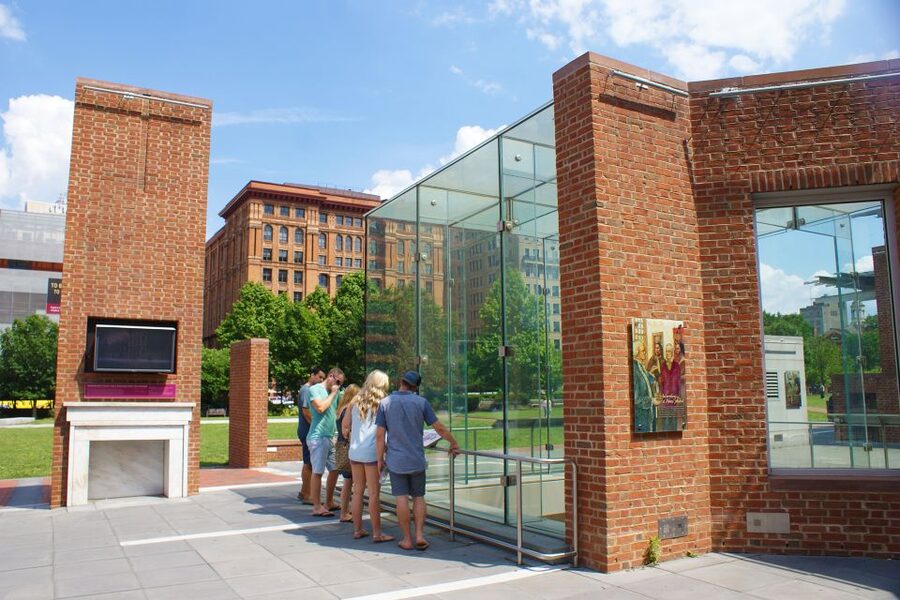
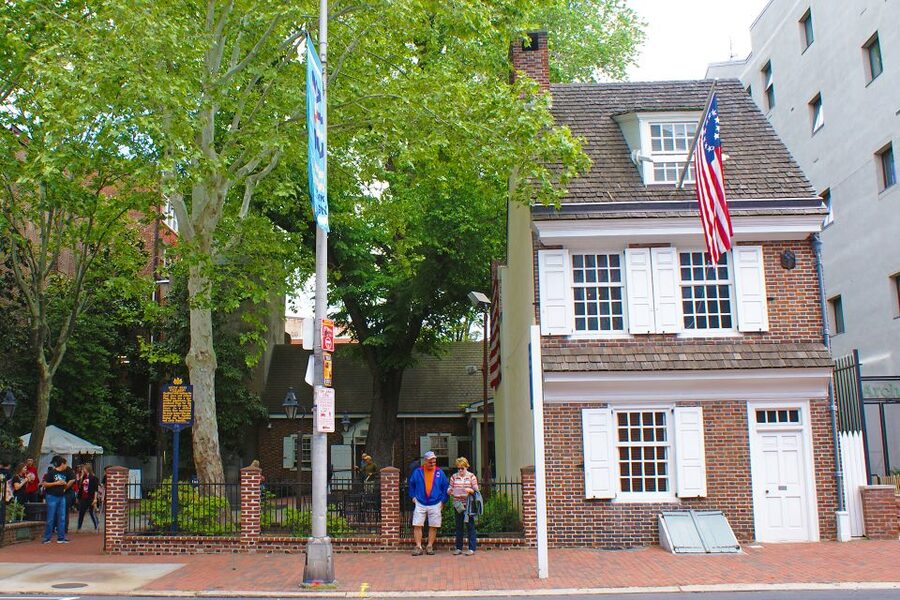
The Betsy Ross House is a memorable stop and a natural place for a photograph. Betsy Ross is widely credited with making the first American flag, and the site has become one of the city’s best-known revolutionary addresses.
A good guide can help you separate the popular story from what can be firmly established. The supplied tour information presents the familiar attribution, but the broader value is understanding how stories of the Revolution become part of national memory.
You will see the house and hear its place in Philadelphia’s heritage. The tour does not promise a long interior visit, so consider the walk your introduction rather than your complete Betsy Ross experience.
This stop tends to work well for families because the flag story is easy to connect with. It also provides a useful opening for questions about how historians assess famous claims.
Benjamin Franklin’s grave and Old City’s layered past
The stop at Benjamin Franklin’s grave is brief, but it carries weight. You pause for photographs and hear about Franklin’s role in Philadelphia and the founding period.
The burial site is in Christ Church Burial Ground, near the corner of North 6th Street and Market Street. Franklin was a printer, writer, scientist, diplomat, and civic figure, so his grave connects several parts of Philadelphia’s story at once.
You should not expect a long cemetery visit. It is a focused stop within a busy walking route. Still, it gives you a quiet moment to consider how many different kinds of work shaped the new country.
The route finishes in Old City, leaving you in a useful part of Philadelphia for further sightseeing, food, or a return to one of the museums. Guides such as Carla and Caroline have also offered practical suggestions for what to do and where to eat after the walk, though recommendations can vary by guide.
Price, pace, and practical value
The price is $45 per person for 150 minutes. That is fair value if you want a local guide to connect a long list of major sites and add a museum presentation. You are not paying only for entry tickets. You are paying for structure, interpretation, and the ability to ask questions as you walk.
The value is strongest if this is your first visit or if your Philadelphia time is limited. You cover Independence Mall, Independence National Historical Park, Independence Hall, Congress Hall, the Liberty Bell, Carpenters’ Hall, the museum, Elfreth’s Alley, Betsy Ross House, Franklin’s grave, and Old City in one continuous route.
It is less ideal if you want long interior visits at every attraction. The walk passes several landmarks and includes a museum presentation, but it is not a full admission tour of Philadelphia’s historic buildings.
Wear comfortable shoes and dress for the weather. The tour lasts two and a half hours, and much of the experience takes place outdoors. It is listed as wheelchair accessible, and the guides have been praised for keeping groups together and adjusting pace, but you should still contact the provider if you have specific mobility needs.
If you drive, use a parking garage or lot in Old City. Street and metered parking is not a good plan because the maximum time allowed is two hours, shorter than the tour. The meeting point is near several historic attractions, so arriving early is wise.
You can cancel up to 24 hours before the tour for a full refund, and you can reserve without paying immediately. Those policies make it easier to fit the walk into a changing Philadelphia schedule.
Who should book this walk?
I would choose this tour for first-time visitors, families with older children, history students, and anyone with a short stay. It is also useful for people who want to visit the museum but would first like a clear explanation of how its story fits with the surrounding streets.
The tour suits you if you enjoy asking questions and listening to stories while walking. Guides have handled a wide range of interests, from basic introductions to detailed questions about the Revolutionary period.
I would choose something else if you dislike guided groups, need lots of time inside each attraction, or already know Philadelphia’s historic district well. In that case, the tour may move too quickly through familiar ground.
Should you book the Philadelphia History, Highlights & Revolution Walking Tour?
Book it if you want a well-organized introduction to Old City and the American Revolution, especially when your schedule is tight. The combination of famous landmarks, Elfreth’s Alley, the President’s House site, Franklin’s grave, and the museum presentation gives you more than a standard monument walk.
The strongest reason to book is the guide. John, Adam, Tom, David, Nina, Caroline, PJ, and the other guides are praised for clear explanations, humor, patience, and genuine enthusiasm for Philadelphia. Just remember that the tour is mainly an outdoor overview with selected access, not a full interior tour of every historic building.
At $45, it is a sensible choice for a first look. Add museum admission afterward if you want more time with the exhibits, and leave the tour ready to explore Old City on your own.
FAQ
How long does the Philadelphia history walking tour last?
The tour lasts 150 minutes, or two and a half hours.
What is the tour price?
The price is $45 per person.
Where does the tour begin?
Meet the guide at the Signer Statue in Signer’s Garden.
Where does the tour finish?
The walk finishes in Old City Philadelphia.
What language is the tour offered in?
The live tour is offered in English.
Does the tour include admission to the Museum of the American Revolution?
The tour includes a special presentation at the museum and discounted admission you can use afterward. Full museum admission is not listed as included.
Will I enter Independence Hall?
The tour includes a guided visit around Independence Hall and passes by the building. The supplied details do not state that interior admission is included.
Is the tour wheelchair accessible?
Yes, the activity is listed as wheelchair accessible.
Can I cancel the booking?
Yes. You can cancel up to 24 hours in advance for a full refund. You can also reserve now and pay later.
Newest history tours we have reviewed in the USA
- Self Guided Detroit’s Spirit and History Solo Walking Tour★ 4.5 · 41 reviews
- Best Downtown Detroit Historical Walking Tour★ 5.0 · 56 reviews
- Detroit’s Hidden History Guided Walking Tour★ 5.0 · 48 reviews
- Private Nightlife Tour in Denver: Culture, History, and Cocktails★ 5.0 · 48 reviews
- Historical Walking Tour Of Denver With A Haunting Twist★ 5.0 · 19 reviews
- Tip Based: Capitol Hill History & Ghost Tour★ 5.0 · 34 reviews
- Denver – Capitol Hill Guided Walking Ghost / History Tour★ 4.5 · 75 reviews
- JFK Historical Tour★ 5.0 · 22 reviews
History Walking Tours, compared.
History and Hauntings of Salem Guided Walking Tour
Read our review →
Freedom Trail History Small Group Walking Tour
Read our review →
Historic Charleston Guided Sightseeing Walking Tour
Read our review →
Tapas Walking Tour with Food, Wine, and History
Read our review →
Savannah History and Haunts Candlelit Ghost Walking Tour
Read our review →
A History of Terror – Belfast City Centre Walking Tour
Read our review →Browse the lists this tour appears in