
Review · BUDAPEST HISTORY TOURS
Palace District Evening Culinary, Wine, and History Walk
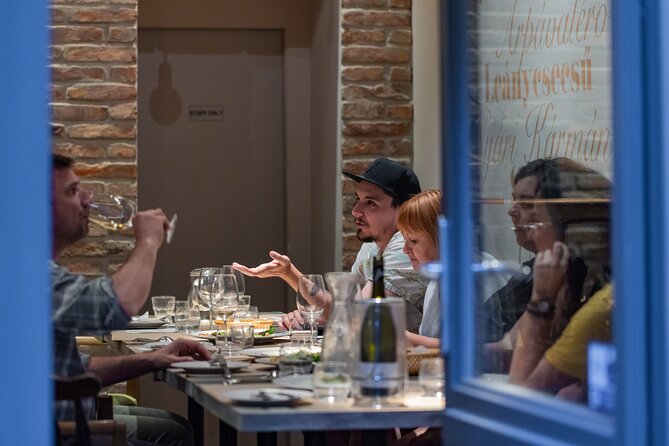
Budapest’s Palace District makes an excellent setting for a progressive dinner. You move from a wine cellar to a family bakery, a courtyard bar, a local bistro, and an old coffeehouse, picking up Hungarian food, drink, and city stories as you go. The food is substantial, not a few token bites, so arrive hungry.
I especially like the small-group format, with two to eight people on the usual tour, and the way the meal unfolds across several local places instead of one restaurant table. I also like the balance of wine education and neighborhood wandering. The main caution is that the four-hour walk includes plenty of history, and the balance may feel too talk-heavy if you mainly want to eat.
Key points at a glance
- Six food and drink settings: Begin with three Hungarian wines, cheese, and charcuterie, then continue through several neighborhood stops.
- A real dinner, not a snack crawl: Gulyás, savory dishes, bakery food, pálinka, and dessert add up to a full evening meal.
- Palace District focus: Explore Budapest’s VIII district, where grand nineteenth-century buildings now sit beside universities, bars, and restaurants.
- Guides shape the evening: Past guides have included Angela, Barbara, Andrea, Elza, George, Lila, and David.
- Best practical tip: Do not eat beforehand. Portions can be generous, including a full-size main course.
- Small group advantage: The standard format is capped at eight people, while larger parties can arrange a private tour.
Why the Palace District is a smart choice for a food walk
Many Budapest food tours center on the market hall or the Jewish Quarter. This one spends its evening in the Palace District, known in Hungarian as Palota Negyed, in District VIII. The area gives you a useful mix of grand architecture, university life, casual drinking spots, and everyday dining.
The name comes from the large urban palaces built by Budapest’s upper class during the 1800s. These buildings help explain the neighborhood’s past, but the district is not presented as a preserved museum piece. Students, bars, cafés, and local businesses give it a lived-in feel.
I like this setting because the food stops do not feel detached from the walk. You are not simply driven between restaurants. You move through central Budapest on foot, stopping for photographs and questions along the way. That makes the food easier to place within the city itself.
The tour starts at 5 p.m. and usually ends around 9 p.m. That timing works well for an evening meal, especially if you have spent the day sightseeing. The route ends near Astoria, a handy central point for continuing into Pest or returning by public transport.
More Castle and Palace History Tours in Budapest:
- Buda Castle District Dark History, Legends and Vampire Night Tour
★ 4.5 · 1,240 reviews - Buda Castle Tour: History and Architecture
★ 5.0 · 33 reviews - Segway Guided Tour In Budapest, Historical Buda Castle
★ 5.0 · 28 reviews
Starting with wine, cheese, and charcuterie at Tasting Table
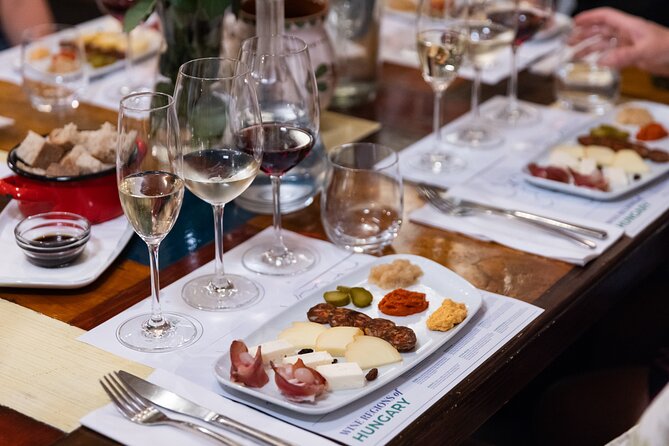
Meet at Tasting Table Cellar, operated by Taste Hungary, at Bródy Sándor utca 9. This first stop gives the evening a calm beginning. Rather than rushing straight into a meal, you start with an introduction to the Palace District and a tasting led by a sommelier.
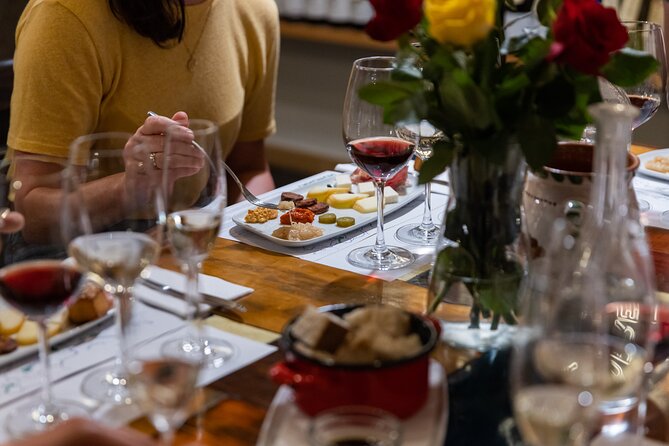
The wine portion includes three Hungarian wines. You also receive local cheese and charcuterie, enough to settle in and begin the meal. The wine presentation includes background on Hungarian wine regions, and at least one past tasting included a map to help explain where the bottles came from.
This is one of the strongest parts of the tour for anyone who knows little about Hungarian wine. Hungary has a wine culture that can be easy to miss if you spend your trip focused only on Budapest’s famous sights. The sommelier gives you a useful starting point without requiring you to become a wine expert.
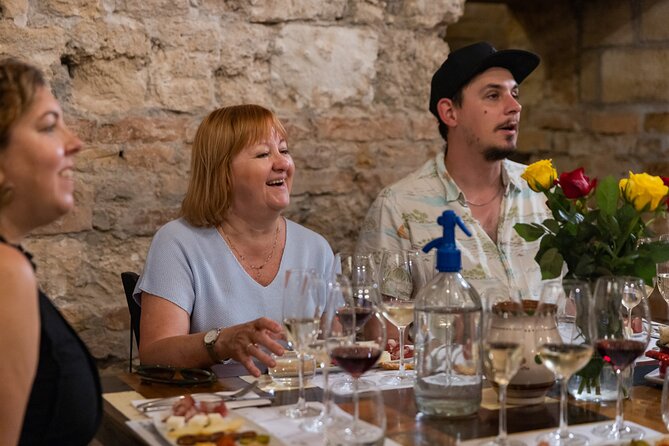
The opening stop also sets a good pace. You can ask questions, meet the rest of the group, and get a sense of how the evening will work. A small group matters here because wine tasting becomes awkward when a crowd is too large. With a normal group of two to eight people, conversation should be manageable.
The precise wine selection can change, so do not book this expecting particular labels or grape varieties. The important point is that the tasting introduces Hungarian wines before you begin pairing them with food later in the evening.
Bakery food with a family business behind it
After the cellar, the walk moves through the Palace District to additional food stops. One is a bakery run by a family whose business dates to 1870. That detail gives the stop more weight than a quick pastry purchase. You are sampling food from a long-running local trade while walking through a neighborhood shaped by several generations of Budapest life.
The supplied details do not specify the exact bakery item served, so you should expect a selection rather than a guaranteed pastry. This is worth noting if you have a very particular dish in mind. The stop is about tasting a family bakery’s food and understanding its place in local life.
I like this kind of stop because it breaks up the heavier dishes that come later. The evening is not simply wine followed by goulash followed by dessert. Bakery food adds another texture and shows how Hungarian eating extends beyond restaurant meals.
Pálinka in a courtyard bar
A later stop includes pálinka in a fun courtyard bar. Pálinka is a Hungarian fruit brandy, and it is often served as a small shot rather than a long drink. The portion is likely modest, but the cultural point is useful: this is a traditional Hungarian spirit encountered in a casual social setting.
The courtyard setting also connects the drink to Budapest’s modern bar life. The Palace District and nearby parts of central Pest have plenty of old courtyards, converted interiors, and informal drinking spots. Here, the guide explains the setting as you go, including the history and concept of ruin bars when the route reaches that part of town.
Pálinka can be strong, so pace yourself. You will already have tasted wine, and more drinks arrive with the food. This is a dinner walk, not a speed-drinking contest. The best way to enjoy it is to treat each pour as a sample and keep water in mind.
More Food and History Tours in Budapest:
- Sevilla Food Tour: Tapas, Wine, History & Traditions
★ 5.0 · 3,468 reviews - Victoria Guided Food and History Tour
★ 5.0 · 2,015 reviews - Gastown Historic Walking Food Tour
★ 5.0 · 1,863 reviews - Dublin Historical Centre Food Tour with 8 Food Tastings & Drinks
★ 5.0 · 1,718 reviews
Gulyás and a proper savory meal
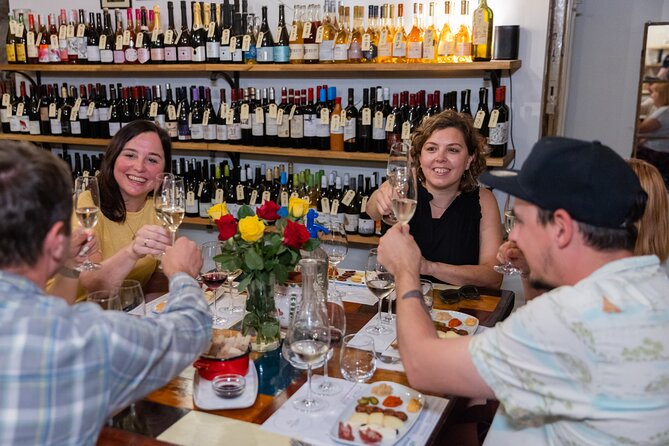
The main food portion includes gulyás and appetizers at a neighborhood bistro. Gulyás is often translated simply as goulash, but the Hungarian version is generally a soup or stew with a strong paprika character. Several past tours have featured gulyás soup as a highlight, and one route paired it with wine.
This is where the walk begins to feel like a full dinner. You can expect more than a tasting spoon. The evening includes a substantial savory course, and at least one past menu offered a full-size entrée with several choices.
The exact menu can vary, but the structure is clear: begin with small plates and drinks, continue to soup or stew, then reach a more filling main course. That makes the earlier advice important. Have a light lunch, but do not eat dinner before meeting the guide.
The bistro stop also benefits from the guide’s local recommendations. Guides such as George have helped participants choose among several entrée options and suggested other food places for later in the trip. That practical advice can be as valuable as the meal itself, especially if you want to continue exploring Budapest’s restaurants after the tour.
History between the plates
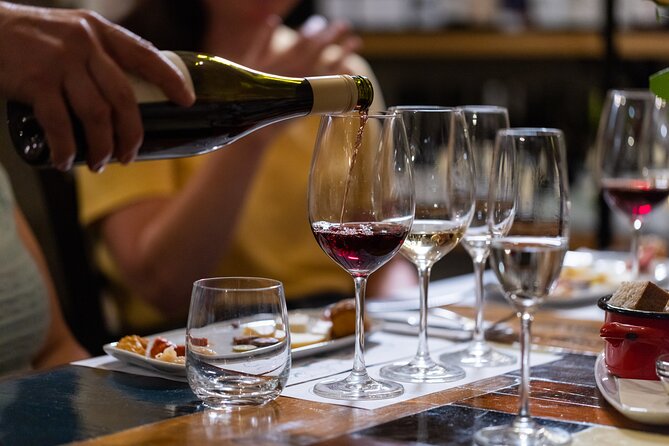
The walking sections connect the food stops. Guides explain the importance of buildings, the district’s development, Hungarian food customs, and parts of Budapest’s cultural life. The route can include discussion of the Jewish Quarter and ruin bars, depending on the evening’s path.
This is not a dedicated architecture tour, but the buildings are more than scenery between restaurants. The grand palaces show how the area looked during Budapest’s nineteenth-century growth. The newer university presence helps explain why the district now has a younger, more casual atmosphere.
The history-to-food balance depends partly on your guide. Angela, Barbara, Andrea, Elza, George, Lila, and David have all led versions of this type of evening, and each guide brings a different style. Some focus more on food and wine; others add more city background.
I see this as a plus for most people, but it is also the clearest possible drawback. If you want only a meal with no commentary, four hours of walking and stories may feel long. If you want context for what you are eating, the extra explanation gives the evening more purpose.
Dessert and coffee in an old Budapest café
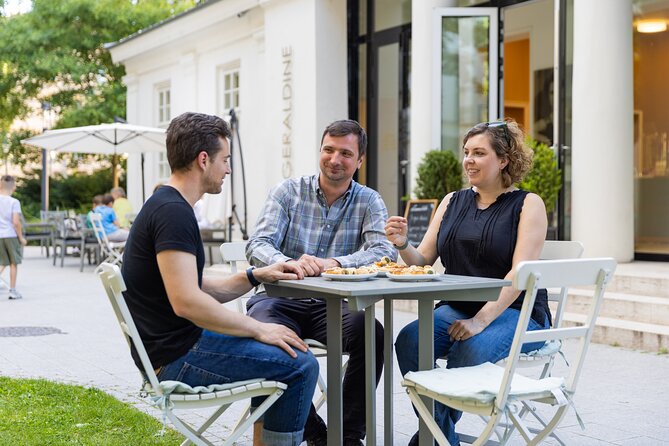
The final stop is dessert at an old coffeehouse, usually with coffee or another suitable drink. This is a fitting ending because Budapest cafés are part of the city’s social identity. The setting slows the pace after several savory courses and gives you time to sit, talk, and ask final questions.
Past menus have included traditional Hungarian pastries. The exact dessert is not fixed in the information provided, but the format is consistent: finish with a sweet course in a classic café rather than ending abruptly at a bar.
Several guides have been praised for making the last stop especially enjoyable. That makes sense. After four hours together, the group has moved from introductions to shared conversation, and a café gives the evening a relaxed finish.
The tour ends near Astoria at about 9 p.m. This is convenient if you want to continue your night, but it also means you should plan your return route in advance if you are staying outside central Pest.
Is $145 a fair price?
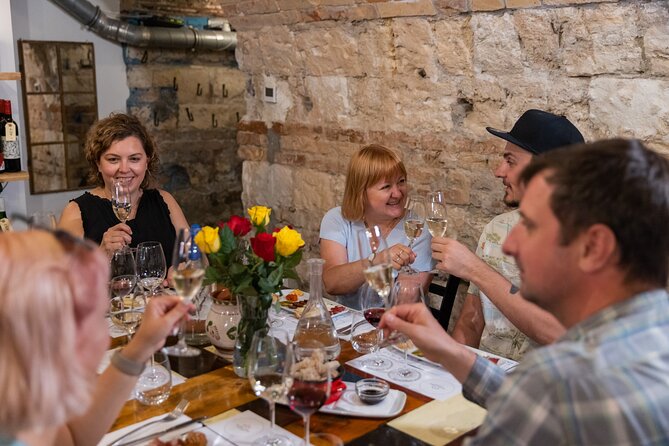
At $145 per person, this is not a cheap dinner. You are paying more than the cost of ordering goulash and wine in one Budapest restaurant. The value comes from combining a multi-course meal, several drinks, wine instruction, neighborhood guiding, and access to several venues in one organized evening.
The food quantity matters. This is not a tour where you need to book a separate dinner afterward. The opening cheese and charcuterie, bakery tasting, pálinka, gulyás, appetizers, main meal, wine, and dessert are intended to cover dinner.
The guide is another major part of the price. You are not just buying dishes. You are getting explanations of Hungarian wine, food traditions, buildings, bars, and local places to eat. For a first evening in Budapest, that context can help you make better choices for the rest of your stay.
I would consider the price fair if you enjoy guided food experiences and want several small encounters instead of a single restaurant meal. I would be less inclined to book it if your main goal is the lowest-cost way to eat Hungarian food, or if you prefer choosing every dish and drink yourself.
The tour is also often reserved well ahead, with an average booking lead time of about 55 days. That suggests you should not leave it until the final day of a short Budapest visit, especially if your dates are fixed.
Group size, walking, and dietary limits
The standard small group requires at least two people and is normally limited to eight. Large groups can arrange private tours, though the stated maximum for the activity is 16 people. A small group is particularly useful for this format because you move through several venues and need to hear the guide clearly.
The tour begins and ends in central Budapest and takes about four hours. It is close to public transportation, and most people can participate. Service animals are allowed.
You should plan for regular walking between stops. The supplied information does not give a total distance or a detailed accessibility assessment, so contact the provider if mobility is a concern. One past group included an 83-year-old participant and a person with back problems, and the guide adjusted the pace, but that should not be treated as a guarantee for every departure.
Dietary restrictions need careful handling. Vegetarian, allergy-related, and religious dietary requests may have limited options because of local food customs, and the provider cannot guarantee that every requirement can be met. Tell the operator before booking and ask for a clear answer rather than assuming substitutions will be available.
The tour is offered in English. Confirmation arrives when you book, but the experience is non-refundable and cannot be changed for any reason. A cancellation is possible if the minimum of two people is not met; in that case, an alternative or full refund is offered.
Who will enjoy this evening most?
I would choose this tour for a first or second visit to Budapest, especially if you want an easy introduction to Hungarian food without spending time researching restaurants. It suits people who enjoy walking, asking questions, and tasting several dishes in one night.
It is also a good fit for anyone curious about Hungarian wine. The opening sommelier session gives the evening a clear structure, and the later wine pairings help connect the bottles to food.
Food-focused couples and small groups should find the format comfortable. The guides have included Angela, Barbara, Andrea, Elza, George, Lila, and David, with several praised for humor, patience, and strong knowledge of local cuisine and history.
I would think twice if you have strict dietary restrictions, do not drink alcohol, dislike group schedules, or want a quiet restaurant meal. You may also prefer another tour if architecture is your only priority, since the history here supports the food walk rather than replacing it.
Should you book the Palace District evening walk?
Book it if you want a full Hungarian dinner broken into several stops, with wine education and a guided look at the Palace District. The strongest reasons are the small group, the broad range of food, the family bakery, the gulyás course, and the old coffeehouse finish.
Skip it if $145 feels high for dinner, if your diet cannot accommodate uncertain local options, or if you want to control every part of the evening. For everyone else, this is a well-planned way to get your bearings through food, drink, and city stories in one night. Its 4.9 out of 5 rating from 55 published ratings and 96 percent recommendation mark fit the experience: the central appeal is not one spectacular dish, but the steady succession of good stops and a guide who makes the route useful.
FAQ
Where does the tour start?
The tour starts at Tasting Table Cellar by Taste Hungary, at Bródy Sándor u. 9, 1088 Budapest.
Where does the tour end?
The tour ends in the Astoria area of central Budapest, at 1053 Budapest.
What time does the tour begin and finish?
The usual schedule runs from 5 p.m. to 9 p.m., for about four hours.
How many people are in the group?
The small-group format requires at least two people and normally has a maximum of eight. Larger groups can arrange private tours, and the stated maximum for the activity is 16 people.
Is dinner included?
Yes. The tour includes generous food and drink tastings intended to make up a full meal. Stops include wine, cheese, charcuterie, bakery food, pálinka, gulyás, appetizers, a main dish, and dessert, though exact menu items may vary.
Is the tour offered in English?
Yes. The tour includes an English-speaking guide who specializes in food.
Can dietary requirements be accommodated?
The provider tries to accommodate dietary needs, but vegetarian, allergy-related, and religious dietary options may be limited. Requirements cannot be guaranteed in every case, so contact the provider before booking.
Is the tour refundable if I cancel?
No. The experience is non-refundable and cannot be changed for any reason. If the provider cancels because the minimum number of participants is not reached, you are offered an alternative or a full refund.
More History Walking Tours in Budapest
- Budapest Historical Sightseeing – Free Walking Tour
★ 5.0 · 1,302 reviews - BloodThirsty Hungary: Walking tour & Dark Historical Stories
★ 4.9 · 633 reviews - Budapest Jewish Heritage Memorial Walking Tour & Synagogue Entry
★ 5.0 · 568 reviews - Budapest: Jewish History Guided Walking Tour with Historian
★ 4.8 · 205 reviews
Newest history tours we have reviewed in Budapest
- Time Machine Budapest Historical Exhibition Ticket★ 5.0 · 32 reviews
- Jewish Heritage in Hungary with a Historian★ 5.0 · 37 reviews
- Budapest Jewish Heritage: Synagogues, Shoes, Secrets & Flódni★ 5.0 · 47 reviews
- Private Jewish Heritage Tour including Hotel Pickup★ 4.5 · 35 reviews
- Jewish Heritage / Full tour★ 5.0 · 59 reviews
- Michael Jackson History Exhibition Ticket★ 5.0 · 42 reviews
- Communist History Evening Walking Tour of Budapest★ 4.5 · 23 reviews
- HOLLÓKŐ UNESCO World Heritage site + Eger Castle Private guided tour★ 4.5 · 18 reviews
Castle & Palace History Tours, compared.
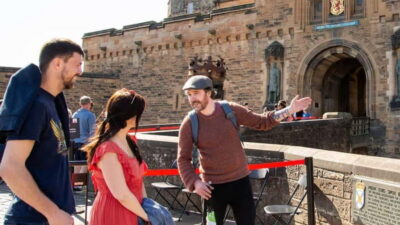
Edinburgh Castle Guided History Tour with Tickets
Read our review →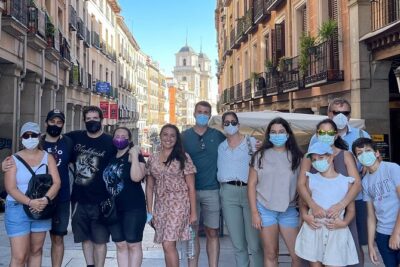
Madrid Essential: Historic Center, Plaza Mayor & Royal Palace
Read our review →
Venice’s Best: Basilica, Doge’s Palace, Gondola & History Gallery
Read our review →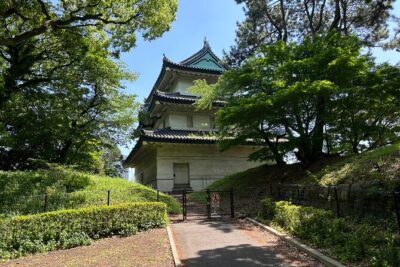
Imperial Palace and Shogun Historical Walking Tour
Read our review →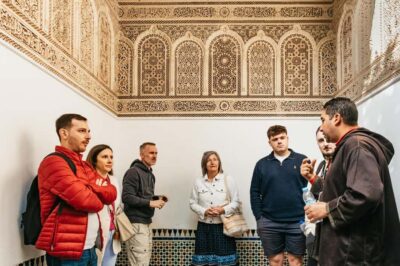
Saadian Tombs & Bahia Palace, Medina Guided Tour
Read our review →
Charleston historical walking tour with a Professor of History at The Citadel
Read our review →
Abu Dhabi Grand Mosque, Palace, and Heritage Village
Read our review →
Buda Castle District Dark History, Legends and Vampire Night Tour
Read our review →Browse the lists this tour appears in