

Review · USA HISTORY TOURS
Memphis 2-Hour Historic Walking Tour: Beyond Beale
The Peabody ducks are the star attraction, but this tour gives you much more than a quick hotel tradition. You’ll walk through old Memphis, from the grand Peabody lobby to Cotton Row, Fourth Bluff Park, Civil War sites, and the place tied to Dr. Martin Luther King Jr.’s last march. The city’s split personality is the real theme: polished Southern society on one side, rough river-town energy on the other.
I like the way the tour connects famous sights to the city’s past, and I like the chance to see Memphis on foot instead of from behind a bus window. Guides such as Mary, Kate, Shannon, and Charley have been praised for clear explanations, good stories, and a friendly manner. The main drawback is timing: if the Duck March is about to begin, the walking portion can feel rushed, and a group of 16 may have trouble hearing through the microphone.
Key points at a glance
- The Peabody Duck March is included: Watch the daily Memphis tradition that began in 1933.
- Downtown history in two hours: Cover Court Square, Cotton Row, Fourth Bluff Park, Main Street, and Civil War locations.
- A useful first-day tour: The route helps you understand how Memphis developed and how its past still shapes the city.
- Strong guide record: Mary, Kate, Shannon, and Charley are praised for clear answers, humor, and lively storytelling.
- Rooftop city views: The walk includes a higher viewpoint over downtown and the Mississippi River area.
- Bring proper shoes: This is a real walking tour, not a short stroll between indoor stops.
Memphis beyond Beale Street

Memphis is often reduced to Beale Street, barbecue, blues, and Elvis. Those are important parts of the city, but they do not explain the whole place. This walk gives you a broader frame.
You’ll hear about Memphis as a cotton port and a river town. The city once drew wealthy merchants, elegant hotels, and river traffic. It also attracted gamblers, gangsters, roughnecks, and people looking for opportunity along the Mississippi. That contrast gives the tour its character.
I find this approach more useful than a string of disconnected facts. When your guide moves from Court Square to Cotton Row, the city begins to make sense as a working commercial center, not simply a backdrop for music tourism.
The tour is led in English, and the guide is the key to the experience. Mary has been praised for her humor and enthusiasm. Kate is known for patient answers and a clear delivery. Shannon and Charley have also earned strong marks for making the city’s story easy to follow. The exact guide depends on your date, but the pattern is consistent: expect a personal, story-based walk rather than a lecture.
More History Walking Tours in the USA
- History and Hauntings of Salem Guided Walking Tour
★ 5.0 · 14,564 reviews - Boston: Freedom Trail History Small Group Walking Tour
★ 5.0 · 6,450 reviews - Historic Charleston Guided Sightseeing Walking Tour
★ 5.0 · 6,216 reviews
Meeting at the Peabody Hotel
You meet inside the Peabody Memphis, near the Concierge Desk, 15 minutes before the start. This is a practical meeting point because the hotel is one of downtown’s best-known landmarks and the Duck March begins here.
Give yourself enough time to find the lobby without rushing. The hotel can be busy, particularly around the duck presentation, and you will want to check in with the guide rather than simply wait near the elevators.
The Peabody itself gives the tour an appropriate opening. It represents the polished, grand side of Memphis, while the streets outside lead into the city’s rougher and more complicated past. You get that contrast right away.
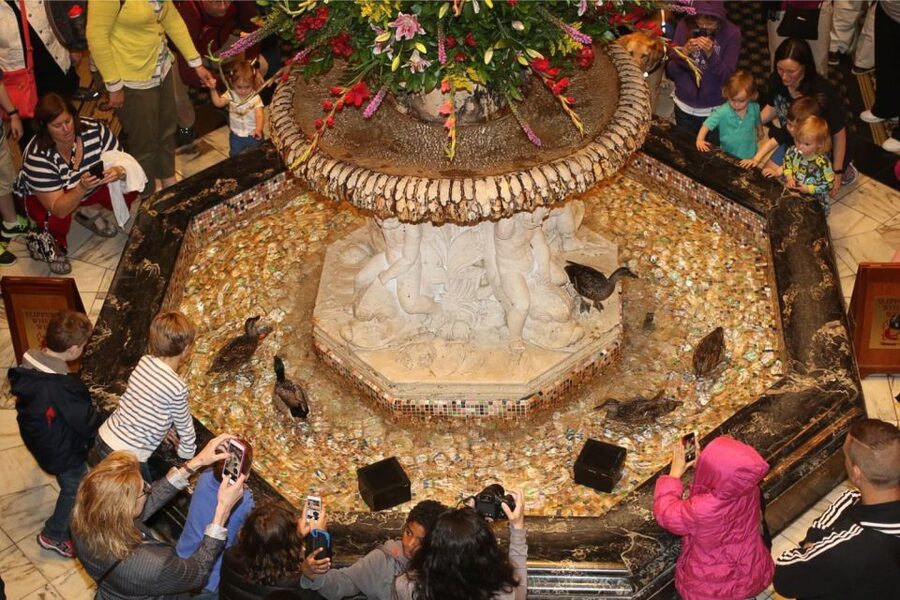
The hotel visit includes a photo stop and about 20 minutes connected to the Duck March. The ducks have been part of the Peabody tradition since 1933. They are escorted into the lobby fountain in a carefully staged daily ritual, and it is one of Memphis’s most recognizable spectacles.
You should know what the Duck March adds and what it takes away. It gives the tour a memorable, distinctly Memphis moment, especially if you have never seen it. Yet it also fixes part of the schedule. If the walk runs late, the guide may need to hurry the group back to the hotel, leaving less time for questions or extra stories.
One person found the audio system hard to hear in a larger group, even after the volume was raised. That is worth considering if you have hearing difficulties. Stay close to the guide and ask for a position where you can see and hear clearly.
Court Square and the city’s early shape

From the Peabody, the tour moves into downtown for roughly 75 minutes of guided walking. Court Square is one of the main early stops, giving you a chance to see a formal public space while hearing how Memphis grew around commerce and the river.
The value here is the connection between place and story. You are not merely told that Memphis was important. You walk through the part of town where business, government, transport, and social life came together.
The guide’s storytelling matters most on this section. The best moments are likely to come from the characters attached to the locations, including the people who helped build the city and those who gave it a less respectable reputation. The walk presents Memphis as a city with competing identities rather than a tidy story of progress.
You may also pass along Main Street, where the tour shifts between older buildings, public spaces, and downtown activity. Since the walk is only two hours, the guide cannot provide an extended architectural survey. Instead, the focus is on the story of the city and the people connected to it.
That makes this a good introduction. If you want detailed interior tours or long stops at individual buildings, you’ll need to explore on your own afterward.
Cotton Row and the money behind Memphis

Cotton Row helps explain why Memphis developed as a commercial center. Cotton was not just one product among many. It helped shape the city’s wealth, social order, and connection to the Mississippi River.
The tour uses this area to show the more gracious side of old Memphis. You’ll hear about commerce and prosperity, but the subject also points toward the labor and inequality that supported that system. The supplied details do not promise a specialist lecture on cotton, so expect a concise overview rather than a full economic history.
That balance is useful. You get enough background to understand why the downtown streets look and feel the way they do, then move on before the subject becomes too narrow.
A rooftop viewpoint adds another angle. From above, you can get a better sense of downtown’s layout and the relationship between the city and the river. It is also a natural photo stop. The exact rooftop location is not specified, so do not treat it as a full observation deck visit. Think of it as a brief change in perspective during the walk.
Same streets, a different century:
- New York City: American Museum of Natural History Ticket
★ 4.5 · 15,447 reviews - Charleston’s Old South Carriage Historic Horse & Carriage Tour
★ 5.0 · 10,023 reviews - Beneath The Streets Underground History Tour
★ 4.5 · 8,006 reviews - Big Island in a Day: Volcanoes Waterfalls Sightseeing and History
★ 5.0 · 6,569 reviews
Fourth Bluff Park and the Mississippi River
Fourth Bluff Park overlooks the Mississippi River and gives the tour a physical sense of Memphis’s location. The river is not simply scenery here. It explains the city’s growth, its traffic, and its rough-edged reputation.
I like this stop because it breaks up the downtown streets. After hearing about merchants, cotton, and city characters, you get an open view and a reminder that Memphis grew beside one of North America’s major waterways.
Your guide can also connect the riverfront to the Battle of Memphis, one of the Civil War locations included on the route. The tour does not present a full battlefield visit, and you should not expect preserved military grounds. Instead, you’ll see places in the modern city that carry links to the conflict.
That approach suits a short city walk. The Civil War is placed within Memphis rather than treated as an isolated subject.
Civil War locations and Forrest’s Raid
The tour includes sites connected with the Battle of Memphis and Forrest’s Raid. These stops add a sharper edge to the city’s story.
Memphis changed hands and faced disruption during the Civil War, and the route shows how conflict touched the urban center. Forrest’s Raid gives the guide another chance to discuss the military and political tensions that shaped the region.
Because the tour lasts only two hours, the amount of detail will depend on your guide and the pace of the group. If Civil War history is your main reason for booking, treat this as an introduction. You may want to ask follow-up questions during the walk, then visit additional sites separately.
For most people, the strength is not a long list of dates. It is the realization that ordinary downtown streets can hold several layers of history at once. A hotel lobby, a commercial district, and a river overlook all become part of the same story.
Deadman’s Alley and Dr. King’s last march
Deadman’s Alley brings the less polished side of Memphis into view. Even the name signals the kind of material the guide may cover: crime, danger, and the people who made the city’s riverfront reputation so colorful.
This is one reason the tour works better than a simple sightseeing loop. Memphis is not presented as only grand hotels and musical landmarks. The route acknowledges the city’s difficult and sometimes violent past.
The walk also passes a location connected with Dr. Martin Luther King Jr.’s last march. This gives the tour a strong connection to the civil rights era and to Memphis’s place in American history.
The information provided does not specify a long memorial visit or museum entry, so expect an outdoor stop and an explanation from the guide. Listen for how the guide connects this event to the city today. One of the tour’s aims is to help you understand how Memphis’s past continues to shape its identity.
What the two-hour timing means

The tour divides its time between approximately 75 minutes of downtown walking, about 20 minutes at the Peabody, and another 20 minutes of walking before returning to the hotel. That schedule gives you a broad introduction, but it leaves little spare time.
You will cover a fair amount of ground. Comfortable shoes are essential, and you should bring a camera if you want photos from the hotel, rooftop viewpoint, river overlook, and downtown streets.
The pace may feel brisk near the end, particularly if the Duck March has a fixed start time. One participant arrived early but still found the group hurried because several people were late. Arriving 15 minutes ahead is not a suggestion to ignore. It protects your own experience and helps the tour begin on time.
Weather can also affect the walk. A participant completed the tour in rain and still found it a useful introduction, but Memphis weather is outside the guide’s control. Check the forecast and dress for an outdoor walk.
Is $32 a fair price?
At $32 per person, this is a sensible price for a two-hour guided introduction to central Memphis, especially because the Peabody Duck March is included. You are paying for a local guide, a planned route, historical context, and the convenience of tying several areas together in one walk.
The value is strongest if you are new to Memphis. In two hours, you get a city orientation, several story-rich locations, a river view, a rooftop perspective, and the hotel’s famous duck tradition. You also leave with ideas for where to spend more time afterward.
The value is weaker if you have already seen the Duck March and mainly want an extended tour of Beale Street. The duck presentation takes a fixed portion of the schedule, and one participant would have preferred more time for Beale Street stories.
That is the central choice. Book this tour for a broad look at downtown Memphis. Skip it if you want a music-only walk, a specialist Civil War tour, or a long, slow architectural tour.
The booking terms are flexible: you can reserve now and pay later, and cancellation is free up to 24 hours before the start for a full refund. Hotel pickup and drop-off are not included, but the meeting point is inside the Peabody.
Who should book this Memphis walk?
I would choose this for a first visit, particularly at the start of a Memphis trip. It gives you context before you explore the city on your own.
It also suits travelers who like stories more than checklists. The route covers famous places, but the guide’s job is to explain the characters, conflicts, and choices behind them.
Families should note that unaccompanied minors are not allowed. The tour requires walking outdoors for two hours, so it is best for anyone comfortable on foot and able to keep up with a group.
I would also recommend it for repeat visitors who have focused only on music attractions. You may already know Beale Street, but the riverfront, Cotton Row, Civil War locations, and Dr. King connection can broaden your view of Memphis.
Should you book it?
Book the Memphis 2-Hour Historic Walking Tour if you want a compact, story-led introduction to downtown and you have not yet seen the Peabody Duck March. The strongest parts are the range of subjects, the friendly guides, and the way the route joins old commerce, river life, war, civil rights, and modern Memphis.
Go in with realistic expectations. This is not a private walk, a deep specialist tour, or a dedicated Beale Street music history lesson. The Duck March can make the schedule tight, and hearing may be difficult in a larger group.
For $32, it is a good-value orientation, especially with guides such as Mary, Kate, Shannon, and Charley bringing the facts to life. Arrive early, wear comfortable shoes, stay near the guide, and treat the tour as your city primer. Then use what you learn to decide which Memphis stories deserve a closer look.
FAQ
Where does the tour meet?
Meet your guide inside the Peabody Hotel lobby, near the Concierge Desk.
How early should I arrive?
Arrive 15 minutes before the tour start time so you can check in and find the guide.
How long does the tour last?
The walking tour lasts two hours.
Is the Peabody Duck March included?
Yes. Watching the Peabody Duck March is included in the tour.
What language is the tour conducted in?
The live tour guide speaks English.
What should I bring?
Bring comfortable shoes and a camera.
Is hotel pickup and drop-off included?
No. Hotel pickup and drop-off are not included.
More Two-Hour Tours in the USA
- 2-Hour Gettysburg Battlefield Guided History Bus Tour with a National Park Guide
★ 4.5 · 2,201 reviews - 2 Hour LoDo Historic Walking Tour in Denver
★ 5.0 · 1,106 reviews - 2 Hour Historic Market Food Tour and Hands-On Biscuit Class
★ 5.0 · 251 reviews - 2-Hour Historic Dallas Segway Tour
★ 5.0 · 225 reviews
Newest history tours we have reviewed in the USA
- Self Guided Detroit’s Spirit and History Solo Walking Tour★ 4.5 · 41 reviews
- Detroit’s Hidden History Guided Walking Tour★ 5.0 · 48 reviews
- Best Downtown Detroit Historical Walking Tour★ 5.0 · 56 reviews
- Private Nightlife Tour in Denver: Culture, History, and Cocktails★ 5.0 · 48 reviews
- Historical Walking Tour Of Denver With A Haunting Twist★ 5.0 · 19 reviews
- Tip Based: Capitol Hill History & Ghost Tour★ 5.0 · 34 reviews
- Denver – Capitol Hill Guided Walking Ghost / History Tour★ 4.5 · 75 reviews
- JFK Historical Tour★ 5.0 · 22 reviews
History Walking Tours, compared.

History and Hauntings of Salem Guided Walking Tour
Read our review →

Freedom Trail History Small Group Walking Tour
Read our review →
Historic Charleston Guided Sightseeing Walking Tour
Read our review →
Tapas Walking Tour with Food, Wine, and History
Read our review →
Savannah History and Haunts Candlelit Ghost Walking Tour
Read our review →
A History of Terror – Belfast City Centre Walking Tour
Read our review →Browse the lists this tour appears in