
Review · POLAND HISTORY TOURS
Gdańsk City Sights & History Guided Walking Tour in English
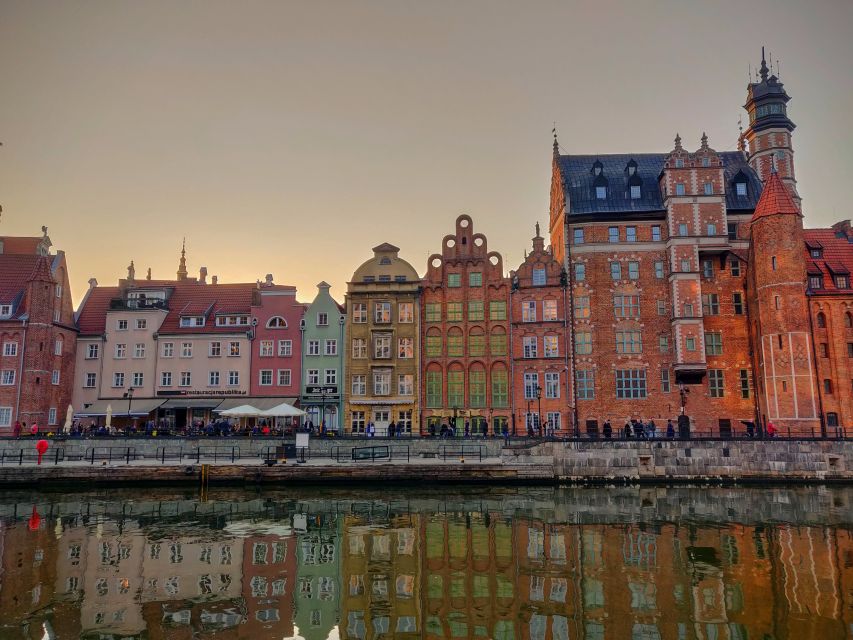
Gdańsk’s grandest streets tell two very different stories: one of wealthy merchants and Polish kings, the other of war, communism, and a long fight for freedom. This 150-minute walking tour links both sides of the city, from the Golden Gate to the harbor, with an English-speaking guide explaining what you are seeing and why it matters.
I like the route through Long Market, where colorful merchant houses, Neptune’s Fountain, and royal history give you an immediate feel for old Gdańsk. I also like the way the tour connects the medieval Zuraw crane and St. Mary’s Basilica to the 20th century, including the start of WWII and the Solidarity movement.
The main consideration is group size. This is a general walking tour, not automatically a private outing, and a large group can be harder to hear and manage at busy sights. The tour also goes ahead in rain, snow, and bitter cold, so good clothing is not optional.
Key points to know before booking
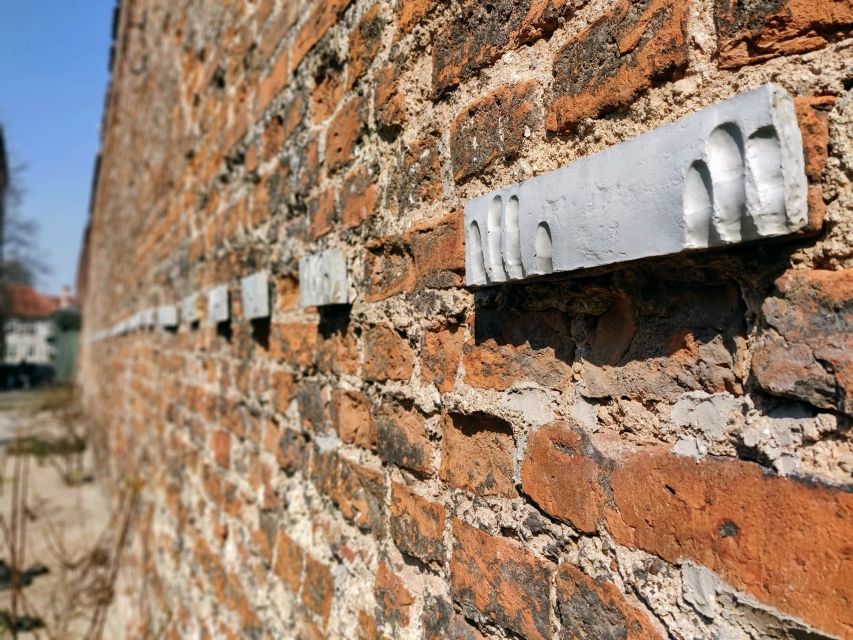
- Follow the old royal route: Walk the same central path once used by Poland’s kings, beginning at the Golden Gate.
- See Gdańsk’s essential sights: The route includes Long Market, Neptune’s Fountain, St. Mary’s Basilica, the Zuraw crane, waterways, and canals.
- Expect history with personality: Guides including Tufi, Kate, Sandra, Marcin, Philip, and Paul have been praised for humor, clear English, and lively storytelling.
- Understand the 20th century: The tour explains how WWII began in Gdańsk and how Solidarity helped challenge communist rule.
- Plan for the weather: The tour runs rain or shine. Wear weather-appropriate clothing and comfortable shoes.
- Good value at $26: You get two and a half hours with a live guide, though the group joins a general tour rather than a guaranteed private experience.
Starting under the yellow umbrella at the Golden Gate
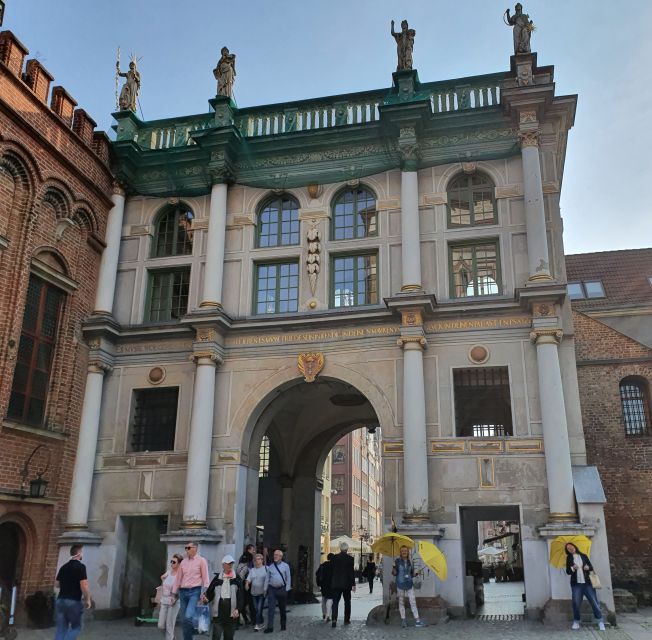
Your meeting point is the Golden Gate, known locally as Złota Brama. Look for the yellow umbrella. This is a useful landmark in the old center, though one practical detail deserves attention: stand on the correct side of the gate and arrive a little early, since the meeting point can feel less clear when the area is busy.
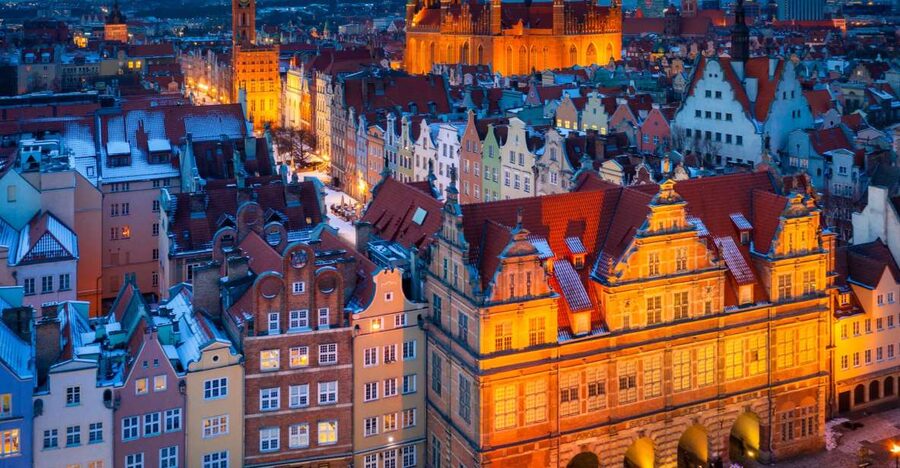
From here, the tour sets up Gdańsk as a city shaped by several cultures. Polish, Dutch, and German influences appear in its architecture, trade, language, and political story. That mix is one reason a guided walk helps. A row of handsome houses can look decorative at first, but the guide explains who lived there, how merchants earned their fortunes, and why Gdańsk mattered around the Baltic Sea.
The early part of the tour also introduces the old royal route. Polish kings once passed through this part of town, and you follow their path into the historic center. It is a smart way to begin because you are not simply ticking off sights. You are seeing how power, commerce, and civic pride shaped the city.
More History Walking Tours in the world:
- History and Hauntings of Salem Guided Walking Tour
★ 5.0 · 14,564 reviews - Lisbon: History, Stories and Lifestyle Walking Tour
★ 4.8 · 10,902 reviews - Boston: Freedom Trail History Small Group Walking Tour
★ 5.0 · 6,450 reviews
Long Market and the Neptune Fountain
Long Market is the visual heart of the walk. Its merchant townhouses are painted in strong colors and packed closely along the street, creating one of Gdańsk’s most memorable urban scenes. The buildings look old, but much of the historic center had to be rebuilt after the destruction of WWII.
That rebuilding is an important part of the story. Your guide explains how the houses were painstakingly restored, rather than treating the old center as an untouched medieval relic. You get a better sense of what Gdańsk lost and what its people chose to recreate.
At the center of the route is Neptune’s Fountain. It is an easy photo stop, but the guide gives it more meaning by placing it in the setting of the old merchant city. Neptune points to Gdańsk’s connection with the sea, trade, and the Baltic. You will have time to look around and take pictures, though busy conditions can make it harder to stay close to the guide.
This is also where the contrast between polished façades and difficult history becomes clear. The street feels elegant and welcoming today, but the story behind it includes war, shifting borders, and competing claims to the city. Good guiding matters here, and the strongest guides make those changes easy to follow without turning the walk into a lecture.
St. Mary’s Basilica and the city from inside out
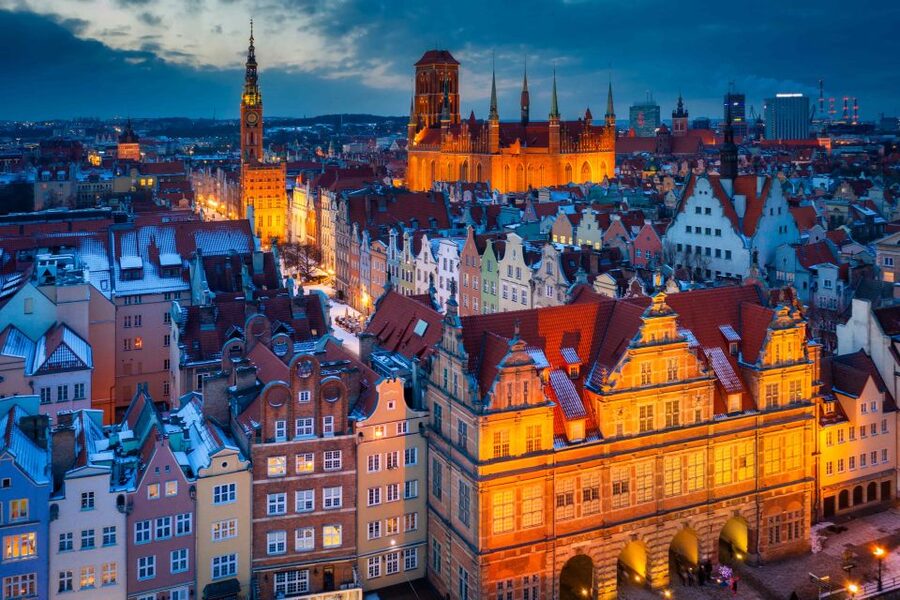
St. Mary’s Basilica is one of the tour’s major stops. Its brick Gothic construction is striking even before you know that it is regarded as the largest brick Gothic church in the world. The scale is hard to grasp from a single photograph, so seeing the building at street level is worthwhile.
The basilica also gives the guide a chance to explain Gdańsk’s religious and civic importance. Brick, rather than pale stone, gives the building a strong northern European character. The church is not just an architectural stop. It helps you understand the city’s wealth, ambition, and long relationship with the Baltic region.
Timing can add a nice touch. One group was brought to St. Mary’s at the right moment to see the clock strike noon, while another tour included the moving figures on the cathedral clock. These details are not the main purpose of the walk, and exact timing cannot be guaranteed, but they show how a good guide can turn a standard stop into a memorable one.
The basilica is also a useful place for a short pause, especially in winter. Guides have adjusted their talks around very cold conditions, sometimes moving indoors for part of the explanation or allowing time for coffee and warmth. That flexibility matters because Gdańsk can feel harsh in winter, even when the route itself is manageable.
The Zuraw crane and Gdańsk’s working harbor
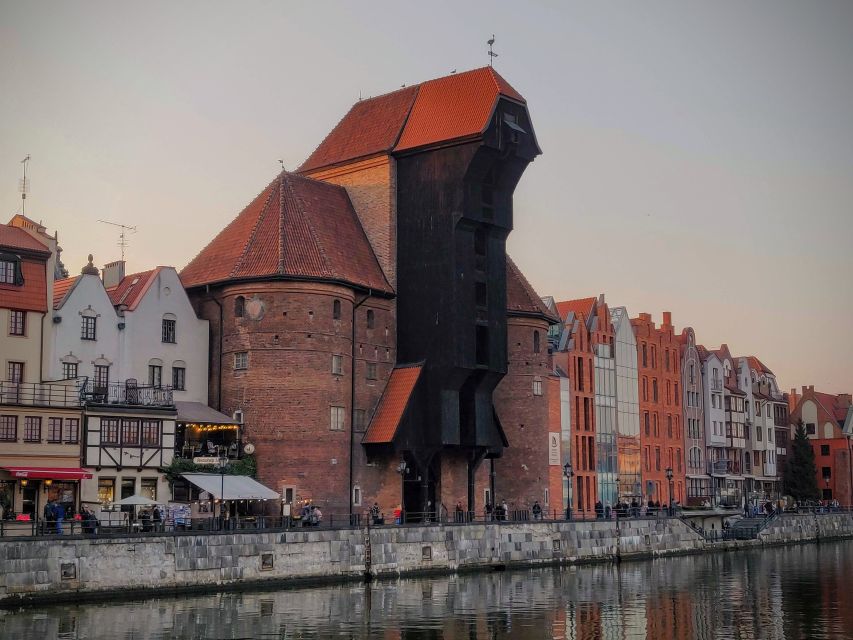
The walk continues toward the water and the Zuraw crane, one of Gdańsk’s clearest symbols. This medieval treadwheel crane was used to lift cargo and load ships. Its wooden structure and large wheel show how much physical labor stood behind the city’s prosperity.
The crane is described as the largest of its kind in the world, and it gives you a practical picture of medieval trade. Merchants became wealthy because goods moved through this harbor, not because the city merely looked grand. The crane connects the decorative old town with the working port that made it important.
As you continue, you see rivers and canals woven into the city. The water is not just scenery. It explains Gdańsk’s position as a trading center and helps you understand why the harbor was so valuable to outside powers.
This part can be less comfortable in bad weather because open waterfront areas offer little shelter. Wear a warm layer and shoes with a good grip. The walk is wheelchair accessible, but historic streets and crowded areas may still make the pace and exact positioning less straightforward for some participants.
More Guided Tours in the world:
- Edinburgh: Edinburgh Castle Guided History Tour with Tickets
★ 4.8 · 9,933 reviews - Historic Charleston Guided Sightseeing Walking Tour
★ 5.0 · 6,216 reviews - Rome: Colosseum with Arena, Roman Forum and Palatine Guided Tour
★ 4.0 · 5,598 reviews - Venice: St. Mark’s Basilica Guided Tour & VR History Intro
★ 3.9 · 4,880 reviews
From WWII’s beginning to the Solidarity movement
The most valuable part of the tour is the shift from beautiful architecture to modern political history. Gdańsk is closely tied to the beginning of WWII, and your guide explains how the city became caught in the tension that led to the war.
The subject is serious, but the tour does not stop there. You also hear about postwar destruction, the years under communism, and the Solidarity movement. Solidarity’s rise in Gdańsk helped set off changes that contributed to the fall of communist rule across the Eastern Bloc.
This gives the city a clear historical arc. You begin with royal processions and merchant wealth, move through war and rebuilding, and end with the struggle for independence and political freedom. That range is what makes the walk more useful than a simple architecture tour.
The quality of the guide makes a real difference here. Tufi has been praised for passionate storytelling and clear explanations, while Kate is known for covering centuries of history in a way that remains easy to follow. Sandra, Marcin, Philip, Paul, and other guides have also been singled out for humor, energy, and strong local insight.
You should not expect every guide to use exactly the same stories or spend the same amount of time at each point. Some guides may offer more personal anecdotes, while others build a careful historical timeline. Either way, ask questions. The guides are expected to welcome them, and the walk becomes more useful when you connect the general story to the details that interest you most.
How the 150-minute pace feels
Two and a half hours is long enough to provide real context but short enough to fit into a first day in Gdańsk. The route covers the central sights at a walking pace, with stops for explanations, photographs, and questions.
Some people will find the amount of history just right. If you enjoy political and architectural detail, you may wish the tour lasted longer. If you prefer a light introduction, the number of dates, rulers, conflicts, and changes can feel like a lot. One useful approach is to treat the walk as an orientation, then return later to the places that caught your attention.
Breaks depend on the guide and conditions. Several winter tours included time for coffee, a bathroom stop, or a chance to warm up. You should still plan ahead, especially since public toilets may require small change.
Group size is the main variable. One group had only eight or nine people, which made it easy to ask questions and stay close. Other groups were large enough to feel cumbersome at busy sights. The booking covers the reservation fee and the guide’s payment for the general tour. If you want a smaller private walk, you can contact the supplier after booking to arrange one.
Is $26 a fair price?
At $26 per person, this is a strong value if you want a guided introduction rather than a self-guided stroll. You get 150 minutes, an English-speaking guide, and a route covering the city’s main architectural, commercial, and political stories.
The value comes from the connections. You could photograph Long Market, Neptune’s Fountain, St. Mary’s Basilica, and the Zuraw crane on your own. What is harder to recreate is the explanation of how merchants built the city’s wealth, why the buildings had to be rebuilt, and how Gdańsk’s 20th century struggles shaped Poland and Europe.
The price does not include hotel pickup or drop-off, but the central meeting point makes transport unnecessary for most people already exploring the old town. It is also not a private tour by default, so compare the price with your expectations. If personal attention and a quiet pace matter most, ask about the private option.
The booking terms are friendly for uncertain plans. You can cancel up to 24 hours in advance for a full refund, and you can reserve now and pay later. Those details are useful if your Gdańsk schedule is still moving.
Who will enjoy this walk most?
I would choose this tour for a first visit, especially if you want to understand Gdańsk before spending time in museums or exploring on your own. It gives you a useful map of the center and points out the places worth revisiting.
It suits people who enjoy history told through buildings, rather than a tour focused only on photographs. It is also a good fit if you want a guide who can explain the city’s Polish, German, and Dutch connections without reducing everything to a single national story.
Families and mixed-age groups can enjoy it if everyone is comfortable walking for 150 minutes. The tour is wheelchair accessible, though the exact ease of movement can vary with crowds and historic surfaces. If you are visiting in winter, bring gloves, a warm coat, and a hat. The guides keep the tour going in severe cold, but you will enjoy it more if you prepare properly.
You may prefer another format if you want a short highlights tour, a guaranteed private group, or lots of time inside each monument. This walk covers broad ground and aims to explain the city as a whole.
Should you book the Gdańsk City Sights and History Tour?
Book it if you want the city to make sense quickly. The route includes Gdańsk’s most recognizable sights, but its real strength is the link between medieval trade, wartime destruction, and the Solidarity movement.
I would schedule it early in your stay. You will leave with a better sense of where to walk, which buildings deserve another look, and how Gdańsk fits into Polish and European history. Just confirm the Golden Gate meeting side, find the yellow umbrella, and dress for the forecast.
At $26, this is an easy recommendation for a first-time visitor who values a lively English-speaking guide. Skip it only if you dislike group walks, need a private pace, or already know Gdańsk’s history well.
FAQ
Where does the Gdańsk walking tour meet?
The tour meets at the Golden Gate, called Złota Brama in Polish. Look for a yellow umbrella.
How long does the tour last?
The walking tour lasts 150 minutes, or two and a half hours.
What language is the tour conducted in?
The live tour guide speaks English.
Which sights are included?
The route includes the Golden Gate, Long Market, Neptune’s Fountain, St. Mary’s Basilica, the Zuraw medieval crane, rivers, canals, and historic areas connected with WWII and the Solidarity movement.
Is hotel pickup included?
No. Hotel pickup and drop-off are not included, so you must reach the Golden Gate meeting point yourself.
Is the tour wheelchair accessible?
Yes, the activity is listed as wheelchair accessible.
Does the tour operate in bad weather?
Yes. The tour takes place rain or shine. You should bring clothing suitable for the forecast.
Is this a private tour?
No. The booking joins a general walking tour. If you want a smaller private tour, contact the supplier after booking to arrange one.
Can I cancel for a refund?
Yes. You can cancel up to 24 hours in advance for a full refund. You can also reserve now and pay later.
Newest history tours we have reviewed in the world
- Bilbao Historical Tour in small group★ 4.7 · 52 reviews
- Bologna: Street Food Tour in the Historic Center★ 4.8 · 125 reviews
- CEBU: Cebu City Heritage and Uphill Guided Tour★ 4.2 · 31 reviews
- Bishkek : City Tour (History, Architects, Statues & Culture)★ 4.9 · 54 reviews
- Blenheim: Omaka Aviation Heritage Centre Admission Ticket★ 4.9 · 31 reviews
- Berlin: Nazi History Walking Tour★ 4.8 · 33 reviews
- Best of Baku: 4-Hour City Tour Historic and Modern Landmarks★ 4.7 · 63 reviews
- Belfast: Best of Belfast History, Culture & Art Walking Tour★ 4.9 · 158 reviews
History Walking Tours, compared.

History and Hauntings of Salem Guided Walking Tour
Read our review →

Freedom Trail History Small Group Walking Tour
Read our review →
Historic Charleston Guided Sightseeing Walking Tour
Read our review →
Tapas Walking Tour with Food, Wine, and History
Read our review →
Savannah History and Haunts Candlelit Ghost Walking Tour
Read our review →
A History of Terror – Belfast City Centre Walking Tour
Read our review →Browse the lists this tour appears in