
Review · JAPAN HISTORY TOURS
Fukuoka Essentials: History, Culture, & Charms
Fukuoka’s best introduction may be a walk that links quiet temple grounds with food stalls, shrine gates, and the busy heart of Hakata. This private tour takes you from Shofukuji, Kyushu’s oldest Zen temple, to Kushida Jinja and the traditional Kawabata arcade, then finishes with a city view from Hakata Station’s rooftop.
I like the personal pace, especially if you want to pause for questions or adjust the route. I also like the mix of places: old religious sites, everyday shopping, and a modern station view all fit into one outing. The main consideration is that this is a walking tour, and the price does not cover food, drinks, transport, or attraction tickets.
Key points to know before booking
- Shofukuji gives the tour its historical anchor: Visit the oldest Zen Buddhist temple in Kyushu and hear how it differs from the larger Tochoji complex.
- Tochoji adds Fukuoka’s famous Buddhist landmark: The route includes a guided visit to this important temple as well as Shofukuji.
- Kawabata offers ordinary Hakata life: You have free time to browse shops, sample food, or pick up a small souvenir.
- The private format is genuinely useful: Radim, Louise, and Vadim have adjusted pace and interests for families, first-time visitors, and people with temporary mobility limits.
- The route ends high above the city: Hakata Station’s rooftop gives you a broad view and a chance to see Fukuoka light up.
- The tour works best as a first-day orientation: It connects major sights while leaving you with practical ideas for restaurants, shopping, and later visits.
Why this Fukuoka walk works so well
Fukuoka can feel easy to navigate at first. Hakata Station is a major transport hub, the central sights are fairly close together, and the city has a relaxed pace compared with Japan’s largest urban centers. Yet the most interesting places are not always obvious when you are finding your way alone.
This tour solves that problem with a compact route through Hakata’s historic center. You are not simply taken from one famous building to another. The guide explains how temples, shrines, festivals, shopping streets, and modern city life fit together.
The private setup matters. You can ask why a shrine is arranged in a certain way, stop longer at a temple gate, or move along when a site does not hold your interest. Guides named in the feedback include Radim, Louise, and Vadim. Radim is especially associated with a relaxed, conversational style and strong English, while Louise has been described as willing to shape the outing around individual interests.
At $58 per person, the experience makes the most sense for solo visitors, couples, or small groups who want orientation without paying for a large group excursion. You are paying for a private guide and a focused route, not for meals or admission. If you only want to walk past the sights and take photographs, the price may feel high. If you want the background and local suggestions that help you use the rest of your stay, it is more convincing value.
More Local Culture and Traditions Tours in Japan
- Kyoto Gion: 2-Hour Geisha Culture & History Walking Tour
★ 5.0 · 1,186 reviews - Nara: Half-Day UNESCO Heritage & Local Culture Walking Tour
★ 4.8 · 250 reviews - Tokyo: The Best of Izakaya in Shinjuku Food & Cultural Tour
★ 4.9 · 221 reviews
Meeting at Hakata Station
The stated meeting point is the CASETiFY STUDiO inside Amu Plaza Hakata, right beside the main entrance under the large clock. This is a practical place to meet because Hakata Station is easy to identify and well connected.
You can also request a hotel meeting if you are staying in a central location. That option saves a little effort, although the exact arrangement depends on availability and the location of your hotel.
The walk begins from the station area and returns there at the end. That makes the tour easy to fit around a train arrival, a later departure, or an evening meal near Hakata Station. Allow more than the advertised walking time if you plan to browse Kawabata or ask many questions.
Shofukuji, where Zen Buddhism begins the route
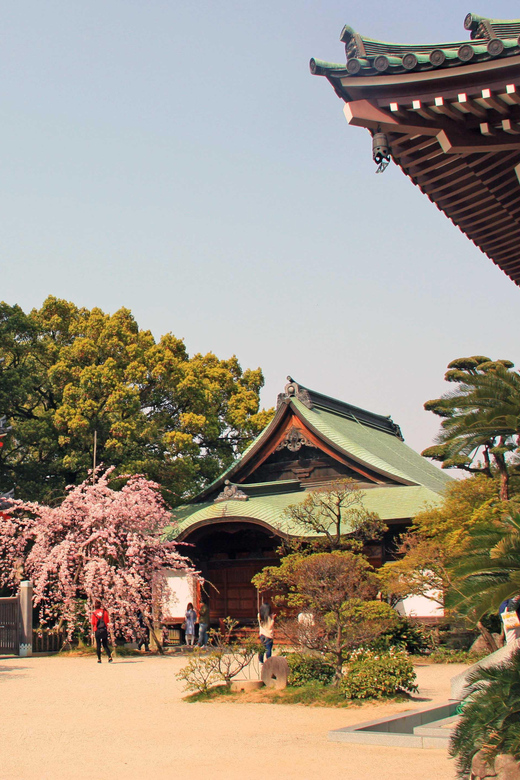
After about ten minutes on foot, you reach Shofukuji. This temple is the oldest Zen Buddhist temple in Kyushu, which gives it real historical weight even before the guide begins explaining the grounds.
The appeal here is calm rather than spectacle. You can expect traditional architecture, quiet paths, and a slower start to the day. The guide helps you notice details that are easy to miss when you walk through on your own, while also explaining why Shofukuji matters in the story of Fukuoka and Zen Buddhism.
This is not the place to expect a huge statue or a long list of display rooms. Its value comes from atmosphere, age, and the chance to see a working religious site in a peaceful setting. If you prefer major monuments with instant visual impact, Shofukuji may feel restrained. Give it time, though, and its quiet character becomes the point.
The tour description draws a useful contrast with Tochoji. Tochoji has the more obvious visual draw, while Shofukuji offers a stronger sense of historical continuity. Seeing both gives you a better comparison than visiting either one alone.
Tochoji and the large Buddhist image
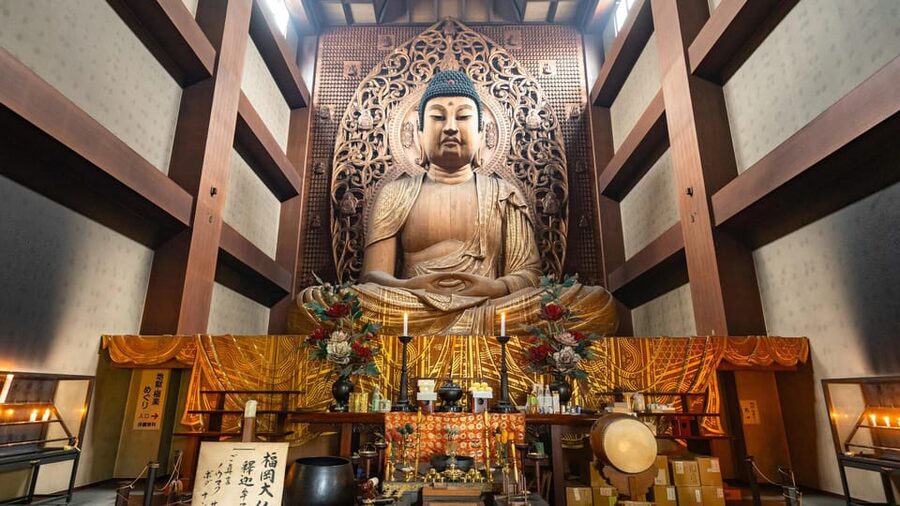
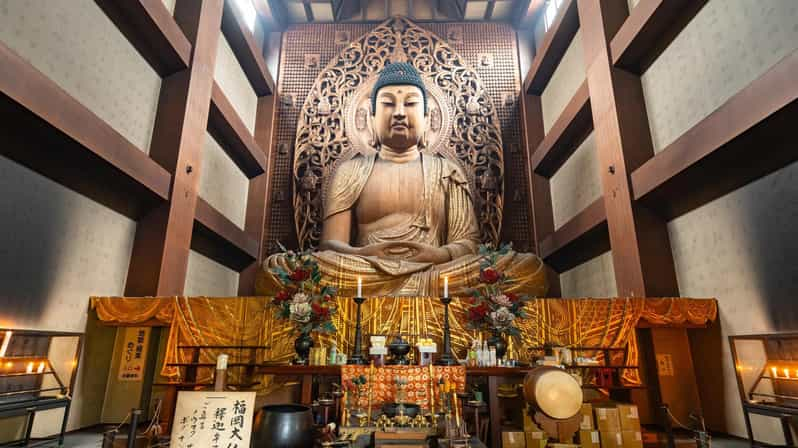
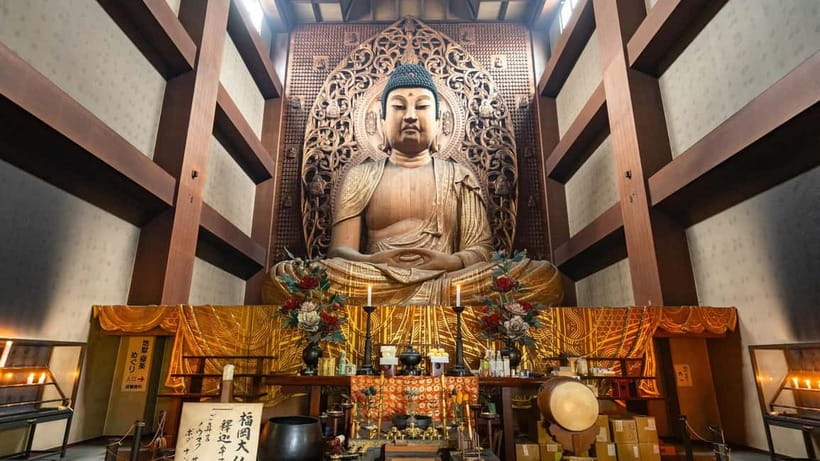
Tochoji follows Shofukuji as another guided temple stop. It is known for its large Buddha statue, giving the route a change of scale after the more subdued first temple.
This contrast is one of the smart parts of the plan. At Shofukuji, you focus on Zen setting and early temple history. At Tochoji, the impressive Buddha offers a more immediate visual experience. Your guide can connect the two rather than treating them as interchangeable religious buildings.
The exact pace is flexible because this is a private tour. You can ask for more background at either temple, or keep moving if you are more interested in the shrines and shopping street later in the route. That flexibility has proved helpful for families and for people who need to control their walking speed.
No attraction tickets are included in the price. The information provided does not specify a separate admission charge for each temple, so check current conditions when booking if seeing every interior space is important to you.
Same streets, a different century:
- Kyoto: Fushimi Inari, Kinkakuji, Bamboo Grove 1 Day Bus Tour
★ 4.8 · 4,316 reviews - World Heritage Shirakawa-go and Experience Tours from Kanazawa
★ 5.0 · 4,049 reviews - Tokyo: Imperial Palace and Shogun Historical Walking Tour
★ 5.0 · 2,251 reviews - World Heritage Kyoto & Nara Uji Authentic Matcha Experience
★ 5.0 · 1,573 reviews
Kushida Jinja and Fukuoka’s festival spirit
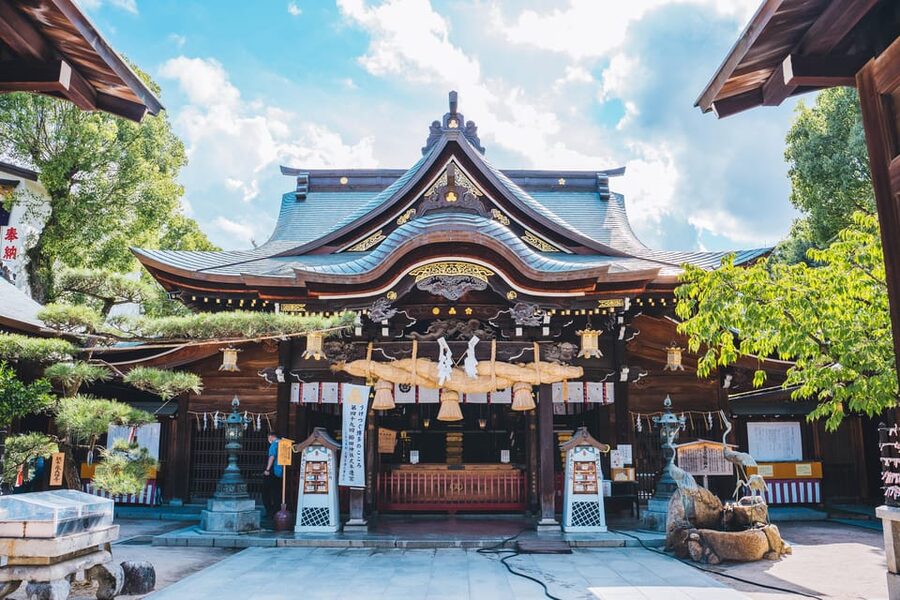
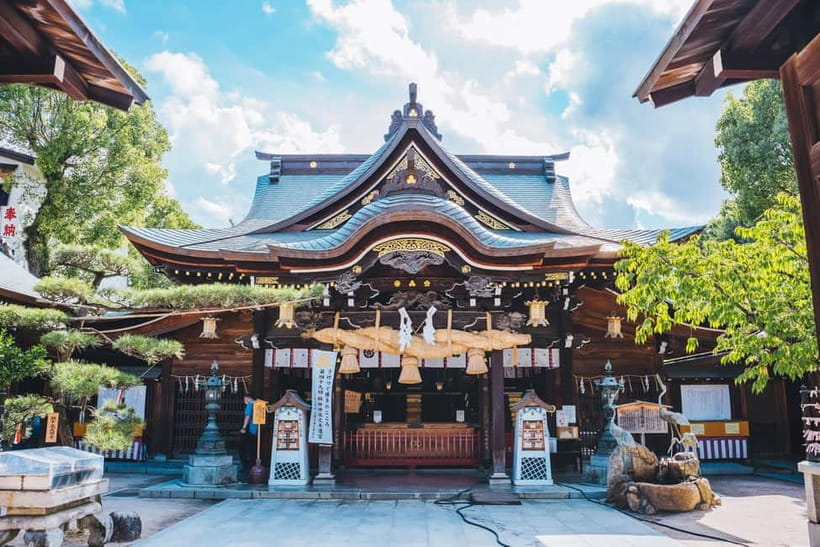
From Tochoji, the walk continues to Kushida Jinja, Fukuoka’s main shrine. This is one of the most important stops for understanding the city’s public traditions.
Kushida Jinja is closely tied to the Hakata Gion Yamakasa festival, a major annual event known for its energetic processions and decorated floats. Even outside festival time, the shrine gives you a clearer sense of how local identity is expressed through religious spaces and seasonal events.
Look for the architectural details and the feeling of activity around the shrine. The guide’s role is useful here because a shrine can otherwise seem like a quick photograph and a short walk under a gate. You get more from it when you understand its place in Fukuoka’s calendar and community life.
This is also a good point to ask practical questions about local festivals, customs, and places to visit later. The guides have offered restaurant, shopping, and activity suggestions, so keep a note on your phone as you go.
Kawabata Shopping Arcade, a short taste of local life
The route then enters Kawabata Shopping Arcade. You get about 15 minutes of free time here, which is enough for a quick look and perhaps a snack, but not enough for a serious shopping session.
That short pause is intentional. After several guided religious sites, Kawabata changes the mood. Shops, food stalls, and everyday commerce show you Fukuoka as a living city rather than a collection of heritage buildings.
Use the time according to your interests. You might browse for a small gift, look at local products, or follow the food smells. Food and drinks are not included, so bring money if you want to buy something. The arcade is also a good place to tell your guide what kinds of meals or shopping you want to find later.
The limitation is time. Fifteen minutes passes quickly, especially if you stop to eat. If Kawabata is your main reason for booking, ask the guide if the route or timing can be adjusted. The private format gives you a better chance of doing that than a fixed group walk.
Sumiyoshi Jinja, a different shrine style
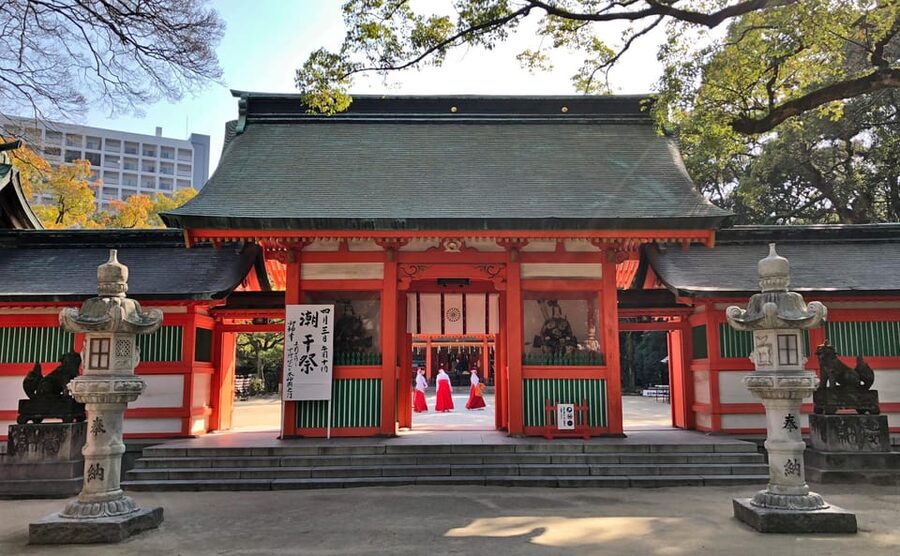
After about 14 minutes on foot, you reach Sumiyoshi Jinja. The shrine has a distinctive architectural style that differs from many other shrines in Japan, making it more than a repeat of Kushida Jinja.
The change is especially useful for first-time visitors. You can compare the layout, buildings, and atmosphere of two important Fukuoka shrines while the differences are still fresh. Sumiyoshi Jinja also has a connection to the sea, which gives the grounds a quieter feeling despite the city around them.
The provided route describes the grounds as tranquil, and that is the right expectation. This is another stop where a guide adds context, pointing out why the shrine looks different and explaining its place in local tradition.
There is some walking between the stops, with another section of about 13 minutes before returning toward Hakata Station. The tour is not a strenuous hike, but you should wear comfortable shoes. If you have a temporary physical limitation, say so at the start. One guide adjusted the outing for a visitor with a mobility issue, and the private format makes that kind of practical response possible.
Hakata Station rooftop and the final city view
The tour finishes back at Hakata Station, with scenic views along the way and a rooftop panorama as the closing point. From above, you can see Fukuoka spread around the station and watch the city change as daylight fades.
This ending works because it gives you a modern counterpoint to the temples and shrines. You begin with old religious sites and end with trains, rooftops, and city lights. The view also helps you understand the parts of Fukuoka you have just walked through.
Try to book a starting time that gives you the kind of light you prefer. The information allows starting times to vary, but it does not promise a sunset departure. Check availability carefully if evening views are important to you.
The rooftop stop is also practical. After the tour, you are already in a major shopping and dining area, with straightforward access to trains and other parts of Fukuoka.
The guide makes the biggest difference
The strongest feature of this outing is the guide, not a special ticket or elaborate vehicle. You get a private host who can explain the sights in English or Czech and change the pace as needed.
Radim has led several of the outings and is described as easy to talk with, considerate, and good at explaining Japan and the local area without overloading you with facts. Another guide, Louise, has answered questions and tailored the route to personal interests. Vadim has also been praised for a personable approach and for placing Fukuoka’s historic sights within modern city life.
One unusual detail from the feedback is that a visitor even saw a sumo wrestler during a tour. That is not a promised feature, of course, but it shows the value of having a guide who can respond to what is happening around you rather than simply reading a fixed script.
The private format also suits families. A guide has adjusted the pace and conversation to keep a teenager involved, while another adapted the walk for a visitor with a temporary physical problem. These are useful signs if your group does not walk at exactly the same speed.
Timing, transport, and what your $58 covers
The advertised experience is described as a three-hour tour, while availability is shown in a three to eight-hour range. Treat three hours as the normal walking format and confirm the selected time when you book. A longer version may allow extra stops or more time at the arcade, but the exact extension is not detailed.
The walk itself is included. Other transport can be arranged at an additional cost, and transportation expenses are not included. Food, drinks, and attraction tickets are also your responsibility.
At $58 per person, the value depends on how much you want from the guide. You receive a private and personalized experience rather than a large group walk, and the route covers several major sights without requiring you to plan connections between them.
I would consider it good value for a first visit, especially if you have only a day or two in Fukuoka. I would think twice if you already know the temples, prefer exploring alone, or mainly want shopping time. In that case, use the route as a guide to places you can visit independently.
Free cancellation is available up to 24 hours before the tour for a full refund, and you can reserve now and pay later. Those terms are useful when your Japan schedule is still moving.
Who should book this experience?
I would recommend it to you if you want a friendly introduction to Fukuoka without spending a full day on a formal sightseeing bus. It suits solo visitors who want conversation, couples who prefer a private pace, and families who need flexibility.
It is also a good fit if you are interested in more than photographs. The guide can explain Zen Buddhism, shrine customs, local festivals, and the way traditional spaces sit beside modern Fukuoka.
You may want a different plan if you dislike walking, want extensive time inside attractions, or expect meals to be part of the price. Kawabata includes only a short free period, and the tour does not provide transport or food.
Should you book the Fukuoka Essentials walk?
Book it if you want to understand Fukuoka quickly and prefer a local conversation to a fixed script. The strongest combination is the private format, the mix of Shofukuji, Tochoji, Kushida Jinja, Kawabata, and Sumiyoshi Jinja, and the final rooftop view from Hakata Station.
The best practical tip is to tell the guide your interests and walking limits at the beginning. Guides such as Radim, Louise, and Vadim have adjusted pace and content successfully, so use that flexibility.
For a first morning or afternoon in the city, this is a sensible choice. It gives you history, local streets, shopping ideas, and a clear sense of where you are. Just wear comfortable shoes, budget for your own snacks, and do not expect the short Kawabata stop to replace a full shopping trip.
FAQ
Where does the tour meet?
The meeting point is the CASETiFY STUDiO at Amu Plaza Hakata, beside the main entrance under the large clock.
Can I request hotel pickup?
Yes. Hotel pickup is available on request for central locations.
How long does the tour last?
The experience is described as a three-hour tour, with available durations shown from three to eight hours. Check the available starting times and duration when booking.
Is the tour private?
Yes. It is a private and personalized experience, and a private group option is available.
Which languages are offered?
Live guiding is available in English and Czech.
Are food, drinks, and transport included?
No. Food, drinks, transportation costs, and attraction tickets are not included. Walking is included, and other transport may be arranged for an additional cost.
Can I cancel for a refund?
You can cancel up to 24 hours in advance for a full refund. You can also reserve now and pay later.
Newest history tours we have reviewed in Japan
- [30 minutes] Rickshaw tour around Asakusa [History, sightseeing, Tokyo Skytree]★ 5.0 · 38 reviews
- Tokyo: Asakusa & Sensoji ー Oldest Temple Walking Tour (2hrs)★ 5.0 · 213 reviews
- Private sake pairing@ancient underground★ 5.0 · 27 reviews
- Private Tour Through the Tokyo National Museum & Ukiyo-e★ 4.7 · 17 reviews
- Tokyo: Customized Private Historical Guided Photoshoot Tour★ 5.0 · 25 reviews
- Tokyo: Imperial Palace, the history of Japan (ENGLISH GUIDE)★ 5.0 · 77 reviews
- Tokyo: Edo Castle & East Garden of the Imperial Palace Tour★ 4.7 · 112 reviews
- (Ticket Included) Explore Osaka Castle & Museum of History★ 4.8 · 21 reviews
Local Culture & Traditions Tours, compared.

Amsterdam Food and Cultural Tour with Tastings
Read our review →
Sevilla Food Tour: Tapas, Wine, History & Traditions
Read our review →
Tromsø: Reindeer Camp and Sami Cultural Tour with Lunch
Read our review →
Half Day Dominican Republic Cultural Tour : Small Group
Read our review →
Ultimate Melbourne Walking Tour: History, Laneways & Culture
Read our review →
Tromsø: Sámi Reindeer Sledding and Sami Cultural Tour
Read our review →
Kyoto Gion: 2-Hour Geisha Culture & History Walking Tour
Read our review →
Marrakech Historical and Cultural Tour – Half Day City Tour
Read our review →Browse the lists this tour appears in