
Review · BUDAPEST HISTORY TOURS
Budapest: Historic Downtown Bicycle Ride with Scenic Views
Budapest makes sense from a bicycle. In 3.5 hours, you can roll from the nightlife lanes of the Jewish Quarter to Heroes’ Square, the Danube, Parliament, Buda’s castle district, and the grand market hall. It is a fast but relaxed way to get your bearings before choosing which sights deserve a longer visit.
I like the small group of no more than 10 and the generous number of photo stops. I also like the route’s mix of famous sights and less obvious ones, including the House of Terror, City Park, the thermal baths, and Liberty Square. The main drawback is that you cover a lot of ground, so this is an overview rather than a close look inside Budapest’s museums and buildings.
Key points at a glance
- A full city circuit: Ride through both Pest and Buda, crossing the Chain Bridge and returning by Liberty Bridge.
- Strong first-day choice: The route gives you a useful map of Budapest for the rest of your stay.
- Major sights without a hard workout: The pace is described as easy and relaxed, with electric bikes available on some departures.
- History between the photo stops: Your English-speaking guide connects the buildings with Hungary’s political and cultural past.
- Useful practical limit: Children’s bikes and child seats are limited, so families should contact the operator ahead of time.
- Best for confident riders: People who cannot ride a bicycle, have mobility impairments, or weigh more than 110 kilograms should not book.
Why a bicycle works so well in Budapest

Budapest is spread across two sides of the Danube, with long avenues, broad riverfront roads, and sights that are too far apart for a comfortable walking tour. A bicycle lets you link Pest’s Jewish Quarter, Andrássy Avenue, City Park, Parliament, and the river in one continuous outing.
The route is not built around speed. You stop often for photographs and short explanations, and the guide leads the group through the city. One useful detail from past outings is that the ride has been described as easy and safe even by people who have taken other city cycling tours. That makes it more about efficient sightseeing than serious exercise.
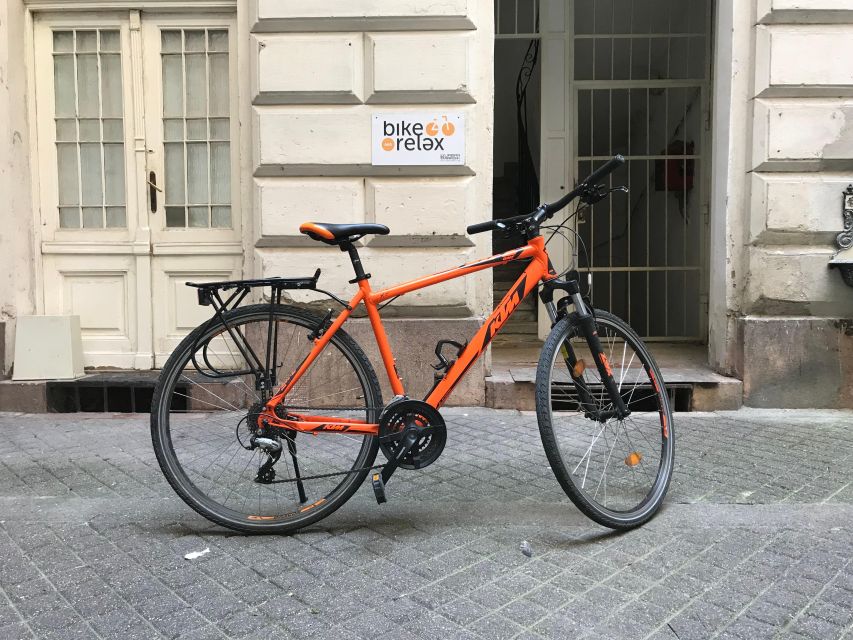
Some bikes have an electric function. You can use it to reduce effort, or leave it off for more pedaling. The available information does not promise an electric bike for every participant, so ask when booking if that matters to you.
I would put this tour near the start of a Budapest visit. You will see places you may want to return to, learn how Buda and Pest fit together, and spot neighborhoods where you can eat after the ride.
More Old Town and Historic Centre Walks in Budapest:
- Budapest Historic Downtown Bicycle Tour in small groups
★ 5.0 · 288 reviews - Budapest: Historic Downtown ride on E-Bicycles Buda & Pest
★ 5.0 · 227 reviews - Madrid Essential: Historic Center, Plaza Mayor & Royal Palace
★ 5.0 · 6,416 reviews
Starting in the Jewish Quarter
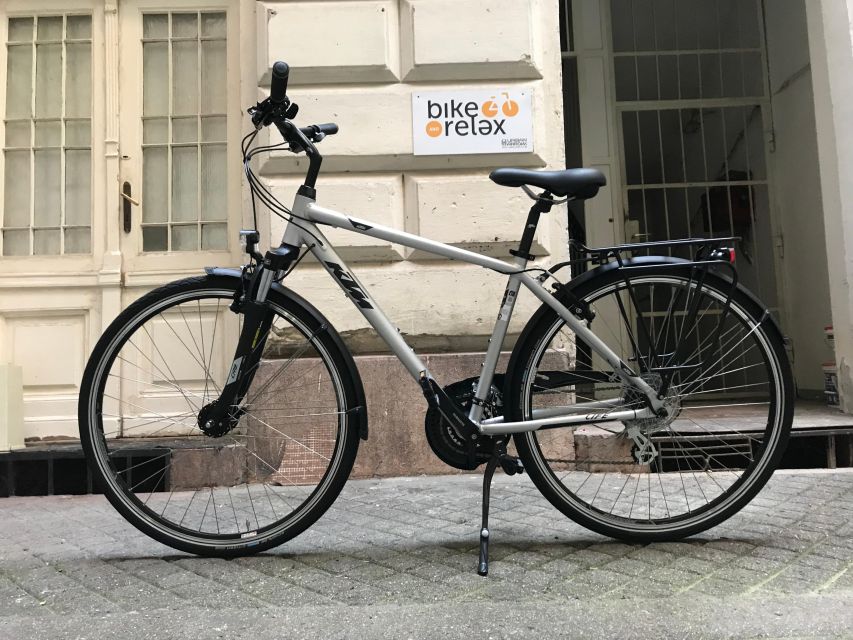
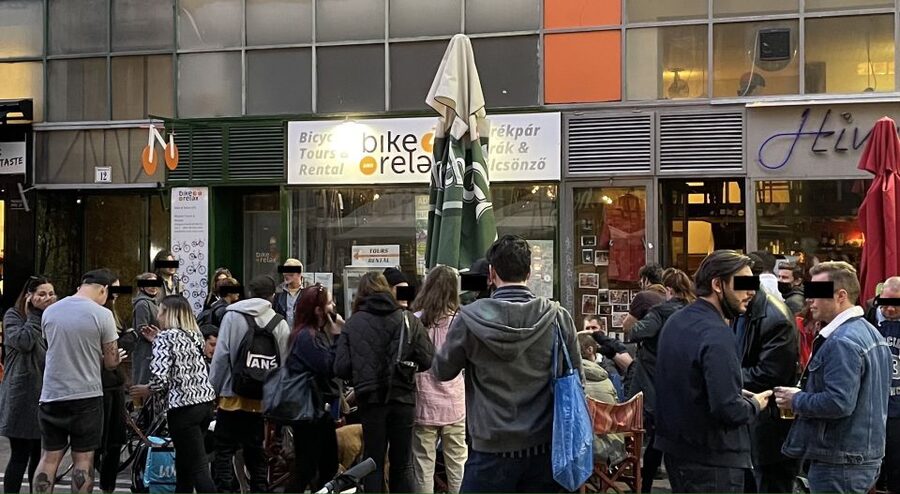
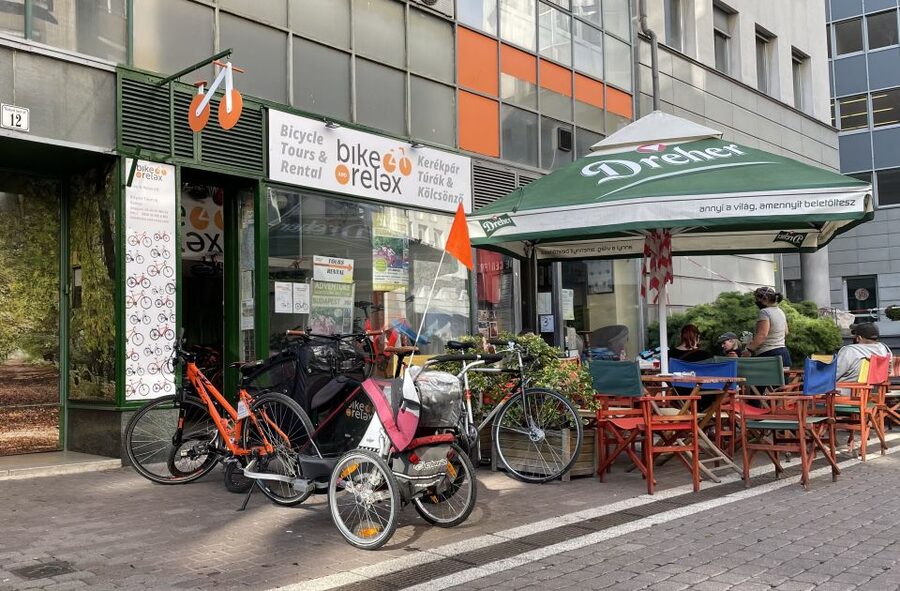
The meeting point is at Madach Imre ut 12, between Madach Square and Gozsdu Court. Look for the Bike & Relax shop beside Cafe Hivatal, just around the corner from Gozsdu Court and Deák Square.
This is a handy central location. Deák Square connects the M1, M2, and M3 metro lines, along with trams 47, 48, and 49 and the airport bus. Still, the entrance can be easy to miss. One rider found the door poorly marked, and the GPS position in the booking information did not match the app directions exactly, so allow a few extra minutes.
The Jewish Quarter is a fitting place to begin. It is now known for nightlife, cafés, food, and the Great Synagogue, but it also carries the weight of Budapest’s Jewish past. You begin with a short guided look around the district, then leave for Andrássy Avenue.
Do not bring a suitcase or large bag. Wear comfortable shoes and clothing suited to the weather. There is a drink included, but the ride has no meal stop, so I would eat beforehand and carry a small snack if you need regular food.
Andrássy Avenue, music, and difficult memories
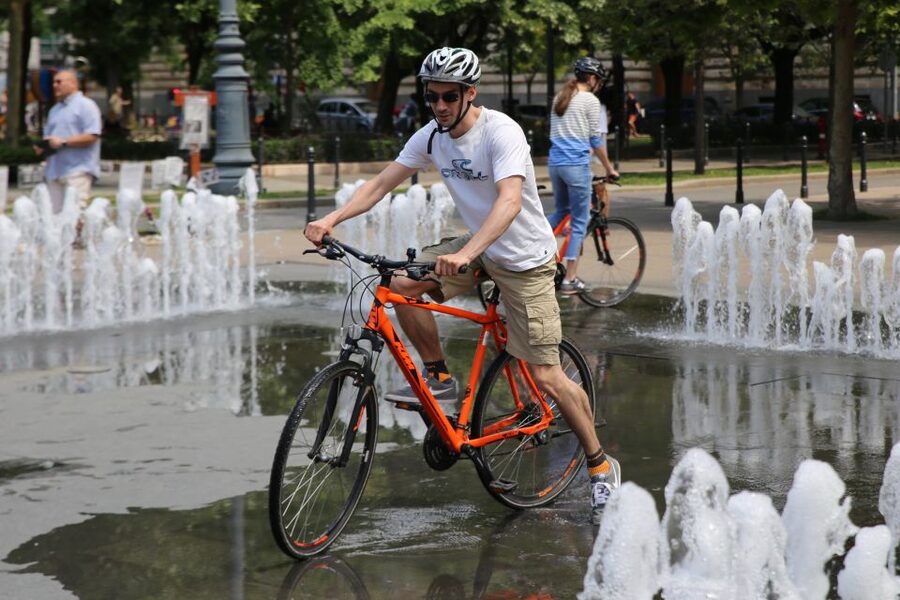
The first stretch leads toward the Franz Liszt Academy of Music and Andrássy Avenue. The avenue is one of Budapest’s grandest routes, lined with elegant buildings and important cultural institutions. You get a sense of the city’s late nineteenth-century ambition without spending the morning inside a single museum.
The House of Terror adds a much darker note. The building is connected with the Nazi and Communist periods of Hungarian history. On this tour, it is a photo stop rather than an interior visit, but the guide can place it within the country’s more recent past.
That contrast is one of the tour’s strengths. Budapest is not presented only as a pretty collection of palaces and bridges. You also encounter the political wounds that shaped modern Hungary.
Heroes’ Square and City Park
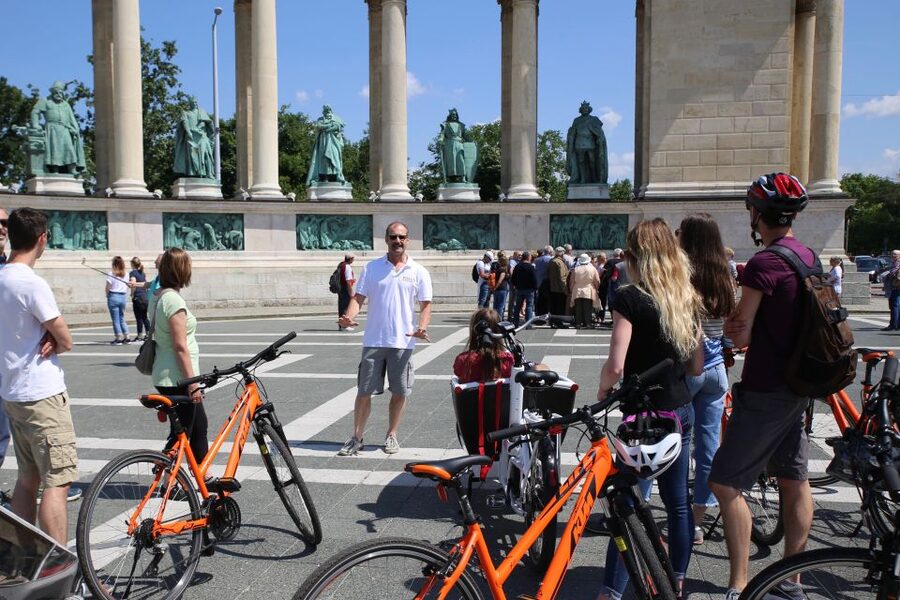
At Heroes’ Square, you stop for photographs and an introduction to Hungarian medieval history. The monument’s statues represent important figures from the country’s past, making this one of the best places on the route to begin understanding Hungary’s national story.
From here, you ride into Városliget, or City Park. The park gives you more open space after the formal avenues of central Pest. The guide spends time here, and the pace allows you to see how the city uses this large recreational area.
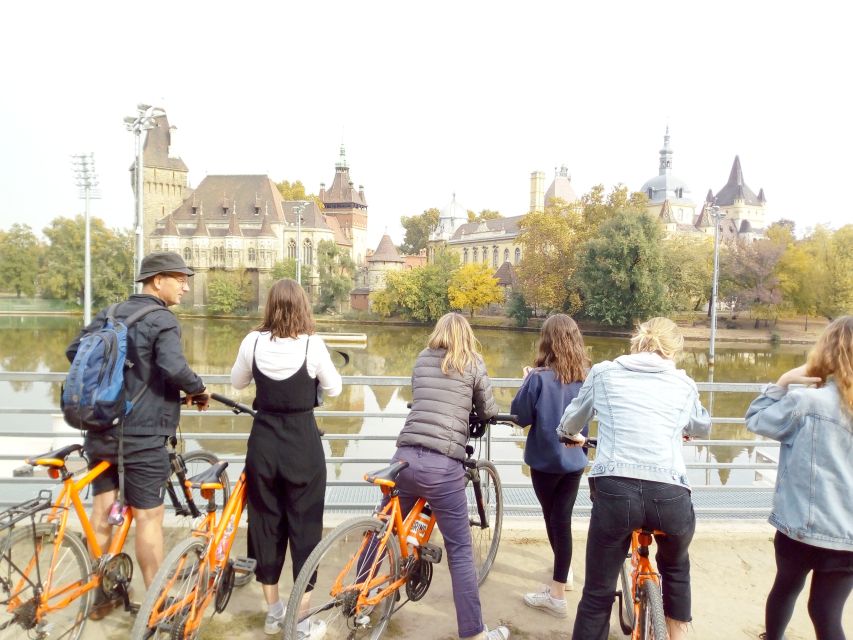
Vajdahunyad Castle is one of the park’s memorable sights. Its architecture draws on several Hungarian and European styles, so it looks almost theatrical beside the park paths. You will not have time for a full interior visit, but the exterior makes an excellent photo stop.
The Széchenyi Thermal Bath is another City Park highlight. Budapest is famous for its bathing culture, and this is one of the city’s best-known bath complexes. The tour stops for photographs only, so plan a separate visit if you want to soak. That is a practical advantage in one sense: you see the bath without spending a large part of your cycling tour indoors.
More History Bike, Segway and Tuk-Tuk Tours in Budapest:
- Segway Guided Tour In Budapest, Historical Buda Castle
★ 5.0 · 28 reviews - Historical Singapore Bike Tour on Full-Sized Bicycles
★ 5.0 · 1,421 reviews - Charlotte’s Ultimate Southern Charm Historical City Cart Tour
★ 5.0 · 1,347 reviews - Barcelona: 2.5-Hour Bike or E-Bike Historical Tour
★ 4.5 · 1,262 reviews
Opera, basilica, and Budapest’s public squares
The route returns toward central Pest, passing the Hungarian State Opera House. This is one of the city’s most polished buildings, with a grand facade that rewards a short stop. You see it from the outside rather than attending a performance or taking a formal building tour.
St. Stephen’s Basilica follows. Its dome and broad facade dominate the surrounding square, and the stop gives you time for photographs. The basilica is also a useful reference point when you explore central Budapest on foot later.
At Liberty Square, the guide turns again toward modern Hungarian history. This public space brings together monuments, grand government buildings, and reminders of the political forces that shaped the country. It is less instantly famous than Parliament, but it helps connect the city’s architecture with its recent past.
This portion of the route is where a live guide earns the fee. You can photograph a building on your own, but the context helps you understand why it matters and how it fits into Budapest’s story.
Parliament and the Danube riverfront
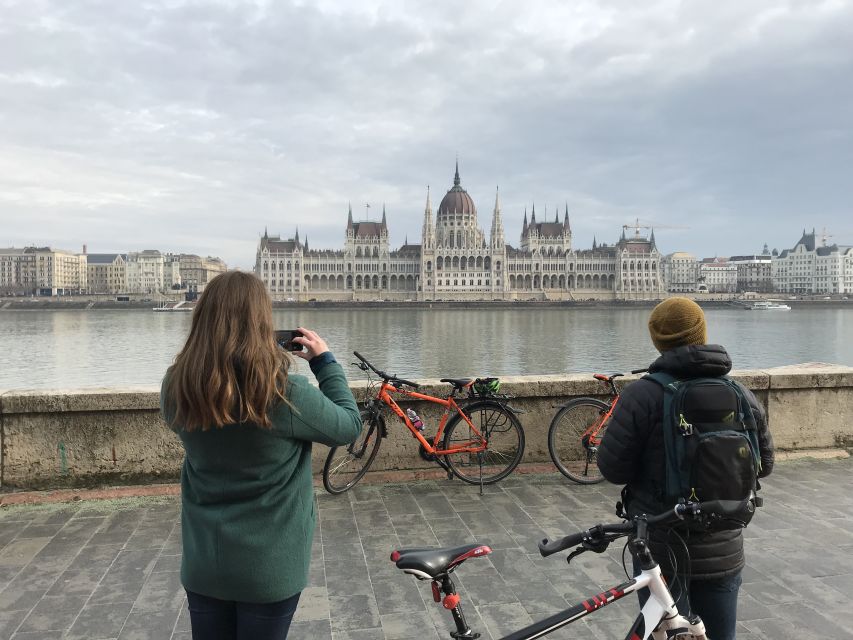
The Hungarian Parliament Building is the route’s major visual payoff. Its Gothic Revival exterior stretches along the Danube, with pointed towers and a long riverside facade. You stop for photographs and an explanation, but the cycling tour does not include an interior visit.
The riverfront continues to the Shoes on the Danube Bank memorial. The bronze shoes honor Jewish people who were killed during the Second World War. The tour stops nearby for a short period, but direct access to the monument is not granted on this route. If this memorial is a major priority for you, plan a separate visit so you can spend more time there.
From the river, you follow the Danube toward the Chain Bridge. The water, bridges, and opposite bank give you some of Budapest’s most recognizable views. The riverfront section is also one of the main reasons a bicycle is useful. You cover distance smoothly instead of repeatedly stopping for public transport or walking long stretches between sights.
Crossing to Buda and the castle district
The Chain Bridge takes you from Pest to Buda. Crossing this famous bridge is more than a transport link. It gives you a clear visual sense of how the two halves of Budapest meet at the Danube.
The itinerary includes photo stops at Matthias Church and Fisherman’s Bastion. These sights sit in the castle district, where you get a different feel from the broad avenues and formal squares of Pest. Matthias Church is known for its patterned roof and ornate exterior, while Fisherman’s Bastion provides striking views back toward the river and Parliament.
The timing here is limited. You will get an introduction and time for photographs, not a detailed castle-district visit. I would mark the spots that interest you and return later if you want to enter the church, explore the surrounding streets, or linger at the viewpoints.
The route then continues past Rudas Bath and Gellért Baths. Both are part of Budapest’s long bathing tradition, and both make useful additions to your personal list of places to visit. The cycling tour treats them as brief exterior stops, so bring a swimsuit only if you are planning a separate bath visit. It is not needed for the ride itself.
Returning through the market and museum quarter
You cross back toward Pest on Liberty Bridge. The green-painted bridge is one of Budapest’s most photogenic crossings, and the ride gives you another view of the Danube before entering the central streets.
The Central Market Hall is a practical and colorful stop. Its large iron structure and food stalls make it a good place to return for paprika, local products, or a meal. Since the bike tour does not include food, you will need to come back on your own if you want to browse properly.
The Hungarian National Museum appears on the way back toward the Jewish Quarter. Like several other stops, it is seen from outside. The museum is worth noting for a later visit if you want a more detailed account of Hungarian history than a city ride can provide.
The final stop is the Dohány Street Synagogue, one of the Jewish Quarter’s major landmarks. It brings the route back to its starting area and rounds out the tour’s attention to Budapest’s Jewish heritage. You finish near Madach Square, where restaurants and bars make it easy to continue the evening.
The guide, group size, and pace
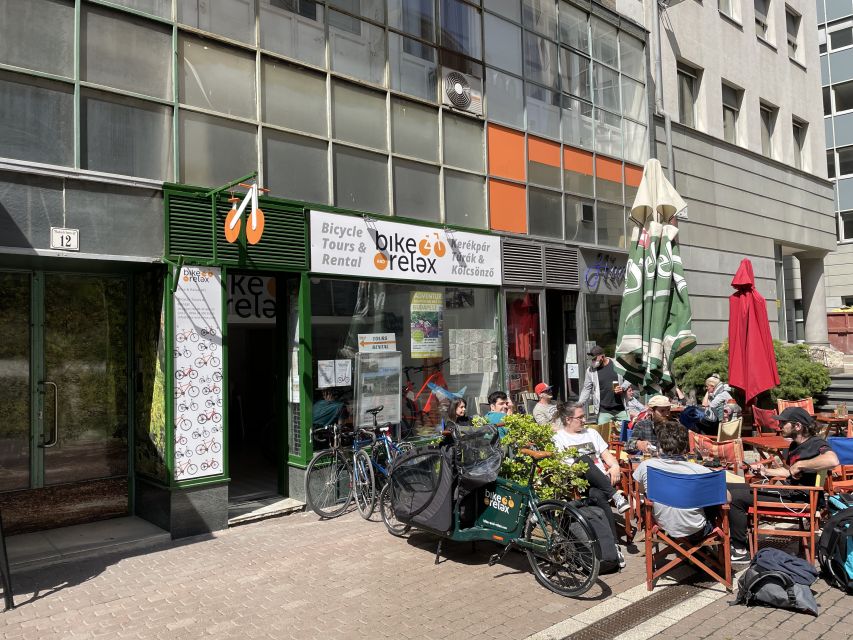
The tour is conducted in English and limited to 10 participants. That is the right size for a city ride: small enough to hear the guide and stay together, but large enough to retain a social feel.
Guide quality matters more than almost anything else on a sightseeing bike tour. The named guides associated with previous departures include Oliver, Karol, Karoly, Bálint, Esther, Naomi, Joel, and others. The strongest feedback focuses on clear explanations, friendly manners, and an ability to answer questions about Budapest’s buildings and history.
The ride has also been described as relaxed, with comfortable bicycles and a route that feels manageable for people who are not looking for a strenuous workout. Still, you should be comfortable riding in an urban setting and able to keep moving for 3.5 hours. The experience is not suitable for people who cannot ride, have mobility impairments, use a wheelchair, are pregnant, have epilepsy, are visually impaired, or weigh more than 110 kilograms.
Children require advance planning. Only a limited number of children’s bicycles and child seats are available, and the operator asks families with small children or anyone under 1.50 meters tall to make contact before the tour.
Is $45 a fair price?
At $45 per person, the tour offers a solid value if you want a broad first look at Budapest. You are paying for a guide, bicycle, 3.5 hours of route planning, and a refreshing drink. More importantly, you cover a distance and number of districts that would be tiring on foot.
The price is less attractive if you want long visits inside museums, baths, churches, or Parliament. Admission to those attractions is not included, and the tour does not provide lunch or additional drinks. Think of it as a moving introduction, not a replacement for your main sightseeing tickets.
The small group improves the value. A guide can keep the pace comfortable, answer questions, and make frequent photo stops without managing a large crowd. The cancellation policy also gives you some flexibility: you can cancel up to 24 hours before the start for a full refund, and you can reserve now and pay later.
Who should book this ride?
I would recommend it to first-time visitors, active couples, friends, and solo travelers who want an efficient introduction to the city. It is especially useful if you have only a few days and want to identify the sights you will revisit.
It also suits travelers who like history but do not want a lecture in a museum. The route gives you short explanations at the places where events unfolded, from the House of Terror and Liberty Square to the Danube memorial and the castle district.
I would not choose it for anyone seeking a slow architectural tour, a bath experience, or a food-focused outing. You will see many places, but the schedule requires you to keep moving. The ride also works best in decent weather, since most of the experience takes place outdoors.
Final verdict
Book this tour if you want to see the shape of Budapest quickly, hear the backstory behind its major sights, and save your legs for later exploring. The route is broad, the group is small, and the pace is generally easy.
Start early in your trip, eat before you arrive, bring weather-appropriate clothing, and leave room in your schedule to revisit the Parliament, baths, market hall, or castle district. If you want a detailed visit to any one attraction, book that separately. For a first look at both Buda and Pest, this bicycle ride is a practical and enjoyable choice.
FAQ
How long is the Budapest bicycle tour?
The tour lasts 3.5 hours.
What language is the tour conducted in?
The live tour guide speaks English.
How large is the group?
The tour is limited to 10 participants.
Where does the tour begin and end?
It begins and ends at Madach Imre ut 12 in the Jewish Quarter, near Cafe Hivatal, Madach Square, and Gozsdu Court.
Is a drink included?
Yes. A refreshing drink is included, but meals and other drinks are not.
Does the tour enter Parliament, the baths, or the museums?
No. These locations are visited as exterior sights or photo stops. Entrance tickets are not included.
Can children join the bicycle tour?
Children may join, but children’s bikes and child seats are limited. Families with small children or participants under 1.50 meters should contact the local partner in advance.
Newest history tours we have reviewed in Budapest
- Time Machine Budapest Historical Exhibition Ticket★ 5.0 · 32 reviews
- Jewish Heritage in Hungary with a Historian★ 5.0 · 37 reviews
- Budapest Jewish Heritage: Synagogues, Shoes, Secrets & Flódni★ 5.0 · 47 reviews
- Private Jewish Heritage Tour including Hotel Pickup★ 4.5 · 35 reviews
- Jewish Heritage / Full tour★ 5.0 · 59 reviews
- Michael Jackson History Exhibition Ticket★ 5.0 · 42 reviews
- Communist History Evening Walking Tour of Budapest★ 4.5 · 23 reviews
- HOLLÓKŐ UNESCO World Heritage site + Eger Castle Private guided tour★ 4.5 · 18 reviews
Old Town & Historic Centre Walks, compared.
Madrid Essential: Historic Center, Plaza Mayor & Royal Palace
Read our review →
Live Fado Show with Port Wine in Historic Center
Read our review →
Valencia Old Town Tour with Wine & Tapas in 11th Century Historic Monument
Read our review →
Prague Old Town, Medieval Underground and Dungeon Historical Tour
Read our review →
Cartagena: Historic Center and Getsemaní Shared Walking Tour
Read our review →
Old Town Walking Tour History and Tales in Edinburgh
Read our review →
Philadelphia Old City Historic Walking Tour with 10+ Top Sites
Read our review →Browse the lists this tour appears in