
Review · HISTORY BIKE, SEGWAY & TUK-TUK TOURS
Anuradhapura Heritage Mountain bike / bicycle Tour
Anuradhapura is far too spread out for a pleasant walking tour, and a bicycle gives you the right pace. With local guide Saranga, you ride a roughly 10-kilometer loop through sacred ruins, shaded forest, rice fields, and quiet roads, stopping at some of Sri Lanka’s most important Buddhist sites.
I like the mix of famous monuments and less hurried cycling routes. I also like that the tour includes a local vegetarian meal at Hela Bojun, bottled water, a mountain bike, and a private guide. The main drawback is the extra $30 UNESCO entrance fee, which makes the total cost much higher than the advertised tour price.
Key points to know before booking
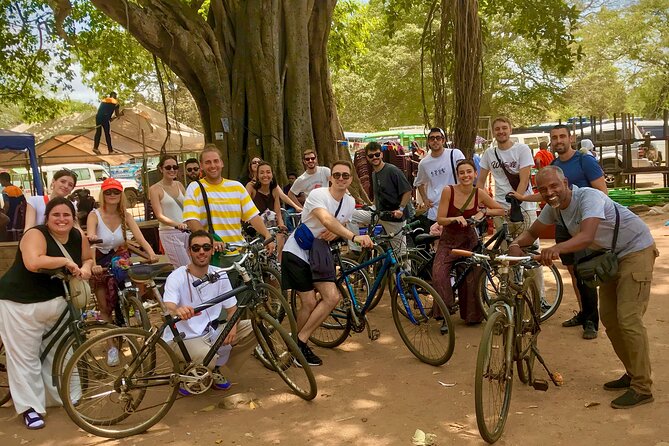
- A 10-kilometer private cycling loop covers the main heritage sights in about four and a half hours.
- Saranga is an English-speaking local guide who explains Anuradhapura’s Buddhist traditions, culture, and history.
- Top-brand mountain bikes from brands such as Giant, Trek, and Louis Garneau are provided.
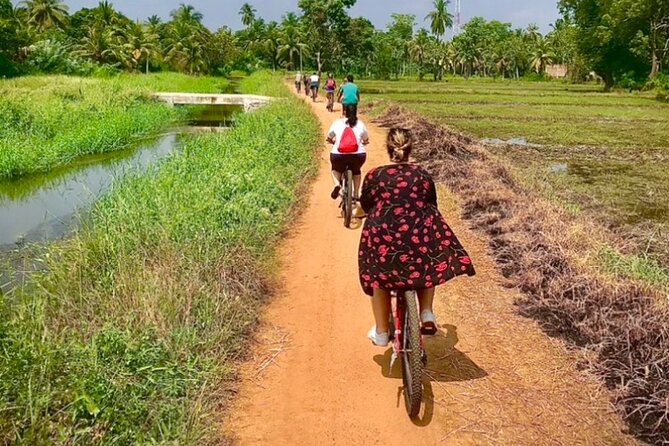
- The quiet routes are part of the appeal, with forest tracks, rice fields, lakes, and local life between major monuments.
- A vegetarian meal at Hela Bojun is included, along with bottled water and parking.
- The UNESCO entrance ticket costs extra, $30 per adult and $15 for children under 13.
Why a bicycle is the smart way to see Anuradhapura
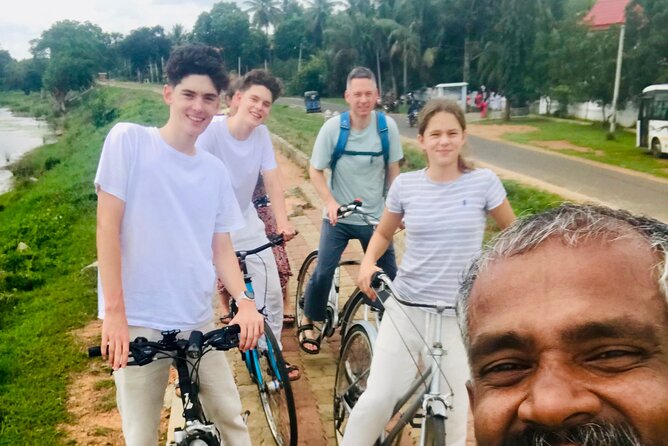
Anuradhapura’s sacred city covers a large area. The monuments are not arranged in one compact cluster, so walking between the main sites would take time and energy better spent looking around. A bicycle lets you cover ground without turning the day into a vehicle tour.
This is not a racing excursion. The route is designed around stops, short rides, and time to look closely at carvings, stupas, statues, reservoirs, and monastic ruins. You get exercise, but the emphasis is on seeing the place at an unhurried pace.
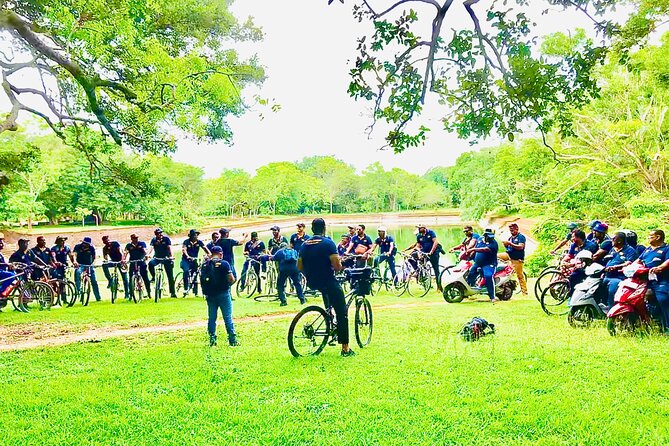
The route covers about 10 kilometers and takes approximately four and a half hours. That includes the cycling and the time spent at ten stops. The tour is private, so you are not tied to the pace of a large group. That matters at religious sites, where a few quiet minutes can be more rewarding than rushing through a checklist.
Saranga brings a local connection that adds meaning to the ride. The strongest part of his role is not simply pointing out old buildings. He also explains Buddhism, local customs, and the continuing religious importance of Anuradhapura. At the major temples, you should expect a respectful and educational visit rather than a quick photo stop.
More History Bike, Segway and Tuk-Tuk Tours in the world:
- Historical Singapore Bike Tour on Full-Sized Bicycles
★ 5.0 · 1,421 reviews - Charlotte’s Ultimate Southern Charm Historical City Cart Tour
★ 5.0 · 1,347 reviews - Barcelona: 2.5-Hour Bike or E-Bike Historical Tour
★ 4.5 · 1,262 reviews
From Jetavanaramaya to the Samadhi Buddha
The first major stop is Jetavanaramaya, one of Anuradhapura’s great stupas. Built during the reign of King Mahasena, it reached about 122 meters, or 400 feet, and was once the tallest stupa in the world. Even with its worn brick surface and ancient setting, its size gives you an immediate sense of the power of the old kingdom.
You have about 15 minutes here. That is enough for a first look, photographs, and a short introduction, though you may wish the stop were longer if large monuments are your main interest. The bicycle helps because you are not spending the morning walking long distances between each site.
Next comes the Samadhi Statue, a famous seated Buddha shown in meditation. The statue is associated with the Dhyana Mudra, a posture connected with meditation. You have about 20 minutes, which gives you time to notice the calm expression and the balance of the figure rather than simply passing by.
This is one of the places where Saranga’s explanation can add value. A guide can help you understand what you are seeing in Buddhist art and why the statue is more than an attractive stone sculpture. Keep your voice low and dress respectfully at all temple sites.
Abhayagiri’s monastery ruins and ancient bathing pools
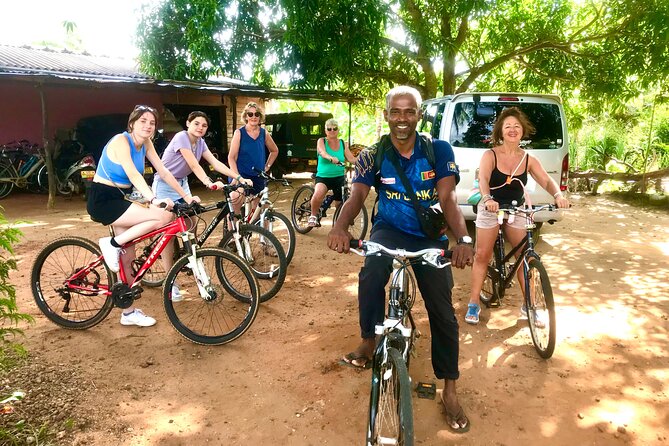
The ride continues to Abhayagiri, one of Anuradhapura’s largest monastic areas. This was not a single temple, but a major religious complex connected with different Buddhist traditions. Its scale becomes clearer as you move between the stupa, pools, refectory, and other remains.
You have around 20 minutes at Abhayagiriya Stupa. The site rewards a slow look at the open spaces around the monument. It also gives you a sense of how much activity once took place here, even though today the area is quiet.
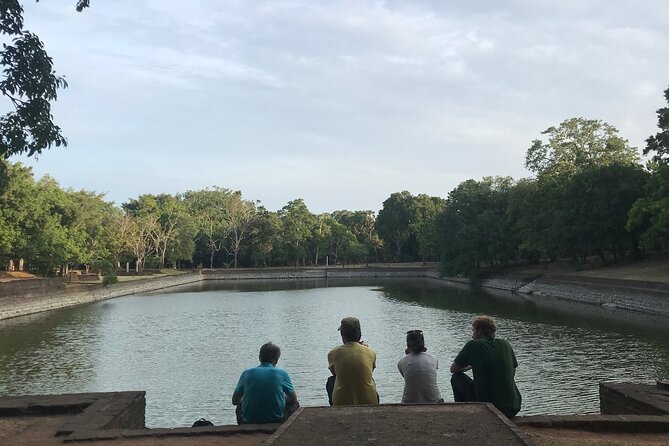
The Twin Baths, or Kuttam Pokuna, follow. These two ancient bathing pools are among the best-preserved examples of their kind in Sri Lanka. Their clean lines, steps, and stonework show that practical structures could also be carefully designed.
The stop lasts about 20 minutes. Look for the details in the stone edges and the way the two pools relate to one another. This is a good place to appreciate the engineering behind daily monastic life, not just the grand religious buildings.
Eth Pokuna, known as the Elephant Pond, gives you another lesson in scale. It is a huge ancient reservoir, measuring roughly 159 meters long and 52 meters wide. The name helps explain its size, but the important point is that it served a large religious community and formed part of a much wider water system.
You spend around 20 minutes here. The size is difficult to grasp from one angle, so walking a little around the edge is worthwhile. The site also makes a strong contrast with the intimate carvings and statues seen elsewhere on the route.
Moonstones, refectories, and the ancient water system
The Sandakada Pahana, or moonstone, is one of Anuradhapura’s most distinctive architectural details. These semi-circular stone slabs were placed at stairways and entrances, often with carefully carved bands and symbolic designs.
You have about 25 minutes for this stop, and that is useful because the stone deserves close attention. Look at it as a complete composition rather than a single decoration. The shape, patterns, and position at the entrance all contribute to how people moved into a sacred building.
The Basawkkulama Tank shifts the focus from carved stone to water management. Ancient Sri Lanka developed complex irrigation systems, with some early works dating to around 430 BCE. Tanks such as this supported farming, settlements, and religious centers in a dry part of the island.
You have about 20 minutes here. The tank is not a conventional monument, but it helps explain how Anuradhapura functioned. The city’s great stupas and monasteries depended on reliable water, food production, and careful planning. This is one of the places where cycling feels especially appropriate, since you can move through the broader setting rather than viewing the ruins as isolated objects.
At the Main Refectory of Abhayagiri Monastery, you get a glimpse of the practical side of monastic life. The Chinese monk Fa-Hien wrote in the fifth century that as many as 5,000 monks lived at the monastery. A community of that size needed organized kitchens, food storage, dining areas, and water supplies.
The scheduled visit is shorter, about 10 minutes. That should be enough for an explanation and a look at the remains, though anyone focused on archaeology may want more time. The stop works best when connected to the earlier baths, tanks, and monastery grounds.
More History Tours in the world:
- New York City: American Museum of Natural History Ticket
★ 4.5 · 15,447 reviews - History and Hauntings of Salem Guided Walking Tour
★ 5.0 · 14,564 reviews - Colosseum: Underground and Ancient Rome Tour
★ 4.7 · 12,691 reviews - Lisbon: History, Stories and Lifestyle Walking Tour
★ 4.8 · 10,902 reviews
Ruwanweliseya and Sri Maha Bodhi
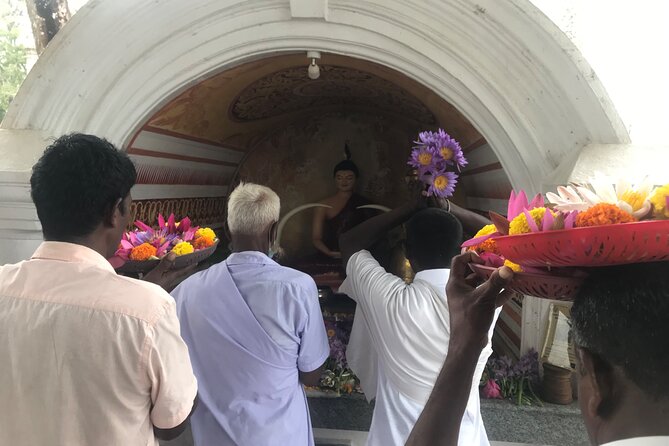
Ruwanweliseya is one of Anuradhapura’s most important stupas. King Dutugamunu began it in the second century BCE, and the monument remains a major place of worship. Its bright white surface and large rounded form create a different impression from the weathered brick of Jetavanaramaya.
The planned stop is about 30 minutes. This gives you time to walk around, watch the activity at the temple, and take in the scale of the sacred precinct. It is also a place where clothing and behavior matter. Cover your shoulders and knees, remove shoes where required, and avoid treating worshippers as part of the scenery.
The final major stop is Sri Maha Bodhi, the sacred fig tree in Mahamevnawa Gardens. It is regarded as the closest living link to the Buddha, and it remains an important pilgrimage site. The tree is not just a botanical curiosity. Its meaning comes from the religious tradition and the centuries of care given to it.
You have about 30 minutes here. Expect a more active religious atmosphere than at some of the quieter ruins, especially if ceremonies are taking place. One of the tour’s appealing details is the chance to encounter local ceremonies, including visits later in the day when the light begins to soften.
What the ride itself feels like
The tour is described as a mountain bike experience, but the route is not presented as a technical off-road challenge. You cycle between heritage sites, through quiet areas, forest, and rice fields. The appeal is the change of scenery and the freedom to cover the ancient city under your own power.
The bikes come from established brands such as Giant, Trek, and Louis Garneau. That is useful because a dependable bicycle makes a long ride more comfortable, especially if you are not used to local road conditions. A moderate level of physical fitness is recommended.
You should still treat this as an active half-day. The total distance is not extreme, but the tropical heat, stops, temple walking, and time in the saddle add up. Drink the provided water, wear practical clothing, and consider booking an earlier or later departure if you prefer cooler conditions. The tour requires good weather, and poor conditions can lead to a new date or a full refund.
The meeting point is Rides Hubwela Mada Gedara, Garage Waththa, near the old car park at 116/1 Watawandana Road. The ride returns to the same point. Parking is included, and the meeting area is near public transportation.
Food, clothing, and the real cost
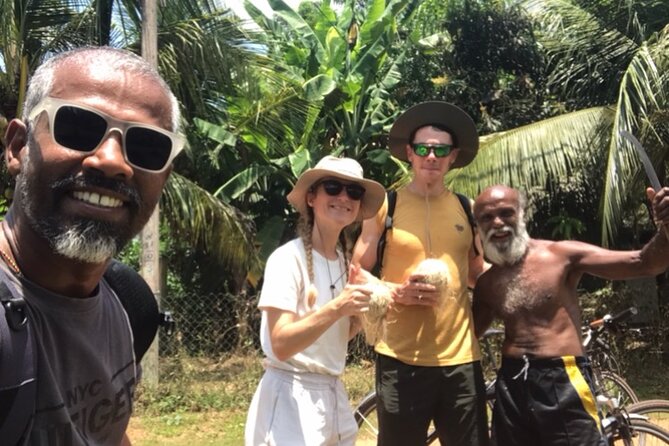
A local vegetarian meal at Hela Bojun is included. The meal is prepared by local people and gives you a break from monument viewing. It also adds a practical local touch to the day, especially if you want more than packaged snacks between stops.
The advertised price is $25 per person, which is reasonable for a private four-and-a-half-hour tour with a bicycle, guide, water, parking, and food. The important catch is the heritage admission fee. The UNESCO ticket costs another $30 per adult, or $15 for a child under 13.
That means an adult should budget about $55 in total before any other personal spending. It is still fair value if you want a guide and a bicycle, but it is not a $25 all-in experience. Check the entrance cost carefully before booking so the final price does not surprise you.
Bring a wraparound cloth if your knees are not covered. Several stops are active religious sites, and modest clothing is part of showing respect. Comfortable shoes are also useful because you will walk around the monuments even though the main transport is by bicycle.
Who will enjoy this Anuradhapura tour most
I would choose this tour if you want history explained in person and prefer moving through the site instead of riding in a vehicle. It suits couples, families with older children, and small private groups that enjoy a flexible pace.
It is especially good for you if Buddhism, ancient engineering, and local customs interest you. Saranga’s personal understanding of Buddhism is an important part of the experience, and the route includes both famous monuments and quieter corners.
You may want a different option if you dislike cycling, have limited physical fitness, or prefer spending a long time at each archaeological site. Ten stops in four and a half hours means the schedule is active. The tour gives you a broad look at Anuradhapura, not an extended archaeological study of every ruin.
The private format helps. You are not sharing the day with a large group, so you can ask questions and keep moving without waiting for strangers. Still, the number of stops means you should tell Saranga early if one site matters most to you.
Should you book it?
Book this Anuradhapura bicycle tour if you want a lively, personal way to see a huge ancient city. The strongest reasons are the quiet cycling route, Saranga’s cultural guidance, quality bikes, and the meal at Hela Bojun.
Before booking, add the $30 adult UNESCO ticket to the advertised $25 price, prepare for moderate physical effort, and bring clothing that covers your knees. If those details suit you, this is a thoughtful alternative to a standard sightseeing drive and a good way to connect Anuradhapura’s temples, waterworks, and living religious traditions.
FAQ
How long does the Anuradhapura bicycle tour last?
The tour lasts approximately four hours and 30 minutes.
How far do you cycle?
The route is a loop of about 10 kilometers through the Anuradhapura heritage area.
Is the tour private?
Yes. Only your group participates in the activity.
Who guides the tour?
Saranga, an English-speaking guide from the Anuradhapura area, leads the tour.
What bicycle is provided?
A mountain bicycle is provided for the tour. The bikes include brands such as Giant, Trek, and Louis Garneau.
Is food included?
Yes. A local vegetarian meal prepared at Hela Bojun is included.
Is the UNESCO entrance fee included?
No. The UNESCO admission ticket costs $30 per adult and $15 for children under 13.
What places does the route visit?
The route includes Jetavanaramaya, the Samadhi Statue, Abhayagiriya Stupa, Twin Baths, Eth Pokuna, the Sandakada Pahana, Basawkkulama Tank, the Main Refectory of Abhayagiri Monastery, Ruwanweliseya, and Sri Maha Bodhi.
Where does the tour start and finish?
The tour starts at Rides Hubwela Mada Gedara, Garage Waththa, near the old car park at 116/1 Watawandana Road, Anuradhapura. It finishes back at the same meeting point.
Can I cancel for a refund?
You can cancel at least 24 hours before the start time for a full refund. Poor weather may lead to a different date or a full refund.
Newest history tours we have reviewed in the world
- Enjoy Ancient Mostar★ 4.0 · 45 reviews
- Private Dublin Historical and Heritage Tour by Bike★ 5.0 · 30 reviews
- Dubrovnik by Night, History, Wine & Bites★ 5.0 · 41 reviews
- Historical Walking Tour of Dublin★ 5.0 · 50 reviews
- DayTripper Dublin: A Guided City Walking Tour★ 5.0 · 90 reviews
- Ancient Old City– Finest tour of Dubrovnik★ 5.0 · 64 reviews
- Dublin LGBTQ Pride Historical and Cultural Walking Tour★ 5.0 · 91 reviews
- Interactive Living History in Dalkey Castle near Dublin City★ 5.0 · 133 reviews
History Bike, Segway & Tuk-Tuk Tours, compared.
Historical Singapore Bike Tour on Full-Sized Bicycles
Read our review →
Charlotte’s Ultimate Southern Charm Historical City Cart Tour
Read our review →
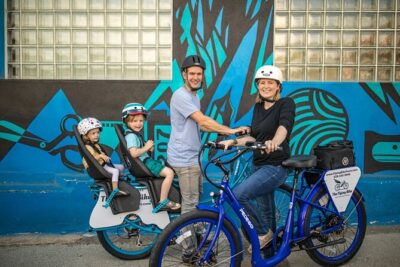
Asheville Historic Downtown Guided Electric Bike Tour with Scenic Views
Read our review →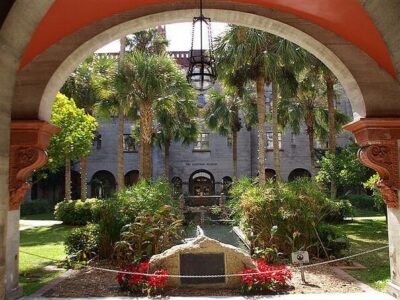
Private Guided Historic Electric Cart Tour of St. Augustine
Read our review →
60-Minute Guided Segway History Tour of Savannah
Read our review →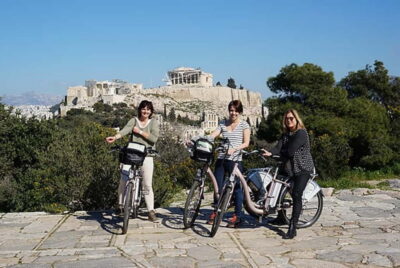
Historic Athens: Small Group Electric Bike Tour
Read our review →
90 Minute Historic Uptown Neighborhood Segway Tour of Charlotte
Read our review →Browse the lists this tour appears in