
Review · AMSTERDAM HISTORY TOURS
Amsterdam Highlights and History Walking Tour (MUST DO)
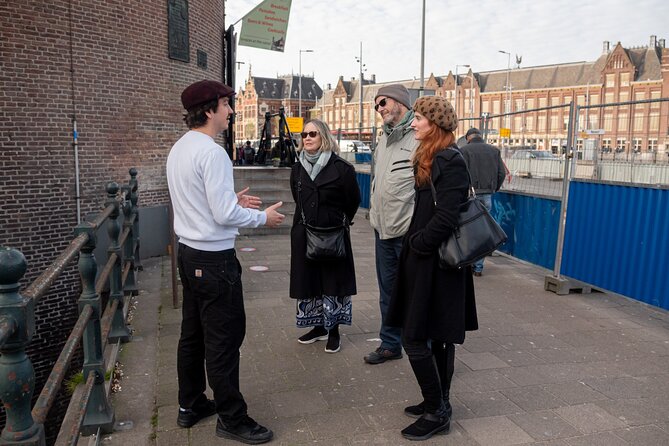
Amsterdam’s best introduction may be on foot, with a guide who can connect a grand palace, a quiet medieval courtyard, and a busy square in one sensible route. This two-hour walk takes you through the city center’s major sights while explaining how Amsterdam grew, traded, worshiped, governed, and adapted to life around its canals.
I like the small-group limit of 15 people, which makes it easier to hear the guide and ask questions. I also like the mix of famous places and less obvious details, from the canal ring’s clever planning to the Begijnhof’s unusual religious past. The main drawback is simple: you must walk and stand for about two hours while staying alert around bicycle traffic.
Key points to know before you book

- Dam Square begins the story: Learn why Amsterdam’s central square has long been tied to politics, public life, and major city events.
- The route covers the essential center: You visit the canal ring, Begijnhof, Old Church, Royal Palace, and Nieuwmarkt.
- Guides add personality: Guides named Gio, Aaron, Andrea, Aarre, David, and James have been praised for clear storytelling, humor, and thoughtful answers.
- A small group helps: With no more than 15 people, you get a better chance to hear the guide and ask about sights that catch your eye.
- It is useful on a short visit: The tour gives you a compact orientation before you explore Amsterdam on your own.
- Plan for bicycles and weather: Good shoes, attention at crossings, and suitable clothing will make the walk easier.
Why this two-hour walk works for a first day
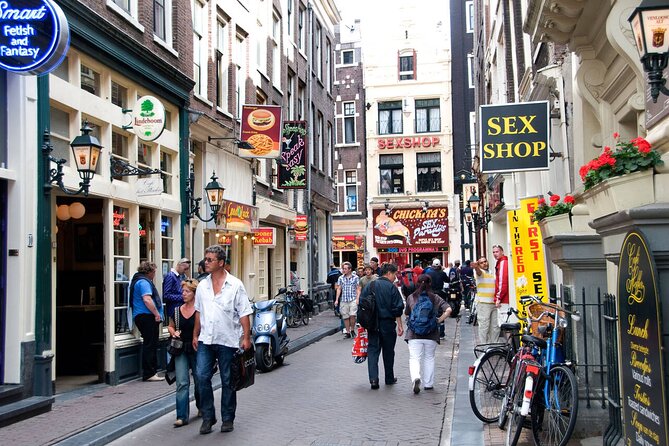
Amsterdam can feel confusing at first. Streets curve around canals, bridges lead you into new districts, and bicycles appear from every direction. A guided walk gives you a mental map quickly, so later trips on foot or by public transport make more sense.
This tour keeps the focus on central Amsterdam rather than sending you far outside the city core. That is a practical choice if you have only a short stay, are arriving for the first time, or want a history lesson before visiting museums and other sights.
The route also gives you variety. You are not spending two hours looking at one type of building or hearing one narrow story. Instead, the walk links civic power at Dam Square, religious life at the Begijnhof and Old Church, royal history at the palace, commerce and urban planning along the canals, and neighborhood life around Nieuwmarkt.
I especially like that the tour is not presented as a long march between photo stops. The strongest guide feedback centers on storytelling and explanation. Andrea is praised for a comfortable pace and for pointing out details people might otherwise miss. Aaron is described as engaging and well prepared, while Gio receives repeated praise for his enthusiasm and passion for the city. Aarre is singled out for fascinating historical explanation, David for answering questions and taking a genuine interest in the group, and James for mixing monuments with historical facts and offering restaurant suggestions.
Guide assignments can change, so you should not book expecting one particular person. Still, the range of positive comments suggests that the experience depends on guides who enjoy making Amsterdam’s past understandable rather than simply reciting dates.
More History Walking Tours in Amsterdam
- Amsterdam: Haunted History and Ghost Walking Tour
★ 4.5 · 488 reviews - Amsterdam History Walking Tour
★ 5.0 · 281 reviews - Amsterdam: Highlights & History Walking Tour
★ 4.8 · 266 reviews
Starting at Dam Square and the Royal Palace
The meeting point is at Damrak 1-5, close to Amsterdam’s central core. From there, the route reaches Dam Square, the city’s symbolic heart.
Dam Square has served as a place of political and cultural importance for centuries. It is also a useful first lesson in Amsterdam’s public life. Here, the guide can help you understand how a central square works in a city shaped by trade, government, religion, and royal authority.
The Royal Palace gives the square much of its visual weight. Built in the 17th century as a town hall, it later became one of the three palaces used by the Dutch royal family. Its original civic purpose matters. You are not simply looking at a royal residence. You are looking at a building created when Amsterdam was wealthy and confident enough to construct an impressive seat of government.
The palace is open to the public for tours, but this walking experience does not include palace admission. Your guide can explain the building from outside as part of the wider city story. If you want to go inside, plan that as a separate visit and check opening details for your date.
Dam Square can be crowded and active, so this is one place where staying close to the guide matters. It is also a good point to ask questions about Amsterdam before the route moves into quieter streets and canal-side areas.
The canal ring and Amsterdam’s clever city plan
The canal ring is one of Amsterdam’s defining sights, and it is more interesting when you understand that it was planned rather than simply allowed to grow by chance. The canals reflect ambitious engineering and urban planning, created to organize a growing city and support its commercial life.
A guide can help you read the city instead of merely photographing it. Look at how streets, bridges, water, and buildings fit together. The canal ring is also a UNESCO World Heritage Site, but the designation is only part of the story. The real value of seeing it on foot is noticing how practical planning became part of Amsterdam’s beauty.
The walk should suit you if you like history tied to actual places. Instead of discussing Dutch culture in the abstract, the guide can point to the setting and explain how the city’s waterways shaped daily life and development.
There is a practical point here: canal streets can be busy, and bicycles have priority in many parts of Amsterdam. The tour notes specifically warn you to remain alert to bicycle traffic. Do not drift into cycle lanes while listening. Keep your eyes up when crossing streets, and allow the guide to choose the safest place for the group to stop.
The Begijnhof, a quiet medieval pause
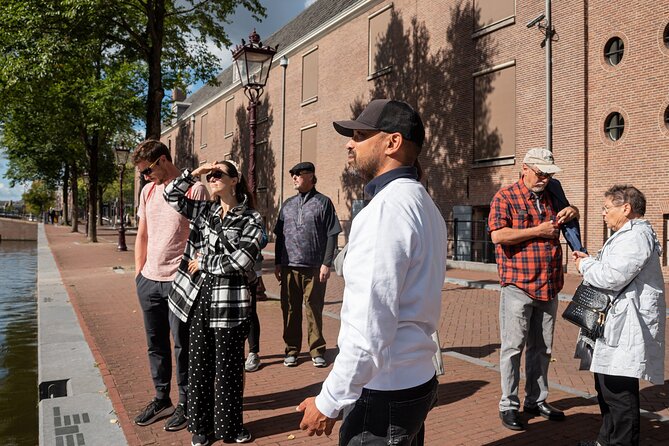
The Begijnhof offers a sharp change from the open space of Dam Square and the movement along the canals. This historic courtyard dates to the 14th century and is among the oldest preserved parts of Amsterdam.
It was home to Beguines, religious women who lived in a semi-monastic community. They were not nuns in the usual sense, and the courtyard’s history gives your guide a chance to explain an important part of medieval urban life that is easy to miss in a general city tour.
The setting is valuable because it shows a different Amsterdam. You move from major public spaces and grand architecture into a contained courtyard with a more intimate atmosphere. That contrast helps you see how many layers exist within the city center.
You should treat the Begijnhof as a place of historical and residential importance, not just a quick photo stop. Listen for the guide’s explanation, keep your voice down, and follow any posted rules. The tour gives you context, but it does not turn the courtyard into a long interior visit.
More History Walking Tours in the Netherlands
- Anne Frank and Amsterdam Jewish History Walking Tour
★ 5.0 · 259 reviews - Amsterdam: Ghost Walking Tour and Dark History
★ 4.8 · 118 reviews - Amsterdam: Iconic Canals & Historic Sights Walking Tour
★ 4.5 · 90 reviews - Amsterdam: Anna Frank and World War II History Walking Tour
★ 4.8 · 86 reviews
Old Church and the city’s changing faith
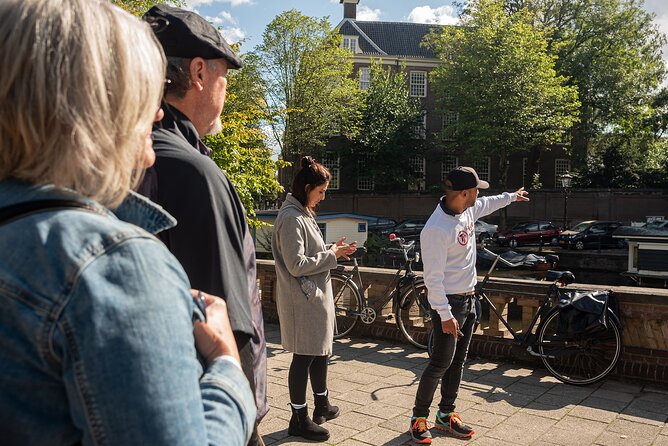
The Old Church is Amsterdam’s oldest surviving building, dating to the 13th century. It began as a Catholic church, later served Protestant congregations, and now functions as a cultural center.
That sequence makes the building a useful window into religious and political change. Amsterdam’s story is not fixed in one period. Buildings were reused, institutions changed, and public spaces gained new purposes as the city developed.
The Old Church also helps balance the tour’s architectural highlights. You see a royal palace built for civic government, then a church with medieval roots and several later chapters. A good guide can connect those changes to the larger history of the Netherlands without turning the walk into a lecture.
The church itself is not listed as an included interior admission, so do not assume the tour includes an inside visit. The route uses the building as one of its major historical sights. If entering matters to you, ask the guide about the best way to plan a separate visit.
Nieuwmarkt and the final stretch
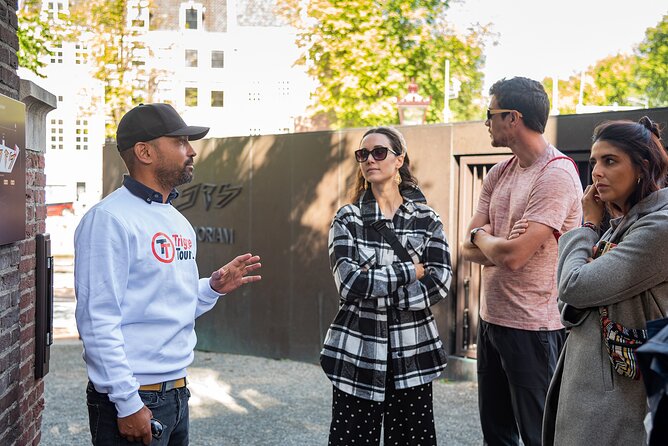
Nieuwmarkt brings the route back to a lively public square. It occupies the site of Amsterdam’s former 17th-century city walls and now has a daily market, cafes, and restaurants.
This is a useful final stop because it shows how old defensive infrastructure can become part of ordinary city life. The square is surrounded by historic buildings, but it is not frozen in the past. People gather here, eat, shop, and use the space as part of the modern city.
You may find Nieuwmarkt especially helpful for planning the rest of your day. It is a natural place to pause and consider where you want to eat or continue exploring. One guide, James, has been praised for recommending very good restaurants, though you should treat such suggestions as personal guidance rather than a formal part of the tour.
The activity ends back at the meeting point. That makes the route easy to combine with other central Amsterdam plans, though you should leave extra time if you have a timed reservation immediately afterward. Walking pace, group questions, and street conditions can affect the exact finish time.
What the guides do best
The strongest part of this experience is the human element. A city-center walk can be dull if the guide only names buildings. Here, the praise focuses on guides who explain significance, answer questions, and keep the pace comfortable.
Andrea is described as attentive and good at revealing details that are easy to overlook. Aaron is praised for energy, historical interest, and an ability to keep the group involved. Gio appears several times in the feedback, with special credit for enthusiasm and a clear love of the work.
Aarre is valued for historical depth, while David receives unusually warm praise for going beyond basic questions and taking interest in the people on the walk. James is noted for clear explanations and useful food suggestions. These details matter because a two-hour tour depends heavily on the person leading it.
The group size helps the guides do this well. A maximum of 15 people is small enough for questions to be practical, but it is still a shared group experience rather than a private tour. If you enjoy conversation and hearing other people’s questions, that format should work well.
Price, pace, and practical value
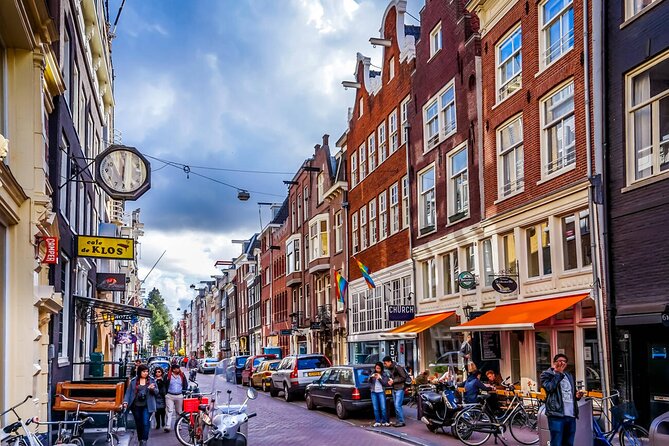
At $26.91 per person, this is priced as an affordable introduction rather than a full-day sightseeing package. You are paying for a local guide and a focused tour of Amsterdam, not food, drinks, or admission to attractions along the route.
I consider that good value if you are new to the city and plan to keep exploring afterward. In two hours, you get a useful orientation, major landmarks, historical context, and recommendations that can shape the rest of your stay. The value is lower if you already know central Amsterdam well or prefer to walk independently with a guidebook.
The pace is moderate, but you need to be comfortable walking and standing for roughly two hours. This is not a sightseeing bus or a stop-and-go tour with regular seating. Wear comfortable shoes, bring water if you need it, and dress for Amsterdam’s changeable weather.
The tour is offered in English and uses a mobile ticket. Confirmation is provided when you book. Service animals are allowed, and the meeting point is near public transportation. Most people can participate, but the walking requirement and bicycle traffic are worth taking seriously.
Group discounts are available, which may make the tour useful for families, friends, or work groups. One group of 11 used it as a team activity and found the mix of interaction, city history, and shared walking worked well.
Who should book this Amsterdam walk?
I would choose this tour if you are visiting Amsterdam for the first time, have limited time, enjoy history, or want help seeing details that you might miss alone. It also suits anyone who likes a guide with personality rather than a purely scripted audio tour.
It is a good fit for a short city break because the route covers several central landmarks in one compact outing. It can also work well near the start of your stay, when the city’s canals and neighborhoods have not yet become familiar.
I would think twice if you dislike walking, need frequent seating, or want extended time inside each attraction. The route covers several places, but it does so from a city-walking perspective. Food and drinks are not included, and any interior admissions must be handled separately.
The tour has a 4.9 rating from 29 reviews, with 97 percent of people recommending it. That is a strong record, though the sample is not enormous. One unhappy experience involved missing the meeting point in very bad weather and receiving no refund, which highlights an important booking rule: cancellation is free only when completed at least 24 hours before the start time. Changes or cancellations inside that window are not refunded.
Should you book it?
Yes, if you want a well-priced first look at Amsterdam with enough history to make the city’s sights meaningful. The combination of Dam Square, the canal ring, Begijnhof, Old Church, Royal Palace, and Nieuwmarkt gives you a strong central overview without taking up an entire day.
Book it early if your schedule is tight, since the tour is often reserved well ahead of time. Go prepared for bicycles, weather, and steady walking. If you can accept those simple conditions, this is a practical way to get your bearings and begin exploring Amsterdam with more understanding.
FAQ
How long does the Amsterdam Highlights and History Walking Tour last?
The tour lasts approximately two hours.
Where does the walking tour start?
It starts at Damrak 1-5, 1012 TM Amsterdam, Netherlands.
Where does the tour finish?
The activity ends back at the meeting point.
Which sights are included on the route?
The route includes Dam Square, Amsterdam’s canal ring, the Begijnhof, the Old Church, the Royal Palace, and Nieuwmarkt.
Is food or drink included?
No. Food and drinks are not included in the tour price.
How large is the tour group?
The tour has a maximum of 15 travelers.
Can I cancel for a full refund?
Yes, if you cancel at least 24 hours before the experience starts. Cancellations made less than 24 hours before the start time are not refunded.
Newest history tours we have reviewed in Amsterdam
- Amsterdam: Luxury Canal Cruise with Historic VR Experience★ 5.0 · 305 reviews
- Amsterdam Walking Tour: Urban Legends & History with local guide★ 5.0 · 39 reviews
- Historical Walking Tour, private with local Dutch guide★ 5.0 · 23 reviews
- Guided Walking Tour Amsterdam – Legends, History & Ghost Stories★ 5.0 · 28 reviews
- LGBTQI+ History Tour of Amsterdam★ 5.0 · 123 reviews
- Anne Frank’s Amsterdam Jewish History WWII Exclusive Guided Tour★ 5.0 · 18 reviews
- Amsterdam Haunted History and Ghost Walking Tour★ 5.0 · 47 reviews
- Private Guided Historic Amsterdam Canal Cruise in a Salon Boat★ 5.0 · 21 reviews
History Walking Tours, compared.

History and Hauntings of Salem Guided Walking Tour
Read our review →
Freedom Trail History Small Group Walking Tour
Read our review →
Historic Charleston Guided Sightseeing Walking Tour
Read our review →
Tapas Walking Tour with Food, Wine, and History
Read our review →
Savannah History and Haunts Candlelit Ghost Walking Tour
Read our review →
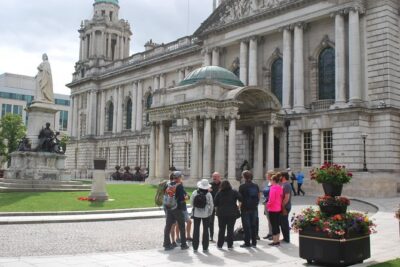
A History of Terror – Belfast City Centre Walking Tour
Read our review →Browse the lists this tour appears in