
Review · AMSTERDAM HISTORY TOURS
Amsterdam History Walking Tour
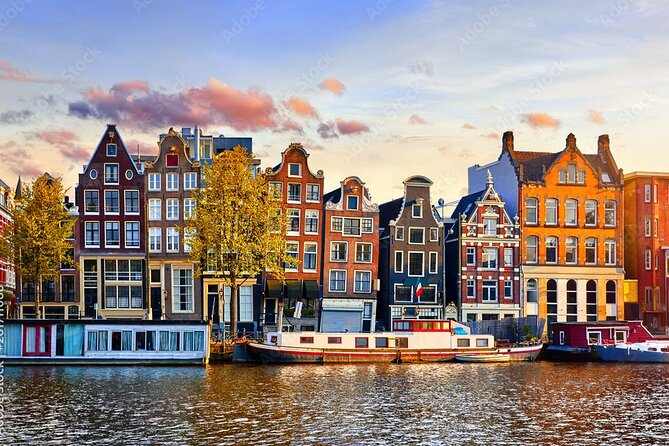
Amsterdam’s story comes alive through its streets on this compact walk from Dam Square to the Dancing Houses. You’ll move from the city’s medieval beginnings to the Dutch Golden Age, Anne Frank House, canal architecture, tulip fever, and Amsterdam’s long tradition of personal freedom.
I like the small group limit of 10, which gives you a better chance to ask questions. I also like the unusually broad mix of subjects, from nuns and Dutch surnames to organized crime and marijuana. The main drawback is that two hours moves quickly, and admission to Anne Frank House and Amsterdam Gallery is not included.
Key points
- Starts at New Church on Dam Square: An easy central meeting point near the heart of Amsterdam.
- Ends at the Dancing Houses: You finish beside one of the city’s most photographed canal views.
- Ten stops in roughly two hours: Expect a brisk walk with about 10 minutes at each location.
- Samuel is a lively guide: His style combines local culture, historical facts, storytelling, and open questions.
- Small groups of up to 10: A useful advantage in Amsterdam’s narrow streets.
- Costs about $6.05 per person: That is remarkably low for a guided introduction, though tipping is not included.
A fast route through Amsterdam’s big stories

This is not a museum tour or a long architectural lecture. It is a street-level introduction to Amsterdam, using central landmarks as prompts for stories about power, religion, trade, law, tolerance, and daily life.
The route covers ten stops in about two hours. That works out to roughly 10 minutes per location, with walking time between them. You should expect a steady pace rather than long periods sitting in one place.
That format suits me when I first arrive in Amsterdam. You get a useful mental map, learn what deserves a longer visit, and hear connections that are easy to miss when you are simply wandering from one attraction to the next.
The tour is offered in English, and the group is limited to 10 people. Those details matter. Amsterdam’s central streets can be tight, busy, and noisy, so a small group is easier to hear and easier to keep together than a large crowd.
More History Walking Tours in Amsterdam
- Amsterdam: Haunted History and Ghost Walking Tour
★ 4.5 · 488 reviews - Amsterdam: Highlights & History Walking Tour
★ 4.8 · 266 reviews - Anne Frank and Amsterdam Jewish History Walking Tour
★ 5.0 · 259 reviews
Starting at Kattengat and the city’s first years
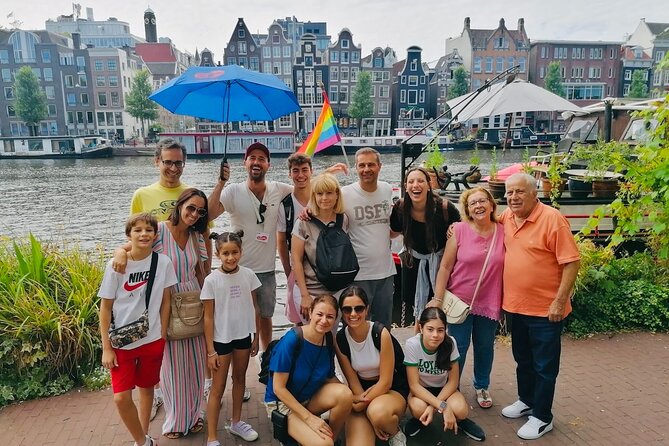
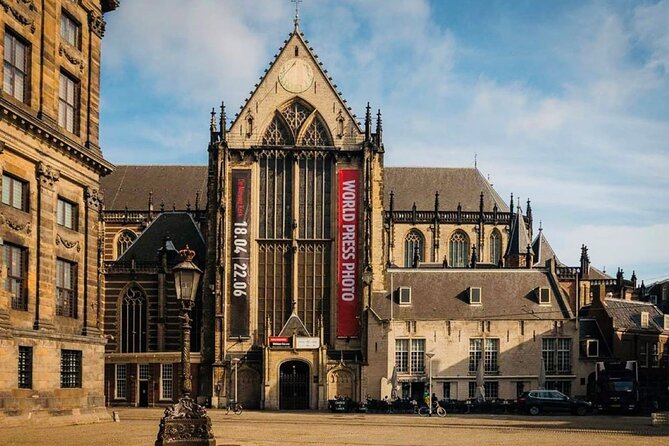
The walk begins at Kattengat, after meeting at New Church on Dam Square. The opening section focuses on the founding of Amsterdam and its earliest years.
That is a sensible place to begin. Before you sort out the canals, grand houses, red-brick lanes, and famous liberties, you need to know how this city started. The guide sets the basic timeline before moving into more complicated subjects such as trade, religion, and social freedom.
The stop is short, about 10 minutes, so do not expect a full account of Amsterdam’s early development. Think of it as the foundation for the rest of the walk. If Samuel is leading your group, you can expect room for questions. His approach is described as open, dynamic, and willing to follow the group’s curiosity.
The meeting point is listed as The New Church, De Dam, 1012 NP Amsterdam. Check the exact location and arrive with enough time to find the group, since Dam Square is a busy central meeting area.
Oude Nieuwstraat and the other Red Light District
From Kattengat, the route continues to Oude Nieuwstraat, described as one of the city’s beautiful and less familiar streets. The subject here is the other Red Light District, which gives the tour a more layered view of Amsterdam’s reputation.
This is one of the more interesting choices on the route. Amsterdam’s Red Light District is often reduced to a quick look at windows and nightlife, but the city’s history in this area is tied to commerce, religion, morality, and regulation. A quieter street can reveal a different side of that story.
You should not expect a long stop or an attraction visit. The value is in the explanation and the setting. Keep your eyes open as you walk. The point is not simply to see a famous district, but to understand how different uses of the city have overlapped over time.
Leliegracht and the Dutch Golden Age
At Leliegracht, the focus shifts to the Dutch Golden Age, when Amsterdam became a major world power.
The canals are a strong setting for this part of the story. Here, trade, shipping, money, art, and civic ambition all come together. You will hear how Amsterdam’s influence grew and why its canals and merchant houses became symbols of that success.
The stop lasts about 10 minutes, which is enough for a clear overview but not enough for every detail. I would treat this as a prompt to return later to the Canal Ring, museums, or historic buildings if the subject catches your interest.
The route also helps connect the grand historical story to the streets around you. Instead of hearing about the Golden Age in a lecture hall, you are standing among the canals and buildings that give the period its character.
More History Walking Tours in the Netherlands
- Amsterdam: Ghost Walking Tour and Dark History
★ 4.8 · 118 reviews - Amsterdam: Iconic Canals & Historic Sights Walking Tour
★ 4.5 · 90 reviews - Amsterdam: Anna Frank and World War II History Walking Tour
★ 4.8 · 86 reviews - Amsterdam Private Historical Walking Tour
★ 5.0 · 75 reviews
Anne Frank House and a major Amsterdam symbol
The walk then reaches Anne Frank House, one of Amsterdam’s most important modern landmarks. The stop lasts about 10 minutes, and admission is not included.
That last detail is important. This tour takes you to the area and explains the significance of the site, but the information provided does not include entry into the house. If you want to visit inside, you need to arrange that separately.
The short stop is best for context rather than a full museum experience. Anne Frank House carries enormous emotional weight, and a brief explanation can help place it within Amsterdam’s wartime story. Still, do not expect the walking tour to replace time inside the museum.
You may find this stop especially useful if you are building a first-day route. It gives you a chance to see where the house is located, then decide how much additional time you want to spend there.
Dam Square, Amsterdam’s civic heart

The next stop is Dam Square, described as the city’s central square and its heart. This is a natural place to discuss Amsterdam’s public life, because the square has long served as a meeting point for politics, ceremony, commerce, and city identity.
The tour begins nearby, but Dam Square also appears as a dedicated stop. That allows the guide to return to the city’s central stage after setting out its earlier history.
Expect a short explanation rather than a lengthy tour of every building around the square. Ten minutes goes quickly here. The advantage is that you can later return on your own, already aware of why the space matters.
Because the start and this stop are in such a central area, the tour is easy to pair with other sightseeing. The supplied information confirms nearby public transportation, though it does not specify a particular tram or metro route.
Amsterdam Gallery and the plates on Amsterdam’s facades
The route then heads south to Amsterdam Gallery, where the guide explains the origin of the decorative plates seen on many facades.
This is exactly the kind of small detail that can improve the rest of your visit. Amsterdam’s canal houses often reward close looking, but it helps to know what you are looking at. The plates may seem like decoration at first, yet they can point toward older customs, trades, or the identity of a building.
Admission to Amsterdam Gallery is not included. The tour information does not make clear whether the stop involves an exterior explanation, an interior visit, or both, so ask when booking if entering the gallery matters to you.
Either way, this section gives the walk a useful change of scale. After large subjects such as the Golden Age and Anne Frank, you turn your attention to the small signs built into the city’s walls.
Spui and Amsterdam’s tradition of freedom

At Spui, the subject turns to the freedoms associated with Amsterdam. The guide connects the square with the development of the city’s modern reputation for personal liberty.
This is a good place to hear a more nuanced version of Amsterdam’s famous open-minded image. The city’s freedoms did not appear by magic. They developed through choices shaped by commerce, religion, law, and social pressure.
The route’s other stops help prepare you for this discussion. After hearing about nuns, the Red Light District, trade, and the Dutch Golden Age, you have several pieces of the larger story in place.
The supplied comments about Samuel repeatedly point to his willingness to answer questions and discuss culture as well as history. That matters here, because ideas about freedom can mean different things to different people. A good guide can explain the background without turning the stop into a simple slogan.
Kalverpassage and Amsterdam’s prison past
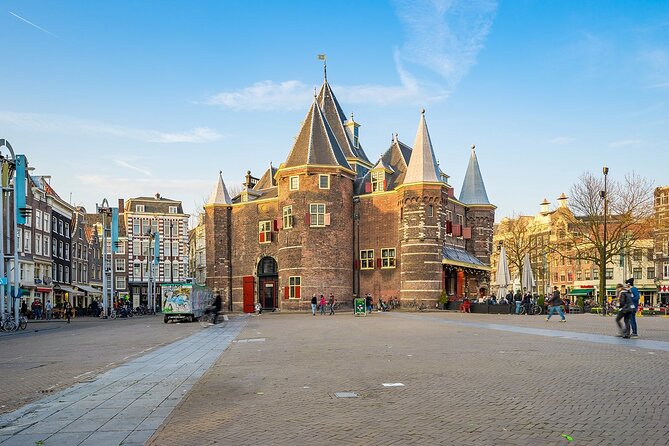
At Kalverpassage, the walk enters the light and dark sides of the Dutch prison system and organized crime. The location is connected with an old prison, giving the subject a concrete setting.
This is one of the route’s more unusual turns. Many introductory walks stay with canals, churches, and famous buildings. This one adds law enforcement and crime, showing that Amsterdam’s story includes control and punishment as well as tolerance and trade.
The language of light and dark is apt. Amsterdam’s public image often focuses on freedom, but any city that regulates vice, commerce, and public behavior also has a history of policing. This stop gives you a chance to consider that contrast.
The tour does not promise entry into a prison museum or a detailed crime-history presentation. You are getting a short, guided explanation at a historic location. If organized crime is your main interest, you will likely want to ask follow-up questions while the guide is nearby.
Bloemenmarkt, tulip fever, and marijuana
At Bloemenmarkt, one of Amsterdam’s most famous spots, the conversation turns to tulip fever and another famous flower, marijuana.
Bloemenmarkt is a fitting location for a discussion of Dutch plant culture and the way certain images become part of a country’s identity. Tulips carry the story of trade, speculation, and fashion. Marijuana brings the tour into Amsterdam’s modern reputation for controlled tolerance and alternative culture.
The combination makes this a lively stop, but it also calls for clear explanations. Amsterdam’s famous associations are often simplified for tourists. A good guide can separate historical facts from popular myths and explain how the city’s image was formed.
The market itself can be crowded, and the stop lasts only about 10 minutes. You may want to return later if you hope to browse slowly. During the tour, focus on the story and keep the group in sight.
The Dancing Houses and Amsterdam’s tilted architecture
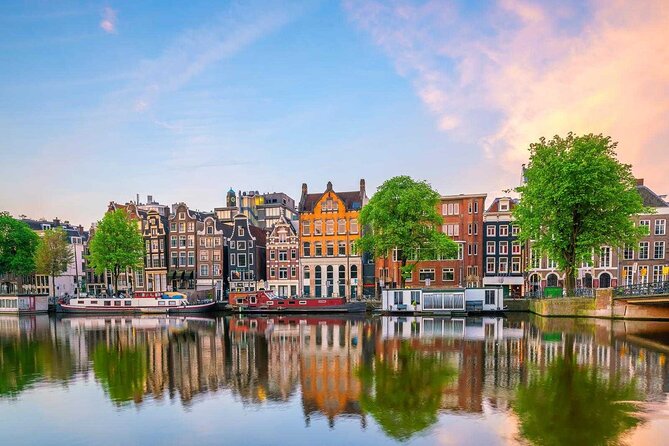
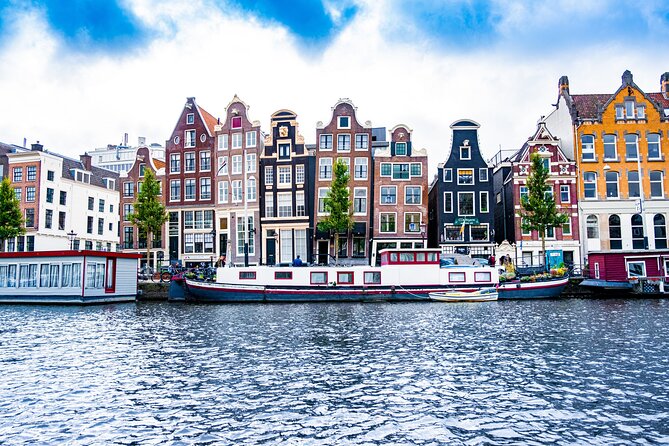
The walk ends at the Dancing Houses on Amstel 102II, 1017 AD Amsterdam. These sloping houses provide a memorable finish and a natural place to discuss Amsterdam’s distinctive architecture.
The guide explains why the houses appear so tilted and uses the view to discuss the country’s picturesque building style. This is a strong ending because it gives you a clear photograph, a final architectural lesson, and a useful location for continuing your day.
You finish in front of one of Amsterdam’s most photographed views. The end point is not the same as the starting point, so you get a one-way walk through the historic center rather than retracing your steps.
The tour information does not specify onward transport from the end point. Since the location is in central Amsterdam and near public transportation in general, you can ask your guide for directions before saying goodbye.
Why the low price can be good value
At about $6.05 per person, this is an unusually inexpensive guided walk. The price includes all fees and taxes, but not a tip.
At that rate, the value comes from the guide’s structure and local explanation rather than from admission to attractions. You are paying for a two-hour introduction that links ten places into one story. That can be worthwhile on your first day, especially if you do not want to spend money on a longer paid tour.
The low price also means you should keep your expectations in check. This is not a private tour, museum-entry package, or full-day historical program. The stops are short, and subjects such as the Golden Age, Anne Frank, prison history, and Dutch culture can only receive an overview.
The small group improves the value. With no more than 10 people, you have a better chance of hearing the guide and asking about subjects that interest you. Samuel’s reported strengths include enthusiasm, clear storytelling, and a willingness to answer questions, so speak up when a topic catches your attention.
Who should book this Amsterdam walk
I would recommend this tour to a first-time visitor who wants a quick orientation with more substance than a simple photo walk. It suits anyone interested in the way Amsterdam’s history connects trade, architecture, religion, law, personal freedom, and popular culture.
It is also a good fit if you like guides who mix serious history with lighter facts. The subjects range from Dutch surnames and secluded places connected with nuns to tulips, marijuana, and sloping houses.
You should think twice if you want long stops, museum entry, or an in-depth visit to Anne Frank House. The route takes you to the house, but admission is not included. Amsterdam Gallery also lists admission as not included.
Wear comfortable shoes and be prepared to walk for about two hours. The tour requires good weather, and it can be canceled if the weather is poor or if the minimum number of participants is not met. In either case, a different date or a full refund is offered.
Free cancellation is available up to 24 hours before the start time. Cancellations or changes made less than 24 hours ahead are not refunded or accepted.
Should you book the Amsterdam History Walking Tour?
Book it if you want an affordable, small-group introduction led by an active guide such as Samuel, with a route that goes beyond the standard canal-house photo stops. The mix of early Amsterdam, the Red Light District, Golden Age trade, Anne Frank House, prison history, Dutch freedoms, tulip fever, and architecture gives you a broad first look.
Skip it if your priority is entering major attractions or spending 20 minutes at each landmark. For everyone else, the $6.05 price makes this a practical way to get your bearings, ask questions, and finish beside the Dancing Houses with a clearer sense of how Amsterdam became the city you see today.
FAQ
How long is the Amsterdam History Walking Tour?
The tour lasts approximately two hours.
Where does the tour begin?
It begins at The New Church on Dam Square, 1012 NP Amsterdam, Netherlands.
Where does the tour end?
The tour ends at the Dancing Houses on Amstel 102II, 1017 AD Amsterdam, Netherlands.
What language is the tour offered in?
The tour is offered in English.
How many people can join the tour?
The maximum group size is 10 people.
Is admission to Anne Frank House included?
No. Admission to Anne Frank House is not included.
Can I cancel for a full refund?
Yes. You can cancel at least 24 hours before the experience start time for a full refund. Cancellations made less than 24 hours ahead are not refunded.
Newest history tours we have reviewed in Amsterdam
- Amsterdam: Jewish Quarter and History Guided Tour★ 4.7 · 210 reviews
- Skipping Lines & Sipping Beers: A History Tour of Amsterdam★ 5.0 · 22 reviews
- Amsterdam: Iconic Canals & Historic Sights Walking Tour★ 4.5 · 90 reviews
- Amsterdam: Private Pedicab Historical Sightseeing Tour★ 5.0 · 41 reviews
- Amsterdam Walking Tour:Anne Frank, History & Liberal Culture★ 5.0 · 18 reviews
- Amsterdam: Walking Tour of Historic Center★ 4.6 · 24 reviews
- Amsterdam: Luxury Canal Cruise with Historic VR Experience★ 4.7 · 31 reviews
- Amsterdam: Ghastly Grachten: ghost stories&dark history tour★ 4.9 · 21 reviews
History Walking Tours, compared.

History and Hauntings of Salem Guided Walking Tour
Read our review →
Freedom Trail History Small Group Walking Tour
Read our review →
Historic Charleston Guided Sightseeing Walking Tour
Read our review →
Tapas Walking Tour with Food, Wine, and History
Read our review →
Savannah History and Haunts Candlelit Ghost Walking Tour
Read our review →
A History of Terror – Belfast City Centre Walking Tour
Read our review →Browse the lists this tour appears in