
Review · ITALY HISTORY TOURS
Alberobello: History Walking Tour
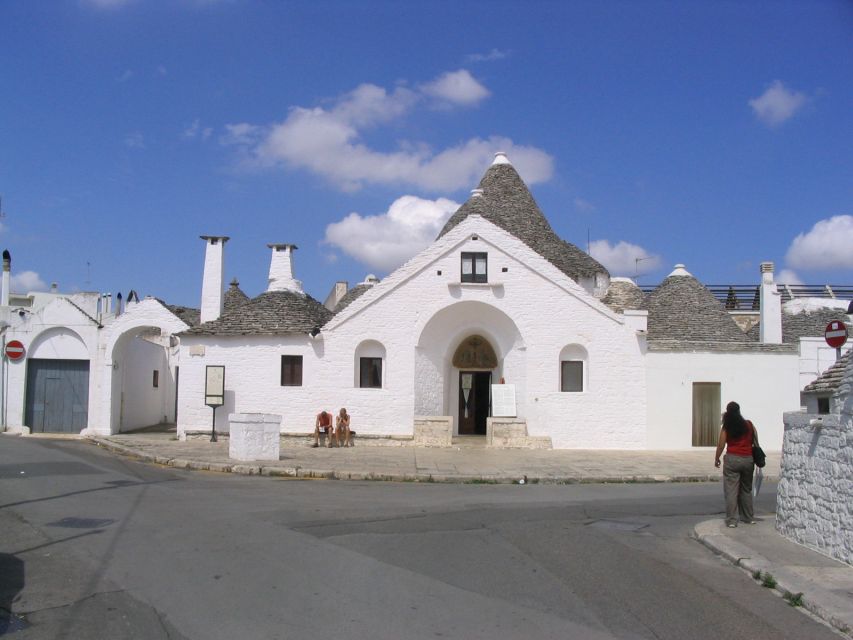
Alberobello’s odd, beautiful trulli make more sense once you see them from the Belvedere and then walk into their narrow lanes. This tour takes you through Aia Piccola and Rione Monti, the town’s two most important trulli districts, before showing you the inside of a traditional home.
I like the opening view because it gives you your bearings before the walking begins. I also like the chance to enter a real trullo, where the unusual cone-shaped roof and stone construction are easier to understand than they are from a postcard.
The main consideration is that this is a walking tour with no transfers included. The meeting point can vary by booking option, and the tour needs at least two participants to run, so check the details before setting out.
Key points
- Start at the Belvedere: Get a clear view of Alberobello’s mass of whitewashed trulli before entering the old districts.
- Compare two different districts: Walk through Aia Piccola and Rione Monti, each offering a different feel and purpose.
- Enter a traditional trullo: See how the circular room, thick stone walls, and conical roof fit together from inside.
- Reach San Antonio Church: Follow the lanes to a church built in the shape of a trullo.
- Hear local stories: Guides such as Francesco, Mario, Alessandro, Floriana, Sylvia, and Roberta have been praised for clear explanations and warm storytelling.
- Taste local products on some departures: Some guides may include a small tasting, but this is not listed as a guaranteed part of every booking.
Alberobello from the Belvedere terrace
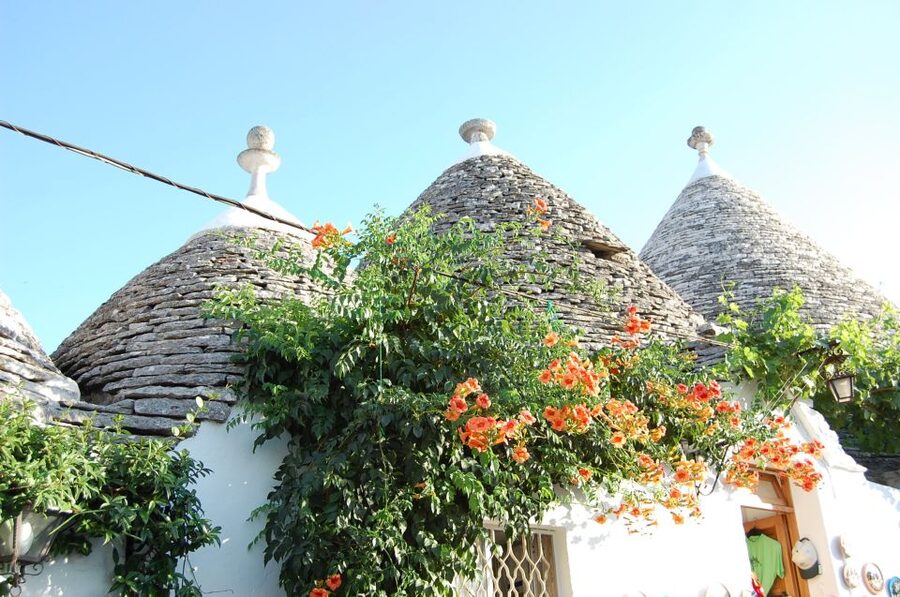
The tour begins with a view from the Belvedere terrace. This is the right place to start because Alberobello can look like a jumble of white cones from street level. From above, you can see how the trulli gather across the town and why the place feels unlike almost anywhere else in Italy.
Your guide uses this first view to explain how Alberobello developed and why the houses were built in this distinctive style. One useful point covered on the tour is that local people built the trulli from rocks without cement. That construction method is not just a visual curiosity. It helps explain the thick walls, rounded interiors, and unusual roofs you will see throughout the walk.
The Belvedere also gives you a chance to get oriented before entering the lanes. You can see the broad shape of the settlement, then notice the details more easily once you are among the buildings. I find this kind of opening far more useful than beginning with a long street-level explanation, since you first get the big picture and then inspect the parts.
Allow yourself a moment here to take in the view. The tour lasts about 1.5 to 2 hours, so the guide will keep the introduction moving, but this first stop sets up everything that follows.
More History Walking Tours in Italy
- Venice: City Center Historical Guided Walking Tour
★ 4.2 · 1,873 reviews - Palermo: Street Food and History Walking Tour
★ 4.9 · 1,486 reviews - Verona: History and Hidden Gems Guided Walking Tour
★ 5.0 · 1,379 reviews
Aia Piccola and the quieter side of the town
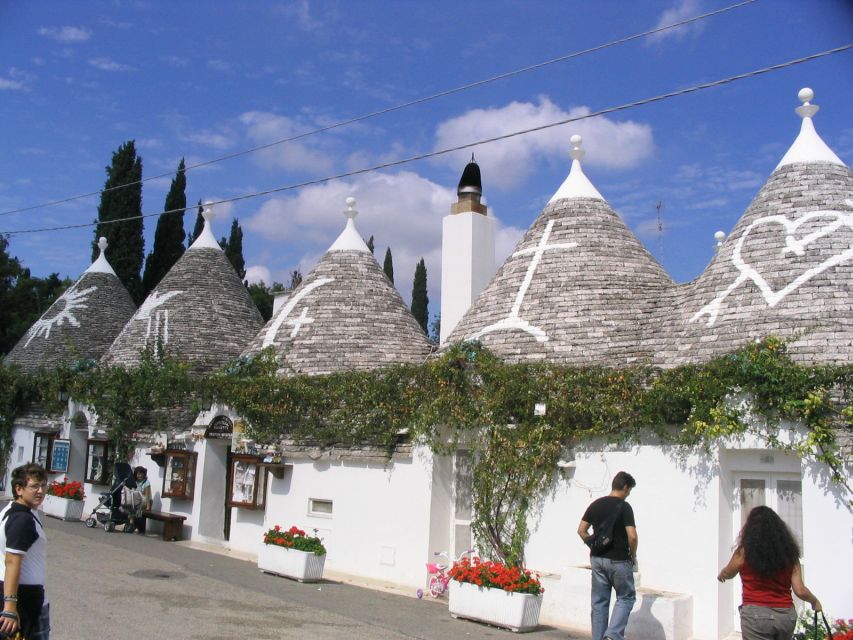
From the Belvedere, the route continues into Aia Piccola. This district is important because it helps you see Alberobello as a place where people live, not only as a collection of photogenic buildings.
The narrow alleys bring you close to the trulli. You will see the conical roofs from different angles, walk between white walls, and begin to notice how the houses fit together in a compact settlement. The guide explains the architecture while pointing to actual buildings, which makes the information easier to follow than a talk delivered in a museum room.
Aia Piccola is also a good place to ask questions. If you are curious about how a trullo is arranged, why the walls are so thick, or how several buildings connect, this is the part of the route where those questions make sense. Roberta, one of the guides mentioned by name, has explained both the building method and the architecture by using real trulli and museum displays.
The district can feel more residential than the shop-lined parts of Alberobello. That distinction matters. The town has a strong tourism trade, but Aia Piccola gives you a better chance to see the form of the settlement without treating every building as a shop or photo stop.
Rione Monti and Alberobello’s famous cones
The walk then takes you through Rione Monti, the other major trulli district. This is likely to be the section you have seen in photographs, with rows of bright white buildings and pointed roofs climbing the slope.
Rione Monti gives you the classic Alberobello view, but the guide adds the practical details that photographs cannot. You learn to look at the shape of the trulli as a system rather than a decoration. The tour explains how the stone construction works and helps you understand why rooms feel rounded and compact inside.
The lanes are a central part of the pleasure here. You are not simply walking from one monument to another. The route is about seeing the way the houses form streets, corners, and small passages. You might find yourself looking upward as often as forward, since the roofs create a striking pattern overhead.
This district may feel more commercial than Aia Piccola. That is not necessarily a flaw, since the shops and activity are part of modern Alberobello, but it can make the area less peaceful. If you want the strongest architectural explanation, stay close to the guide rather than treating Rione Monti as a self-guided photo walk.
The guide can also help you separate the genuinely old features from the modern additions. That is one reason the tour earns its price. A quick solo visit can show you the shapes, but a local guide gives those shapes context.
Inside a real trullo home
The most useful stop is the visit inside a local home. You do not only look at the exterior. You get to see how a trullo is composed from the inside, including the relationship between its rooms, walls, and cone-shaped roof.
This is where the construction method becomes clear. From outside, the roof looks like a neat stone pyramid. Inside, the rounded walls and compact spaces show how much work went into making the house practical. The guide explains the details while you are standing in the space, so you can connect the words to what you see.
For me, this is the difference between a pleasant walk and a worthwhile history tour. Alberobello’s trulli are easy to admire, but less easy to understand. Entering one gives you a sense of scale and structure that you cannot get from the Belvedere or from the street.
The visit is also more personal than a standard monument stop. You are seeing a local home rather than only a public display. The supplied details describe this as a chance to meet local people, and some guides have also included local product tastings. Treat the tasting as a possible extra, not a guaranteed inclusion, since the formal tour details list the walking tour and licensed guide but not food.
Same streets, a different century:
- Colosseum: Underground and Ancient Rome Tour
★ 4.7 · 12,691 reviews - Rome: Colosseum with Arena, Roman Forum and Palatine Guided Tour
★ 4.0 · 5,598 reviews - Venice: St. Mark’s Basilica Guided Tour & VR History Intro
★ 3.9 · 4,880 reviews - Colosseum with Arena, Roman Forum and Palatine Hill Guided Tour
★ 4.5 · 3,526 reviews
San Antonio Church, a fitting final stop
The route continues through the little alleys to the Church of San Antonio. Its trullo shape makes it a natural part of this tour. Instead of seeing a church that looks separate from Alberobello, you see how the local building style was used for an important religious structure.
This stop also helps round out the story. You have seen residential trulli from outside, studied the districts, and entered a home. The church shows how the same visual language can serve a larger public building.
Do not expect a long church visit based on the information provided. The main value here is the building’s form and its place in the walking route. It is a memorable final landmark because it reinforces the idea that the trullo is not merely a private house type or a tourist symbol.
How the guides shape the experience
The quality of a history walking tour depends heavily on the person leading it. Here, the guide roster can vary, but several names have received especially strong praise for their style.
Francesco is described as speaking very good English, explaining small details inside historic houses, bringing the group to interesting places, and helping the visit feel personal. Mario is known for making the history of the trulli clear and entertaining. Alessandro has been praised for being kind, accommodating, and generous with information.
Other guides have their own strengths. Dominicio is described as a strong storyteller, while Floriana is noted for her humor and excellent command of Alberobello’s past. Sylvia has led a tour that combined the old and new parts of town with local food products. Roberta has explained the practical reason for building with rocks without cement and used museum exhibits to support the explanation.
These details suggest that you should expect more than a memorized list of dates. The best version of this tour connects the town’s construction, local life, and architecture. It also leaves room for questions. One guide was even praised for accommodating people who arrived very late, though you should not count on every departure being able to do that.
The tour is available in English, French, Spanish, and Italian. If language is important to you, confirm your preferred option when booking. A private group is also available, which may suit families or friends who want a more flexible pace.
Is $40 a fair price?
At $40 per person, this is not the cheapest way to see Alberobello. You can walk through the trulli districts on your own without paying for admission to the streets. The value comes from the interpretation and the access to a traditional home.
I think the price is fair if you want to understand what you are seeing. The Belvedere view, the two districts, San Antonio Church, and the interior visit create a complete introduction in a relatively short time. You are paying for a licensed guide who connects those stops rather than simply leading you from one photo point to the next.
The value is stronger if you have limited time in Apulia. In 1.5 to 2 hours, you get the main districts and a clear explanation of the town’s architecture. The tour also works well near the start of your visit, since you can return to the lanes later with a better sense of what to look for.
It is less valuable if you prefer to wander alone, read signs, and set your own pace. The tour follows a fixed route, and the group may move on while you are still taking photographs. For someone who wants a quiet, unstructured afternoon, a guide may feel unnecessary.
Children under 18 are free, which improves the value for families. A minimum of two participants is required, and private groups are available if you want a more personal format.
Timing, meeting points, and practical planning
The advertised duration is about 1.5 to 2 hours. That is long enough for a useful introduction without taking over your day in Apulia. You should still wear comfortable shoes because the activity is entirely on foot and includes lanes, districts, and terraces.
Transfers are not included. You need to reach the meeting point yourself, and the exact starting location can vary depending on the option you book. Check that detail before you leave your accommodation, especially if you are arriving from another town.
Starting times also vary. Confirm the available departure when you book rather than assuming the tour begins at a fixed hour. Alberobello can be very different depending on the time of day, but no specific crowd or weather pattern is guaranteed by the tour details, so plan around your own schedule.
The tour ends back at the meeting point. That makes it easy to continue exploring Alberobello afterward, return to your car, or head to your next stop without arranging a separate ride.
You can cancel up to 24 hours before the start for a full refund, and the reserve-now, pay-later option lets you hold a place without paying immediately. Those policies are useful if your Apulia plans are still shifting.
Who should book this Alberobello walk?
I would recommend this tour to a first-time visitor who wants the basic story of the trulli in a short, well-organized visit. It is also a good choice if you care about architecture but do not want to study the town alone.
Families may find it manageable because children under 18 are free and the route includes visual details, narrow lanes, a church, and an interior visit. The short duration helps, though younger children may need patience during the history explanations.
This is also a strong fit for anyone who values local contact. The home visit gives the walk a more human quality, and guides may introduce local products or local residents along the way. That is more meaningful than simply photographing the roofs from the street.
I would be more cautious if you have limited mobility, since the activity is a walking tour and the supplied information does not give accessibility details. Ask the provider before booking if you need specific support.
Should you book it?
Book this tour if Alberobello is new to you and you want more than attractive photographs. The best reasons are the Belvedere introduction, the comparison between Aia Piccola and Rione Monti, and the chance to enter a traditional trullo home.
The $40 price makes sense when you value a clear explanation and a licensed guide. It is less necessary for repeat visitors or independent walkers who already understand the town’s architecture.
If you book, confirm the language, meeting point, starting time, and whether you are choosing a private group. For a compact introduction to Alberobello, this tour gives you the right mix of views, history, local contact, and practical orientation.
FAQ
Where does the Alberobello walking tour start?
The starting meeting point may vary depending on the option booked. Check the exact meeting point with your selected departure.
How long does the tour last?
The tour lasts about 1.5 to 2 hours. Starting times vary, so check availability when booking.
Which areas of Alberobello does the tour visit?
The route includes the Belvedere terrace, the Aia Piccola district, Rione Monti, and the trullo-shaped Church of San Antonio.
Can I enter a traditional trullo?
Yes. The tour includes a visit to a local home where you can see how a traditional trullo is composed.
Is the tour available in English?
Yes. Live guiding is available in English, French, Spanish, and Italian.
Are children allowed on the tour?
Yes. Children under 18 can join free of charge.
Is a private tour available?
Yes. A private group option is available.
Can I cancel the tour for a refund?
You can cancel up to 24 hours in advance for a full refund. The reserve-now, pay-later option is also available, and you pay nothing at the time of booking.
Newest history tours we have reviewed in Italy
- Guided Cultural Tour of the Godfather Film in Messina★ 5.0 · 31 reviews
- SU NURAXI BARUMINI Unesco World Heritage Site★ 5.0 · 129 reviews
- Picnic aperitif in the vineyard of an ancient trullo in Martina Franca★ 5.0 · 21 reviews
- Brescia the Unexpected: History, Local Stories & a drink★ 5.0 · 31 reviews
- Bologna historical art walking tour with hidden gems and tastings★ 5.0 · 108 reviews
- Bolognese Cooking Class with Margherita in the Historic Center★ 5.0 · 26 reviews
- Best of Bologna in one day : Food, architecture, art and history★ 5.0 · 27 reviews
- Private or semi-private tour of the historic center of Bologna★ 5.0 · 34 reviews
History Walking Tours, compared.
History and Hauntings of Salem Guided Walking Tour
Read our review →

Freedom Trail History Small Group Walking Tour
Read our review →
Historic Charleston Guided Sightseeing Walking Tour
Read our review →
Tapas Walking Tour with Food, Wine, and History
Read our review →
Savannah History and Haunts Candlelit Ghost Walking Tour
Read our review →
A History of Terror – Belfast City Centre Walking Tour
Read our review →Browse the lists this tour appears in