

Review · SPAIN HISTORY TOURS
A Coruña: Historic Walking Tour Old Town and Highlights
A Coruña reveals itself best on foot, where medieval churches, grand civic buildings, and glass-fronted galleries appear within a few easy blocks. This two-hour walk links the Old Town with the Pescadería district and finishes at the Obelisk, giving you a useful first look at the city’s past and daily life.
I like the small groups of up to 10 and the way the route mixes famous sights with quieter squares. I also like the personal touch from guides such as Alex and Alejandro, who add restaurant tips, cultural suggestions, and stories about Galicia rather than simply pointing at buildings.
The main consideration is pace. You see many places in two hours, but most are viewed from outside, and entrance fees are not included. If you want long museum visits or a slow look inside every church, you will need extra time afterward.
Key points to know before you book

- A compact route with plenty of variety: Move from Teatro Colón through María Pita Square, medieval churches, Calle Real, and the Marina gardens.
- A guide who adds local context: Alex and Alejandro are praised for clear explanations, humor, city pride, and practical advice for the rest of your day.
- The glass galleries are a major highlight: A Coruña’s famous galerías show how architecture responds to the city’s sea-facing weather.
- Small groups make questions easy: The tour is limited to 10 people, and some departures have operated with only two to six participants.
- Good value for a first visit: At $19, the tour costs little more than a casual meal while giving you a useful map of the center.
- Plan for outdoor conditions: Wear comfortable shoes and weather-ready clothing because the walk goes ahead in rain or shine.
Why this walk is a good introduction to A Coruña
A Coruña can feel spread out when you first arrive, especially if you are visiting for a short port stop. This route solves that problem by giving you a clear line through the central districts, from the theater area to the waterfront end of the city center.
You will hear about the city as a seafaring place, a medieval settlement, and a modern Spanish city shaped by trade and urban growth. The route is not just a parade of monuments. It shows how different parts of A Coruña fit together.
The guides are a big part of the experience. Alex, also referred to as Alejandro, is repeatedly praised for his clear English, humor, local pride, and ability to explain architecture and history without making the walk feel like a classroom. His suggestions for lunch, drinks, cultural sites, and the rest of your day are especially useful if you have only a few hours in town.
The tone seems friendly and informal, but the content is serious enough for anyone who wants to understand the city. Alex has also adjusted the experience to small groups, sometimes giving a couple more time when a departure turned into a nearly private walk. That cannot be promised every time, but a group capped at 10 still gives you a good chance to ask questions.
More History Walking Tours in Spain
- Barcelona: Tapas Walking Tour with Food, Wine, and History
★ 4.8 · 4,261 reviews - Barcelona Tapas Walking Tour: Food, Wine & History
★ 4.5 · 1,928 reviews - Madrid Historical Walking Tour
★ 5.0 · 721 reviews
Starting at Teatro Colón
Meet at the main entrance of Teatro Colón, where the guide carries a distinctive black backpack and wears an official badge on a blue lanyard. That is a simple but helpful arrangement, particularly if you are arriving in an unfamiliar part of central A Coruña.
The theater serves as a sensible starting point because it places you near the modern center before the route moves toward the older districts. This opening stretch also helps you get your bearings. You begin with the city around you, not with a long transfer or a remote meeting point.
From here, the walk passes Teatro Rosalía de Castro. This is a photo stop and guided sightseeing point rather than a full performance or interior visit. The theater adds a cultural note at the start, and your guide uses the area to introduce the city’s public life and architectural character.
You should expect a steady walking tour rather than a series of long stops. Bring shoes that can handle streets and squares comfortably, and keep your clothing suited to changing weather.
María Pita Square and the city’s civic heart
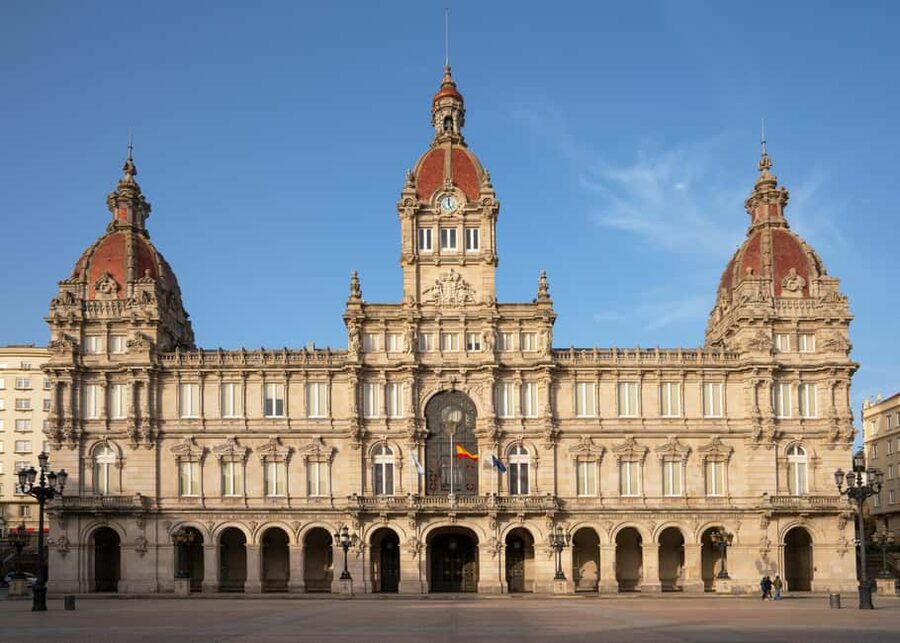
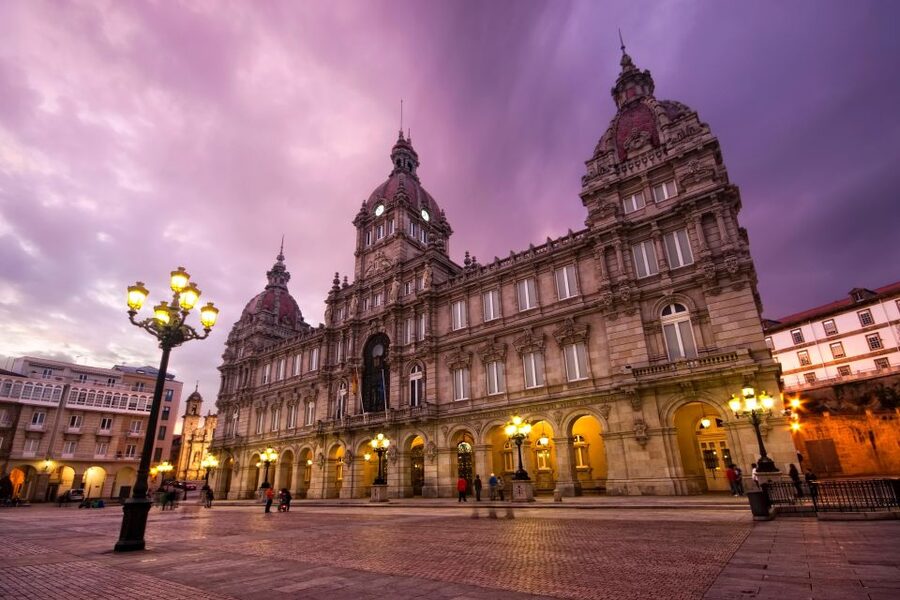
The route then reaches Praza de María Pita, one of the most important public spaces in A Coruña. The square is linked with María Pita Palace, the city hall and one of the city’s best-known symbols.
This is a good place to pause and understand A Coruña’s civic identity. The palace gives the square a formal center, while the surrounding buildings make clear how much the city values public space and grand urban design.
Your guide explains the story behind the square and the character associated with María Pita. The stop is more useful than a quick photo because it helps connect the city’s local identity with its broader Spanish setting.
The open space can also make the group feel more exposed to wind or rain. Since the tour operates in all weather, this is one reason to bring a light waterproof layer, even on a day that begins pleasantly.
Medieval corners around Santiago and Santa Bárbara
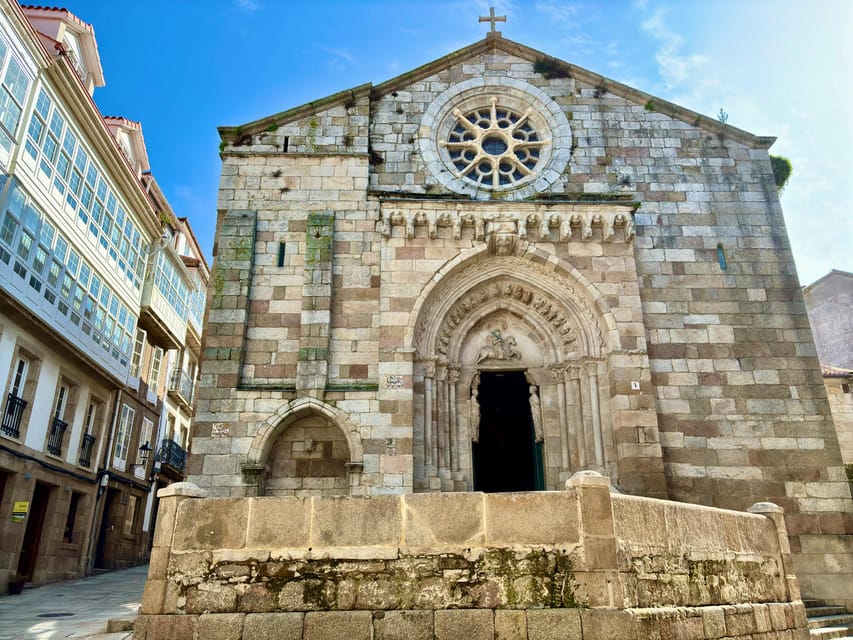
From María Pita Square, the route turns toward older streets and religious buildings. At Igrexa de Santiago, you have a visit and guided stop. This church offers a sense of A Coruña’s medieval past, and it is one of the places where the city feels distinctly older than the modern center around it.
The tour then continues to Praza Santa Bárbara. This is listed as a photo stop and sightseeing point, so the emphasis is on the square’s setting, buildings, and story rather than a long interior visit.
Praza Santa Bárbara rewards a slower eye. Look beyond the central view and notice how the square’s scale differs from the larger civic spaces. The route gives you several chances to compare grand public architecture with smaller historic corners, which is one of the walk’s strongest features.
At Palacio de Cornide, the guide adds another architectural stop. You will hear about the building and its place in the city, then continue rather than spending a long period inside. This works well for a short orientation tour, but anyone who wants detailed architectural study should plan to return independently.
More Old Town and Historic Centre Walks in Spain
- Madrid Essential: Historic Center, Plaza Mayor & Royal Palace
★ 5.0 · 6,416 reviews - Valencia Old Town Tour with Wine & Tapas in 11th Century Historic Monument
★ 5.0 · 3,234 reviews - Madrid Historic Centre Food Tour with Authentic Tapas & Wines
★ 5.0 · 814 reviews - Madrid in a Day Tour:Royal Palace, Historic Center & Prado Museum
★ 5.0 · 628 reviews
Santa María do Campo and Azcárraga Square
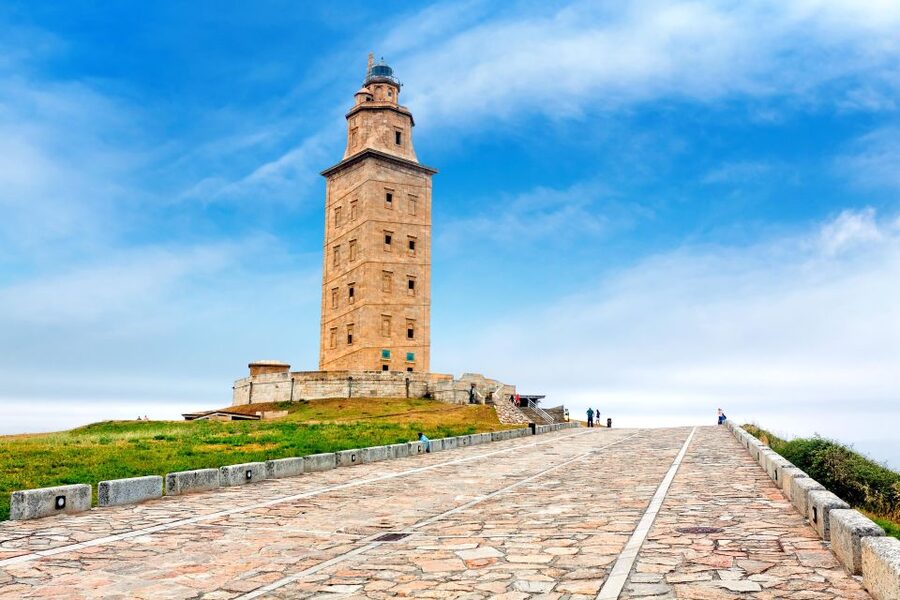
The Colexiata de Santa María do Campo is another key sight on the Old Town portion of the walk. It helps fill out the picture of medieval A Coruña and gives you another chance to see how religious buildings shaped the old city.
The route also reaches Praza de Azcárraga, a pleasant place to pause and take photographs. The square brings a different mood from María Pita. Instead of a large civic setting, you get a more intimate historic space that helps you understand the texture of the Old Town.
This part of the tour is where getting slightly lost becomes useful. The streets are not simply a corridor between major landmarks. They form the experience, with turns, façades, churches, and small plazas revealing themselves in sequence.
The guide’s interpretation matters here. Without context, you might see attractive stone buildings and move on. With explanation, you begin to understand how the city developed and how architecture reflected different periods and social groups.
Church of San Nicolás and the Pescadería district
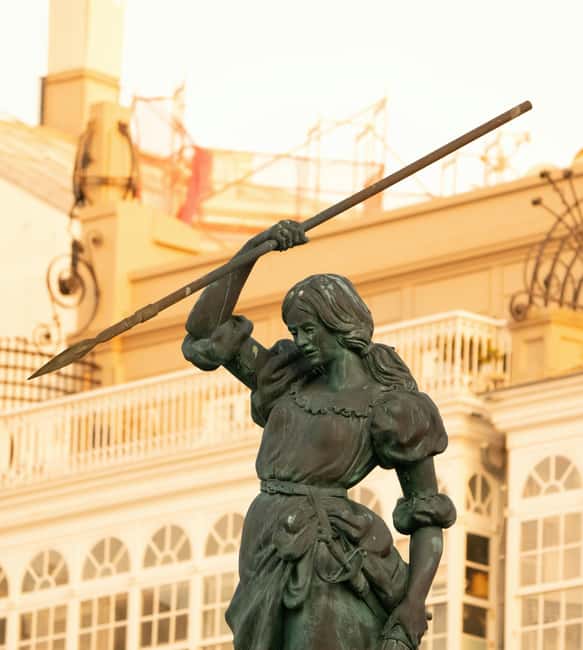
The Church of San Nicolás adds another religious landmark to the route. Like the other church stops, it gives the walk historical depth without requiring you to spend the entire afternoon inside monuments.
The surrounding Pescadería neighborhood is particularly important to the overall feel of the tour. Here, tradition and urban life meet. You are not only looking at preserved buildings. You are walking through a living part of A Coruña, where older streets remain part of the city’s everyday pattern.
This is one reason the experience suits people who want more than a sightseeing checklist. The route keeps moving through real streets and working districts, linking the past with the present.
At this point, you will have covered several churches and squares. If religious architecture is not your main interest, the variety of the route keeps it from becoming repetitive. Each stop is brief, and the guide adds broader comments about the city, Galicia, architecture, and Spanish culture.
Calle Real and the walk toward the sea

Rúa Real, or Calle Real, brings the tour into one of the city center’s liveliest streets. This section feels more urban and commercial than the Old Town squares, making it a useful contrast.
The street also points toward the maritime side of A Coruña. The route does not isolate historic monuments from modern city life. Instead, you move from old churches to shops, façades, and pedestrian activity, seeing how the central districts work together.
I find this kind of transition valuable because it gives you practical orientation. After the tour, you will have a better sense of where to walk, where to browse, and which areas to revisit for food or further sightseeing.
The guides also offer recommendations for restaurants and drinks. Those tips are not a formal food tour, and food and drinks are not included, but they can help you turn the walking tour into a useful first afternoon in the city.
The Marina galleries and Méndez Núñez Gardens
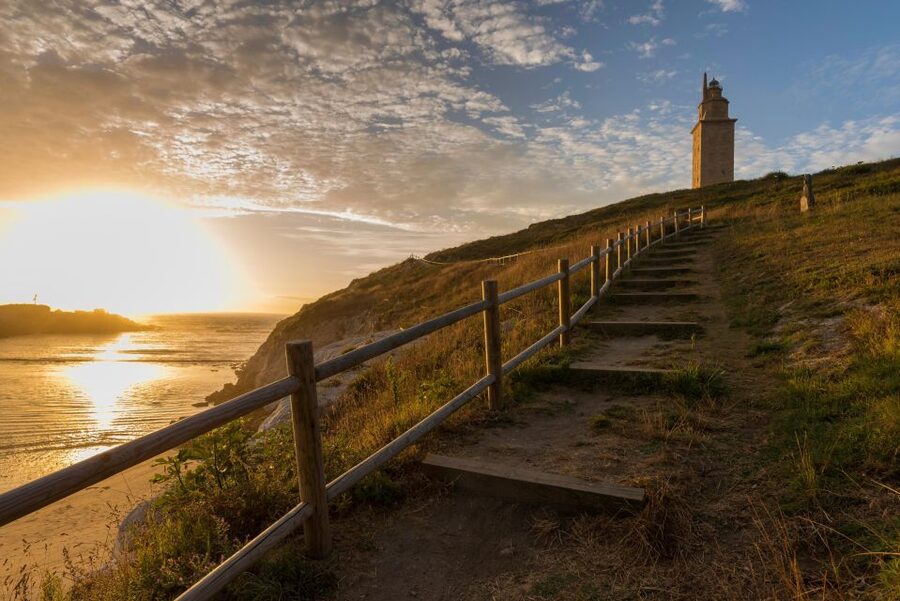
A Coruña is famous for its galerías de la Marina, the glazed galleries that give many waterfront buildings their distinctive appearance. They are one of the most memorable sights on this route.
The galleries are not just decorative façades. They show the city’s close relationship with the sea and its weather. The glass fronts bring light into buildings while offering shelter, creating a look that is both practical and elegant.
This is also where the tour’s focus on modernist façades becomes especially clear. You will see how A Coruña’s architecture changed as the city grew, while still responding to its coastal setting. The effect is much easier to understand in person than in a list of facts.
The route includes Jardínes de Méndez Núñez as a photo and sightseeing stop. These gardens add open space near the water and provide a change of pace after the narrower streets. You will not spend the whole tour beside the sea, so this section is particularly welcome for anyone drawn to A Coruña’s maritime character.
Finishing at the Obelisk
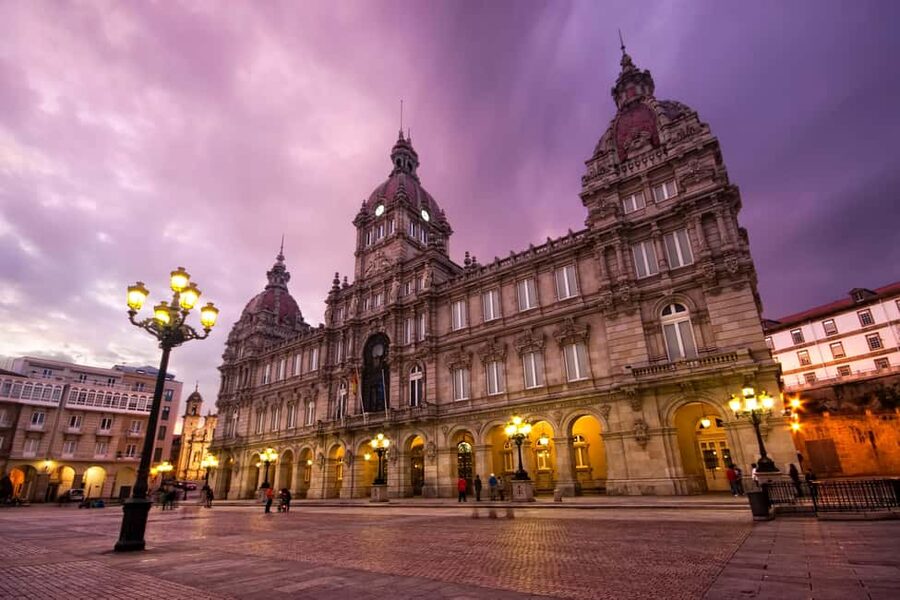
The walk ends at the Obelisk, a clear landmark and practical place to continue exploring on your own. Finishing here gives you options. You can return toward the center, continue along the waterfront, find lunch, or use the guide’s suggestions to plan the rest of your visit.
The ending also gives the tour a satisfying structure. You start near the theater district, pass through civic and medieval A Coruña, then finish closer to the sea and the city’s modern waterfront identity.
This is not a tour built around one dramatic monument. Its value comes from the connections between places: theater to palace, palace to church, church to old square, old square to commercial street, and commercial street to the Marina.
What $19 gets you
At $19 per person, the tour is strong value if you want a well-organized introduction to A Coruña. The fee includes the local guide, taxes, and the full two-hour walk. It does not include food, drinks, or admission to monuments and museums.
That pricing makes sense for a first morning or afternoon in the city. You get a route that would be difficult to plan efficiently on your own, along with interpretation that helps the buildings make sense.
The value is highest for first-time visitors, cruise passengers, and anyone with a limited stay. A couple or family can also treat the tour as a planning tool, using the final recommendations to decide where to spend the rest of the day.
The price is less compelling if you already know the Old Town well or prefer to wander without a fixed route. It is also not the right choice if your main goal is extended access to interiors, since most stops are guided from the outside and entrance fees are separate.
Group size, language, and practical comfort
The tour is available in English and Spanish, with a maximum of 10 participants. That small-group limit is one of the most useful details here. It should make it easier to hear the guide, ask questions, and keep the group together in narrow streets.
Several departures have been especially small, including walks with only two, four, or six people. A small group can make the experience feel more personal, though the exact size depends on the date you choose.
The tour is wheelchair accessible, but the route includes streets, squares, and outdoor walking, so it is wise to confirm that the specific path works for your needs before booking. The supplied information does not give detailed surface or slope notes.
Wear comfortable shoes, comfortable clothes, and weather-appropriate outdoor clothing. The walk goes ahead in rain or shine, so a waterproof layer can make a real difference in Galicia’s changeable weather.
You can cancel up to 24 hours before the start for a full refund, and the reserve-now, pay-later option keeps your plans flexible. Check the available starting times when choosing a date, since the duration is fixed at two hours but departure times vary.
Who should book this A Coruña walk?
I would choose this tour if you are visiting A Coruña for the first time, arriving on a cruise, or trying to understand the city before exploring it alone. It gives you enough background to make later visits to churches, squares, galleries, and museums more meaningful.
It also suits people who enjoy architecture, local stories, and city history but do not want a long lecture. Alex and Alejandro bring humor and personal feeling to the route, which helps the information stick.
Families with older children, couples, solo visitors, and small groups should all find the format manageable. The two-hour length is long enough to cover the city center but short enough to leave room for lunch or another attraction.
I would think twice if you want a museum-heavy experience, a food tasting, or a full-day tour that includes the beach and wider city. Those are not the focus here, though the guide can help you decide what to do next.
Should you book it?
Book this walk if you want a friendly, focused introduction to A Coruña at a modest price. The strongest reasons are the varied route, the small group size, the glass Marina galleries, and the guide’s mix of historical detail, humor, and useful local advice.
Skip it only if you prefer complete independence or plan to spend your time inside monuments. For most short visits, this is a smart first step. It gives you the city’s basic shape, points out details you might miss alone, and leaves you at the Obelisk with plenty of time to continue on your own.
FAQ
How long does the A Coruña historic walking tour last?
The tour lasts two hours.
What is the price per person?
The listed price is $19 per person.
Where does the tour begin?
The meeting point is the main entrance of Teatro Colón.
How will I recognize the guide?
The guide carries a distinctive black backpack and wears an official tour guide badge on a blue lanyard.
Which languages are available?
The tour is offered in English and Spanish.
Where does the walk finish?
The tour finishes at the Obelisk.
Does the tour run in bad weather?
Yes. The tour takes place rain or shine, so bring weather-appropriate outdoor clothing.
Newest history tours we have reviewed in Spain
- Bilbao Historical Tour in small group★ 4.7 · 52 reviews
- Barcelona Tapas Tour, Taverns, History & Local Culture★ 5.0 · 25 reviews
- Barcelona Historical 3-Hour Bike Tour★ 4.7 · 222 reviews
- Barcelona: Market, Tasty Tapas/Food and Gothic History Tour★ 4.7 · 48 reviews
- Barcelona: Cemetery Tour – Gothic Graves & Local History★ 4.9 · 33 reviews
- Barcelona & Chocolate Amatller History and Culture + Activity and Tasting★ 4.9 · 173 reviews
- Barcelona: The Spanish Civil War Historical Walking Tour★ 4.9 · 239 reviews
- Barcelona: 3-Hour Esoteric, Spiritual & Historical Tour★ 5.0 · 34 reviews
Old Town & Historic Centre Walks, compared.

Madrid Essential: Historic Center, Plaza Mayor & Royal Palace
Read our review →
Live Fado Show with Port Wine in Historic Center
Read our review →
Valencia Old Town Tour with Wine & Tapas in 11th Century Historic Monument
Read our review →
Prague Old Town, Medieval Underground and Dungeon Historical Tour
Read our review →
Cartagena: Historic Center and Getsemaní Shared Walking Tour
Read our review →
Old Town Walking Tour History and Tales in Edinburgh
Read our review →
Philadelphia Old City Historic Walking Tour with 10+ Top Sites
Read our review →Browse the lists this tour appears in