
Review · CROATIA HISTORY TOURS
Zagreb: City & History Walking Tour & WW2 Tunnels
The most unusual part of this Zagreb walk is the Grič Tunnel, a wartime shelter beneath the Upper Town that gives the tour a useful link between old Zagreb and its more recent past. Above ground, you move from Zrinjevac Park and the Cathedral to Dolac Market, Tkalčićeva Street, and Gradec.
I like the small-group format, which makes it easier to hear the guide and ask questions. I also like the mix of famous sights and local details, including the miracle chapel at Stone Gate and tips for finding good food afterward. One thing to consider: the route includes hills, steps, and uneven historic streets, and it is not suitable for wheelchair users.
Key points to know before you book
- The Grič Tunnel adds a rare wartime-history stop beneath Zagreb’s Upper Town.
- Petra, Tomislav, Tomas, and Maja have led this tour, with a style that combines facts, humor, and personal stories.
- The route covers both Lower Town and Gradec, giving you a useful first look at central Zagreb.
- Small groups make conversation easier, with one recent group numbering eight people.
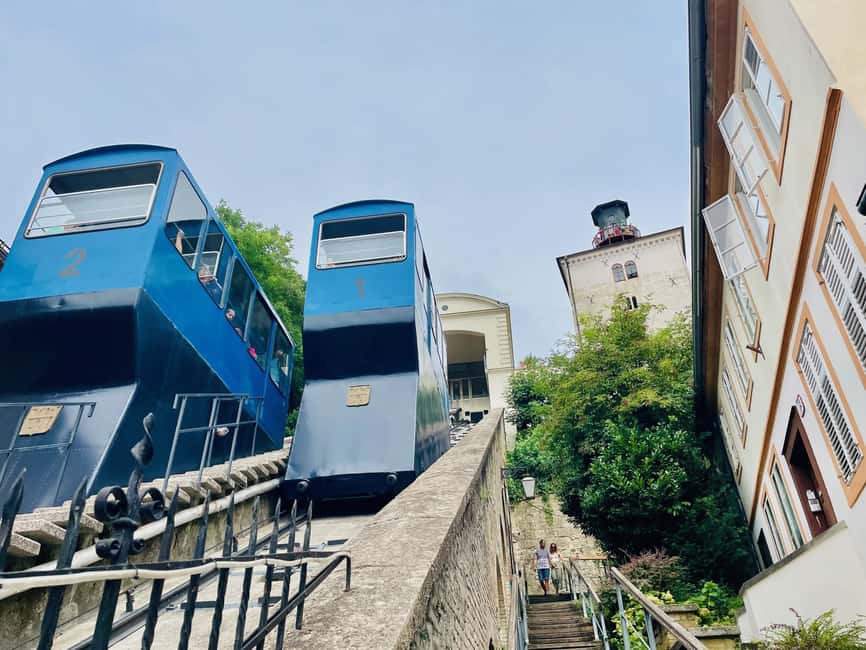
- The funicular is closed for renovation until March 2026, so you should expect to walk uphill to the Upper Town.
- Dolac Market is best seen in the morning, since it closes in the afternoon and on public holidays.
From Zrinjevac Park to the heart of Zagreb
The tour begins at Zrinjevac Park, formally Nikola Šubić Zrinski Square, beside the small meteorological station on the north side of the park. This is a practical meeting point because the park is easy to find and gives your guide room to gather the group before setting off.
Zrinjevac is part of Zagreb’s Lower Town, a more orderly district of broad streets, leafy squares, and grand public buildings. Your guide uses the park to introduce the city’s layout and explain how Zagreb developed beyond its medieval hilltop settlements.
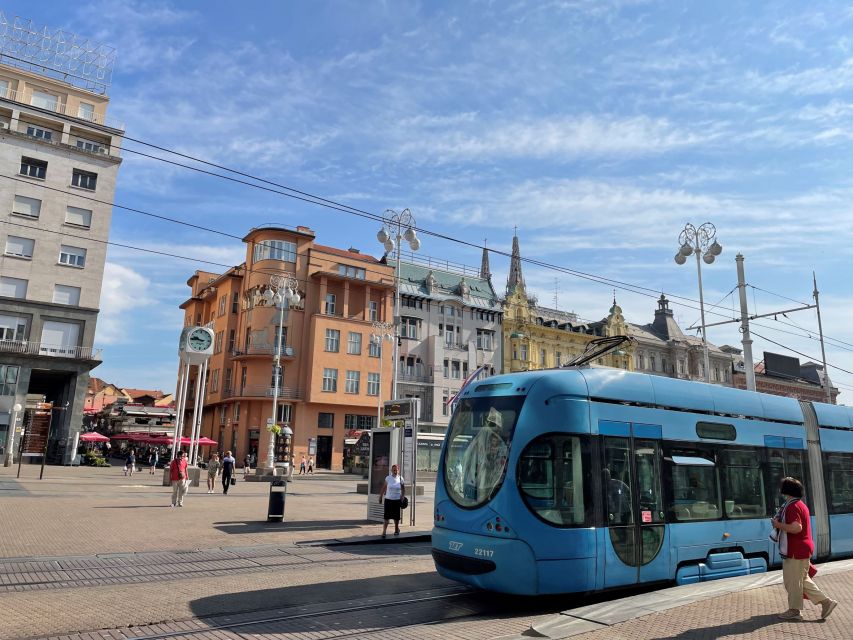
From there, you walk toward Ban Jelačić Square, the city’s main meeting place. This is the spot where Zagreb’s daily life comes together, with pedestrians, trams, cafés, and people crossing the square in every direction.
The square also provides the first useful lesson in Zagreb’s past. Your guide explains the story behind the city’s name and the legends connected with its founding. These tales give you more than dates and rulers. They help you understand why Zagreb grew as two separate medieval communities before becoming the city you see today.
The pace is not a forced march. Stops are built into the route, and you get time to look around and ask questions. That matters on a walking tour because Zagreb’s central sights are close together, but their stories are not always obvious from the street.
More History Walking Tours in Croatia
- Dubrovnik Old Town History Walking Tour
★ 5.0 · 1,684 reviews - Dubrovnik: Ancient City Walls & Wars Walking Tour
★ 5.0 · 1,270 reviews - Walking Tour of Split with a ‘Magister’ of History
★ 5.0 · 1,122 reviews
Zagreb Cathedral and the city’s changing face
The next major stop is the Cathedral of the Assumption of the Blessed Virgin Mary. Its twin towers make it one of Zagreb’s easiest landmarks to recognize, and its long story reflects the city’s troubles as well as its religious importance.
Your guide discusses the cathedral’s origins, damage, and repeated restoration. Zagreb has had to repair and reshape the building over many years, so this stop is not simply about admiring the façade. It gives you a way to understand how earthquakes, conflict, and changing architectural tastes have affected the city.
The tour is primarily an outdoor walking experience, so you should not assume that an interior visit is included. The value here is the explanation around the building, along with time for photographs and questions.
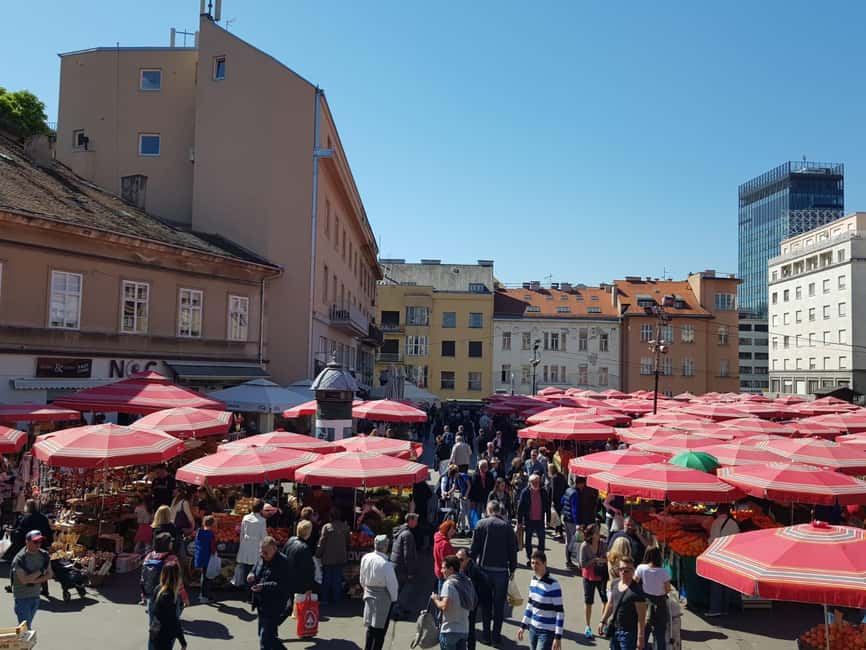
From the cathedral, the route continues to Dolac Market. This is one of the best places to see Zagreb as a working city rather than just a collection of monuments. Locals come here for produce and everyday shopping, while the red umbrellas and open stalls make it one of the city’s most recognizable scenes.
The market is often called the belly of Zagreb. Your guide explains its place in local life and may point out details you would likely pass without noticing. Go in the morning if you want to see Dolac at its fullest. The market is closed in the afternoon and on public holidays, so the stop can change depending on your starting time.
Café culture on Tkalčićeva Street
Tkalčićeva Street brings a different mood. The former street of small workshops and local businesses is now lined with cafés, restaurants, and places to sit. It is one of the best places to understand Zagreb’s fondness for taking time over a coffee.
Your guide explains the local art of lingering, which is less about rushing from sight to sight and more about making room for conversation. This is also where practical advice can be useful. Guides such as Petra, Tomislav, Tomas, and Maja have been praised for answering questions and offering suggestions for restaurants and later activities.
I like this part of the route because it connects architecture with present-day habits. You are not just told what a street used to be. You see how it functions now and how café culture shapes the center of Zagreb.
The route includes a pass by the Museum of Broken Relationships. The museum is not a full stop on this tour, but its location helps place you within the Upper Town area. If the subject interests you, you can return later for a separate visit.
Inside the WWII-era Grič Tunnel
The Grič Tunnel is the tour’s most distinctive stop. This underground passage was built during the Second World War as a shelter and is now used for public events, exhibitions, and performances as well as occasional sightseeing.
Walking into the tunnel changes the rhythm of the tour. After parks, squares, and church towers, you are suddenly below street level in a long, utilitarian passage. It offers a direct way to think about Zagreb during wartime and about how cities reuse difficult spaces in later years.
The tunnel is not guaranteed to be open every time. An exhibition, theatre performance, or another event may prevent access, and in that case the guide cannot include the visit. This is the main feature-related risk to keep in mind when booking.
If the tunnel is open, it is a worthwhile contrast to the older monuments. It also makes the tour more varied than a standard city-center walk focused only on architecture.
More WWII and D-Day Tours in Croatia:
- Vienna: World War II Historical Walking Tour
★ 4.8 · 1,772 reviews - Pearl Harbor History Remembered Tour from Ko Olina
★ 5.0 · 1,009 reviews - Hiroshima Peace (Heiwa) Walking Tour at World Heritage Sites
★ 5.0 · 872 reviews - Berlin: History of the Third Reich Guided Walking Tour
★ 4.7 · 791 reviews
Walking uphill to Gradec
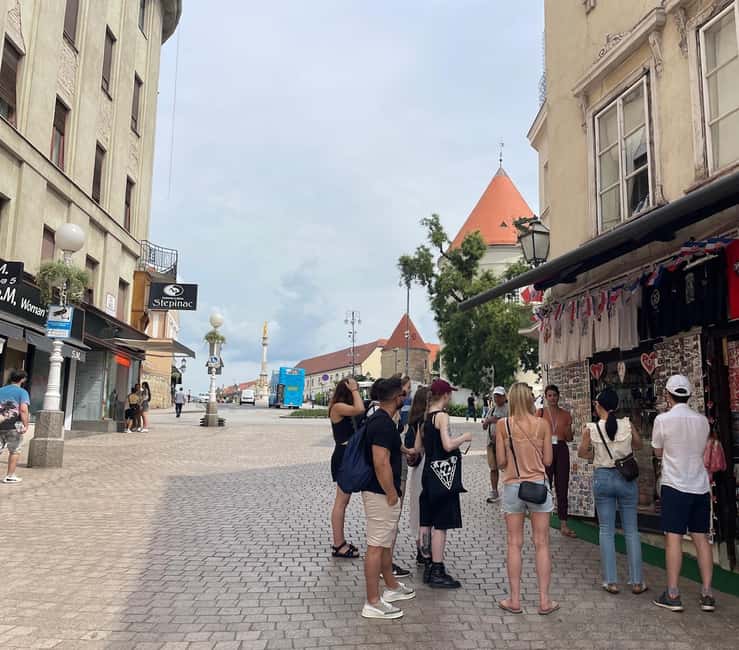
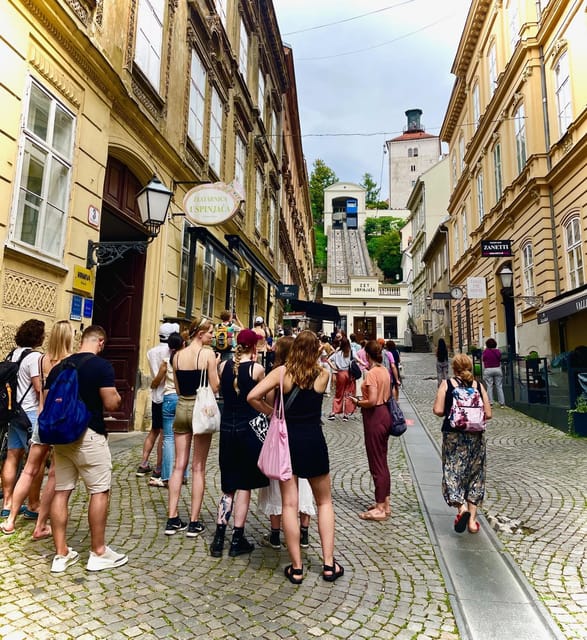
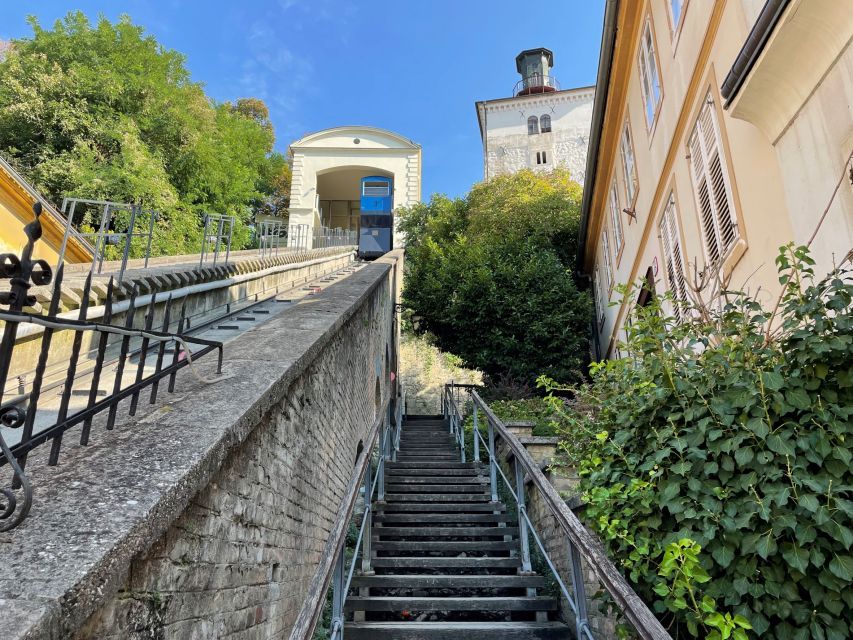
The original plan includes Zagreb’s funicular, the oldest public transport in the city. At present, it is closed for renovation until March 2026, so you should expect to reach the Upper Town on foot rather than riding up.
That change is not a deal-breaker, but it matters if you were counting on a short mechanical ascent. The walk to Gradec includes uphill streets and historic surfaces. Wear shoes with a firm grip, especially if the weather is wet.
Once you reach the Upper Town, the setting becomes quieter. Gradec is one of Zagreb’s original medieval settlements, and the route here feels more enclosed and residential than the open squares below.
Strossmayer Promenade is a pleasant terrace along the edge of the hill. It gives you a broad view over Zagreb’s rooftops and the Lower Town. This is a good place to pause, take photographs, and get your bearings before continuing through the old streets.
The walk is not only about scenery. Your guide explains how Gradec fits into Zagreb’s early development and points out the way the medieval settlement still shapes the modern city.
Lotrščak Tower and the daily cannon
Lotrščak Tower is one of the Upper Town’s best-known landmarks. It formed part of the old defensive system and now offers a strong reminder that Zagreb was once a fortified hilltop settlement rather than a single unified city center.
The tower is tied to the cannon fired at noon. Guides Petra and Tomislav have timed tours so that the group can reach the area for the midday event when the schedule allows. It is a small but memorable piece of Zagreb routine, and it gives the history a pleasing sense of connection with the present.
The tour does not promise a tower interior visit, so think of this as an exterior stop with historical explanation and photographs. You will have time to listen without having to hurry through a formal museum display.
St. Mark’s Church and the Stone Gate
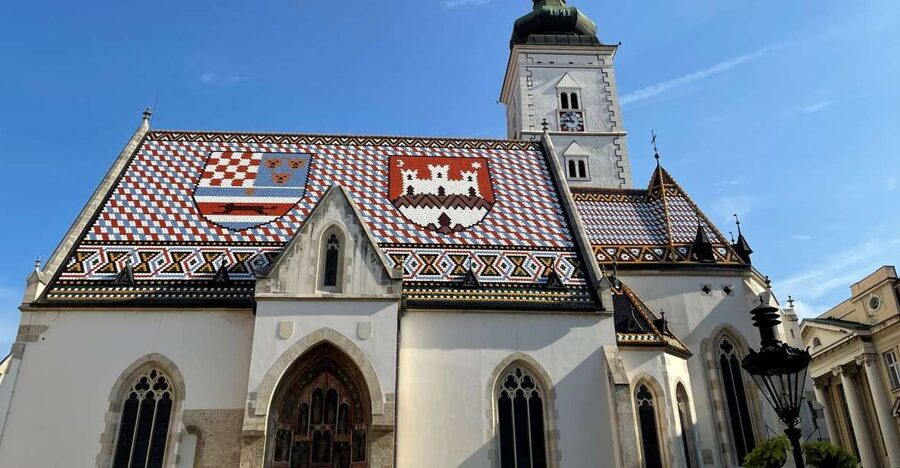
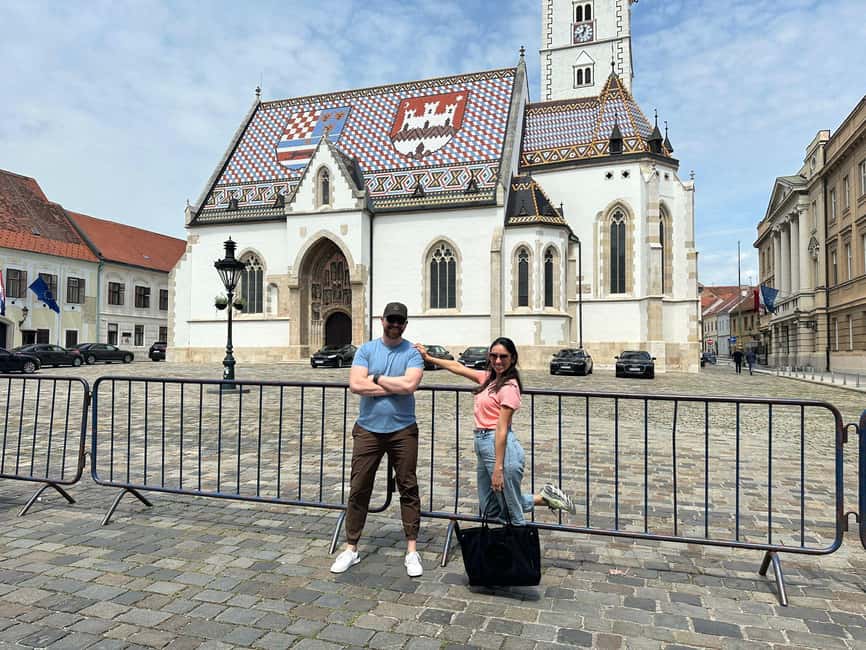
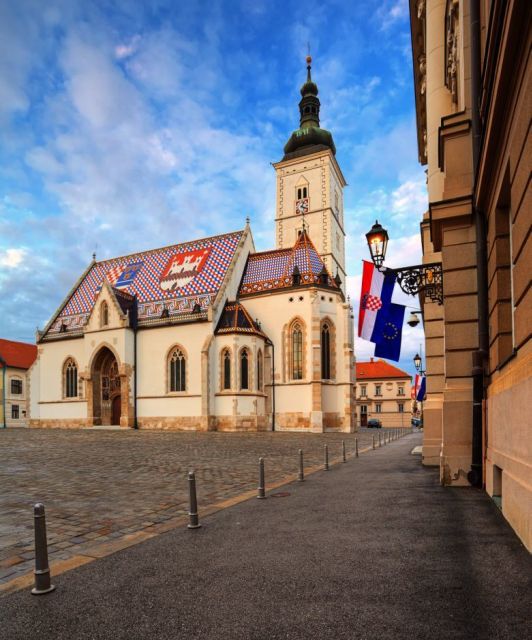
St. Mark’s Square is one of Zagreb’s most photographed places. St. Mark’s Church is easy to recognize because of its colorful tiled roof, which carries the coats of arms associated with Zagreb and Croatia.
The square also puts government buildings and historic architecture close together. Your guide gives context for the church and the surrounding area, helping you read the square instead of simply photographing it.
The route then leads to Zagreb’s oldest pharmacy and through the Stone Gate, the only surviving gate from the old city fortifications. This is one of the most meaningful stops on the walk because it combines medieval remains with living religious practice.
Inside the gate is a small chapel dedicated to Our Lady. A painting there is believed by local people to have miraculous powers, and the chapel remains a place of quiet devotion. You may find people stopping briefly to pray, light a candle, or simply pause in the middle of the old passage.
That moment is a good example of what this tour does best. It takes you to a landmark, then explains why the place still matters to people who live in Zagreb.
Small groups, guide style, and the value of the experience
The tour lasts 150 minutes and is conducted in English. Its small-group design is important because much of the value comes from conversation. You can ask about Croatian history, daily life, food, or what to do next, and the guide has a better chance of responding without losing the group.
The guides have different personalities, but the pattern is clear. Petra is often described as friendly, funny, and full of local stories. Tomislav and Tomas bring humor, careful explanations, and practical suggestions. Maja has been praised for keeping the group together, choosing shade on hot days, and adapting to different questions.
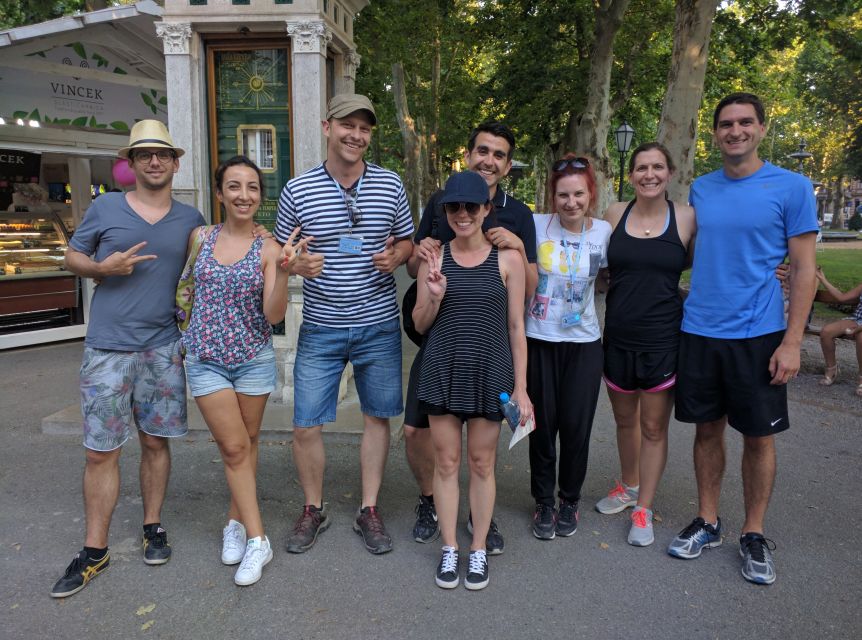
One group had eight people, while the exact size can vary. Compared with a large crowd, that makes it easier to hear in busy squares and easier to stop without blocking the street.
The tour receives a 4.9 rating from 1,202 reviews, which points to strong and consistent satisfaction. The most praised features are the guides’ storytelling, the chance to ask questions, the relaxed pace, and the balance between major sights and lesser-known details.
At $11 per person, the value is strong. You are paying less than the price of many museum admissions for two and a half hours with a licensed local guide. The tour does not include food, drinks, funicular transport, or paid entry to other attractions, but it gives you the background needed to choose those activities later.
Who should take this Zagreb walk?
I would choose this tour for a first morning or afternoon in Zagreb. It covers enough ground to help you understand the city center, while the guide’s suggestions can shape the rest of your stay.
It suits you if you want history explained in plain language, prefer walking to riding between sights, and like having room for questions. It is also a good choice if you have only a few hours before a bus or another departure. One person booked it with only a short time left in Zagreb and still found the route useful.
You should think twice if stairs, hills, or uneven pavement are difficult. The tour is not suitable for wheelchair users, and the funicular closure means there is no ride to shorten the uphill section.
Hot weather can also affect the experience. The route is outdoors for much of its 150 minutes, although guides may look for shade when possible. In rain, bring suitable clothing and shoes. The tour can still run, but wet streets and old paving deserve care.
Practical details before you go
Meet at Trg Nikola Šubić Zrinski 2, beside the meteorological station in Zrinjevac Park. Look for the small display showing temperature and barometric pressure on the north side of the park.
Check the starting time when you book. If Dolac Market matters to you, choose a morning departure when possible. Also remember that the Grič Tunnel may be unavailable because of an event, and the funicular remains closed until March 2026.
You can cancel up to 24 hours before departure for a full refund, and the reserve-now, pay-later option keeps your plans flexible. The tour finishes at Ban Jelačić Square, where the guide can suggest food, museums, and other things to do.
Should you book it?
Book this tour if you want a well-priced introduction to Zagreb that goes beyond a list of photo stops. The route gives you the cathedral, market, old fortifications, Upper Town, St. Mark’s Church, and the Grič Tunnel, while the guides add stories and useful local advice.
The main reasons to hesitate are the walking conditions, the funicular closure, and the possibility that the tunnel will be closed for an event. For most able walkers, though, the combination of a small group, a 2.5-hour route, and a strong local guide makes this one of the easiest ways to get oriented in Zagreb.
FAQ
How long does the Zagreb walking tour last?
The tour lasts 150 minutes, or two and a half hours.
What language is the tour conducted in?
The live tour guide speaks English.
Where does the tour begin?
It begins at Trg Nikola Šubić Zrinski 2 in Zrinjevac Park, beside the meteorological station on the park’s north side.
Where does the tour finish?
The tour finishes at Ban Josip Jelačić Square in central Zagreb.
Is the Grič Tunnel always included?
The tunnel may be closed if an exhibition, theatre performance, or another event is taking place. If it is closed, the visit cannot take place.
Is the Zagreb funicular included?
The funicular is part of the route description, but it is closed for renovation until March 2026. You should expect to walk to the Upper Town during this period.
Is Dolac Market open all day?
No. Dolac Market is closed in the afternoon and on public holidays. A morning tour is the best choice if you want to see it open.
Are food and drinks included?
No. Food and drinks are not included in the tour price.
Is the tour suitable for wheelchair users?
No. The activity is not suitable for wheelchair users.
Can I cancel the booking?
Yes. You can cancel up to 24 hours in advance for a full refund. You can also reserve now and pay later.
Newest history tours we have reviewed in Croatia
- Dubrovnik: Game of Thrones and History Small Group Tour★ 5.0 · 76 reviews
- Dubrovnik Old Town: Small-Group Walking Tour With A Local★ 5.0 · 123 reviews
- History Split Walking Tour in French -Small group★ 5.0 · 41 reviews
- Split History and Gastro Small-Group Tour with Food and Drinks★ 5.0 · 375 reviews
- Dubrovnik Jewish Heritage Private Walking Tour★ 5.0 · 121 reviews
- Private History Split Walking Tour in English★ 5.0 · 159 reviews
- Split: Historical Tour of Salona, Klis Fortress and Trogir★ 4.1 · 108 reviews
- History & Cultural Walking Tour of Split and Diocletian’s Palace★ 5.0 · 104 reviews
WWII & D-Day Tours, compared.
Pearl Harbor History Remembered Tour from Ko Olina
Read our review →
Hiroshima Peace (Heiwa) Walking Tour at World Heritage Sites
Read our review →
![Pearl Harbor & USS Arizona Small-Group Tour [Early Access]](https://media.myhistoryguide.com/wp-content/uploads/pearl-harbor-uss-arizona-small-group-tour-early-access-400x267.jpg)
Pearl Harbor & USS Arizona Small-Group Tour [Early Access]
Read our review →
Anne Frank and the Jewish History of Amsterdam Private Tour
Read our review →
Anne Frank and Amsterdam Jewish History Walking Tour
Read our review →
The History of Berlin: WWII PRIVATE Walking Tour With Locals
Read our review →Browse the lists this tour appears in