
Review · ITALY HISTORY TOURS
Verona: History and Hidden Gems Guided Walking Tour
Verona reveals itself best when you stop looking only at the big sights. This two-hour walk links the Arena and Juliet’s balcony with Roman gateways, medieval courtyards, old churches, and quiet lanes that are easy to pass without a second glance. Fabio Massimo Rapanà, a licensed Veronese guide, supplies the local context.
I like the small maximum group of 10 and the supplied headsets. You can ask questions without shouting, and you can hear the guide beside a busy square. I also like the route’s broad sweep, from Ancient Rome through the medieval city and into modern Verona.
The main consideration is pace. Two hours covers many stops, but several are brief photo stops or pass-bys rather than full visits. You will also need comfortable shoes and water, since this is a continuous city walk in rain or shine.
Key points to know before booking
- A local guide with roots in Verona: Fabio was born and raised in the city, and his storytelling connects buildings, streets, and historical periods.
- A compact route with wide coverage: You see the Arena, Piazza delle Erbe, Piazza dei Signori, the Adige River, Castelvecchio, the Scaligere tombs, and Juliet’s balcony.
- Small groups make a difference: The tour accepts up to 10 participants, with private options also available.
- Headsets improve the walk: You can listen clearly while standing in open squares or moving through busy streets.
- The focus goes beyond famous sights: Look for architectural details, old walls, courtyards, churches, and side streets most people walk past.
- Best used early in your stay: The tour gives you useful orientation and helps you notice more when you return to Verona on your own.
Starting beneath the Italian flag in Piazza Bra
The meeting point is beneath the Italian flag at Verona’s Town Hall, Palazzo Barbieri, in Piazza Bra. This is a practical place to begin because the square puts you directly beside Verona’s most famous building, the Arena.
Piazza Bra is broad and open, so allow a few minutes to find the guide and settle in. Fabio uses headsets, which is especially useful here. The square can be noisy, and a traditional guide trying to project across a crowd is not always easy to follow.
The walk starts with a short look at Piazza Bra before turning to the Verona Arena. The five-minute square visit is not meant to explain every corner of the piazza. Instead, it places the amphitheater in its urban setting and gives you a sense of how the city is arranged around it.
More History Walking Tours in Italy
- Venice: City Center Historical Guided Walking Tour
★ 4.2 · 1,873 reviews - Palermo: Street Food and History Walking Tour
★ 4.9 · 1,486 reviews - Naples Spanish Quarters Walking Tour Street Art, Folklore & Sweet
★ 5.0 · 797 reviews
The Arena and Verona’s Roman beginnings
The Verona Arena gets about 10 minutes as a photo stop and history lesson. You learn about the gladiator contests held here and the building’s Roman design, while Fabio points out the scale and structure that make the amphitheater so impressive.
This is not an Arena interior tour. Entry tickets are not included, and the route does not take you inside. That is important if your main goal is to explore the seating tiers or underground areas. Think of this walk as a city-history tour that uses the Arena as its opening chapter.
The benefit is context. Instead of treating the amphitheater as an isolated monument, you begin to see Verona as a Roman city that later grew around its older bones. That idea returns throughout the walk, especially at the old gateways and traces of early city walls.
Roman gateways, old walls, and the Adige
From Piazza Bra, the route follows the foundations of the early medieval walls toward the Corso, one of Verona’s oldest streets. This is where the walk begins to feel different from a basic checklist tour. You are not simply moving from one postcard view to another. You are following the shape of the city itself.
The route includes Porta Borsari, a Roman-era gateway and a natural photo stop. The gateway helps show how Roman Verona controlled movement into the city. The monument is easy to miss if you are focused on shops and traffic, but its stonework gives you a direct link to the ancient city.
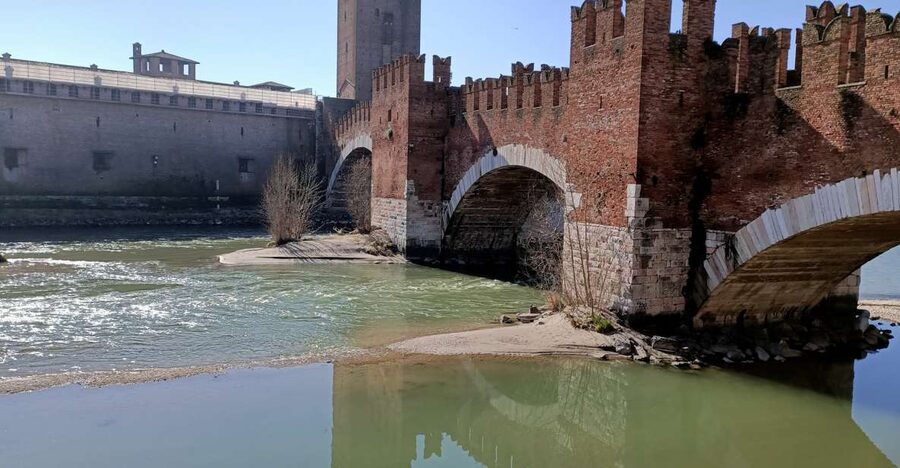
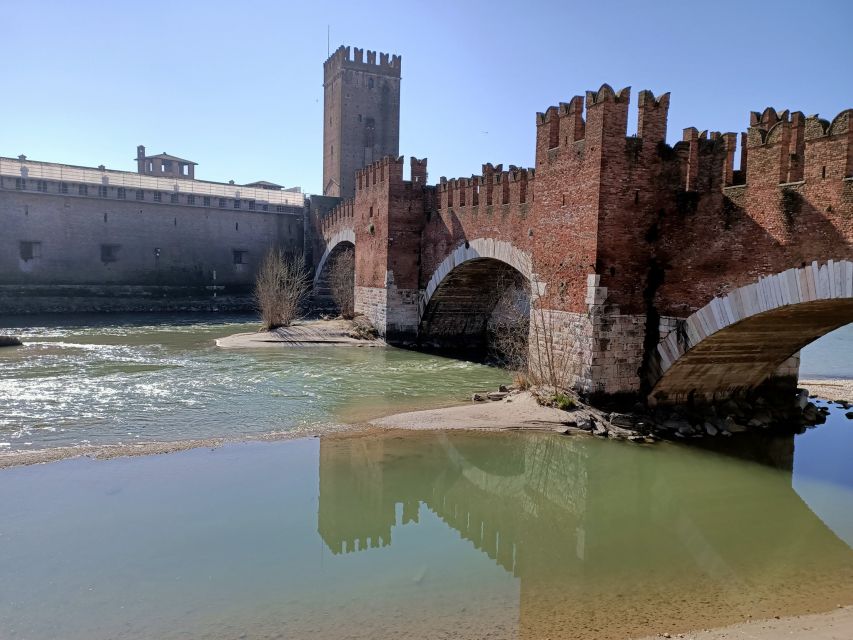
Next comes Riva San Lorenzo, where the route opens toward the Adige River. You get views toward Castelvecchio and the Ponte Scaligero, the striking brick-and-stone bridge associated with Verona’s medieval rulers. This is one of the more scenic parts of the walk, and it gives the historical talk a welcome change of pace.
The river views also help explain Verona’s shape. The Adige is not just a pretty backdrop. It helped define the city’s defenses, crossings, and trade routes. Fabio’s approach, according to the supplied details, connects those broad themes with the buildings in front of you.
Small churches and details along the Corso
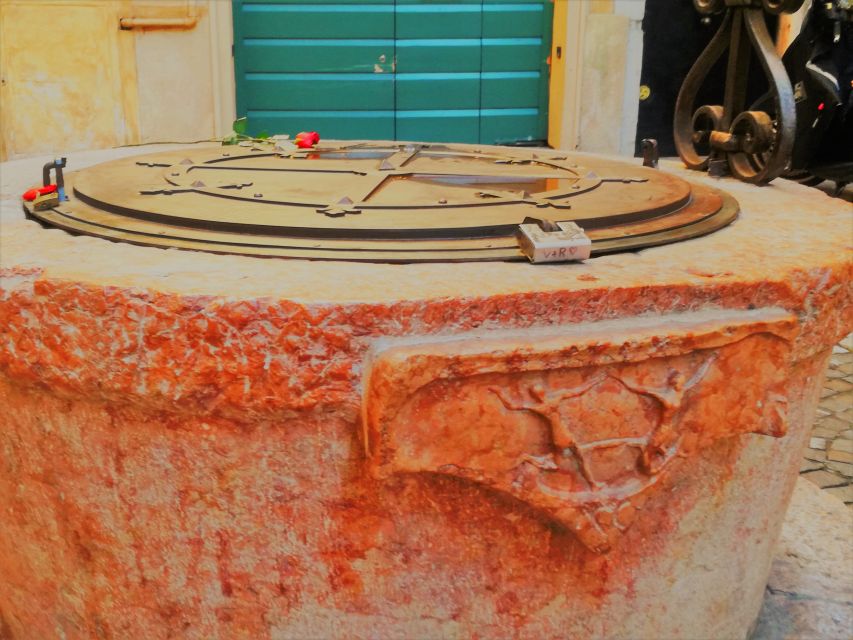
Several stops are labeled simply as secret or lesser-seen points, with short pauses for photos or brief explanations. The route passes Chiesa di San Giovanni in Foro, a church whose location and surrounding buildings add another layer to Verona’s long urban story.
You also pass through Piazzetta Monte and several smaller corners before reaching Piazza delle Erbe. These quick stops are part of the tour’s character, but they also explain its main limitation. You will see many points, yet some receive only two or five minutes.
I see this as a good trade for first-time visitors who want a broad introduction. If you prefer one church or monument explored in great depth, you may find the pace too brisk. The walk is built around connections: Roman remains lead to medieval streets, which lead to civic squares and local stories.
Same streets, a different century:
- Colosseum: Underground and Ancient Rome Tour
★ 4.7 · 12,691 reviews - Rome: Colosseum with Arena, Roman Forum and Palatine Guided Tour
★ 4.0 · 5,598 reviews - Venice: St. Mark’s Basilica Guided Tour & VR History Intro
★ 3.9 · 4,880 reviews - Colosseum with Arena, Roman Forum and Palatine Hill Guided Tour
★ 4.5 · 3,526 reviews
Piazza delle Erbe and the city’s market life
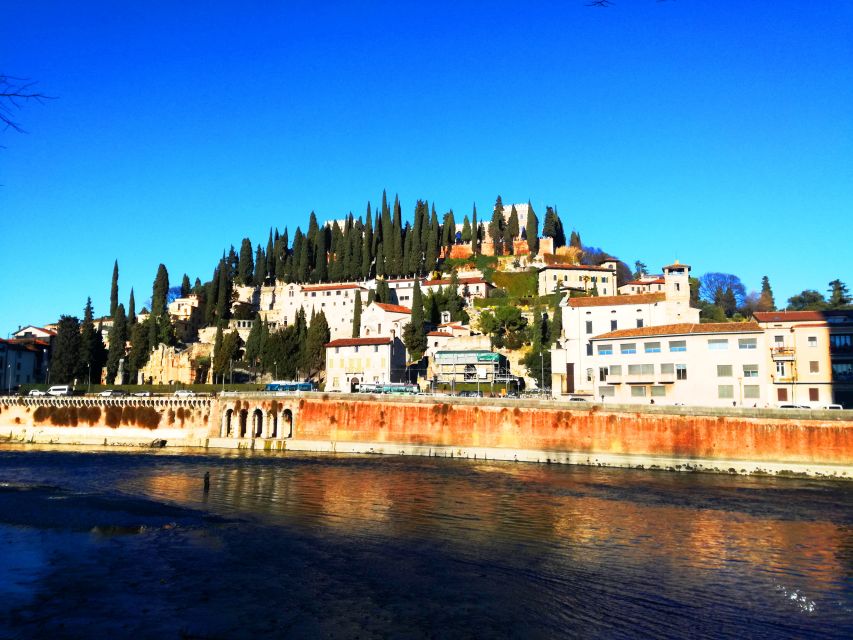
Piazza delle Erbe receives about 10 minutes, enough to take in the square, its market tradition, and its historic façades. This is one of Verona’s essential public spaces, and the tour treats it as more than a scenic stop.
You learn about the local market and see the city’s oldest fountain. Look upward as well as ahead. The surrounding townhouses carry layers of decorative detail, and the square makes clear how Verona’s public life once centered on commerce, water, and civic display.
This is a useful moment to pause and orient yourself. From here, many visitors head toward shops, cafés, or Juliet’s House without noticing how the square fits into the wider city. Fabio’s explanations help turn façades into evidence of changing power and daily life.
Piazza dei Signori and Verona’s medieval rulers
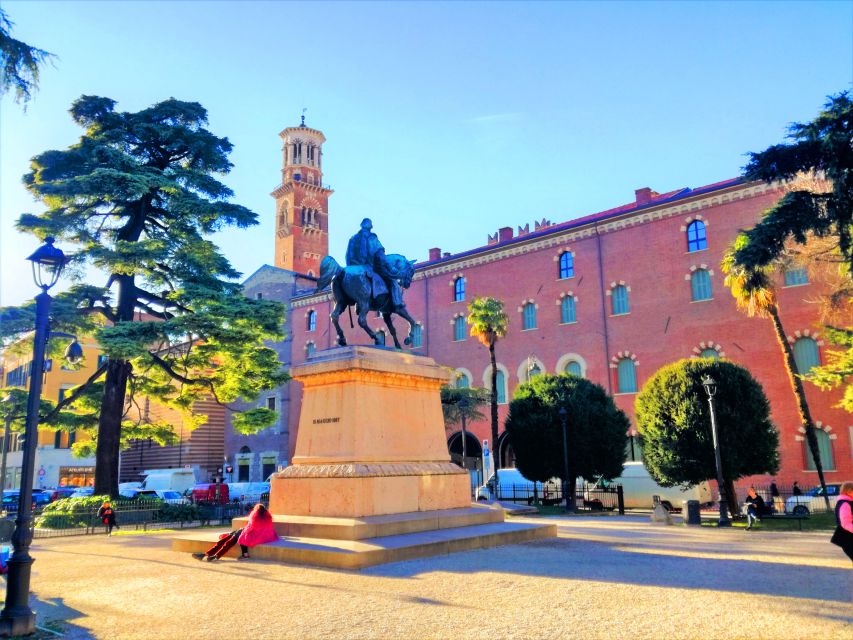
A short walk brings you to Piazza dei Signori, another major square with a more formal, political feel. The route takes in Palazzo della Ragione, Palazzo della Scala, and Palazzo del Capitano, along with the city’s highest tower.
These buildings show medieval Verona as a city of rulers, officials, courts, and competing powers. The square is compact, but the collection of public buildings makes it one of the best places to understand how government shaped the city center.
The stop lasts about five minutes, followed by another nearby point and a photo stop at Basilica di Santa Anastasia. You may not enter the basilica on this tour, since admission is not included. Still, the exterior adds an important religious building to a route that has already covered military, commercial, and political Verona.
The Adige, Ponte Scaligero, and a change of viewpoint
At Piazzetta Bra Molinari, you get another scenic pause, listed at about 10 minutes. This section allows more time for views and photos, especially around the river and historic structures.
The Ponte Scaligero and Castelvecchio are among Verona’s most recognizable medieval sights. Seeing them from the river helps you appreciate their defensive purpose rather than viewing them only as attractive architecture.
The route’s river sections are also practical for hot days. Several people specifically valued Fabio’s care in finding shade and allowing breaks during warm weather. That cannot guarantee cool conditions, but it suggests a guide who watches the group rather than delivering a fixed speech without adjustment.
Romeo, Juliet, and the story behind the story
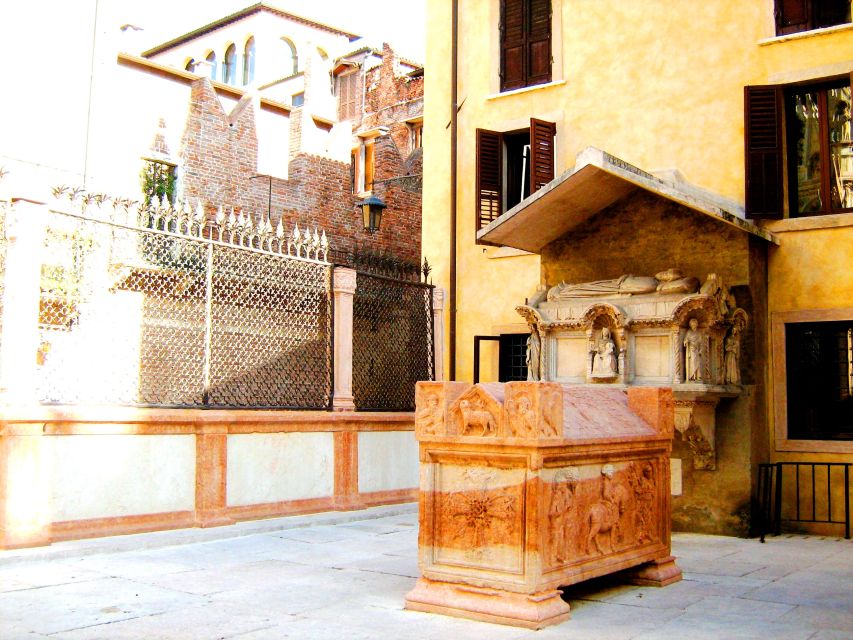
The walk then turns toward Casa di Romeo, the Arche Scaligere, Piazza Indipendenza, and Juliet’s House. You see Romeo’s house from outside and stop at the dramatic Scaligere tombs, the ornate medieval mausoleums of Verona’s ruling family.
The Arche Scaligere are especially valuable for visitors who might otherwise rush to Juliet’s balcony. Their carved details and theatrical Gothic forms show the power and ambition of the Scaliger dynasty. They also give the famous love story a more grounded setting: Romeo and Juliet belong to a literary world shaped by real rivalries and medieval families.
At Juliet’s House, the tour provides historical background on the inspiration for Shakespeare’s tragedy. This is a photo stop, not an included visit inside the museum. If you want the courtyard, museum, or balcony experience, you will need to arrange entry separately.
That distinction matters. The balcony is one of Verona’s busiest attractions, and the tour does not pretend it is the whole city. You see it as one part of a larger story, then can decide later if you want to return for a closer look.
Courtyards, the Old Market, and overlooked Verona
The Courtyard of the Old Market and nearby passages provide some of the walk’s quieter moments. These spaces reward careful looking. You may notice changes in stone, old civic structures, and the way modern Verona fits around medieval remains.
The route also passes the synagogue, the Convent of Saint Mary della Scala of the Servants of Mary, and Via Dietro Anfiteatro. These brief stops broaden the picture of Verona beyond Roman ruins and Shakespearean romance.
Some of these places receive only a couple of minutes. That means you should not expect a full architectural lecture at every stop. Instead, Fabio uses them as pieces in a larger explanation of how Verona developed and how religious, civic, and private spaces ended up close together.
This is where the tour’s central promise works best. A standard walk might point out the Arena, market square, and balcony. This route encourages you to watch for the smaller evidence between them.
Fabio’s guiding style and the value of the headsets
The strongest part of the experience is the guide’s role. Fabio is described as warm, witty, patient, and enthusiastic about Verona. He connects history with architecture and uses stories and comparisons to make different periods easier to grasp.
He also seems comfortable with mixed groups. Specific feedback describes him answering questions carefully, remembering names and home countries, engaging a teenager, and adjusting for slower walking speeds. Those details matter because a history walk can become tiring if the guide speaks only to the fastest or most experienced participants.
The headsets are more than a minor convenience. You can stand at the edge of a square, move through a street, or keep a little distance from the guide without losing the thread. They are particularly helpful if you have some hearing loss or if traffic and surrounding conversation make ordinary guiding hard to follow.
The maximum group size is 10. That is small enough for questions and personal attention, but it is not the same as a one-to-one tour. Private groups are available if you want the guide to shape the pace around your own interests.
What the $41 price gives you
At $41 per person, the tour costs more than simply walking Verona with a guidebook or map. You are paying for two hours of organized storytelling, a licensed local guide, a small group, headsets, and a route designed around connections rather than isolated sights.
The value is strongest if you are visiting Verona for the first time or have limited time. A good opening walk can save you from seeing the center as a blur of attractive façades. It also helps you decide which places deserve a later return, especially the Arena, Juliet’s House, Piazza delle Erbe, and the medieval squares.
The value is weaker if you mainly want admission to attractions. No transport, food, drinks, or entry fees are included. You are buying interpretation and orientation, not a package of tickets.
The flexible booking terms help if your schedule is uncertain. You can cancel up to 24 hours ahead for a full refund, and reserve now while paying later. The walk operates in rain or shine, so check the forecast and bring suitable clothing.
Who should take this Verona walking tour?
I would choose this tour for a first visit, a short stay, or the first morning of a longer Verona trip. It gives you the city’s main landmarks while training your eye to notice smaller architectural and historical details.
It suits people interested in Roman and medieval history, architecture, city planning, and the background behind Shakespeare’s Verona. Families can also benefit, especially if younger participants respond well to stories and questions rather than long museum labels.
You need to be ready to walk for two hours. Bring comfortable shoes and water. The tour is wheelchair accessible, but the walk still moves through streets, squares, and multiple stops, so it is sensible to confirm current needs when booking.
The available languages are English, German, Italian, and Spanish. Private and small-group formats are offered, with the standard group capped at 10 people.
Should you book it?
Book this tour if you want to understand Verona rather than simply photograph it. Fabio’s local connection, clear headsets, careful pacing, and attention to overlooked places give the walk real value, especially at the start of your stay.
Skip it if you want long interior visits, included admission tickets, or a slow study of just one monument. For most first-time visitors, though, $41 buys a useful framework for the city. Afterward, you can return to the Arena, market square, river, or Juliet’s House with sharper eyes and a better sense of what you are seeing.
FAQ
Where does the tour meet?
Meet the guide beneath the Italian flag at Verona’s Town Hall, Palazzo Barbieri, in Piazza Bra.
How long does the walking tour last?
The tour lasts two hours.
What is the price?
The price is $41 per person.
What languages are available?
The live guide is available in English, German, Italian, and Spanish.
Who guides the tour?
The guide is Fabio Massimo Rapanà, a licensed guide born and raised in Verona.
How large is the group?
The group can include up to 10 participants. Private and small-group options are also available.
Are headsets provided?
Yes. Headsets are included so you can hear the guide clearly during the walk.
Does the tour enter the Arena or Juliet’s House?
The tour includes photo stops at the Verona Arena and Juliet’s House, but entry tickets are not included.
Is the tour wheelchair accessible?
Yes, the activity is listed as wheelchair accessible.
What should you bring?
Bring comfortable shoes and water. The tour takes place rain or shine.
Can you cancel the booking?
Yes. You can cancel up to 24 hours in advance for a full refund. You can also reserve now and pay later.
Newest history tours we have reviewed in Italy
- Bologna: Street Food Tour in the Historic Center★ 4.8 · 125 reviews
- Asti Historic Town Walking Tour★ 4.5 · 82 reviews
- Ancient Rome: Archeological area Largo Argentina★ 3.9 · 49 reviews
- Ancient Rome Half-Day Segway Tour★ 4.8 · 25 reviews
- Alghero: Historic Center Walking Tour with A Local Guide★ 4.8 · 120 reviews
- Alghero: walking tours around the ancient city★ 4.6 · 30 reviews
- Amalfi Organic Lemon Tour & Tasting in the Historical Garden★ 4.9 · 46 reviews
- Alba: History Walking Tour and Food Tasting with a Local★ 4.8 · 20 reviews
History Walking Tours, compared.
History and Hauntings of Salem Guided Walking Tour
Read our review →
Freedom Trail History Small Group Walking Tour
Read our review →
Historic Charleston Guided Sightseeing Walking Tour
Read our review →
Tapas Walking Tour with Food, Wine, and History
Read our review →
Savannah History and Haunts Candlelit Ghost Walking Tour
Read our review →
A History of Terror – Belfast City Centre Walking Tour
Read our review →Browse the lists this tour appears in