
Review · CANADA HISTORY TOURS
Pete’s Historic Walking Tour
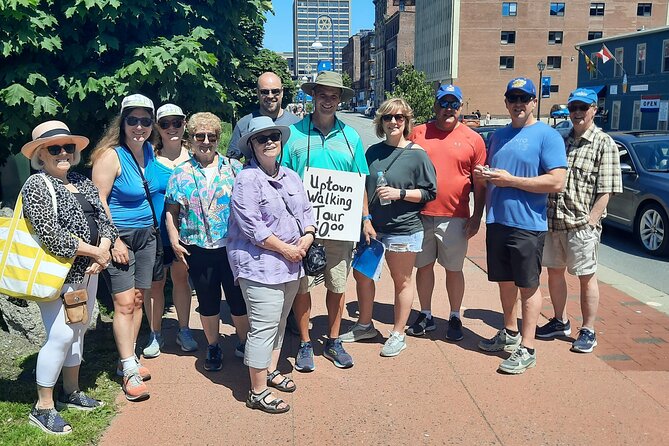
Saint John’s story is told best in small pieces: a mass of melted metal from the Great Fire, carved stone heads above an old bank, a mural tucked down an alley, and the place where Loyalists landed in 1783. Pete Ferguson connects these details with the city’s larger story, using rare photo copies and plenty of personal local lore.
I like the tour’s easy pace and the way it covers both major sights and easy-to-miss corners. I also like Pete’s direct connection to the city. He owned Pete’s Pub for 35 years, knows many people along the route, and adds stories about sports, entertainment, restaurants, and daily life.
The main caution is time. At two and a half hours, this is a talk-heavy tour with frequent stops. If you prefer to walk quickly and spend more time shopping in the City Market, parts of the presentation may feel long.
Key points to know before you book
- Pete Ferguson is the main attraction: He combines Saint John history with personal stories from a lifetime in the city and years running his own pub.
- The route covers 1783 to today: You’ll hear about Loyalist settlement, the Great Fire, immigration, industry, theatre, banking, and the future waterfront.
- The walking is gentle: The route uses sidewalks, pedways, an elevator, and escalators in some sections to avoid the steepest climbs.
- You’ll see more than the headline sights: Look for alley murals, carved stone faces, old business buildings, and the Three Sisters Lamp.
- Expect a small-group feel: The maximum is 20 people, and the guide projects his voice well enough for people at the back.
- Plan for about 2.5 hours: Morning and afternoon departures are available, but leave extra time if you want to shop or eat afterward.
Why Pete’s local point of view matters
Many city walks give you dates, names, and a quick photograph stop. Pete adds the sound of a longtime local showing you his own town. His stories include the history of Pete’s Pub, which he owned for 35 years, along with memories tied to Saint John sports and entertainment.
That personal link changes the mood. You are not only looking at a theatre or an office tower. You are hearing how a building fit into local life, who used to gather there, and how Saint John has changed.
Pete also keeps the tone light. His humor helps during the longer explanations, and he invites questions. If he does not know an answer, he has said he will research it and get back to you. His voice carries well, so you should not need a microphone in a group of the advertised size.
The strongest reason to choose this walk is simple: you get a city overview from someone who lives its history rather than reciting only textbook facts.
More History Walking Tours in Canada
- Gastown Historic Walking Food Tour
★ 5.0 · 1,863 reviews - Vancouver: Gastown Historical Walking Food Tour
★ 4.8 · 539 reviews - Quebec City: Old Quebec Historical Walking Tour
★ 4.8 · 409 reviews
Water Street and Market Square: Saint John’s starting points
The tour begins at Duke Street and Water Street. The first stop is near Furlongs liquor store, a brief introduction before the route reaches Market Square.
At Market Square, Pete explains three major moments tied to the area. You’ll learn where the Loyalist landing took place in 1783, where the Great Fire of Saint John began, and where Prince Charles and Lady Diana made a walkabout.
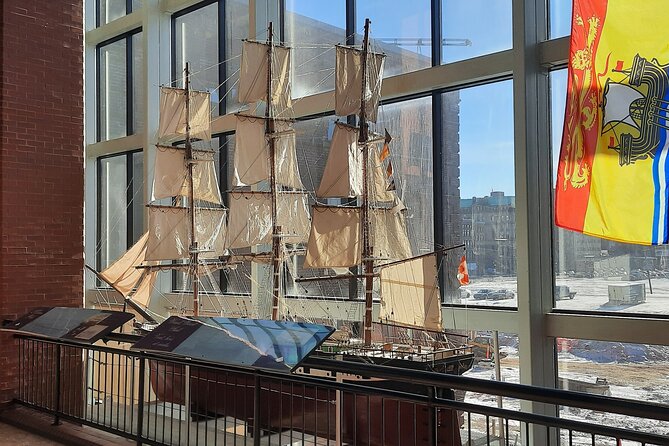
This is a useful opening because it gives you the city’s basic frame: settlement, disaster, and royal connection. Inside Market Square, Pete also points out the model of the Marco Polo sailing ship and explains the ship’s story.
The stop is free, as are all of the outdoor points along the walk. The tradeoff is that the tour spends more time hearing about the market area than browsing inside it. If shopping matters to you, use the extra few minutes offered at the City Market later, or plan a separate return visit.
City Hall and the City Market
At Saint John City Hall, the focus shifts from public events to Pete’s own connection with the city. He tells the story of Pete’s Pub and his 35 years in the business, with related stories about local sports and entertainment.
This stop will appeal most to you if you enjoy local character. It is less about grand architecture and more about the people and places that shaped Saint John’s social life.
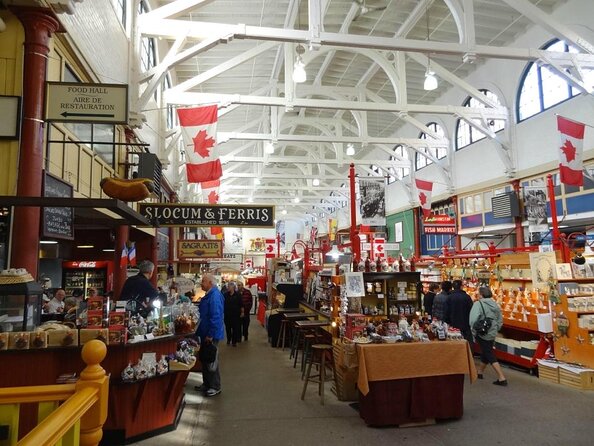
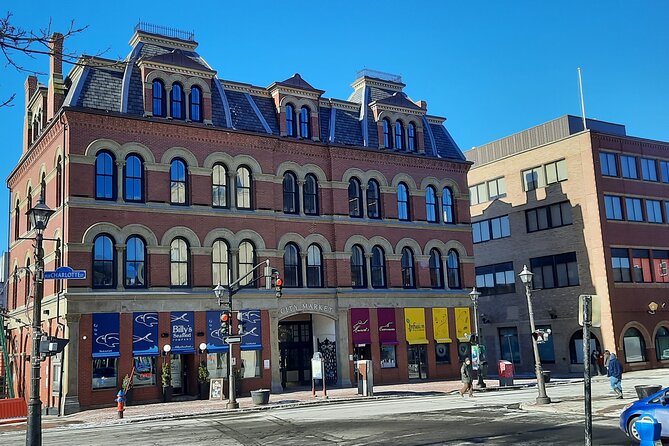
The next stop is Saint John City Market, described as the oldest continuously operating market in Canada. Pete explains the building’s architectural features and its history, then allows a few extra minutes for shopping.
That short window is helpful, but it is not a full market visit. The market may also have limited hours on Sunday, so do not depend on the tour as your only chance to browse. If you want food, gifts, or a close look at the stalls, leave room in your schedule before or after the walk.
Charlotte Street murals and King’s Square
After the market, the route turns toward Charlotte Street. Here, Pete shows large murals of famous Saint John people tucked down an alley. This is one of the easiest details to miss on your own, since it is away from the main street view.
The murals give the tour a more modern note. After several stops about older buildings and historic events, you get a look at how the city remembers its local figures today.
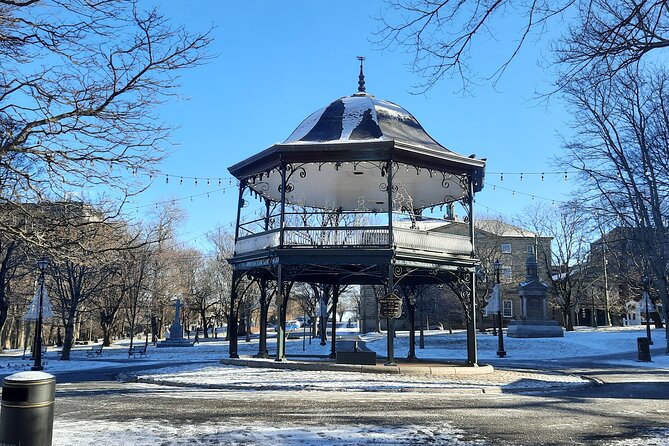
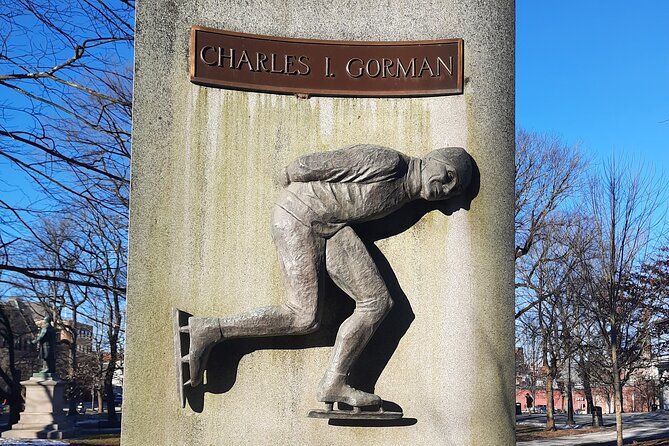
King’s Square, established in 1785, brings together several important features. Pete points out a mass of molten metal left by the Great Fire, along with the William Young statue, Charles Gorman statue, and King Edward VII Bandstand.
This is a good place to pause and let the city’s past feel physical. The melted metal is especially effective because it turns a distant fire into something you can actually see. The square also shows how public spaces collect layers of history over time.
Across from the square, the Irving Oil home office provides a short lesson in the Irving family and New Brunswick business history. Pete begins with K.C. Irving in 1899. The stop lasts only about five minutes, so it works as a compact link between the park and the next group of buildings.
More History Walking Tours in the world:
- History and Hauntings of Salem Guided Walking Tour
★ 5.0 · 14,564 reviews - Lisbon: History, Stories and Lifestyle Walking Tour
★ 4.8 · 10,902 reviews - Boston: Freedom Trail History Small Group Walking Tour
★ 5.0 · 6,450 reviews - Historic Charleston Guided Sightseeing Walking Tour
★ 5.0 · 6,216 reviews
Imperial Theatre and the Admiral Beatty building
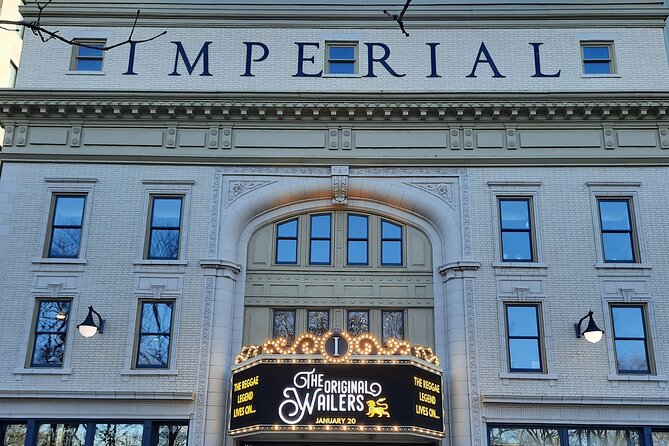
The Imperial Theatre began as a vaudeville theatre in 1913. Pete explains its history, along with features such as the chandeliers and restoration details.
The theatre stop is one of the more architectural parts of the walk. You will not simply hear that the building is old. You’ll learn how its interior features connect to its original role as an entertainment venue.
Beside it, the Admiral Beatty building recalls a luxury hotel that opened in 1925. Pete points out famous visitors, including Amelia Earhart before her transatlantic flight.
These stops are close together and work well as a pair. One tells the story of performance and public entertainment. The other brings in travel, hotels, and famous names. If you prefer constant movement, this section may feel slow because the guide spends time facing the buildings and explaining their details.
For me, that pause is worthwhile if you enjoy architecture and local stories. If you want more time inside attractions, remember that this is an exterior-focused city walk, not a theatre tour.
Trinity Church and the Loyalist story

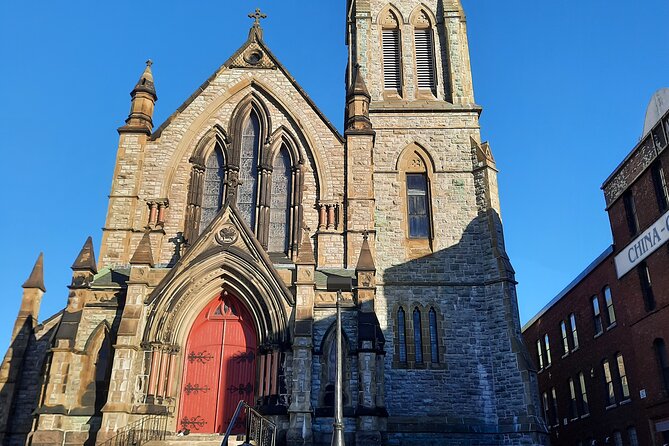
Trinity Church is one of the tour’s central stops. Pete describes the features and history of this Loyalist church, including four main artifacts held there.
The church adds depth to the opening discussion of the 1783 Loyalist landing. You are not only told that Loyalists arrived in Saint John. You see how their religious and civic presence became part of the city’s built fabric.
The stop lasts about 15 minutes, making it one of the longer pauses. That matters for pacing. You’ll spend a fair amount of the tour listening while standing or sitting near points of interest, rather than walking continuously.
A short section on Germain Street follows. The street is named for Lord George Germain, whose story Pete explains. Across from Trinity Church, the Union Club dates to 1884 and offers another look at Saint John’s business and social life.
Princess Street and preservation in action
At Germain and Princess streets, the route turns toward Prince William Street. Pete points out a newer building designed to conform to preservation standards.
This is a useful stop because it shows preservation as a current decision, not only a story about old buildings. You can see how new construction can be shaped by the historic character around it.
Next comes the Ritchie building, where Pete explains its features. The stop is brief, but it gives you a way to read Saint John’s streets: look up, compare building fronts, and notice where newer work meets older structures.
The route then goes downhill toward Prince William Street. The walk is described as easy, and several people have found the use of pedways, escalators, and an elevator helpful in avoiding the steepest hills. Still, you should bring comfortable shoes and be ready for a walk of more than two hours.
Prince William Street, once called Canada’s Wall Street
Prince William Street is one of the tour’s richest sections. Pete describes the street as once known as the Wall Street of Canada and points out a string of historic buildings.
You’ll see Chubb’s Corner with its carved stone heads, the old City Hall, the former post office, the Jarvis building, the Bank of New Brunswick Palatine building, and the Seamen’s Mission.
This part rewards anyone who likes architecture with a story attached. The buildings are not presented as isolated facades. Pete explains their former roles and shows how banking, government, mail, shipping, and trade shaped the street.
Across from the Seamen’s Mission is a mural about Partridge Island. Pete uses it to explain immigration and quarantine, with particular attention to Irish arrivals during the Potato Famine.
That story gives the walk a more serious turn. Saint John’s port was not only a place of commerce and cruise ships. It was also a point of arrival, illness, separation, and hope. The mural helps you connect the city’s waterfront to the people who passed through it under difficult conditions.
The Three Sisters Lamp and the waterfront finish
At the foot of Prince William Street, the tour reaches the Three Sisters Lamp in St. Patrick Park. Pete explains the reason for the name and how the lamps helped save lives.
This is a small feature with a practical purpose, exactly the kind of detail that can disappear if you explore alone. It also fits the wider theme of the tour: Saint John’s identity is built from many modest objects and places, not only landmark buildings.
The final stop is near the Marco Polo cruise terminal and Area 506 Waterfront Container Village. Pete explains how the cruise industry began in Saint John and how the waterfront is developing.
The ending is useful if you are visiting by ship or planning to spend time near the port. It also gives the tour a present-day finish after beginning with the Loyalist landing in 1783.
The booking details say the activity ends back at the meeting point, while the route description places the finish at the Marco Polo terminal and Area 506. Confirm the exact end arrangement when you book, especially if you have a ship departure, meal reservation, or transport waiting.
How much walking and standing should you expect?
The route lasts about two hours and 30 minutes, but it is not a strenuous hike. The group stops often, and some sections can use Saint John’s pedway system, escalators, and an elevator.
The mix of walking and listening works well for people who want a gentle orientation to uptown Saint John. It may also suit families, older visitors, and anyone who wants to avoid the steepest hills. Service animals are allowed, pet dogs are welcome, and special-needs children are free.
The main physical issue is not speed or distance. It is the amount of time spent standing at separate locations. Wear comfortable shoes, dress for the weather, and consider asking about a seat during longer explanations if needed.
The tour requires good weather. If poor weather cancels it, you are offered another date or a full refund.
Group size, timing, and the $33.80 price
At $33.80 per person, the tour is a fair buy for a two-and-a-half-hour walk led by a local guide. You are paying for context and storytelling, not admission tickets. Every listed stop has free admission, so the value depends on how much you want a guide to explain what you are seeing.
The maximum group size is 20. That is small enough to hear Pete and ask questions, though the actual feel will depend on the number booked. Morning and afternoon times give you useful flexibility, especially if you are fitting the walk around a cruise call or other plans.
The tour is commonly booked well ahead, about 44 days in advance on average. If your schedule is fixed, booking early is sensible.
Free cancellation is available up to 24 hours before the start time. Changes or cancellations inside that window are not accepted for a refund.
Who will enjoy Pete’s tour most?
I would choose this walk if you want:
- A broad first look at Saint John, from 1783 to the present.
- Personal local stories, not only dates and building names.
- An easy city walk with frequent stops and possible use of pedways.
- Architecture and civic history, especially churches, theatres, banks, markets, and public squares.
- A guide who welcomes questions and keeps the tone friendly and humorous.
- A port-friendly activity that finishes near the cruise terminal and waterfront area.
I would hesitate if you want a fast-paced walk, long shopping time, or entry into several attractions. The City Market stop is short, the theatre is viewed as a historic building rather than explored as a full attraction, and Pete’s storytelling takes up much of the time.
Should you book Pete’s Historic Walking Tour?
Book it if you want Saint John explained by a proud hometown guide who can connect a melted piece of metal, a church artifact, a theatre chandelier, a bank facade, and a waterfront mural into one understandable story.
Skip it if your priority is independent browsing or a shorter route. The two-and-a-half-hour length is the one real concern, especially for anyone who prefers more walking and less listening.
For most first-time visitors, the price is reasonable and the coverage is strong. Pete’s humor, clear voice, local contacts, and personal memories are the reason to choose this tour, while the city’s smaller details are the reward.
FAQ
Where does Pete’s Historic Walking Tour begin?
The listed starting point is Duke Street and Water Street in Saint John, New Brunswick.
Where does the tour finish?
The route description places the finish at the Marco Polo cruise terminal and Area 506 Waterfront Container Village. The booking information also says the activity ends back at the meeting point, so confirm the exact end point when booking.
How long does the tour last?
The tour lasts approximately two hours and 30 minutes.
How much does the tour cost?
The listed price is $33.80 per person.
Is the tour offered in English?
Yes. The tour is offered in English.
Are morning and afternoon departures available?
Yes. Both morning and afternoon tour times are available.
How large can the group be?
The maximum group size is 20 travelers.
Is this a strenuous walk?
No. The walk is described as easy, with frequent stops. Some groups use pedways, escalators, and an elevator to avoid steep hills, but you should still wear comfortable shoes.
Are dogs allowed?
Pet dogs are welcome, and service animals are allowed.
What happens if bad weather cancels the tour?
If poor weather causes a cancellation, you are offered a different date or a full refund.
Can I cancel for a full refund?
Yes. You can cancel at least 24 hours before the experience start time for a full refund. Cancellations or changes made less than 24 hours before the start time are not accepted.
Newest history tours we have reviewed in the world
- Bilbao Historical Tour in small group★ 4.7 · 52 reviews
- Bologna: Street Food Tour in the Historic Center★ 4.8 · 125 reviews
- CEBU: Cebu City Heritage and Uphill Guided Tour★ 4.2 · 31 reviews
- Bishkek : City Tour (History, Architects, Statues & Culture)★ 4.9 · 54 reviews
- Blenheim: Omaka Aviation Heritage Centre Admission Ticket★ 4.9 · 31 reviews
- Berlin: Nazi History Walking Tour★ 4.8 · 33 reviews
- Best of Baku: 4-Hour City Tour Historic and Modern Landmarks★ 4.7 · 63 reviews
- Belfast: Best of Belfast History, Culture & Art Walking Tour★ 4.9 · 158 reviews
History Walking Tours, compared.
History and Hauntings of Salem Guided Walking Tour
Read our review →
Freedom Trail History Small Group Walking Tour
Read our review →
Historic Charleston Guided Sightseeing Walking Tour
Read our review →
Tapas Walking Tour with Food, Wine, and History
Read our review →
Savannah History and Haunts Candlelit Ghost Walking Tour
Read our review →
A History of Terror – Belfast City Centre Walking Tour
Read our review →Browse the lists this tour appears in