Review · ROME HISTORY TOURS
Ancient Ostia Antica Semi-Private Day Trip from Rome by Train with Guide
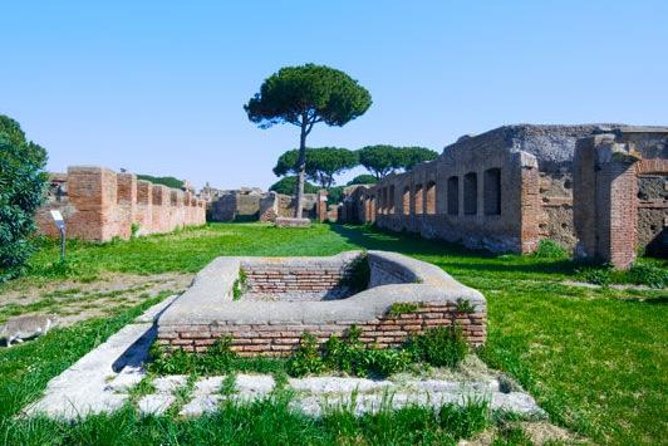
Ostia Antica gives you something Rome’s center cannot: a full ancient town where you can walk past shops, apartments, baths, temples, and a theater without crossing modern traffic. The 2.5-hour guided walk makes this huge archaeological park easier to understand, especially if Roman ruins usually blur into a jumble of stones.
I like the simple train ride from Piramide and the fact that entry and return tickets are included. I also like the small maximum of 12 people, which gives you a better chance to hear the guide and ask questions. The main drawback is the walking: uneven ground, stairs, heat, and a fairly brisk pace can be hard if you have limited mobility.
Key points to know before booking
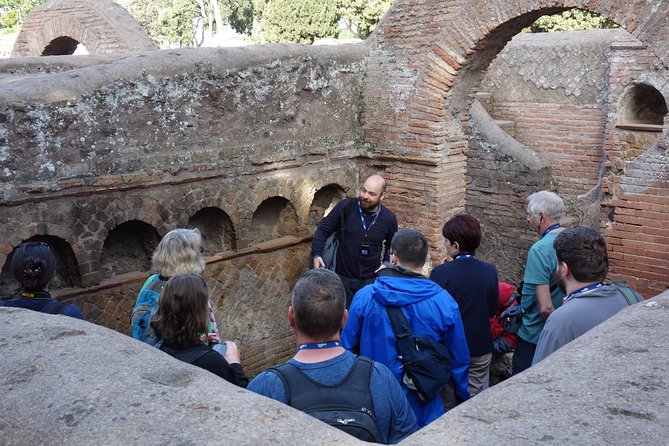
- A complete ancient port city: See the Decumanus Maximus, Baths of Neptune, amphitheater, taverns, homes, temples, and public buildings.
- An easy half-day from Rome: Meet near Piramide, travel by train with your guide, and return to the same meeting area.
- A small group of up to 12: The size allows more conversation than a large coach tour.
- A guide makes the ruins readable: Alberto, Barbara, Laura, Rob, Cat, and others have been praised for clear storytelling and good pacing.
- A good alternative to Pompeii: Ostia is closer to Rome and focuses on ordinary Roman life rather than one dramatic disaster.
- Prepare for outdoor walking: Bring water, wear sturdy shoes, and expect uneven ground with limited shade.
Why Ostia Antica makes a good change from central Rome
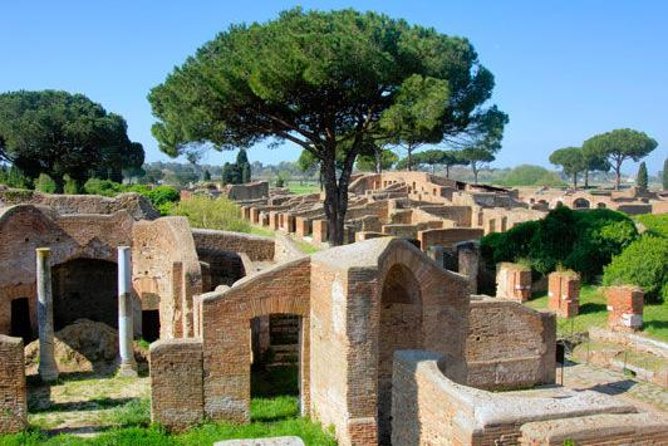
Ostia was ancient Rome’s port city, and its ruins show how ordinary people lived. You are not looking only at grand temples and monuments. You can pass storefronts, apartments, public baths, taverns, religious buildings, and working streets.
That everyday angle is the strongest reason to choose this excursion. Rome’s famous center can make ancient life seem like a parade of emperors, senators, and gods. At Ostia, your guide can point out the practical details of town life: where people gathered, how businesses worked, and how public facilities shaped the day.
The site dates as far back as the fourth century BC and later grew into a major city. At its height, it was home to more than 100,000 people. The ruins are spread across a large area, so a first visit can feel confusing without a plan. A good guide solves that problem by taking you directly to the main sights and explaining how they fit together.
You will not see every corner in four hours. That is not a flaw. It is the tradeoff that makes this a useful half-day outing instead of an exhausting full-day march.
More Ancient History Tours in Italy
- Colosseum: Underground and Ancient Rome Tour
★ 4.7 · 12,691 reviews - Colosseum & Ancient Rome with Arena Floor Option I Max 6 People
★ 5.0 · 3,306 reviews - Rome: Colosseum, Ancient Rome Tour or AudioGuided Tour
★ 4.4 · 2,879 reviews
Meeting near Piramide and riding out of Rome
The tour begins at Piazza Ostiense, 11, near the Piramide metro station. You meet your English-speaking guide there, receive your round-trip train ticket, and travel together toward Ostia Antica.
This arrangement is practical because hotel pickup is not included. You need to make your own way to the meeting point, and the instructions deserve careful reading. One useful tip is to arrive about 20 minutes early, especially if you are unfamiliar with Rome’s metro and station area.
The train ride is part of the appeal. You are not sealed inside a tour bus watching Rome pass by through tinted windows. You travel as people living in Rome do, with your guide handling the ticket details and helping the group stay together.
The journey also keeps the price sensible. At $59.26 per person, the tour includes the train fare, archaeological-site admission, and guide. You are paying for a guided half-day outing rather than simply hiring transport. If you already feel comfortable navigating Italian trains and reading archaeological maps, you could visit independently. But the included admissions and direction make the organized option a fair deal for a first visit.
Walking the Decumanus Maximus
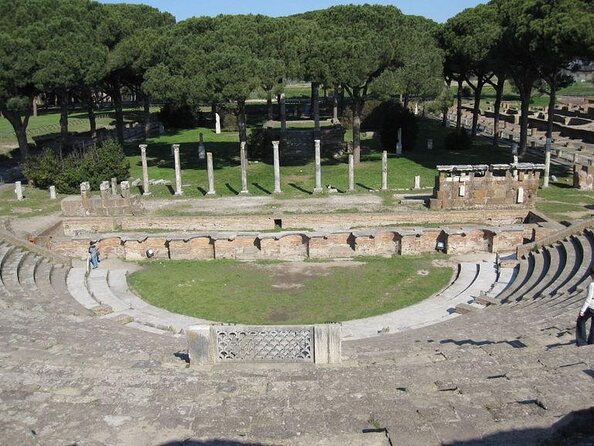
Once inside the archaeological park, the main walk lasts about two and a half hours. The route centers on the Decumanus Maximus, Ostia’s principal street.
This broad ancient road gives you a useful sense of scale. Instead of seeing isolated ruins, you begin to understand Ostia as a functioning town. Streets connect public buildings with commercial spaces and homes. Your guide can help you imagine the movement of people, goods, and business through the city.
Look closely at the walkways and surviving statues. Some details are easy to miss if you move quickly, and this is where a guide earns the fee. The strongest guides on this tour have been praised for explaining Roman life in a clear, entertaining way without burying the group in dates.
Alberto has received repeated praise for his pacing, humor, and ability to explain complicated subjects simply. Barbara has been described as warm and engaging, while Rob has been singled out for keeping the group comfortable on a very hot day. Cat and Laura have also been praised for making the site approachable and well organized.
Guide quality can vary, of course. Several departures have received poor marks for dull delivery or for moving too fast. The site itself remains worthwhile, but your enjoyment will depend partly on how well your guide reads the group.
The Baths of Neptune and their sea-god mosaic
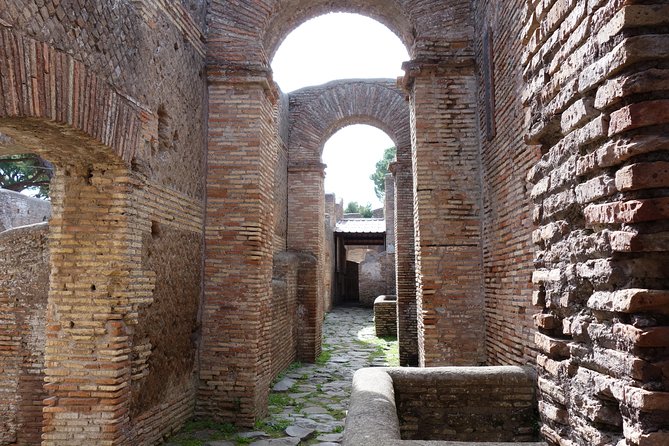
The Baths of Neptune are one of the visual highlights. The complex is topped by a large mosaic showing Neptune, the Roman god of the sea, riding a four-horse chariot.
This is more than a quick photo stop. The baths show how important public bathing was in Roman society. They were places for washing, exercise, conversation, and social contact. Ask your guide to explain how the rooms worked and how the mosaics fit into the building’s purpose.
The mosaic is particularly helpful for understanding how decoration carried meaning. You can look at the image as artwork, but you can also connect it to Ostia’s identity as a port city linked to the sea.
The site is exposed, and hot weather can make standing still uncomfortable. Good guides have found shady places for explanations when possible, but shade is not guaranteed everywhere. I would bring water and use the refill opportunities pointed out by the guide.
More Ancient History Tours in Rome
- Colosseum Underground & Ancient Rome Guided Tour
★ 4.5 · 2,590 reviews - Pantheon Elite Guided Tour – Rome’s Iconic Ancient Temple
★ 5.0 · 1,447 reviews - Ancient Rome: Colosseum Underground Group Tour
★ 4.5 · 1,059 reviews - Colosseum Express Guided Tour and Ancient Rome Admission Included
★ 4.0 · 1,008 reviews
Sitting in the ancient amphitheater
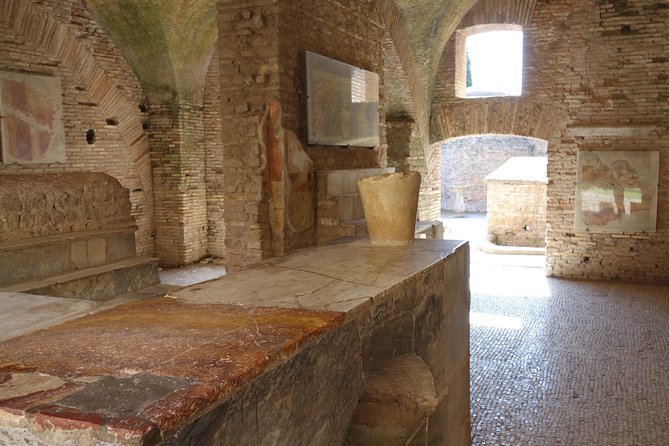
Ostia’s amphitheater dates to 12 BC and held about 3,500 spectators. The scale is large enough to make the building feel like a real public venue, yet small enough for you to take in its shape without the overwhelming crowds found at Rome’s major monuments.
You can sit in the theater and look across the seating area toward the stage. This is one of the easiest places to picture a Roman crowd gathering for entertainment.
The amphitheater also gives the tour a welcome change of pace. After walking along streets and examining walls, you get a broad view and a chance to rest. Families may appreciate this stop, particularly if younger participants are beginning to lose interest in smaller archaeological details.
Several guides have been praised for keeping children and teenagers involved by explaining the ruins through daily life rather than a long list of emperors and dates. If your group includes a teenager who is unsure about archaeology, the theater and shops are likely to be more accessible entry points.
Shops, apartments, temples, and public life
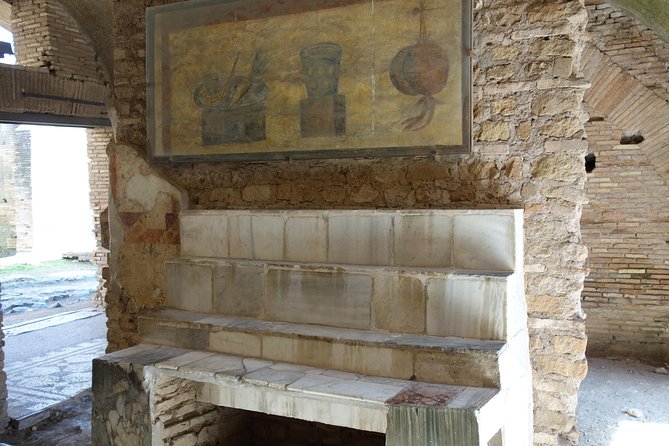
The most revealing part of Ostia may be the smaller buildings. You pass ruined shops and living quarters that help you see the city as a place where people worked and lived, not merely a collection of ceremonial monuments.
The site includes taverns, public baths, the Forum of the Corporations, and the Collegiate Temple. Each adds another piece to the city’s story. The Forum of the Corporations is especially useful for understanding Ostia’s commercial role, while the smaller rooms help show how dense and active the city once was.
A guide can also help you notice how archaeologists interpret the remains. One highly rated departure included an explanation of the work done to preserve and understand the town. That kind of context matters because some ruins are easy to misread when you are standing among them without a plan.
You may also have the option to continue exploring after the main guided portion. The archaeological park includes a museum, and one guide specifically gave the group the choice of leaving or staying longer to see more. Confirm the practical details with your guide on the day, since the fixed tour time is built around the group’s return to Rome.
How the small group changes the experience
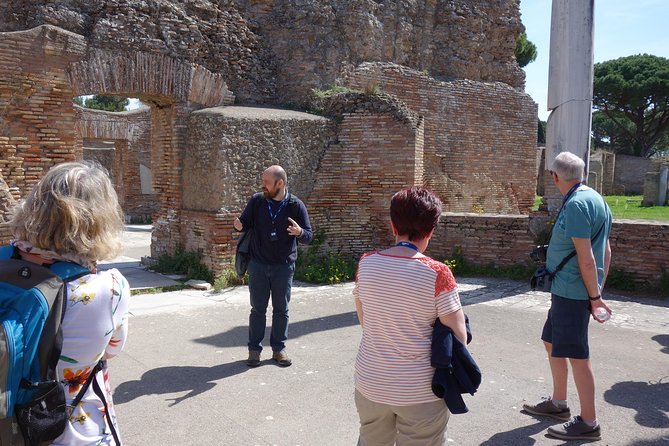
The maximum group size is 12 people. That is not private touring, but it is small enough to feel personal when the guide is effective.
You should be able to hear explanations more easily than in a large group, and asking a question is less awkward. A guide can also adjust the pace slightly, pause for water, or point out a detail that matches your interests.
The best feedback has focused on guides who combine information with patience. Alberto has been praised for giving clear expectations, keeping the group moving, and adding humor without wasting time. Laura Luongo was praised for adjusting to crowds and helping the group keep together. Alfredo was noted for being patient and making a hot day easier.
Still, do not expect a private archaeological consultation. The tour has a fixed route and a fixed return. If you want to spend an hour studying one mosaic or photographing every street, an independent visit may suit you better.
Walking conditions and who should think twice
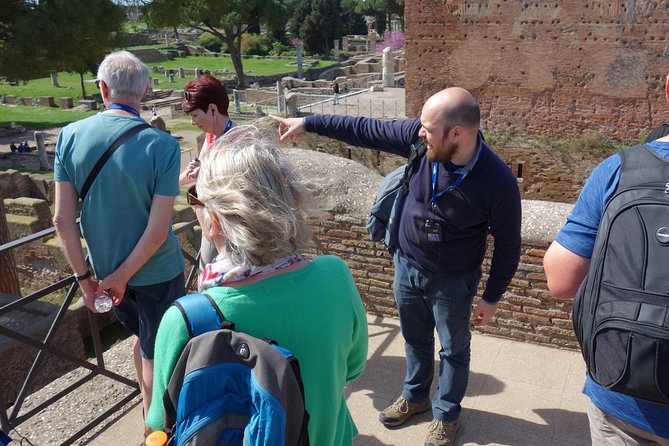
The tour requires a moderate level of physical fitness. You will transfer on and off a train, walk for around two and a half hours, negotiate uneven ground, and encounter stairs.
This is not the right choice if you need a slow, fully accessible route. One poor experience involved a participant with a knee problem who felt the guide did not allow enough time to keep up. That is a serious consideration, not a minor complaint. If you use a cane or need frequent breaks, contact the operator before booking and ask what accommodation is possible.
Heat is another issue. The site is outdoors, and one summer departure took place in temperatures around 95 degrees Fahrenheit. Bring water, a hat, sunscreen, and shoes with good grip. Loose sandals are a poor match for rough ancient paving.
The tour can also run slightly longer than planned because of transport or site conditions. Do not schedule a tight appointment immediately after the stated four-hour finish.
Why the $59.26 price can be worthwhile
The price is reasonable for a four-hour guided excursion if you value convenience and interpretation. Train tickets, entrance admission, and an English-speaking guide are included, so the advertised rate does not hide the main costs.
The strongest value comes from saving you the trouble of planning the route through a very large site. You can arrive by train with someone who knows where to go, see the main buildings, and return to Rome without working out the transport on your own.
The value is less certain if you are an experienced independent visitor. The train is described as easy to use, and you can buy an audio guide at the entrance. In that case, you might prefer paying only for transport and admission, then setting your own pace.
I would choose this tour for a first visit, a short stay in Rome, or a family group that needs structure. I would choose independent exploration for a repeat visit or for anyone who wants several hours of quiet study.
A useful add-on near the coast
Ostia Antica is close enough to the coast that some participants have continued by train to the beach afterward. The tour itself returns to Rome, so this is not part of the official experience, but the idea can work if you have extra time and confirm the train details locally.
For most people, I would not plan this as a fixed part of the day. The archaeological walk can run a little long, and hot weather may leave you ready for a break. Still, families with teenagers may like having the beach as an optional extension rather than spending the entire day among ruins.
Cancellation and booking details
You receive confirmation when booking, and the experience is offered in English with a mobile ticket. Free cancellation is available up to 24 hours before the start time. Changes or cancellations inside that window are not accepted for a refund.
The tour requires suitable weather and a minimum number of participants. If poor weather or low enrollment cancels the outing, you are offered another date or experience, or a full refund.
Since no hotel pickup is included, allow time to reach Piazza Ostiense, 11. The end point is the same meeting area after the return train.
Should you book the Ostia Antica train tour?
I would book it if you want to see how ordinary Romans lived, prefer a half-day outing over a full Pompeii excursion, and like having transport and admission arranged. Ostia is large enough to reward a guide, and the small group keeps the walk manageable.
I would skip it if you have significant mobility limits, dislike outdoor walking, or want complete control over your time. The site is fascinating on its own, but an uneven pace or uninspiring guide can weaken the experience.
For most first-time visitors with four free hours, this is a sensible choice. Arrive early, wear sturdy shoes, bring water, and treat the guide as part of the value. If you are fortunate enough to have a guide with the clear storytelling style associated with Alberto, Barbara, Rob, Cat, or Laura, Ostia can become one of the most memorable history stops outside central Rome.
FAQ
How long does the Ancient Ostia tour last?
The experience lasts about four hours in total. Around two and a half hours are spent walking through the archaeological site, with the remaining time used for meeting, train travel, and returning to Rome.
Where does the tour begin?
The meeting point is Piazza Ostiense, 11, 00154 Rome, near the Piramide metro station.
Where does the tour end?
The experience ends back at the original meeting point in Rome.
Is transportation included?
Yes. The guide provides round-trip train tickets from Rome to Ostia Antica.
Is admission to Ostia Antica included?
Yes. The entrance ticket to the archaeological site is included.
What language is the tour offered in?
The tour is offered in English.
How large is the group?
The group has a maximum of 12 participants.
Is hotel pickup included?
No. You must make your own way to the meeting point near Piramide.
Is the tour suitable for people with limited mobility?
The tour requires moderate physical fitness and includes train transfers, uneven ground, stairs, and about two and a half hours of walking. It may be difficult for anyone with limited mobility.
Can I cancel for a full refund?
Yes, if you cancel at least 24 hours before the local start time. Cancellations or changes made less than 24 hours in advance are not refunded.
More Ancient Rome and Colosseum Tours in Rome
- Rome: Colosseum with Arena, Roman Forum and Palatine Guided Tour
★ 4.0 · 5,598 reviews - Colosseum with Arena, Roman Forum and Palatine Hill Guided Tour
★ 4.5 · 3,526 reviews - Rome: Colosseum Arena, Roman Forum & Palatine Hill Tour
★ 4.5 · 1,874 reviews - Colosseum, Roman Forum & Palatine Hill Guided Tour
★ 4.5 · 1,568 reviews
More Private History Tours in Italy
- Colosseum & Ancient Rome Semi-Private Tour
★ 5.0 · 208 reviews - Private Rome Food Tour in the Historic Centre with 8+Tastings
★ 5.0 · 135 reviews - Ancient Appian Way PRIVATE Bike Tour
★ 5.0 · 89 reviews - Ancient Pompeii Private Tour: Skip the Line & Kid-Friendly Option
★ 5.0 · 167 reviews
Newest history tours we have reviewed in Rome
- Ancient Rome: Archeological area Largo Argentina★ 3.9 · 49 reviews
- Ancient Rome Half-Day Segway Tour★ 4.8 · 25 reviews
- Colosseum Forum Ancient Rome Small Group Tour for Kids Families★ 5.0 · 198 reviews
- VIP Colosseum Underground and Ancient Rome Small Group Tour★ 4.5 · 332 reviews
- Colosseum & Ancient Rome Semi-Private Tour★ 5.0 · 208 reviews
- Small-Group Rome to Pompeii & Amalfi: Day of History & Sea★ 5.0 · 239 reviews
- Colosseum & Ancient Rome Guided Walking Tour★ 5.0 · 332 reviews
- Ancient Rome at Twilight Walking Tour★ 5.0 · 276 reviews
Ancient Rome & Colosseum Tours, compared.
Colosseum: Underground and Ancient Rome Tour
Read our review →
Colosseum with Arena, Roman Forum and Palatine Guided Tour
Read our review →
Colosseum with Arena, Roman Forum and Palatine Hill Guided Tour
Read our review →
Colosseum & Ancient Rome with Arena Floor Option I Max 6 People
Read our review →
Colosseum, Ancient Rome Tour or AudioGuided Tour
Read our review →
Colosseum Underground & Ancient Rome Guided Tour
Read our review →
Colosseum Arena, Roman Forum & Palatine Hill Tour
Read our review →