
Review · NEW YORK CITY HISTORY TOURS
American Museum of Natural History Admission Ticket
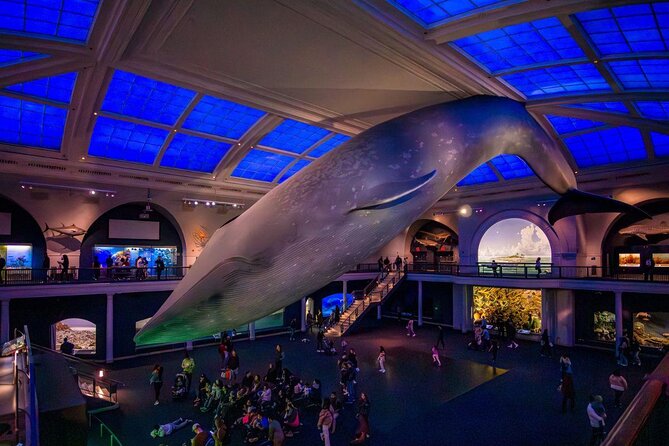
The American Museum of Natural History packs 13 billion years of the universe into one enormous Manhattan building. You can face a Tyrannosaurus Rex, stand beneath a 94-foot blue whale, and compare yourself with Asian elephants without leaving the Upper West Side.
I like the sheer range here, from dinosaurs and gems to ocean life and space science. I also like the family-friendly mix of spectacle and learning, since small children, teenagers, and adults can all find a favorite hall. The main concern is ticket handling: some visitors have spent a long time exchanging a voucher for the actual museum ticket, so buying directly from the museum may be simpler.
Key points to know before you go

- The blue whale is 94 feet long: Milstein Hall of Ocean Life has one of the museum’s most memorable displays.
- More than 40 permanent halls are included: General admission covers the main collection, the Rose Center for Earth and Space, and the Richard Gilder Center.
- Allow at least three hours: Four levels and long walks between halls make a quick visit feel rushed.
- Extra attractions cost more: The planetarium space show, giant-screen film, butterfly vivarium, Invisible Worlds, and other ticketed exhibitions are not part of general admission.
- Bring a paper map: The building can feel confusing, especially on a busy day, and the map helps you choose priorities.
- Voucher does not always mean instant entry: You may need to exchange it at the museum before entering.
Why this museum deserves at least half a day
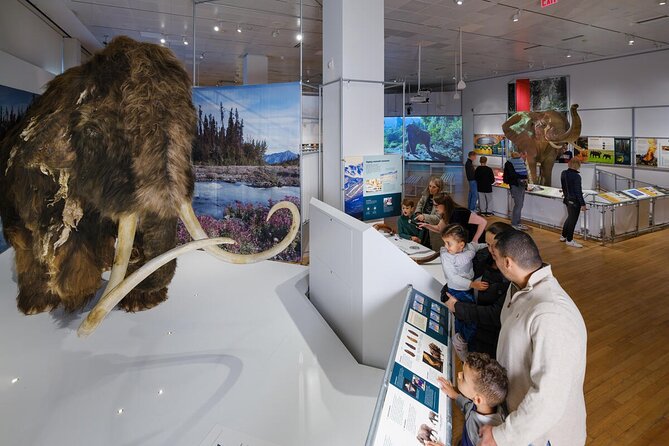
I think of this as several museums joined under one roof. You can spend an hour with dinosaurs, move into the animal halls, then shift from Earth science to galaxies and the early universe.
The admission price is $37 per person. That is fair if you plan to stay for three or four hours, and it becomes better value if you use the full-day access and return to favorite halls. The ticket lets you explore the permanent galleries at your own pace rather than follow a fixed group schedule.
Still, do not assume that every attraction inside the building is included. General admission covers more than 40 permanent exhibition halls, the Rose Center for Earth and Space, and the Richard Gilder Center for Science, Education, and Innovation. It does not include ticketed exhibitions, Invisible Worlds, the butterfly vivarium, the giant-screen film, or the Hayden Planetarium Space Show.
That distinction matters for families. Children may see signs for the planetarium or butterfly display and expect them to be part of the basic ticket. If those are priorities, check the add-on cost before you arrive.
More Museum and Gallery History Tours in the USA
- New York City: American Museum of Natural History Ticket
★ 4.5 · 15,447 reviews - Guided African American History Tour with Reserved Museum Entry
★ 4.5 · 1,180 reviews - Chicago: Field Museum of Natural History Ticket or VIP Tour
★ 4.7 · 717 reviews
Entering on Manhattan’s Upper West Side
You make your own way to the museum at a time that suits your schedule. It is on the Upper West Side and near public transportation, so it fits well into a day that also includes Central Park.
The major practical issue is the voucher. A voucher may need to be converted into an admission ticket at the museum. Several people have reported waiting in the ticketing line, in some cases for a very long time, while visitors with tickets purchased directly from the museum moved faster.
I would treat this as the biggest weakness of booking this particular option. The experience inside can be excellent, but a family with young children may not want to begin the day with an hour-long wait. Before paying, compare the third-party price and conditions with the museum’s own checkout process. If you already have this voucher, arrive prepared to exchange it and allow extra time.
After admission, pick up a paper map at an entrance, information desk, or membership desk. The building is large, and the signs do not always create an obvious route. A map lets you choose a sensible order instead of walking back and forth across four levels.
Dinosaurs, fossils, and the thrill of scale
The dinosaur halls are an obvious first stop, especially for children. The Tyrannosaurus Rex skeleton in the Hall of Saurischian Dinosaurs gives the museum its big-screen moment, but the value is not only in seeing one famous predator.
The displays help you compare body size, movement, and the long span of prehistoric time. You can make this section as simple or as detailed as you like. Young children may focus on teeth and claws, while older children and adults can spend longer with the scientific displays.
The dinosaur area is also one of the places where time disappears. If you have only two hours, set a limit before entering. If you have three or four hours, give the fossils a proper block of time and then move on before everyone tires.
Some exhibition halls may be closed or partly closed for refurbishment at the time of your visit. That can affect the value of a fixed itinerary, since this is a self-guided admission rather than a guaranteed route through every display. Check current museum information if a particular dinosaur or fossil hall is the main reason for your visit.
The animal halls, from elephants to ocean giants

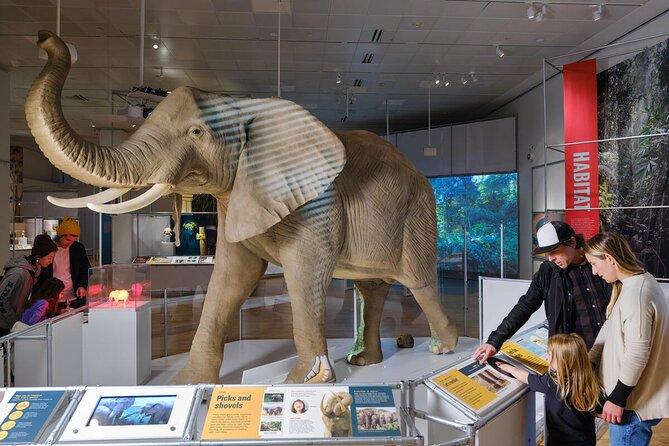
The Akeley Hall of African Mammals is one of the museum’s signature spaces. The Asian elephants are especially striking, and the lifelike animal displays make this a strong choice for children who learn best through visual scenes rather than text panels.
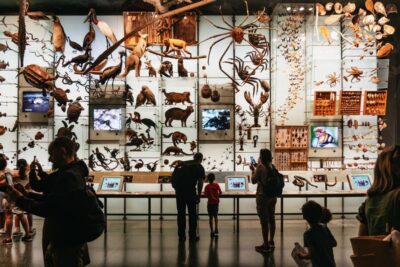
I like this part of the museum because it gives you a quick sense of the variety of animal life. You can move from large mammals to birds and other creatures without needing to understand a complicated layout first.
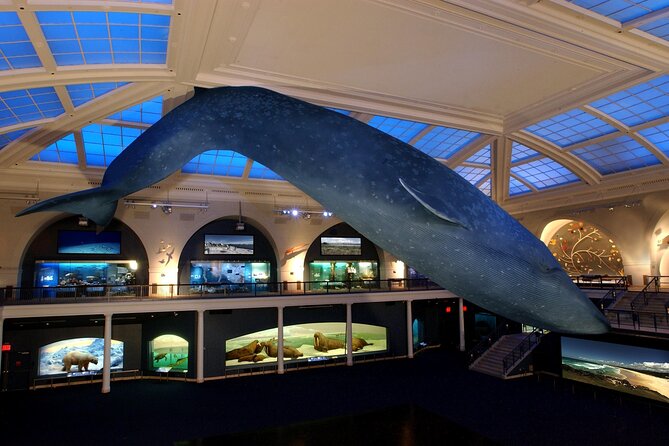
Milstein Hall of Ocean Life brings a different kind of scale. The 94-foot blue whale model dominates the room and gives children an easy way to understand how large the animal is. It also works for adults who want a memorable, less technical stop between the fossil and space halls.
The animal displays are one reason to bring a paper map and make a short list of must-sees. The building can be hot and crowded, especially after the first half hour on a busy day. Long periods on hard floors can also wear you down, so plan a pause before everyone reaches the point of no return.
Same streets, a different century:
- History and Hauntings of Salem Guided Walking Tour
★ 5.0 · 14,564 reviews - Charleston’s Old South Carriage Historic Horse & Carriage Tour
★ 5.0 · 10,023 reviews - Beneath The Streets Underground History Tour
★ 4.5 · 8,006 reviews - Big Island in a Day: Volcanoes Waterfalls Sightseeing and History
★ 5.0 · 6,569 reviews
Rose Center and Richard Gilder Center

The Rose Center for Earth and Space takes you from animals and fossils to the larger story of the universe. General admission includes access to the center, so you can make it the final section of a visit focused on Earth, space, and the museum’s 13-billion-year story.
The Richard Gilder Center for Science, Education, and Innovation is also included with general admission. It adds a newer science-focused part to the visit and gives you another reason not to treat the museum as only a dinosaur attraction.
Keep the ticket limits in mind here. Access to the Rose Center does not mean that the Hayden Planetarium Space Show is included. The space show is a separate ticketed experience, as are the giant-screen film and several other special attractions.
If your family wants the planetarium, ask about it before entering or plan it as a separate purchase. One family described wishing they had added it, largely because the extra-ticket rule was not clear in advance.
How long should you spend inside?
The advertised visit length is about three to four hours, but the admission is presented as a full-day pass. Both ideas make sense. Three hours is enough for a purposeful first visit, while a full day gives you time to see more halls, stop for food, and return to sections that caught your attention.
I would use these time plans:
- Two hours: Choose two or three priorities, such as dinosaurs, African mammals, and the blue whale.
- Three to four hours: Add the Rose Center, Gilder Center, and one or two more exhibition halls.
- A full day: Take breaks, eat inside or nearby, and spend longer with the sections that interest your group.
The museum is physically demanding because it involves substantial walking and hard floors. Strollers and ADA access are supported, which helps families and visitors with mobility needs, but a large building still takes effort to cross.
The museum can also become crowded and warm. An early arrival may help, but even the first part of the day can fill quickly. If you visit during a busy period, use the map immediately and head first to the halls that matter most to you.
Food, breaks, and a nearby Central Park plan
A museum this large works best when you plan a real break. The food court has some gluten-free choices, including gluten-free pizza and brownies, which is useful for families managing dietary needs.
You do not need to see every hall to have a worthwhile visit. In fact, trying to cover all four levels without stopping can turn an exciting day into a march over hard floors. I would choose a few major exhibits, take a food break, then decide if everyone has enough energy for more.
The Upper West Side location also makes this a good partner for Central Park. You can spend the morning with science and natural history, then head outside for a change of pace. That combination works especially well for children who need room to move after several indoor hours.
Who will enjoy this admission most?

Families with school-age children and teenagers are the clearest match. The dinosaurs provide an immediate hook, while the animal halls, space displays, and science sections give older children more to think about. The museum also works for adults, couples, solo visitors, and multigenerational groups because you can choose your own pace.
It is a good choice if you want:
- A flexible museum day without a scheduled guide
- A major indoor activity in bad weather
- Dinosaurs, mammals, ocean life, Earth science, and space in one place
- A destination that can fill three hours or most of a day
- A stop that pairs well with Central Park
It is less suitable if you want a fast, simple attraction with instant entry. The building is huge, the route can be confusing, and the voucher exchange may add a line before the visit begins.
The museum is also not ideal for someone who wants every special attraction included in one basic ticket. The butterfly vivarium, Invisible Worlds, giant-screen film, and Hayden Planetarium Space Show require additional tickets.
Is $37 good value?
At $37, the price makes sense when you use the ticket as a substantial museum visit rather than a brief stop. The permanent collection is broad enough to support several hours, and the full-day access gives you flexibility if your schedule allows.
The value drops if you spend much of your visit waiting to exchange a voucher or discover that your preferred attractions require extra payment. I would compare the final cost with buying from the museum directly, especially if you are visiting with small children or on a tight schedule.
New York residents have a different arrangement: the amount paid for general admission is up to them. That does not necessarily apply to visitors from elsewhere, so nonresidents should use the stated $37 price as the practical guide.
Free cancellation is available if you cancel at least 24 hours before the experience start time. Within 24 hours, the payment is not refunded, and changes are not accepted.
Should you book this museum ticket?
Book it if you want a broad, self-guided museum day and you are happy to choose your own halls. The dinosaurs, Asian elephants, blue whale, Rose Center, and Gilder Center provide more than enough material for a strong three-to-four-hour visit.
I would be cautious about this voucher format if direct museum admission is available at a similar price. The most important question is not the museum itself, which is a worthwhile New York stop, but how quickly the voucher becomes a usable ticket.
For the best day, bring a map, set three or four priorities, budget time for food and walking, and check the cost of special exhibitions before you arrive. Families should allow extra time at the entrance. With that preparation, the American Museum of Natural History can be one of the most satisfying indoor stops in Manhattan.
FAQ
How long does the American Museum of Natural History visit take?
The expected visit lasts about three to four hours, but the admission can be used as a full-day visit. The museum has four levels and more than 40 permanent exhibition halls, so seeing everything takes much longer than a quick stop.
What does general admission include?
General admission includes more than 40 permanent exhibition halls, the Rose Center for Earth and Space, and the Richard Gilder Center for Science, Education, and Innovation.
What is not included in general admission?
General admission does not include ticketed exhibitions, Invisible Worlds, the butterfly vivarium, the giant-screen film, or the Hayden Planetarium Space Show.
Do I receive a museum ticket immediately with the voucher?
The voucher may need to be converted into an admission ticket at the museum. Allow extra time for this step, since the exchange can require waiting in the ticketing line.
Is the museum suitable for children and visitors using strollers?
Yes. The museum is family-friendly, and information provided for the experience states that strollers and ADA access are supported. Children under three qualify for waived admission fees.
Can I cancel for a full refund?
Yes, if you cancel at least 24 hours before the experience start time. Cancellations or changes made within 24 hours are not accepted and are not refunded.
Newest history tours we have reviewed in the USA
- Nashville: Belle Meade Historic Mansion Tour★ 4.8 · 63 reviews
- Beaufort: Local History and Film Sites Tour by golf cart★ 4.9 · 102 reviews
- Boston: Guided Seafood Tasting and History Tour★ 4.9 · 90 reviews
- Beaufort: Gullah Heritage Tour★ 4.8 · 26 reviews
- Beaufort: Historic City Tour by Bus★ 4.9 · 228 reviews
- Austin: Downtown Austin Haunted History Tour★ 4.4 · 31 reviews
- Austin: Morning History Walking Tour of Downtown Austin★ 4.9 · 71 reviews
- Atlanta: Beltline Food, Street Art, and History Walking Tour★ 5.0 · 47 reviews
Museum & Gallery History Tours, compared.

Louvre Museum Entry with History of Mona Lisa
Read our review →
Venice’s Best: Basilica, Doge’s Palace, Gondola & History Gallery
Read our review →
Guided African American History Tour with Reserved Museum Entry
Read our review →
POLIN Museum of the History of Polish Jews Ticket
Read our review →
Bell Tower & St Mark’s Square History Gallery Ticket
Read our review →
Field Museum of Natural History Ticket or VIP Tour
Read our review →
Madrid in a Day Tour:Royal Palace, Historic Center & Prado Museum
Read our review →Browse the lists this tour appears in