
Review · BUCHAREST HISTORY TOURS
Bucharest: Small Group History, Art & Secrets Tour
Bucharest reveals its character one street at a time on this three-hour walk, moving from the grand Romanian Athenaeum to old churches, elegant passages, café corners, and the enormous Palace of Parliament. The route gives you both the postcard buildings and the less polished details that make the capital interesting.
I like the artist guides, who bring history, architecture, politics, and local food advice together. I also like the small-group format and café break, which make the long walk feel more personal and give you time to ask questions. The main catch is simple: you cover a lot of ground, so this is not a gentle sightseeing stroll.
The guide may be Elena, Alexandra, Stefan, Alessandro, Helen, or another member of the team. Past guests consistently single out their clear storytelling, warmth, and useful restaurant and café suggestions. Elena, in particular, is praised for keeping a good pace and explaining difficult subjects without making them dull.
Key points to know before you go
- The route links the Athenaeum and Parliament: You start at the Romanian Athenaeum and finish outside the Palace of Parliament.
- Cold War and revolution stories matter here: Revolution Square and the Palace of Parliament give the tour much of its political weight.
- You see more than grand monuments: Pasajul Englez, Umbrellas Street, Macca-Vilacrosse Passage, old churches, and street art add variety.
- A 25-minute café stop breaks up the walking: Coffee or tea is available, but food and drinks are not included in the tour price.
- The guides are the main strength: Elena, Alexandra, Stefan, Alessandro, Helen, and others have been praised for strong English and lively explanations.
- Bring good shoes and water: Large bags and luggage are not allowed, and the tour is not a good match for anyone with serious mobility limits.
From the Romanian Athenaeum to the old royal quarter
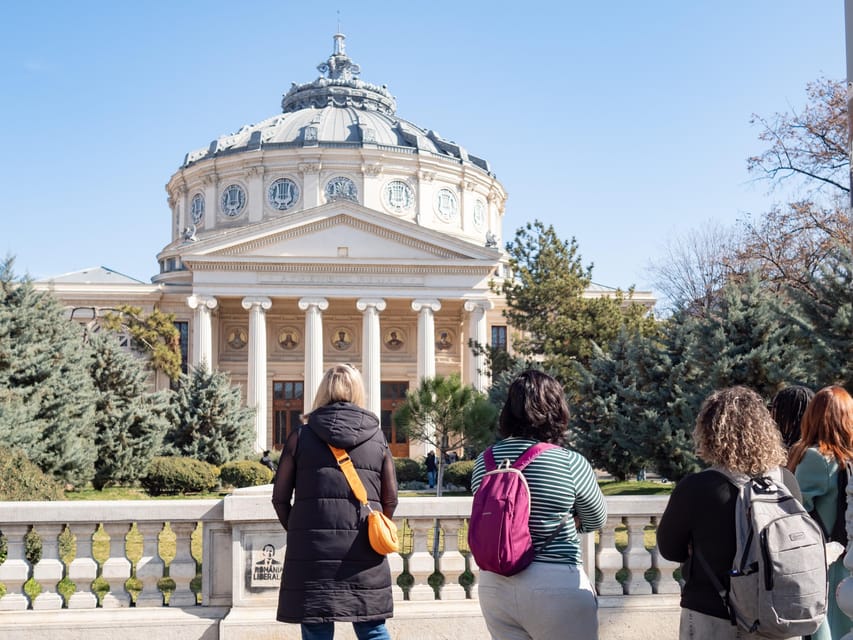
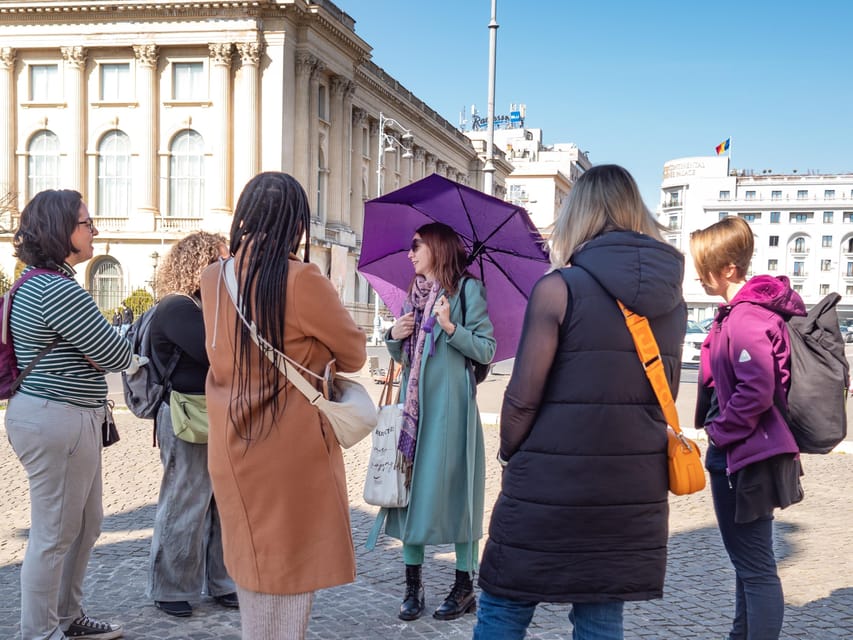
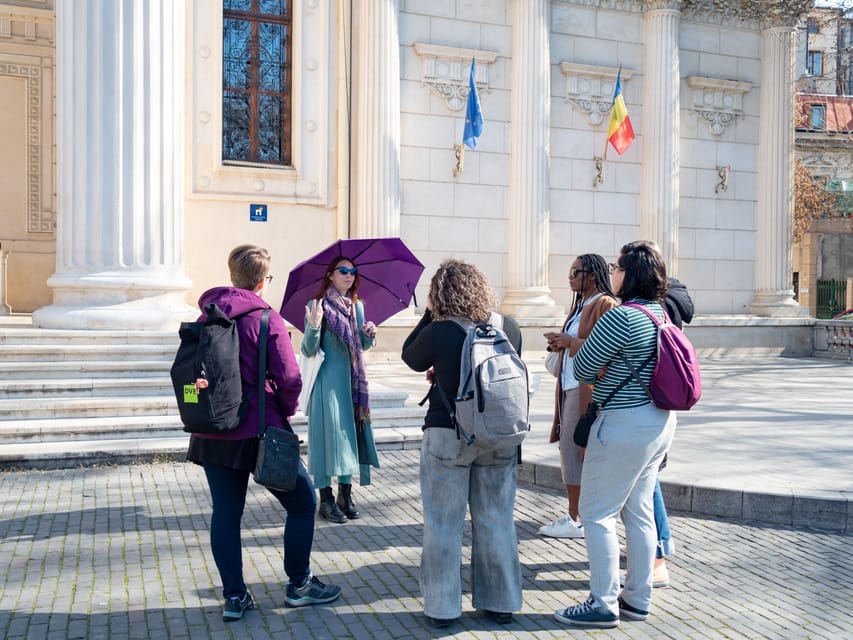
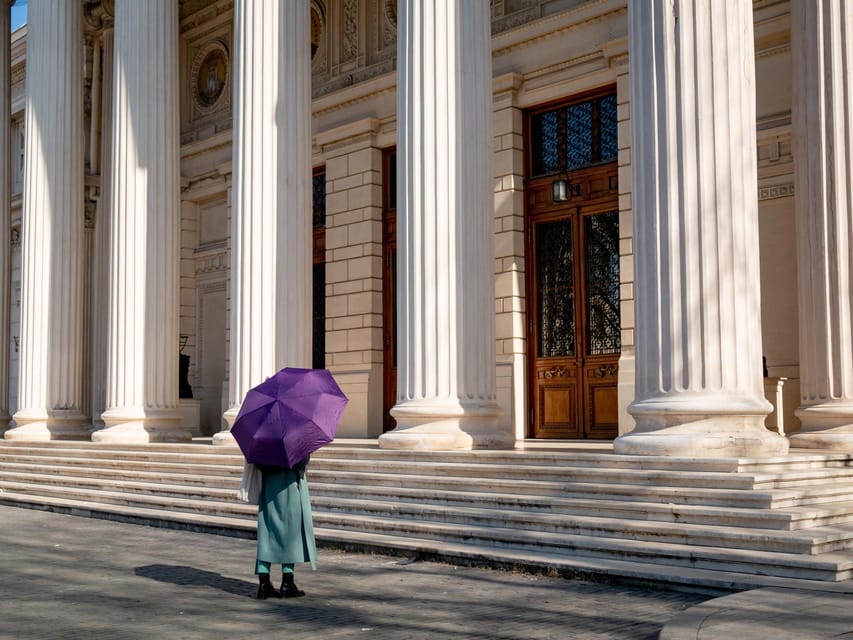
Meet your guide in front of the Romanian Athenaeum, by the columns and the purple umbrella. This is a useful meeting point, though it can be easy to miss if you do not know the building. One person had trouble getting dropped directly at the entrance, so allow a few extra minutes to find the columns.
The Athenaeum is a fitting starting point. Its neoclassical design gives you an immediate sense of Bucharest’s formal side, while its role as home to the George Enescu Philharmonic Orchestra introduces the city’s musical culture. Your guide uses the building to set the scene before the route turns toward royal buildings, political landmarks, and the old center.
The Royal Palace comes next, with time for a photo and a short explanation. The stop is brief, so think of it as an outside introduction rather than a full palace visit. That pattern continues through much of the morning: you see many sites, but you do not enter each one.
Revolution Square is one of the most important stops. Here, the guide can explain the political changes that shaped modern Romania and place the surrounding buildings in their historical setting. This is where a good guide earns the fee. Architecture alone cannot explain why the square matters, but a clear account of the country’s turbulent twentieth century can make the location meaningful.
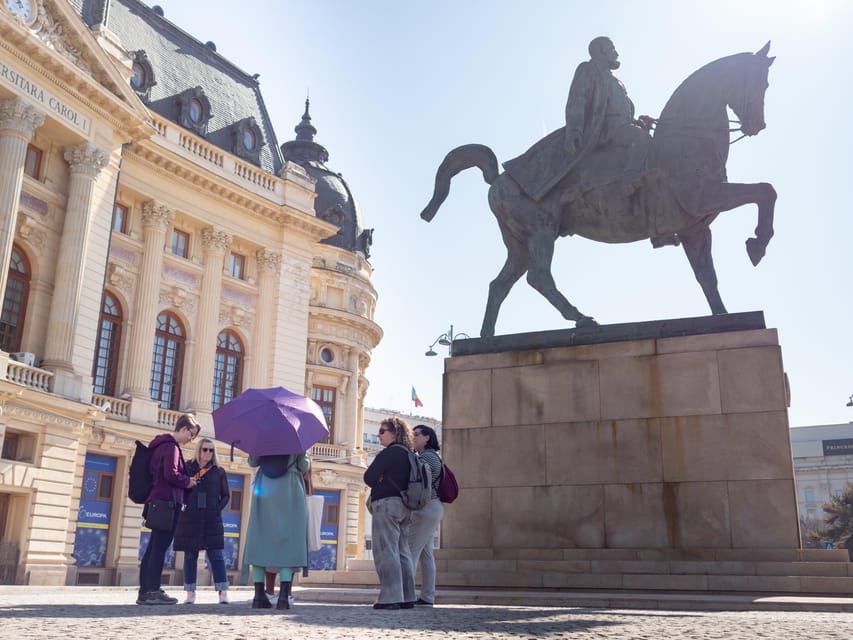
Kretzulescu Church offers a sharp change of mood. The church brings religious architecture and older Bucharest into a route otherwise filled with state buildings, royal references, and modern urban details. You stop for photographs and an explanation rather than a full religious-site visit.
More Small-Group History Tours in the world:
- London Small Group Tour of Historical Pubs
★ 5.0 · 10,422 reviews - Boston: Freedom Trail History Small Group Walking Tour
★ 5.0 · 6,450 reviews - Madrid Tapas & Taverns Small Group Food & History Tour
★ 5.0 · 2,664 reviews
Passages, umbrellas, and theatre façades
The route then moves through Pasajul Englez and Umbrellas Street. These are short, visual stops that keep the walk from becoming a procession of government buildings. They are especially useful if you enjoy urban details, colorful backdrops, and the way Bucharest mixes old structures with newer street decoration.
Do not expect a large attraction at every stop. Some places are small passages or streets, and the value comes from the guide’s context and the contrast between them. If you prefer long interior visits, this format may feel too quick. If you want to understand how the center fits together on foot, the variety works well.
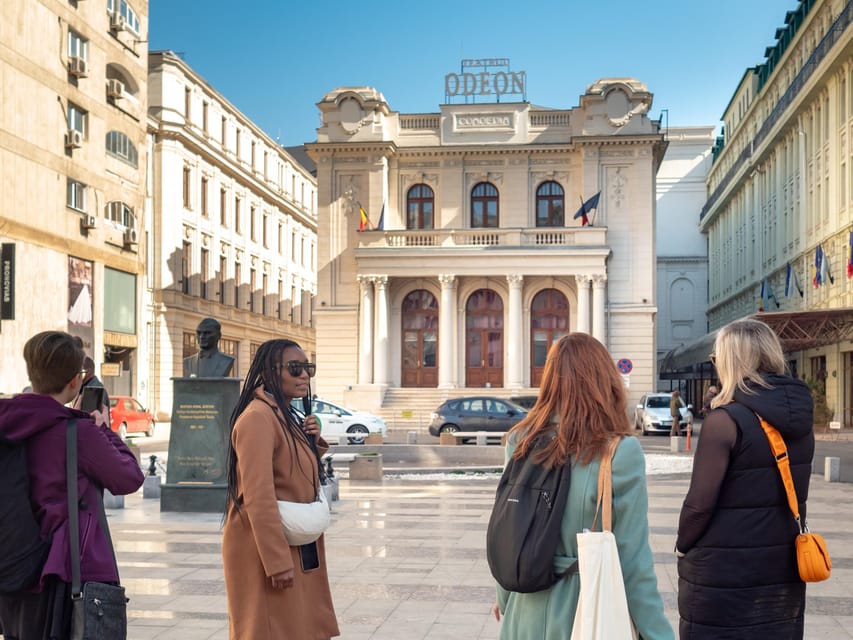
The Odeon Theatre and National Military Circle continue the architectural theme. The theatre adds a cultural note, while the military building points back to the institutions that shaped the capital. Your guide may connect these sites to the city’s artistic life, political history, and changing public identity.
The route is built around short explanations, photographs, and movement. That makes it efficient for a first day in Bucharest, but it also means you should not count on lingering at every façade. Wear shoes that can handle uneven pavement and several hours of walking.
A café break with room for local advice
About midway through the route, you stop at a local café for roughly 25 minutes. Coffee and tea are part of the break, while meals and other drinks are extra. This pause is more useful than it may sound. It gives you a chair, a chance to warm up or cool down, and time to ask about the rest of your stay.
The guides are often especially helpful here. Elena has been praised for recommending places to eat after the tour, including a pastrami spot that made a strong impression. Other guides have pointed out small coffee shops and food addresses as well. These suggestions can turn a general sightseeing walk into a practical introduction to Bucharest’s daily life.
The café stop also helps balance the history. Three hours of monuments and political events can become heavy, especially in poor weather. A short pause keeps the pace human and gives you time to compare notes with the guide and the rest of the group.
Macca-Vilacrosse Passage and the old center
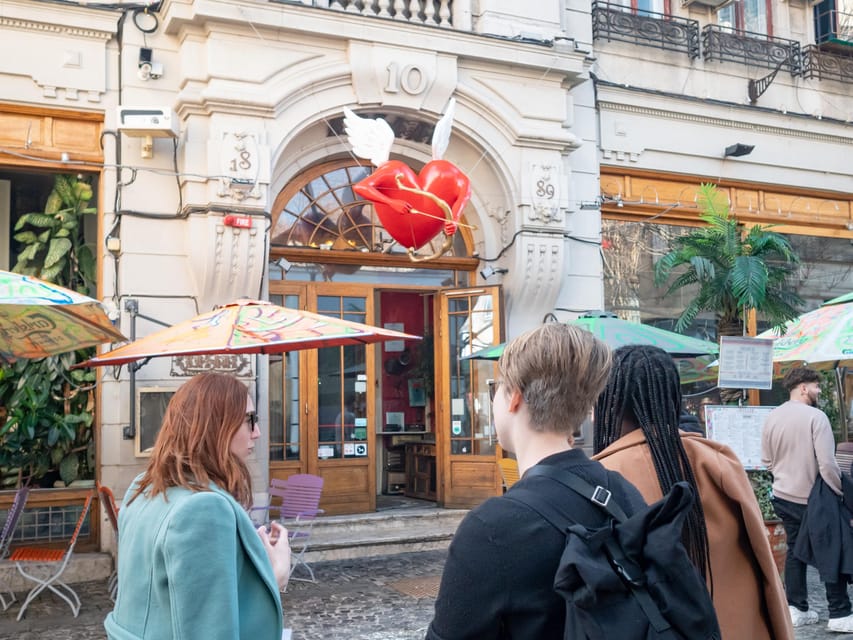
After the break, the route reaches Macca-Vilacrosse Passage, one of Bucharest’s most distinctive covered walkways. Its curved form and café-lined setting make it a natural photo stop, but the guide’s explanation gives it more purpose than a quick snapshot.
You then pass the National Bank of Romania. This is another exterior stop, with the guide explaining the building’s place in the city’s financial and civic center. The sequence works well because you move from a decorative passage to a formal institution, seeing how Bucharest’s center shifts in style within a few minutes of walking.
Stavropoleos Monastery is one of the route’s strongest stops. Its intimate scale and ornate details offer a welcome contrast with the huge state buildings later in the tour. You should expect a guided look and photo opportunity, not an included admission or extended visit inside every attraction.
Caru’ cu bere follows, a famous historic restaurant and one of the city’s best-known dining addresses. The stop is useful even if you are not eating there because it gives the guide a chance to discuss Bucharest’s café and restaurant culture. If you plan to return for a meal, ask about timing and reservations directly, since food is not included in the tour.
The CEC Palace adds another grand architectural moment. Its decorative exterior helps show why Bucharest has long been associated with a mixture of French-inspired neoclassical design, local religious buildings, and later concrete monuments. The guide’s job here is to connect the styles rather than simply list dates and names.
More History Tours in the world:
- New York City: American Museum of Natural History Ticket
★ 4.5 · 15,447 reviews - History and Hauntings of Salem Guided Walking Tour
★ 5.0 · 14,564 reviews - Colosseum: Underground and Ancient Rome Tour
★ 4.7 · 12,691 reviews - Lisbon: History, Stories and Lifestyle Walking Tour
★ 4.8 · 10,902 reviews
History at the National Museum and Manuc’s Inn
The National Museum of Romanian History is another photo and explanation stop. Since entrance fees are not included, you should not assume that the group will tour the museum galleries. The outside visit still gives you a useful landmark in the old center, but anyone wanting museum time should plan a separate visit.
Manuc’s Inn is a particularly good place to pause and picture Bucharest as a trading city. The inn adds a more intimate, historic atmosphere to the route and creates another short break for photographs. It helps prevent the tour from becoming focused only on official buildings and political power.
You may notice that the itinerary includes many ten-minute stops. That is the key to understanding this experience. You are not spending an hour at one monument. You are building a broad mental map of central Bucharest, with the guide supplying the connections.
That approach suits me when I have just arrived in a city. I can mark places to revisit, learn which streets connect the main sights, and get advice for the next day. It is less suitable if you want long, quiet time at each building or detailed interior access.
Antim Monastery and the road to Parliament
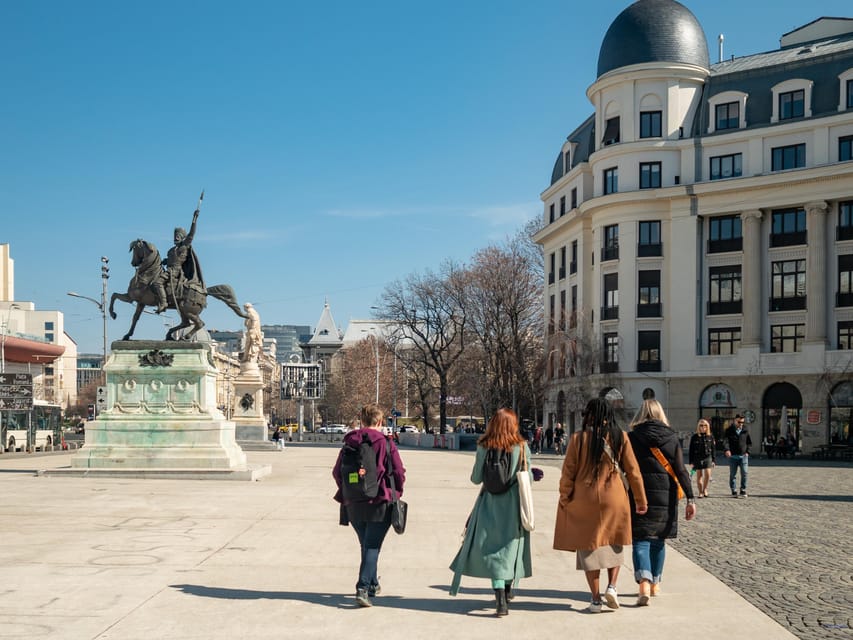
Antim Monastery brings another religious and architectural layer before the final major stop. It is a quieter counterpoint to the commercial center and helps show how much of Bucharest’s older identity survives beside its grand avenues and state institutions.
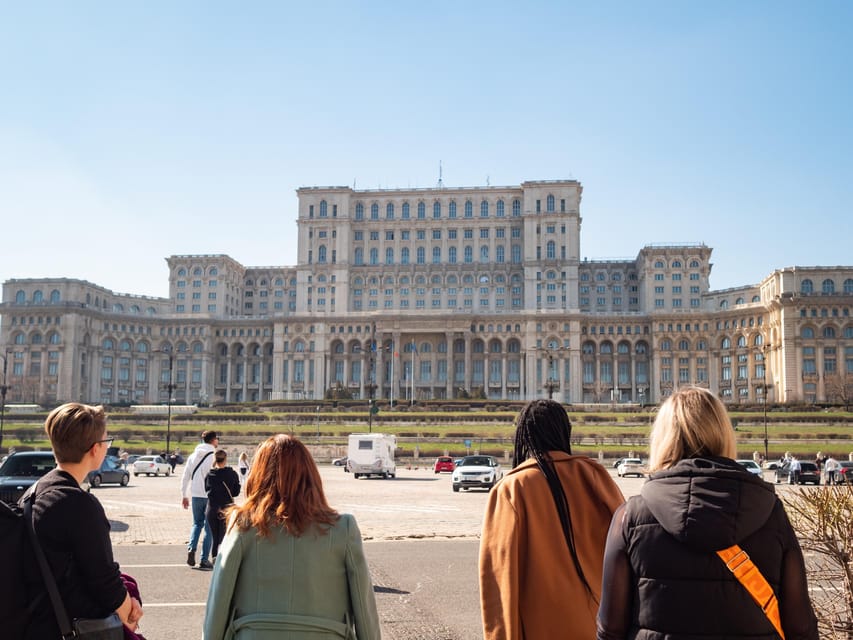
The Palace of Parliament is the route’s big finish. It is described as the second-largest administrative building in the world, and its scale is difficult to grasp from a photograph. From outside, you can appreciate its size and discuss the controversial political history behind its construction and its effect on Bucharest.
This is an exterior stop with about 15 minutes for photographs and sightseeing. No entrance fees are included, so do not book this tour expecting an interior visit to the Parliament building. If you want to see inside, you will need to arrange that separately and follow the building’s own access rules.
The ending works well because the palace gathers many of the tour’s themes in one place: power, architecture, national identity, and the difficult legacy of the communist era. Guides have been praised for explaining Cold War politics in a way that stays accessible, including the long-term impact of the period on Romania and Bucharest.
How the guides shape the experience
The guide is more important here than any single monument. The route includes plenty of buildings that you can photograph on your own, but the added value comes from understanding why they matter and how they fit together.
Elena is praised for a clear, well-paced style and for giving useful advice about places to eat after the walk. Alexandra is noted for making complex subjects entertaining without overloading the group with facts. Stefan has been praised for his detailed knowledge of Bucharest and for helping people reach places they had hoped to see.
Alessandro is described as friendly, fluent in English, and prepared with stories about the old city. Helen has been praised for combining facts about the tour with practical suggestions for the rest of a Bucharest stay. The company offers English, Italian, Spanish, and French, though you should select your preferred language when checking availability.
The feedback is not just about facts. Guides are also praised for patience, humor, and a genuine interest in the city. That matters on a route with difficult subjects. Revolution, communism, and the Palace of Parliament can become dry or overly political in the wrong hands. Here, the best guides balance serious context with personal observations and local details.
Is $22 good value for three hours?
At $22 per person, the tour is good value if you want a guided orientation to central Bucharest. You get a professional local guide, a long list of landmarks, a café break, and practical suggestions for the rest of your visit. A private guide would usually cost more, while exploring the same route alone would leave you to research the stories yourself.
The value is strongest for first-time visitors, people with only a short stay, and anyone who likes walking tours that cover several neighborhoods and themes. The price is less compelling if you already know central Bucharest well or mainly want to enter museums and historic buildings. Admission fees are not covered, and most stops are viewed from outside.
The tour also helps you spend the rest of your trip wisely. You can return to Stavropoleos Monastery, the National Museum of Romanian History, Caru’ cu bere, or the Palace of Parliament after learning which places interest you most. It is a useful first look rather than a complete substitute for dedicated visits.
Practical details that affect your decision
The tour lasts three hours and is offered as a small-group experience. It is a walking-heavy route, so bring comfortable shoes and water. A camera is worthwhile, especially for the Athenaeum, the passages, churches, and Parliament.
Large bags and luggage are not allowed. Plan to leave suitcases elsewhere before meeting the guide. The meeting point is in front of the Romanian Athenaeum, by the columns and a purple umbrella.
The activity is listed as wheelchair accessible, but it is also marked as unsuitable for people with mobility impairments. That apparent mismatch deserves attention. The route involves a lot of walking, and the short stop structure may not work well for anyone who needs frequent rest or easier access. Contact the provider before booking if mobility is a concern.
You can cancel up to 24 hours before the start for a full refund, and reserve now while paying later. Those terms are useful if your Bucharest plans are still shifting, but the main booking decision is physical: can you comfortably walk for three hours?
Who should book this Bucharest walk?
I would choose this tour early in a Bucharest visit if I wanted a clear introduction without spending much. It suits history fans, architecture enthusiasts, art lovers, and curious first-time visitors who enjoy a guide with a point of view.
It is also a good choice if you want practical local help. The café break and restaurant suggestions can save time later, and the route covers enough ground to show you where the old center, royal quarter, passages, churches, and Parliament fit together.
I would skip it if your priority is interior access, a slow pace, or extensive time at one museum. I would also think twice if you have limited mobility or dislike walking in all weather. For everyone else, the combination of strong guides, useful context, and a $22 price makes this a sensible way to get oriented.
FAQ
Where does the tour start?
It starts in front of the Romanian Athenaeum, by the columns and the guide’s purple umbrella.
Where does the tour finish?
The tour finishes at the Palace of Parliament.
How long does the tour last?
The walking tour lasts three hours.
Which languages are available?
The tour is available in English, Italian, Spanish, and French.
Is the Palace of Parliament entrance included?
No. The tour includes an outside stop at the Palace of Parliament, but entrance fees to attractions are not included.
What should I bring?
Bring comfortable walking shoes, water, and a camera. Large bags and luggage are not allowed.
Newest history tours we have reviewed in the world
- Bilbao Historical Tour in small group★ 4.7 · 52 reviews
- Bologna: Street Food Tour in the Historic Center★ 4.8 · 125 reviews
- CEBU: Cebu City Heritage and Uphill Guided Tour★ 4.2 · 31 reviews
- Bishkek : City Tour (History, Architects, Statues & Culture)★ 4.9 · 54 reviews
- Blenheim: Omaka Aviation Heritage Centre Admission Ticket★ 4.9 · 31 reviews
- Berlin: Nazi History Walking Tour★ 4.8 · 33 reviews
- Best of Baku: 4-Hour City Tour Historic and Modern Landmarks★ 4.7 · 63 reviews
- Belfast: Best of Belfast History, Culture & Art Walking Tour★ 4.9 · 158 reviews
Small-Group History Tours, compared.
Freedom Trail History Small Group Walking Tour
Read our review →
Madrid Tapas & Taverns Small Group Food & History Tour
Read our review →
Hidden Alleyways and Historic Sites Small-Group Walking Tour
Read our review →
New Orleans Small-Group Haunted History Carriage Tour
Read our review →
Half Day Dominican Republic Cultural Tour : Small Group
Read our review →
Ultimate Seville Tapas, Wine & History Small Group Tour
Read our review →
Vienna Historic Center Small Group Walking Tour
Read our review →Browse the lists this tour appears in